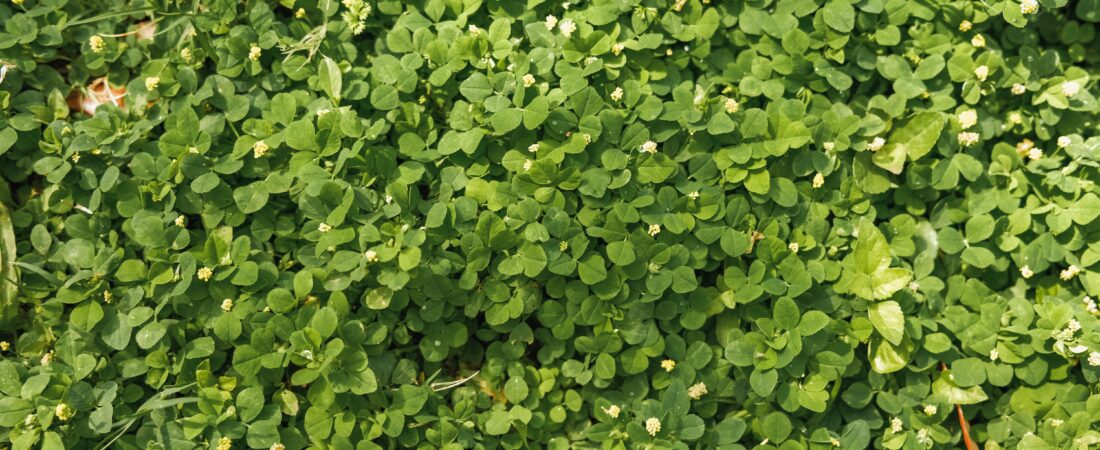
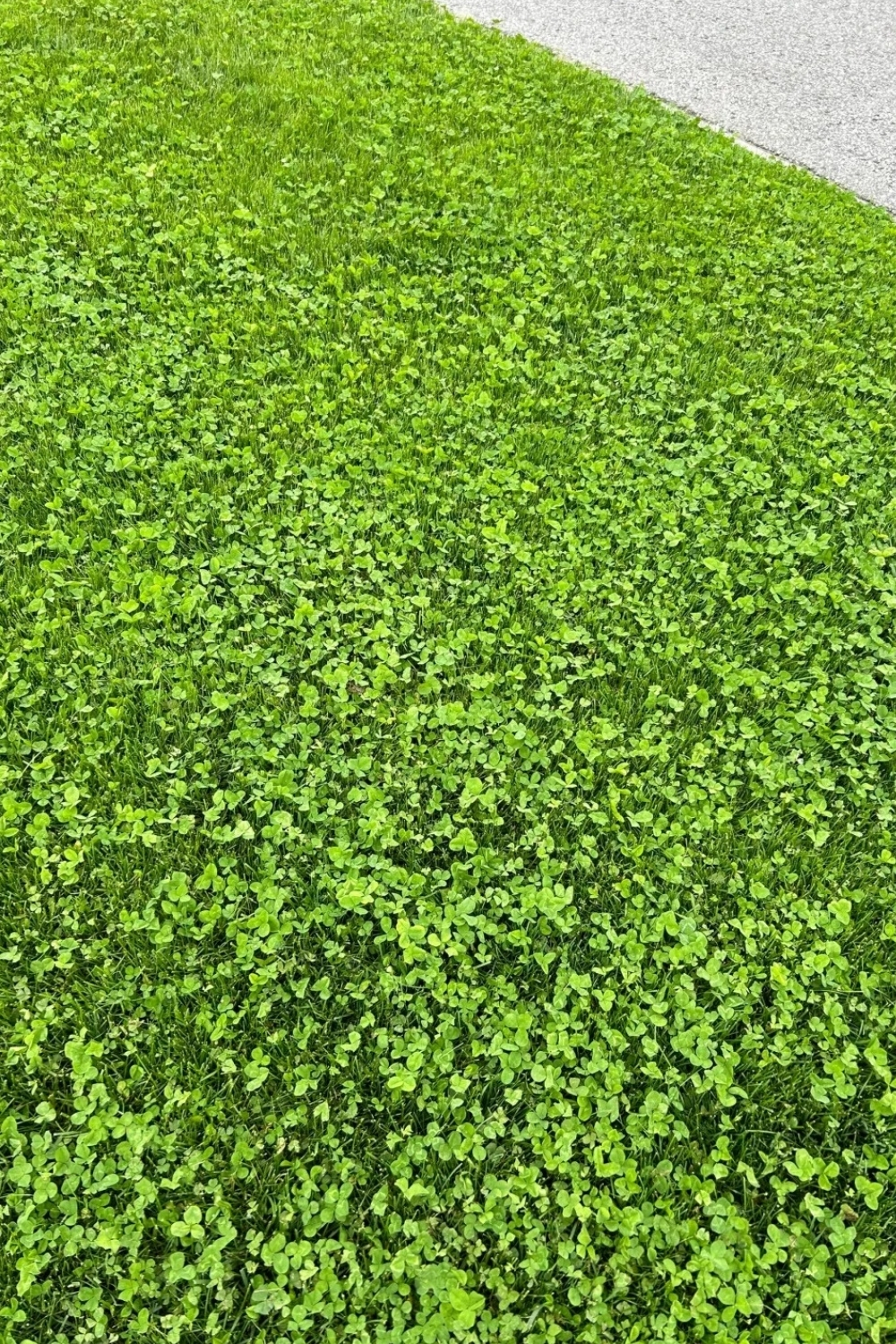
Is a clover lawn really the low-effort, always-green yard the photos promise? Partly. Clover stays green through dry spells, needs almost no fertilizer and wants mowing far less often than grass. It also stains, draws bees and wears thin under a soccer game, so the answer depends a lot on how the yard gets used.
Microclover, white clover or a full clover lawn
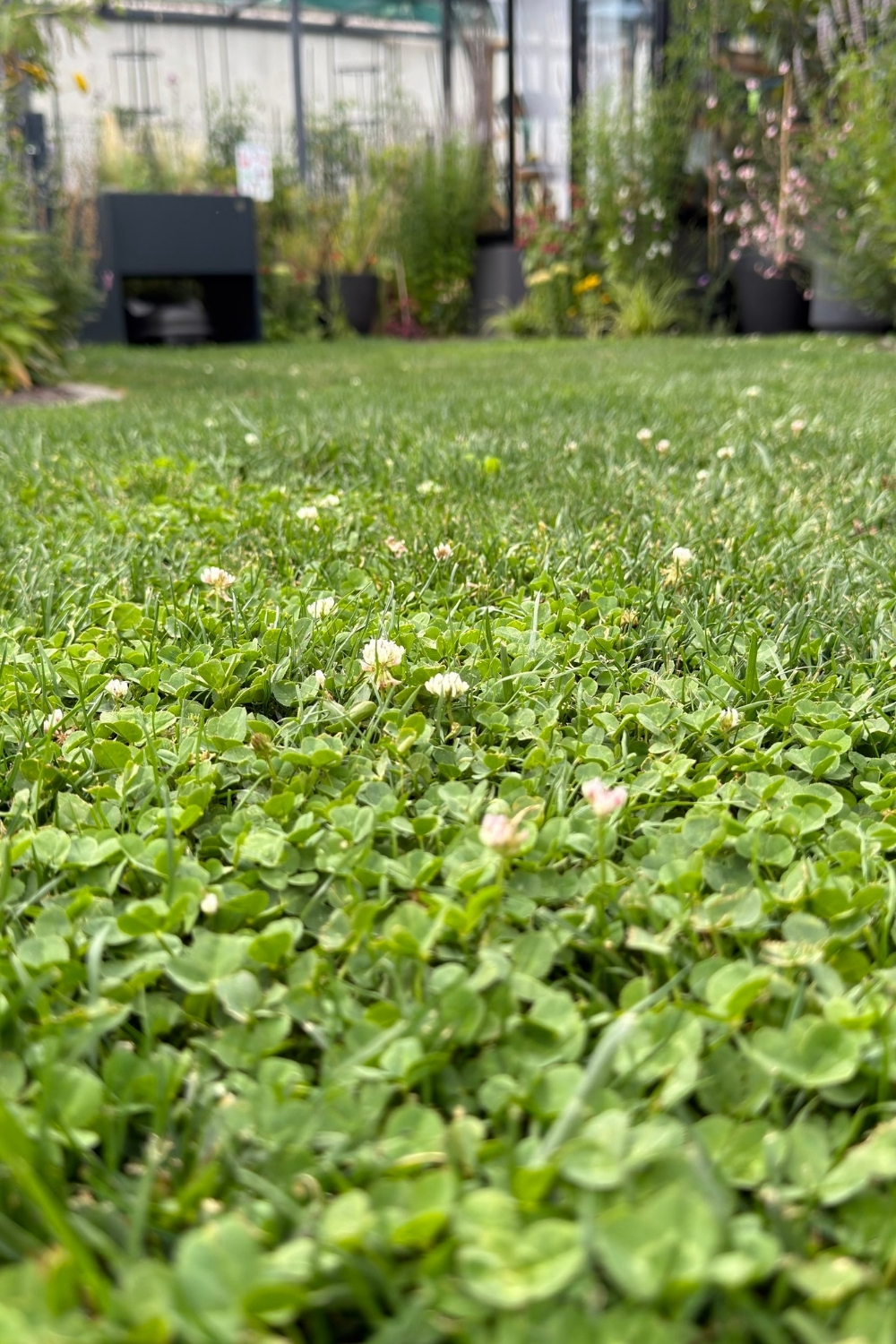
Most clover lawns use white clover (Trifolium repens), a low, creeping plant with the familiar three-part leaves and round white flowers. It’s the same clover that shows up uninvited in many grass lawns, and it spreads by creeping stems that root as they go.
Microclover is a small-leaved selection of white clover. According to Laidback Gardener’s look at micro-clover, its leaves are about half the size of regular white clover, even smaller after mowing, and it blooms much less. Mixed into grass, it blends in so well that the lawn just looks thicker and greener rather than obviously clover.
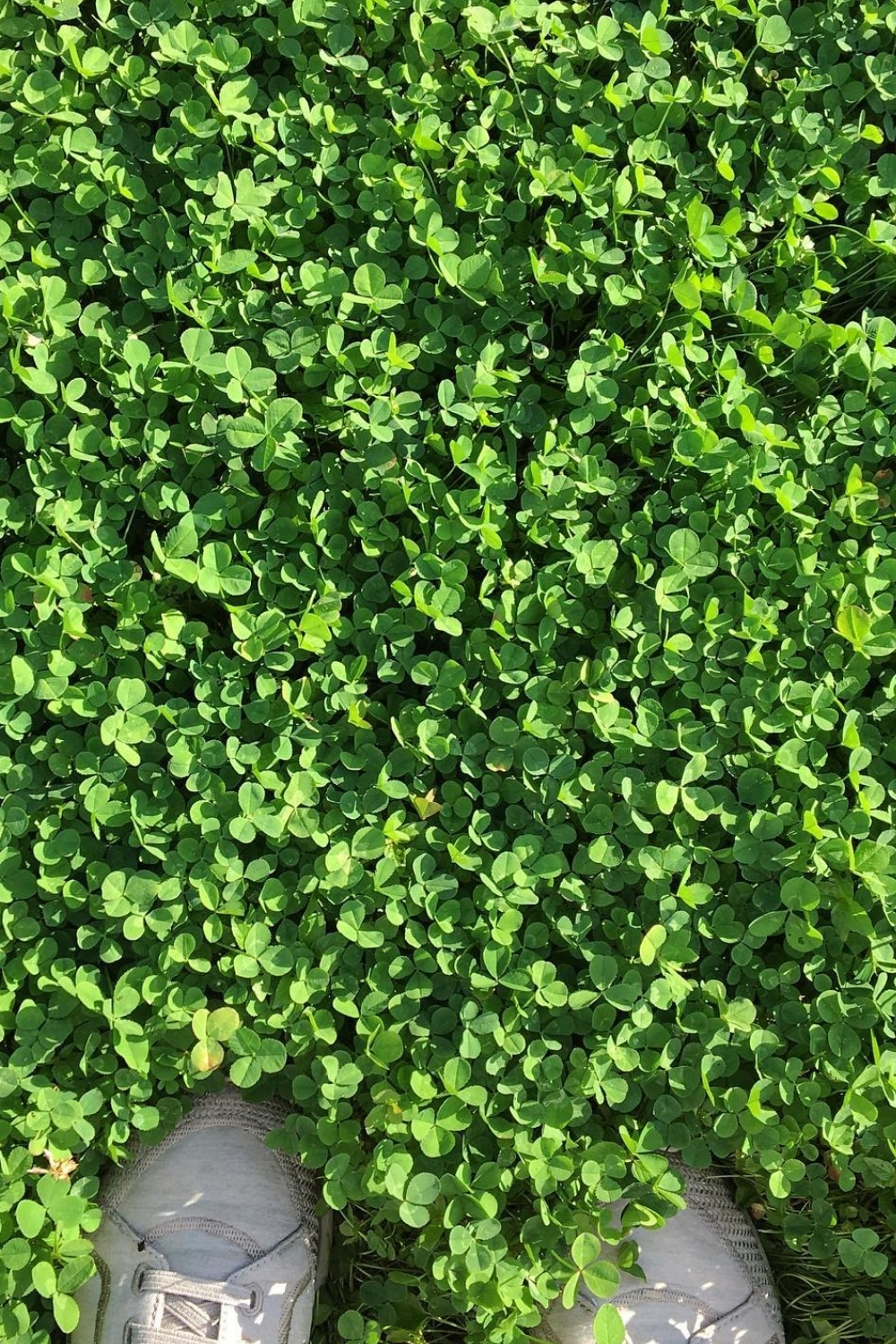
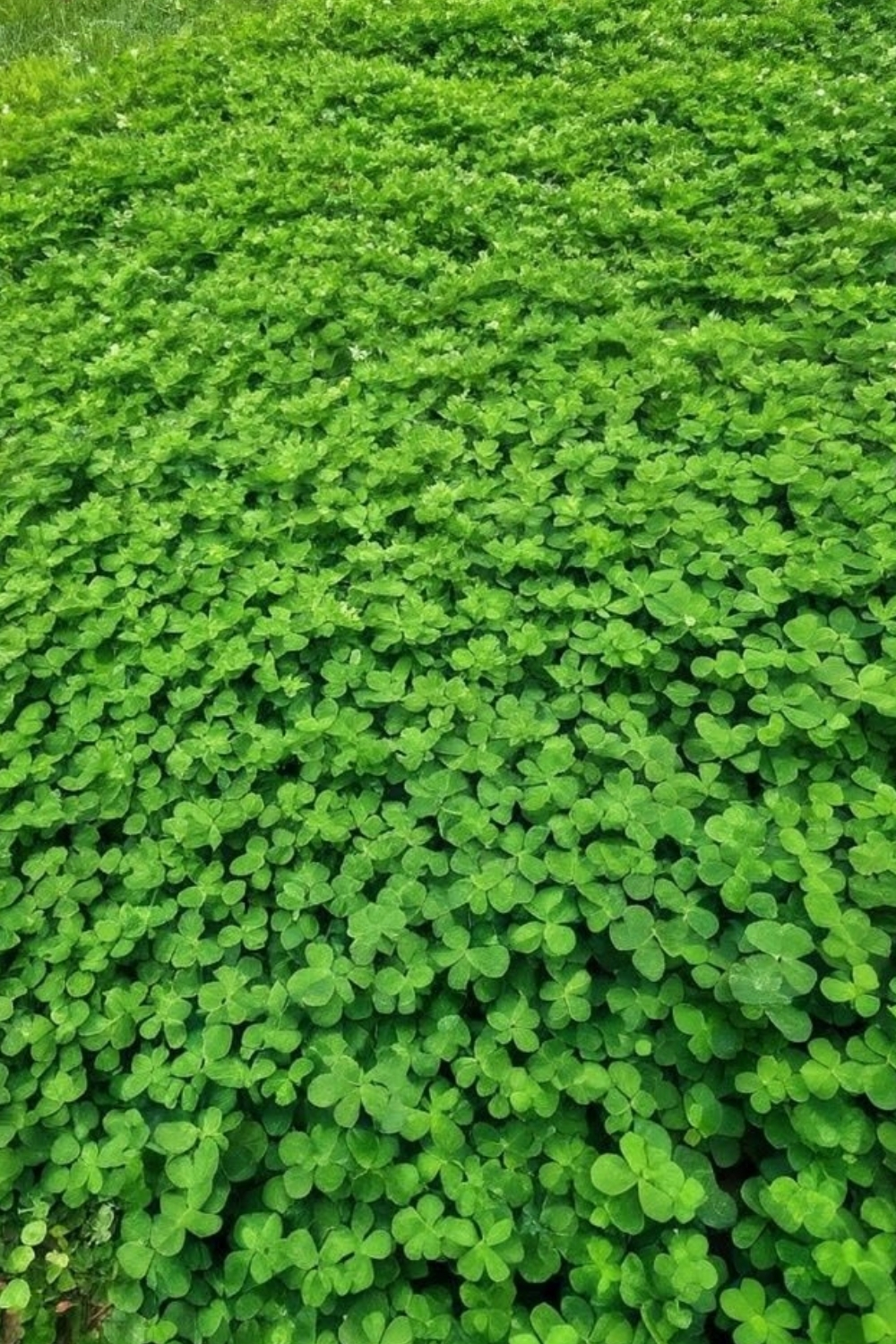
A full clover lawn means clover on its own, or nearly so, with little or no grass. It looks soft and bright, but it behaves more like a ground cover than a lawn (in deep shade, a moss lawn is the other option), which matters once people start walking on it every day.
What a clover lawn does well
- Stays green in dry weather. Clover roots run deep, so it often stays green after grass has turned brown in a summer dry spell.
- Needs little mowing. It stays low on its own, a few inches tall, so mowing every few weeks is often enough, or never for microclover in some yards.
- Feeds itself. Clover is nitrogen-fixing: bacteria living in small bumps on its roots pull nitrogen out of the air and turn it into plant food. That’s free fertilizer, for the clover and the grass around it.
- Feeds bees. White clover in flower is a reliable source of nectar and pollen from late spring through summer.
Those last two points tie a clover lawn into the rest of the yard. It does a lot of the same work as the plants in these easy pollinator garden ideas, and in a dry region it fits well with the plants in this drought-tolerant garden, since neither needs much watering once established.
Where clover falls short
- Stains. Clover leaves leave green marks on clothes and knees that are harder to wash out than grass stains.
- Bees underfoot. In bloom, a clover lawn hums with bees, which is a real concern with small kids, bare feet or anyone with a bee sting allergy.
- Less hard-wearing. A pure clover lawn doesn’t stand up to heavy foot traffic, ball games or a dog that runs the same track every day.
- Patchy in winter. In cold zones, the leaves die back to the base of the plant over winter, and the lawn looks brown and thin until it greens up in spring.
- Weed killers kill it. Broadleaf herbicides, the weed killers used on dandelions and plantain, kill clover too, so a clover lawn means giving up most weed-and-feed products.
No, but seriously, the bee point deserves thought. Mowing just before the clover flowers, or choosing microclover, which blooms far less, keeps most of the bees off the play areas while leaving the rest of the yard for them.
Sun, soil and shade
Clover likes full sun to light shade and is far less fussy about soil than grass. It grows in thin, poor or compacted soil where a lawn struggles, partly because it makes its own nitrogen. Under dense trees or on the north side of a house, though, it thins out just like grass does, and a clover lawn in deep shade ends up patchy and mossy. For those spots, moss or shade-loving ground covers are a better bet.
Very wet ground isn’t ideal either. Clover handles a damp spring, but soil that stays soggy for weeks rots the roots, so low spots that hold puddles are worth fixing first.
Mixing clover into grass or replacing it
For most yards, mixing works better than replacing. A grass lawn with clover sown into it keeps the toughness of grass where people walk and play, and gains the clover’s green color in summer and its free nitrogen. Microclover is the usual choice for mixing, since its small leaves sit down among the grass blades. When starting a brand-new lawn from seed rather than overseeding, the same DLF guide suggests only a small share of microclover, about 5 percent of the seed mix by weight; a little goes a long way, because clover spreads sideways on its own once it settles in, and too much early on can crowd out the young grass in a new clover lawn mix.
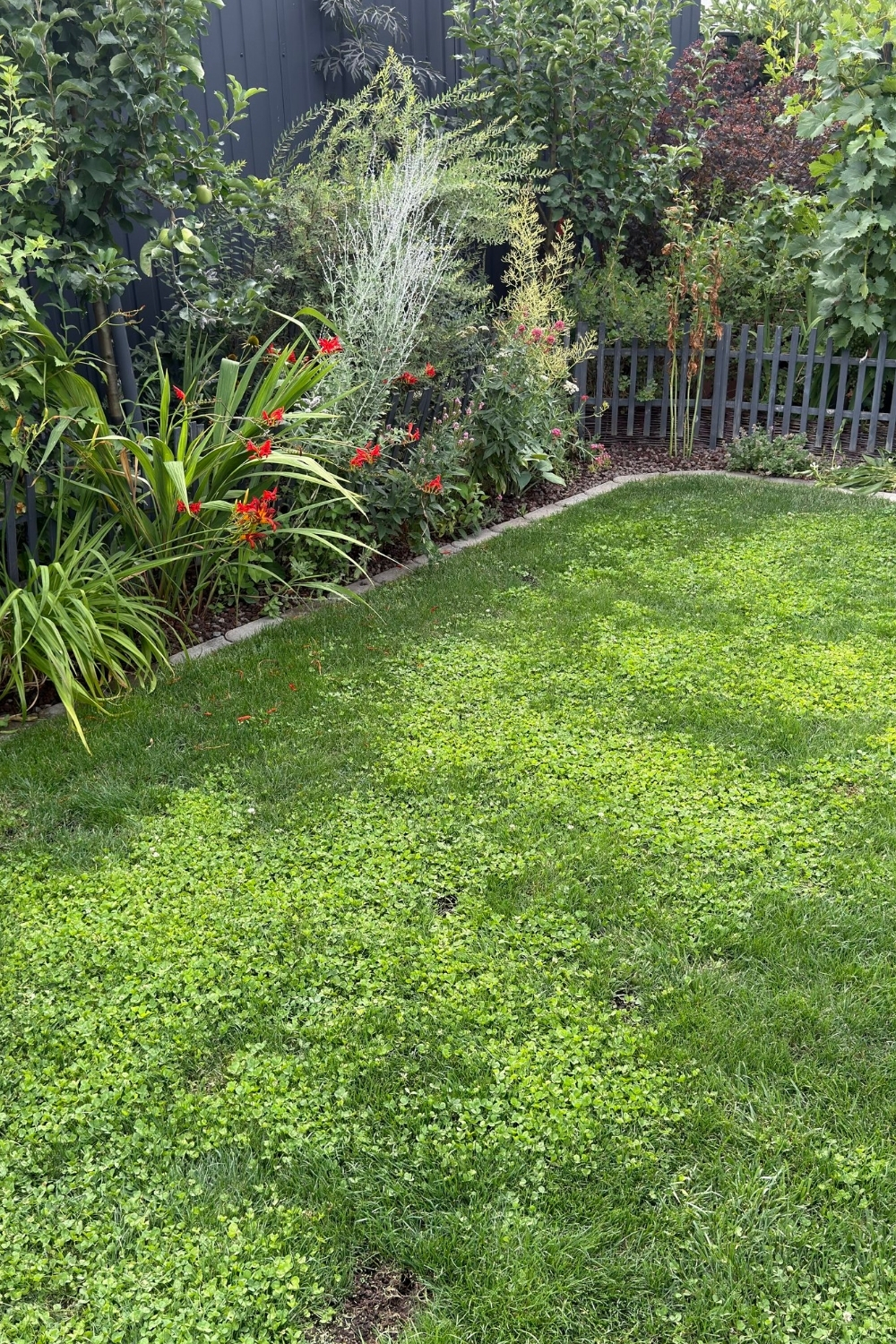
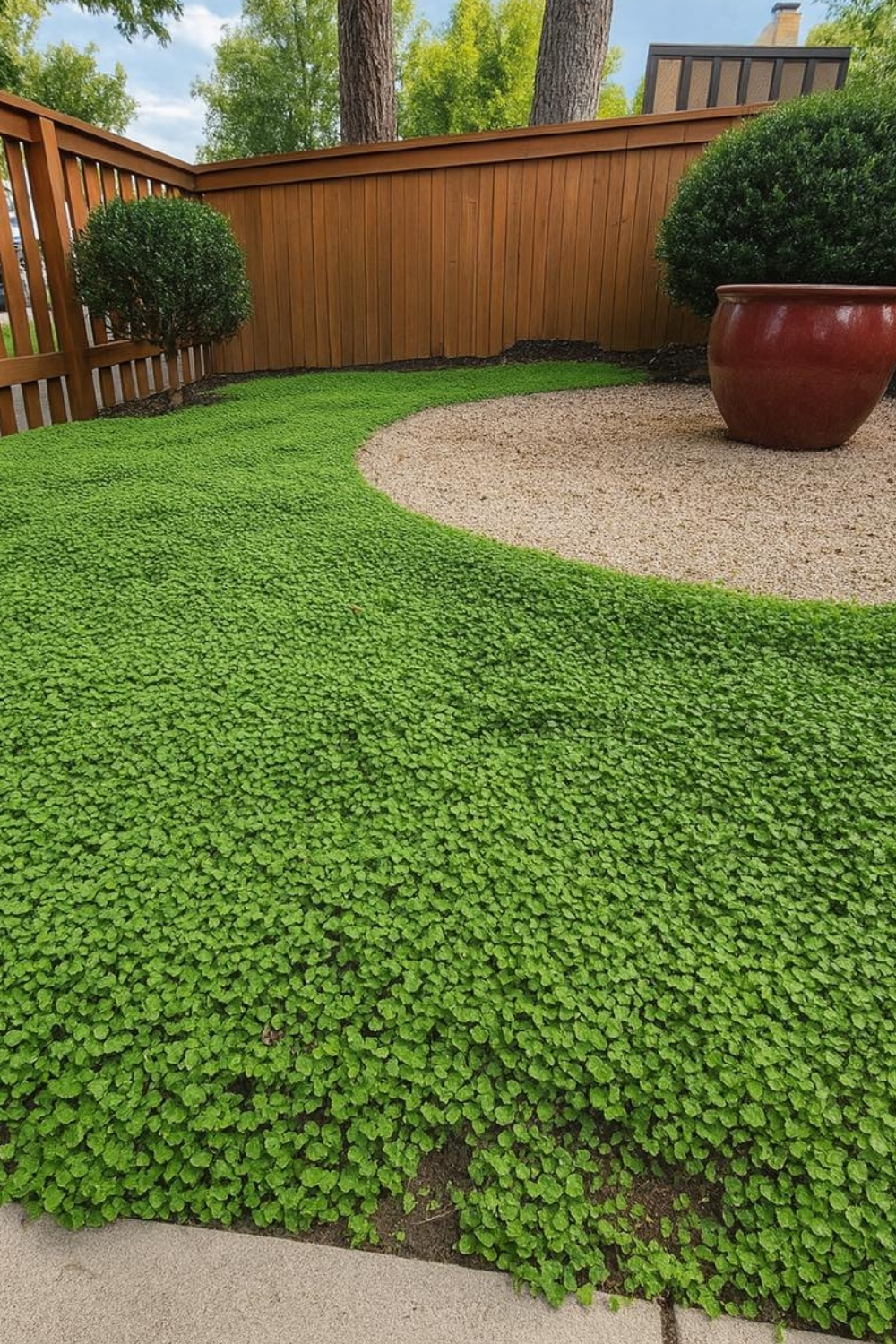
A full clover lawn suits a different kind of space: a front yard that’s mostly looked at, a slope that’s awkward to mow, or a corner around a fire pit or patio that gets light, occasional use.
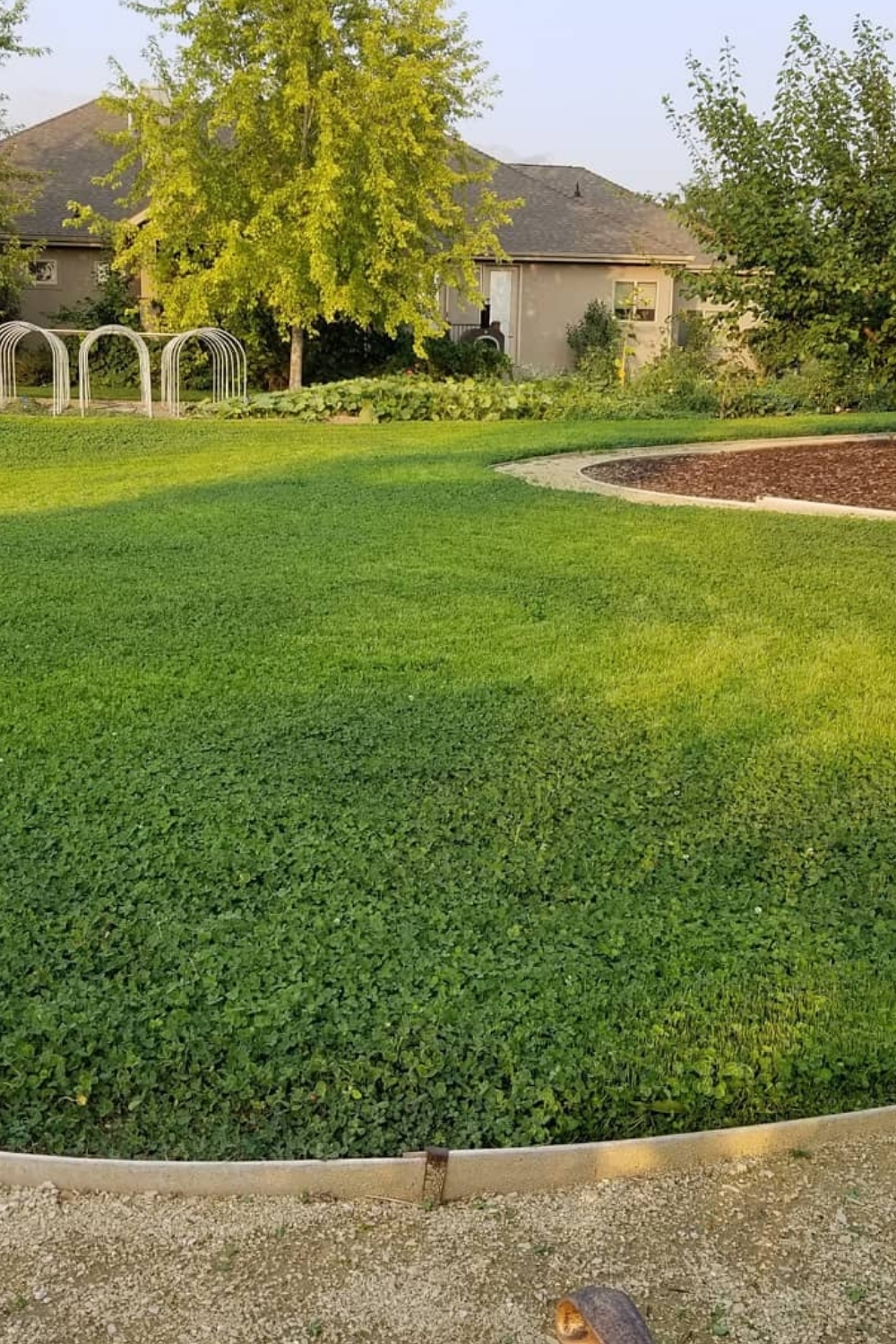
Personally, I think it’s worth starting with a mix in the main lawn and a pure clover patch somewhere low-traffic. Having said that, side yards are often the best test spot, since they’re narrow, awkward to mow and don’t get much play.
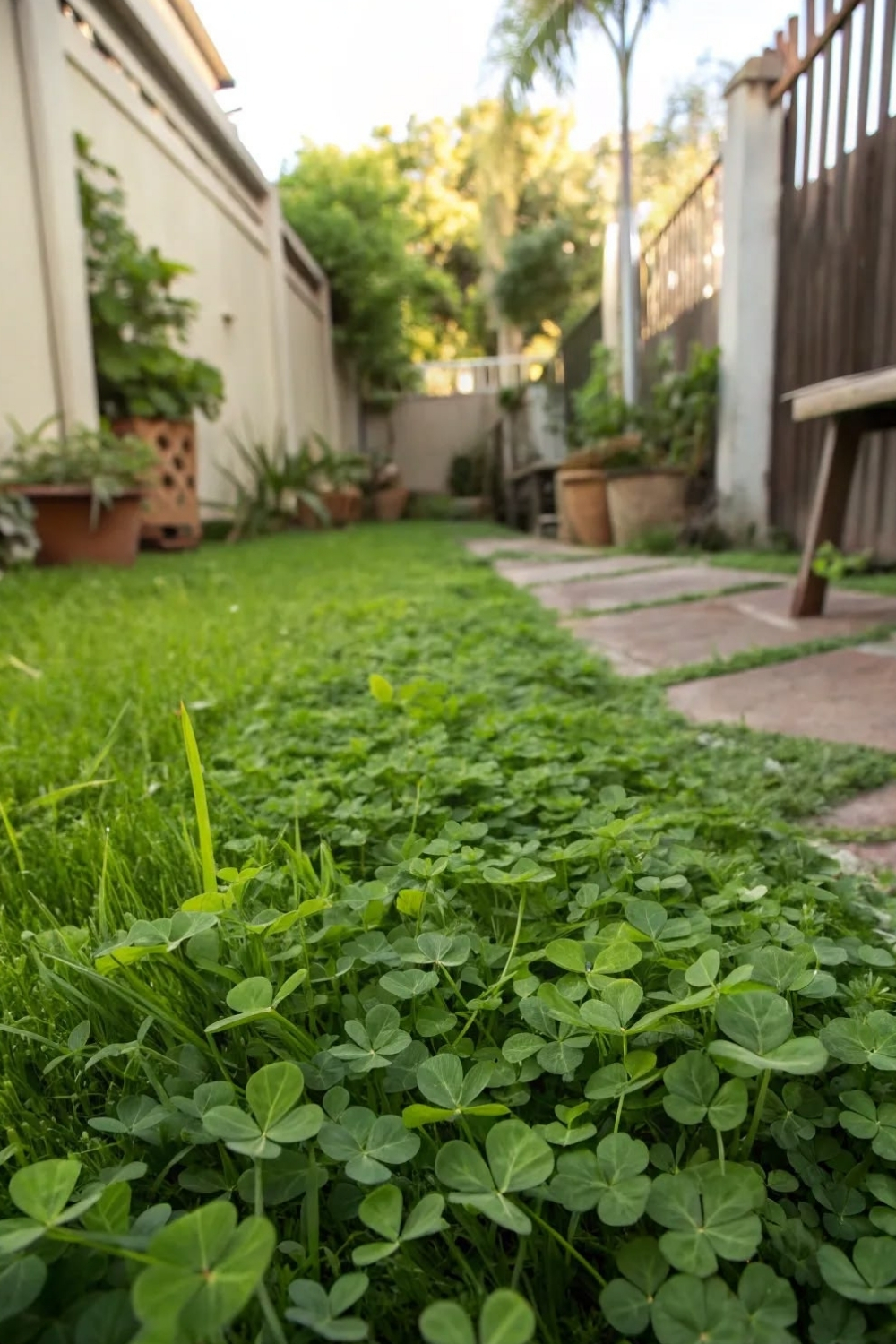
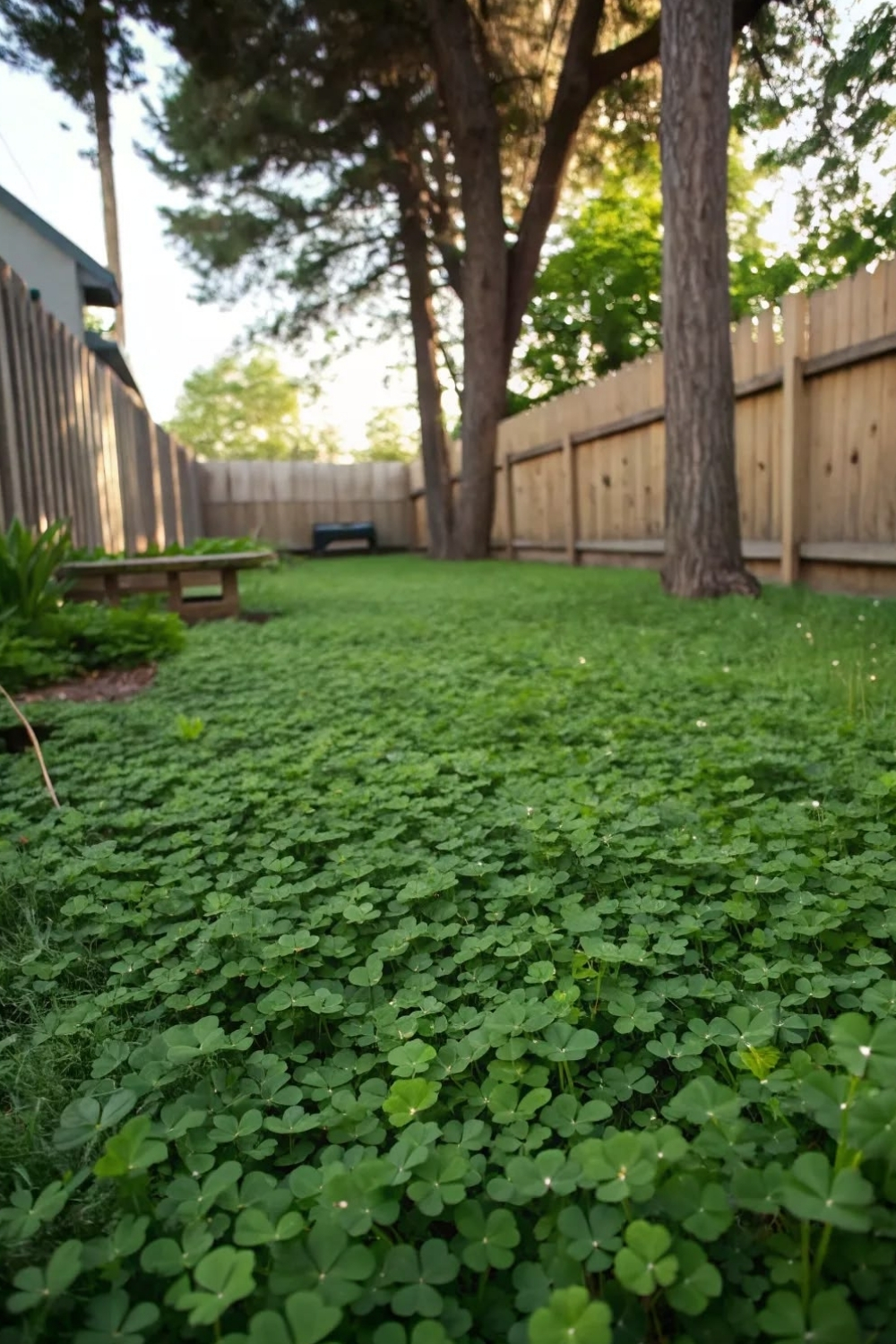
What to expect the first year
A new clover lawn rarely looks like the photos in its first season. Seedlings come up within a couple of weeks, but the plants spend the first months building roots and creeping stems, so the cover stays thin and uneven until the following summer. In a mixed lawn, the clover often shows up first in the thinnest, sunniest patches and spreads from there.
Some clover dies back after a few years, especially microclover in a lawn where the grass is thick and well fed, so a light reseeding every few years keeps the mix even. Two other visitors to plan for: rabbits love clover and will graze it, and dog urine tends to leave fewer yellow spots on clover than on grass, which is one reason dog owners like a clover lawn.
Overseeding clover in fall
Fall is a good time to sow clover into an existing lawn, with cooler weather and more rain to help the seed. According to DLF’s microclover planting guide, late-summer and fall seeding should happen at least six weeks before the first killing frost, and the area needs to stay moist for about two to three weeks while it establishes.
Start by mowing the grass short, so the seed reaches the soil instead of resting on blades. Rake out dead grass and loose debris; core aerating first, pulling small plugs of soil out of the lawn, makes even more room for seed. Clover seed is tiny, so mix it with a few times its volume of dry sand before spreading, which makes it far easier to scatter evenly by hand or with a spreader. For overseeding microclover into grass, the guide suggests about a pound of seed per 1,000 square feet; check the rate printed on your seed bag, since it varies by product.
One thing to skip that fall: pre-emergent weed preventer, the granular product spread to stop weed seeds from sprouting. It stops clover seed from sprouting too, so don’t use it in the months before or after sowing.
Rake lightly, so the seed sits just under the surface or under a thin dusting of compost, then water gently. Keep the soil surface damp, not soaked, until the seedlings are up and growing, which usually takes two to three weeks.
Edges, mowing and keeping it in check
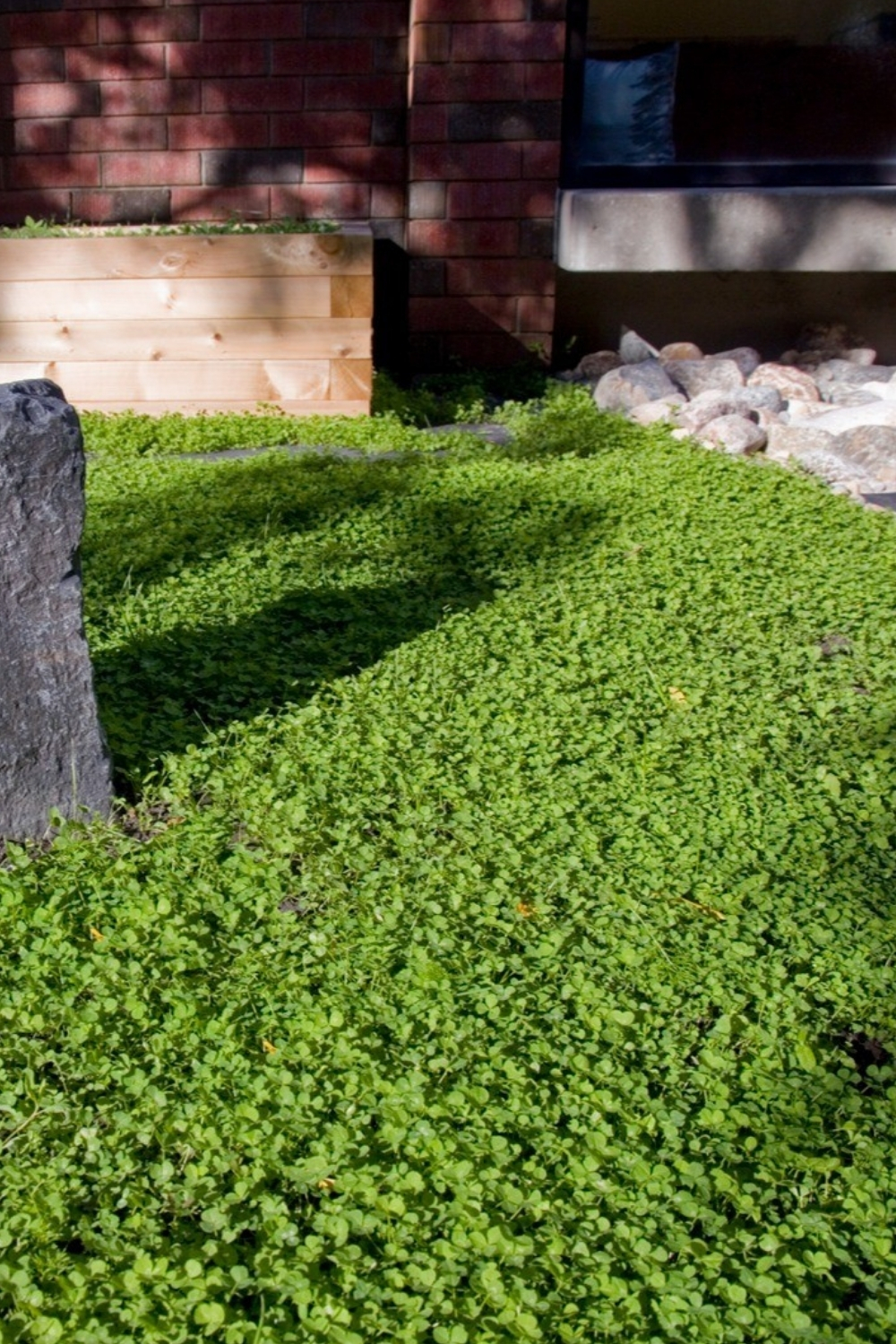
Clover creeps. Its stems root wherever they touch soil, so a clover lawn spreads into gravel paths, flower beds and the cracks between pavers if nothing stops it. A firm edge, such as a strip of metal or plastic lawn edging, a row of bricks or a concrete mowing strip, keeps it in its place. Along gravel, the edging matters most, since clover roots happily in the fine dust between the stones.
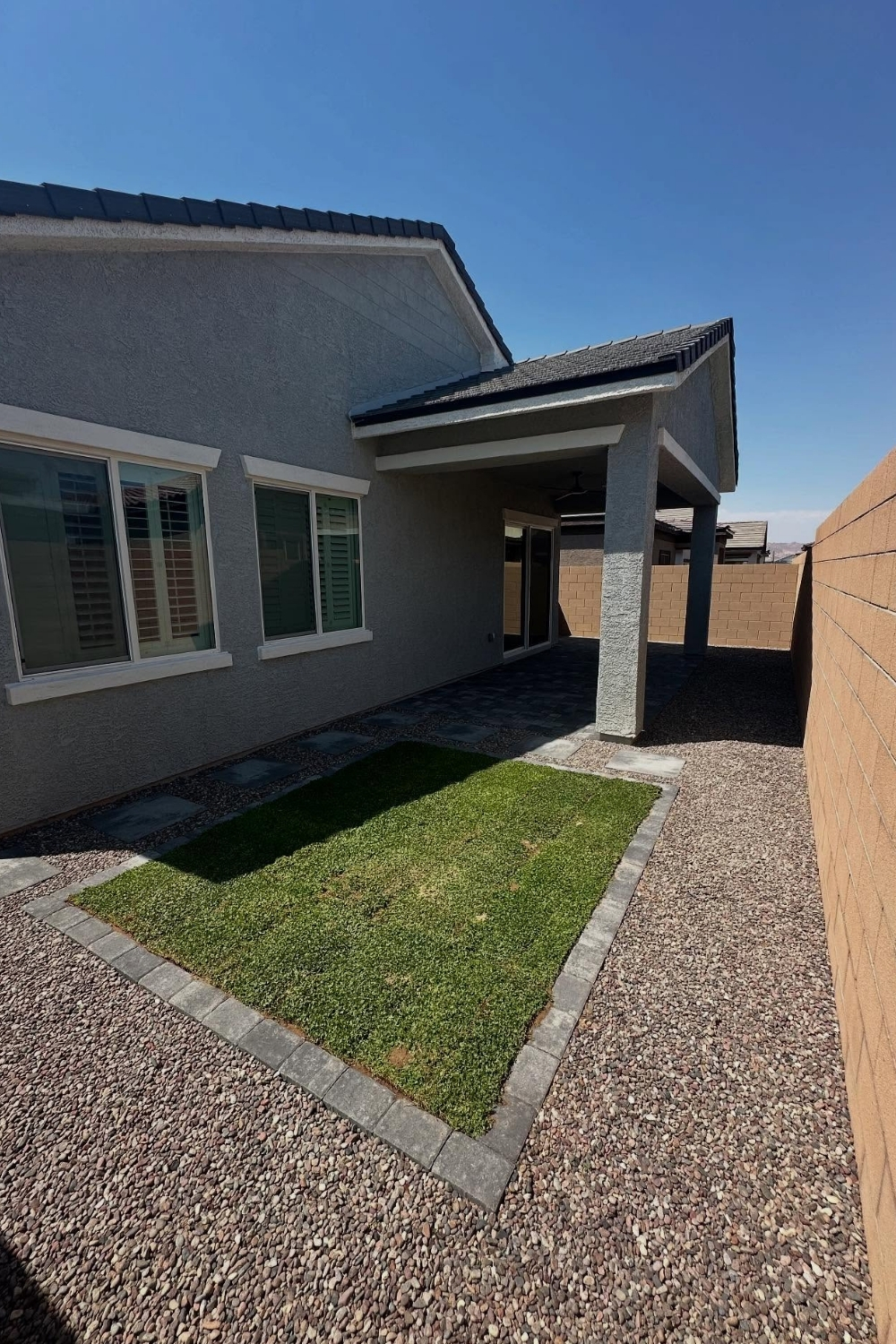
Mow less often than grass, but don’t stop completely. (In a mixed lawn, the grass still benefits from a light fall feeding, just a low-nitrogen one.) A trim every few weeks keeps a mixed lawn even and stops grass from getting tall and shading out the clover. In a mixed lawn, mow at the grass’s usual height, around 3 inches; a pure microclover patch can be cut much lower. Skip high-nitrogen lawn fertilizer, which feeds the grass and lets it crowd out the clover, and skip broadleaf weed killers entirely. Pull dandelions by hand instead, which is less work than it sounds in a thick clover lawn, so to speak, since clover leaves little bare soil for weeds to start in.
Before overseeding the whole yard, sow a clover patch of about 10 by 10 feet in a spot you can see from the house this fall, and judge it next summer on stains, bees and how it holds up underfoot.