Five moves. That’s the entire post, and three of them cost nothing but an afternoon.
I know that sounds like an overpromise. But most of the yards I’ve seen that look genuinely good aren’t full of rare plants or expensive stonework. They’re full of ordinary plants arranged with about four or five decisions repeated consistently, which is a completely different skill from knowing plant names.
That’s the good news buried in every simple garden ideas search. You are not missing knowledge. You are missing structure.
Here’s the thing nobody selling you plants will mention: you can add twenty new perennials to a yard and make it look worse. Plants are not the problem. Arrangement is.
So this post covers the five moves, in order, with which ones to do first depending on what’s currently wrong. Real yards, real budgets, no design degree.
What Separates a Beautiful Garden From a Yard With Plants In It
Walk past a garden that stops you and it will have five things going on. Every single time.
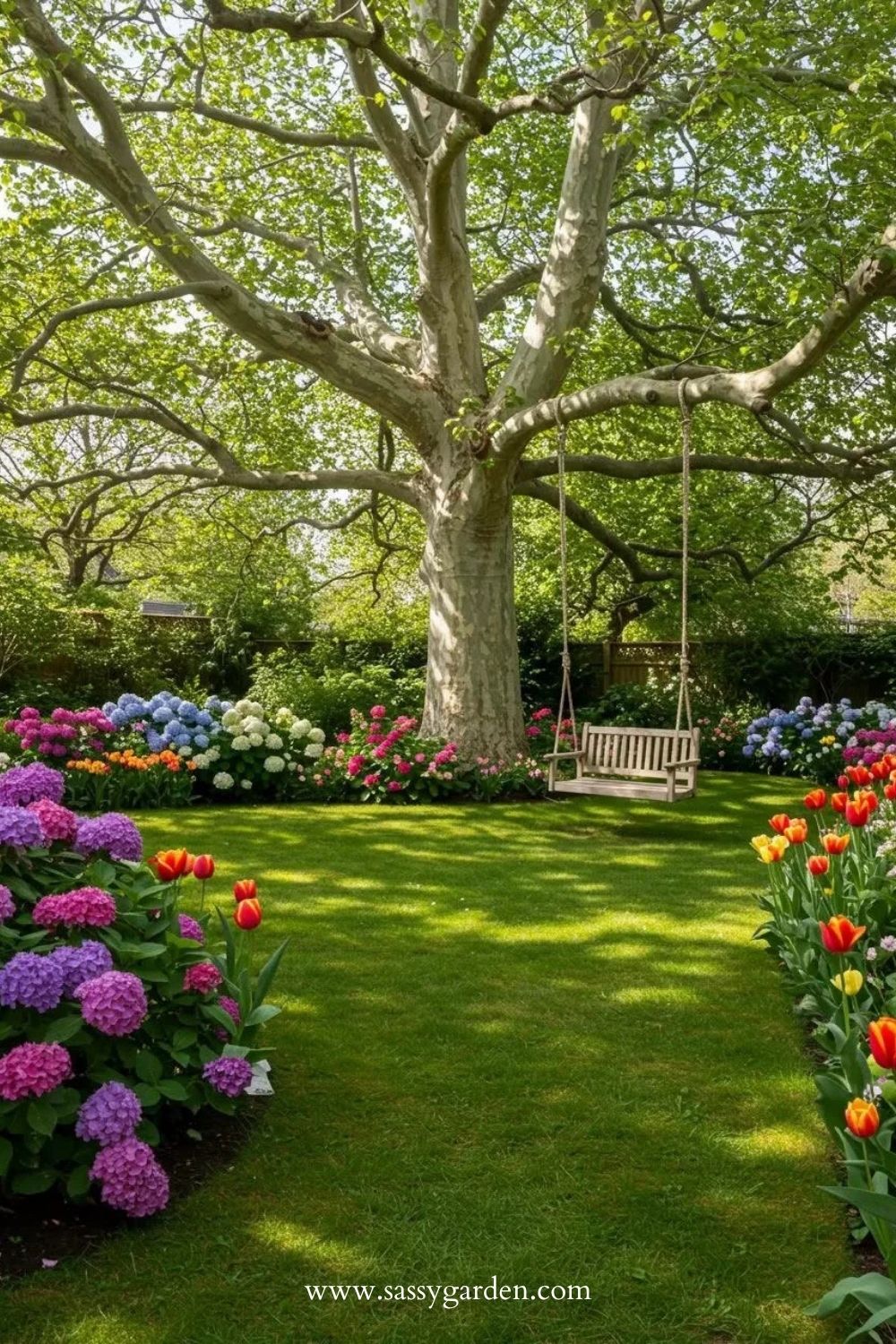
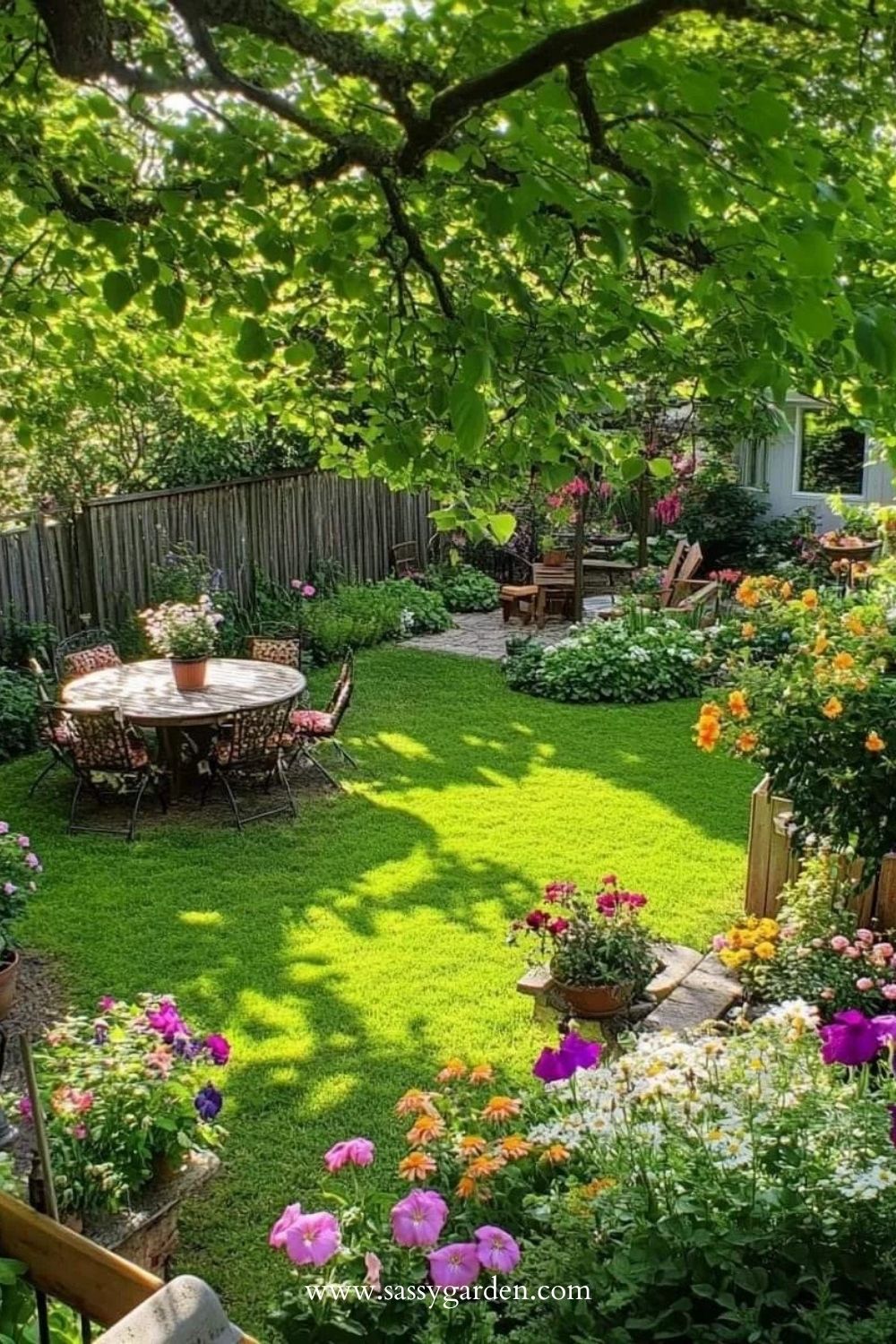
Defined edges, so the eye knows where the bed ends. Repetition, so the planting reads as one idea instead of forty. Layers, so you see depth instead of a flat wall of green.
Then a path, so the space invites you in. And somewhere to sit, so it feels like a room rather than a display.
Now walk past a yard that doesn’t work. Usually it has plenty of plants. What it lacks is any of the above, so your eye bounces around looking for somewhere to land and finds nothing.
That’s the criteria I’m judging these ideas against. Not “is it pretty,” but “does it do one of those five jobs.” Everything below earns its spot that way.
And here’s the part that should make you feel better: none of the five require good taste. They’re mechanical. You can execute all five badly and the yard will still look twice as good as it does now. (Don’t worry, it’s easier than it sounds.)
Five Simple Garden Ideas That Work in Any Yard
The Three That Cost Almost Nothing
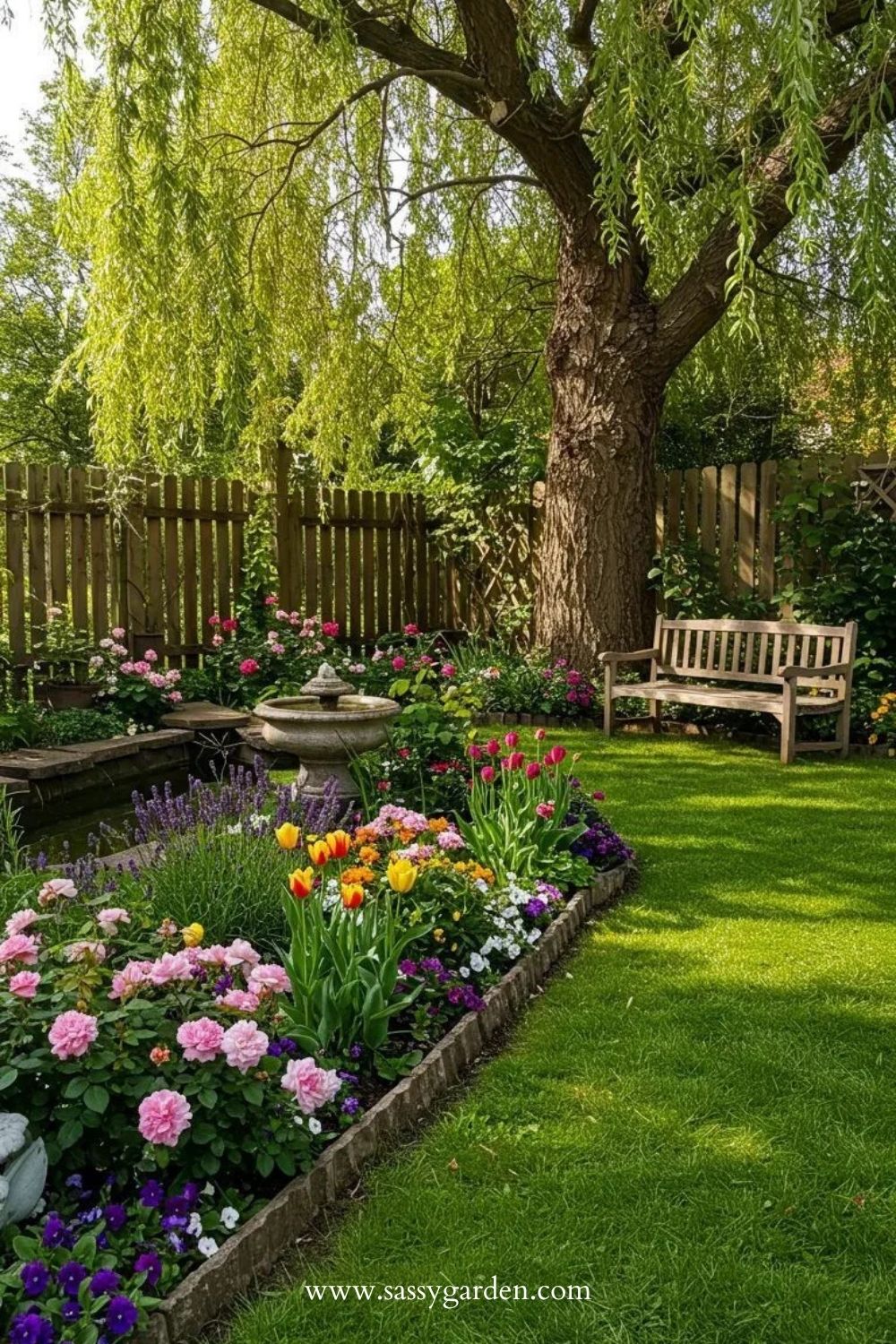
1. Cut a hard edge on every bed. This is the single highest-return thing you will ever do in a yard, and it costs the price of a half-moon edger.
Push the blade in about four inches deep along the bed line, pull the wedge of turf out, and you get a clean trench between lawn and bed. That crisp line is what makes everything inside it look deliberate, and there are plenty of cheap DIY edging approaches if you want something more permanent than a cut trench.
I had a bed once that was full of perfectly nice plants and still looked like a weedy accident. Cut the edge in one Saturday afternoon. Same plants, completely different bed. It’s the cheapest before-and-after in gardening, and if you want options beyond a spade, these edging ideas for crisp, clean borders cover the rest.
Do this once the soil thaws and before growth pushes in spring, then touch it up once mid-season.
2. Mulch it all, one mulch, everywhere. Two to three inches of the same mulch across every bed in the yard. Not red rubber in front and pine bark in back. One material.
Mulch does the boring useful things: holds moisture, moderates soil temperature, suppresses weeds. But visually it does something better. It turns six separate beds into one connected garden, because your eye reads the shared color as a single surface.
Keep it pulled back a couple of inches from stems and trunks. Mulch piled against bark holds moisture where you don’t want it and invites rot.
3. Repeat one plant at least three times. This is the move that separates a plant collection from a garden, and it’s completely free if you’re buying anyway.
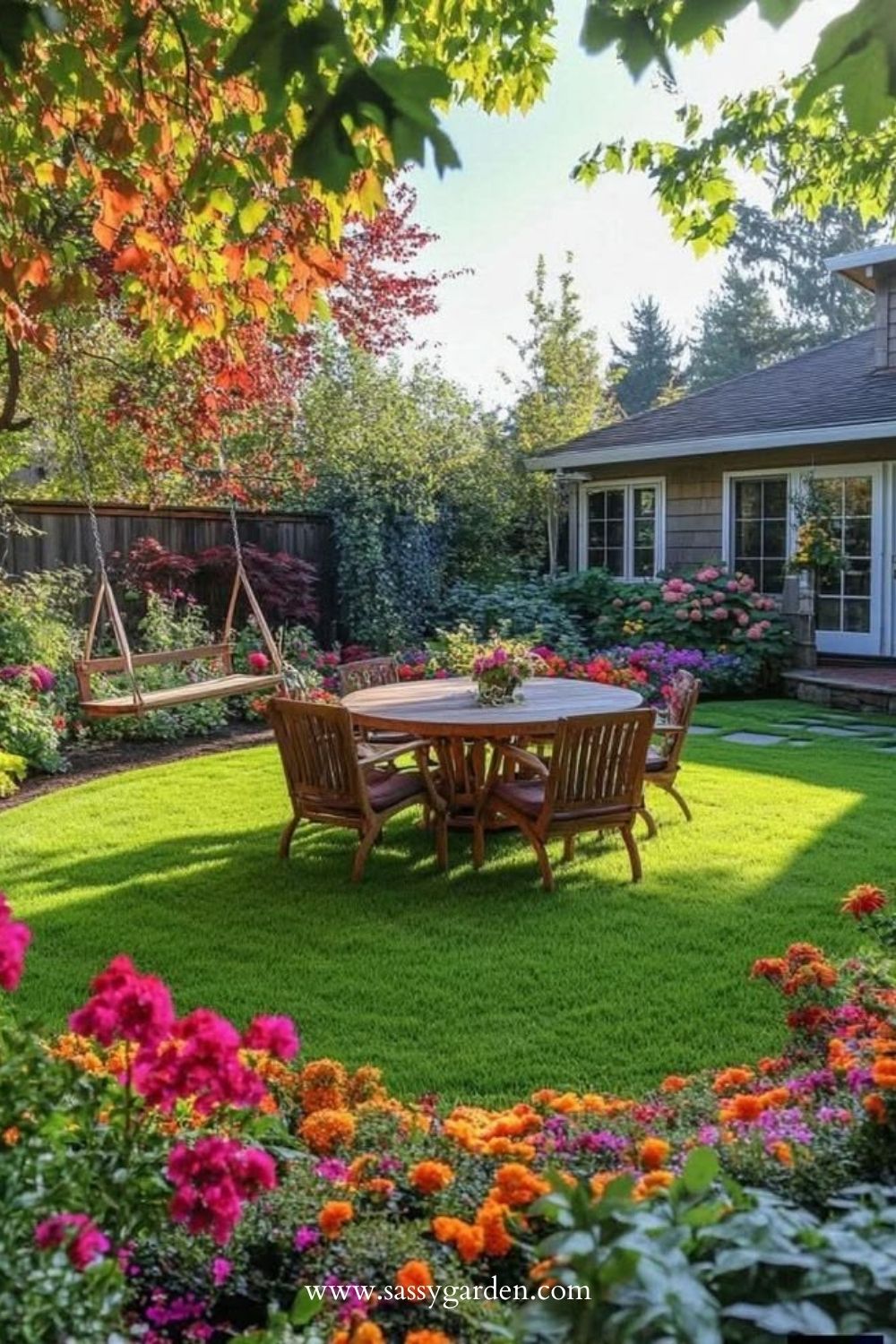
Instead of one of everything, buy three or five of the same thing and space them through the bed. Odd numbers, planted in drifts rather than a row. A unified palette with repeated drifts is the shortcut professionals use constantly, and it works because the repetition gives your eye a rhythm to follow.
Coneflower (Echinacea purpurea) and catmint (Nepeta x faassenii) are my go-to repeaters. Both are easy to grow, drought tolerant once established, hardy across roughly zones 3 through 8, and both are non-toxic to cats and dogs.
If you want a repeated shrub instead, boxwood works beautifully. Just know boxwood is toxic to pets if chewed, so think about it before it goes next to the dog run.
The Two Worth a Weekend
4. Layer the planting front to back. Three height bands, and that’s the whole concept: low at the front, mid in the middle, tall at the back.
Roughly, ground level to knee height in front, knee to waist in the middle, waist and above at the back. This is the core of landscape layering, and it’s what creates the sense of depth that flat plantings never manage.
Hydrangeas make a great back layer in partial shade. Note that hydrangea is toxic to cats and dogs, so keep it out of the corner where the dog naps.
For the tall layer in sun, please skip Chinese silvergrass (Miscanthus sinensis). It’s gorgeous, and it’s listed as invasive across much of the eastern US, spreading by seed and rhizome into natural areas.
Little bluestem (Schizachyrium scoparium) at two to four feet or switchgrass (Panicum virgatum) at three to six feet do the same job, stay put, and feed wildlife. Same logic applies to English ivy and periwinkle as groundcover, both of which escape badly. There’s a whole world of native plants that feed pollinators with zero fuss worth borrowing from.
Plant the layers after your last frost, and give each one its mature width rather than the width of the pot it came in. Everyone plants too close. Including me. …haha
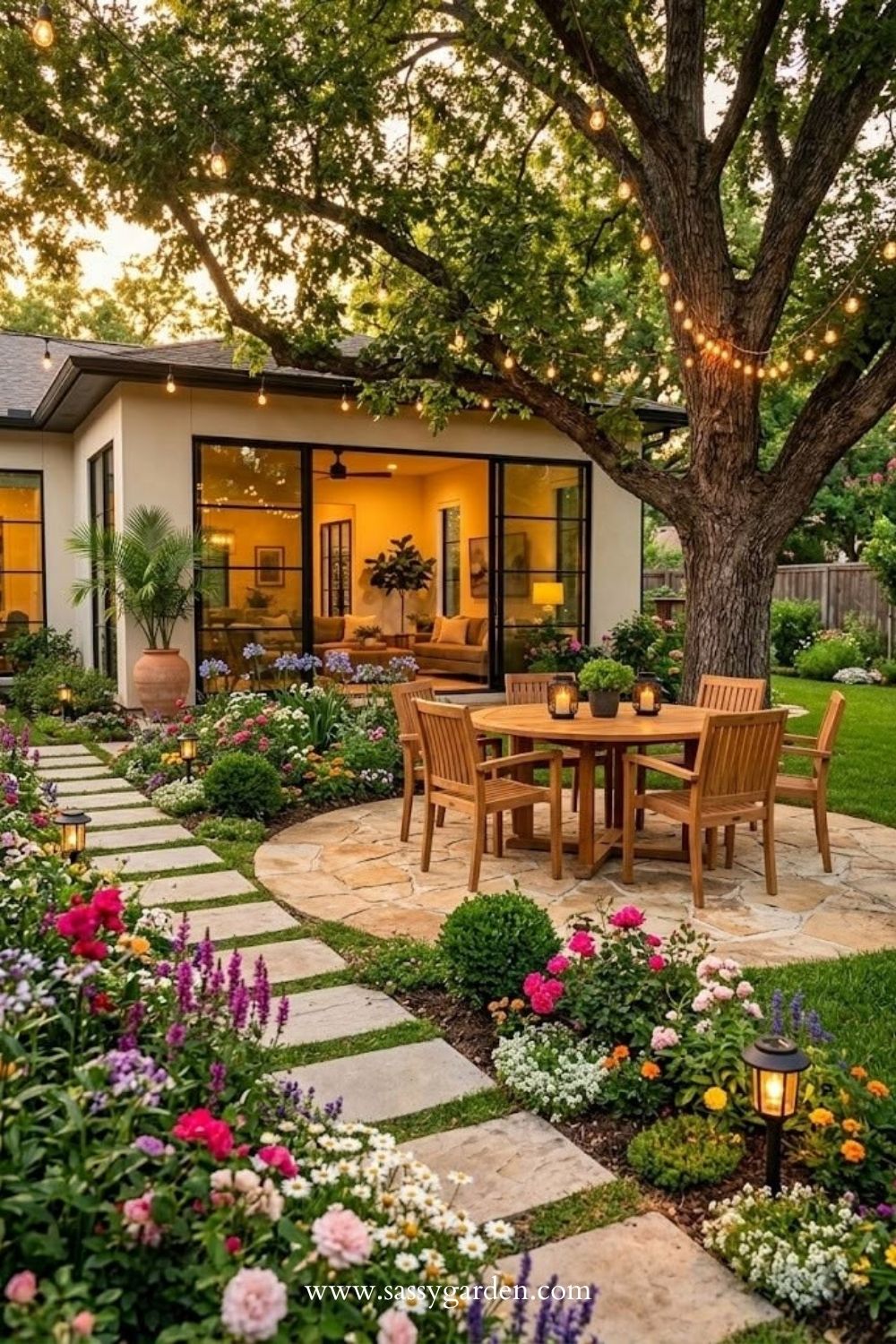
5. Add one path and one place to sit. Not a full hardscape plan. One route through, one spot to land.
A path can be stepping stones set in the lawn, a strip of gravel, or mown turf between two beds. It tells people the garden is meant to be entered rather than looked at from the driveway, and there are more charming garden walkway ideas than you’d think that don’t involve pouring concrete.
The seat matters more than it sounds. A single bench or two chairs facing the best view changes how you use the space, and a garden you sit in is a garden you actually maintain.
Which One Should You Do First?
Depends entirely on what’s wrong right now, and you can diagnose this from your own front step in about ten seconds.
If the yard looks messy, start with the edge. Messy almost always means undefined, and a cut line fixes undefined faster than anything else.
If the yard looks bare, start with mulch. Bare soil between plants reads as unfinished no matter how good the plants are, and two inches of bark makes a half-planted bed look intentional while you save up for more perennials.
If the yard looks busy, start with repetition. Busy means too many single specimens competing. You don’t have to remove anything, just add three of one thing and let it thread through.
If the yard looks fine but you never go out there, start with the seat. That’s not a design problem, that’s a use problem, and no amount of planting fixes it.
Budget reality: the edge costs about the price of an edger, mulch runs a few bags per bed, repetition costs whatever three plants cost. The path and the seat are where money actually goes, and they can wait a year.
Simple Garden Questions
How Much Does This Actually Cost?
Less than one visit from a landscaper, and you can stretch it across a whole season.
The three free-ish moves need an edger, mulch, and a handful of perennials. Buy the perennials small. A one-gallon coneflower catches up to a three-gallon one within two seasons, and costs a third as much.
The path and the seat are the real spend, and both scale to whatever you have. Stepping stones and a secondhand bench get you most of the effect.
What If My Yard Is Tiny or Mostly Shade?
All five still apply, which is the nice thing about structural moves. They’re about arrangement, not conditions.
Small yards benefit more from repetition, not less, because busy reads worse in a small space. Use fewer plant varieties and repeat them harder.
For shade, swap the sun-lovers and keep the structure: hosta, heuchera, and ferns layer just as well, and hosta is non-toxic to dogs and cats while a lot of shade groundcovers aren’t. Check before you plant if you have a chewer.
The short version, in the order I’d do it:
- Cut a hard edge on every bed. Highest return, lowest cost.
- Mulch everything with the same material, two to three inches, pulled back from stems.
- Repeat one plant three or five times through the bed instead of one of everything.
- Layer front to back in three height bands, using natives over invasive grasses.
- Add one path and one seat so the garden becomes somewhere you go, not something you look at.
That’s it. Five moves, and you can do the first three this weekend for under a hundred dollars.
Save this for the next time you’re standing in the garden center about to buy one of everything again. Buy three of one thing instead. Your yard will thank you, and so will your future self holding a coffee on that bench.