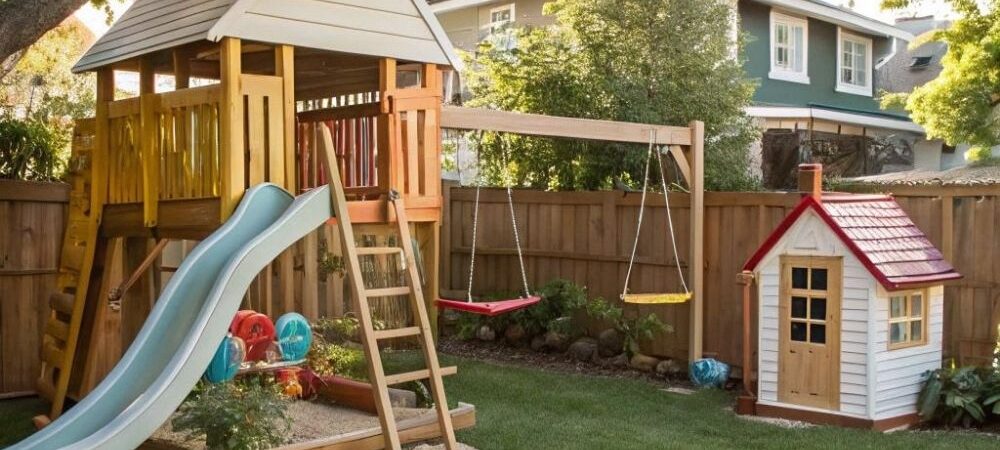
There are exactly four rules for a kids’ garden that gets used, and not one of them involves buying something shaped like a mushroom.
I’ve watched the alternative play out plenty of times. Someone plans a beautiful children’s corner, buys the cute signs and the tiny watering can, and by the third week the kid is back inside and the bed is full of weeds.
The kids garden ideas that stick are messier and cheaper than that. They’re built around what children actually do outside: dig, hide, pour water on things, and own a patch of dirt nobody else is allowed to touch.
So here are the four rules, in order. Then when to break them, and what to plant so nobody ends up calling poison control on a Saturday.
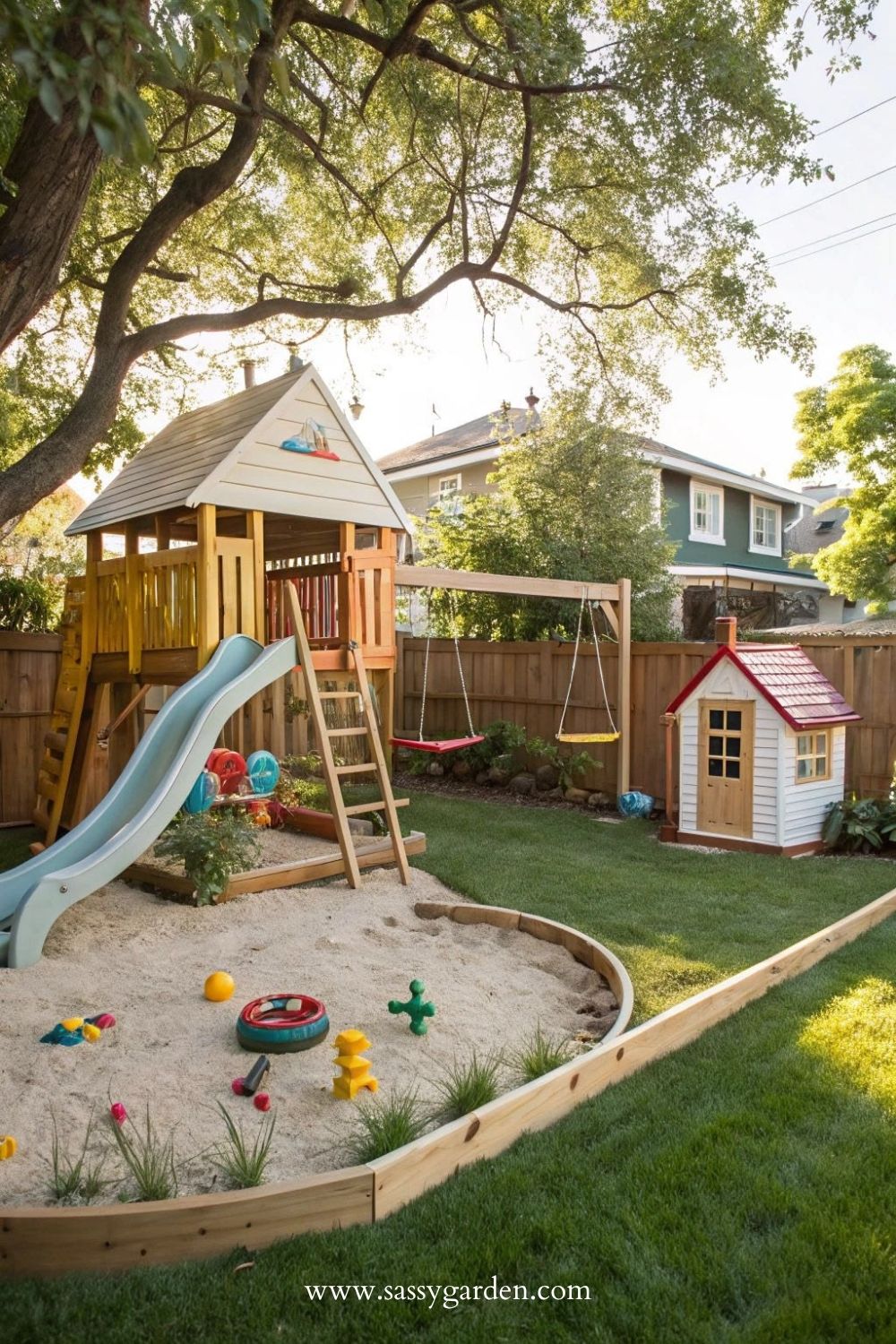
Rule 1: Give Them a Patch That’s Theirs, Not a Job in Yours
“Helping” in your bed is a chore. A bed with their name on it is a completely different thing.
The difference is decision-making. If they choose what goes in and whether the marigolds get planted in a spiral, they’ll come back to check on it. If they’re weeding your tomatoes, they’ll come back when you make them.
Mark it clearly so it reads as theirs. A low wooden edge, a painted sign, plant markers they wrote themselves. All cost almost nothing and matter enormously to a six-year-old.
How Big It Should Actually Be
Small. Much smaller than you’re picturing.
A three-by-three square is plenty for a young child, and a couple of stacked crates works for a toddler. A tiered crate planter you can build in one afternoon gives three levels of growing space in a few square feet.
Oversizing is the classic mistake. A big bed becomes maintenance, maintenance becomes nagging, and nagging kills the whole thing. (We’ve all killed one.)
Rule 2: Design for Mess, Not for Photos
Here’s the uncomfortable truth about kids’ garden ideas: the tidiest features get ignored and the filthiest ones get used daily.
I once watched a carefully planned children’s bed sit untouched for two weeks while the same kids played in the puddle at the bottom of the downspout every single day. That puddle taught me more about designing for children than any book did.
The Mud Kitchen Is the Whole Point
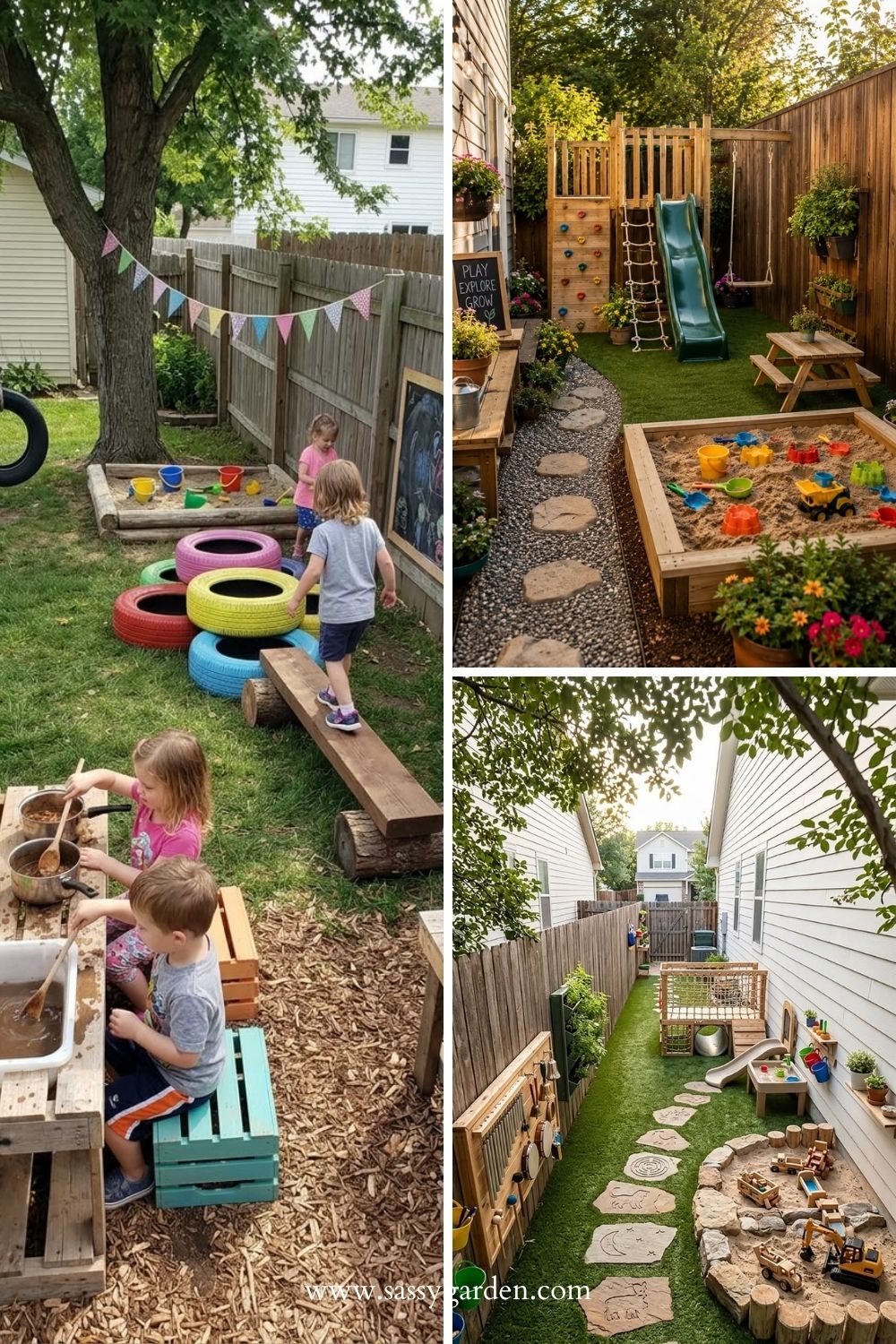
If you build one thing, build this. A plank across two crates, an old dish basin set into a cut hole, a few battered pots, and a bucket of water.
You don’t need lumber and a plan, though a proper DIY mud kitchen build is a good weekend project if you’re handy. Pallets, cinder blocks with a shelf across them, or a secondhand table with a basin cut into it all do the job.
Put it on wood chips or gravel, not on grass. Grass under a mud kitchen becomes mud in about ten days, and then it becomes a swamp.
Water, Sand, and One Thing That Gets Ruined
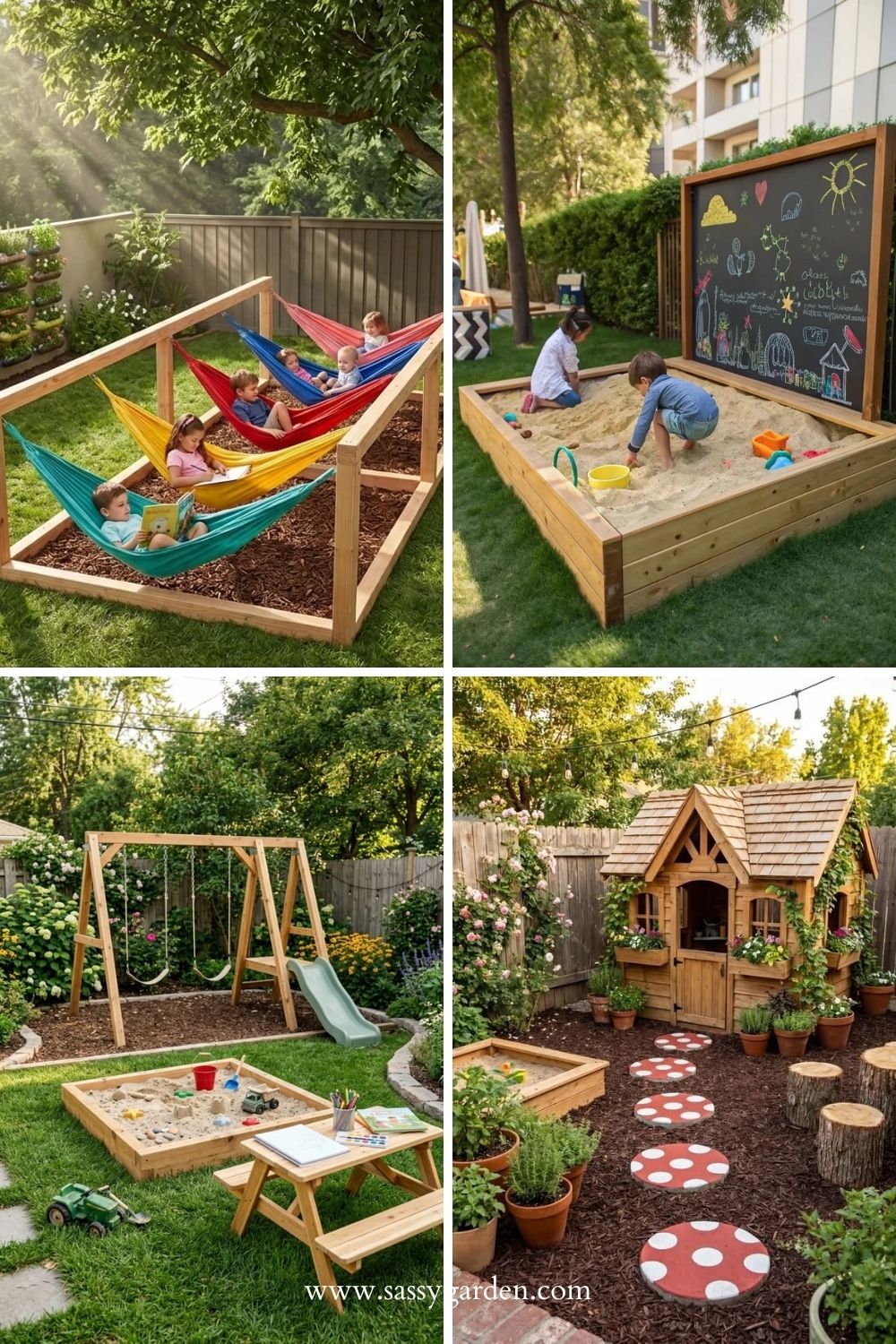
Sand and water are the two materials children never get bored of. A timber sandbox with bench lids does double duty as seating and keeps cats out overnight.
Add a digging pit that’s just dirt and toy trucks, separate from the sandbox and from anything you care about. That’s the “gets ruined” zone, and having one protects everything else in the yard.
A chalkboard panel screwed to the fence is the cheapest upgrade here. So is a musical wall: old pots, lids, and metal bowls hung from a fence rail with cable ties. (Not as loud as it sounds. Okay, it is exactly as loud as it sounds.)
Rule 3: Build a Place, Not a Display
Children don’t look at gardens. They occupy them, and the features that matter are the ones you can be inside of.
That means a route and a destination. Log-round stepping stones through a bed, polka-dot toadstool pavers leading to a playhouse door, a balance beam made from one length of timber on two log supports. Cheap, and they turn a lawn into a map.
Then give them somewhere to disappear to. A sunflower house, a bean tepee, a gap behind a shrub with a cushion in it. Same instinct behind backyard secret garden ideas, scaled to someone three feet tall.
Fairy Doors and Hideouts That Survive a Season
Miniature worlds hold attention longer than you’d expect, and building a fairy garden step by step is a real afternoon project rather than a five-minute one.
Keep it in a container or a defined corner so it doesn’t get mowed. Moss, pebbles, a wood-slice path, a door at the base of a tree. Let the child add to it rather than finishing it yourself.
For atmosphere on the cheap: a sail shade over the play area, string lights, bunting on the fence, a hammock frame with a few cheap hammocks between the posts. What turns a plain yard into a whimsical escape covers the grown-up version of the same thinking.
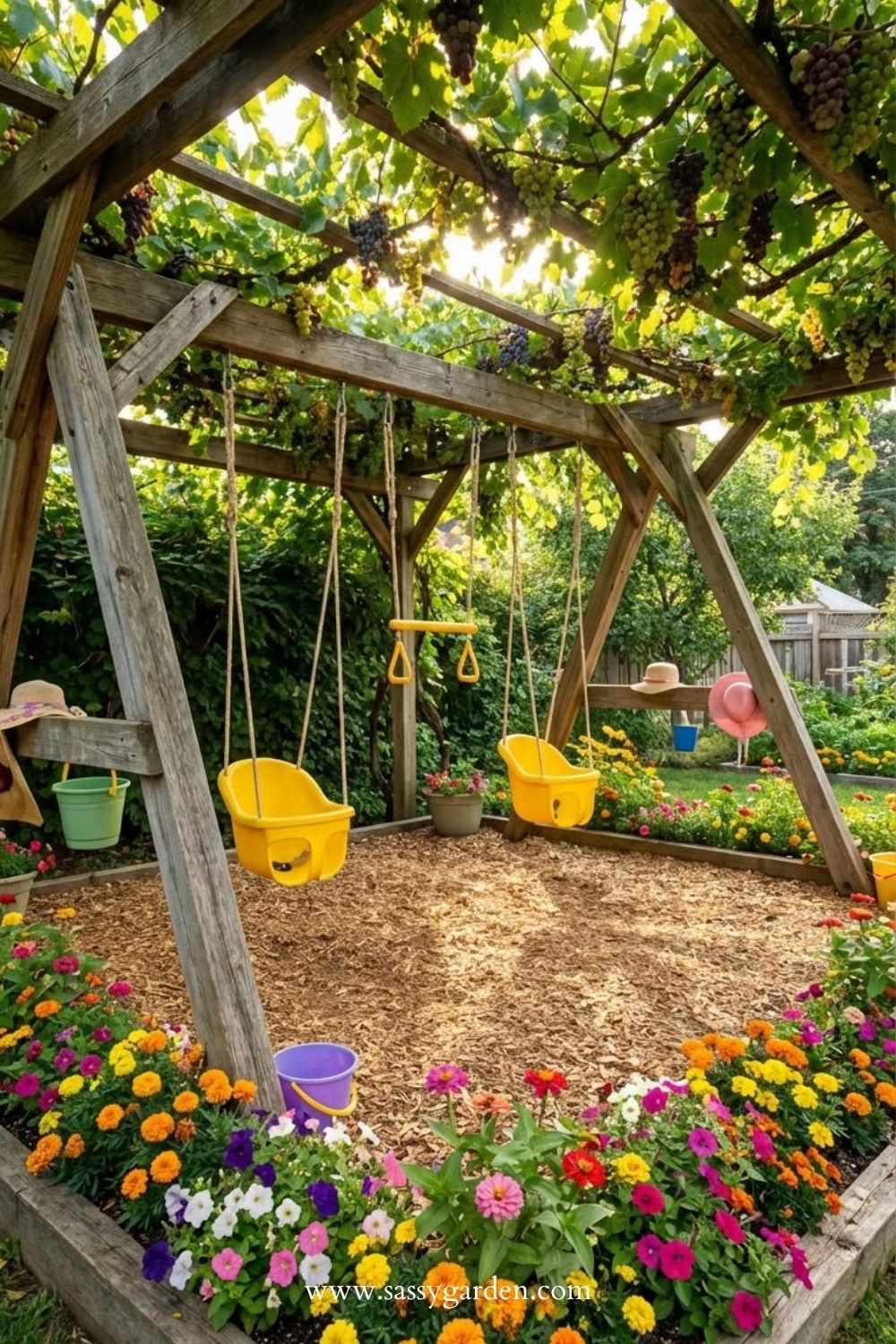
A grapevine trained over the swing frame is my favorite of these. Real shade by midsummer, the kids can eat what’s overhead, and by year three it looks like something out of a storybook.
Rule 4: Plant Things That Are Safe, Fast, and Forgiving
In that order. Safety is not negotiable, speed keeps them interested, and toughness means the garden survives being stood on.
Safe First, and That Means Pulling Some Things Out
Walk the yard before you plant anything. Foxglove (Digitalis purpurea), monkshood (Aconitum napellus), lily of the valley (Convallaria majalis), yew, and castor bean are all seriously toxic and belong nowhere near a child’s play area.
Foxglove and lily of the valley are dangerous enough that even vase water from cut stems has poisoned children. Poison control and extension services say the same thing about all of them: remove or fence them off before young children use the space.
Two more to know: sweet pea seeds are toxic despite being planted for kids constantly, and marigolds cause mild irritation in dogs and cats even though they’re fine for children. Zinnias, sunflowers, petunias, nasturtiums, and strawberries are the genuinely safe crowd-pleasers.
Fast, Because Kids Have No Patience
Radishes are the champion here. They germinate in under a week and can be pulled in around three to four weeks, which is roughly the attention span you’re working with.
Sunflowers sprout in about a week and a half, and dwarf types flower in under two months. Nasturtiums come up in a week or two, have seeds big enough for small fingers, and the flowers are edible. Those three plus bush beans are the core of any kid-friendly seed list worth using.
Sow radishes as soon as soil is workable in spring, since they’re a cool-season crop that bolts in summer heat. Sunflowers, beans, and nasturtiums go in after your last frost, once soil hits 60°F. Zone 8 and warmer gets a second radish window in early fall.
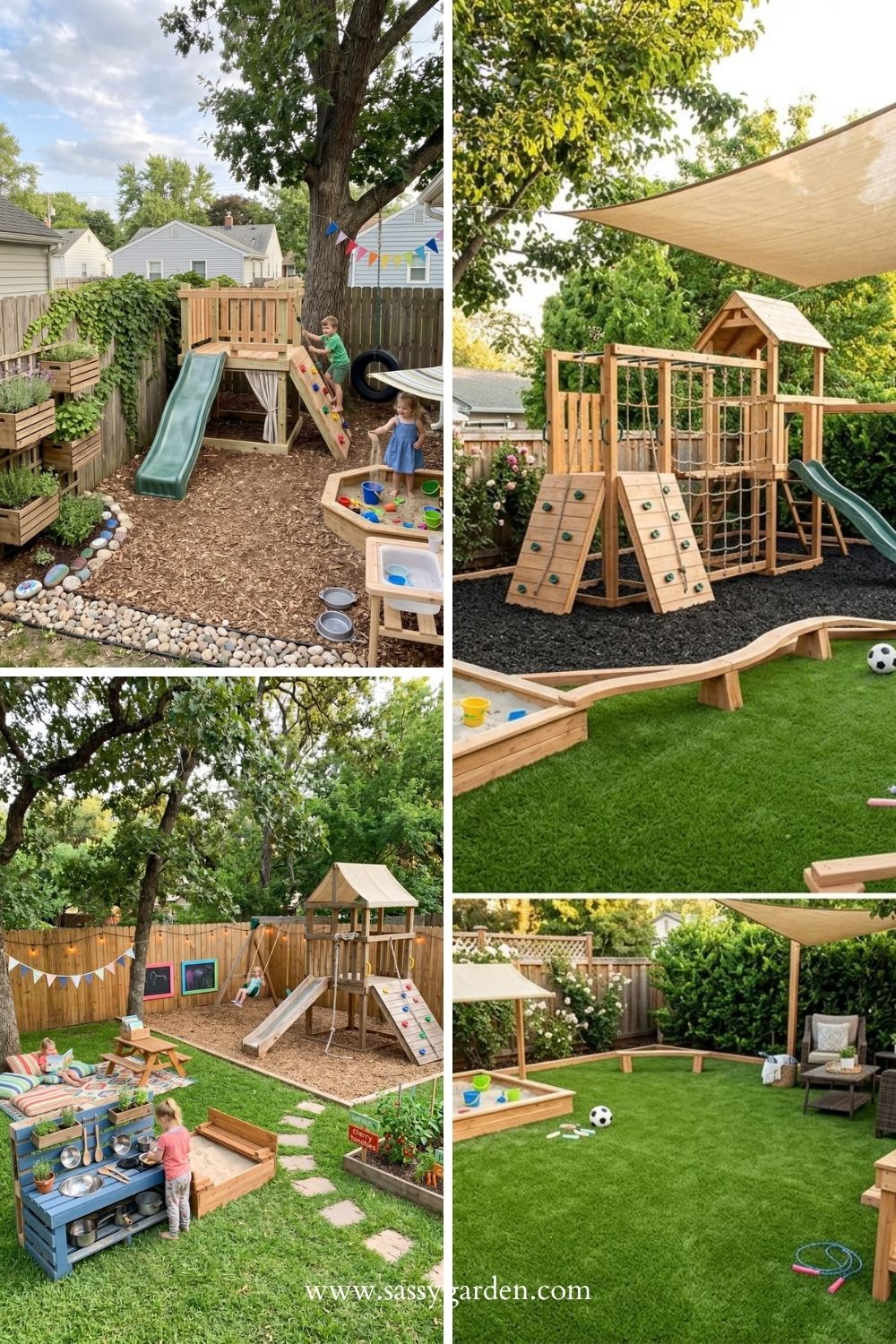
Forgiving, Because It Will All Get Trampled
Assume everything in reach will be stepped on at least once. Lamb’s ear, which children pet constantly, hardy geranium, chives, and strawberries all take the abuse and bounce back.
Ring the play area with something cheerful and tough. Marigolds and zinnias around a swing set look wonderful, cost very little, and won’t sulk if a football lands on them.
One warning: keep mint in a sunken pot rather than loose in the bed. It spreads by runners and will take over a small children’s patch in one season, and then it’s yours forever. Lemon balm does the same thing.
So When Do You Break These Rules?
Plenty of situations, and none of them mean giving up.
No ground to work with. A balcony or a paved yard runs all four rules in containers. Crate planters up a wall for herbs, a tub of sand, a basin on a stool for the mud kitchen.
A narrow side yard. Those awkward strips beside a house make great play corridors: stepping stones, a small climbing frame, a sandbox at one end, planters up the fence. Long and thin is a feature when you’re seven.
Older kids. Fairy doors stop working around age eight. Swap make-believe for ownership: a bigger patch, a real budget, and something they can sell or cook.
Rentals and strict HOAs. All of it works in freestanding containers and moves with you. Nothing here requires digging a permanent hole.
One rule that never bends: loose-fill surfacing under anything they can fall from. Wood chips or rubber mulch, spread deep rather than decoratively, and check the depth guidance for your equipment height.
Kids’ Garden Questions
What Age Can Kids Actually Start Gardening?
About two, if you count pouring water on things and eating dirt as gardening. Which I do.
Toddlers want sensory work: sand, water, digging, big seeds they can grip. Around four or five they can handle their own patch. By seven or eight they can plan a bed and remember to water it, mostly.
The trick at every age is lowering your standards for the outcome. Their garden will look chaotic. That’s the correct result.
How Do You Keep Them Interested Past Week Two?
Fast crops, visible change, and staying out of it.
Something has to be happening every week or the novelty dies. Radishes, sunflowers, and beans deliver that. So does a sandbox that changes every time they play in it, which is why the mess features outlast the plant features by a mile.
And resist tidying their patch. The moment you weed it for them, it becomes your garden again, and they stop showing up.
That’s the whole system. A patch they own, somewhere to make a mess, somewhere to hide, and plants that are safe, quick, and hard to kill.
None of it is expensive and none of it requires you to be good at building things. A plank, a bowl, a bag of wood chips, and a packet of radish seed covers most of it.
The rest is theirs to decide, which is the point. Walk out this weekend, hand over a corner, and let them tell you what goes in it.