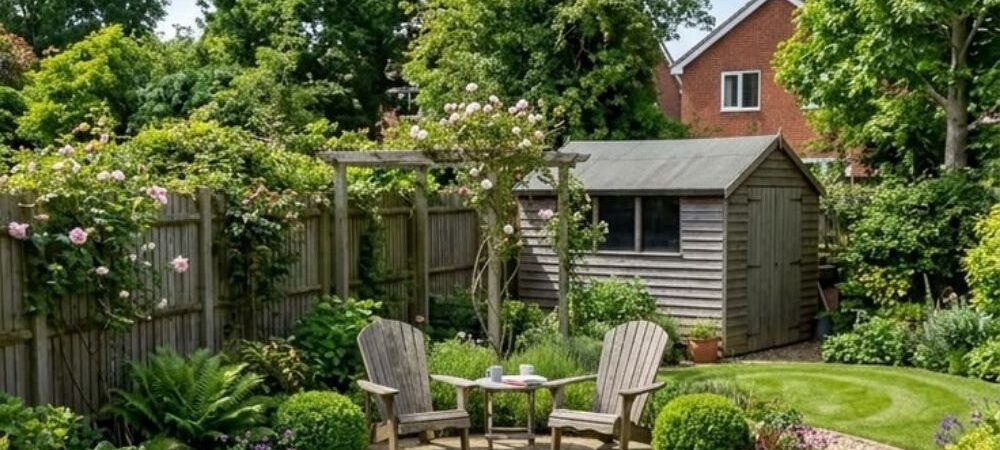
Everyone who walks into a well-done round garden says the same thing. “It feels so much bigger than it actually is.”
They’re not being polite. That impression is real, and it’s the whole reason circular garden design works so well on the small, boxy plots most of us are stuck with.
Here’s what’s going on. A straight bed running parallel to a straight fence does nothing but underline how small and rectangular your yard is. A circle ignores the boundary entirely, pulls your eye to a center point, and sends it wandering on a curve instead of stopping dead at the fence.
So this isn’t just a pretty shape. It’s a genuine trick of the eye that makes a cramped square feel like a designed space.
I’ll walk through why circles do this, six round layouts worth copying, how to mark out a perfect circle with a stake and a bit of string, and what to put in the middle so the whole thing holds together.
Why Circles Make a Small Garden Feel Bigger
The short version: circles hide the edges and give the eye somewhere to land. A boxy plot broadcasts its dimensions. A curve refuses to.
It’s the same reason a round rug can make a room feel calmer than a square one. Corners are information, and a small space with all its corners on show feels smaller than it is.
The Fence-Line Problem Circles Solve
Straight beds are the trap. You get a new yard, you run a border down each fence, and you’ve just drawn a big rectangle outlined in plants, which reads as “small rectangle” to anyone standing in it.
Cut a circle into that same space and the fences recede. Your eye follows the round lawn or the curved path instead of measuring the boundary, and the corners fill up with planting that softens the hard lines. This is one of the simple design moves that works in every yard, and it costs nothing but a change of shape.
Curves genuinely trick the brain into reading more space. It’s why designers reach for them constantly on tight urban plots.
The One Focal Point Rule
A circle needs a center to work. Draw a round lawn and leave the middle empty and it looks unfinished, like a stage with no actor on it.
Give it an anchor and it clicks: a small tree, a birdbath, a single big pot, a sundial, a ring of low planting around a specimen shrub. The center is what your eye travels to, so it has to be worth arriving at. (Empty middle, sad circle. Trust me on this one.)
6 Circular Garden Design Ideas
Six ways to work a circle into a real yard, from a full lawn redesign down to a single raised bed.
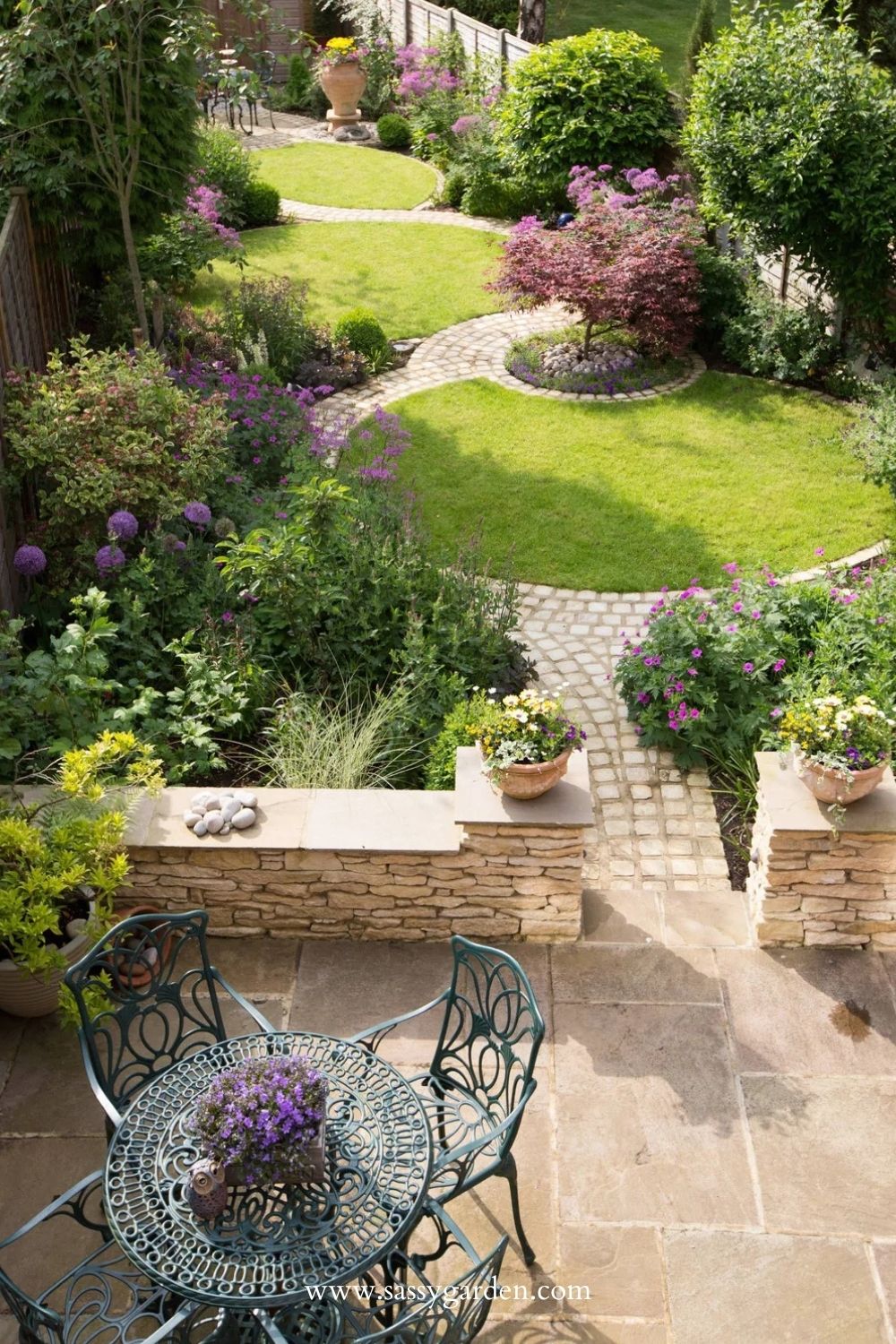
1. The classic round lawn ringed with borders. The workhorse of the whole style. A circle of grass with a deep planted border wrapping all the way around, so the lawn becomes a green centerpiece and the corners disappear into planting. This is the donut layout designers lean on to make small gardens feel larger, and it suits almost any square plot.
2. Overlapping or figure-eight circles. Two circles that meet or overlap, one lawn and one patio, or two beds. It creates flow and movement, leading you from one round space into the next, which is perfect for a long or awkward yard that needs breaking up.
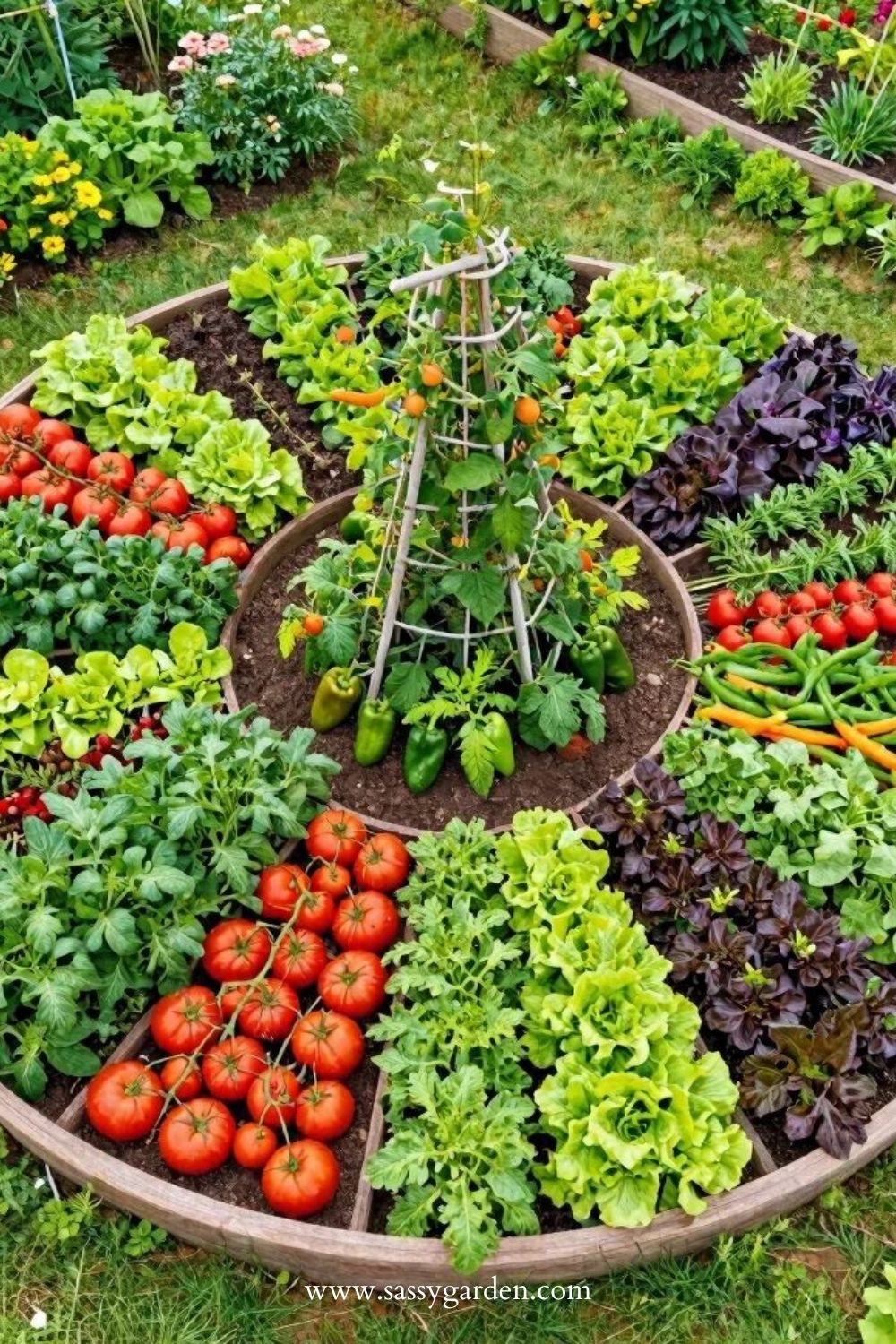
3. The circular herb or veg wheel. A round bed divided into wedges like a pie, each segment planted with a different crop or herb, often with a tall support or feature at the hub. It’s productive and gorgeous at once, and it turns a vegetable patch into the best-looking thing in the garden.
4. A round patio or seating circle. A circle of paving or gravel with a bistro set or a bench in the middle, tucked into a border so it feels like a private room. Round seating areas encourage people to face each other, which is exactly what you want.
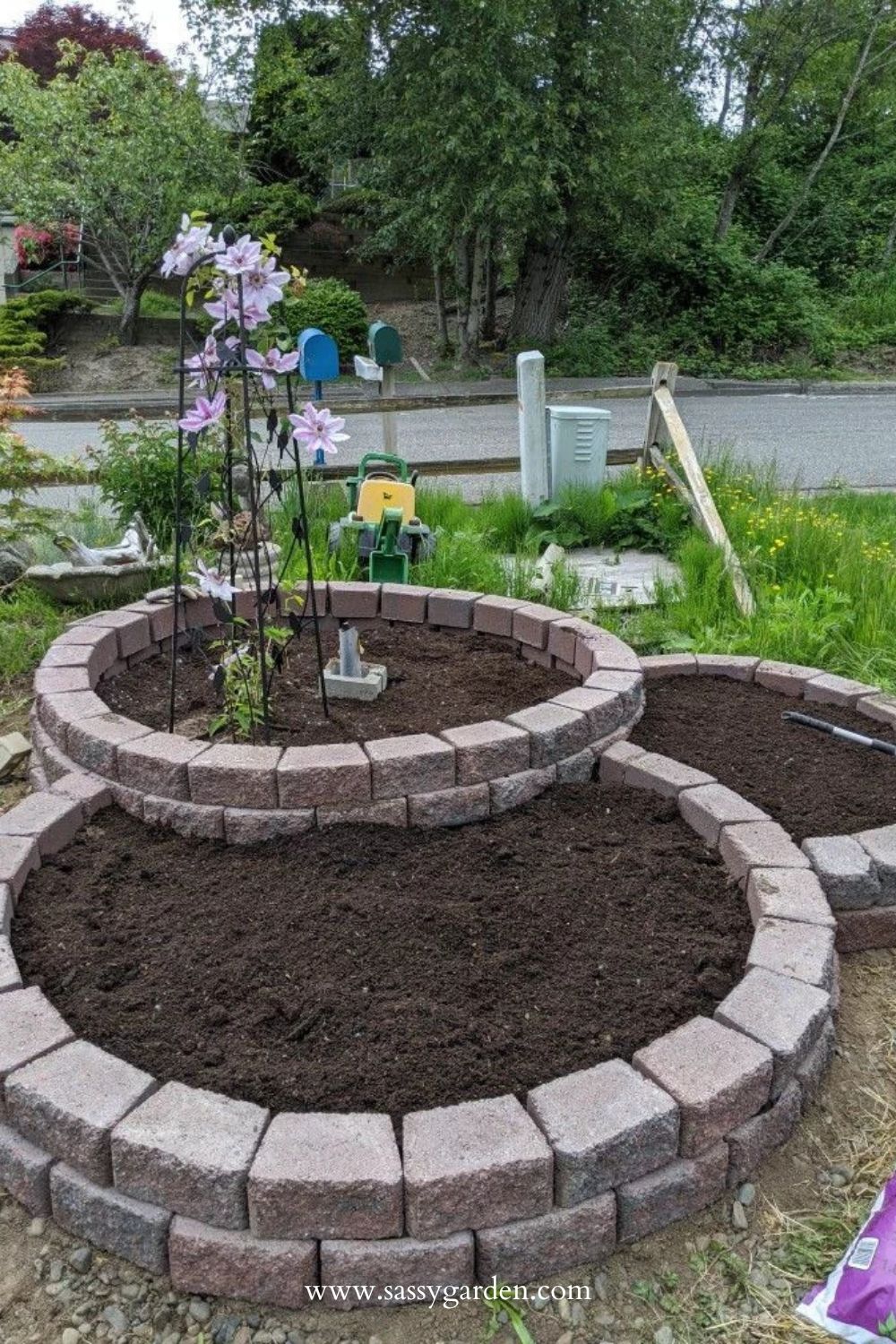
5. Round raised beds or a keyhole bed. Circular raised beds are lovely and easy to reach into. The clever version is the keyhole bed, a round raised bed about six feet across with a wedge notch cut to a compost basket in the center. You feed the middle, it feeds the bed, and you can reach every plant from the notch.
6. Circle-in-circle with a brick path. A small central circle (lawn, planting, or a feature) ringed by a circular brick or cobble path, with more planting outside that. It’s the most formal of the six and it photographs beautifully. Pair it with the right charming garden walkway ideas and it looks like it cost a fortune.
Which Circular Layout Fits Your Yard?
Answer two questions and it narrows fast.
What do you want from the space? Somewhere to sit means a patio circle. Food means a herb wheel or keyhole bed. A calm green view means the round lawn with borders.
How much room and sun do you have? A full round lawn needs a fair bit of open ground and decent light. A single round raised bed or seating circle fits a courtyard or a shady corner where grass would sulk anyway. Match the layout to what you’ve actually got, not the dreamiest photo you saved.
How to Actually Mark Out a Circle
This is the part people overthink, and it’s genuinely a ten-minute job with a stick and some string.
The first time I tried to cut a lawn circle by eye, I ended up with a lopsided egg that haunted me every time I mowed. Never again. The stake-and-string method gives you a perfect circle every time.
Push a cane or stake into the center of where you want the circle. Tie string to it, measured to your radius (half the total width you want), and tie the other end to a bottle of dry sand or a can of marking spray. Pull the string taut and walk slowly around the stake, trickling sand or spraying as you go, keeping the line tight the whole way.
That’s your circle marked. To cut a lawn circle, slice along the sand line with a half-moon edger and lift the turf outside it. For a bed, dig to the line. Keep the string tension identical all the way around or you’ll get that egg shape again. (Ask me how I know.)
Materials and Edging That Hold the Curve
A crisp edge is what separates a designed circle from a vague roundish blob. The line has to stay clean or the whole effect falls apart.
Brick or stone setts laid on edge follow a curve beautifully and give you a mowing strip at the same time. Flexible steel or aluminum edging bends into a true circle and disappears visually. Even a well-cut spade edge works if you keep it sharp through the season, and there are plenty of edging ideas for crisp, clean borders that hold a curve without much upkeep. Spring or early fall is the easiest time to lay any of it, while the ground is workable and turf knits back quickly.
Circular Garden Questions
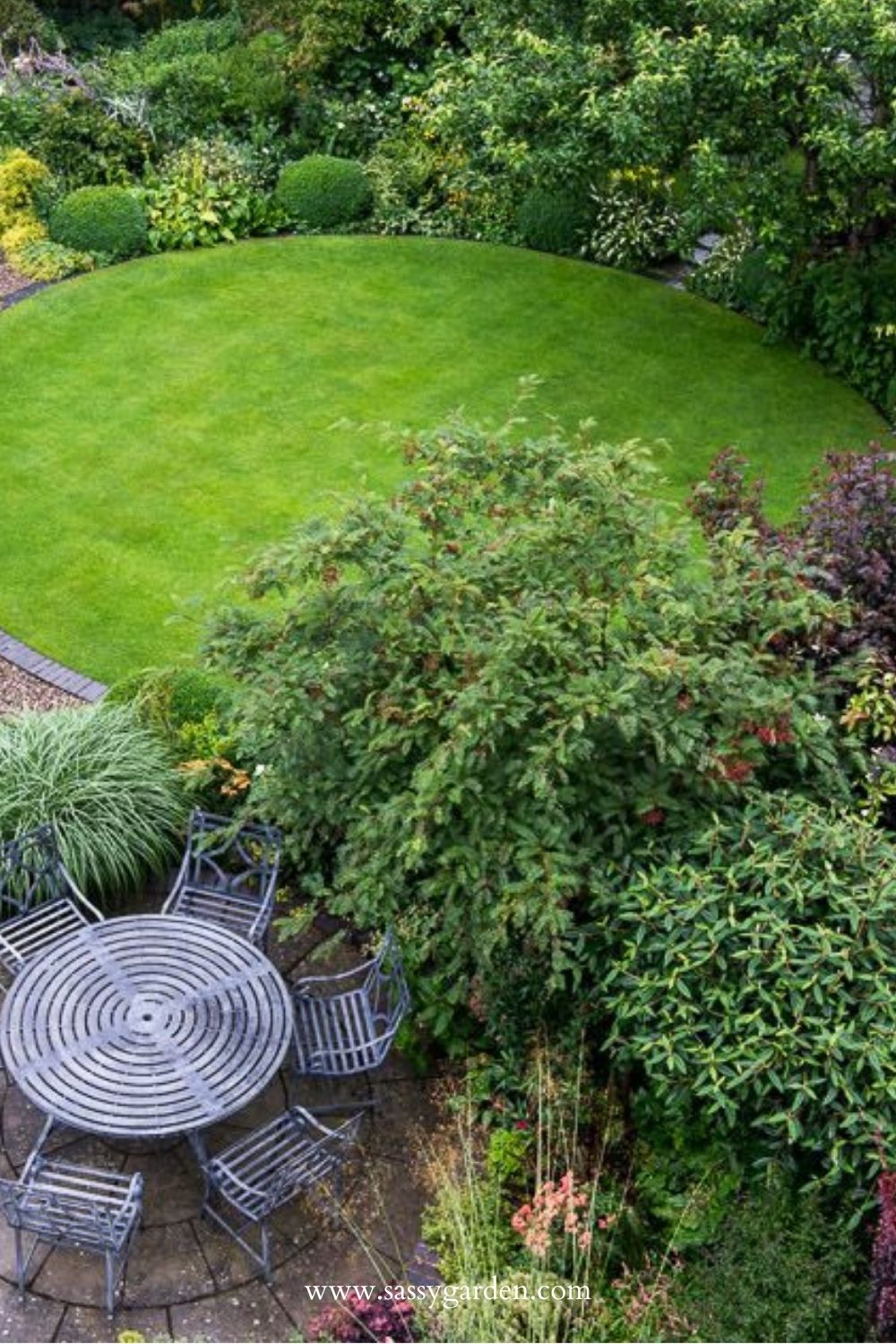
How Big Should a Circular Lawn Be?
Big enough to read as a deliberate shape, which usually means at least eight to ten feet across.
Go much smaller and it looks like a patch rather than a design feature, and it becomes fiddly to mow. In a larger yard you can scale up to whatever leaves you a decent border all the way around, since the border is doing half the work.
The ratio matters more than the raw size. Aim to leave enough planted depth around the circle to hide the fence line, because a big lawn crammed against the boundary loses the whole effect.
What Do You Put in the Center of a Circular Garden?
One thing, and one thing only. The center is a solo act, not a crowd.
A small ornamental tree, a specimen shrub underplanted with a ring of low color, a large pot, a birdbath, a sundial, or an obelisk all work. For evergreen structure a clipped boxwood ball is the classic, though note boxwood is toxic to cats and dogs if they chew it, so a globe thistle or a clump of ornamental grass is the pet-safe swap that gives similar shape.
Resist the urge to fill it. The power of a circle comes from that single point of focus, and three competing features in the middle just muddle it.
Are Circular Gardens Harder to Mow and Maintain?
A round lawn is actually easier to mow than a square one. No corners to reverse out of, you just spiral in or out and you’re done.
The edging is the only real upkeep difference. A curved edge needs trimming to stay crisp, which is why a hard mowing strip of brick or steel pays for itself in saved time. Cut the edge once with the right material and you rarely touch it again.
Circular beds are no different from any other bed to weed and plant. If anything, being able to reach the middle of a keyhole bed from the notch makes it easier than a wide rectangular one.
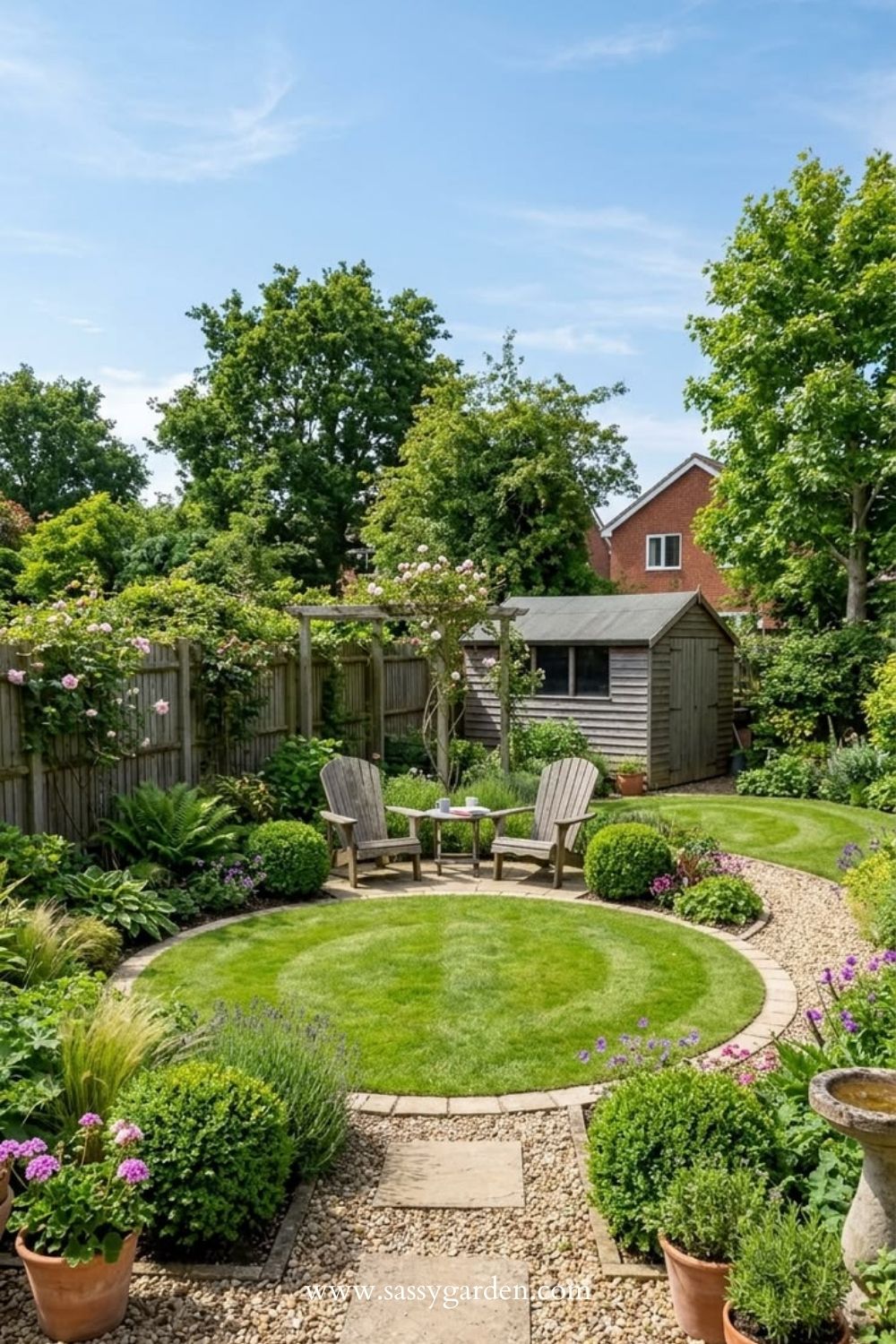
If it were my own square backyard, here’s what I’d do without much hesitation: one round lawn, ringed by a single deep border, with the circle pushed slightly off-center rather than dead in the middle.
The offset is the part people miss. A perfectly centered circle can feel stiff, but nudging it toward one corner leaves room for a generous border on the far side and makes the whole thing feel designed rather than diagrammed. Then one anchor in the middle, a small multi-stem tree or a single big pot, and nothing else competing with it.
That’s the layout that turns the most ordinary rectangle into something people comment on. Grab a stake, a ball of string, and a can of marking spray this weekend, and lay out a circle on your grass just to see it. You can stand back and look before you cut a thing.