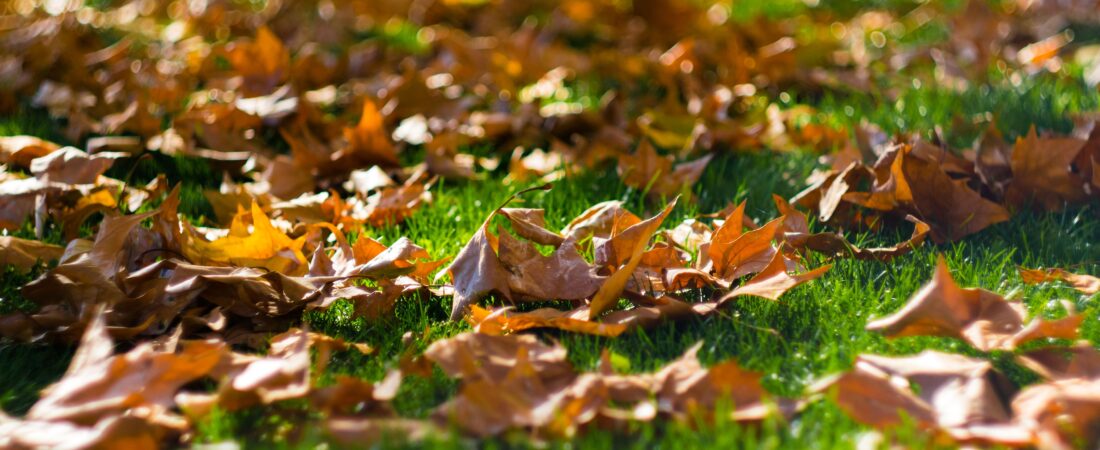
Late September, and the lawn looks like it had a rough summer: thin patches by the path, a brown spot where the kiddie pool sat, and a spongy feel underfoot in the shady corner. Yes, a lawn in fall should be fed. For cool-season grass, the type most northern and middle-zone lawns are made of, the fall feeding is the most useful one of the whole year.
Fall lawn care is mostly about roots. Above ground, the grass is slowing down. Below ground, it’s busy building the roots that carry it through winter and green it up first in spring. Every fall lawn job on this list, from the fertilizer to the last mow, helps with that.
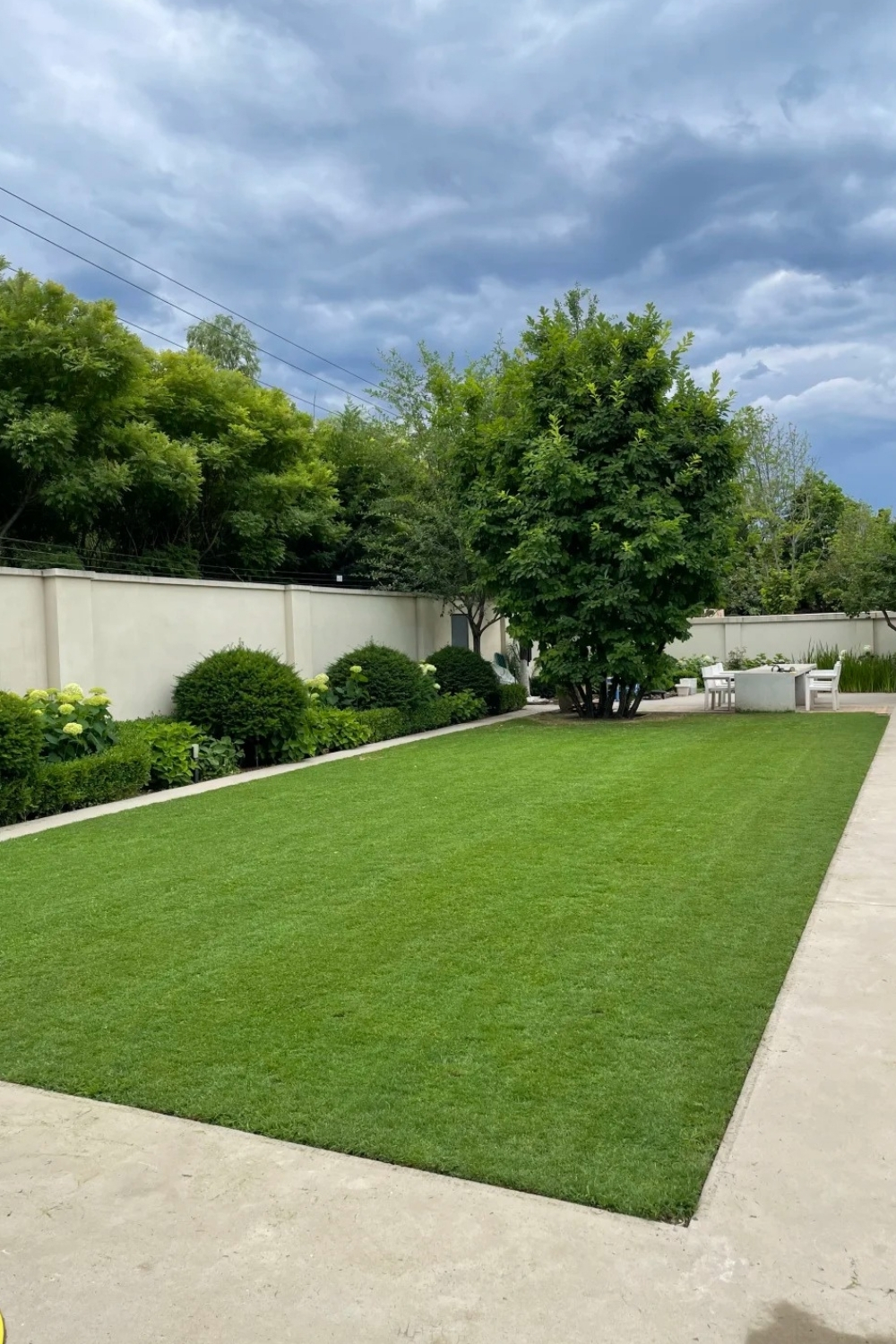
“Don’t feed a lawn before winter,” and where that idea comes from
The idea makes sense on the surface. Grass is about to stop growing, so why feed it? Fertilizer, after all, is what people use to make grass grow faster in spring.
The confusion comes from mixing up two kinds of grass. Cool-season grasses, such as Kentucky bluegrass, tall fescue, fine fescue and perennial ryegrass, grow best in spring and fall and slow down in summer heat. Warm-season grasses, such as Bermuda, zoysia and St. Augustine, are the opposite: they grow in the heat and go brown and dormant, meaning they shut down for winter, once it turns cool. For warm-season grass, a late feed really is wasted. It can’t use the nutrients while it’s dormant, so they wash off into storm drains instead. Zoysia, for example, shouldn’t get nitrogen after the end of August.
For cool-season grass, feeding the lawn in fall helps it recover from summer stress and pushes root growth that pays off the following year. According to NDSU Extension’s advice on fall lawn fertilizer, northern lawns do best with a feeding around Labor Day, ideally with a product that is about half slow-release nitrogen (it breaks down gradually over weeks, instead of all at once), and none after the end of September. Research in Minnesota and Wisconsin found that October and November feedings were mostly wasted there, and late feeding can even raise the risk of winterkill, the grass dying over winter, because it keeps the grass growing when it should be hardening off, slowly toughening up for the cold.
Farther south, in the middle zones where cool and warm areas meet, many lawn programs use two fall feedings for tall fescue: one in September and a second in late fall. So the answer depends on where you live. In the north, early September. In the middle, September plus an optional late-fall feeding. In the warm south, usually no fall feeding at all for warm-season grass.
Reading the bag helps too. Every fall lawn fertilizer lists three numbers, such as 24-0-10: the first is nitrogen, which feeds leaf and root growth, the second is phosphorus, and the third is potassium. Many states limit phosphorus on established lawns, so a 0 in the middle is common and fine unless a soil test says otherwise.
More fertilizer doesn’t necessarily mean better care. Follow the rate on the label, sweep any granules off the driveway and sidewalk back onto the grass, and keep it out of storm drains, since local rules on lawn fertilizer vary.
Why fall lawn care works so well
Cool air and still-warm soil suit grass roots better than any other combination. The soil holds on to summer heat for weeks after the air cools down, so seeds sprout and roots grow fast, while the grass blades above don’t wilt in the heat. On top of that, most summer weeds are finishing up, so new grass doesn’t have to fight crabgrass for space.
The window is the catch. Seeding and patching need at least four to six weeks of growing time before the first frost. Here we are, then: the other fall lawn jobs line up in a fixed order, and they’re easiest done in a single weekend.
Roughly, fall lawn work starts in late August in the coldest zones (3–5), runs from early to mid-September in zones 6–7, and stretches into late September or early October where cool-season grass meets the warm south. A first frost date for your ZIP code, from a local extension office or an online lookup, pins it down better than any calendar.
Step 1: Dethatch if the layer is thick enough to bother
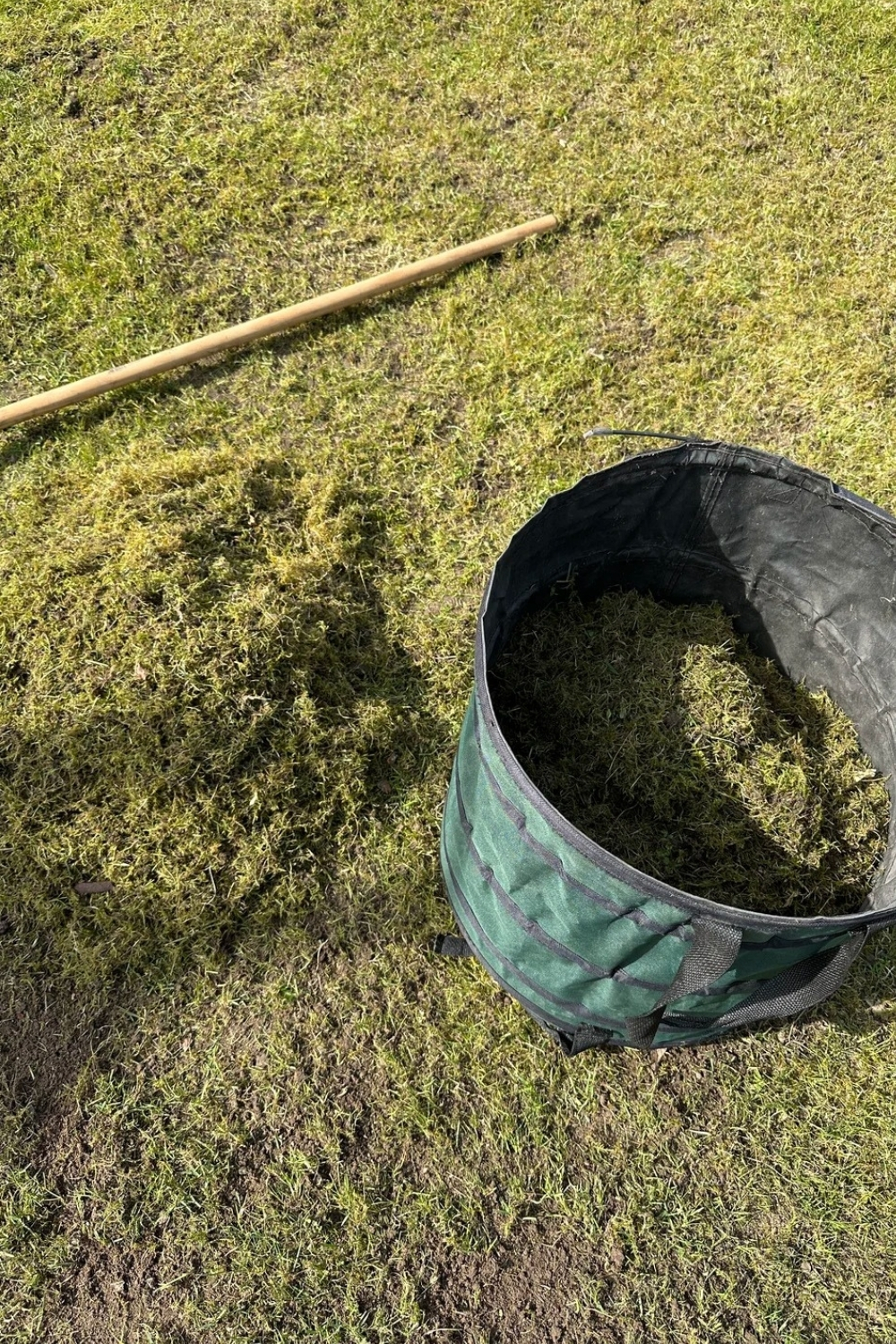
Thatch is the layer of dead grass stems and roots that builds up between the green blades and the soil. A thin layer is fine and even protects the soil. A thick one acts like a sponge or a tarp: it holds water at the surface and stops it from soaking down to the roots.
To check, cut out a small wedge of lawn with a trowel and look at the side. If the brown, felt-like layer between the green grass and the dark soil is more than about half an inch thick, it’s worth removing. Under that, skip this step.
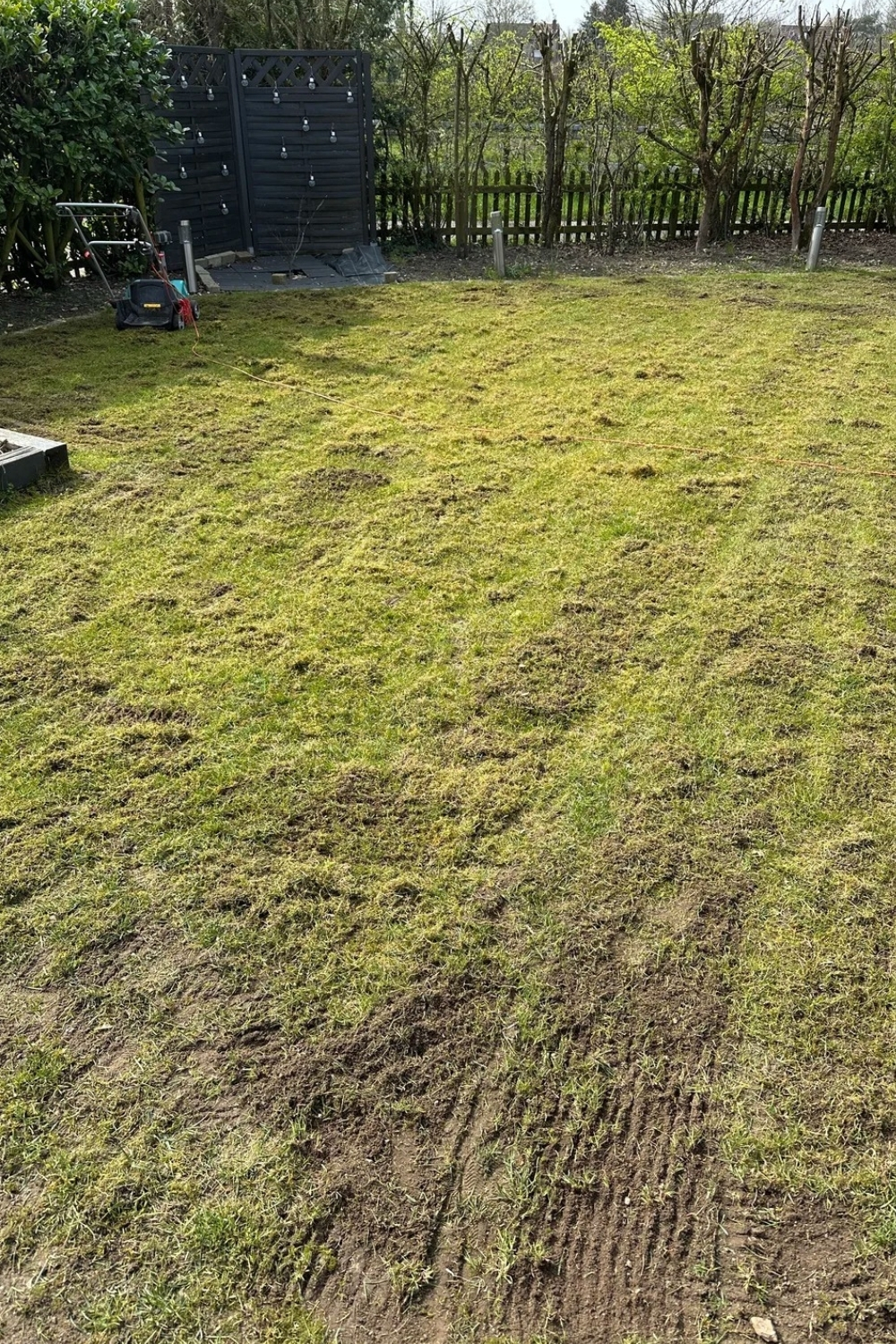
Dethatching a lawn in fall means raking it out. A stiff thatch rake works for a small lawn; a rented power dethatcher, a machine with spinning blades that tear the thatch loose, saves a lot of sore arms on a bigger one. Either way, the lawn looks rough afterward. That’s normal, and it recovers within two to four weeks.
Step 2: Aerate with cores, not spikes
Over time, soil gets packed down by feet, mowers and rain, and roots struggle to push through it. Aerating loosens it.
There are two ways of aerating a lawn in fall. A spike aerator just pokes holes, which pushes soil sideways and packs it even tighter around the hole. A core aerator pulls out small plugs of soil, about the size of a finger, and drops them on the surface. Core aeration is the one worth doing: the holes let air, water and fertilizer reach the roots, and they make handy little pockets for grass seed.
The plugs look messy, a lawn full of tiny dirt cylinders. Aerate a day or two after a good rain or watering, when the soil is moist but not muddy, so the machine can pull clean plugs. Leave them where they fall. They break down in a week or two of rain and mowing, and the soil in them goes back into the lawn. Core aerators can be rented for a day, and a lawn service will often do it for a reasonable fee.
Step 3: Topdress and overseed
Topdressing a fall lawn means spreading a thin layer of compost or screened soil over the lawn, about a quarter inch, just enough to settle into the grass without burying it. It fills low spots, adds organic matter and gives new seed something to sink into.
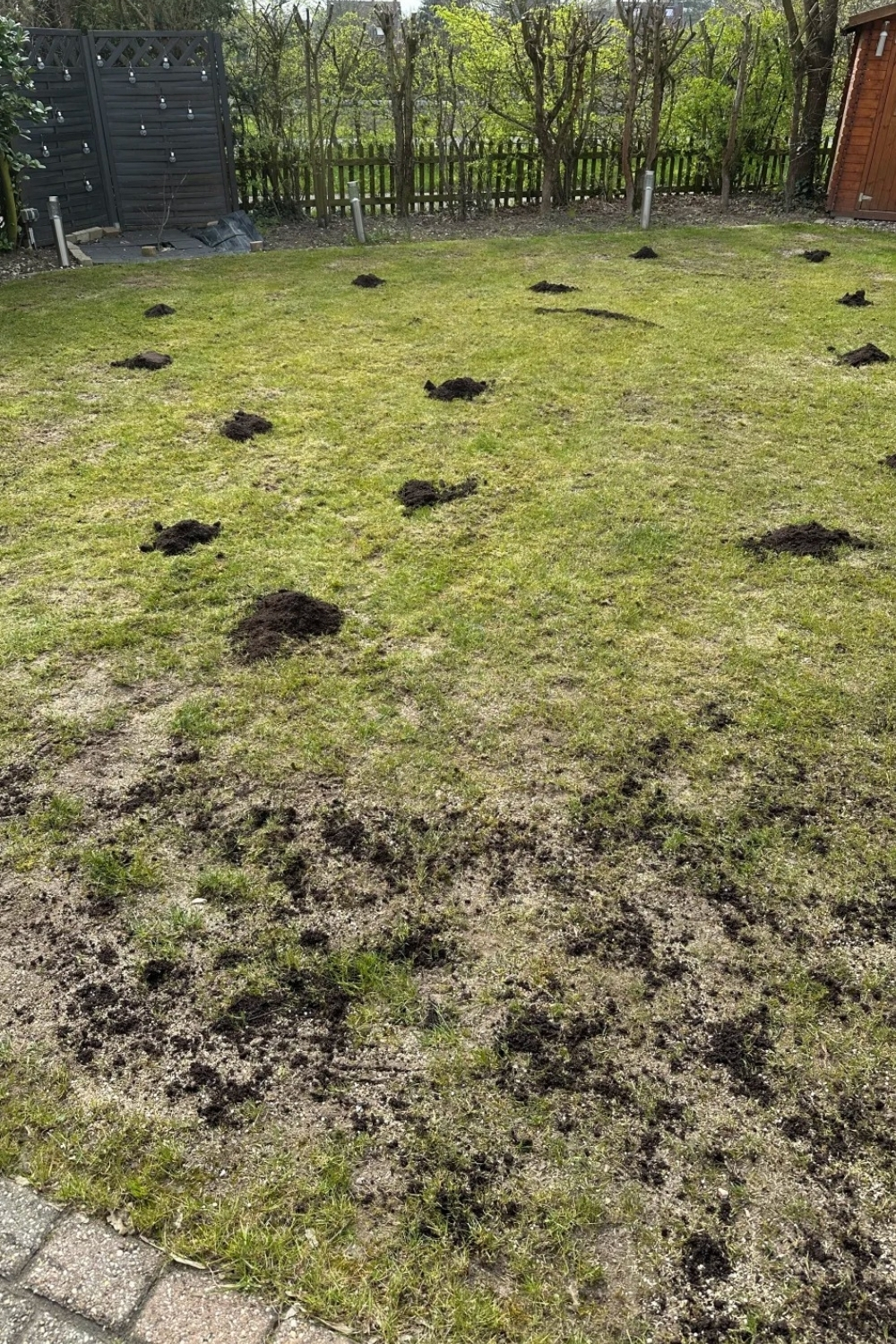
Dump the compost in small piles across the lawn, then spread it with the back of a rake or a leveling rake, a wide, flat rake made for pushing soil into the low spots.
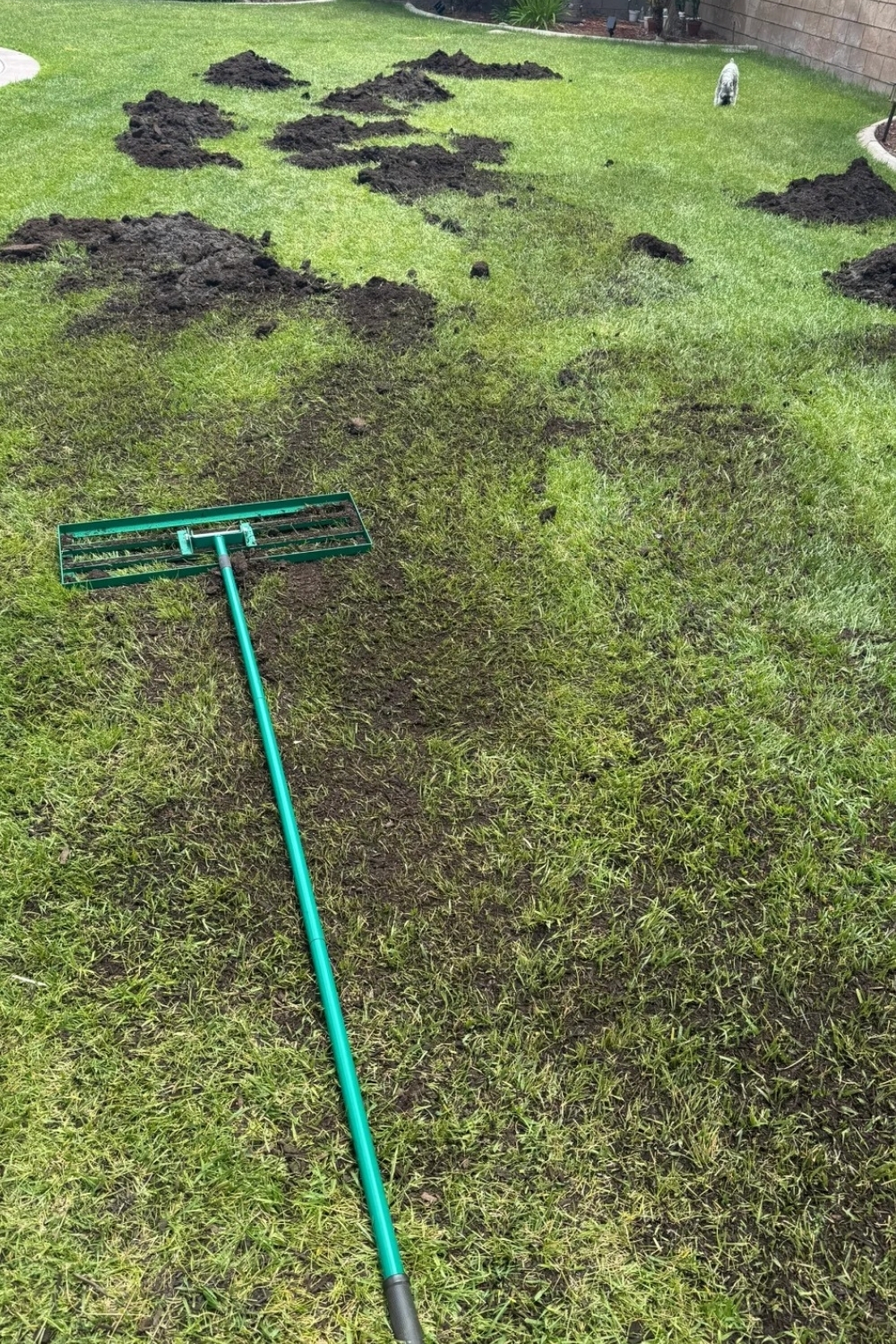
Overseeding a lawn in fall means sowing grass seed into the existing grass to thicken it and fill bare spots. According to Lawn Love’s guide on when to overseed, the best time for cool-season grass is late August through September, four to six weeks before the first frost, when soil temperature sits between 50 and 65 °F. Mow the lawn short first, to about 1.5–2 inches, so the seed reaches the soil instead of resting on the blades. With less than four weeks left before frost, wait for early spring or next fall. Good to know, I guess, before buying a big bag of seed in late October.
Repairing large bare areas in a fall lawn: seed or sod
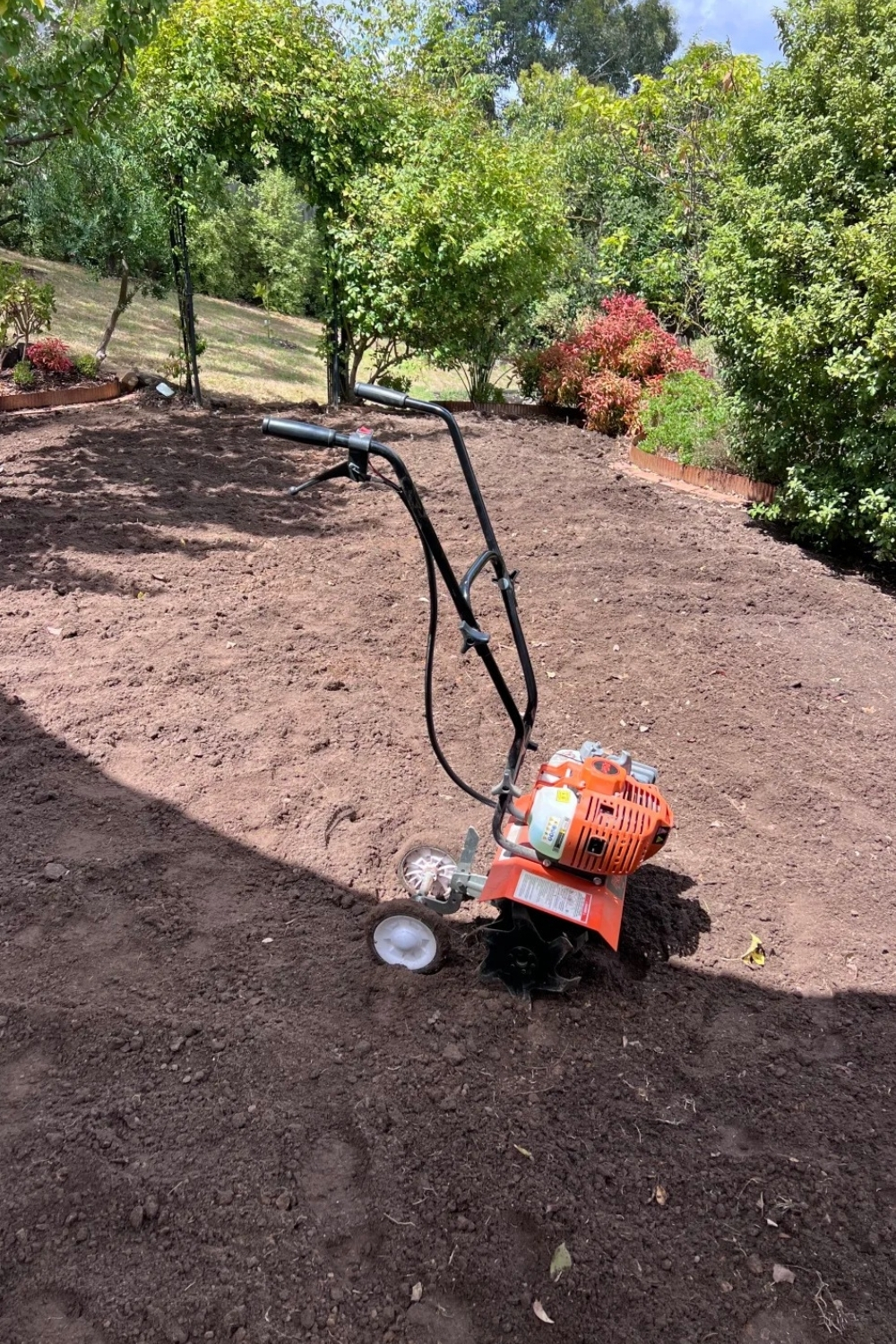
In a fall lawn, a patch bigger than a doormat, or a whole worn-out section, needs more than overseeding. Loosen the soil first with a tiller, a machine with rotating tines that breaks up the ground, or with a garden fork on a small area. Rake out stones and old roots.
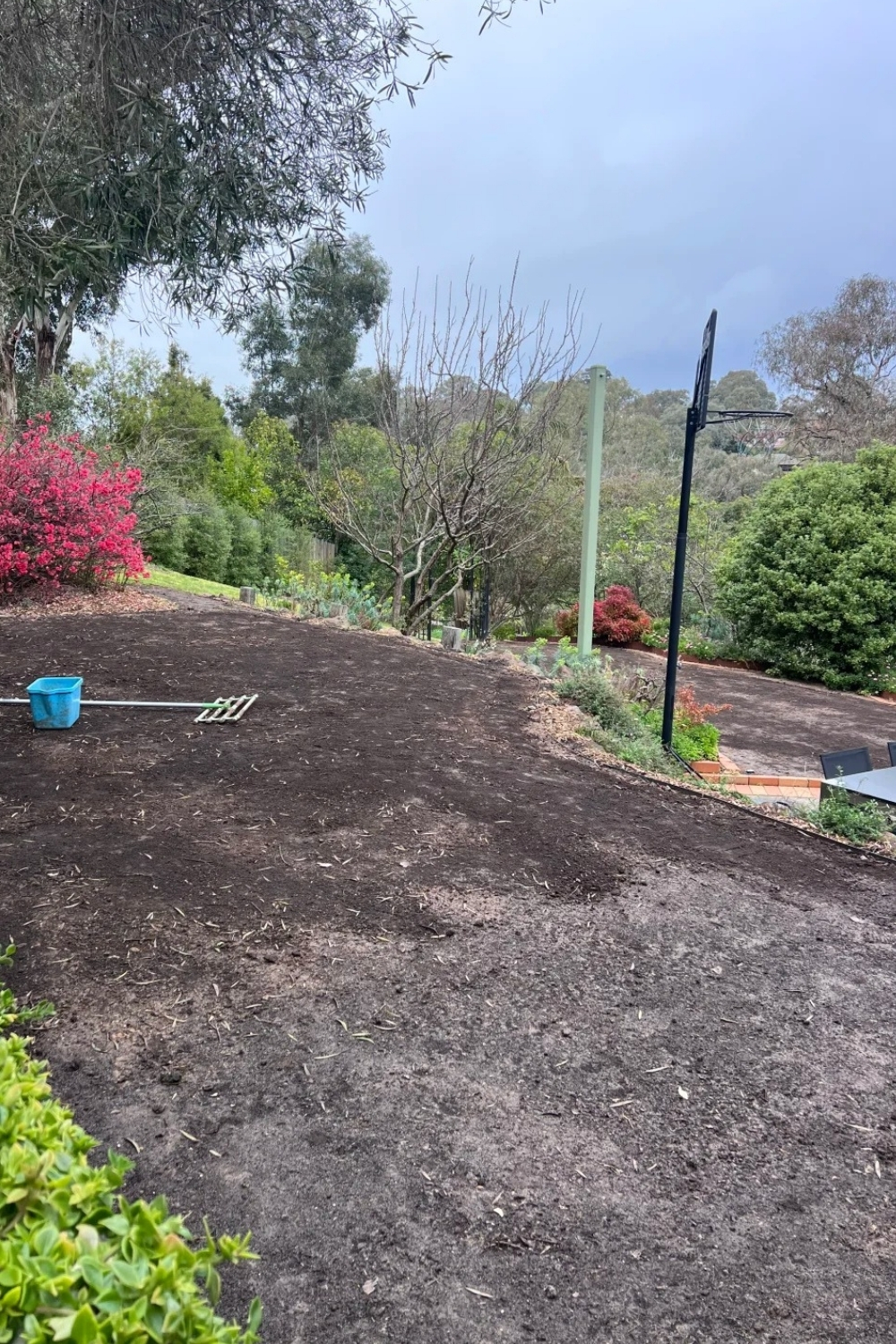
Then level it. Low spots collect water and high spots get scalped by the mower, so rake the soil smooth and firm it by walking over it or rolling it lightly. Low, soggy spots that never seem to dry out are often a drainage problem, and these backyard drainage fixes help sort that out before reseeding.
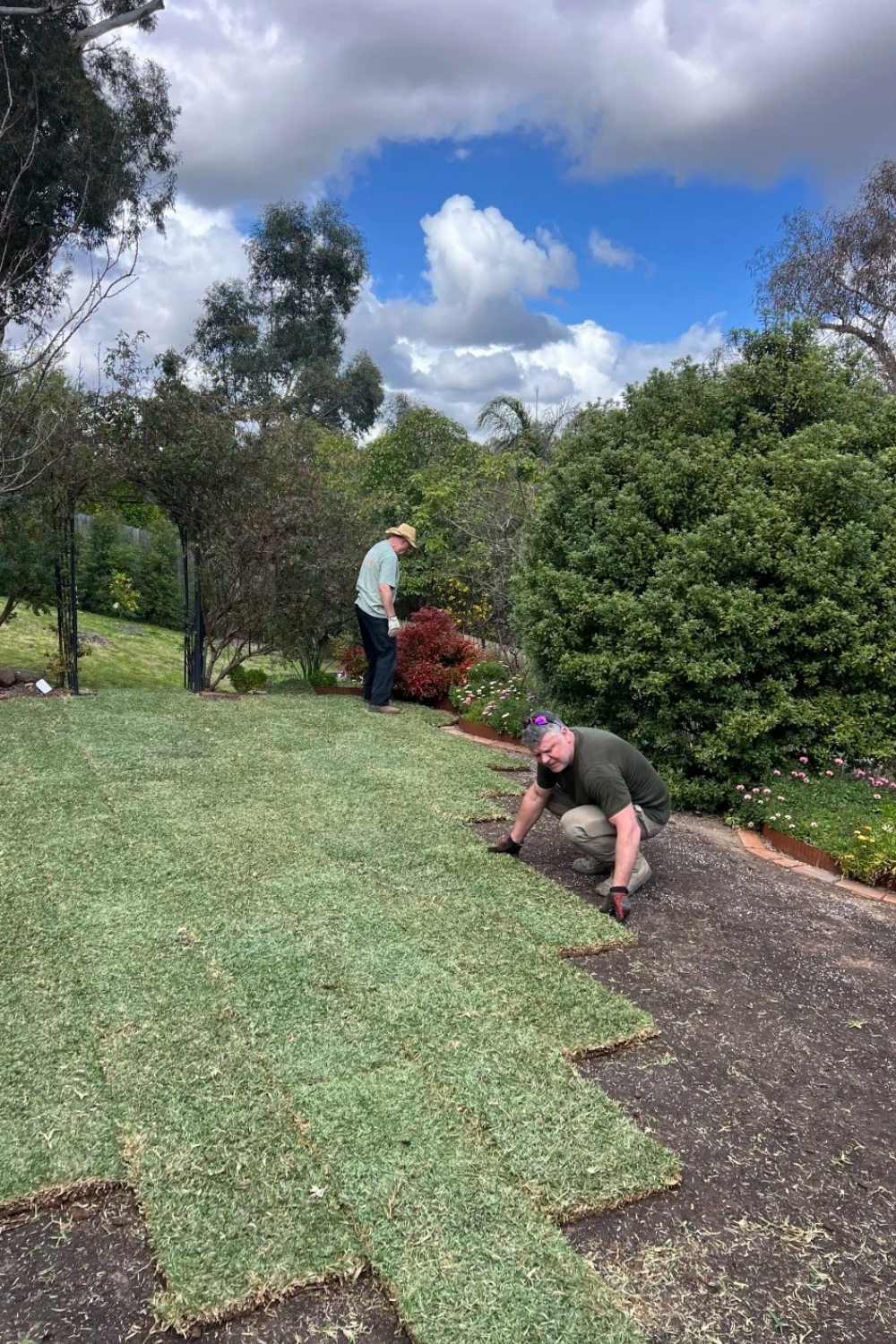
From there, the choice is seed or sod. Sod is rolls of grass grown on a farm, laid like carpet strips, with the joints staggered like bricks. It gives a finished lawn in a day and holds the soil on a slope, but it costs several times more than seed and is heavy work. Seed is cheap and offers more choice of grass types, but it takes weeks to fill in and needs steady watering all that time. Neither is necessarily better in every situation; it depends on budget, the size of the patch and how soon the lawn needs to be walked on.
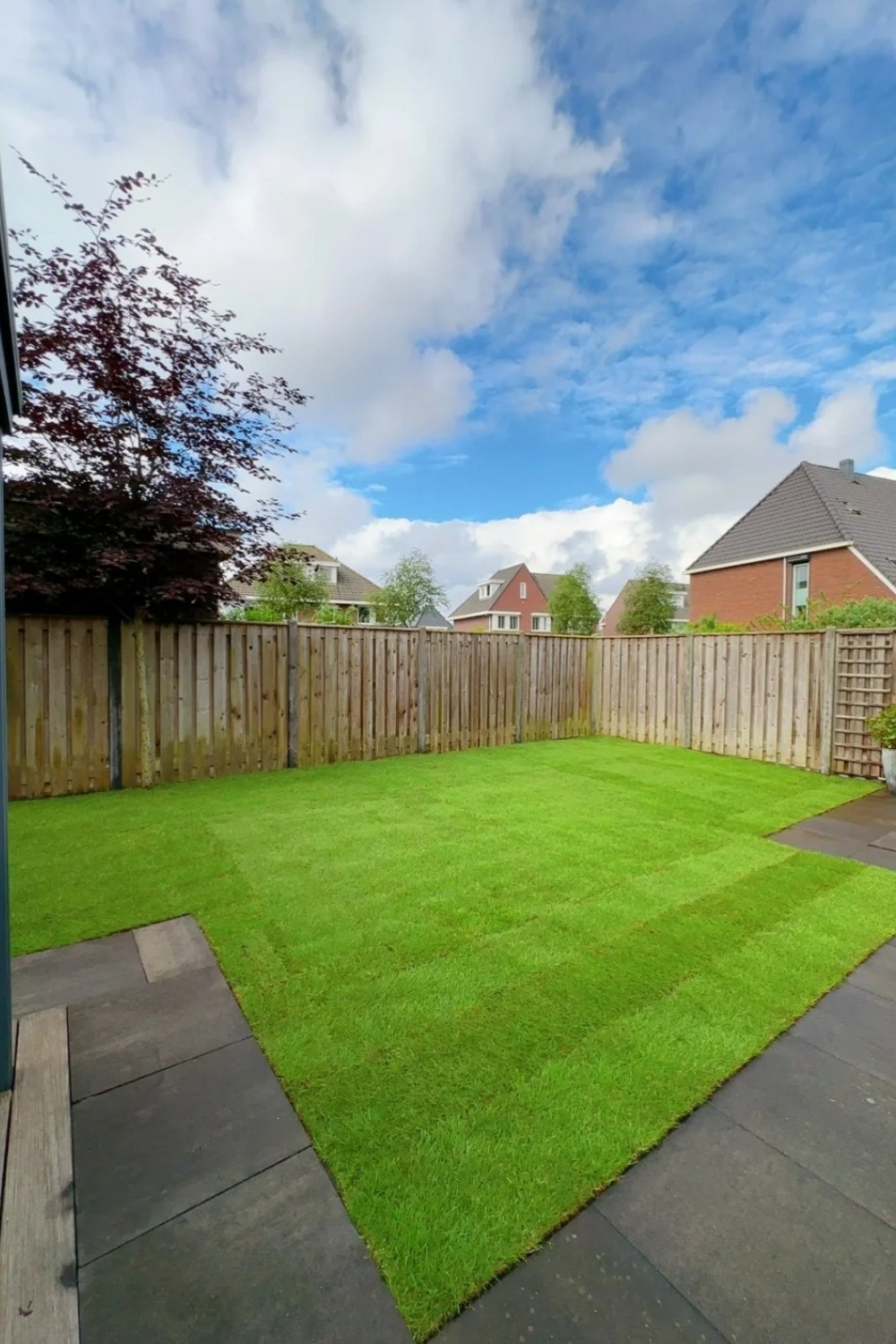
Some spots never hold grass well, like deep shade under trees or a strip by the fence that bakes all afternoon. Rather than reseeding them every year, I’d recommend turning them into planting beds, and these ideas on deciding what to plant where help pick what goes there.
Watering new grass and the last mow of the year
New seed in a fall lawn needs a moist surface, not a soaked one. Based on Kansas State University’s guidance on watering new lawns, the schedule looks roughly like this:
- Until the seed sprouts: light watering once or twice a day, enough to keep the top of the soil damp.
- Once seedlings reach about 1 inch tall: every other day, about ¼ inch of water each time.
- The second week after that: every third day, about ½ inch each time.
- From then on: about 1 inch of water every 5 to 7 days, counting rain.
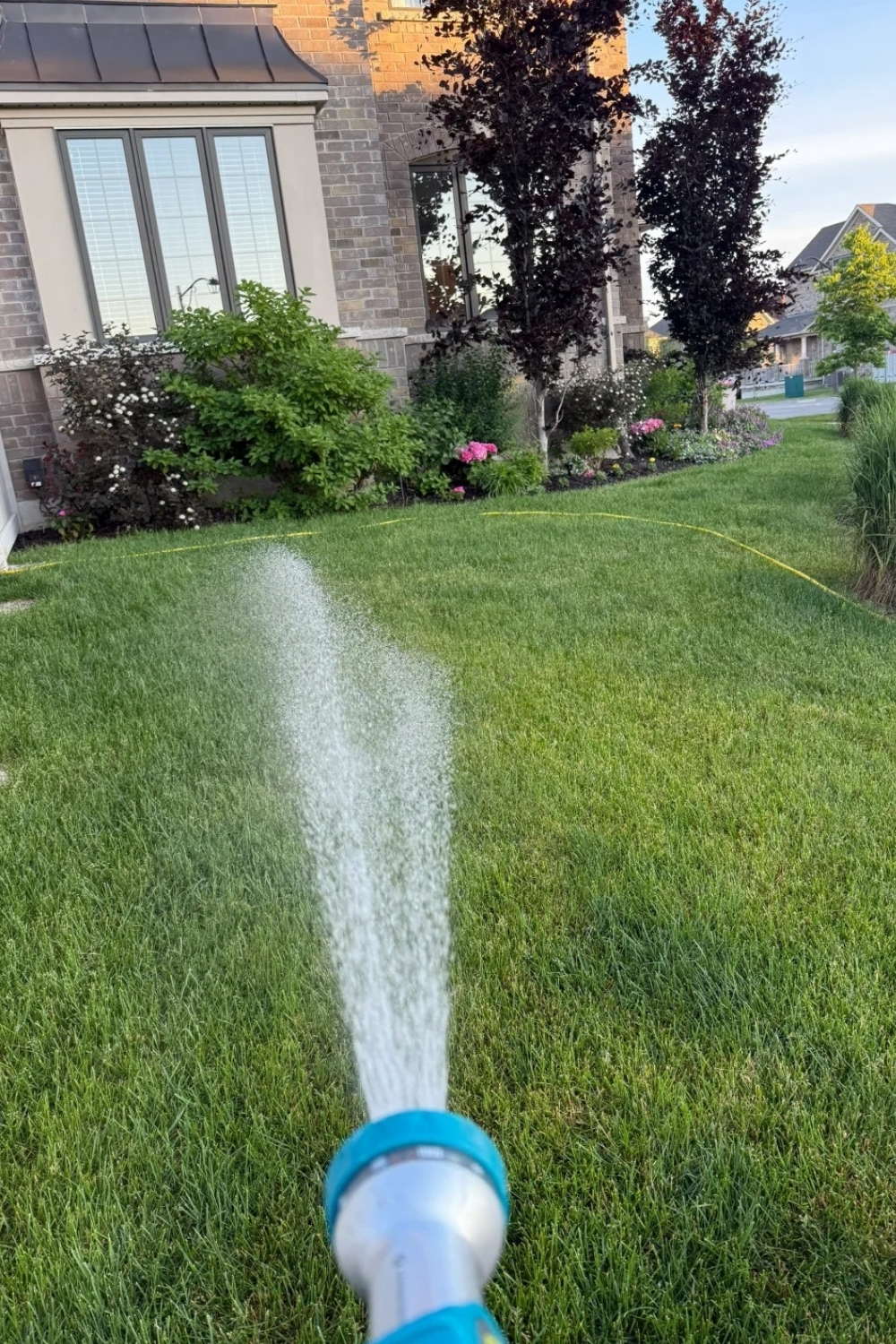
A straight-sided can, like an empty tuna can, left on the lawn shows how much water the sprinkler puts down. New sod needs the same steady moisture until its roots grow into the soil below. Lift a corner after a week or two: if it resists, the roots have taken hold, and watering can space out.

Keep mowing the lawn in fall as long as the grass keeps growing, and lower the mower a notch for the last cut of the year, to about 2–2.5 inches. A fall lawn left long and floppy over winter tends to mat down under snow, which invites disease. If that makes sense for your lawn, rake up thick layers of fallen leaves too, since they smother the grass beneath them.
Thinking about a different kind of lawn altogether? A clover lawn needs far less feeding, and in deep shade a moss lawn may be the better fit. Too late in the season for all four jobs? Feed it if it’s still September, put the leaves to work, and save the rest of your fall lawn care for next year. The other end-of-season jobs are on this November garden checklist.