Two things decide what goes where in a garden: how much sun a spot gets, and how big a plant will be when it’s grown up. Get those two right and most garden planting ideas start working on their own. Get them wrong and even the prettiest plant from the garden center will sulk, flop or take over its neighbors by the second summer.
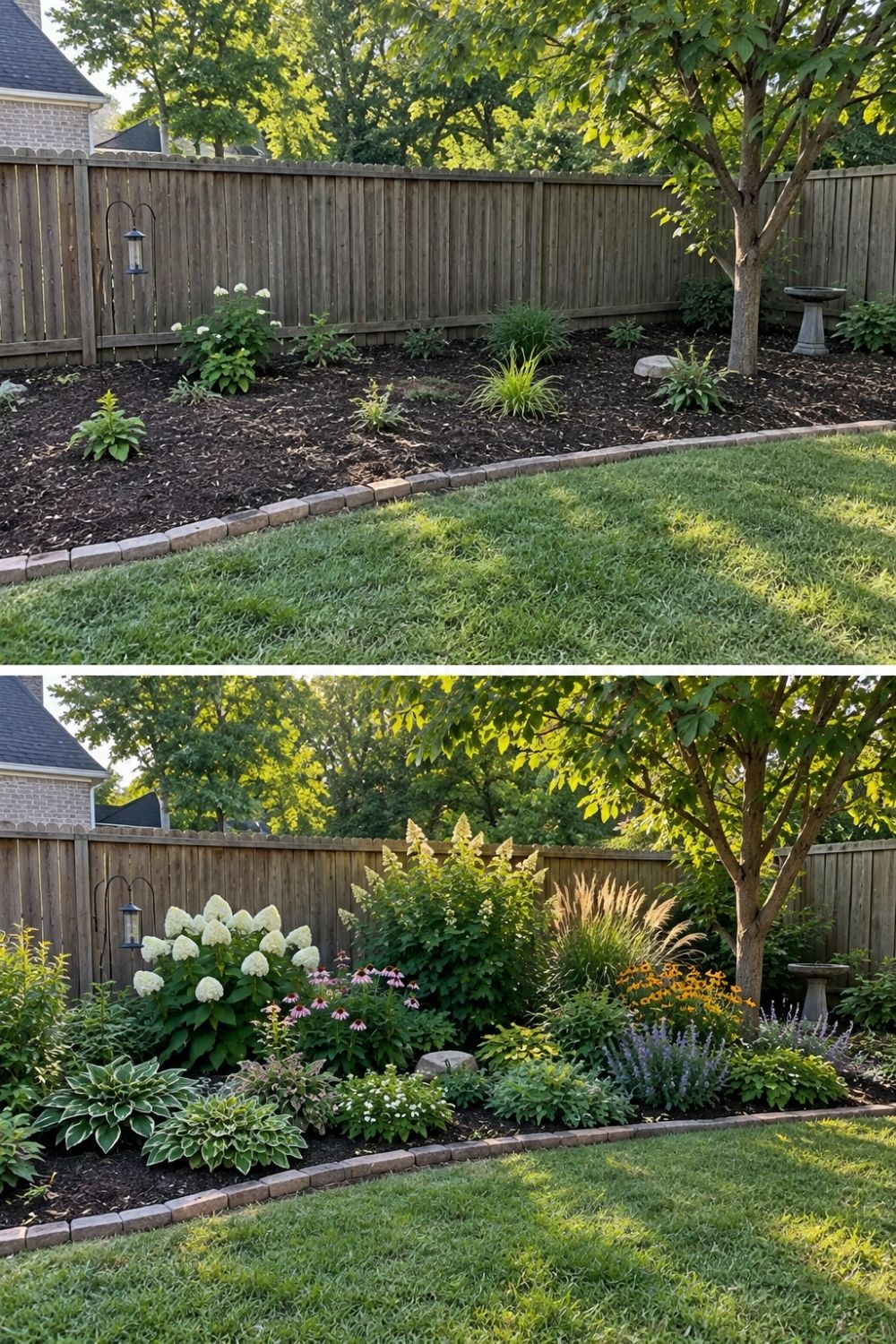
Photo by SassyGarden
The before and after above shows those garden planting ideas in practice. The same fence-line bed under a small tree goes from a few scattered plants in bare mulch to a full border: white hydrangeas and tall grasses at the back, coneflowers and salvia in the middle, hostas along the shady front edge. Nothing in it is rare or expensive. The plants are simply in the right spots and at the right distances. The problems below are the ones that usually stand between a sparse bed and that second photo, and each comes with a fix. If you’re planning a whole yard rather than one bed, start with my guide to planning a garden that feels designed and come back here for the planting.
“I bought what looked nice at the nursery”
We’ve all done it. You walk in for compost and walk out with a flat of whatever was blooming by the door. Sounds harmless, right? Except those plants were chosen for how they look in a pot on a sunny display bench, not for the spot waiting at home.
Flip the order of your planting plan: look at the spot first, then shop. Three questions cover most of it.
How many hours of direct sun? Full sun means 6 or more, part sun or part shade means roughly 2–6, and shade means less than 2. Plant tags use exactly these terms, so once you know your number, half the choices make themselves. North-, south-, east- and west-facing beds behave very differently, which I went through in what to check before planting by orientation.
Is the soil wet, dry or somewhere in between? Dig a hole about a foot deep, fill it with water, and time how long it takes to drain. Gone within an hour or two means fast-draining soil, fine for lavender and grasses. Still standing the next day means heavy clay or a wet spot, better suited to plants that tolerate wet feet.
What zone are you in? Every tag lists a hardiness range. A plant rated for zones 5–9 won’t survive a zone 4 winter, however well it’s placed. Most of the US falls between zones 3 and 9, and your ZIP code gives you the number in seconds on the USDA hardiness map.
Then write a short list of garden plants for that spot before you go shopping. It feels a bit like homework. It also saves more money than any sale.
Arrange the pots before you dig a single hole
This is the step people skip, and it’s the cheapest way to fix a planting layout. Set every plant, still in its pot, where you think it should go, step back, and look at the bed from where you’ll usually see it: the kitchen window, the patio, the path.
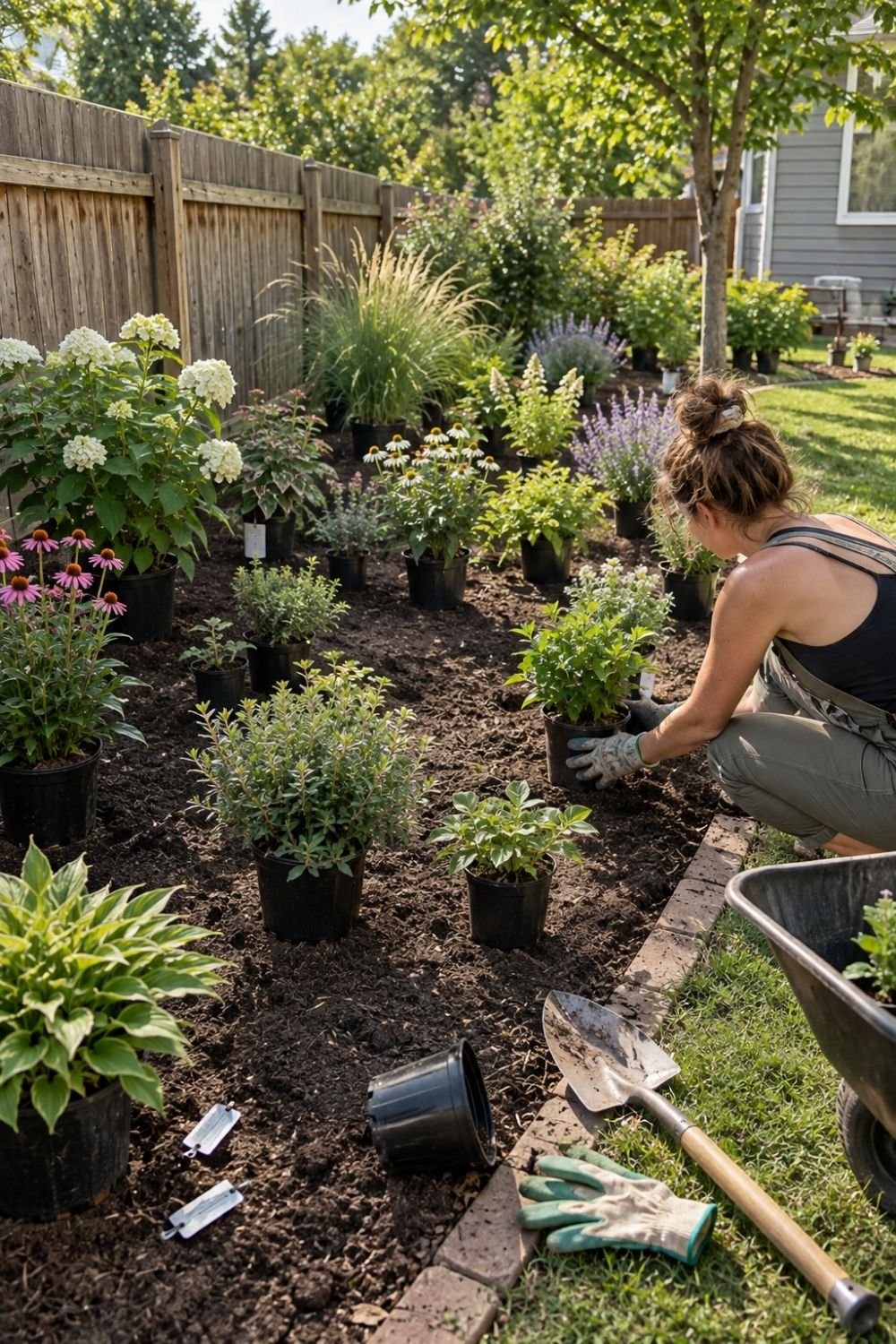
Photo by SassyGarden
In the photo, hydrangeas, grasses, coneflowers, lavender and hostas are all laid out in their pots across freshly prepared soil before a single one goes in. Moving a pot takes two seconds. Moving an established shrub takes an afternoon and a sore back.
Space by the mature width on the tag, not by how big the plant looks now. If a perennial is listed as 18 inches wide, set the pots about 18 inches apart, center to center. The bed will look thin for the first season, and that’s normal: most perennials follow the old rule of “sleep, creep, leap,” filling in during the second and third year. Fill the gaps in the meantime with annuals or mulch, not with extra perennials you’ll have to dig out later.
When you plant, dig each hole about twice as wide as the pot and no deeper, so the top of the root ball sits level with the soil. Water deeply right after planting and about once a week through the first summer if it doesn’t rain.
The tall plants keep hiding the short ones
A border that’s viewed from one side, like a bed along a fence, works like theater seating: tall at the back, medium in the middle, low at the front.
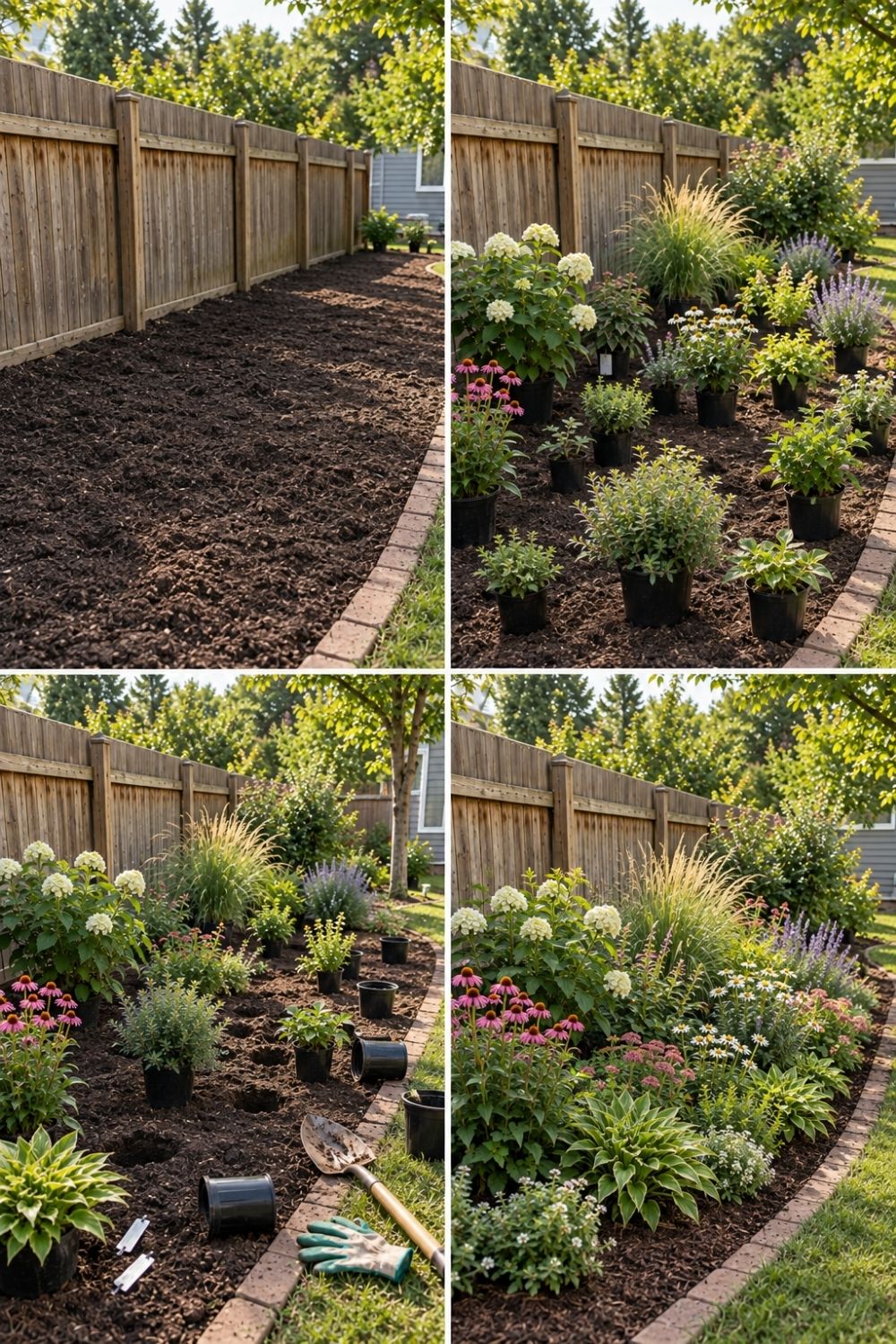
Photo by SassyGarden
The four stages above show a fence border planting layout built in exactly that order: bare soil with a brick edge, the tallest plants set along the fence, the middle layer added, and finally the low front edge. Along the back go plants of 3–5 feet: panicle hydrangeas, tall grasses, Russian sage. The middle row holds 18–36 inches: coneflowers, salvia, yarrow. The front edge stays under about a foot: catmint, lamb’s ear, low sedums, or hostas where it’s shady.
Two small tricks make a planting layout like this look less stiff. First, let a few middle-height plants drift toward the back and a few low ones creep toward the middle, so the rows don’t read as three flat stripes. Second, add one see-through plant near the front, such as a grass with airy flower heads. You look through it rather than at it, and the bed suddenly has depth.
An island bed, the kind you can walk around, follows the same idea with the tallest plants in the middle instead of at the back.
“Everything blooms in June, then nothing”
This one is almost guaranteed if you shop in late spring, because that’s when the nursery sells what’s flowering in late spring. The result: one glorious month, then eleven months of green.
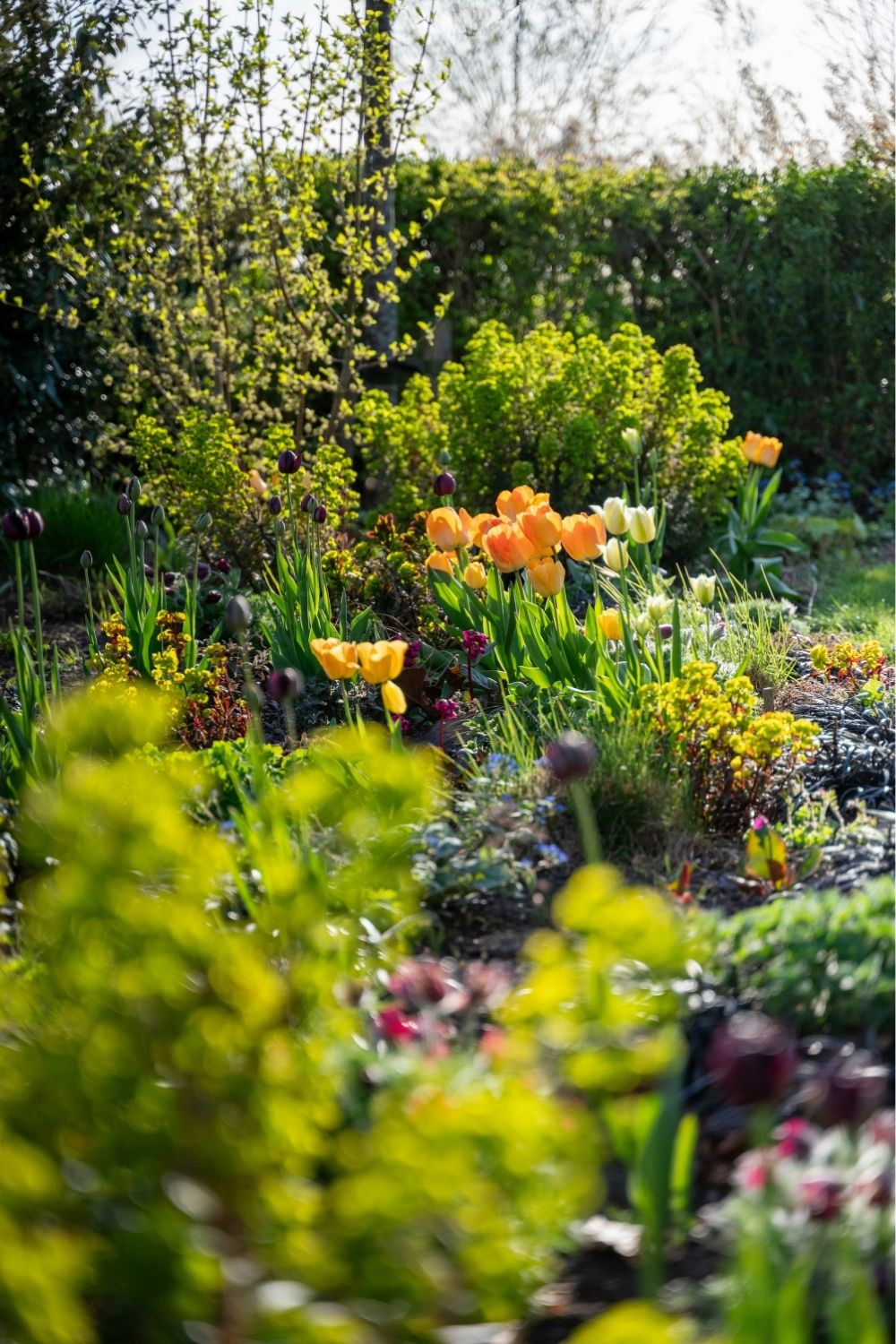
Photo by Sandra Luimes on Unsplash
The fix is a planting plan that works in relays. The spring border above gets its color from orange tulips and chartreuse spurge long before most perennials wake up. Aim for at least two or three plants peaking in each season:
| Season | Garden plants that carry it |
|---|---|
| Early spring | Tulips, daffodils, crocus, hellebores |
| Late spring | Alliums, irises, peonies, catmint |
| Summer | Coneflowers, salvia, daylilies, hydrangeas |
| Late summer and fall | Asters, sedum, black-eyed Susans, ornamental grasses |
Spring bulbs are the easiest planting idea here, but they go in the fall. Plant tulips (Tulipa) 6–8 inches deep, pointed end up, once soil temperatures drop in autumn, usually from late September in the north to November in the south. They need a cold winter to bloom, so in zones 8–9 look for pre-chilled bulbs. Keep in mind that tulip bulbs are toxic to dogs and cats, so plant them where a digging dog won’t find them.
Evergreen shrubs and grasses fill the fifth season, winter, when nothing blooms at all. A bed with some structure left standing in January never looks completely empty.
Small beds by the house need fewer, bigger moves
The most common garden planting mistake in a small bed is treating it like a sampler: one of everything. Eight different plants in a 6-foot bed look busy and a little accidental, like the last day of a plant sale.
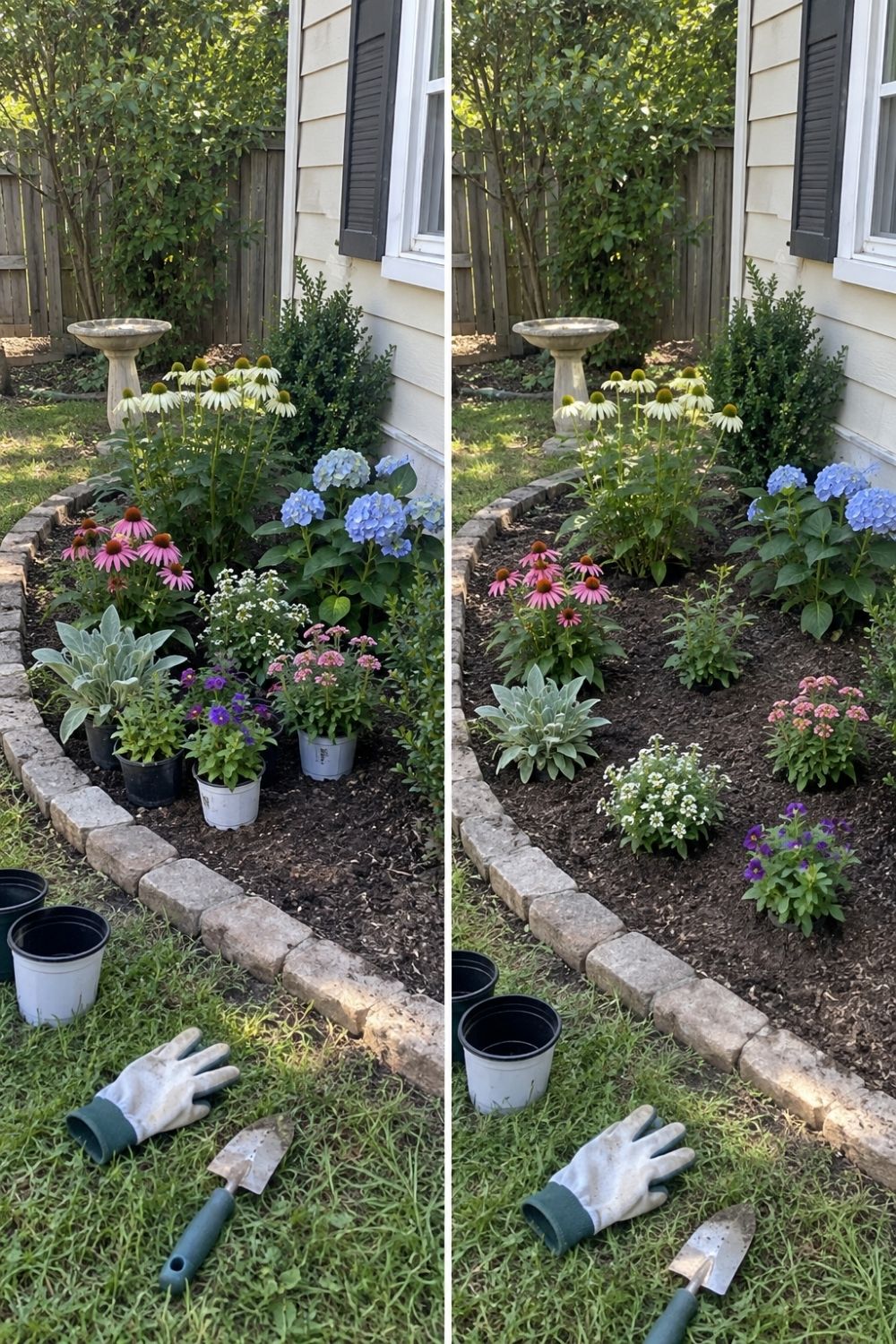
Photo by SassyGarden
This bed along the side of a house works because its planting plan uses a short list of garden plants in bigger groups: blue hydrangeas as the anchor, white and pink coneflowers, silver lamb’s ear (Stachys byzantina) at the front, and a small evergreen at the corner. The before photo shows the plants still in their pots, spaced out on the soil; the after shows them planted, with room left to grow.
For small beds, three rules do most of the work. Pick five or six plants at most. Use each one in groups of three or five. Repeat at least one of them on the other side of the bed or near the door, so the eye connects the two. Bigleaf hydrangeas (Hydrangea macrophylla) grow in zones 5–9 and bloom blue in acidic soil, pink in alkaline soil. They’re toxic to pets if chewed, as is lavender in larger amounts, so keep that in mind by a back door the dog uses.
The dry, sunny corner where nothing survives
Every yard has one: the strip by the driveway or the south wall where the hose never quite reaches and the soil bakes by July. Stop fighting it with thirsty garden plants and choose a planting plan made for it instead.
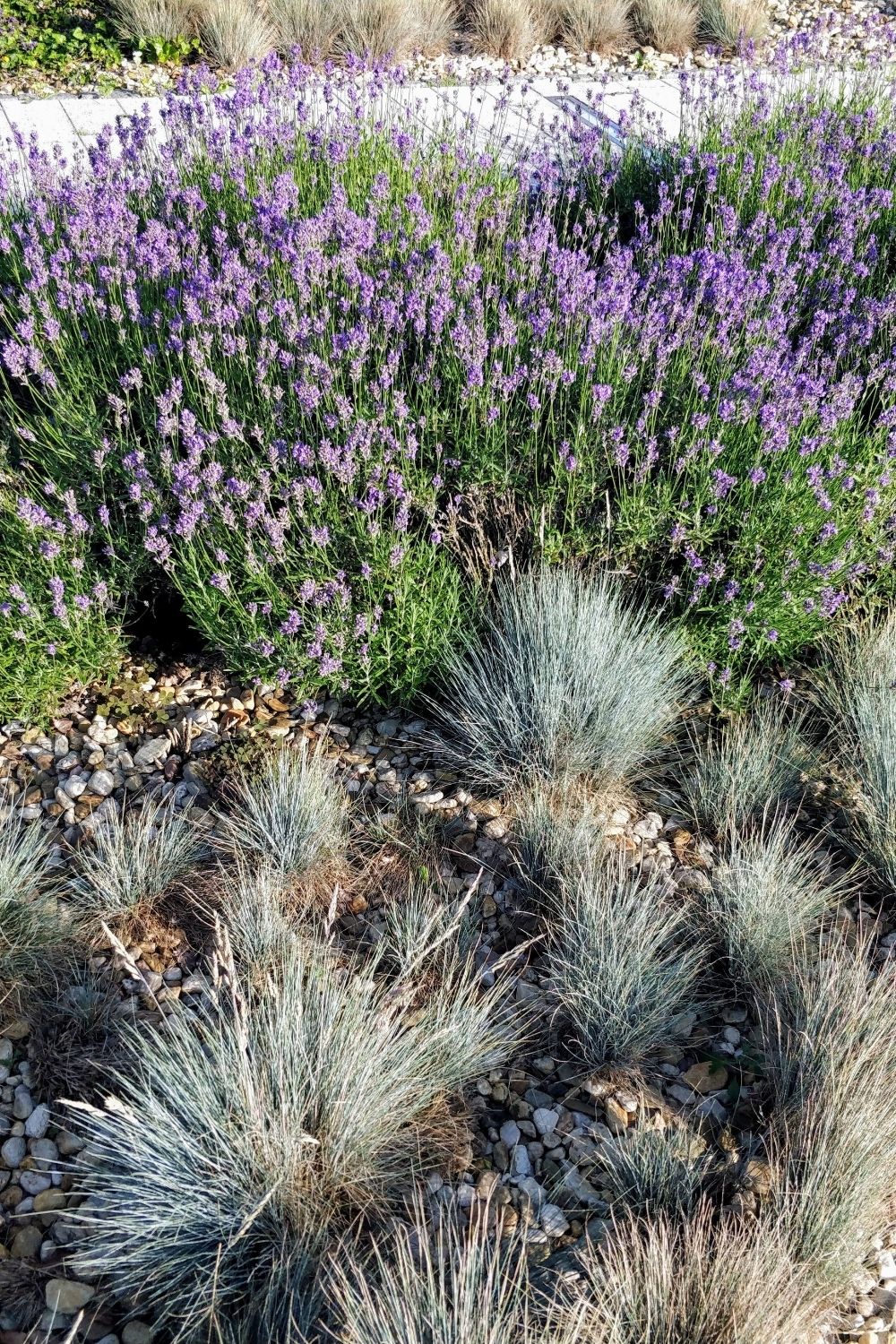
Photo by MrGajowy3 Teodor on Pexels
English lavender (Lavandula angustifolia, zones 5–8, with some varieties to zone 9) and blue fescue (Festuca glauca, zones 4–8) are one of the simplest dry-garden pairings there is. Both want full sun and sharp drainage, both are silvery, and together they give a purple-and-blue planting that looks good even when nothing’s in flower. Mulch with gravel instead of bark: it keeps the crown of the lavender dry, which matters more for its survival than winter cold. Once established, this corner needs water only in long droughts.
Other good garden plants for hot, dry spots are yarrow, sedums, Russian sage and catmint. For a whole garden built on this idea, see can a drought-tolerant garden still look lush.
Planting for bees without a meadow
You don’t need to turn the lawn into a wildflower field to help pollinators. A single sunny bed with the right garden plants, flowering in sequence, feeds bees and butterflies from spring to fall.
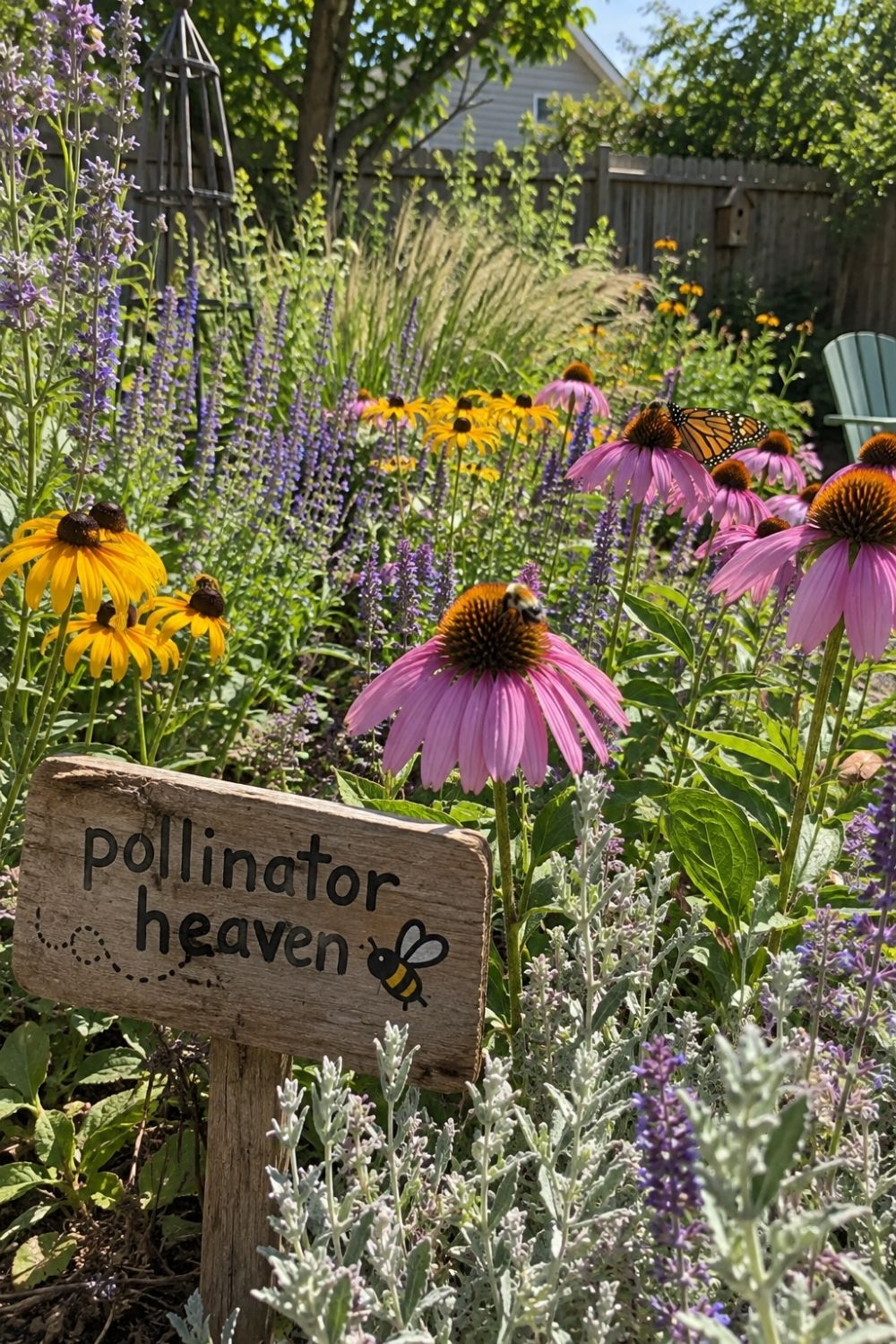
Photo by SassyGarden
The bed above mixes purple coneflower (Echinacea purpurea, zones 3–9), black-eyed Susans (Rudbeckia hirta), spiky purple salvia and soft lamb’s ear, with a monarch on one of the coneflowers. A few pollinator planting ideas make it work better:
- Plant in clumps of at least three of the same plant, so insects find them easily.
- Mix flower shapes: flat daisies for butterflies, tubular flowers for bumblebees.
- Favor natives where you can, since many insects depend on the plants they evolved with.
- Skip insecticides in this bed entirely, including systemic ones in nursery plants; ask before you buy.
Coneflowers and black-eyed Susans are both native to North America and are generally considered safe around pets. More plant lists and designs are in my post on easy pollinator garden ideas.
Vegetables and flowers in the same plan
Vegetable beds don’t have to be all business, and they’re a good place for garden planting ideas that mix food and flowers. Tucking flowers between the crops makes the plot prettier and brings in the insects that pollinate squash and beans.
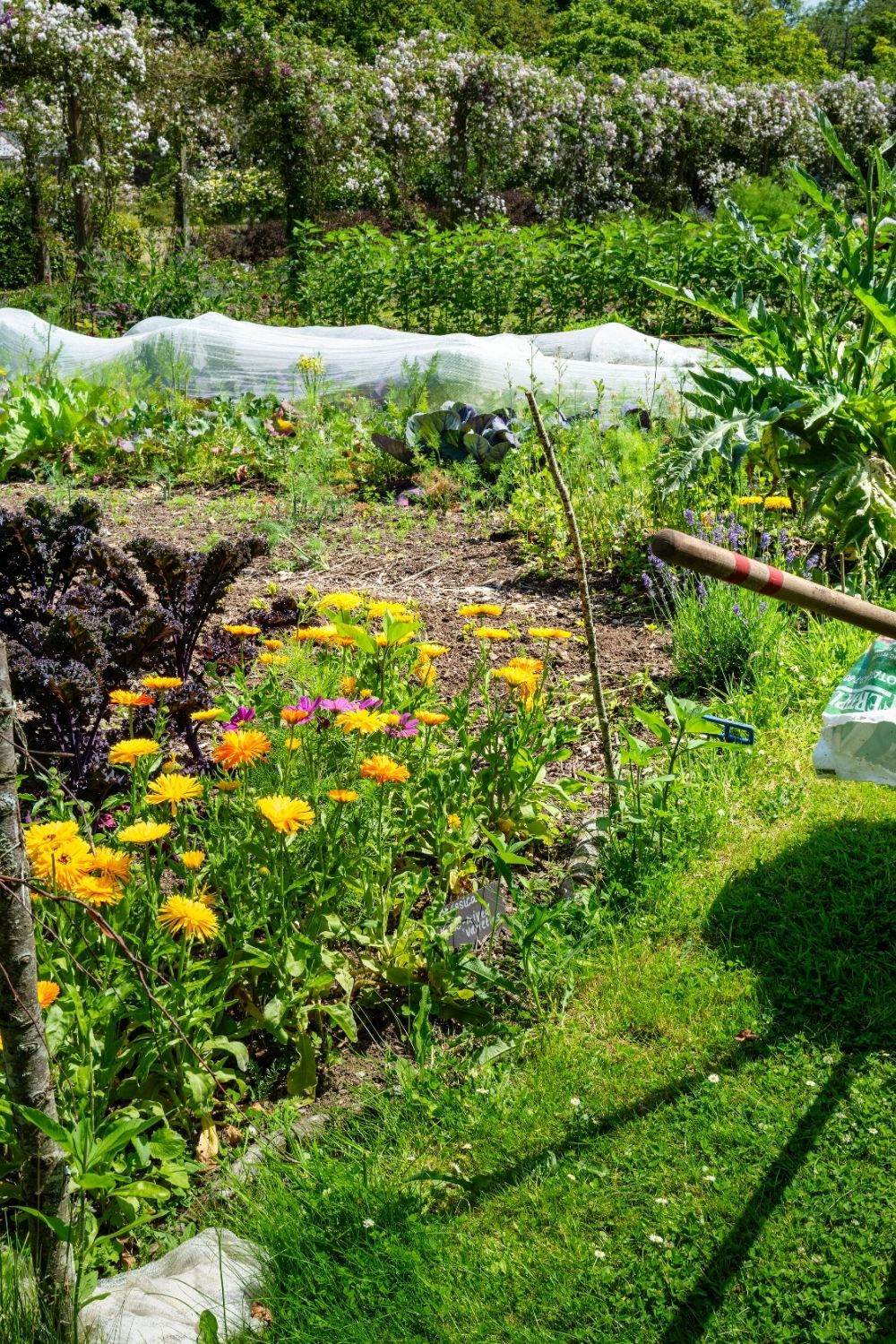
Photo by Bob Jenkin on Pexels
In this vegetable garden, orange and yellow pot marigolds (Calendula officinalis) bloom in front of dark kale, with a row cover protecting young crops behind them. Calendula is an easy annual from seed, flowers from early summer until frost, and its petals are edible. Sow it along bed edges and at row ends, where it won’t shade the vegetables.
Plan the vegetable part with the same planting layout rules as the flowers: tall crops like pole beans and tomatoes on the north side, short ones in front, and succession sowings of lettuce and radishes to fill gaps. I covered layouts for small spaces in could a kitchen garden work in your space.
That’s the gist of it: read the sun before you shop, space for the grown-up size, stack the heights, and plan something to bloom in every season. A garden planting plan like that fills in on its own, and the gaps stop being a problem by the second summer.