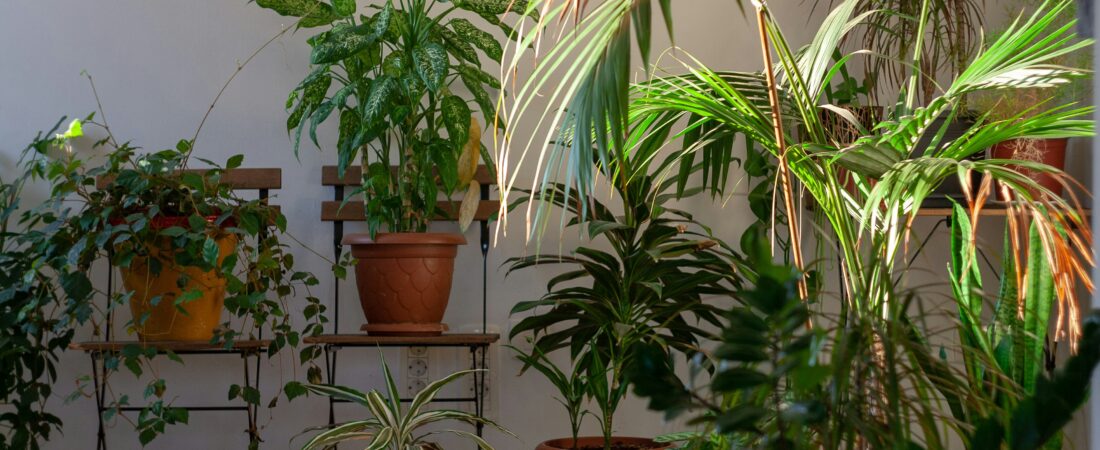
Where does the next plant go once the windowsill is full? Up, usually. The best plant stand ideas start with the spot and the light it gets, and only then with the stand itself, because a pretty stand in a dark corner (unless it holds plants that cope with low light) is just furniture with a sad plant on it.
Before buying any plant stand, measure three things: the floor space it can take up, the height of the window it stands next to, and the width of the pots it will hold. Plant holders that look roomy online often take only a 6-inch pot per ring or shelf, which rules out most of the plants people actually want to raise. Then think about weight, because a plant stand loaded with watered pots is far heavier than the box it came in.
A narrow corner: go tall
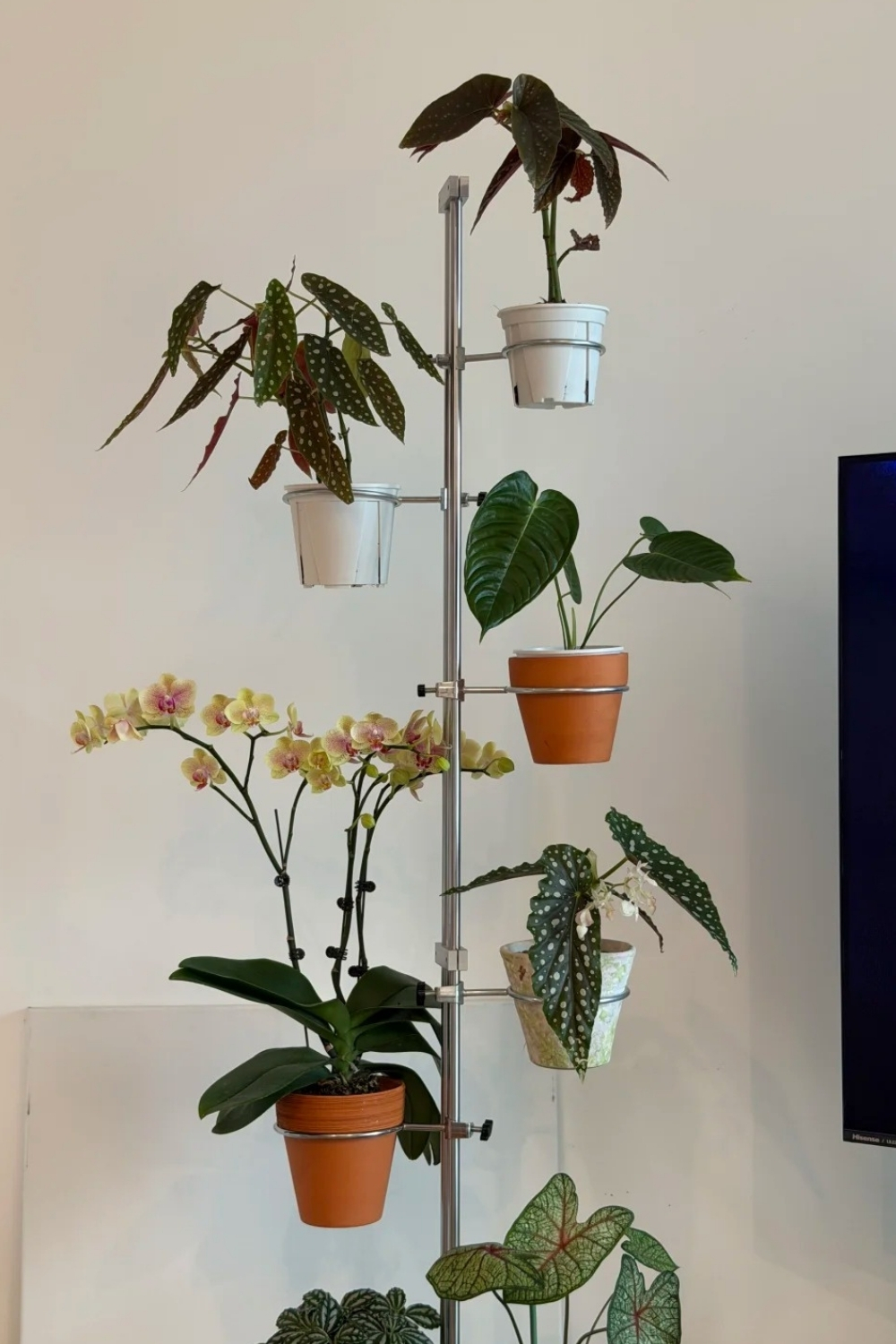
A corner next to a window or a TV wall rarely has room for a shelf, but it almost always has height. A pole stand fits there: one upright pole, sometimes pressed between floor and ceiling with a spring like a shower curtain rod, with ring holders that clamp on at any height. Five or six pots can climb a pole that takes up less floor space than a dining chair. A tension pole plant stand also needs no screws, which makes it a good option for renters, though it’s worth checking the ceiling height range on the box before ordering, since most poles only stretch so far.
Put the plant that needs the most light at the top, closest to the window glass, and the ones that cope with less lower down. Begonias, orchids and small alocasias all fit on ring holders, as long as the pots are light plastic or thin terracotta rather than heavy ceramic.
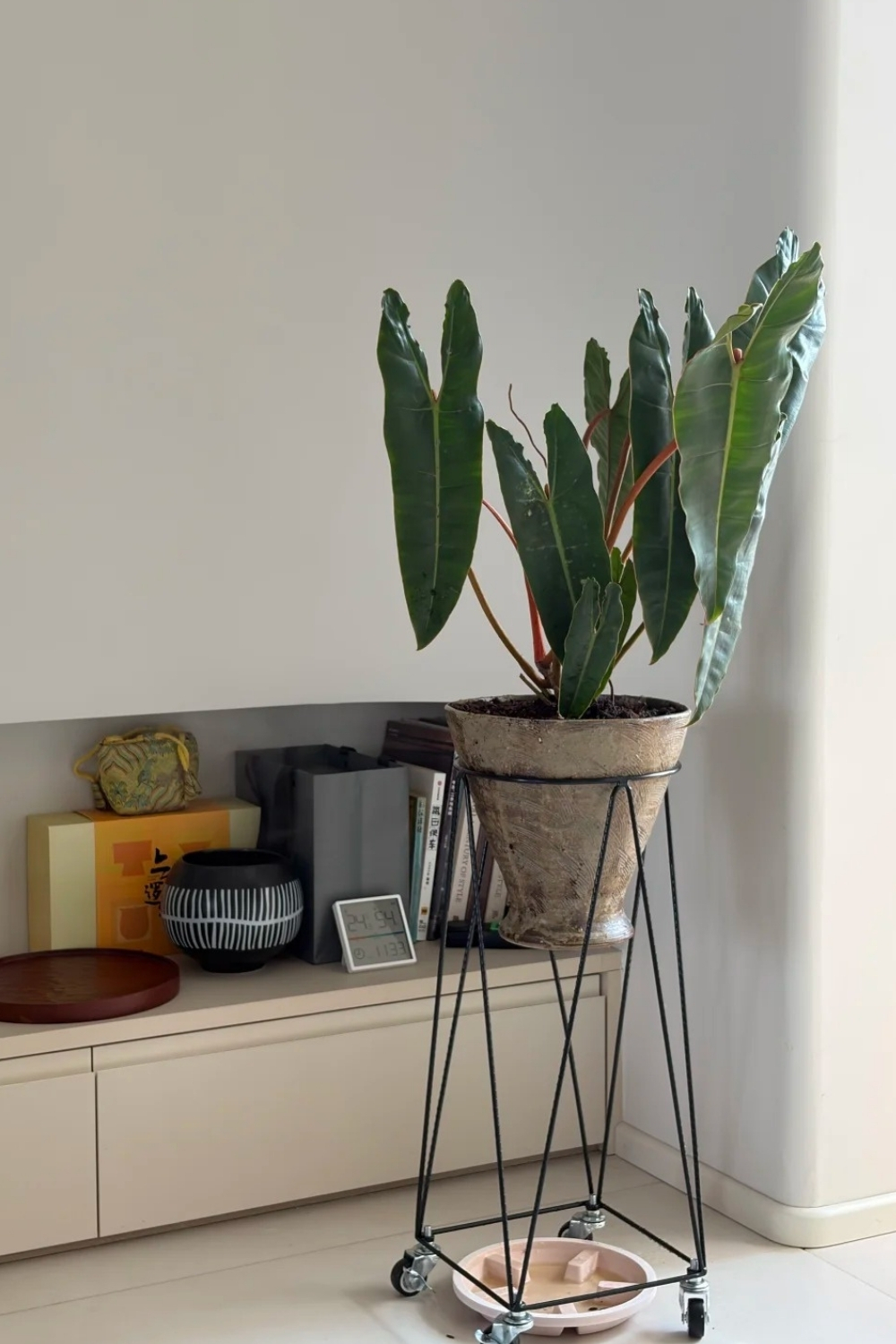
For a single tall plant, a wire stand on a slim frame lifts it a couple of feet off the floor and into better light, without the visual weight of a cabinet. In a home with small kids or a climbing cat, anchor any tall, top-heavy stand to the wall with a furniture strap.
Beside a window: tiered and ladder stands
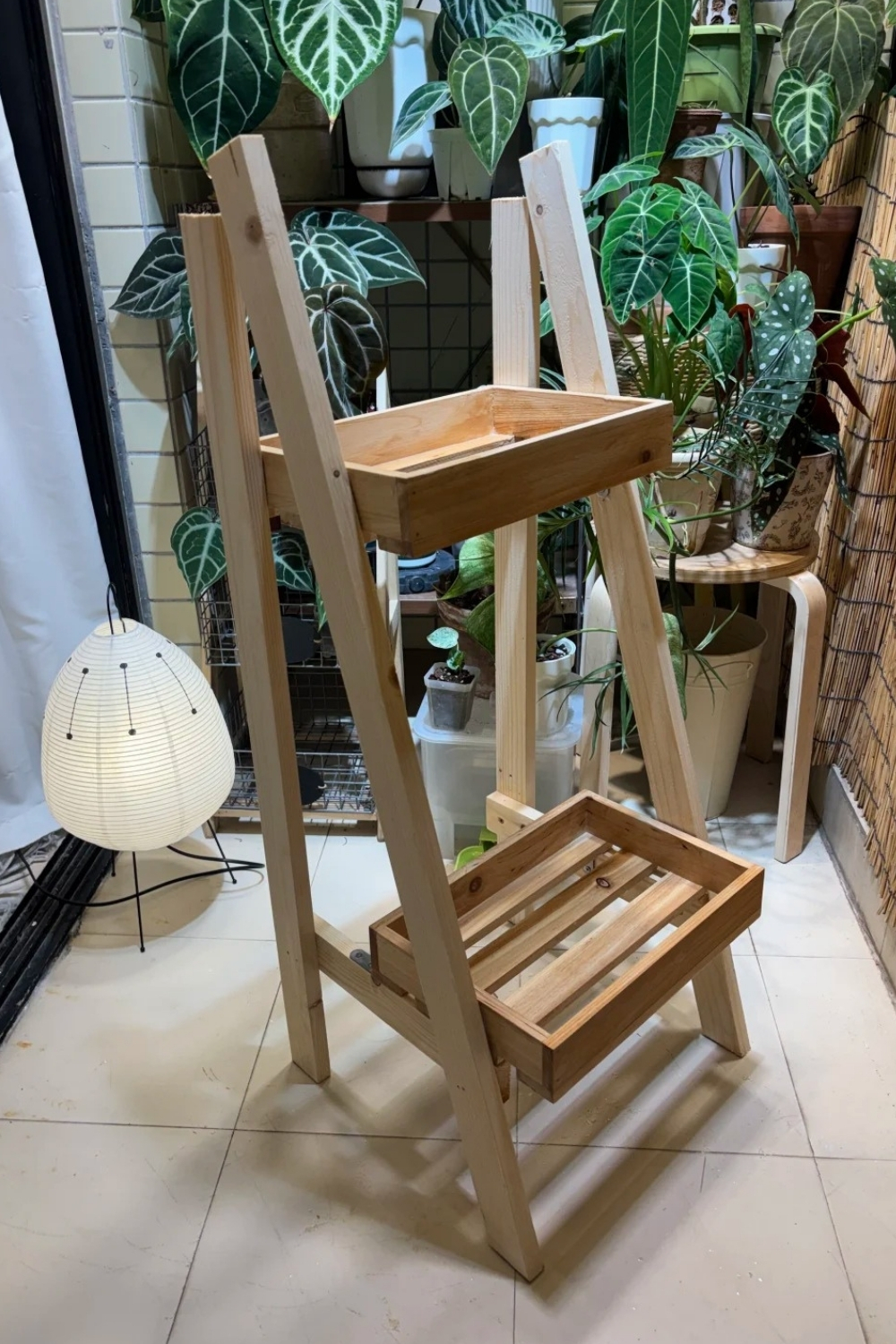
A tiered plant stand has two or more shelves stepped back like stairs, and a ladder stand leans like an A-frame with trays on its rungs. Both turn one window into several growing spots.
The rule for loading them is simple. The top tier gets the most light, so sun-lovers such as succulents, crotons or herbs go up there. The middle tier suits plants that like bright light but not direct sun. The bottom tier, in the shadow of the shelves above, is for ferns, pothos and other plants that put up with less. Turn the stand a quarter turn every week or two, so the back row doesn’t always sit behind the front row. In winter, watch out for a radiator or heating vent under the window: a plant stand right above it dries the soil and the leaves fast, so a gap of a foot or so helps.
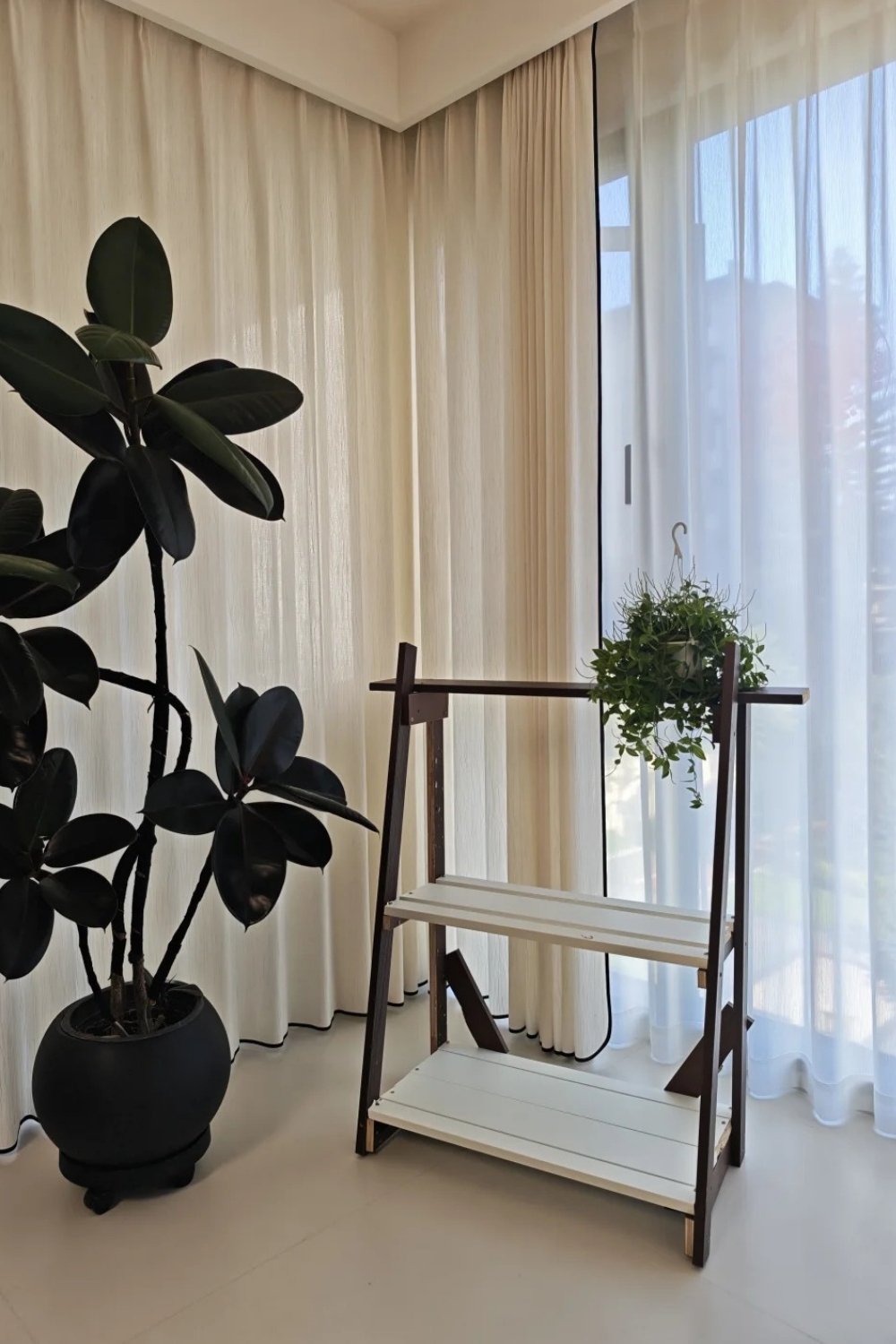
A stand with a rail across the top gives one more layer: a small trailing plant can hang from it, above the shelf plants, without any hook in the ceiling. In a kitchen, a small tiered stand next to the window takes pressure off the sill, the way this kitchen windowsill makeover shows.
One big plant at eye level
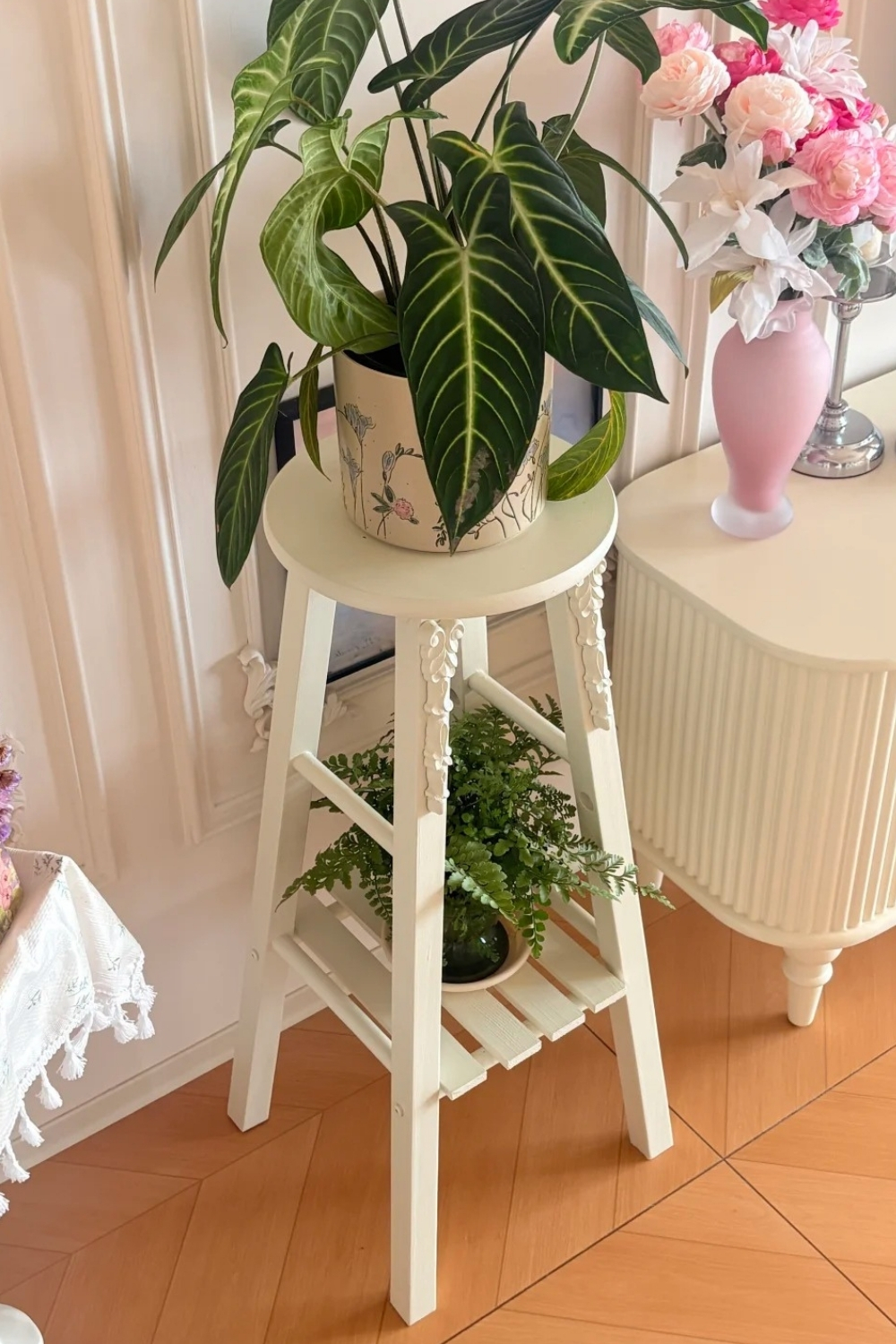
A statement plant, the one big, eye-catching plant in a room, looks different raised up. On a pedestal about 2 feet tall, an anthurium, a philodendron or a young monstera sits at eye level for anyone on the sofa, and the leaves are easier to dust and check for pests. A second, lower shelf on the same pedestal can hold a small fern, which fills the gap under the big leaves. Pick a plant stand whose base is at least as wide as the pot on top, so a heavy plant doesn’t make it wobble when someone brushes past.
All of these are toxic to cats and dogs. According to this list of houseplants to avoid with pets from Epic Gardening, anthuriums, alocasias, monsteras, philodendrons and begonias all contain calcium oxalate, tiny sharp crystals that irritate the mouth and throat if chewed. A tall pedestal helps with a dog. With a cat, I mean, yeah, a pedestal is more of a challenge than a barrier, so it’s worth choosing safe plants for the reachable spots.
For the bigger plant on the pedestal, a moss pole keeps a monstera upright as it grows, and this monstera care guide covers how to set one up.
Plant stands on wheels
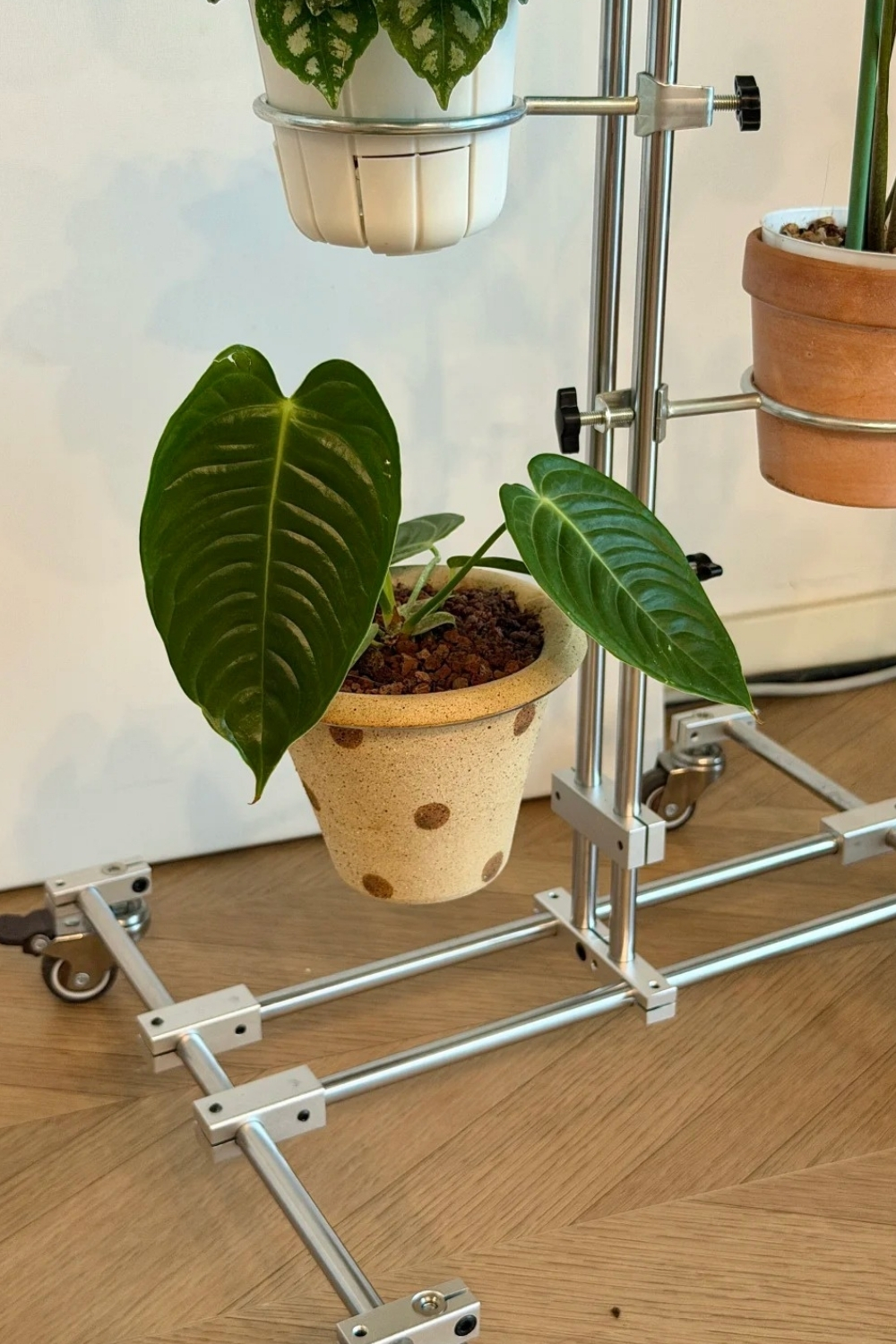
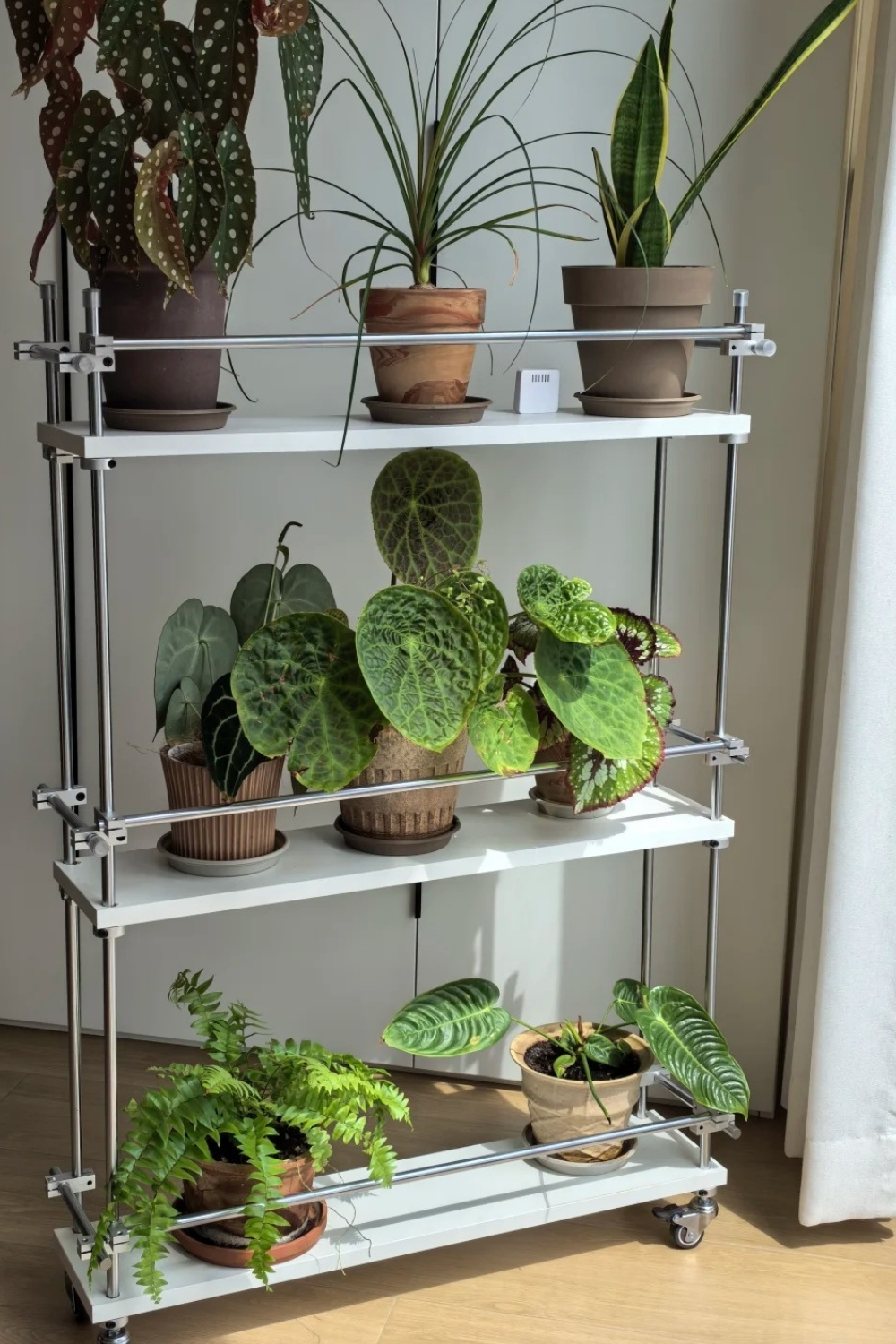
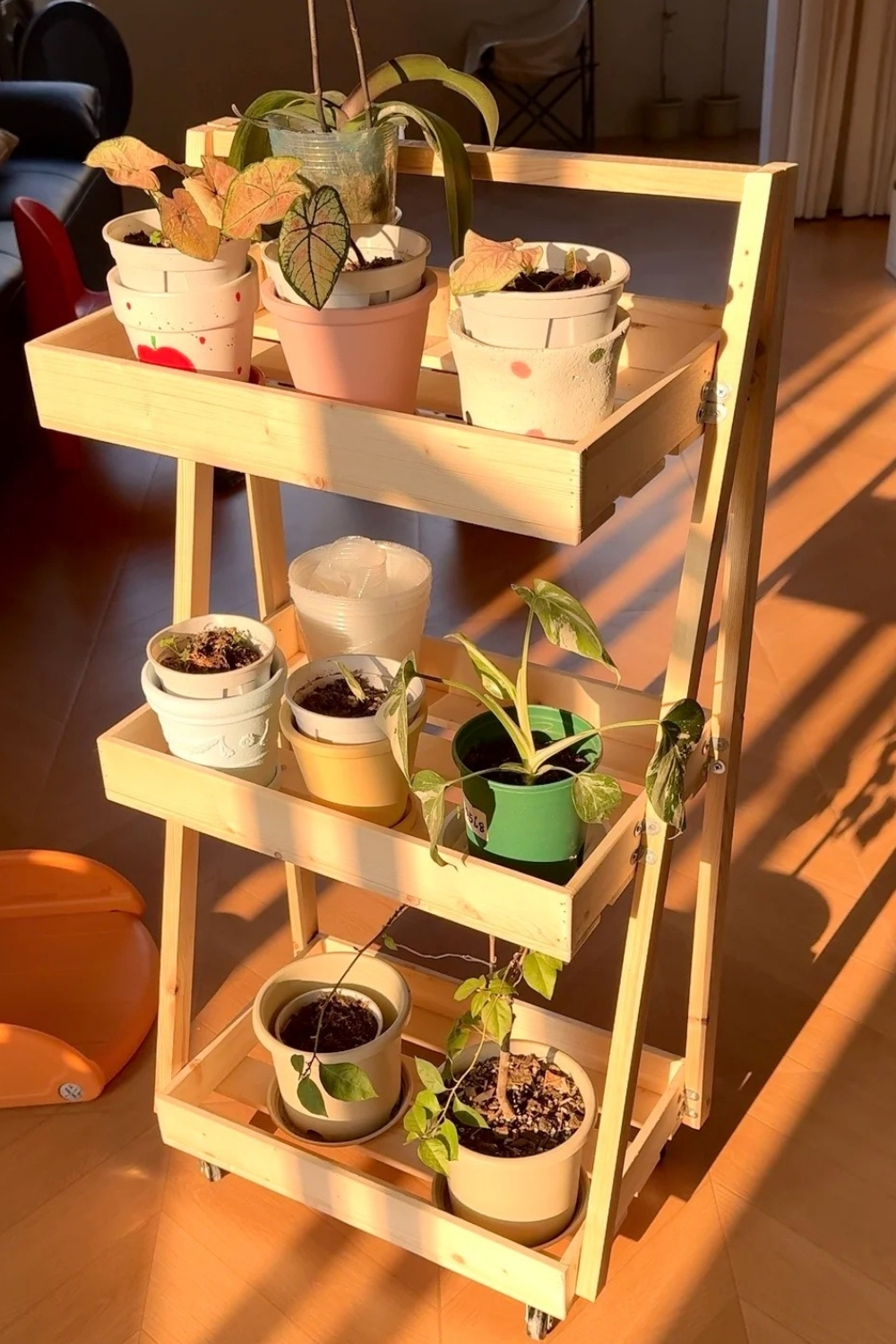
Casters, the small wheels screwed to the bottom of a stand, change how plants live in a room. A rolling plant stand can follow the light, sliding closer to the window in winter and back from the hot glass in summer. It also rolls aside for vacuuming, so the floor under it gets cleaned more than once a year.
Pick casters with brakes, so the stand doesn’t drift when someone bumps it. And check the weight limit with wet soil in mind, since a freshly watered 10-inch pot can weigh several times what it did dry. Three tiers of watered pots add up faster than it seems.
DIY plant stand ideas from crates, branches and pine
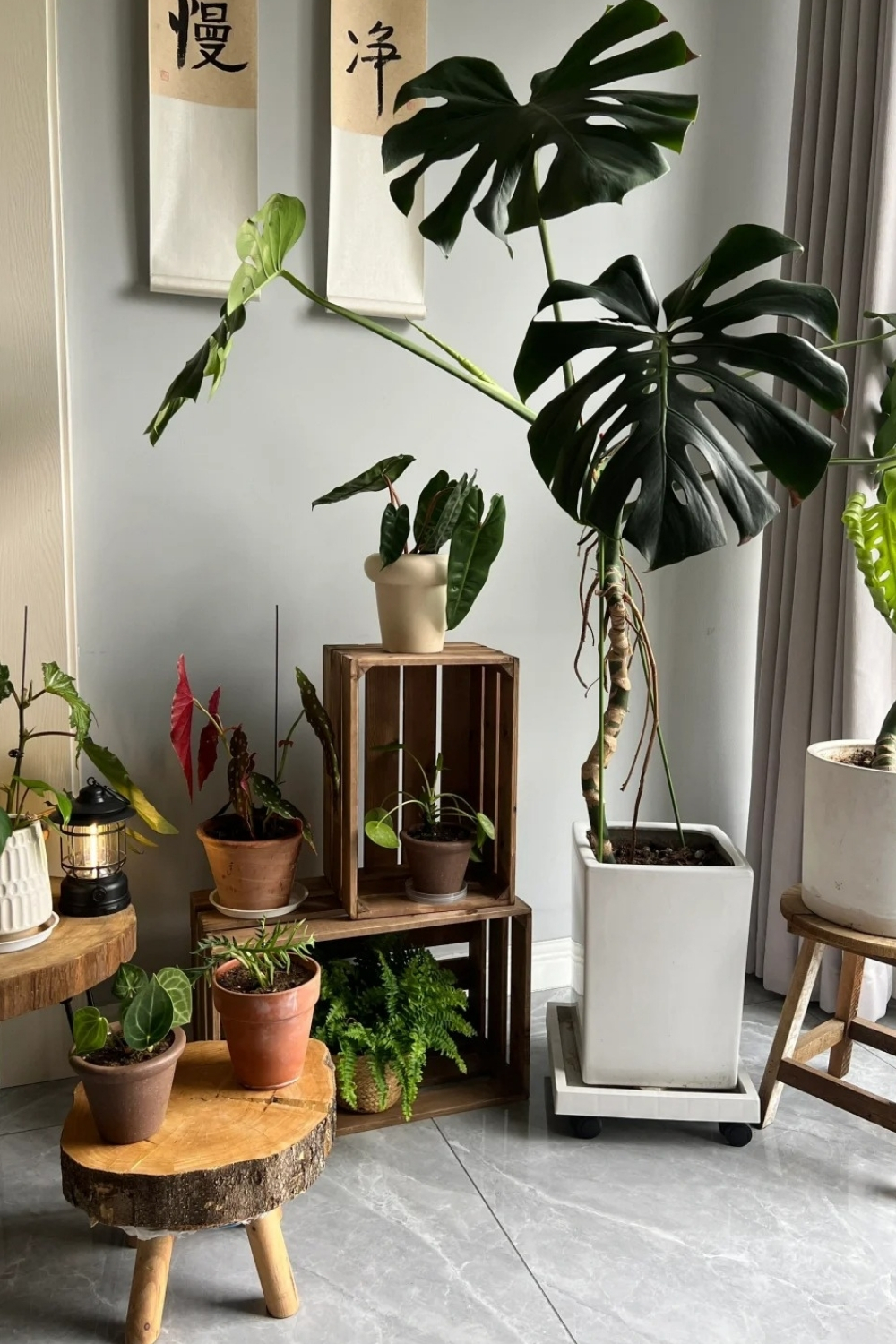
A DIY plant stand doesn’t need a workshop. Wooden crates from a craft store, stacked on their sides or screwed together at different heights, make a sturdy stand in an afternoon. A coat of furniture wax or clear sealer on the inside keeps water marks from soaking in. Screw a set of casters to the bottom crate and the same DIY plant stand rolls, which turns three crates into a plant cart that follows the sun.
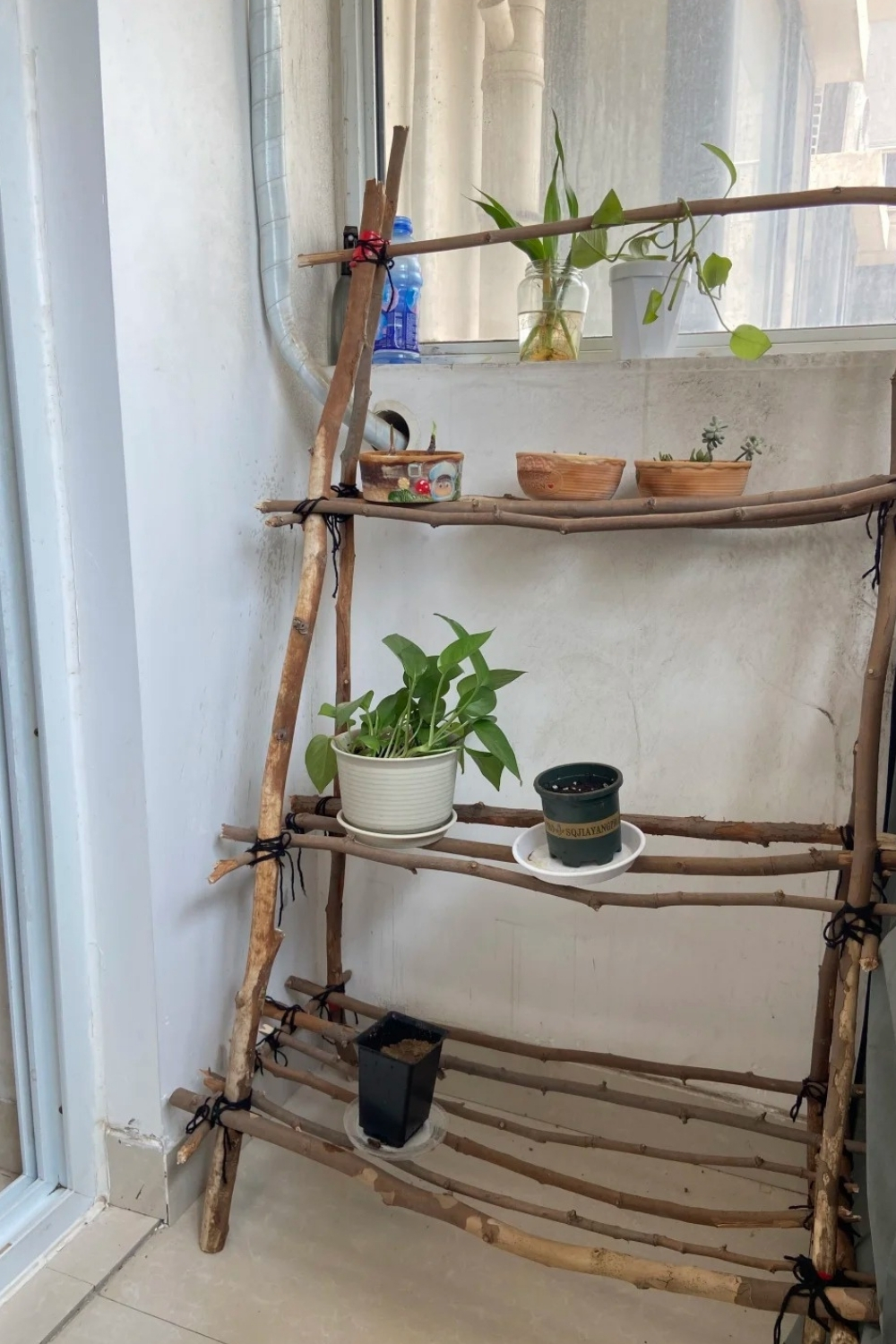
A branch shelf looks rustic and costs almost nothing. Two longer branches lean against the wall as uprights, and shorter, straight branches are tied across them with jute twine in tight crisscross knots to form shelves. It holds light pots well, but for some reason it looks heavier than it is, so keep anything big and full of wet soil off it.
A simple pine ladder stand needs two long boards for the sides, a few short boards for the shelves, and a hinge or two at the top. Stain it darker for a living room, or leave the pine pale for a bright corner. The same idea scales up outdoors, and these vertical gardening ideas for small patios and balconies carry it onto a wall or railing.
Group them into a plant corner
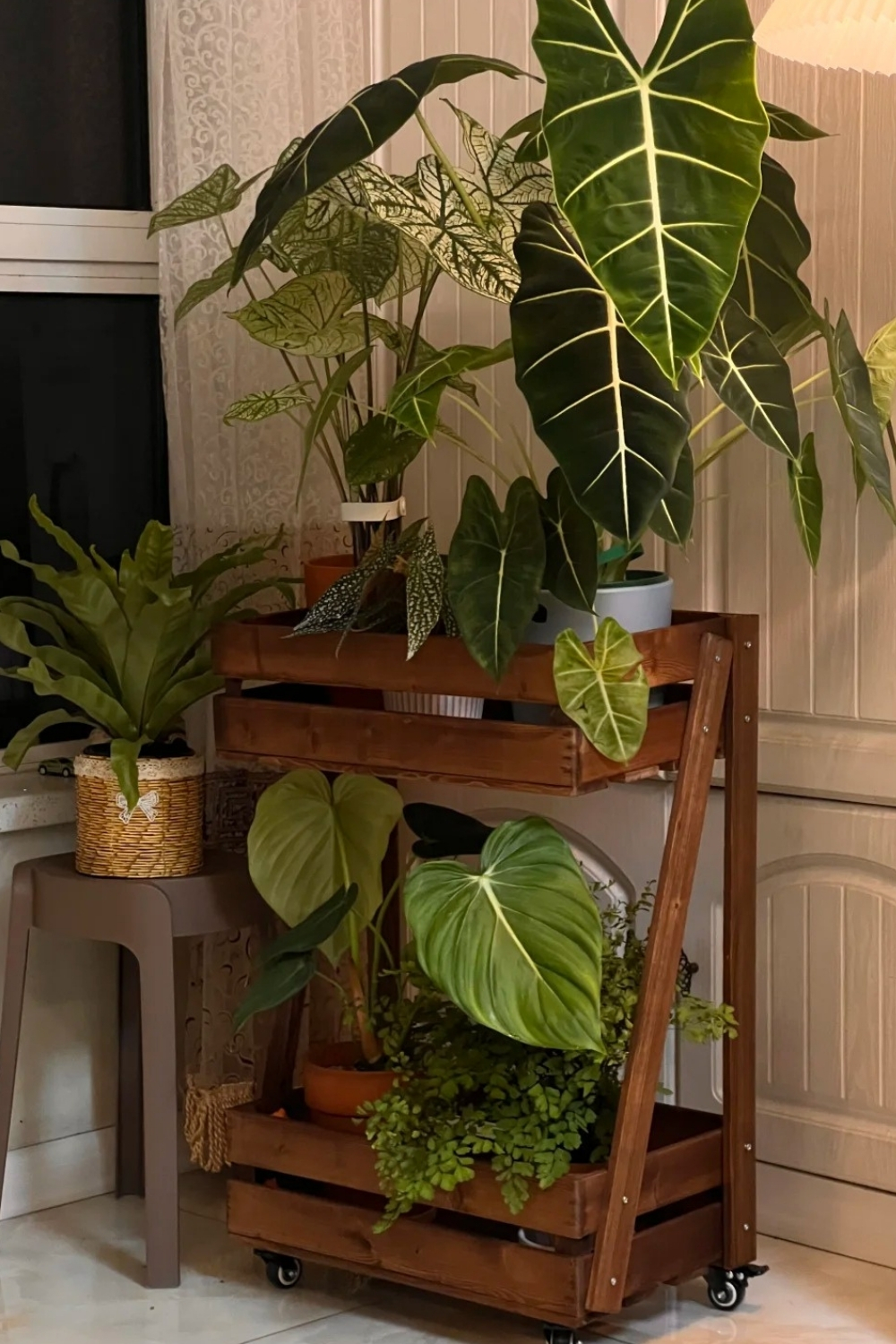
One stand holds plants; three or four stands together make a plant corner. Mix heights: a tall plant on the floor at the back, a crate or stool in the middle, small pots on low stools in front. Odd-numbered groups look more natural than neat pairs.
Plants grouped together also keep the air around them a little more humid, meaning it holds slightly more moisture, and tropical plants with thin leaves appreciate that in a heated home. Makes sense, since in the wild most of them grow crowded together under trees.
A plant corner far from the window can still work with a grow light, a lamp made to give plants the kind of light they use. Small clip-on grow lights fasten to the frame of a plant stand and can run on a plug-in timer for 10 to 12 hours a day, so nobody has to remember to switch them on.
Keep water off the floor
Every pot on a stand needs a saucer, and terracotta needs one most, since unglazed clay lets water seep through its walls. According to Gardening Know How’s tips on protecting wood floors from potted plants, cork and felt pads look tidy but can still get wet when watering gets careless, and a damp pad trapped under a pot can stain or mold the floor beneath it.
On a rolling or tiered stand, a shallow tray on each shelf catches the drips from the pots above. So put the cork pad under the saucer, never instead of it, and lift the pots every few weeks to check. A dark ring or a soft spot on a wood floor is much easier to fix early.
Taking a plant stand outside
Not every indoor plant stand survives a patio. Metal stands with a powder-coated finish, a baked-on paint layer that resists rust, handle rain well. Pressure-treated wood, which has been soaked with a rot-resistant treatment, and naturally rot-resistant cedar also last outside. Untreated pine, crates and branch shelves soak up rain and start to rot or grow mold within a season.
An outdoor plant stand on a balcony needs a heavier base or a strap to the railing, because wind tips tall stands over. And before the first frost, bring the houseplants back inside along with any wooden stand you want to keep.
A plant stand earns its place when the plant on it grows better than it did on the floor; if it only looks good, move it to where the light is.