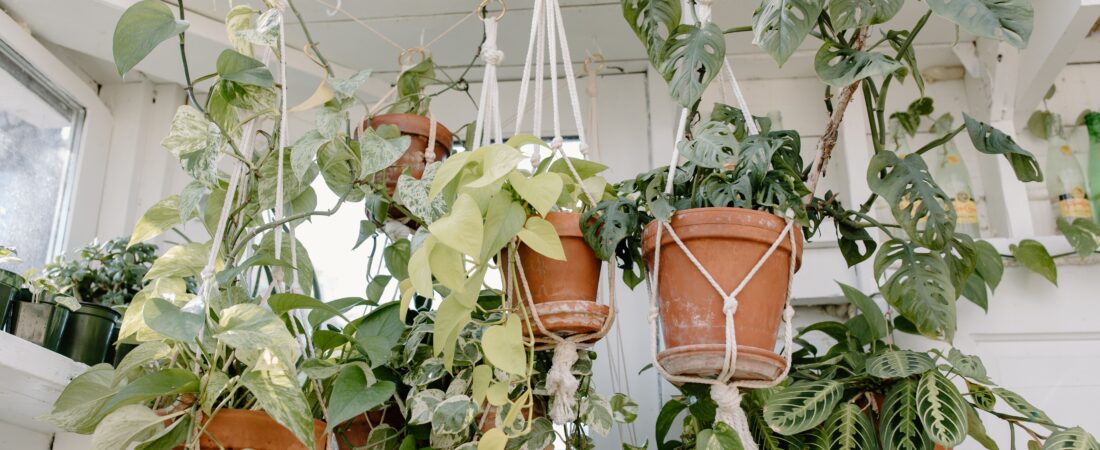
Most hanging plants indoors end up where they look good from the sofa, not where the light is. A few weeks later the plant shows it: bare stems at the top, long thin strands at the bottom, and leaves spaced an inch or more apart along the vine. Before any hook goes into the ceiling, stand in the spot around midday and try reading a page of a book without a lamp. A spot that fails that test will starve most hanging plants, however good the basket looks there.
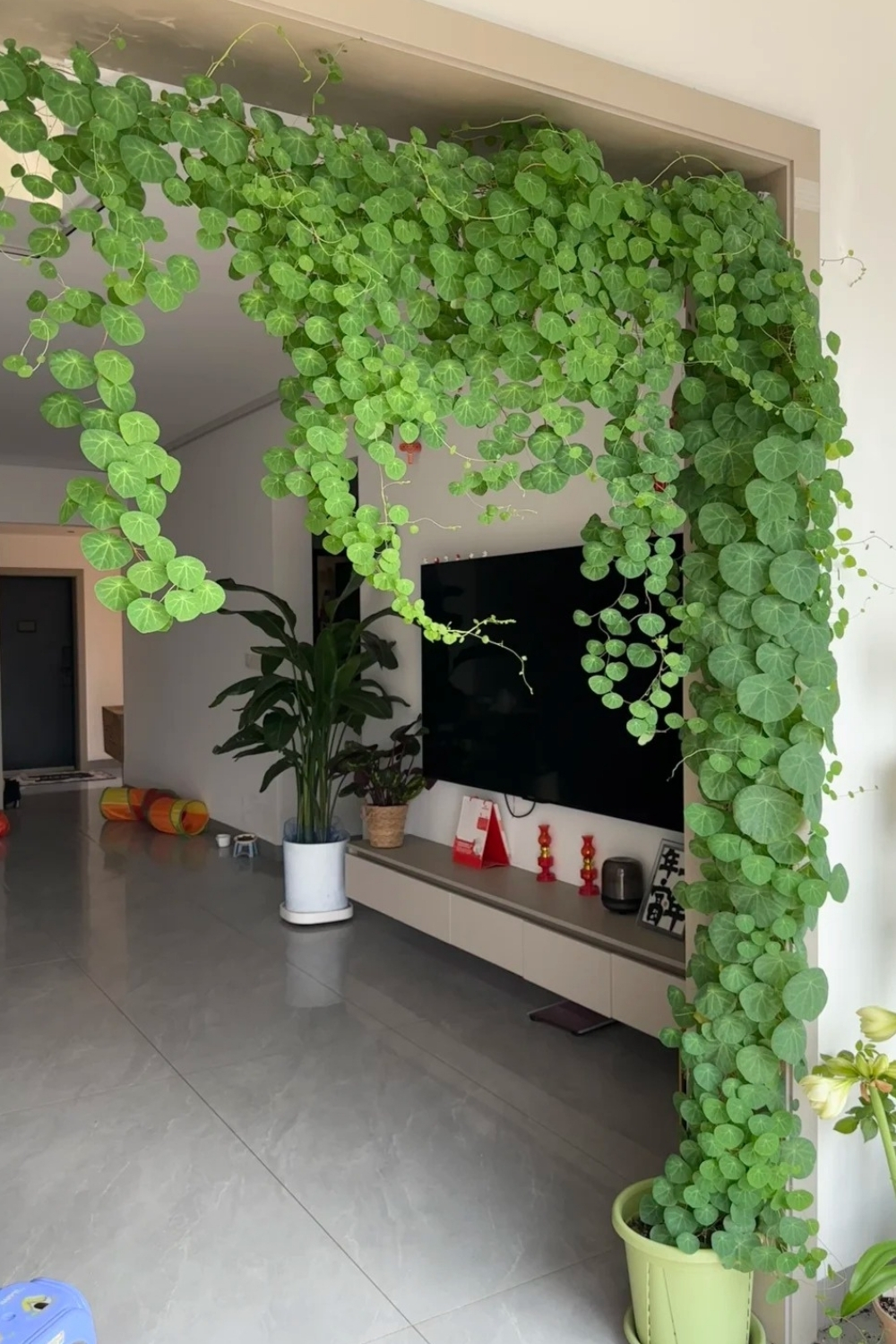
A vine trained all the way around a doorway shows what one healthy trailer can do once it has light and something to follow. To borrow the idea, put a plant on a shelf beside a doorway near a bright window, add small adhesive hooks along the frame, and guide the longest stems from hook to hook for a season or two.
Trailing, climbing or cascading: what your plant actually wants to do
Hanging plants don’t all grow the same way, and the difference decides how they behave in a basket.
Trailers send out long, flexible stems that simply hang down. String of pearls (Curio rowleyanus), string of turtles (Peperomia prostrata) and string of hearts (Ceropegia woodii) belong here. They stay thin and lacy, and they look best hung high enough for the strands to fall freely.
Climbers grow downward in a pot, but what they would rather do is grab onto something and go up. Pothos (Epipremnum aureum), heartleaf philodendron (Philodendron hederaceum) and English ivy (Hedera helix) all make aerial roots or clinging stems. In a hanging pot they trail; given a frame, a doorway or a moss pole, they climb, and the leaves usually get bigger when they do.
Cascaders form a full, arching mound that spills over the rim instead of dangling in strands. Spider plant (Chlorophytum comosum), Boston fern (Nephrolepis exaltata) and rhipsalis, also called mistletoe cactus (Rhipsalis spp.), grow this way.
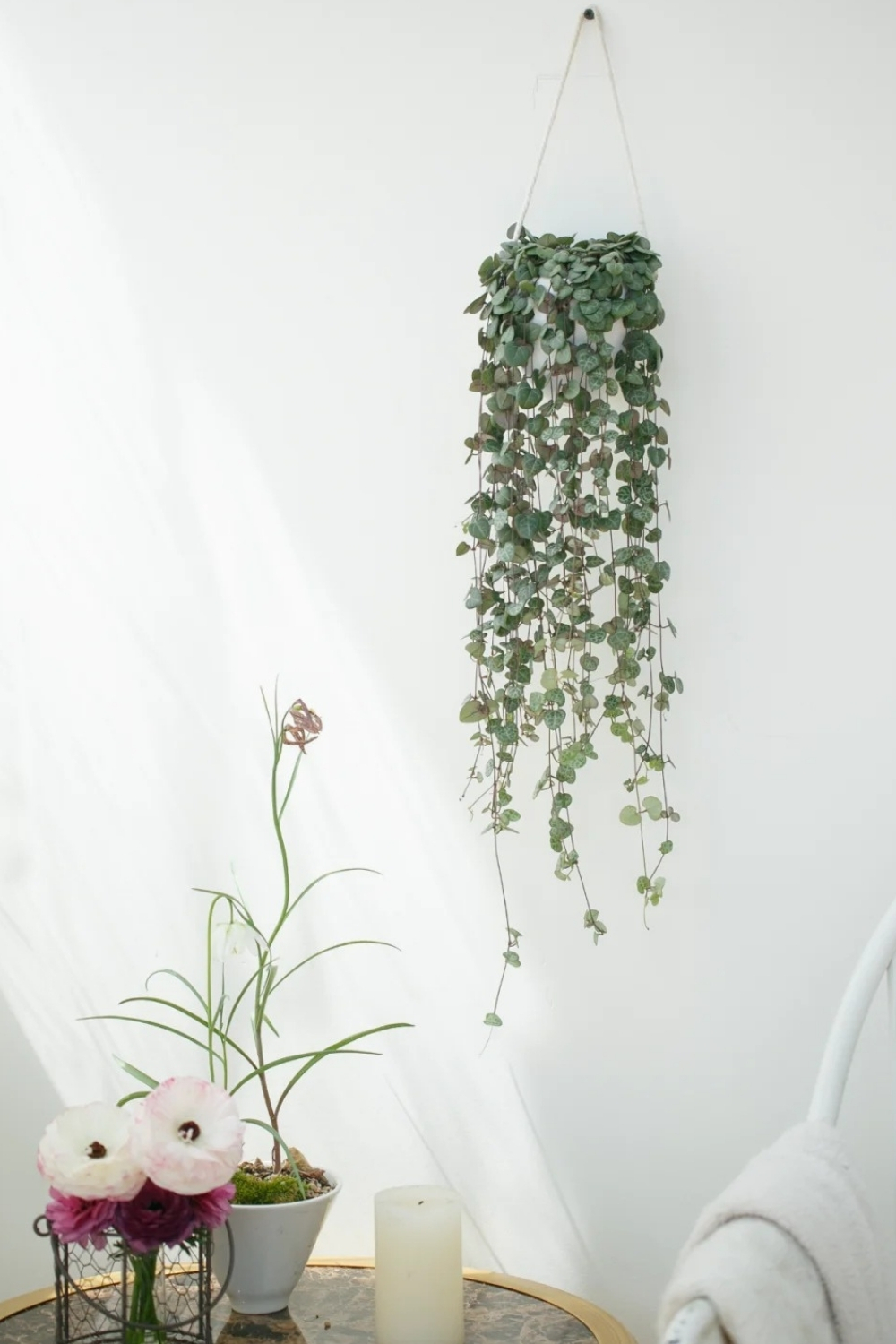
The habit decides where a hanging plant goes. A string plant hung low gets tangled in chair backs and brushed by every passerby. A climber in a ceiling basket will keep reaching for the nearest curtain rod. A cascader needs a bit of clearance around it, because it grows wide before it grows long.
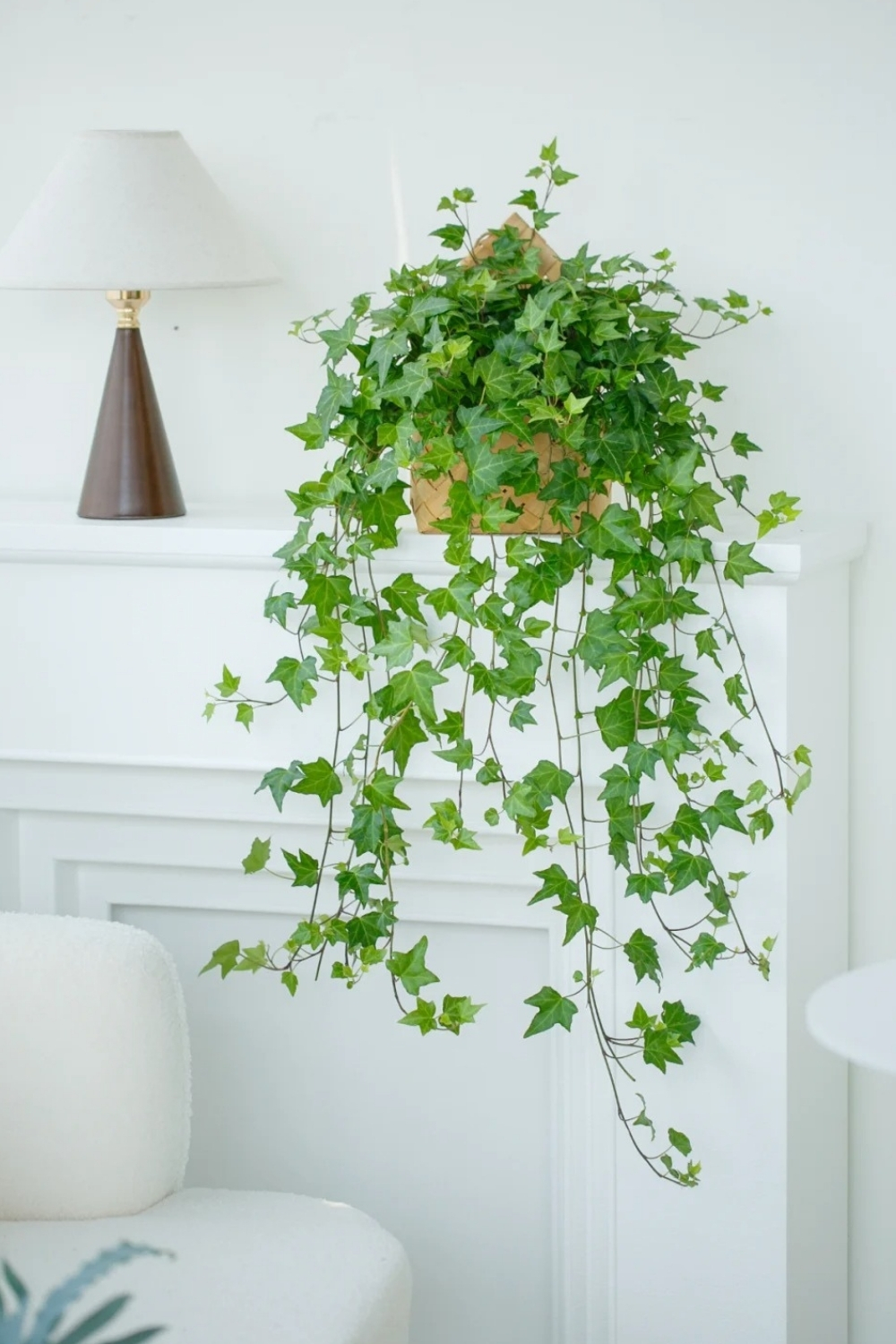
Ivy is the climber that fills out fastest in a wall pocket, and it handles cooler rooms better than most tropical trailers. It is toxic to cats and dogs, though, and the leaves are the most toxic part. Hang it where a cat can’t reach it from a shelf or the back of a sofa.
Which hanging plants indoors suit the light you have?
With hanging plants indoors, light picks the plant, not the other way around. Most hanging house plants come from forest canopies, where they grow in bright light that is broken up by leaves above them. A sunny window without any filter is harsher than that, and a dim hallway is far darker. Personally, I think it’s worth starting with the spot and choosing the plant second, not the other way around after a trip to the garden center.
Bright spots, out of direct midday sun
String of pearls needs the most light of the common hanging plants. It does well a foot or two back from a bright window, but the beads scorch in a hot south- or west-facing pane in summer. The plant is toxic to pets and somewhat poisonous to people if eaten, so it belongs high up and away from curious paws.
Rhipsalis and hoya (Hoya carnosa) also want bright, indirect light. Rhipsalis is a jungle cactus that grows on trees in the wild, so it likes more humidity and less sun than a desert cactus. Hoya flowers only when it gets enough light. Both are listed as safe for cats and dogs in this roundup of non-toxic houseplants from Laidback Gardener, as are string of hearts, spider plant and most ferns.
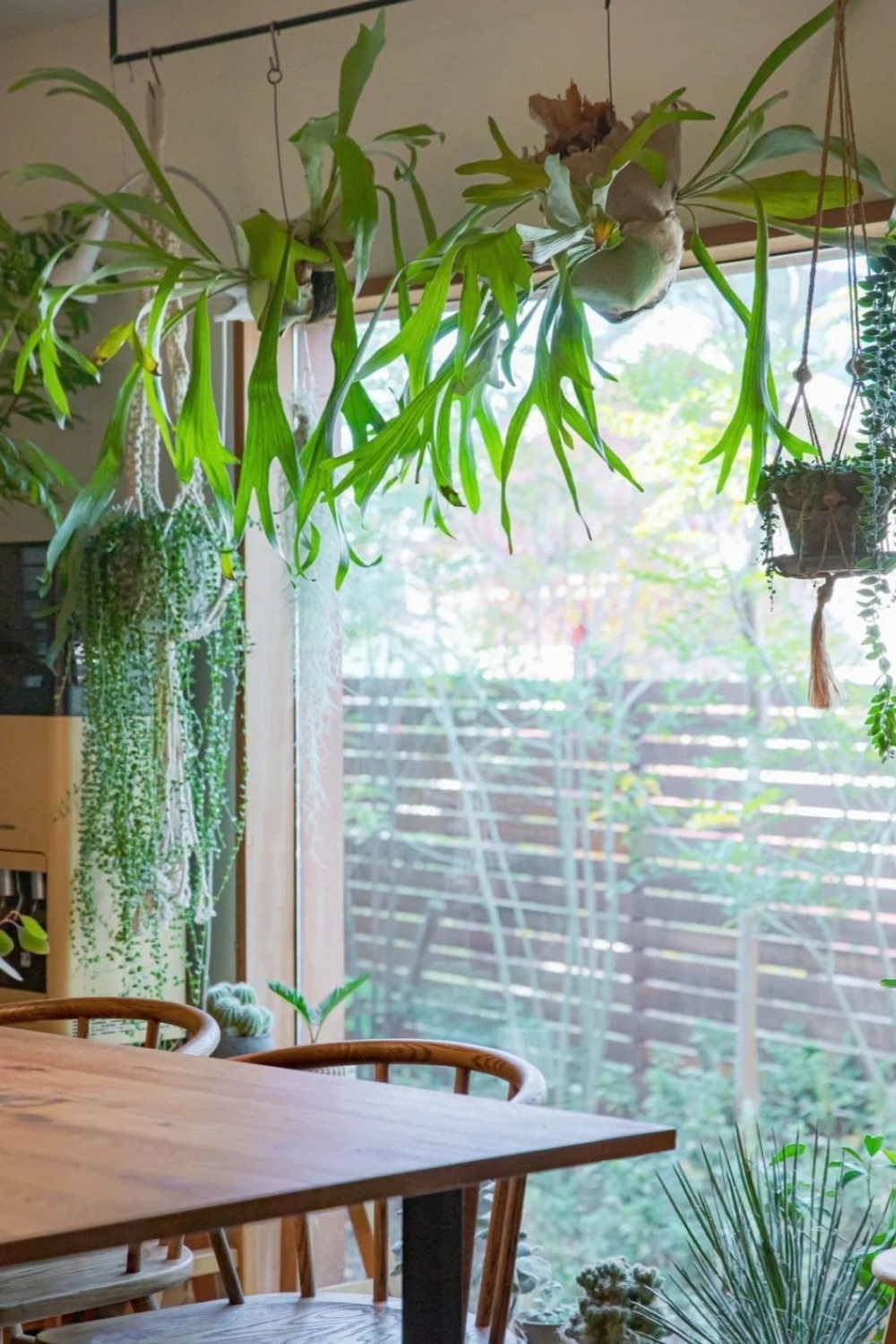
A window wall above a dining table works well: mounted staghorn ferns on a rail, a string-type trailer near the glass, and nothing low enough to brush a head.
Medium light
Pothos, heartleaf philodendron and ivy grow happily a few feet from an east window or deeper inside a bright room. They’re pretty much the most forgiving hanging plants indoors, which is why they’re everywhere. All three are toxic to cats and dogs. Pothos and philodendron contain calcium oxalate crystals that irritate the mouth and throat, so they belong out of reach, not on a low shelf. The Swiss cheese vine (Monstera adansonii) is a close relative and gets the same caution. For the larger cousin, this monstera care guide covers moss poles and aerial roots in more detail.
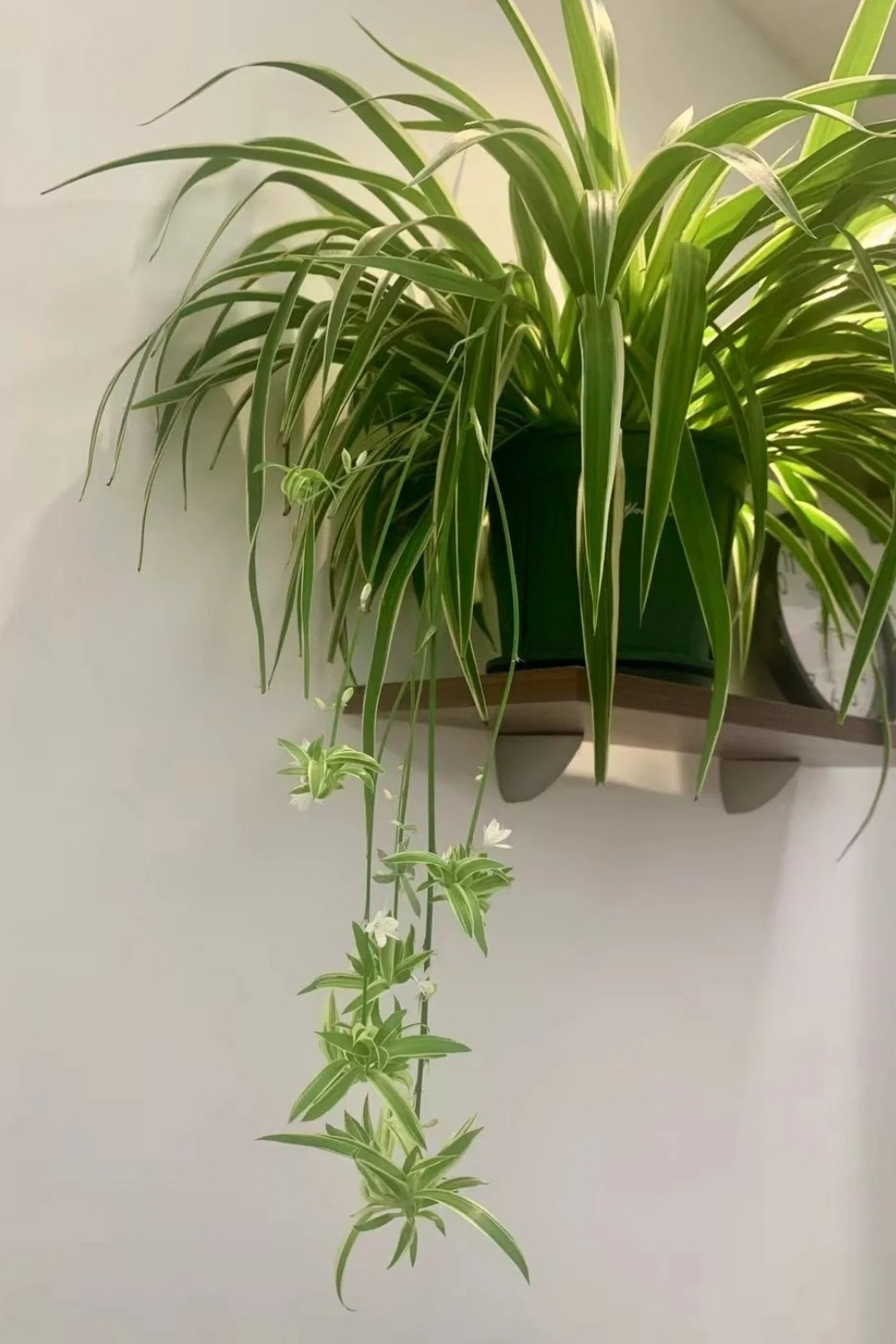
Spider plant sits comfortably between bright and medium light, and a wall shelf suits it: the pot stays stable, and the baby plantlets dangle well below the board. It’s one of the few cascaders that is safe around pets, though cats often chew the leaves anyway. I mean, fair: the long leaves dangle right at paw height.
Lower light
Pothos and philodendron are the two hanging plants that put up with low light, and both show up again on this list of plants that cope with dark rooms. “Put up with” is the honest phrase: growth slows, new leaves come in smaller, the gaps between them get longer, and variegated types turn greener. Low light indoors behaves a lot like shade outside, and the plants on this list of what actually grows in shade follow the same logic. In a dark room, keep expectations modest and move the plant toward the window for a few weeks whenever it starts to look sparse. Even experienced gardeners sometimes have plants that simply don’t thrive in a dark corner, and that usually says more about the corner than the gardener.
Where to hang them so they look planned, not parked
A hanging plant near a window should be close to the glass, not against it. In winter, leaves that touch a cold pane can get chill damage, and the air right at the window is several degrees colder than in the room. A gap of 6–12 inches avoids that. These may seem like small details, but over a whole winter they can make a huge difference.
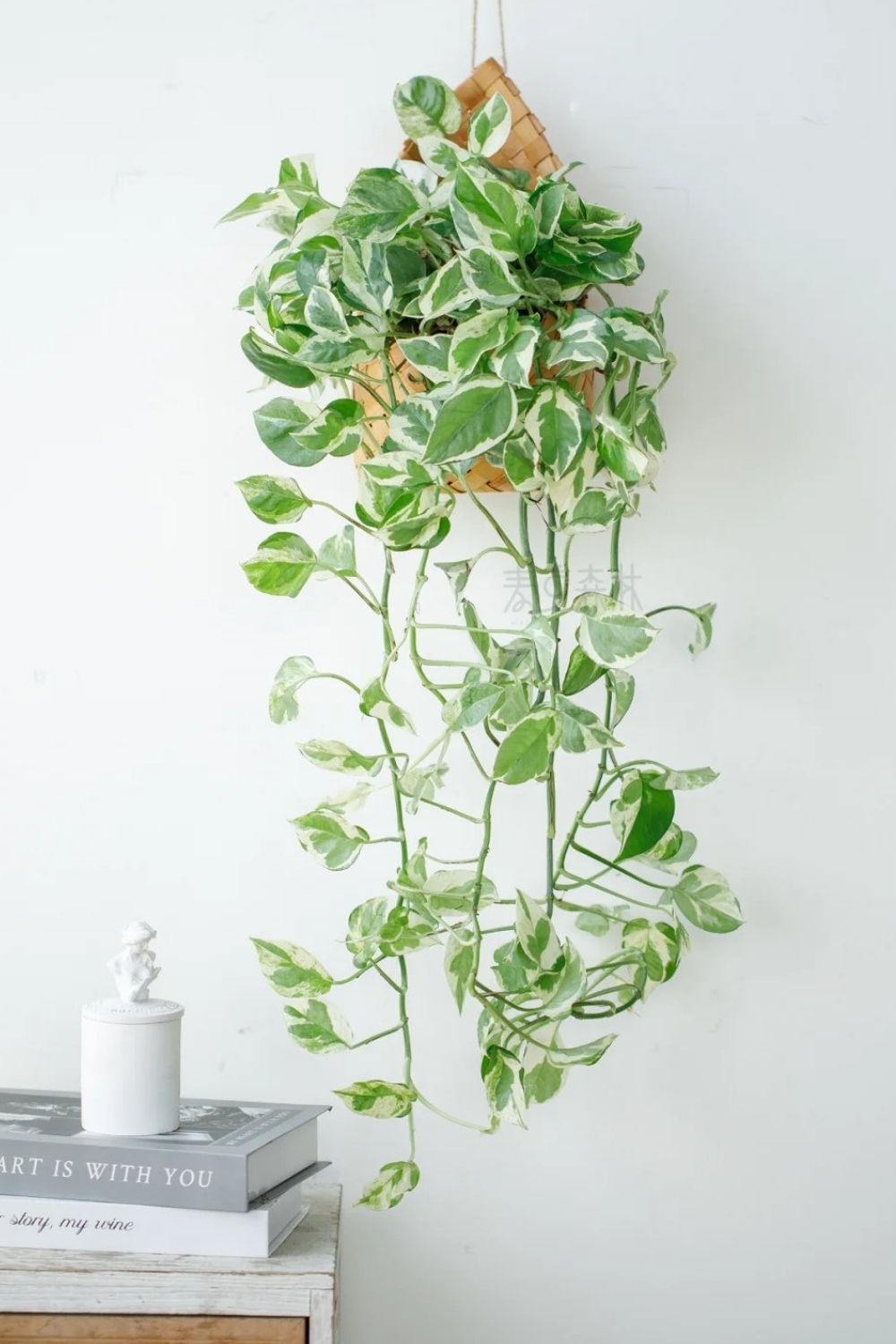
Hanging plants in wall pockets work well on a blank wall that gets side light from a window. A single woven pocket with a variegated pothos is enough for a narrow wall beside a bookshelf; two pockets side by side, at slightly different heights, fill a wider one.
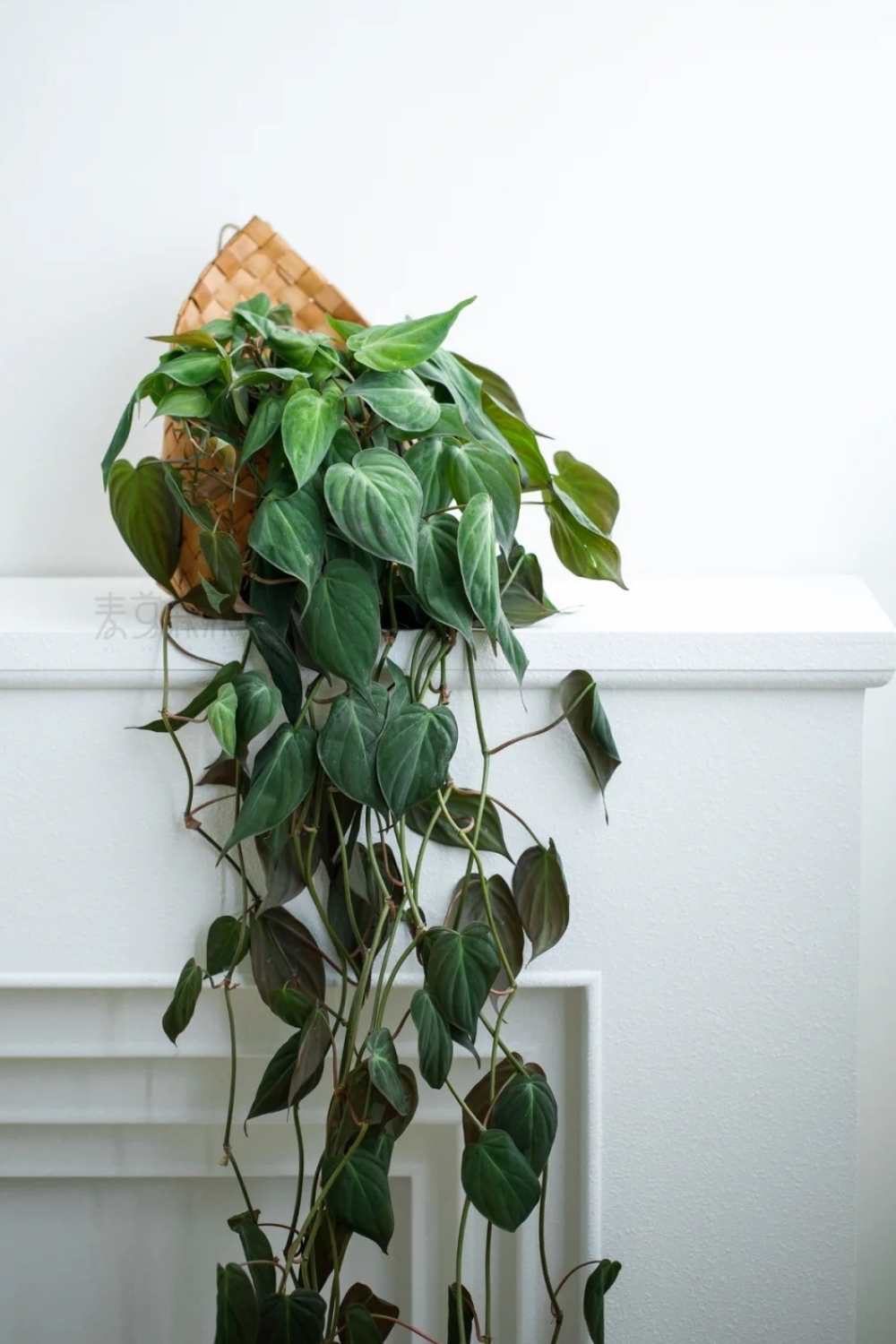
A pocket hung just above a mantel or a low cabinet lets the vines fall over the edge and down the front, which looks fuller than a vine dangling into empty air.
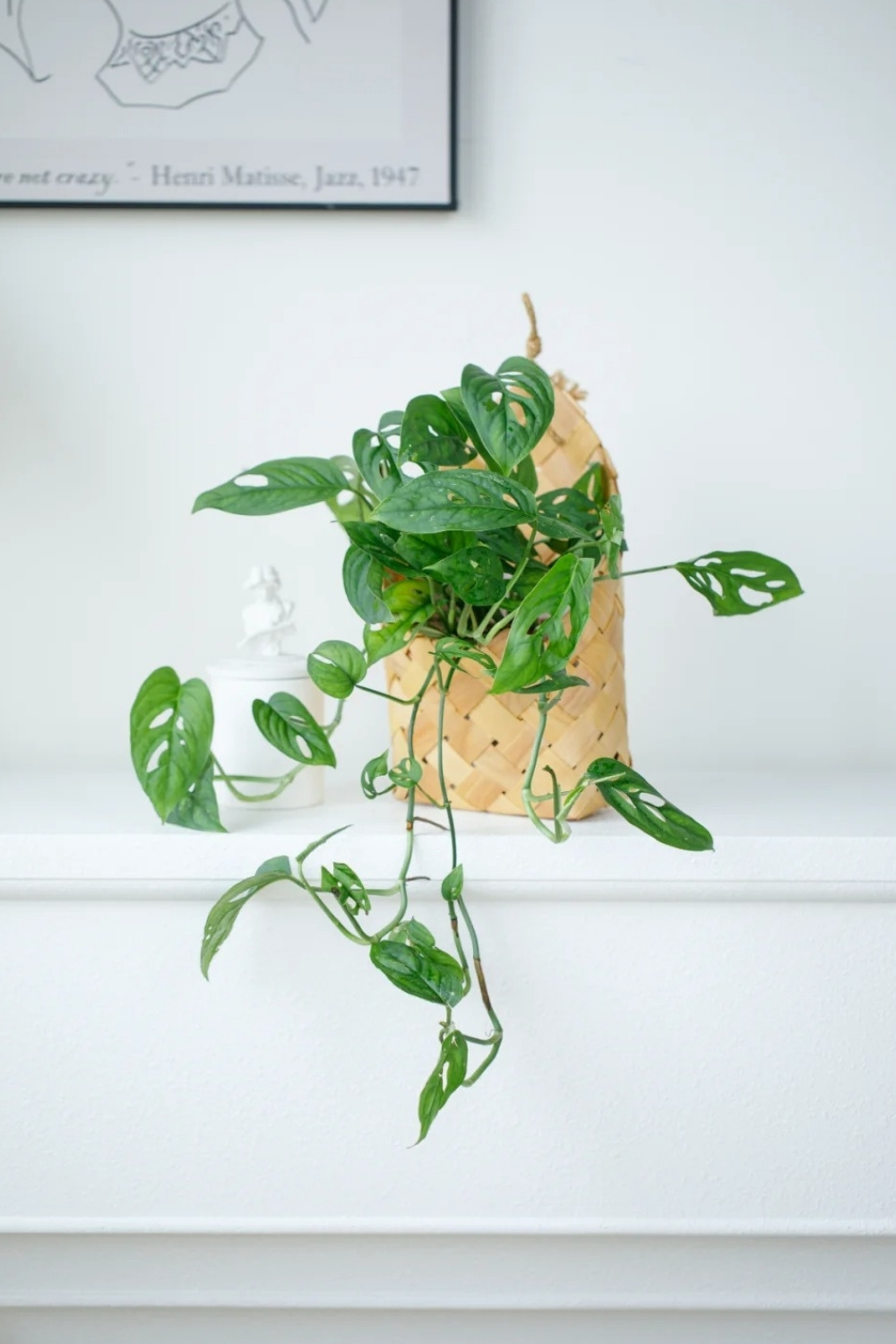
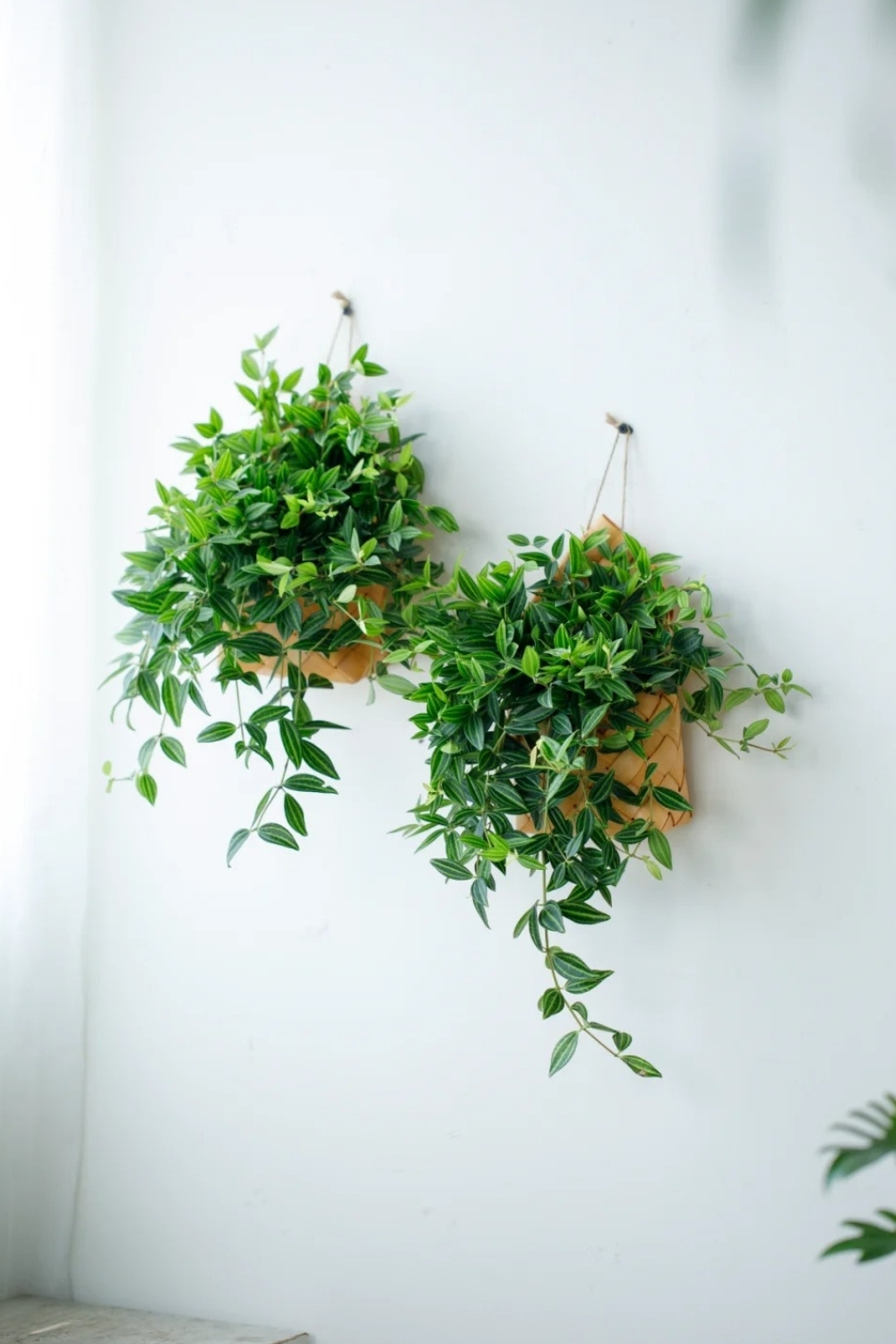
Where a ceiling hook isn’t an option, a tall plant stand with a top rail does the same job. Above shelves and a TV wall, hanging plants soften a lot of hard edges and black screens. In a doorway or as a room divider, a row of hanging plants marks the edge of a space without blocking light. Of course, leave at least 6 feet 8 inches of clear headroom in a walkway, the height of a standard door, so nobody walks into a basket.
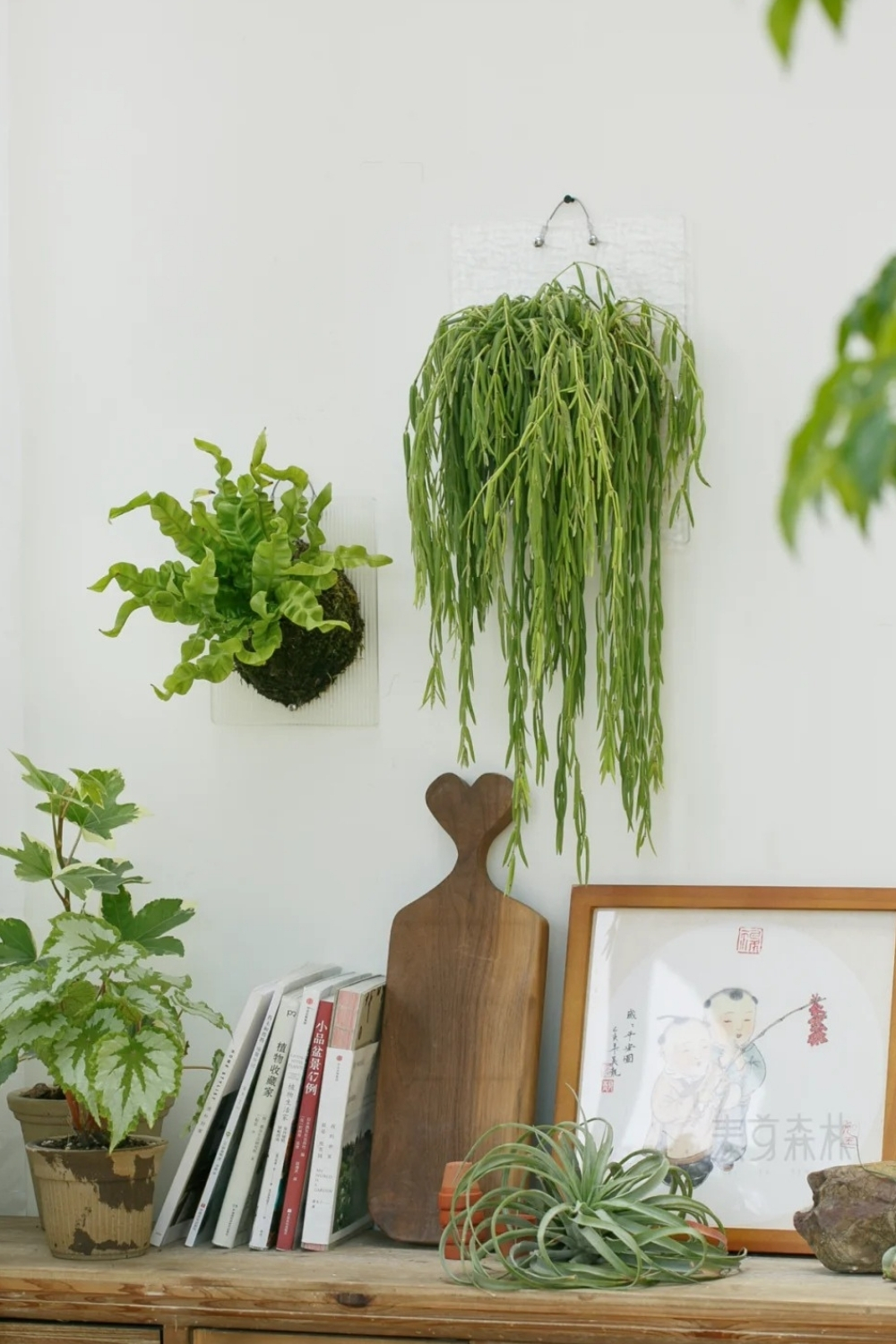
Mixing heights on a shelf wall keeps a group of plants from looking like a row of identical pots. A trailer hung high, a mounted fern at eye level and a small plant on the shelf below create three layers in about 3 feet of wall. A narrow kitchen works the same way on a smaller scale, and this kitchen windowsill makeover shows what fits when counter space is tight.
Hooks, wall pockets, shelf edges and grid walls
There are four main ways to get a hanging plant off the floor, and each one handles weight differently:
- Ceiling hooks: strongest when screwed into a joist. Joists usually run 16 or 24 inches apart, and a stud finder locates them in a few seconds. Without a joist, use a toggle bolt through the drywall, never a plastic anchor.
- Wall-mounted pockets: light, and good for small plants in plastic nursery pots. A screw into a stud or a proper wall anchor holds them better than a nail.
- Shelf edges: the easiest option, since nothing gets drilled into the ceiling. The pot sits on the shelf and the vines trail over the edge.
- Pegboard or grid walls: hold many small pots at once and let you move them around as plants grow.
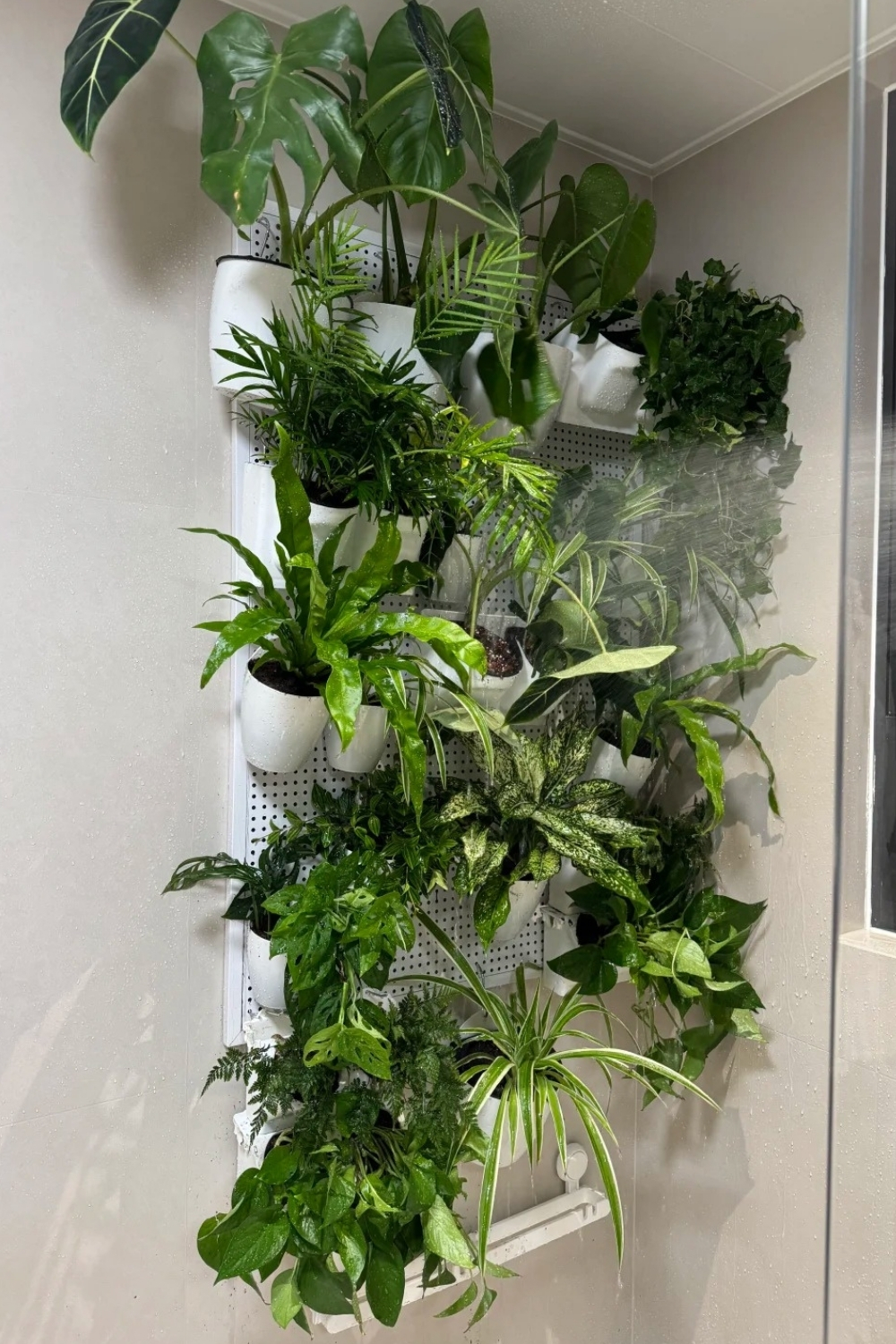
A grid wall gets heavy quickly, since every pot adds wet soil. Mount the panel into studs, and leave a drip tray or a towel at the bottom for watering day. The same system works on a balcony, and the vertical gardening ideas for small patios cover the outdoor version.
Wet soil is heavier than you think
A hanging plant weighs one thing on the shelf at the store and quite another after watering. According to Bob Vila’s guide to hanging plants from the ceiling, most hanging plants weigh 7 to 20 pounds. A typical swag hook holds about 20 pounds. A plastic anchor rated for 10 to 25 pounds in a wall manages only about a third of that in a ceiling, which is why it has no place above a sofa.
Weigh the plant right after watering, then pick a hook rated above that number. Basket liners or a plastic nursery pot inside a decorative basket stop water from dripping onto the floor. The nursery pot also comes out easily, so the plant can be watered in the sink, drained for 20 minutes and hung back up.
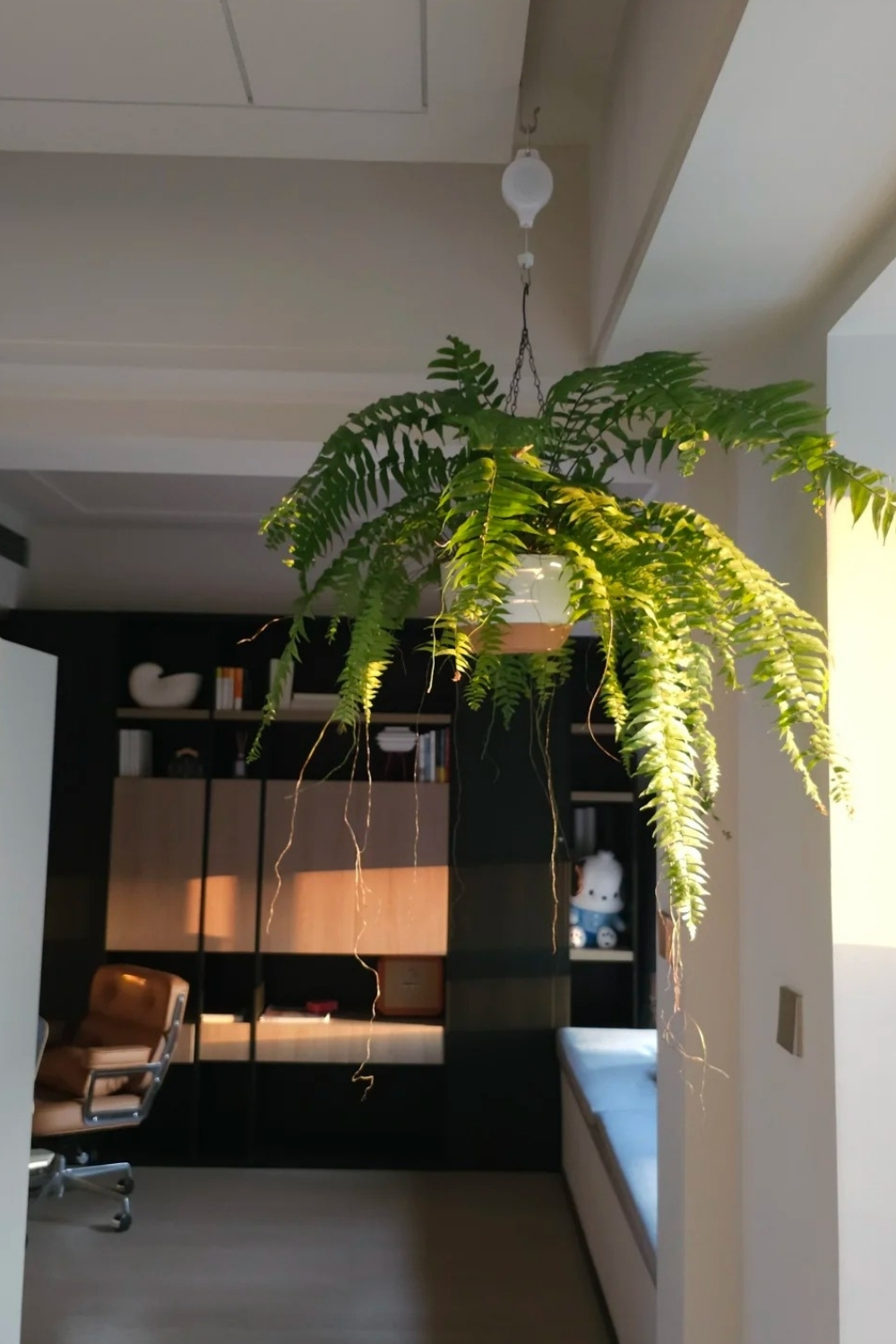
Watering hanging plants from a ladder gets old fast, and, to be fair, it’s also how most of us end up with a wet sofa cushion. A retractable plant pulley lets you lower a fern to arm’s height, water it and push it back up, and a lower hook does the same job with no hardware at all.
How do you keep a trailing plant full instead of stringy?
Hanging plants go bald at the top for a simple reason: the growing tips get the energy, and the older leaves near the soil fall off over time. Unfortunately, more water won’t bring them back. Three habits keep a pot full.
Pinch the tips. Cutting a long vine back to just above a leaf makes the plant send out new shoots from lower down. With pothos and philodendron, the cut pieces root in a glass of water within a few weeks and can go back into the same pot.
Pin vines back onto the soil. A long stem of pothos or ivy laid across the surface of the pot and held with a U-shaped pin will root where its nodes touch the soil, filling in the bare top.
Rotate the plant every week or two. The side facing the window grows faster, and a quarter turn keeps the growth even.
Climbers can also be trained along a frame or doorway, like the opening photo. Tie the stems loosely with soft plant ties and move the ties as the vine grows, so they never cut into the stem.
Before buying the next hanging plant, stand under the hook you have in mind at noon, check the light and the headroom, and only then pick the plant that suits that spot.