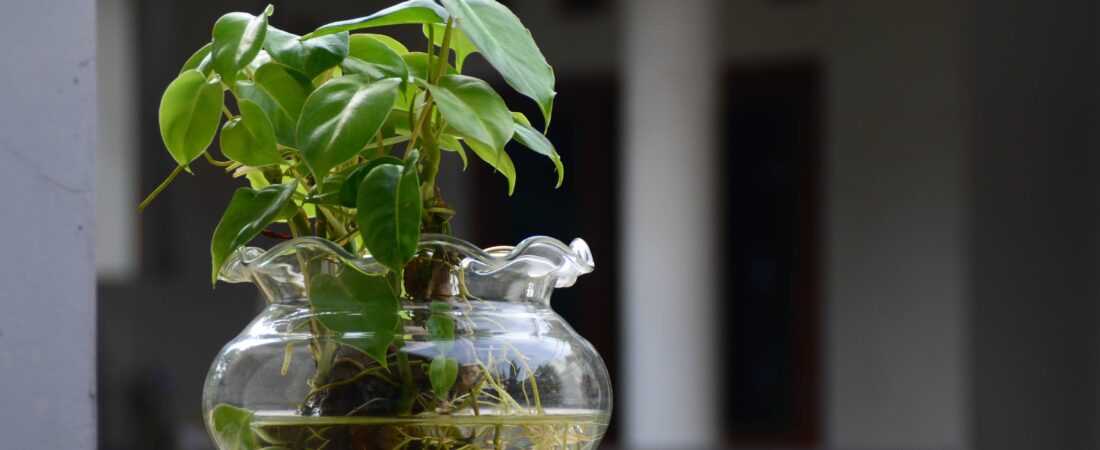
Snip a 4- to 6-inch piece of pothos just below a node, the small bump on the stem where a leaf grows, pull off the lowest leaf and stand it in a glass of water on a bright windowsill. Within two or three weeks, white roots appear from that bump. That’s the easiest way to see which plants grow in water indoors, and it costs nothing but a cutting.
Some of these plants only use water to get started and do better in soil later. Others can stay in a vase for years. Knowing which is which, and keeping the water fresh, is most of the work.
Why some plants are happy in water
Roots need two things: water and oxygen. Soil holds both in its tiny air pockets. Water holds a little oxygen too, and plants that grow in water make thinner, more delicate roots built to take it up straight from the water. Those are different from soil roots, which is why a plant raised in a vase often sulks for a few weeks when it’s moved into a pot later.
Roots rot when the oxygen runs out. Old, stale water, a vase crowded with roots and leaves sitting underwater all use up oxygen and let bacteria take over. Fresh water and a little room solve most of it.
Plants that can live in water for years
Pothos and philodendron
Pothos (Epipremnum aureum) and heartleaf philodendron (Philodendron hederaceum) are the easiest plants to keep in water long term. They root fast, grow slowly but steadily, and a single vase can hold a trailing plant for years. Both are toxic to cats and dogs, since they contain calcium oxalate, sharp microscopic crystals that irritate the mouth.
Lucky bamboo
Lucky bamboo isn’t bamboo at all; it’s a dracaena (Dracaena sanderiana). It’s sold growing in water, often with pebbles, and it can stay that way indefinitely with fresh water and a bit of feeding. It’s toxic to cats and dogs.
Asparagus fern
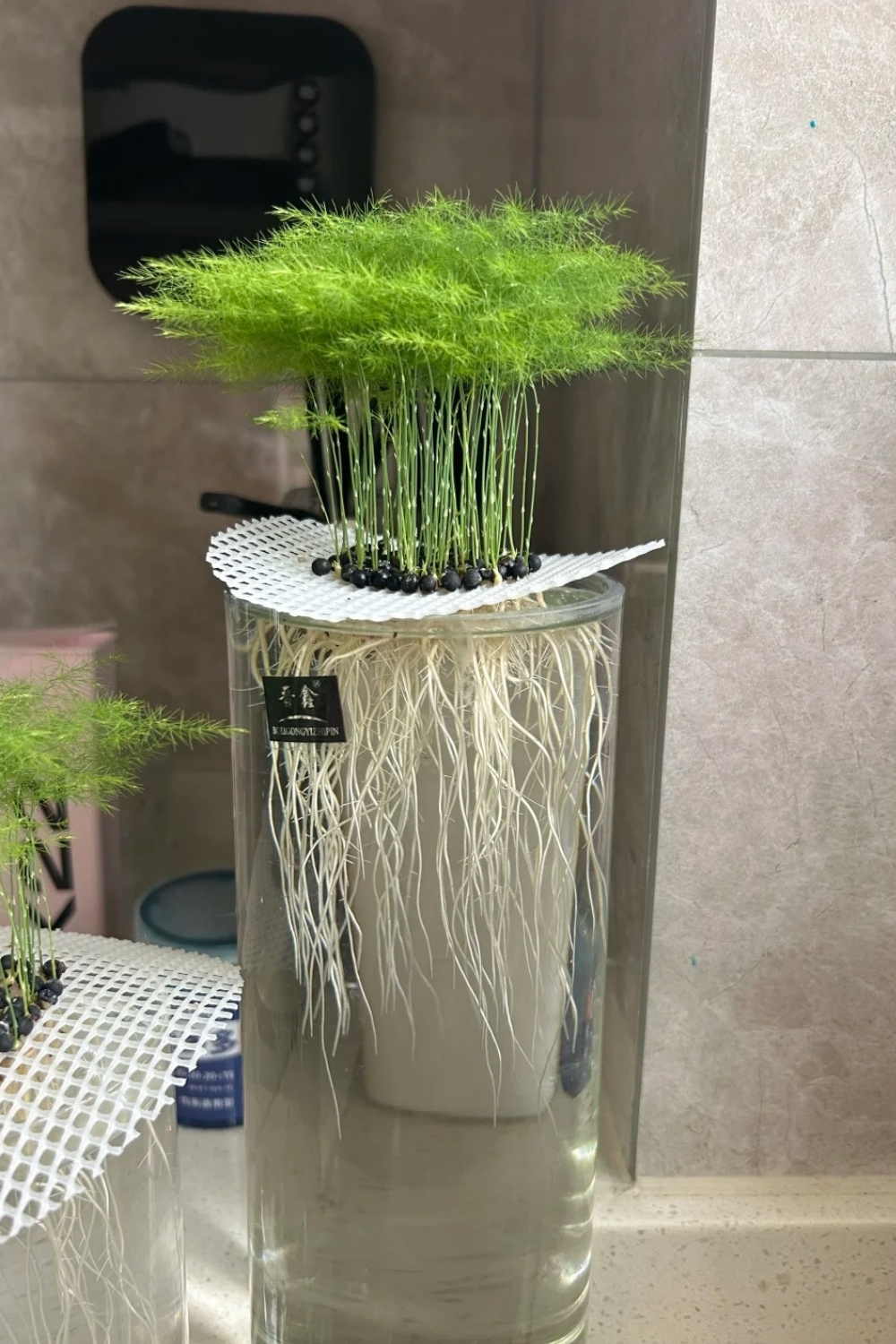
The asparagus fern (Asparagus setaceus) is a feathery plant that isn’t a true fern. It can grow in water held up by a mesh or a cup lid, with its roots hanging into the water below. According to the ASPCA’s entry on asparagus fern, it’s toxic to dogs and cats, and the berries can cause vomiting and stomach upset.
Spider plant
The spider plant (Chlorophytum comosum) is the pet-friendly choice on this list. The small plantlets that dangle from a mature plant root in water within a week or two, and they can grow in water for months before going into soil. It’s one of the few common houseplants considered non-toxic to cats and dogs, so it suits a low shelf in a home with pets.
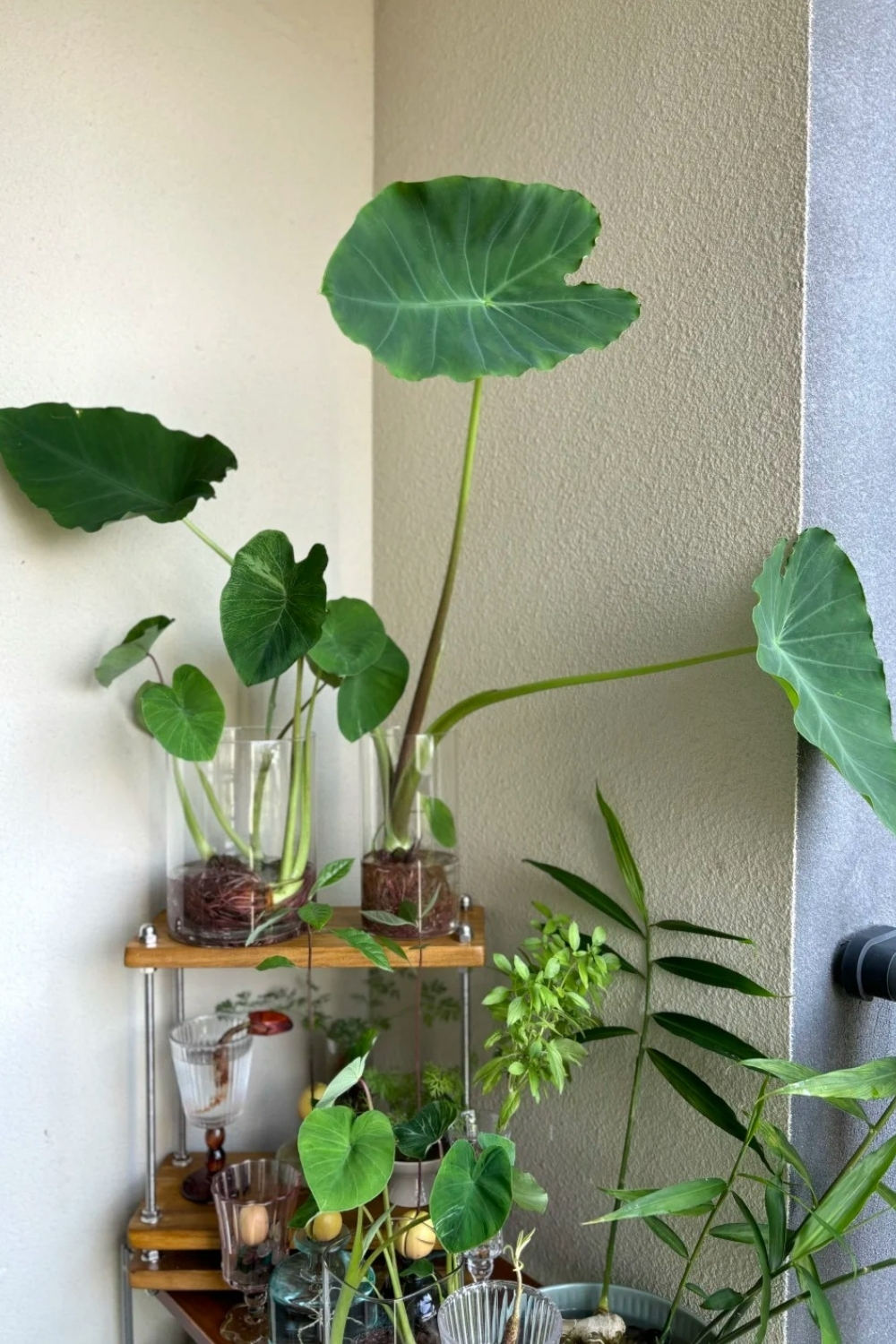
A shelf of glass jars and vases makes a small water garden of its own, and it’s a good spot to mix the long-term growers with fresh cuttings.
Big cuttings that root in water and can stay a while
Monstera
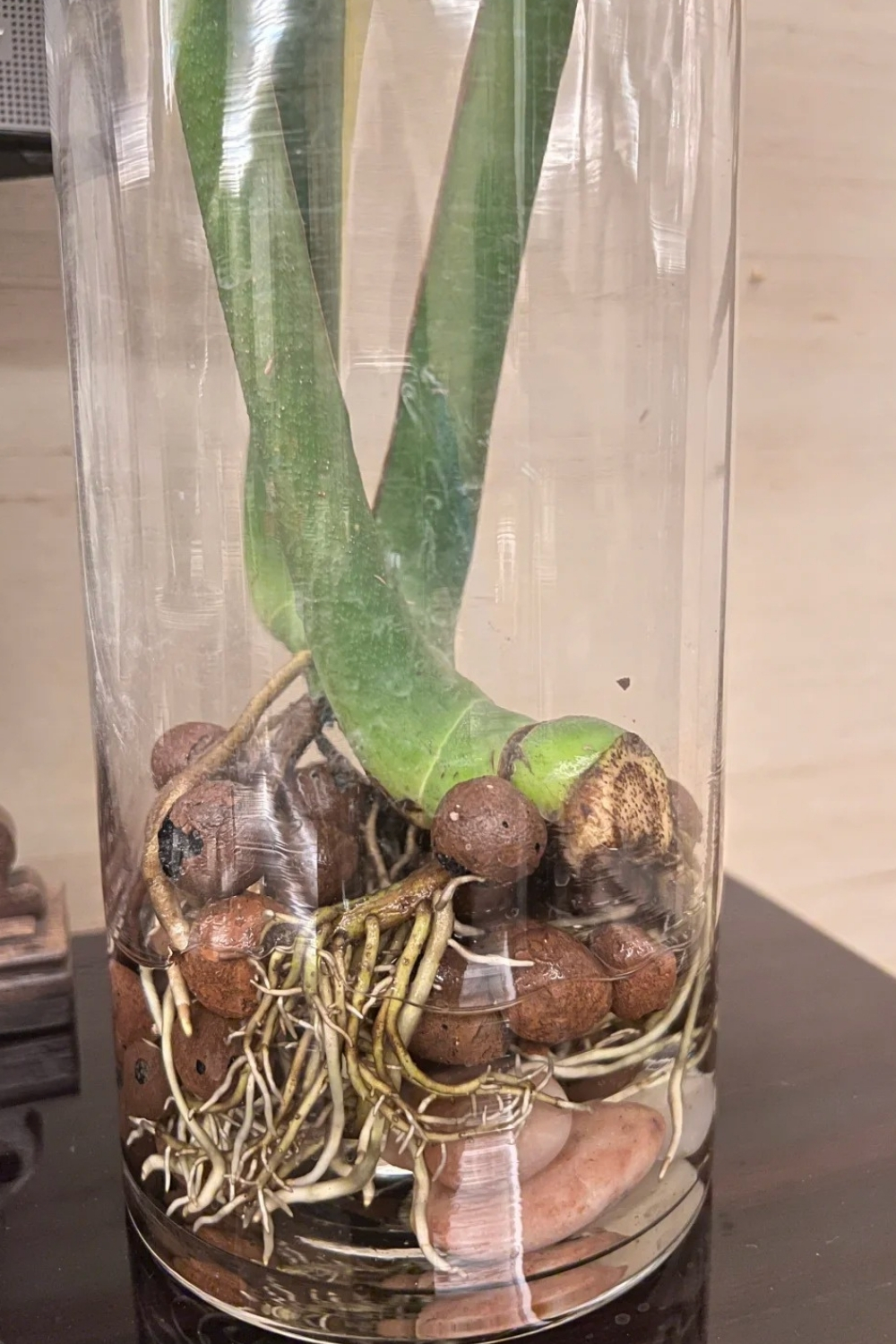
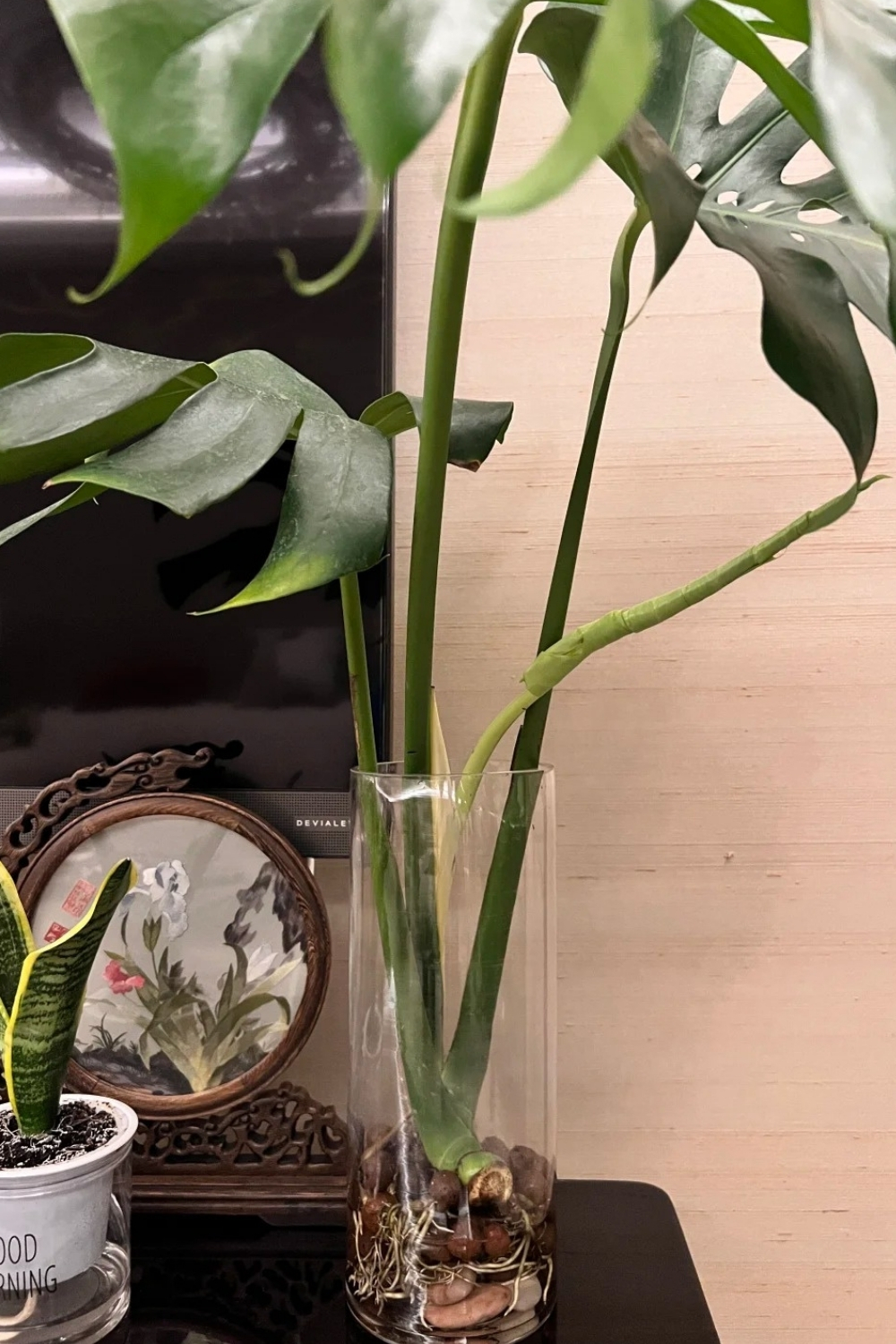
Monstera cuttings (Monstera deliciosa) root well in water as long as the cutting includes a node, and an aerial root, the thick brown root that grows out of the stem in the air, makes it even faster. Clay pebbles, fired clay balls also sold as LECA, hold a heavy cutting upright in a tall vase. A monstera can grow in water for a long time, though it grows bigger and sturdier in soil, and this monstera care guide covers the move into a pot. Monstera is toxic to cats and dogs.
Umbrella plant
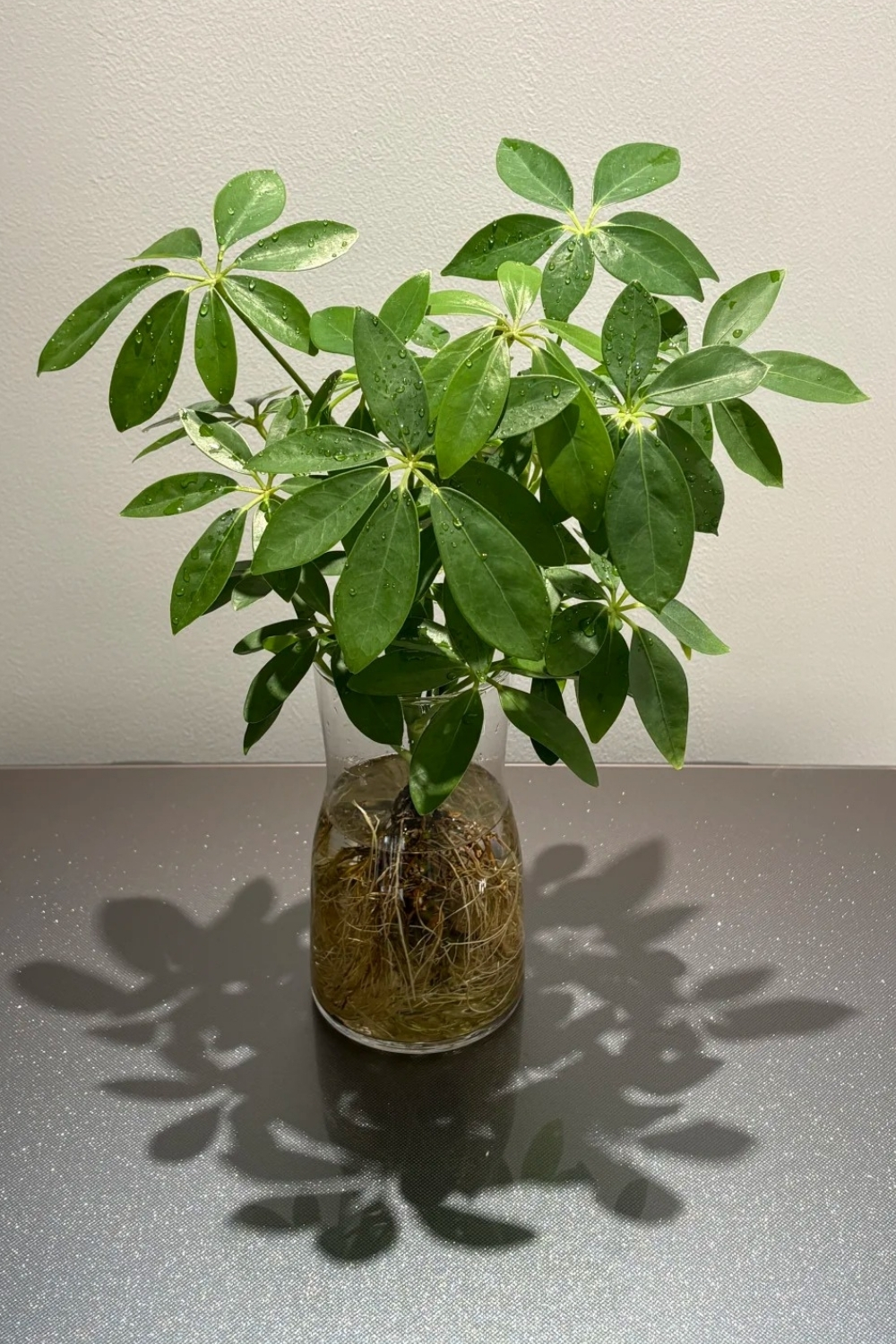
The umbrella plant (Schefflera) roots in water and can live in a vase for a long time, building up a dense ball of roots. Toxic to cats and dogs.
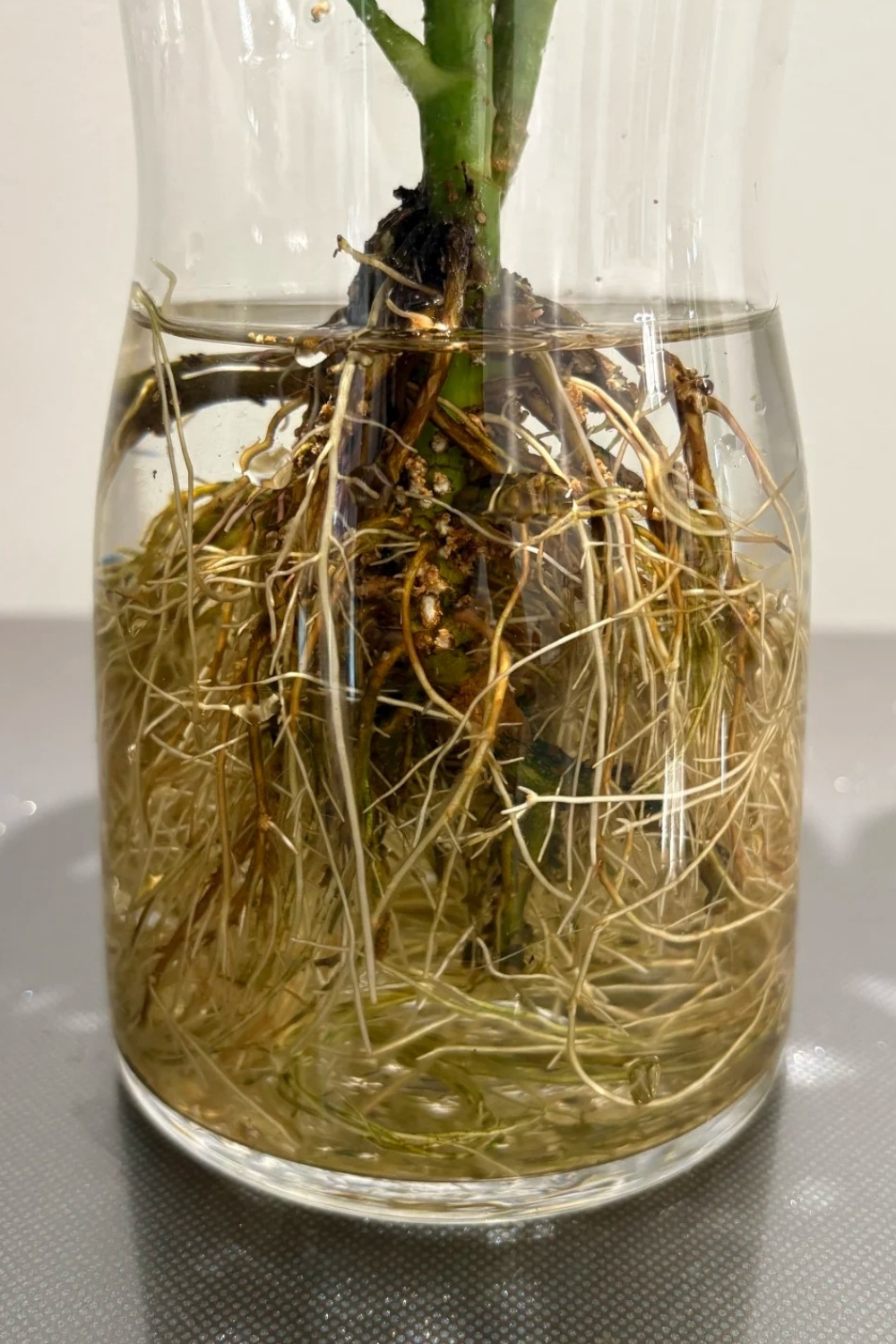
A root mass like this is a sign the water is working, but also a sign the vase is getting crowded. Trim the longest roots by about a third, or move the plant to a bigger vase, so fresh water can still reach the middle.
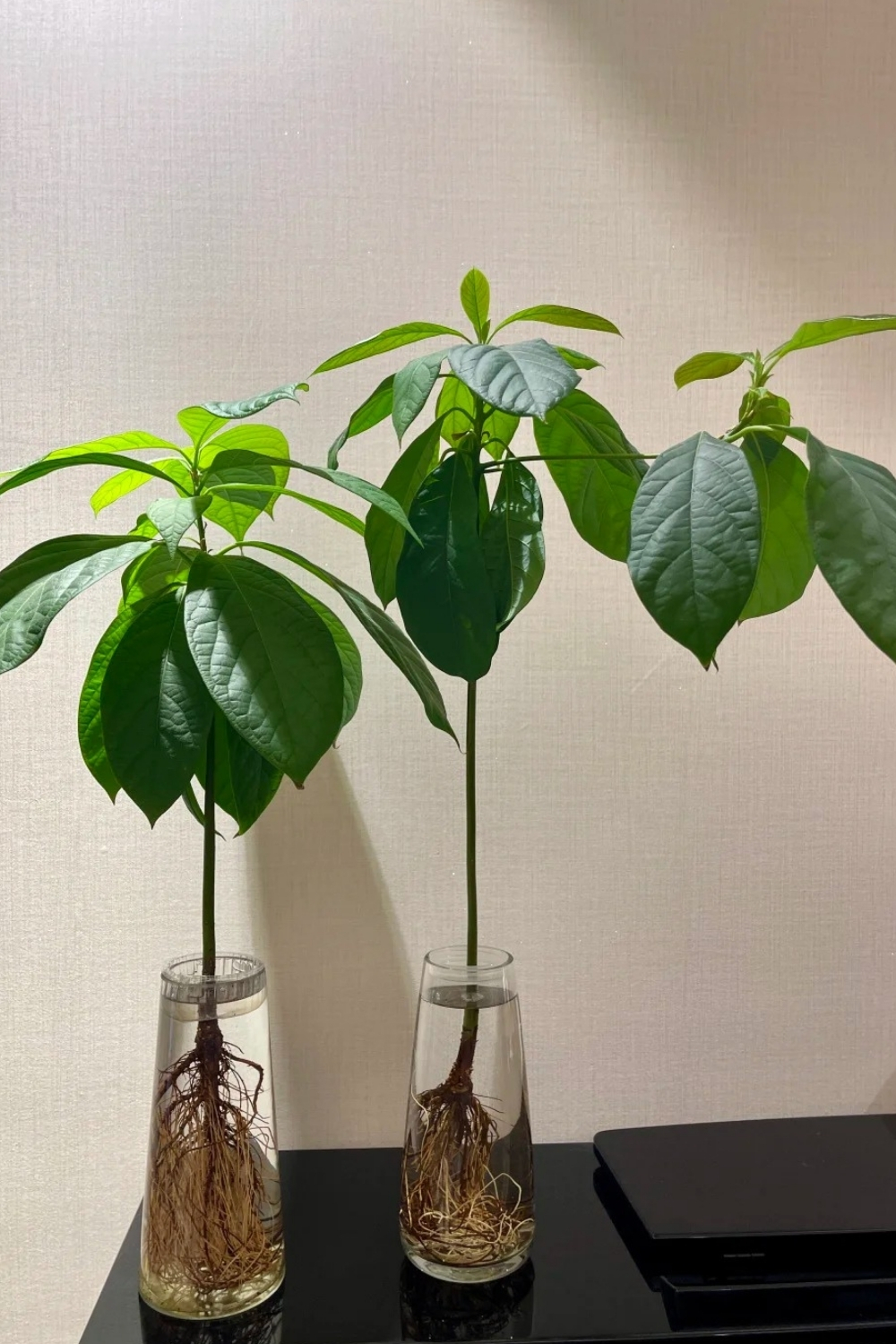
Woody cuttings and seedlings rooted in narrow vases look striking side by side. An avocado pit started over water is the classic version, and this story of growing an avocado from seed follows one from the glass into a pot.
Rex and polka-dot begonias
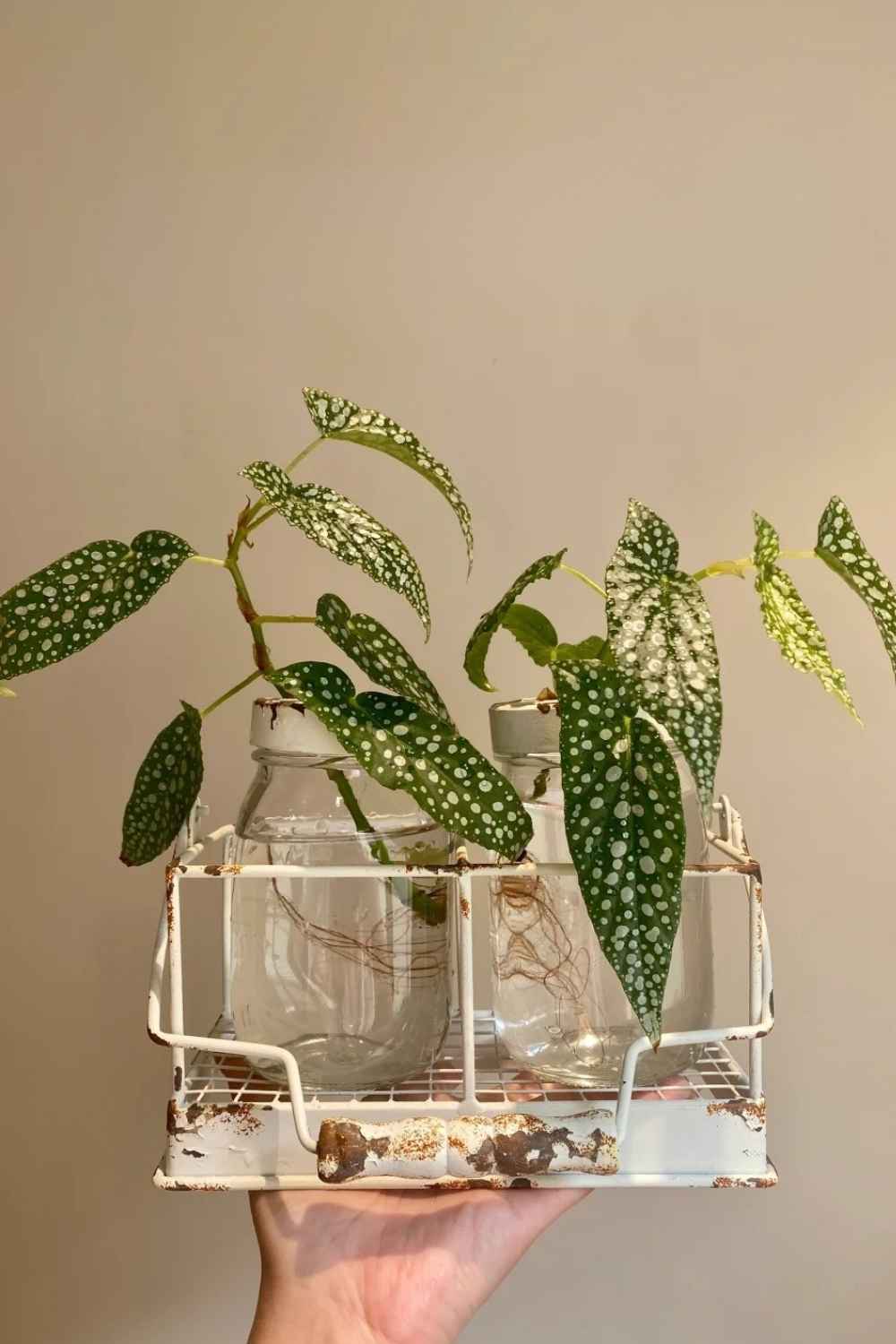
Rex begonias and polka-dot begonias (Begonia maculata) root from stem cuttings in water within a few weeks, and the spotted leaves look great above a glass. They’re happiest moved to soil once a good set of roots forms. Begonias are toxic to cats and dogs, especially the roots.
Taro
Taro (Colocasia esculenta), also sold as elephant ear, grows happily with its base in water, since in the wild it lives in wet ground. It’s toxic to cats and dogs.
Kitchen herbs and scraps that regrow in water
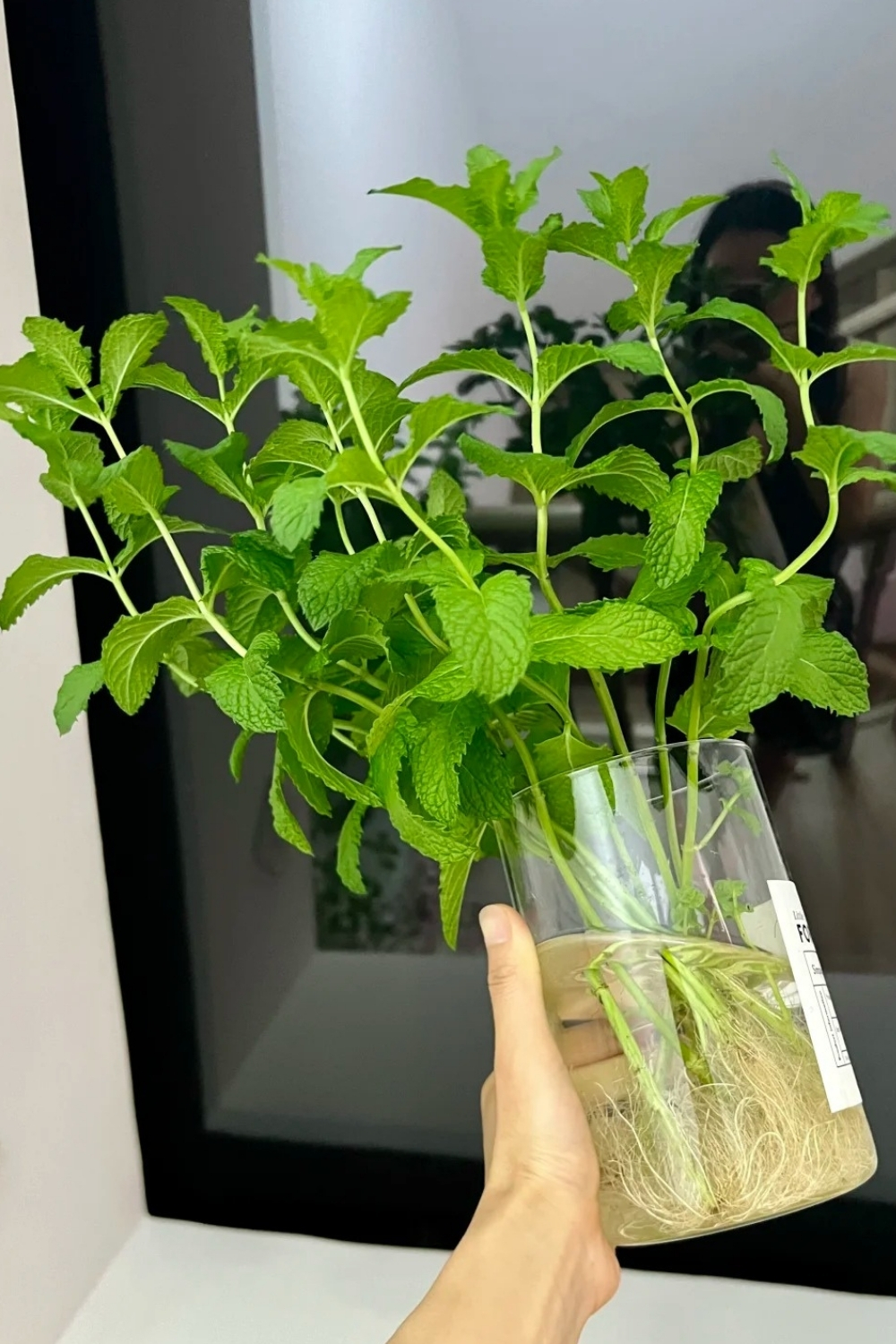
Mint is one of the quickest herbs to root in water: a stem from a grocery bunch, with the lower leaves stripped, usually shows roots within a week. It keeps growing in water for weeks, though it lasts longer in soil. Mint is toxic to cats and dogs in larger amounts, so keep it off a low counter.
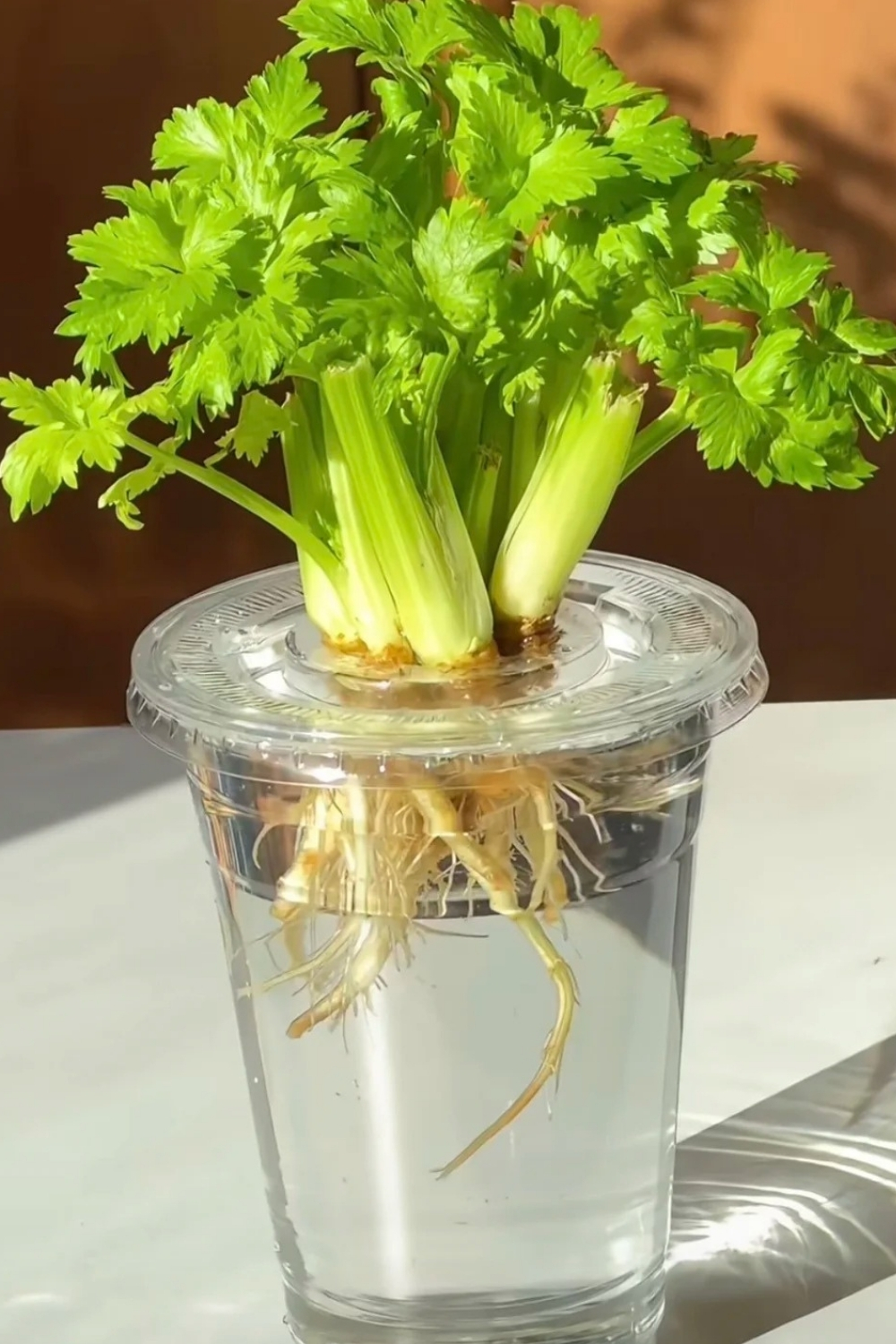
The base of a bunch of celery, set cut side up in a shallow dish or held in a cup lid, sends up new pale green leaves in a few days. It won’t grow a full new head, but the leafy shoots are good in soups and stuff like that.
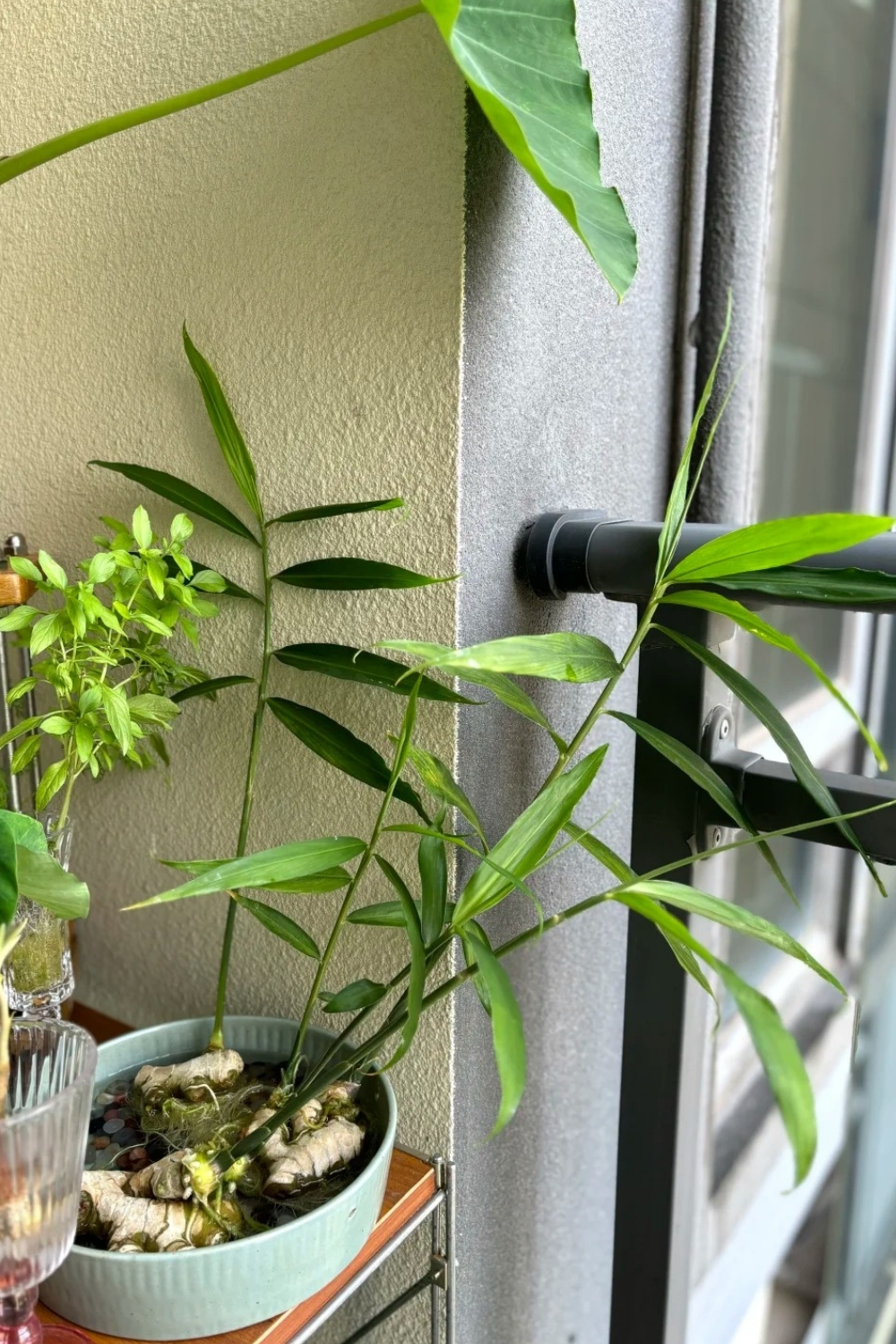
Ginger root sitting partly in water in a shallow bowl sends up tall, grassy shoots. Well, that’s something to look at on a windowsill, though for actual ginger to harvest, it needs to go into a pot of soil. Herbs and regrown greens fit neatly into a narrow kitchen window, as this kitchen windowsill makeover shows.
Setting up a vase so roots don’t rot
Clear glass is the best choice for a start, since you can see the roots and the water level at a glance. Narrow-necked bottles hold a single cutting upright on their own. Wider vases need support: clay pebbles or washed stones in the bottom, a mesh grid over the top, or a plastic cup lid with holes poked into it.
Keep only the stem and the node in the water. Leaves left underwater rot within days and cloud the water for every other cutting in the vase. Pull off any leaf that would sit below the surface before putting the cutting in.
Moving water-grown plants into soil
Sooner or later, many water-grown plants outgrow their vase. The switch is easier when it’s gradual. One way is to plant the rooted cutting in a small pot of light, airy potting mix and keep it very moist for the first two weeks, so the water roots don’t dry out while new soil roots form. Another is to add a spoonful of potting mix to the vase every few days, so the roots get used to it before the move.
Expect a pause either way. Plants that grow in water for a long time sometimes drop a leaf or two after potting, while their roots adjust. That’s normal, and new growth usually follows within a few weeks.
Water, food and light
According to Epic Gardening’s guide to growing plants in water, it’s best to replace the water completely when it changes color rather than just topping it up, and to keep the roots fully submerged. In practice, a full change about once a week keeps most vases clean; rinse the roots and the inside of the glass at the same time.
Plants in water still need food, since plain water holds almost no nutrients. Add a few drops of a balanced liquid houseplant fertilizer each time you change the water, during spring and summer, and stop in fall and winter when growth slows. More is not better here; too much fertilizer feeds algae and can burn the delicate water roots.
Bright, indirect light suits most of these plants; for dimmer rooms, these plants that don’t need sunlight cope better. Direct sun on a glass vase heats the water and turns it green with algae fast. A darker or tinted glass helps if algae keeps coming back. But yeah, anyway, if the water turns green, it’s not dangerous to the plant; just rinse the glass and change the water more often.
Going bigger: a bowl lotus or water garden
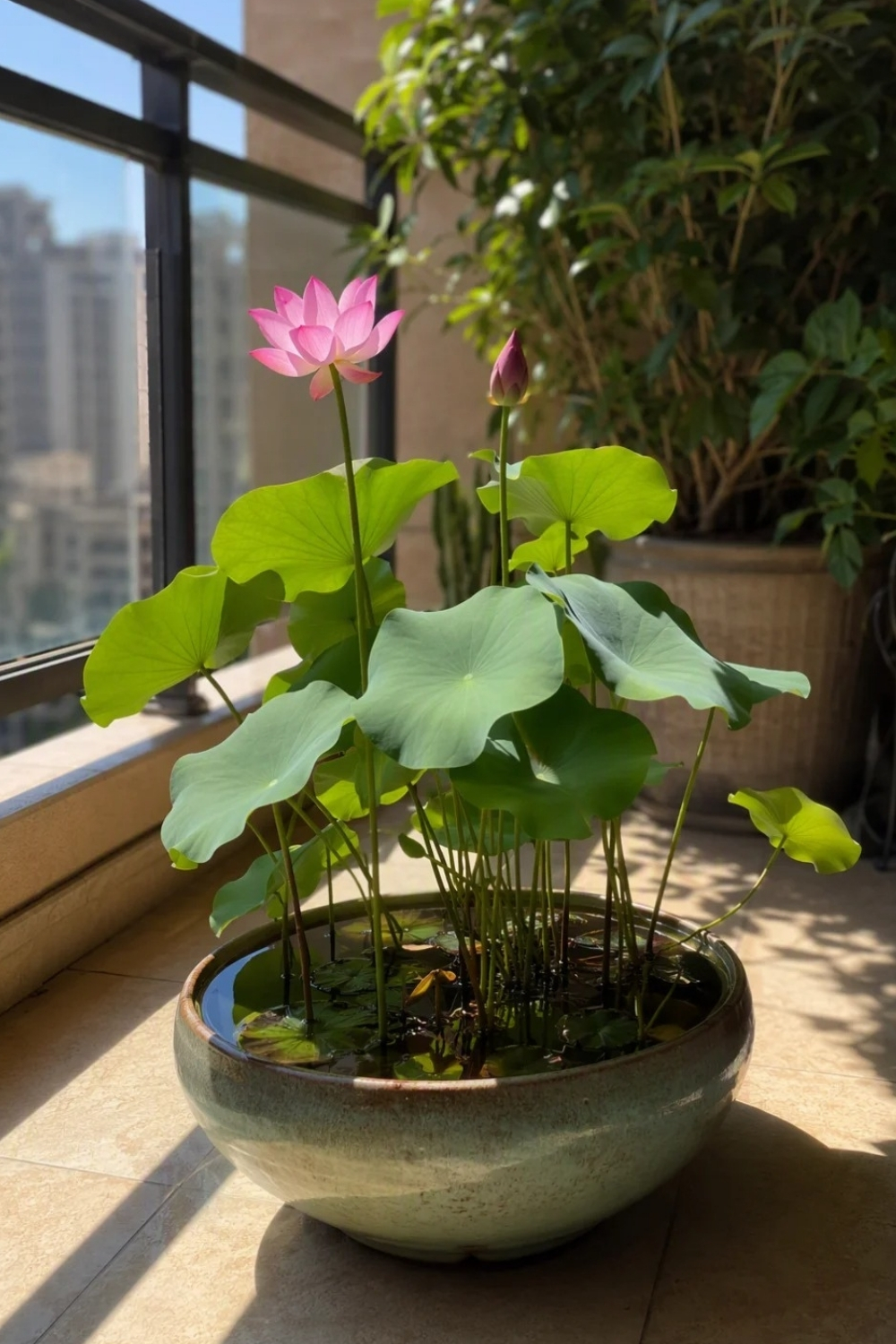
For a sunny balcony or a bright sunroom, a wide glazed bowl can hold a real water plant. A dwarf lotus or a small water lily needs at least six hours of sun to bloom, a planting basket of heavy soil under a few inches of water, and a frost-free spot or a cold, dark rest in winter. It’s a bigger commitment than a vase of pothos, but it’s the same idea: plants that grow in water, without the soil.
Not sure where to start? A single pothos cutting in a glass on the windowsill, with fresh water every week.