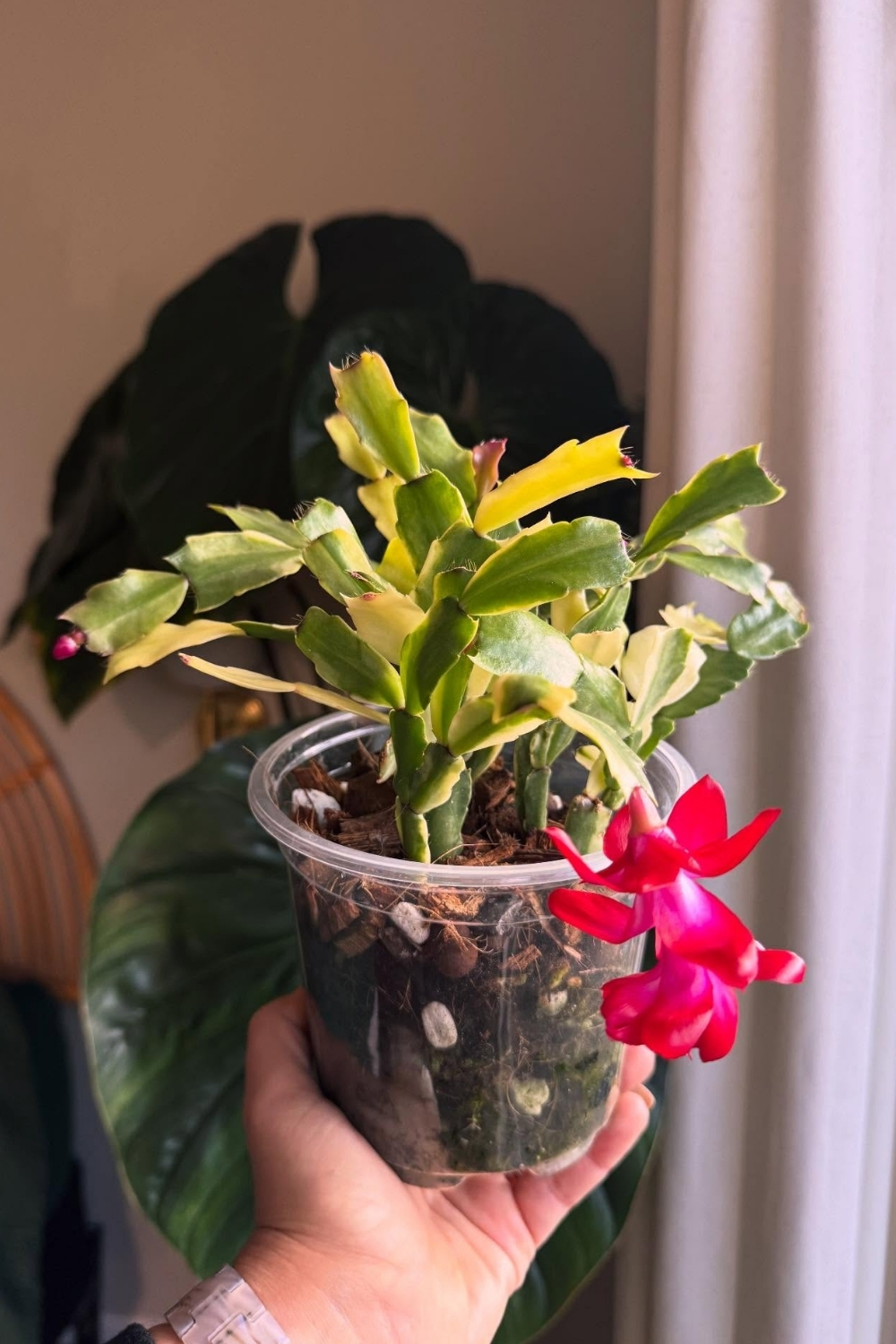
A Christmas cactus that won’t flower isn’t being stubborn. It’s waiting for a signal it hasn’t received. In its home in the coastal mountains of Brazil, this plant grows on tree branches in cool, shady forest, and it sets flower buds when fall brings long nights and cooler air. A warm living room with the lamps on until midnight sends the opposite message, so the plant keeps growing leaves and skips the flowers.
Good Christmas cactus care in fall is mostly about recreating that signal, and figuring out which part of it is missing.
Which one is it? No buds at all usually means reasons one to three: too much light at night, too much warmth or the wrong watering. Buds that form and then drop point to reason five. A plant that blooms in November, weeks before Christmas, is most likely reason seven, and nothing is wrong at all.
Too much light at night
The holiday cactus is a short-day plant, which means it forms flower buds only when nights are long. According to Epic Gardening’s tips for getting a Christmas cactus to flower, it needs 12 to 14 hours of darkness a day to set buds, and grow lights should be switched off for that long once fall arrives.
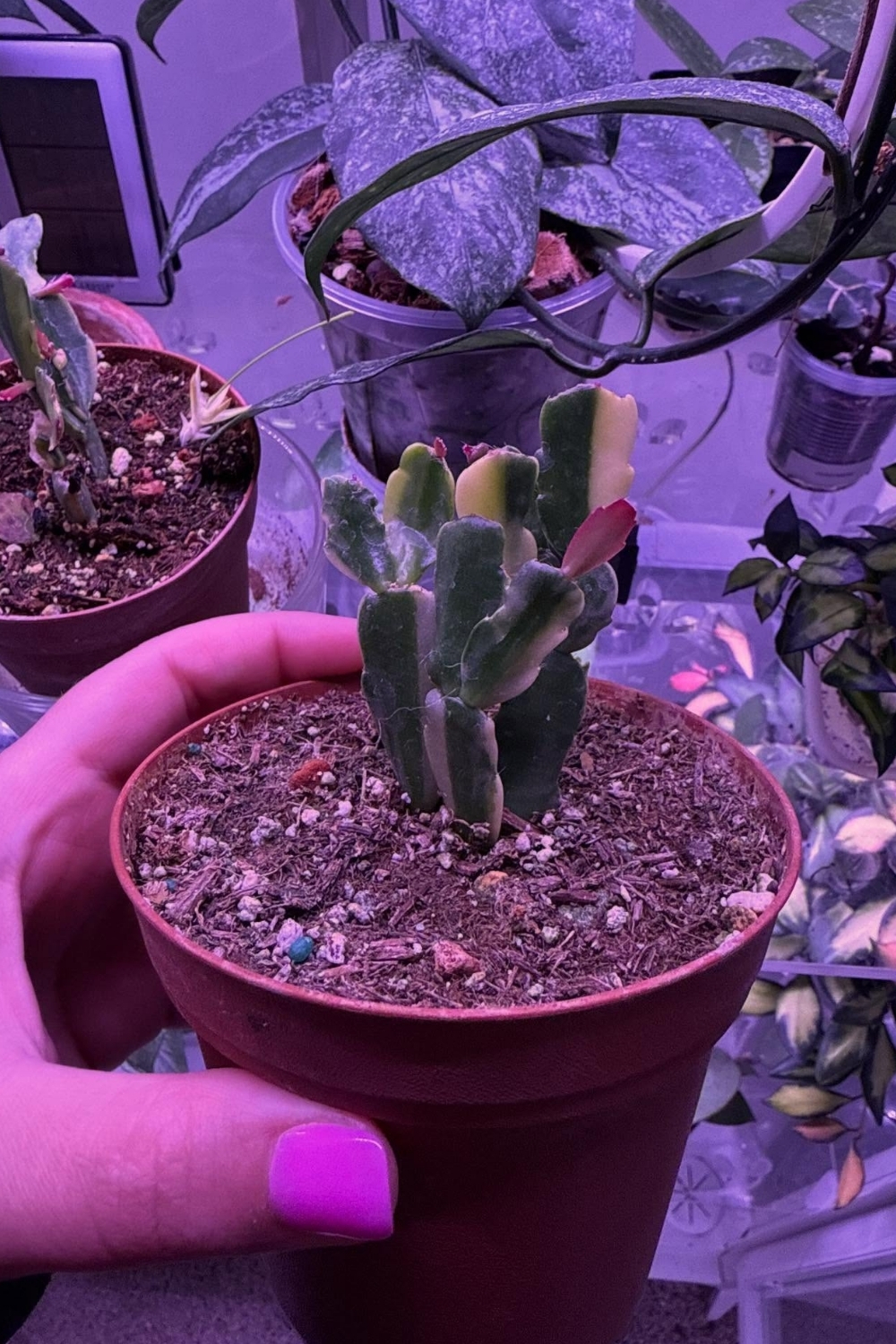
That darkness has to be real. A table lamp, a TV, a streetlight through the window or a shelf of grow lights like these can interrupt the night enough to stop buds forming. Not even gonna lie, this is the reason behind most cacti that grew happily all summer and then never flowered.
Fix: from early October, keep the plant somewhere it gets bright daylight but complete darkness at night: a spare bedroom, a cool porch or a window in a room nobody uses after dark. Alternatively, cover it with a box or move it into a closet every evening for about six weeks, until buds appear.
Too warm
Temperature works alongside darkness. Cool nights, roughly 50 to 60 °F, push the plant toward flowering even if the nights aren’t completely dark. Leafy Place’s guide to getting a Christmas cactus to bloom puts the sweet spot at about 50 to 55 °F for two or three weeks. Most heated homes sit well above that, especially near radiators and heating vents.
Fix: move the plant to the coolest bright spot in the house for October and November, often a windowsill, where the glass keeps the air several degrees cooler than the middle of the room. Keep it above about 45 °F, and away from both heat sources and cold drafts.
Watering at the wrong time
Christmas cactus isn’t a desert cactus. It’s a tropical plant that grows in pockets of decaying leaves on trees, so it likes more water than a typical cactus but hates soggy roots. Two watering mistakes block flowers: keeping the soil wet all fall, which rots roots and keeps the plant in growing mode, and letting it dry out completely once buds appear.
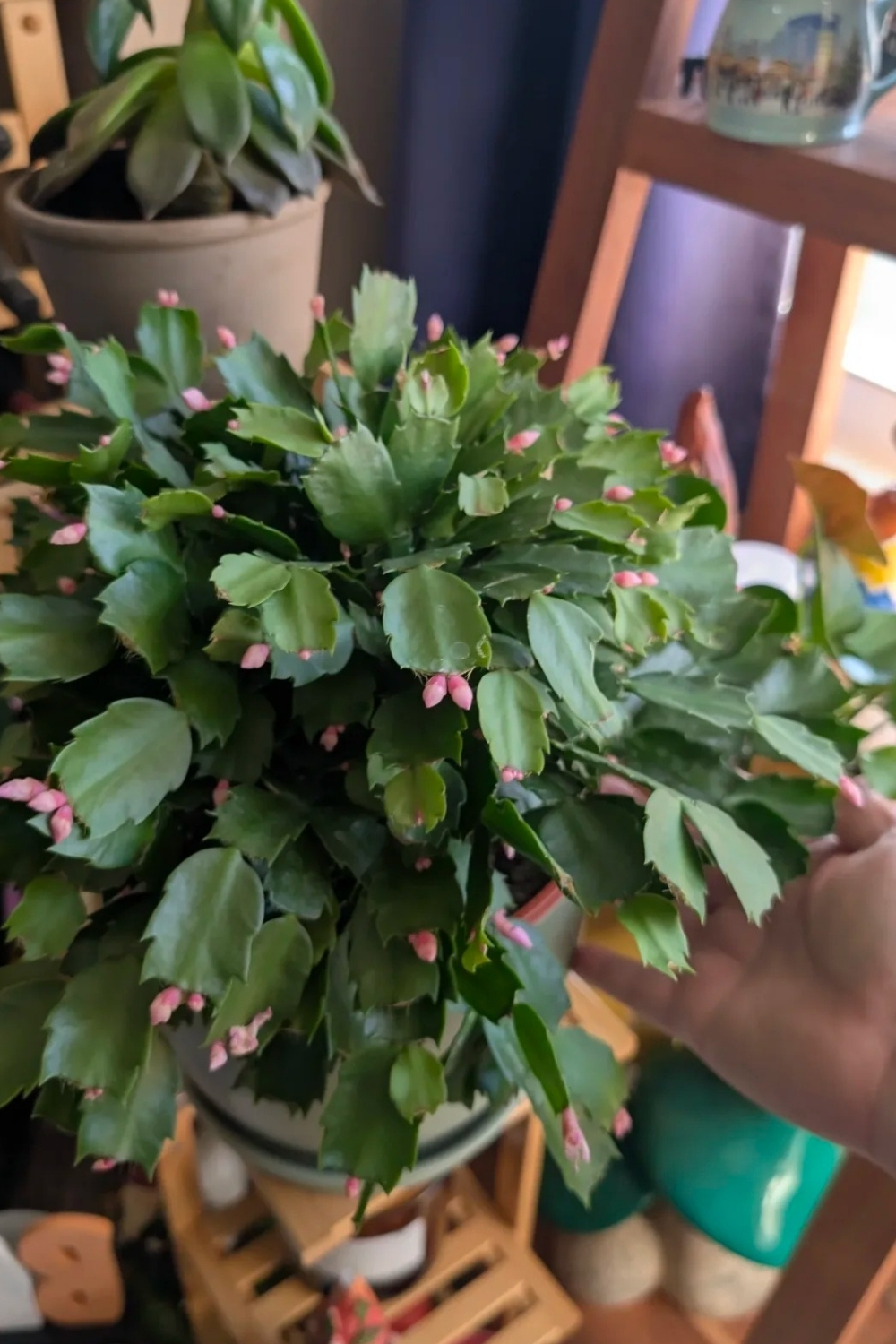
Fix: in fall, before buds form, let the top inch or two of soil dry out between waterings. Once buds appear, like the tiny pink tips all over this plant, water a little more regularly so the soil stays lightly moist, never dry and never soaked.
The pot is too big
Christmas cactus flowers best when its roots are a bit crowded. In a pot that’s far too big, the plant spends its energy growing roots and leaf segments, and the extra soil holds water longer than the roots need.
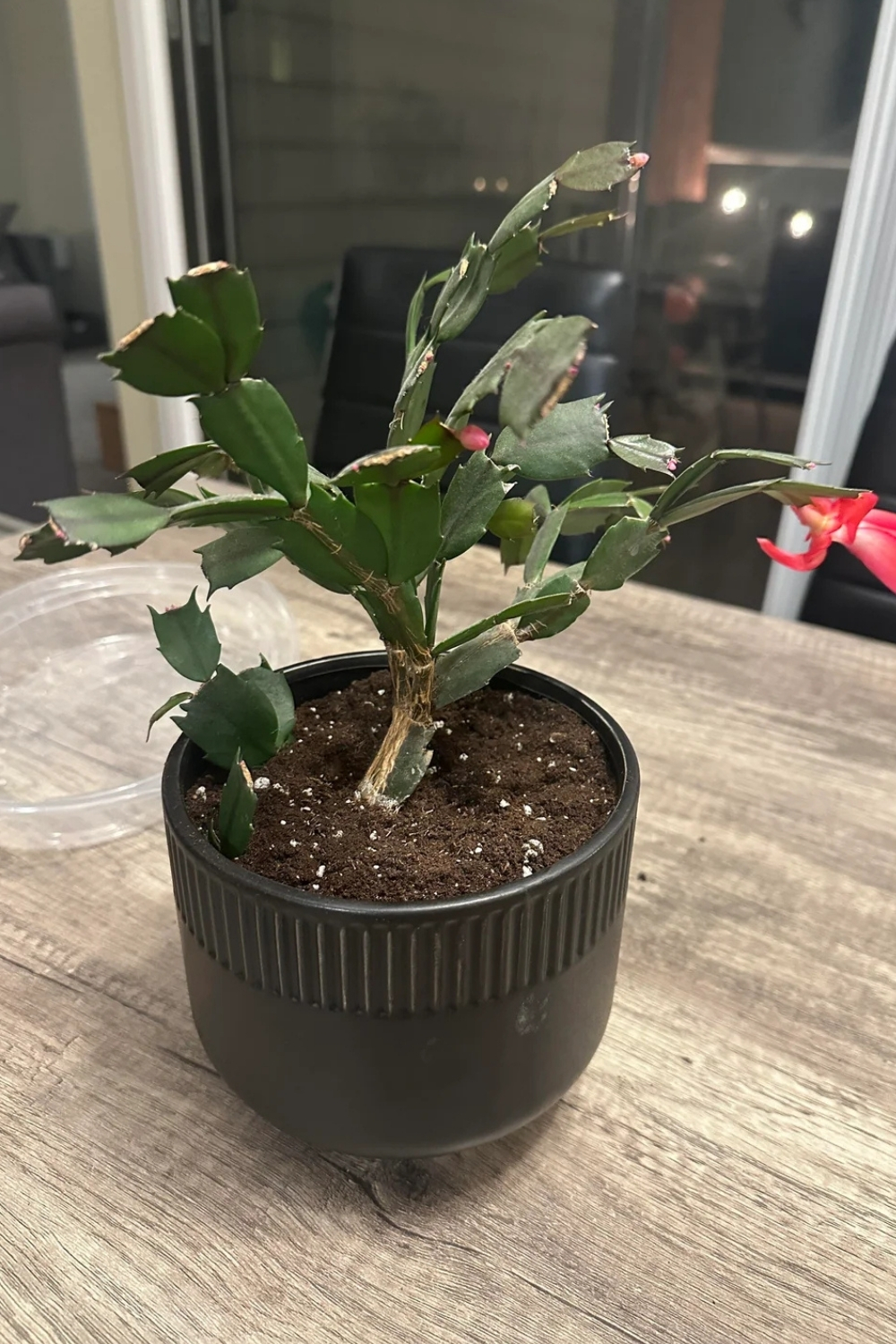
A sparse, leggy plant like this one, with long bare stems in a roomy pot, often has both problems at once: too much soil and too little light.
Fix: repot only every two or three years, in spring after flowering, and go up just one pot size. Use a light, fast-draining mix, such as potting soil mixed with orchid bark or perlite.
Moving it after buds form
This one catches a lot of people out. The plant forms buds in a cool, dark spot, then gets moved to a warm, bright living room for display, and a week later the buds drop onto the floor. Sudden changes in temperature, light or watering are the usual cause of bud drop.
Fix: once buds are visible, leave the plant where it is. Turning it is fine, but avoid moving it to a new room, putting it near a heater or letting it dry out. If you want it on display, move it gradually over a week, or wait until the first flowers open.
No rest, or feeding at the wrong time
After it finishes blooming, the plant needs a rest of about six weeks: a cooler spot, less water and no fertilizer. Skipping that rest, or feeding it heavily in fall, keeps it growing leaves when it should be gearing up for buds.
Fix: feed with a balanced houseplant fertilizer once a month from spring through summer, then stop by early fall. Give it its rest after flowering, and let it grow freely through spring and summer. A summer outdoors in light shade, brought in before nights drop near 50 °F, builds a strong plant for the next season.
It’s actually a Thanksgiving cactus
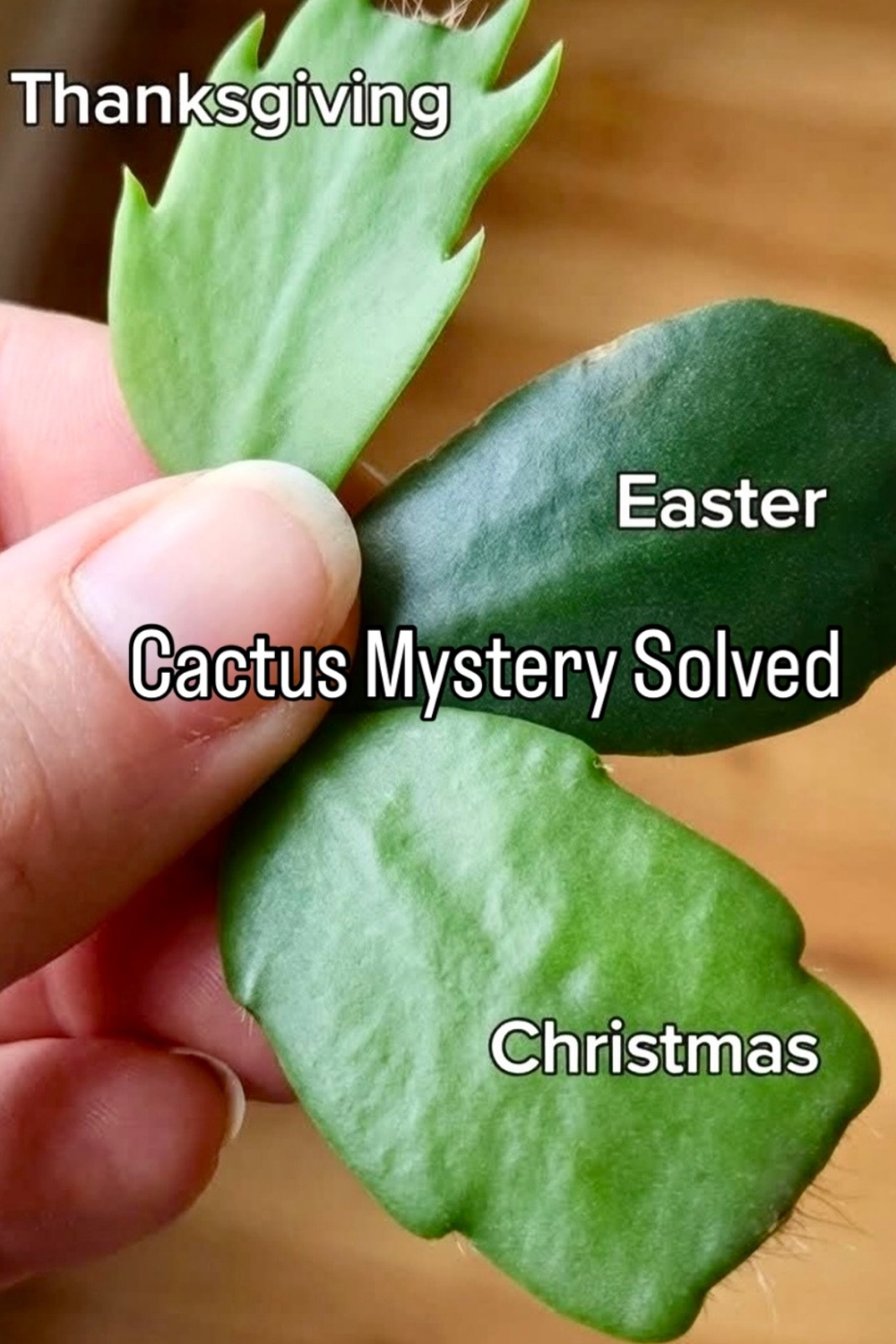
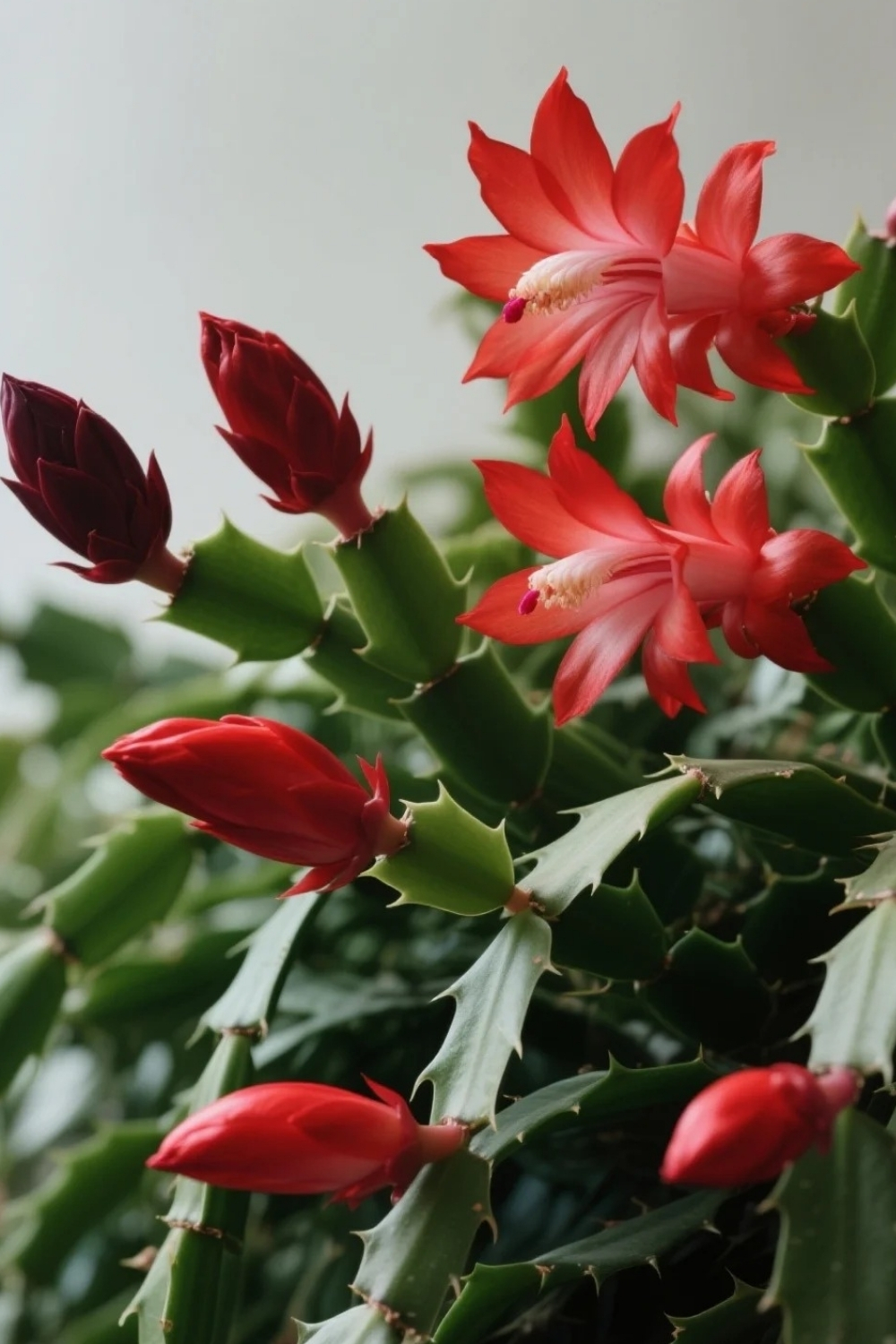
Many plants sold as Christmas cactus are really Thanksgiving cactus (Schlumbergera truncata). The difference is in the leaf segments: a Thanksgiving cactus has pointed, claw-like teeth along the edges, while a true Christmas cactus (Schlumbergera × buckleyi) has smoother, rounded, scalloped edges. A third relative, the Easter cactus, has rounder segments with small bristles and flowers in spring.

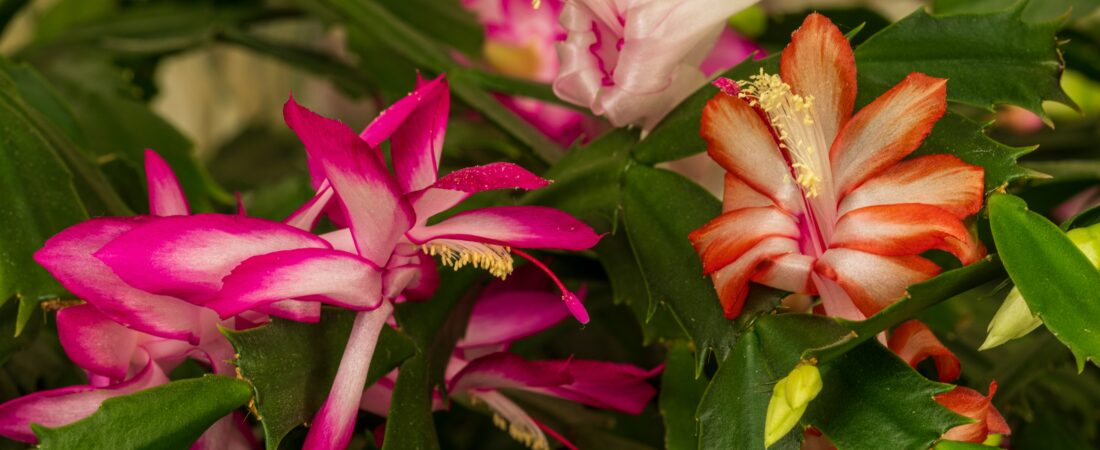
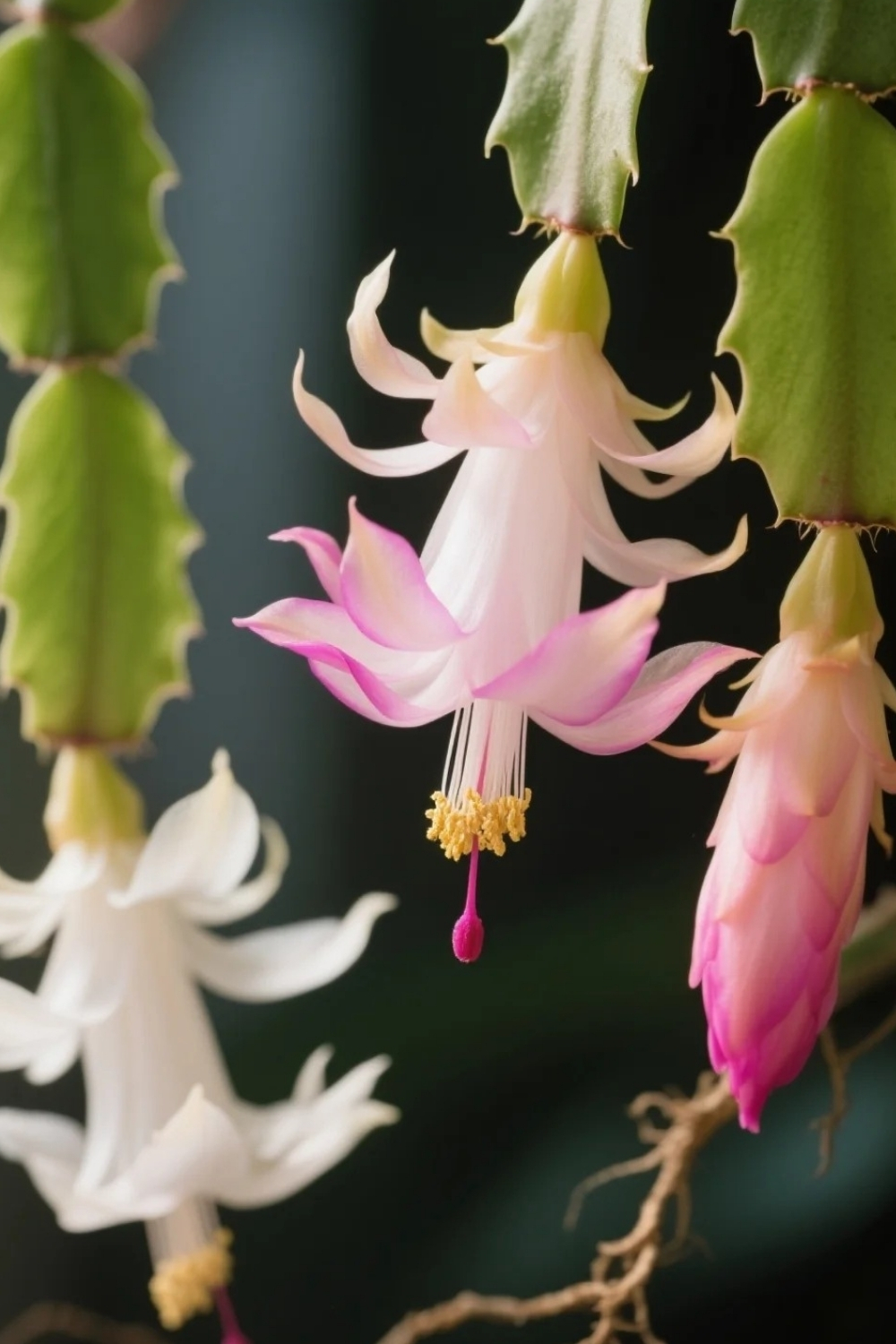
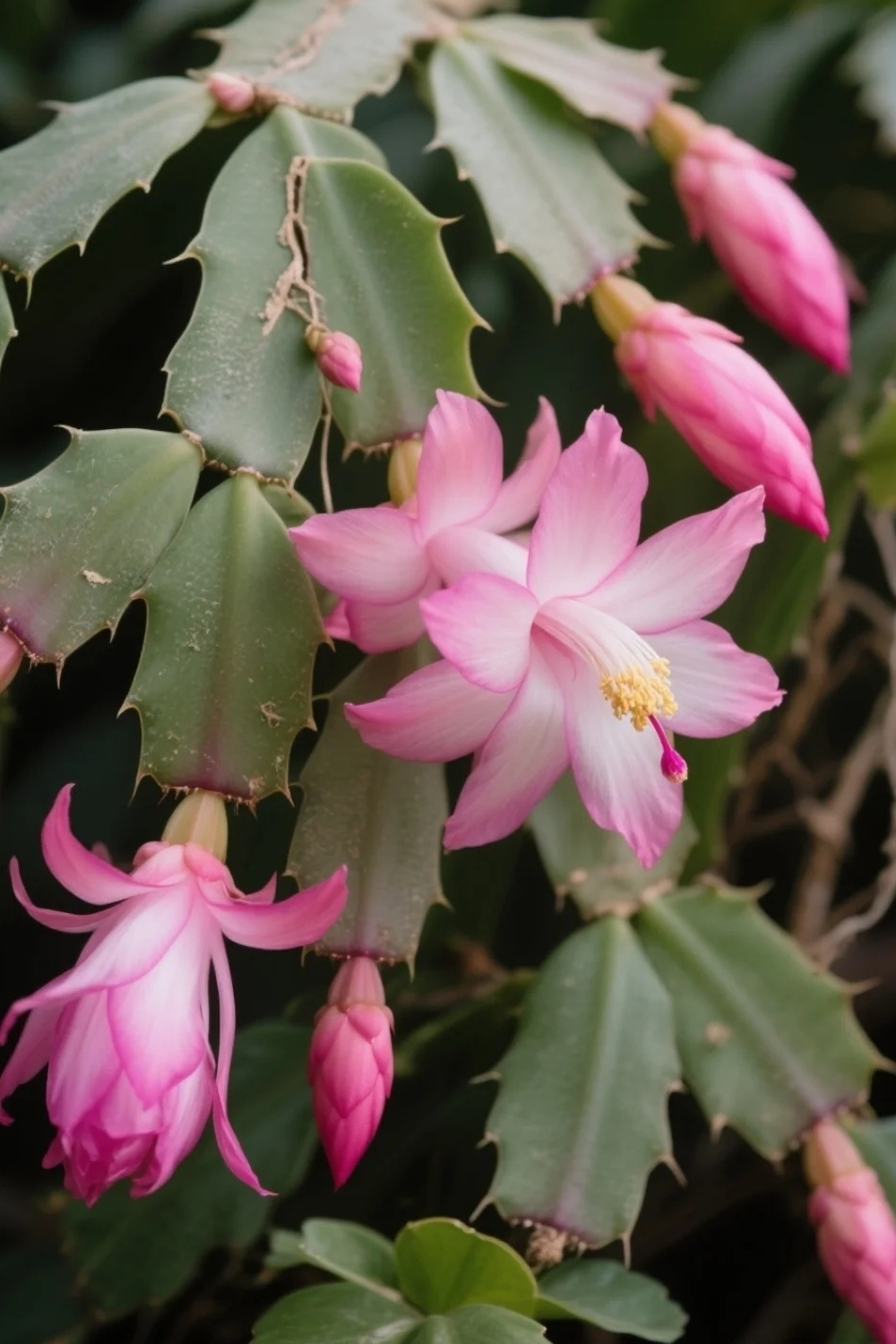
The flowers in these close-ups mostly come from the pointed-leaf type, which is what most garden centers sell. A Thanksgiving cactus naturally blooms about a month earlier, often in November. For whatever reason, the label rarely says which one it is, so a plant in full bloom before Thanksgiving isn’t confused, it’s just a Thanksgiving cactus doing its thing.
Fix: none needed. Christmas cactus vs Thanksgiving cactus care is the same; only the timing differs. Start the dark, cool treatment in September for a Thanksgiving type.
Everyday Christmas cactus care

Outside of the fall bloom push, the plant asks for very little. Give it bright, indirect light, an east window or a few feet back from a south one, since harsh afternoon sun turns the segments reddish and limp. Water when the top inch of soil is dry, and keep it in a pot with drainage holes. It’s an easy plant to fit into a sunny kitchen window, like the plants in this kitchen windowsill makeover.
It’s also forgiving of lower light than most flowering houseplants, though it flowers less in a dim spot. For darker rooms, these plants that don’t need sunlight are a better match.
Christmas cactus propagation
New plants are easy to start from leaf segments. In late spring, after the rest period, twist off a piece two or three segments long. Let it dry on a counter for a day or two so the broken end seals over. Then push the bottom segment about a quarter of the way into a small pot of damp, gritty potting mix, and keep it in bright, indirect light. Water lightly when the mix dries. Roots usually form within a few weeks, and new segments soon follow.
Several cuttings in one pot make a fuller plant faster, and a rooted cutting from a family plant makes a thoughtful gift. Fair enough to say most holiday cacti in old family homes started exactly this way.
Buying one in bloom

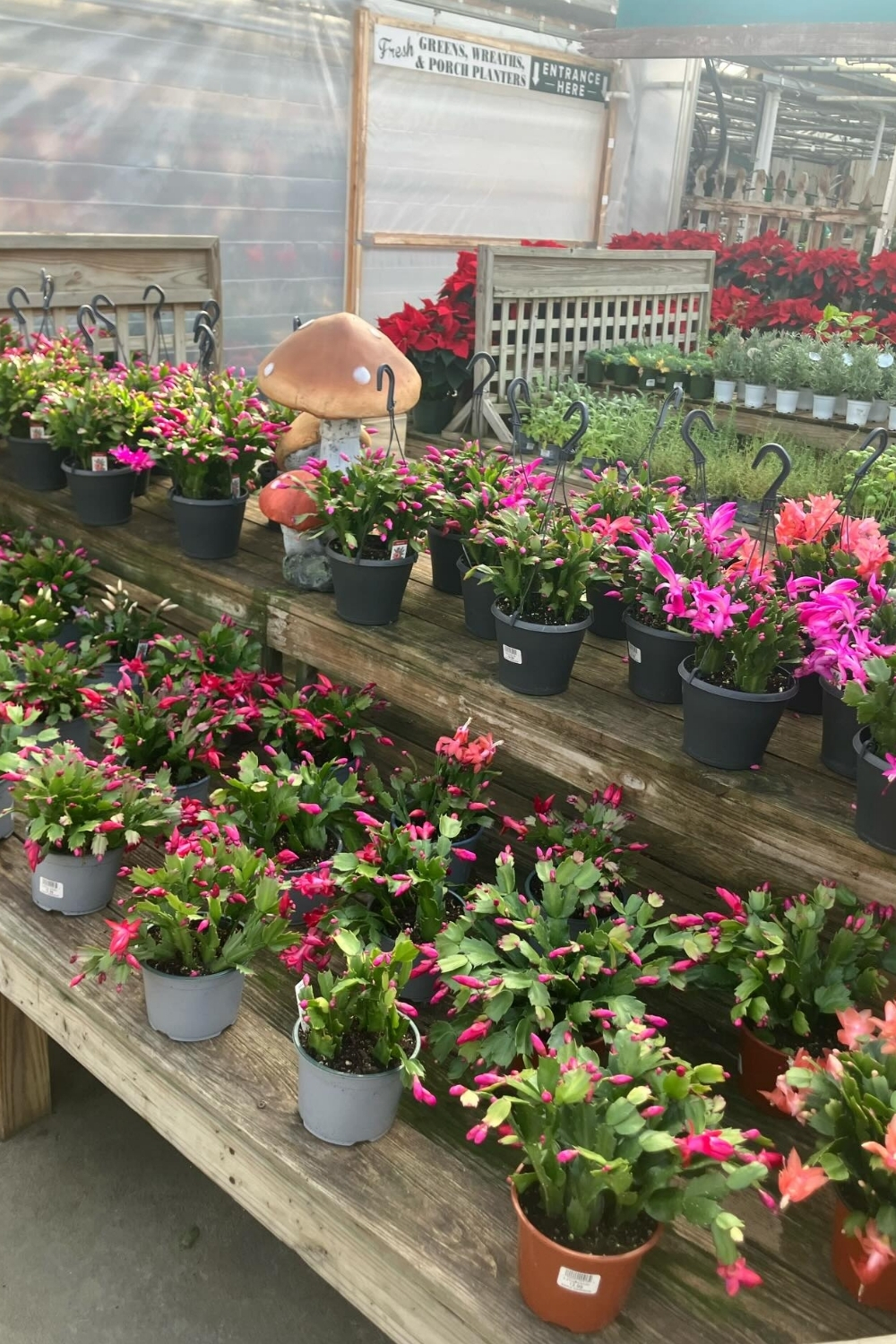
Garden centers fill up with holiday cactus in November. Look for a plant with plenty of unopened buds rather than one already in full flower, firm, green segments without soft or shriveled spots, and moist but not soggy soil. Get it home with as little cold exposure as possible, and don’t repot it until spring.
Christmas cactus care, in one line: dark nights, cool air, steady water, a snug pot, no moving once the buds appear, and a rest after flowering.