The darkest flower you can grow isn’t actually black. And that’s the interesting part.
Every “black flower” you’ve ever admired is playing a trick on your eye. It’s so deeply saturated with dark pigment that it soaks up nearly all the light hitting it, and your brain rounds that down to black. Get up close in the right light, though, and you’ll catch the truth: deep blood-red, eggplant, oxblood, or the darkest violet.
So the honest answer to whether true black flowers exist is no. Not a single one, anywhere in nature. But the near-black blooms are real, gettable, and some come astonishingly close.
Here’s the one-paragraph science behind why, and then the darkest flowers ranked, with real talk on which you can grow, where, and which to keep away from pets.
The Myth: Why “True Black” Flowers Can’t Exist
Let’s settle it before the list. No flower produces a pigment that absorbs 100% of visible light, which is what “black” actually requires.
Why Do People Think Black Flowers Exist?
Partly marketing, partly Photoshop. Florists sell dyed black roses for Halloween and gothic weddings, breeders lean hard on the word “black” in cultivar names, and moody photography does the rest.
None of that is a real pigment doing the work. A dyed rose is white petals drinking up black ink, and a dramatic photo is often just underexposed. The idea of a truly black bloom is sticky because we want it to be true. (I did too, for years.)
The Pigment Reality
Flower color comes mostly from anthocyanins, the same pigment family behind reds, purples, and blues. Pack those molecules densely enough into a petal and it absorbs almost every wavelength of light, reflecting so little back that it reads as black.
But “almost every” is the catch. There’s always a sliver of red or purple bouncing back, which is why even the darkest bloom shows its true color at the petal edge or in raking light. Pigment chemistry simply can’t reach absolute black in living tissue. It’s an optical near-miss, not a color.
So What Are We Actually Looking At?
When gardeners say “black,” they mean ultra-saturated maroon, burgundy, deep purple, or charcoal violet. Colors that read black against green foliage or in flat daylight, then reveal themselves in bright sun.
Light angle changes everything. The same tulip looks jet-black at midday and deep merlot at sunset, which is honestly half the appeal. You’re not growing a color, you’re growing a mood that shifts through the day.
It also means the background matters as much as the flower. Set a dark bloom against a pale wall and it looks black. Set it against a shadow and it looks like nothing at all. More on that below, because it’s the single thing that decides whether these are worth growing.
The Darkest Blooms, Ranked
From the closest-to-black on down. All real, all growable somewhere.
The Near-Black Champions
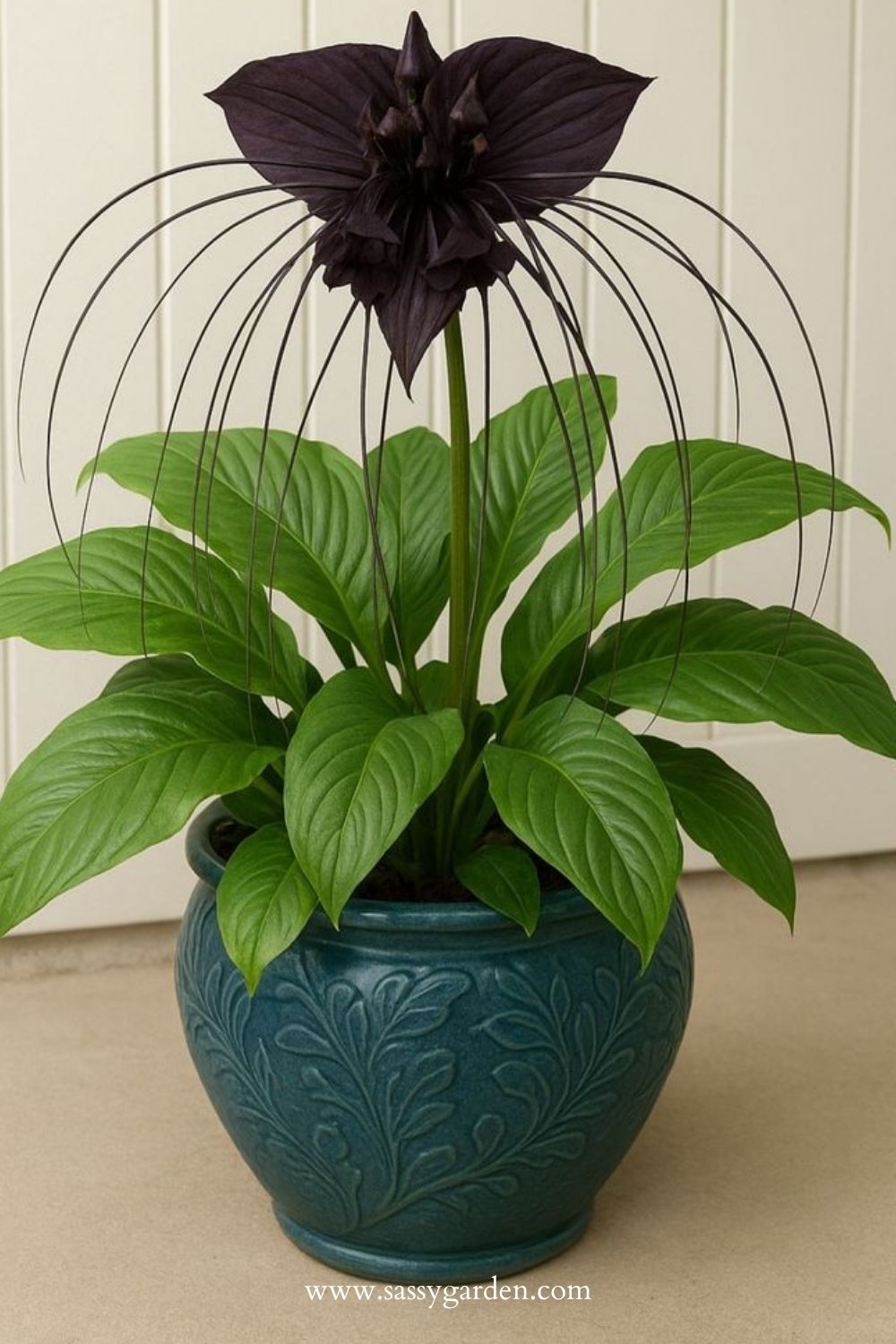
1. Black bat flower (Tacca chantrieri). The closest thing to true black in the plant world, and the strangest. Its blackish-purple flowers span up to a foot wide with long whisker-like bracts trailing below, and the bat flower genuinely earns its near-black reputation. It’s tropical and fussy, hardy only in zones 9 to 11 and sulking below about 55°F, so most of us grow it as a warm, humid houseplant. Flag for pet owners: it contains calcium oxalate crystals and is toxic to cats and dogs, causing drooling and vomiting if chewed. If you want to try it indoors, the same care logic behind growing tender tropicals indoors applies, warmth and humidity above all.
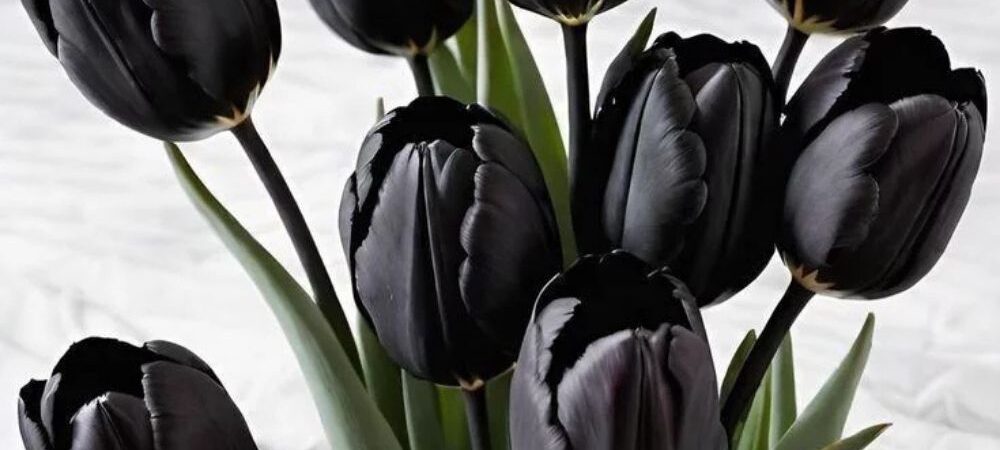
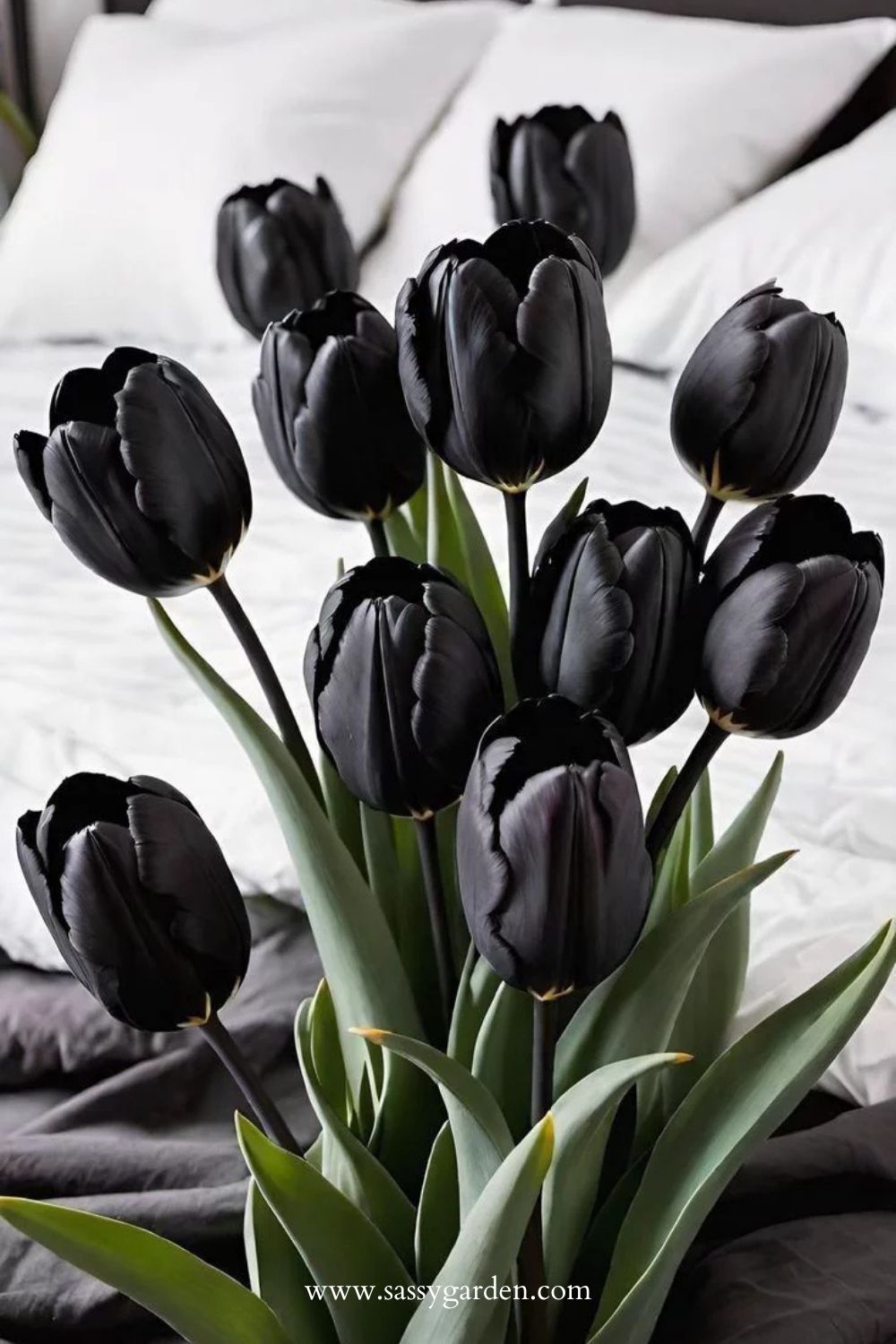
2. Queen of Night tulip. The famous one, bred by the Dutch back in 1944 and still the benchmark for a “black” tulip. It’s a deep, glossy maroon-purple that reads pure black in a border and holds tall single blooms on strong stems, which makes it a favorite for cutting too. Plant the bulbs in fall before the ground freezes, hardy in zones 3 to 8, and site them where they catch light or they’ll disappear.
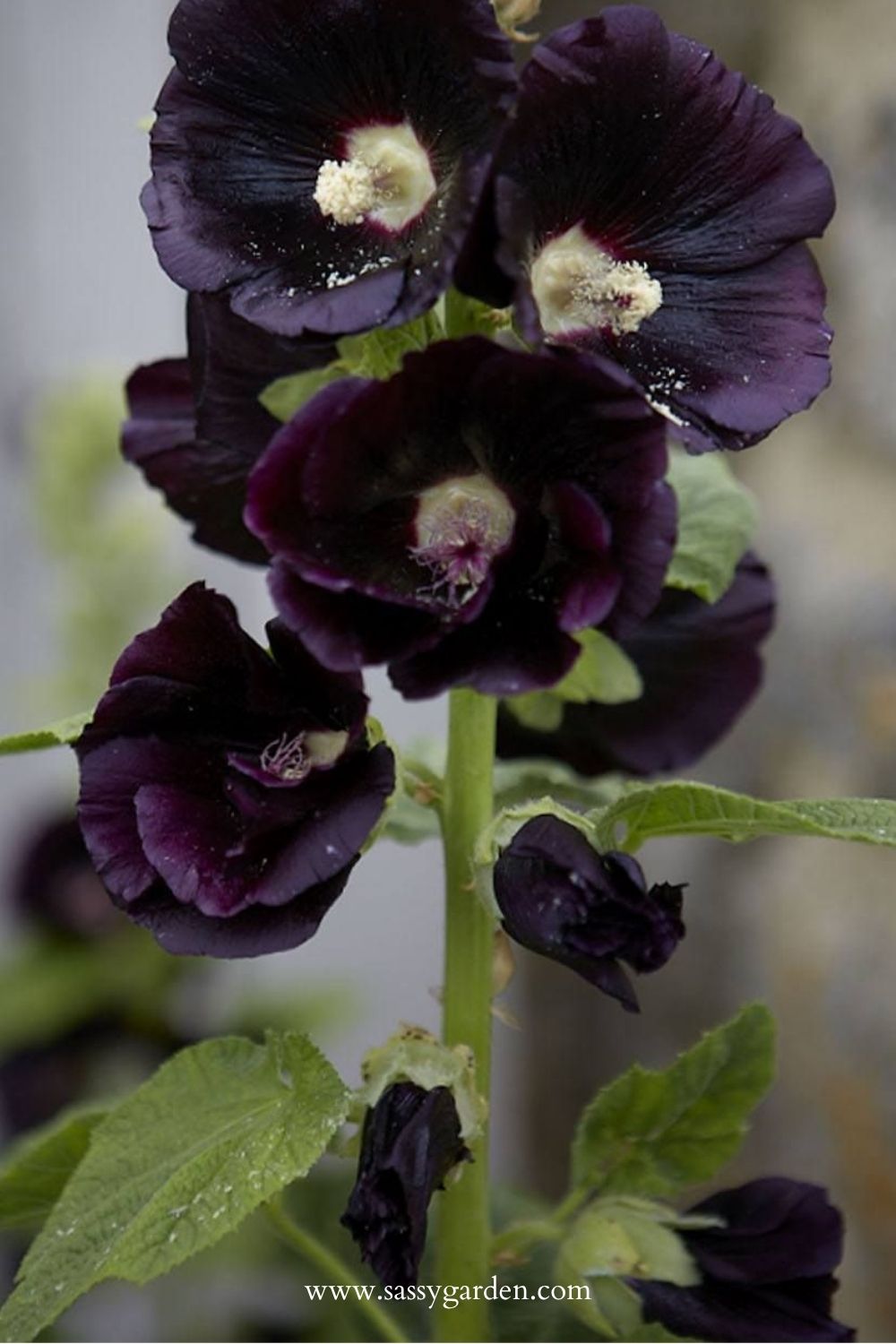
3. Black hollyhock ‘Nigra’. Waxy, deep purple-black flowers up a towering spike that hits five to eight feet in mid-to-late summer. Hardy across zones 3 to 9 and easy from seed, it’s the cottage-garden drama queen. The plant’s non-toxic, though the foliage can irritate sensitive skin, so glove up if you’re prone to that.
The Dark-and-Easy Crowd
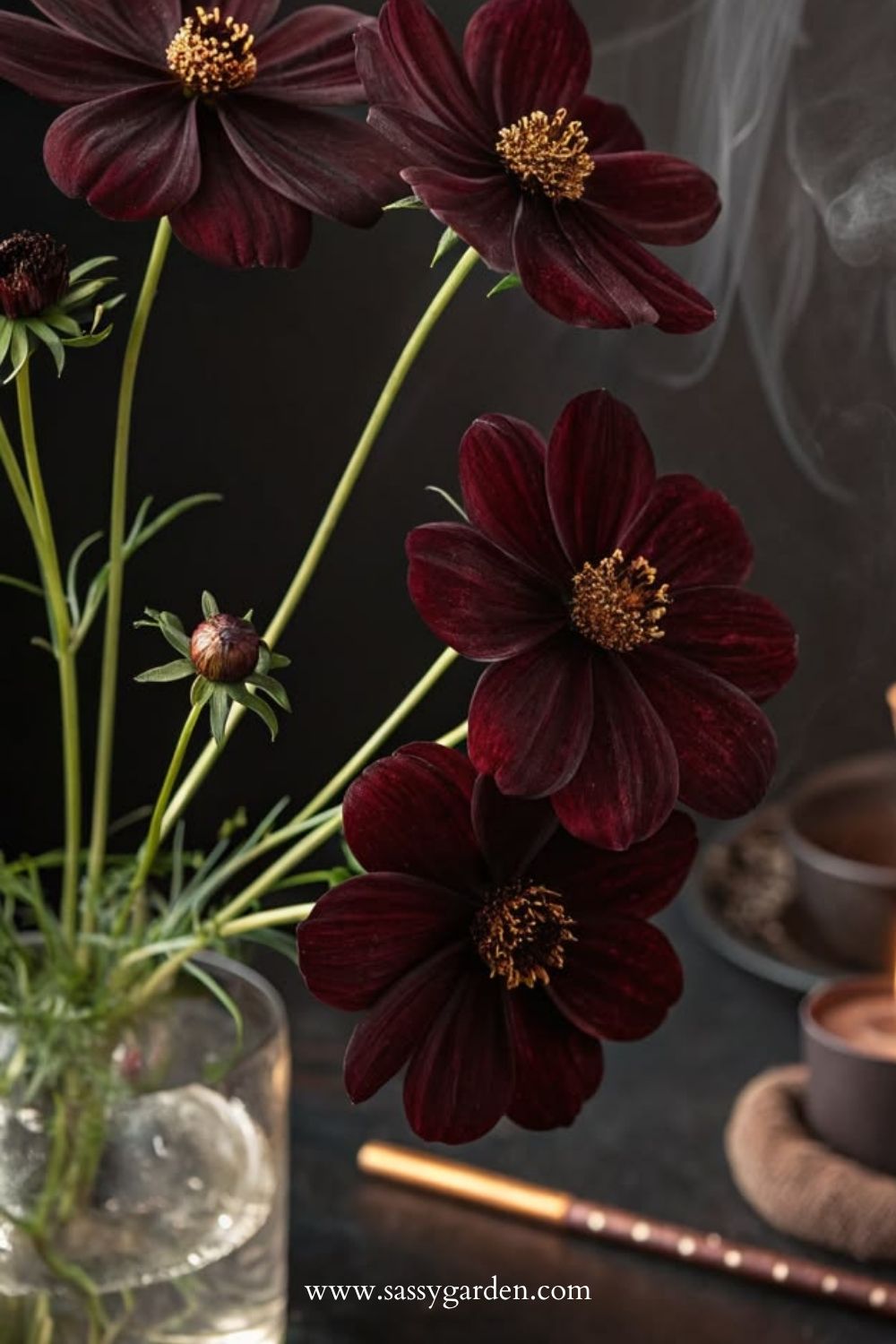
4. Chocolate cosmos (Cosmos atrosanguineus). My personal favorite, and not just for the color. Its velvety dark maroon blooms genuinely smell of chocolate on a warm afternoon, and it’s non-toxic to people and pets, which makes it the guilt-free pick. It’s tender, treated as an annual or lifted as a tuber in zones colder than 9, planted out after your last frost.
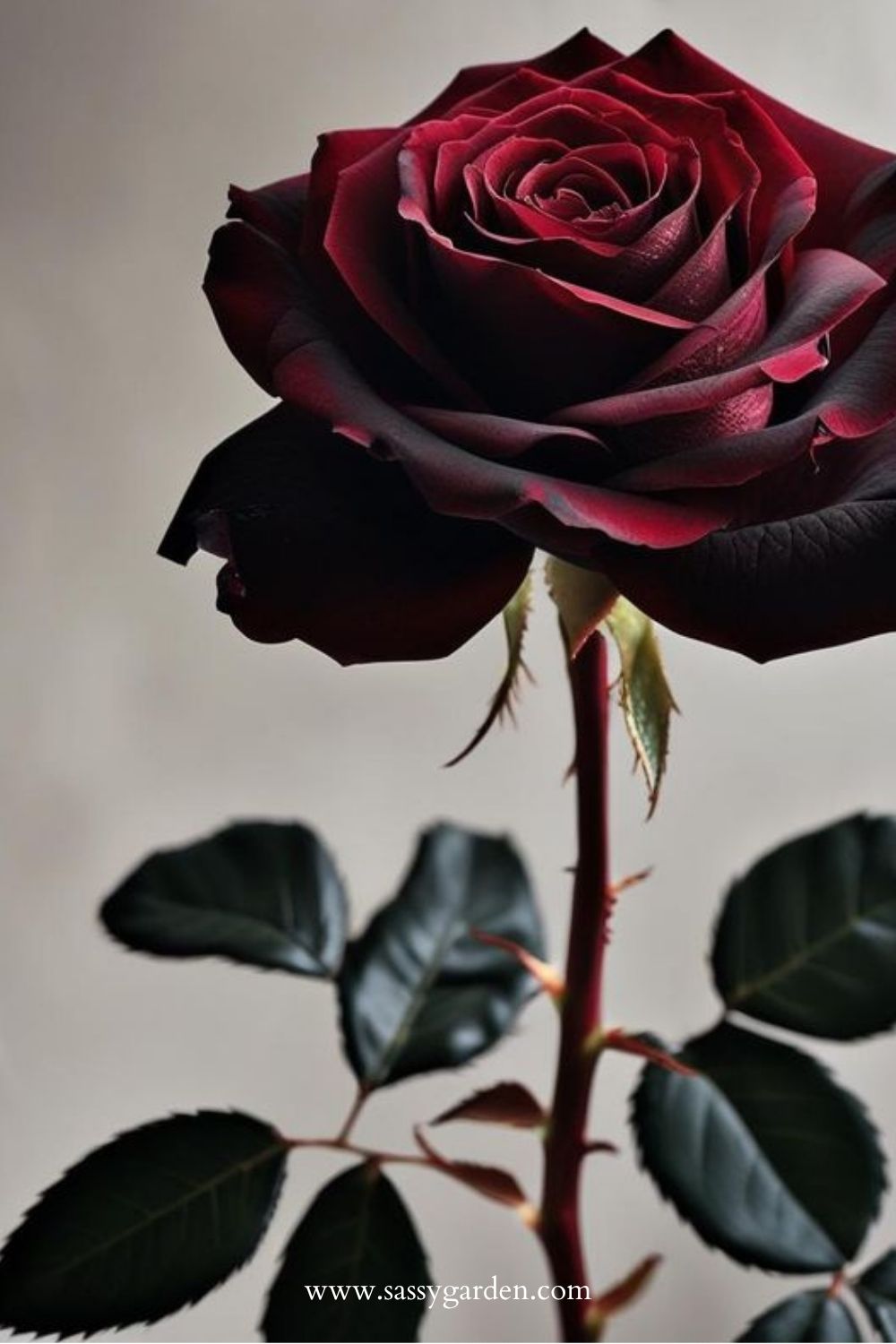
5. The “black” rose, honestly. There is no truly black rose. The darkest real ones, like ‘Black Baccara’, are deep smoky red that edges toward black in cool weather and bud stage, then opens redder. Beautiful, but if a florist swears it’s jet black, it’s been dyed.
6. Dark dahlias and their friends. ‘Black Jack’ and other near-black dahlias, plus dark sweet William, ‘Black Knight’ scabiosa, ‘Black Pearl’ lisianthus, and ‘Nigrescens’ violets fill out a dark border. None are truly black, all read that way in the right spot, and the whole approach of picking varieties by color works here just as it does for brighter blooms.
If you want the full roster, the darkest cultivars catalogued in one place confirm the same theme running through all of them: gorgeous, dramatic, and never once actually black. Good news across the board, none of these are invasive in the US, so you can plant the dark drama without a second thought on that front.
How to Make Dark Flowers Actually Read as Black
Here’s the part that trips people up. A near-black flower planted against a dark fence or in a shady corner just vanishes into the gloom.
The first year I grew Queen of Night, I lined them up against a stained wood fence and they basically disappeared. Moved them in front of silver artemisia the next spring and suddenly they read as proper, dramatic black. (Lesson: contrast is everything.)
So pair dark blooms with their opposites. Silver foliage, chartreuse leaves, white flowers, or pale gravel all throw the darkness into relief and make it pop. It’s one of those simple design moves that costs nothing but changes the whole effect.
And give them light. Bright sun makes a dark flower glow from within, while shade flattens it to a smudge. Site them where the light hits, not where the mood feels right.
Black Flower Questions
Are Black Roses Real or Dyed?
Dyed, almost always, if they’re truly jet black.
Real roses only reach a very dark red or maroon, like ‘Black Baccara’ or ‘Black Magic’, and even those open lighter than the bud promised. The pure black roses in bouquets are white or pale roses that have drunk up black dye through the stem.
You can do it yourself with floral dye and a pale rose if you want the look for an event. Just know it’s ink, not breeding.
What’s the Closest Thing to a True Black Flower?
The black bat flower, by a good margin.
Its deep blackish-purple bloom absorbs so much light that it reads darker than almost anything else you can grow. Certain near-black tulips, hellebores, and ‘Black Pearl’ lisianthus come close behind.
Still not truly black, though. Hold any of them up to strong light and the purple or red underneath gives the game away. That reveal is part of the fun, not a disappointment.
Step back and the whole thing gets more charming, not less. The fact that no flower is truly black is exactly what makes the dark ones worth growing.
A paint-chip black would be flat and dead. What you actually get is a bloom that shifts from merlot to charcoal to near-black as the light moves across it through the day, a living optical trick that a flat black could never pull off. That shimmer is the reward.
So grow one this year. A pot of Queen of Night by the door, a chocolate cosmos you can sniff, a bat flower on a warm windowsill. Then stand and watch it change as the sun moves, and you’ll stop wishing it were truly black.