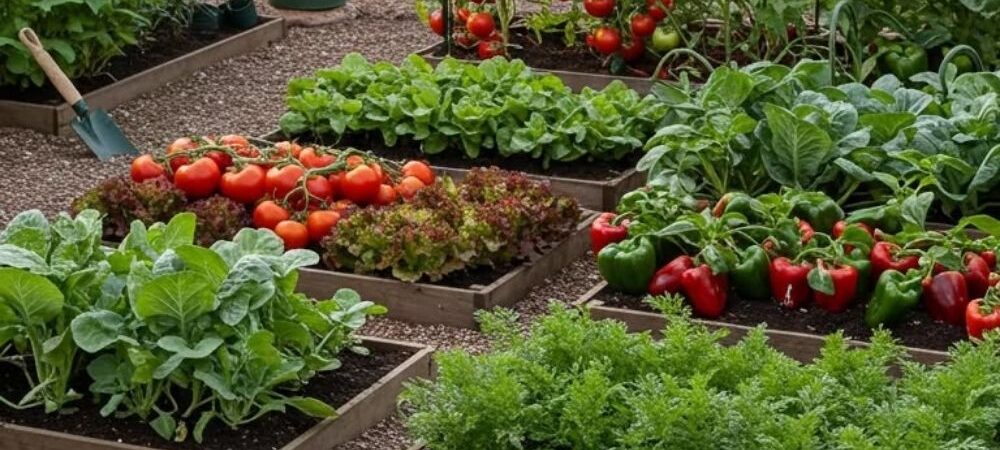
Would you rather grow tomatoes in the sunniest spot on your property where every neighbor can watch you fail, or grow them out back in four hours of dappled shade where nobody sees a thing?
That’s the real question behind a front yard vegetable garden. Not aesthetics, not property values, not what the internet thinks. Sun.
Most American houses were built with the driveway and the street on the open side, which means the front is often the only part of the lot that gets real light. Meanwhile the backyard has a fence, a neighbor’s maple, and a garage throwing shade by two in the afternoon.
So this is the honest comparison. Not an idea gallery, not a pep talk. What the front yard genuinely does better, what it costs you, the rules that can end the whole project before you start, and who should actually skip it.
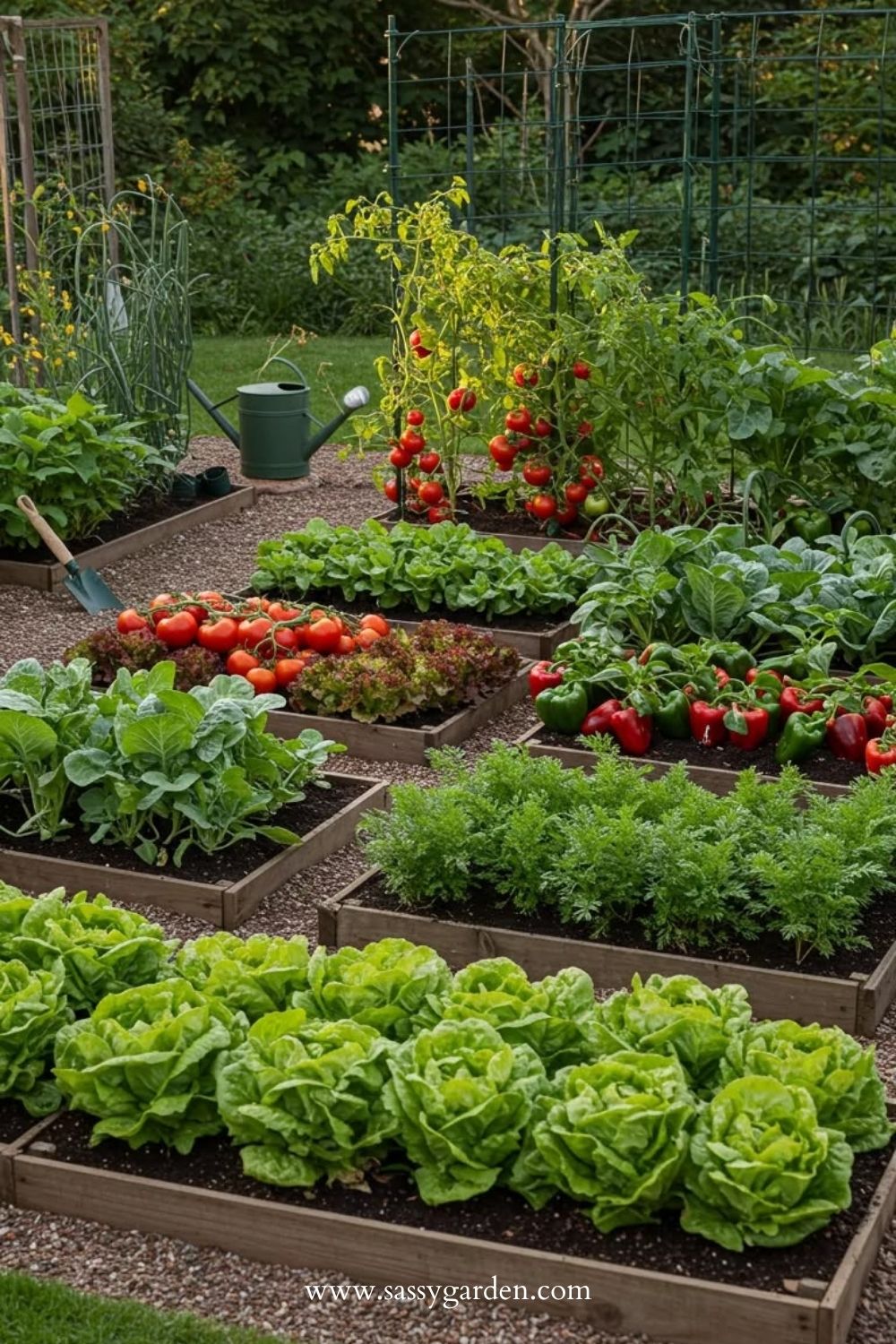
What a Front Yard Vegetable Garden Actually Does Better
Light, mostly. But not only light.
The front is usually closest to the hose bib and the front door, which sounds trivial until you’ve spent a season dragging a hose around a house twice a day in August. Short trips get made. Long trips get skipped, and skipped watering is how a garden quietly dies in July.
There’s also the accountability thing. A bed you walk past every single time you leave the house gets weeded. The one behind the garage does not. (We’ve all killed one.)
Does the Front Yard Really Get More Sun?
Usually, and by more than people expect.
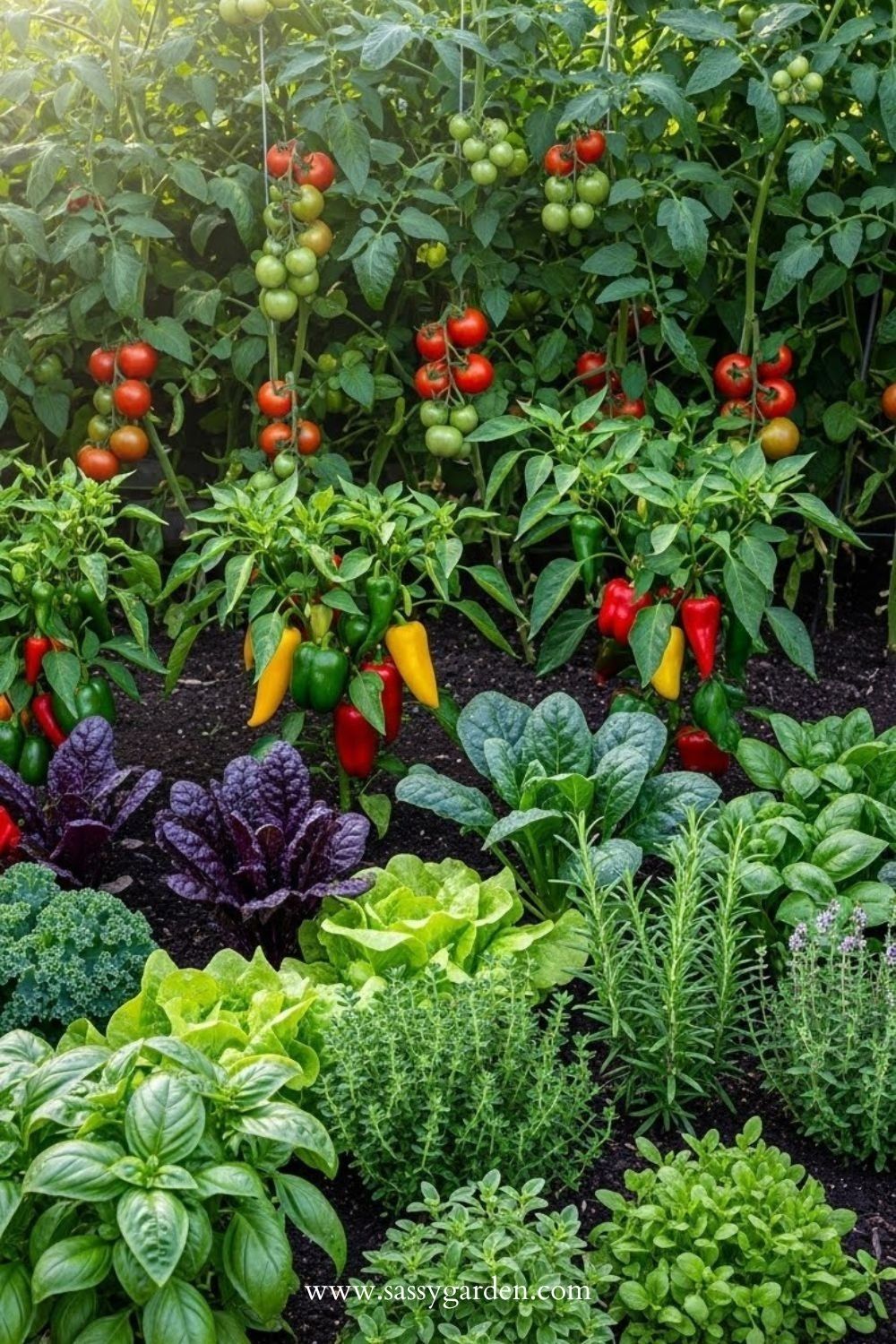
Fruiting crops like tomatoes, peppers, squash, and cucumbers want somewhere in the range of six to eight hours of direct sun, and the front yard is often the only spot that clears that bar once the trees leaf out. Pavement nearby also reflects heat, so those beds warm earlier in spring and hold warmth later into fall.
Here’s where people get burned though. Track your sun in June, not April. I’ve watched a backyard that looked gloriously open in early spring go almost fully shaded by the middle of summer, and by then the seedlings were already in the ground.
If you’re stuck under five hours, don’t force tomatoes. Leafy greens, lettuce, spinach, kale, and most herbs will still produce in partial shade.
What You Give Up by Moving Out Front
Everything you gain in sun, you pay for in visibility and rules. That’s the trade, plainly stated.
A backyard garden can look rough in mid-August and nobody knows. A front bed is a public statement, and the messy stretches are public too: the bolted lettuce, the tomato cage leaning at 30 degrees, the bare dirt in March.
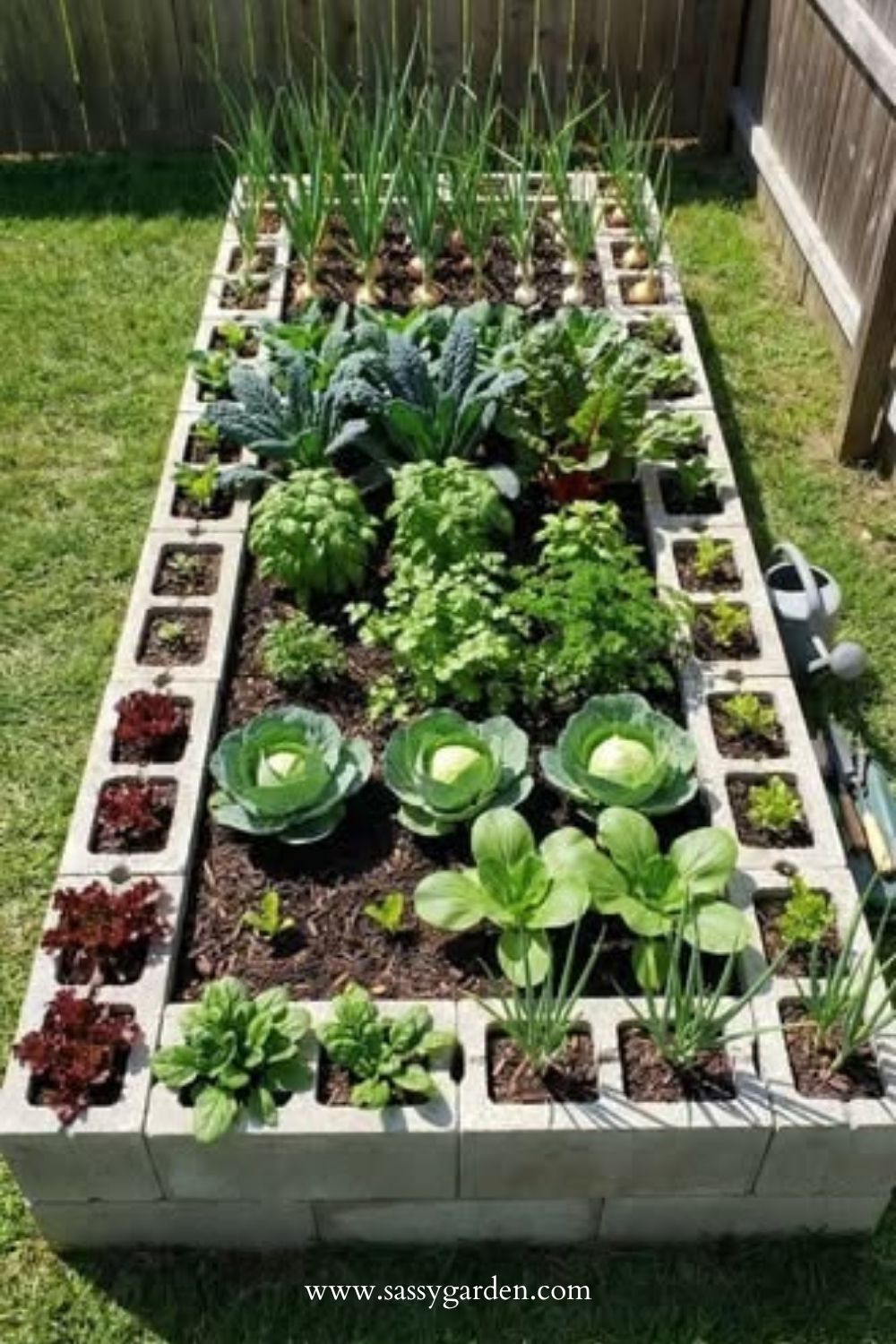
Will Your HOA or City Actually Stop You?
Sometimes yes, and this is the part to check before you buy a single seed.
City zoning is the floor. Your HOA covenants are the ceiling, and they’re the ones that bite, because plenty of them contain a clause restricting vegetable gardens to rear or side yards specifically. A few states have passed protections for residential food growing, but those laws generally push back on municipal ordinances rather than the private contract you signed at closing.
Read your CCRs before you argue with anyone. And if the rules do block a proper bed, the workaround most gardeners land on is edible ornamentals: blueberry bushes as foundation shrubs, rainbow chard as border color, dwarf fruit trees, herbs as edging. Food that doesn’t read as a vegetable garden.
The Soil Problem Nobody Checks First
Front yards sit closer to the road and closer to the house, and both of those are where lead shows up. Old leaded fuel settled along roadsides for decades, and old exterior paint flaked off into the strip right along the foundation.
Get a lead test before you plant food out front, especially in an older neighborhood. Your county extension office can tell you which lab does it, and it’s a separate request from a standard fertility test. Root crops like carrots and radishes are the bigger concern here, so those are the ones to grow in clean soil no matter what.
If the result comes back high, you’re not done, you just build up instead of down. A raised bed on landscape fabric filled with clean soil sidesteps the problem entirely, which is one more reason raised beds earn their cost in a front yard more than they do out back.
Front Yard vs. Backyard, Head to Head
Five things actually separate them. Everything else is noise.
Sun: front usually wins, sometimes by three or four hours. Water access: front usually wins, closer spigot and shorter runs. Privacy: backyard wins, no contest. Maintenance pressure: front wins if you like the pressure, loses if you resent it. Off-season looks: backyard wins easily, and this is the criterion that decides it.
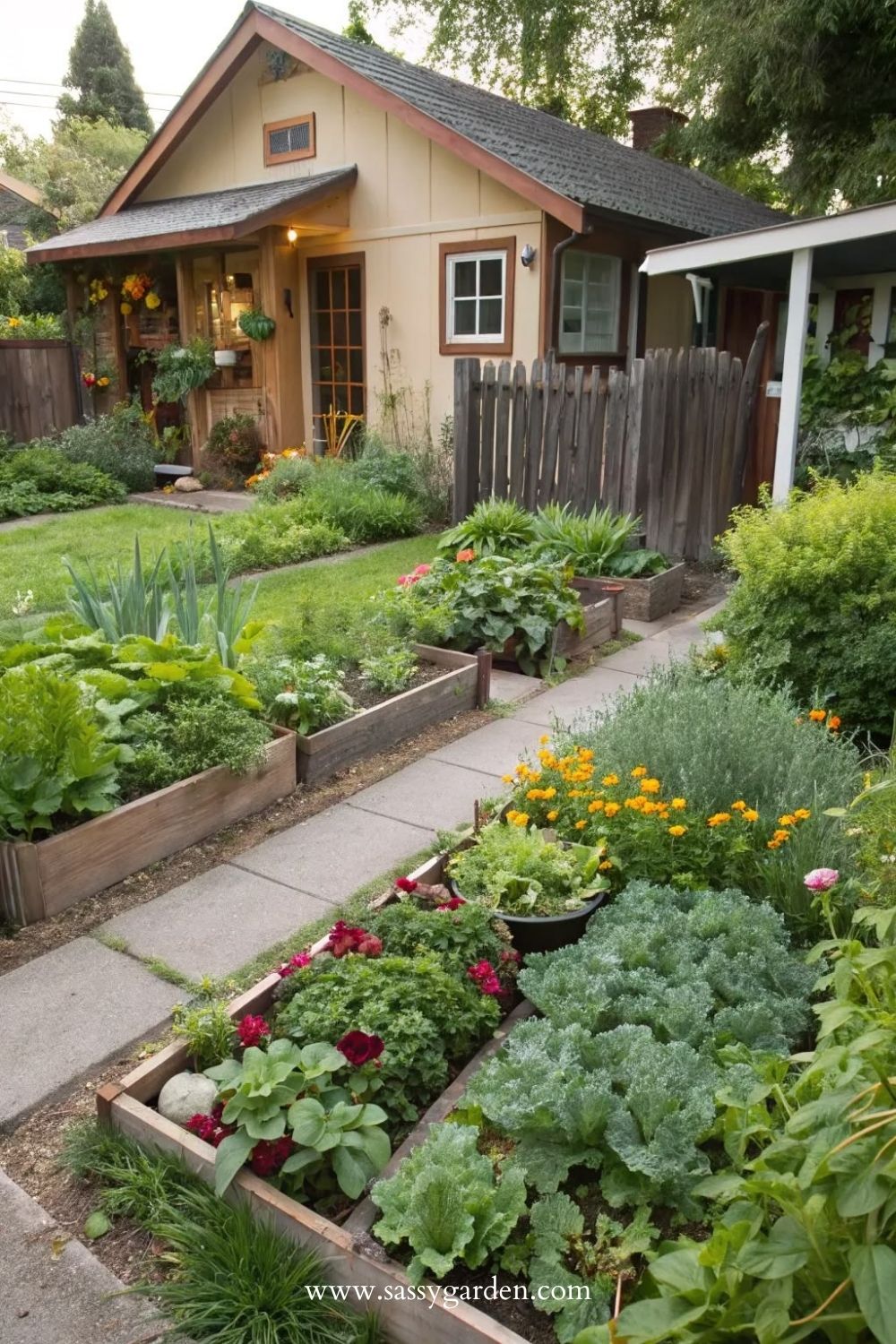
The Criterion That Decides It for Most People
A vegetable garden is beautiful for about five months and structurally naked for seven.
November through April, a pure vegetable bed out front is bare soil and a few frost-killed stems. That’s fine behind the house. Out front it reads as neglect, and that’s what generates complaints far more often than the tomatoes ever do.
So the deciding question isn’t “can I grow food out here.” It’s “am I willing to design for winter.” If the answer is no, keep the crops out back and put something with year-round structure in front of the house instead.
So Who Should Actually Do This?
Two clear camps, and most people know which one they’re in before they finish reading this section.
Do It If
Your backyard gets under six hours of summer sun and the front gets more. That’s the whole case right there, and it’s a strong one.
Also do it if you have no HOA or a permissive one, you’re willing to mix ornamentals in with the crops, and you’d rather have a garden people comment on than one nobody sees. Start with one defined bed, not the whole lawn. (And no, you don’t need a greenhouse.)
Budget-wise this doesn’t have to be a big swing either, and there’s a lot you can do redoing a front yard on a small budget with a hard edge, some compost, and a season of patience.
Skip It If
Your backyard already gets six or more hours. Take the easy win, garden where nobody’s watching, and use the front for shrubs.
Skip it too if your covenants explicitly ban it and you don’t want the fight, if you know you’ll resent weeding while people walk by, or if you’re in your first season of vegetable gardening. Learn on a bed where the mistakes are private. Your first year is going to be ugly, and that’s completely normal.
Front Yard Vegetable Garden Questions
Do People Steal Vegetables From Front Yards?
Less than you’d think, and rarely in a way that matters.
The occasional tomato walks off. Kids grab a strawberry. In practice, most front-yard growers report the opposite problem: neighbors stopping to talk while you’re trying to finish weeding before dark.
If it worries you, keep the highest-value crops closer to the house and put the abundant stuff, beans, greens, herbs, near the sidewalk. Some people plant a little extra on purpose and stop caring.
What Does a Front Yard Vegetable Garden Look Like in Winter?
Bare, unless you build bones into it.
The fix is borrowed straight from landscape design: give the bed permanent structure so the crops are decoration rather than the whole show. That means a hard edge, a path, an evergreen or two, and a trellis or obelisk that looks intentional standing empty in February. Blending edibles into an ornamental framework is the core idea behind edible landscaping, and it’s what separates a front garden that reads as designed from one that reads as an abandoned project.
Cool-season crops help too. Kale, chard, and garlic hold their looks well past the first frost in zones 6 through 9, and garlic planted a few weeks before your ground freezes gives you green shoots in late winter when nothing else is happening.
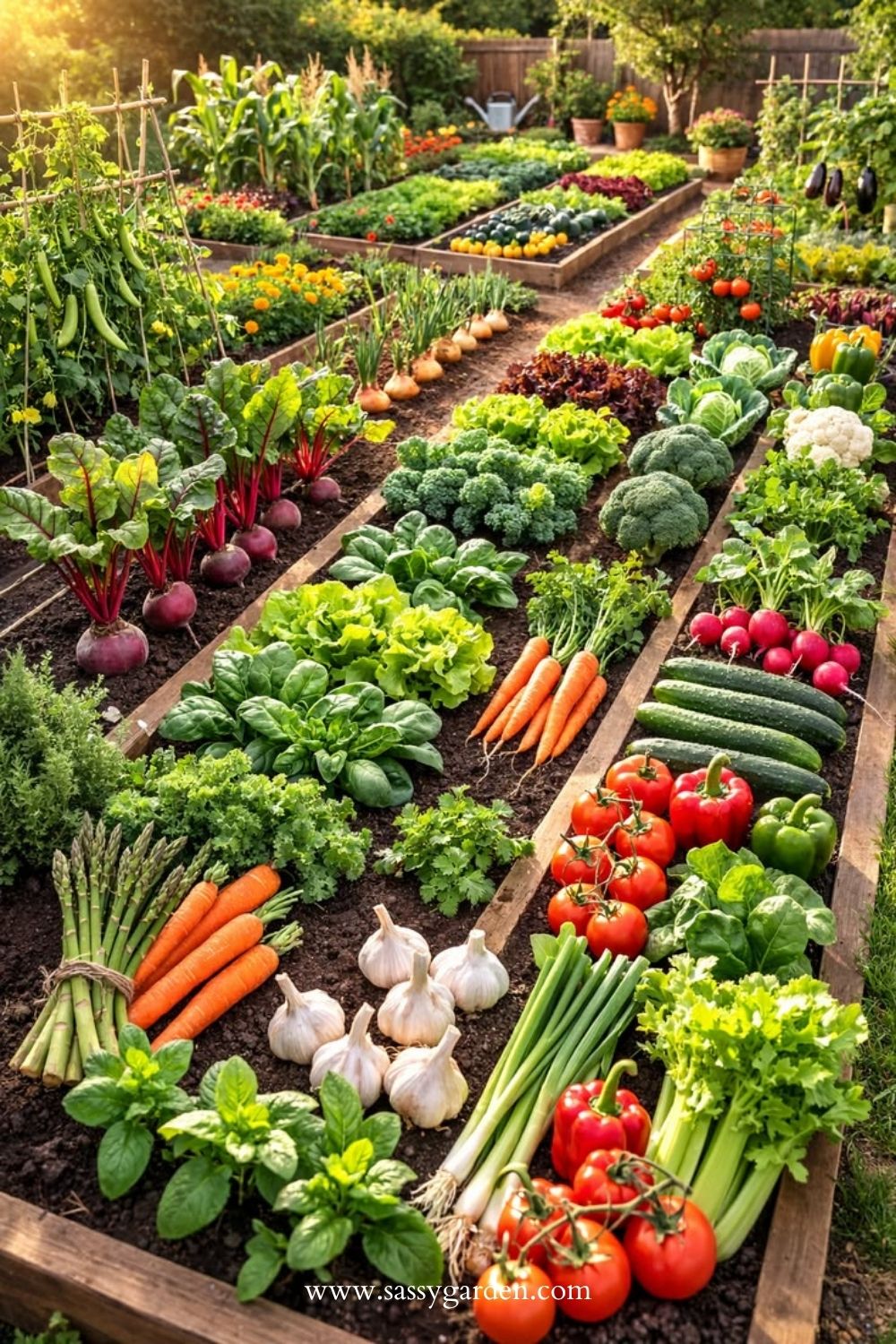
If it were my house and my front yard, I’d do it, but I’d do exactly one bed the first year. A single raised bed with a clean hard edge, set where the sun is best, planted half with crops and half with things that look good doing nothing: chard, dwarf marigolds, a blueberry bush at one end.
That gets you real tomatoes, tells the neighbors this is deliberate, and keeps the project small enough that a bad season doesn’t leave a scar across your whole lawn. Then expand in year two once you’ve watched how the light and the foot traffic actually behave.
Go stand at your curb this week and time the sun from ten to four. That one number decides this for you better than any post can. (Your future self, standing in that garden, is going to love you for this.)