What do a $50,000 in-ground pool and a $900 stock tank in a side yard have in common?
Both of them get used far less than the owner expected. And usually for the same three reasons, none of which are money.
I’ve watched a beautiful pool sit untouched all summer because it was in shade until two in the afternoon and there was nowhere dry to sit beside it. Cold water, a long walk from the back door, and nowhere to put a towel kill more pools than cost ever has.
So the swimming pool ideas worth your time aren’t the prettiest ones. They’re the ones that pass a short list of practical tests, then get surrounded properly.
Here’s the criteria, six options across a wide price range, the planting that does the resort work, and an honest accounting of the upkeep.
What Separates a Pool You Use From a Pool You Maintain
Five things, and you can check all five before you spend anything.
Sun for at least half the day. Water in shade stays cold, and cold water gets swum in once. Track the sun over the spot before you commit, especially in June when the trees are full.
Close enough to walk out in a towel. Past about fifty feet from the back door it becomes an expedition. The pools that get used daily are the ones you’re in ninety seconds after deciding to swim.
Somewhere dry to sit beside it. People skip this and then wonder why nobody hangs around. A deck collar, a paved apron, two loungers under an umbrella.
A season long enough to justify it. In zones 4 and 5 you’re looking at roughly ten to twelve usable weeks without heating. In zones 8 to 10 it’s most of the year, which changes the math on everything below.
Upkeep you’ll actually do. Not upkeep you intend to do. There’s a difference, and the pool knows.
Six Swimming Pool Ideas Worth Considering
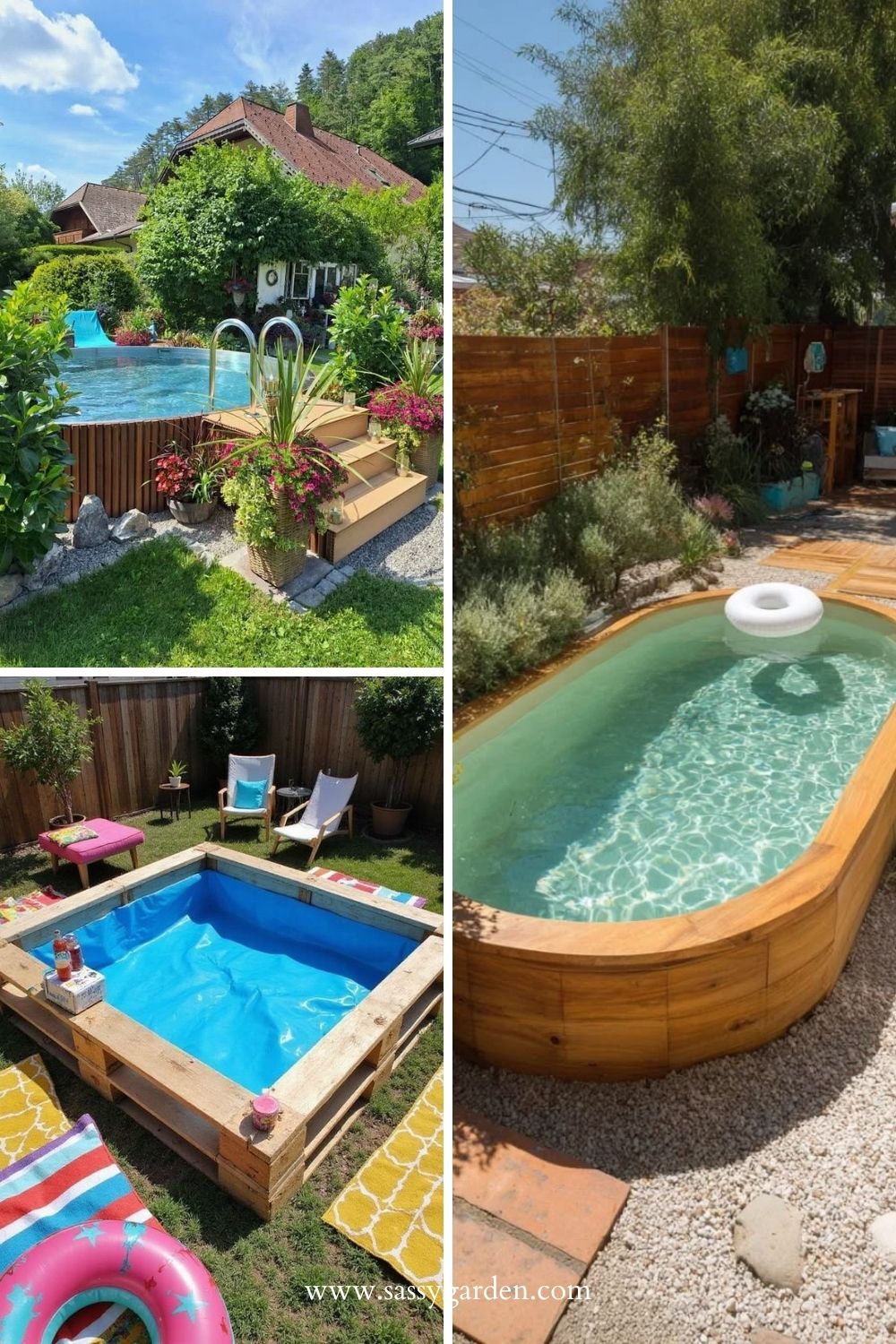
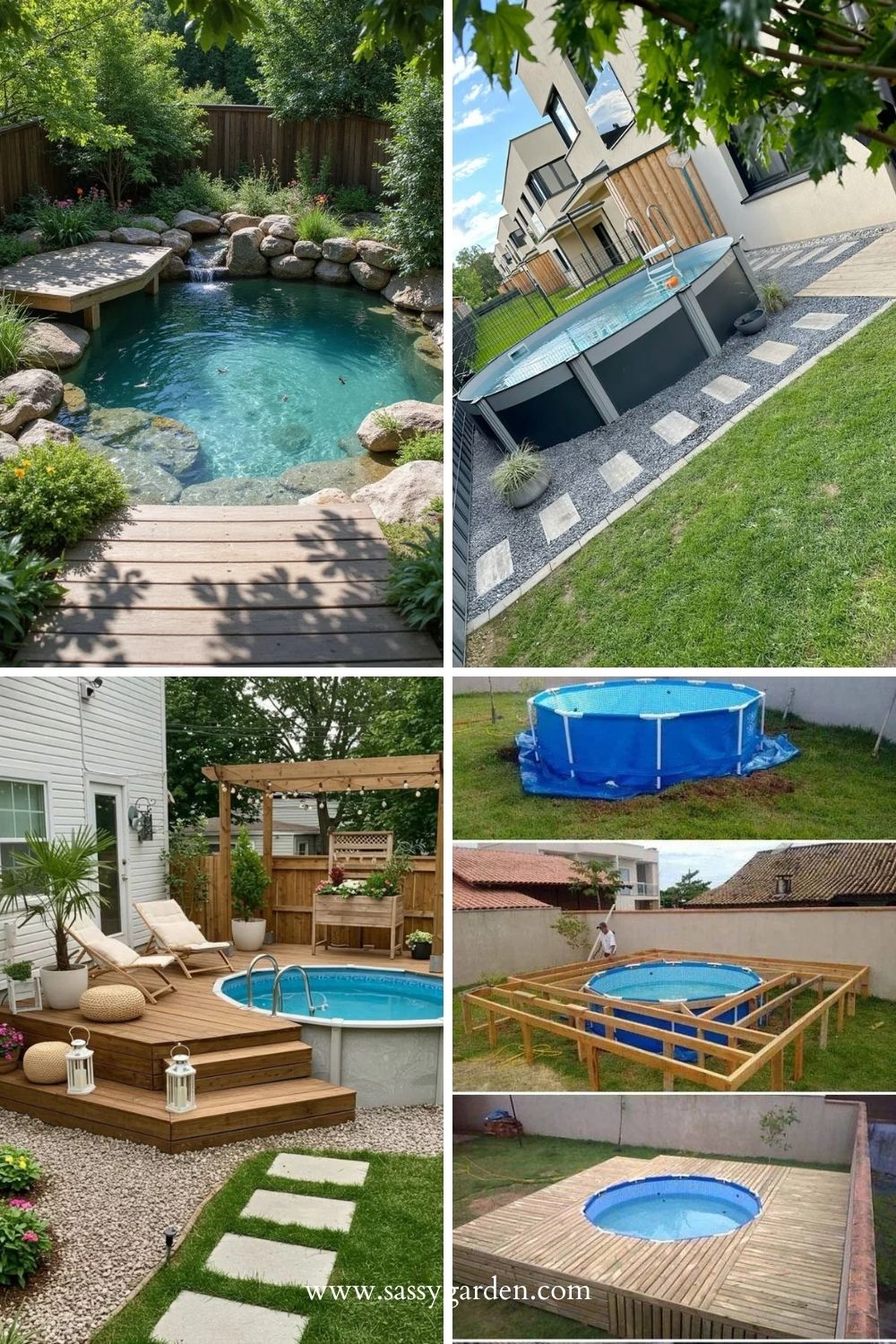
1. Stock tank pool. A galvanized livestock tank, a small cartridge pump, and a level pad of pea gravel. Genuinely the best value in backyard swimming, and a well-documented stock tank pool build lands somewhere around $700 to $900 all in, including liner and filtration.
The catch: it’s for sitting in, not swimming laps. An eight-footer holds two adults comfortably and three if you’re friendly.
2. Above-ground pool with a deck collar. The single biggest upgrade you can make to an above-ground pool is cladding it in timber and building a deck to one side, which turns an eyesore into a feature.
You can frame a deck around a tank or frame pool over a couple of weekends, and building in a hatch for pump access is the detail everyone forgets until they need it. (Ask the person who had to unscrew nine deck boards to change a filter.)
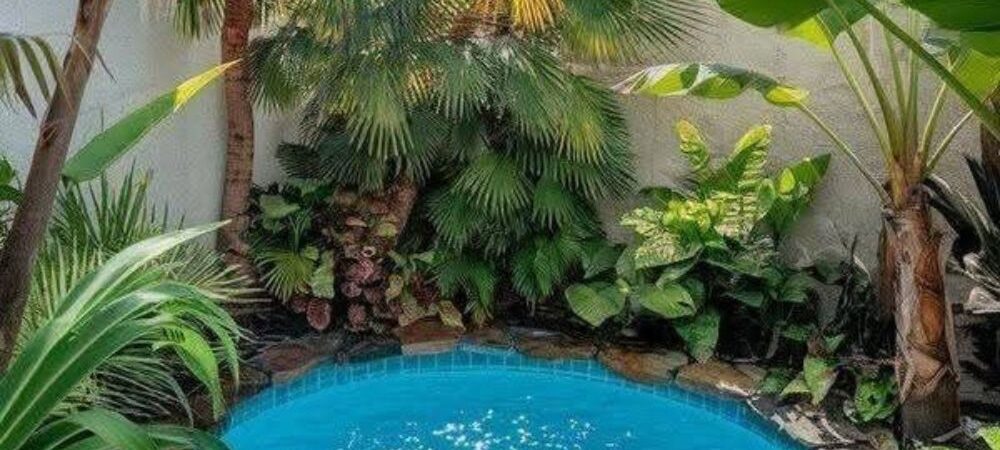
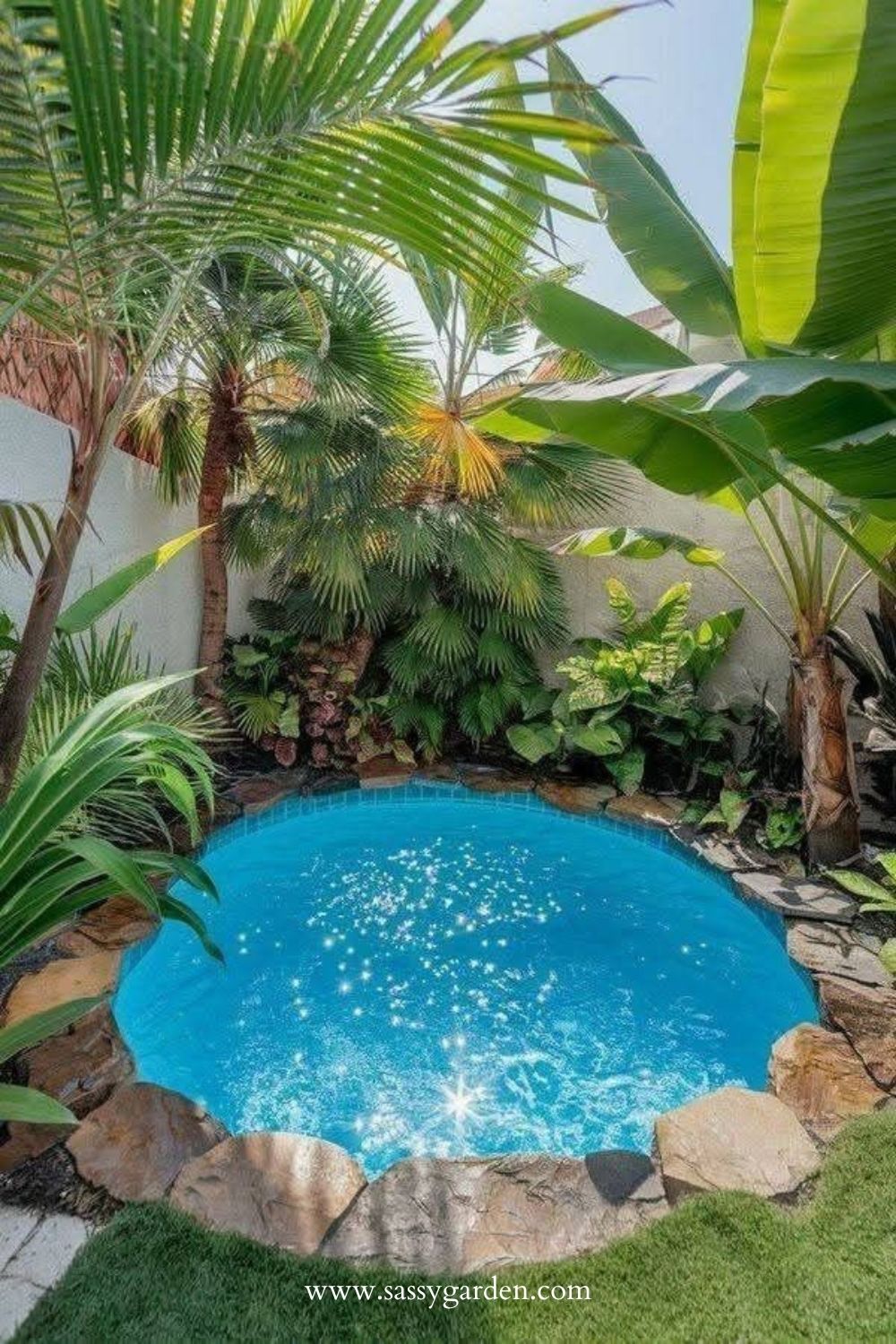
3. Plunge or cocktail pool. Small, deep, often gunite or fiberglass, and permanently installed. Ten by twelve feet is plenty, and paired with flagstone coping and big-leaved planting it reads as a proper resort pool at a fraction of the footprint.
This is real construction with real costs. It’s the option to pick if you’re staying put and want something permanent that doesn’t eat the whole yard.
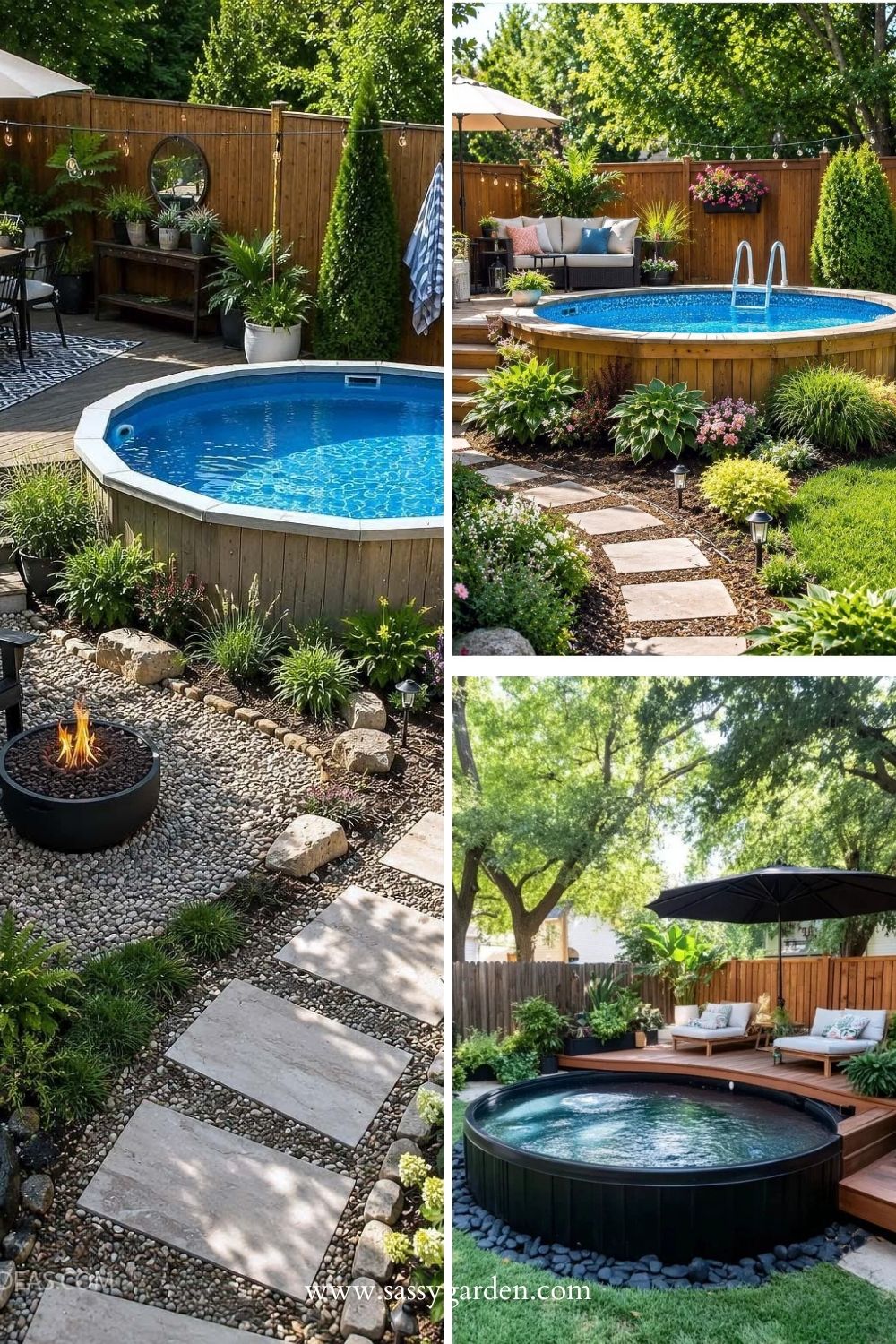
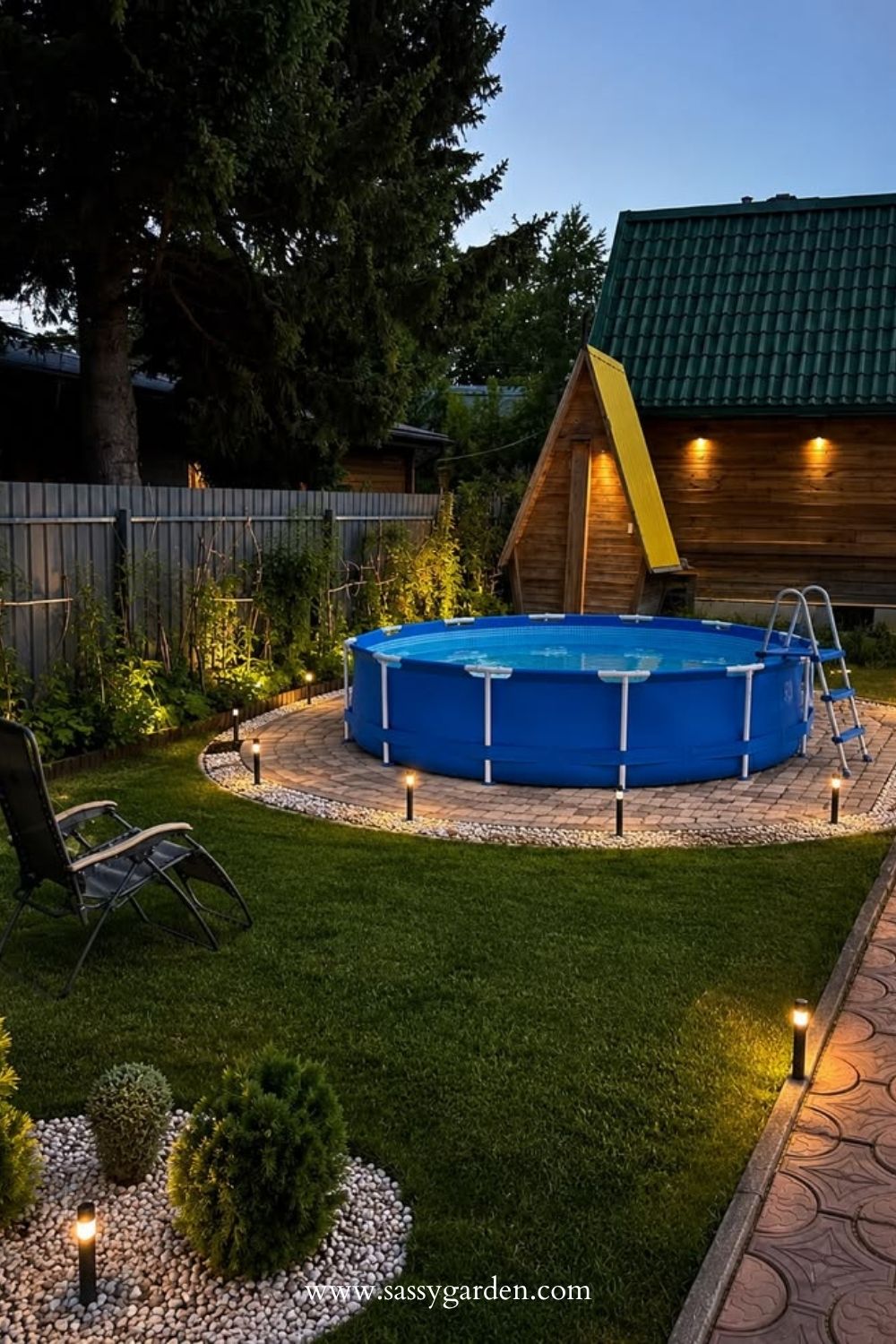
4. Metal frame pool, dressed properly. The blue vinyl frame pool everyone has in a box in the garage. On grass it looks like exactly what it cost. Set it on a ring of pavers with a gravel margin and a few low path lights, and at dusk it looks intentional.
Cheapest real swimming you can buy, and it comes down in October. No fancy tools required, just a level base and one afternoon.
5. Pallet-and-liner budget build. Heat-treated pallets stacked and braced into a square, lined with a heavy pool liner. Cheerful, temporary, and perfect for a family with small kids.
Be realistic about lifespan. Two or three seasons before the timber goes soft, and it needs proper bracing because water is far heavier than it looks.
6. Natural swimming pond. Boulders, a shallow planted regeneration zone, and no chlorine at all. Beautiful, low-chemical, and increasingly popular.
It’s also the most complex and expensive thing on this list, and the water will be cooler and greener than you’re imagining. Worth it if the look matters more than the swimming.
Which One Actually Fits Your Yard?
Answer three questions and it narrows fast.
Do you want to swim, or sit in water? Sitting means a stock tank or plunge pool. Swimming means an above-ground at least fifteen feet across, or in-ground.
How long is your season? Under three months and I would not build anything permanent. Take the frame pool or the stock tank, put it up in June, and take it down before your first hard frost.
Are you staying put? Renters and movers want the tank, the frame pool, or the pallet build. Everything else is a fixture you leave behind.
The Planting That Does the Resort Work
Here’s the thing nobody says: the pool is not what makes it feel like a resort. The surround is.
A frame pool ringed with pavers, ornamental grasses, and warm lighting beats a bare in-ground pool sitting in a lawn every single time. Big leaves, evergreen structure, gravel and stepping stones, string lights overhead, and something to sit on at the far end.
For the tropical look without lying to yourself about zones: hardy banana (Musa basjoo) survives to zone 5 with a heavy mulch over the crown, windmill palm (Trachycarpus fortunei) is reliable from about zone 7b, and canna gives you the same drama in zones 7 and up, or anywhere if you lift the rhizomes before frost.
Add a fire bowl or a low seating area at the far end and the pool becomes a place you use in the evening too. These sunken fire pit and seating ideas work particularly well set slightly away from the water. For the bigger picture of tying it all together, designing a pool that feels part of the garden is the companion piece to this one.
What to Keep Away From the Water’s Edge
Some plants are simply not poolside plants, and the reasons split into three.
Roots that go looking for trouble. Willow, silver maple, cottonwood, mulberry, and American elm all have aggressive root systems that will find your plumbing and lift your decking. The standard advice is to keep trees and large shrubs well back from pool walls and lines, which in practice means ten to fifteen feet minimum.
Running bamboo belongs in this group and then some. It spreads by rhizome, it will get into pool structure and pipework, and several states list or restrict running types. Clumping bamboo gives you the same screen without the invasion.
Litter that clogs filters. Fig, camphor laurel, and anything that drops fruit or heavy leaf fall means skimming twice a day in season. Evergreens and grasses shed far less.
Toxic plants near where people are barefoot and wet. Oleander is still sold as a poolside hedge across the warm South, and it’s seriously toxic to people and pets in every part of the plant. Sago palm is worse for dogs, causing liver failure from very small amounts. Elephant ear irritates skin and mouths.
Safer picks that still look the part: ornamental grasses, lavender, agapanthus, hardy banana, canna, and boxwood or holly for evergreen structure. Shallow, fibrous roots and minimal drop, which is the whole brief.
Choosing, Costing, and the Boring Bits
Ground prep is where DIY pools fail. Level ground, rocks removed, a compacted base of pea gravel or sand, because a pool sitting even slightly out of level stresses a seam and eventually splits.
Size the pump to the volume. An undersized cartridge filter on a big tank means cloudy water within a week, no matter how many chemicals you throw at it.
Winterizing depends on your zone. Anywhere with a hard freeze, drain and store the pump and hoses before your first frost, then either drain the pool or cover and partially drain below the skimmer line. Zone 9 and warmer, you run it most of the year and dial back the chemistry.
Sort out storage early, because wet towels on a deck rail is not the resort look. Where to store pool towels and floats solves the ugliest problem in backyard swimming.
How Much Work Is a Backyard Pool, Really?
About fifteen minutes a week for a small pool, plus five minutes most days.
The weekly job is chemistry: test the water, adjust as needed, and add a chlorinating tab or two. The daily job is skimming leaves off the surface before they sink, which takes a minute and saves you an hour later.
Filter cartridges need rinsing regularly and replacing every few weeks to a couple of months, depending on how much debris lands in your water. Plant it well and that number improves noticeably.
Bigger pools scale the time up, not the complexity. The chemistry is the same, there’s just more of it and more surface to skim.
One thing this post deliberately doesn’t cover: barrier and fencing law, permits, and in-ground construction. Not because it’s boring, but because it’s entirely local and getting it wrong is dangerous.
Most US jurisdictions require a barrier of a specified height with a self-closing, self-latching gate around any pool over a certain depth, and plenty of them count a stock tank. Your municipality decides and your insurer cares, and neither is interested in what a blog said.
So call the building department first and ask about depth thresholds, fencing, and whether you need a permit for what you’re planning.
Then come back to the fun part: pick your spot by tracking the sun for a week, and start with the surround rather than the pool. It’s the cheaper half, and it’s the half that decides whether you use it.