There are two kinds of people who buy bougainvillea. The ones who want one exact color for one exact wall, and the ones who grab whatever’s blooming at the nursery and hope for the best.
The second group is the one that ends up with hot magenta climbing the porch when they had a soft coral in mind. (Been there, planted that.)
Here’s what nobody tells you at the register: the color you’re looking at isn’t really a flower. It’s the papery bracts, and the exact shade depends on the variety, the sun, and how old the bloom is. Which means the only reliable way to get the color you pictured is to know the bougainvillea varieties by name before you go.
So this is the color map. The best-known varieties grouped by shade, from the loud magenta-reds to the barely-pink whites, plus the honest truth about zones, thorns, and where these will and won’t survive.
What “Color” Even Means on a Bougainvillea
Quick breakdown before the list, because it saves disappointment.
The showy part is three papery bracts wrapped around a tiny white or cream true flower in the center. Look closely at any bloom and you’ll spot the little trumpet flowers doing the actual botanical work while the bracts do all the shouting.
Bract color is not fixed. Full sun tends to deepen and warm it, shade cools it, and many bracts shift as they age, which is why the warm-colored varieties in particular change through their bloom. Some are bred bicolor on purpose.
Vigor matters as much as color. A big climbing red will swallow a two-story wall, while a compact white behaves in a pot. Pick the color you love, then check the size, because full-sun vigor and mature spread vary hugely between types. Match the plant to the job and half your problems disappear.
One more thing worth knowing going in: bougainvillea flowers best when it’s a little stressed. Rich soil, heavy feeding, and constant water give you a leafy green monster with almost no color. Lean, dry, and sun-baked is what triggers the bracts, which is genuinely good news for anyone who tends to forget a plant exists.
The Reds, Magentas, and Purples
The loudest end of the range, and the varieties most people picture when they hear the name.
Magenta and Red
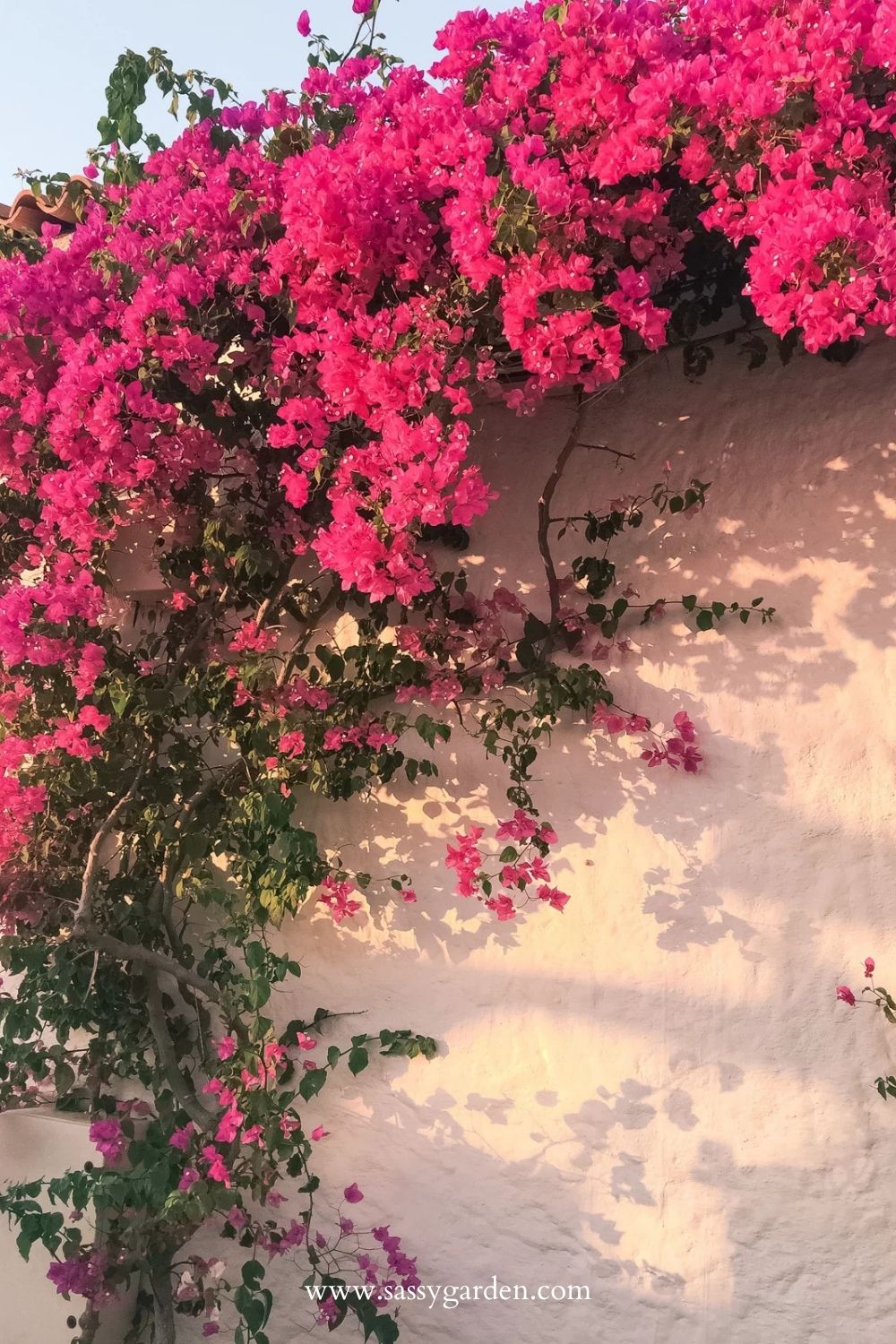
Barbara Karst is the one you’ve seen on a hundred Mediterranean walls. Bright magenta-red bracts, blooms young, blooms long, and climbs with real enthusiasm. If you want the classic look, this is it, and it’s the variety most likely to be in stock wherever you shop.
San Diego Red goes deeper, a true dark red that reads crimson in shade and bright red in full sun. That shift is worth knowing about, since the same plant can look like two different reds depending on which side of it you’re standing. Scarlet O’Hara sits in the same family, a touch brighter and just as free-flowering.
All three are vigorous climbers, so give them something serious to hold onto and check which trellis is right for your climbers before they get away from you. These are the workhorses of the whole genus. If you have a hot wall and no patience, start here.
True Purple
Purple Queen and the deep-violet types like Vera Deep Purple give you that rich, saturated purple that photographs almost blue in low light. In strong afternoon sun the same bracts warm toward magenta, so if it’s the cool blue-purple you’re after, a spot with some shade in the hottest part of the day actually holds the color better.
They’re just as vigorous as the reds, which brings up the trade-off nobody mentions in the color guides: thorns. Bougainvillea is armed, and the big climbers are the thorniest of the lot. The spines hide under the foliage and they’re stiff enough to go through a thin glove, so wear thick ones. And keep the pruned stems away from where kids and pets wander, because a thorn scratch can turn into an infection fast.
The Warm Colors: Orange, Coral, and Gold
This is where bougainvillea gets interesting, and where buyers get surprised.
Orange and Coral
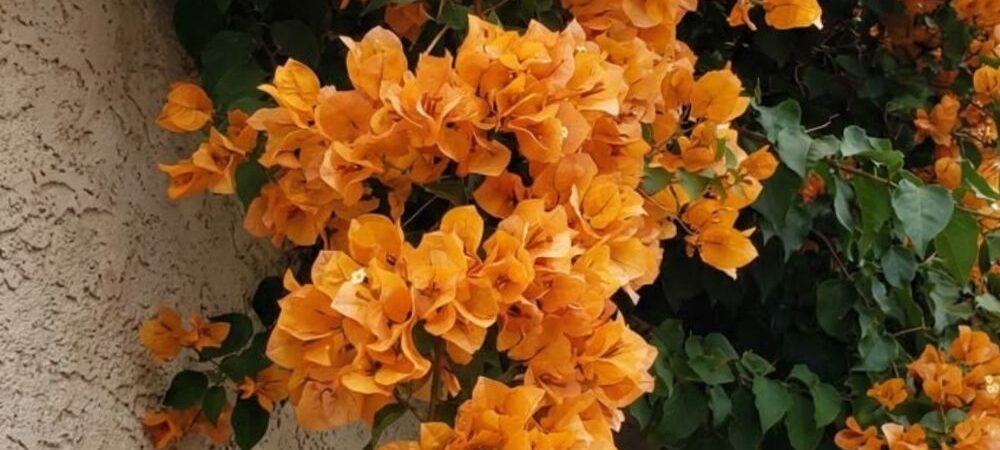
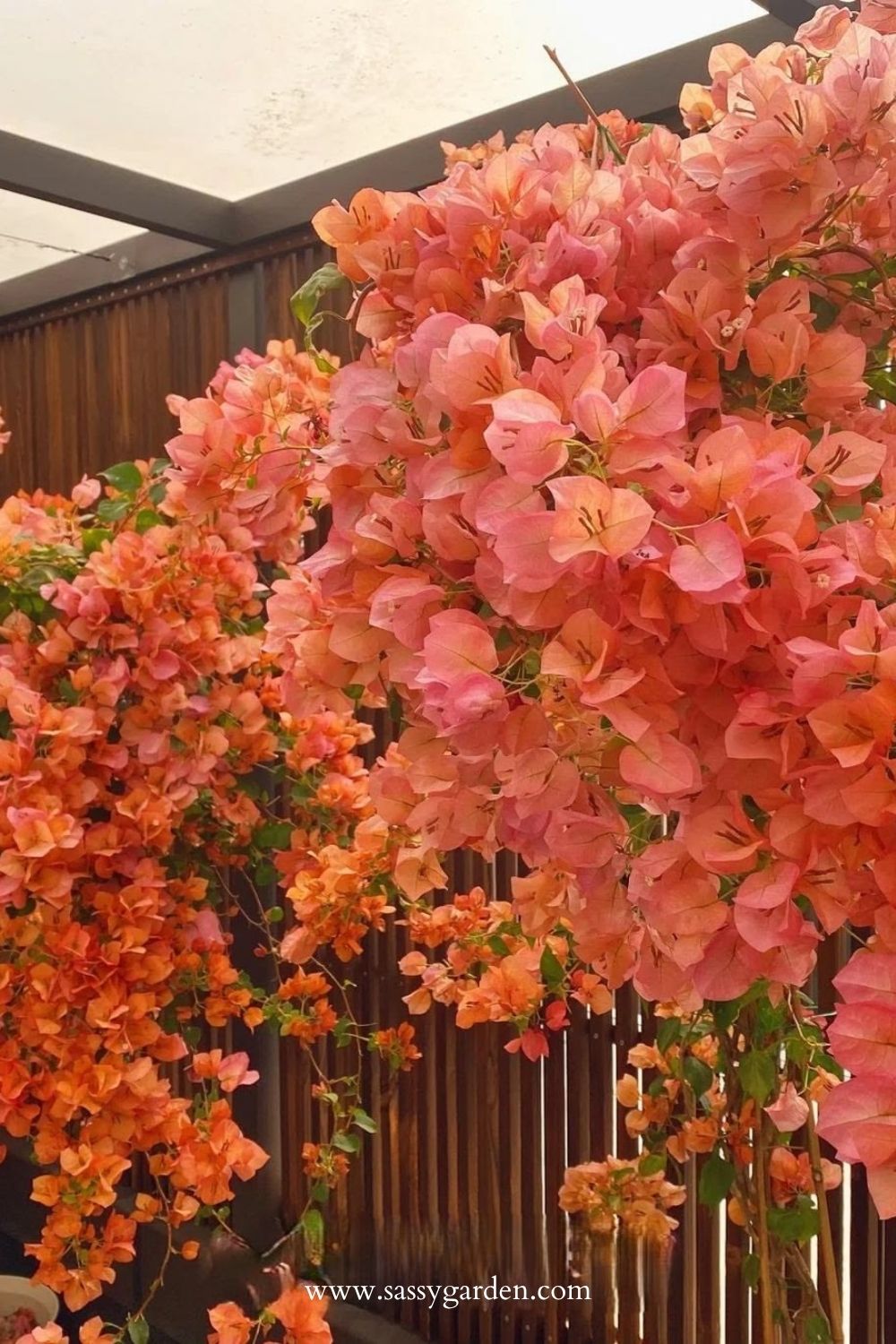
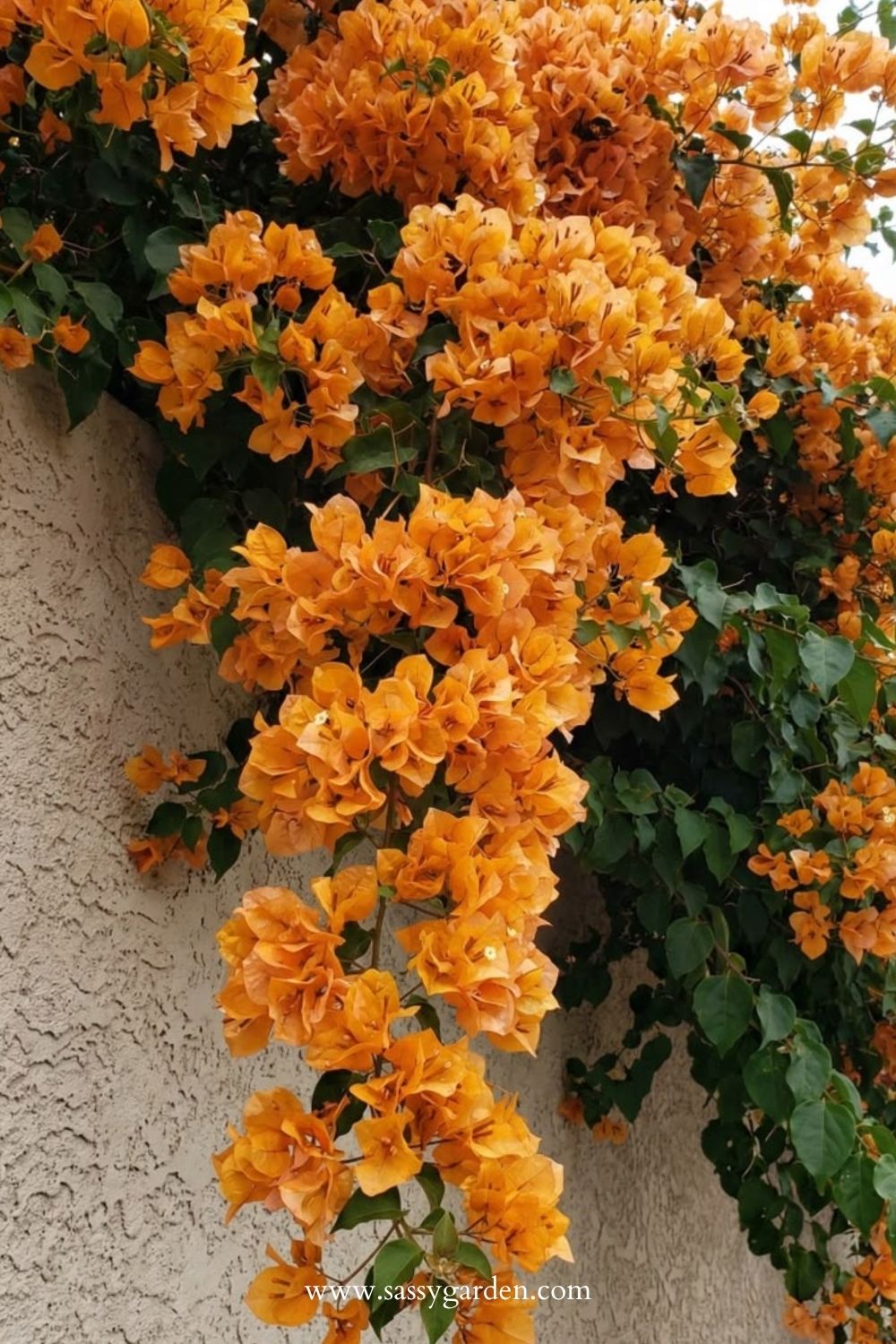
California Gold (also sold as Sunset) opens a warm gold and softens toward peachy cream as it ages. Afterglow gives you that glowing apricot-orange, and Orange King leans deeper into true orange. Between them you can hit almost any warm shade from butter-gold to sunset tangerine.
These are the coral and tangerine shades in every dreamy courtyard photo, the ones that make a plain stucco wall look like a vacation. They’re a little less bulletproof than the reds, blooming a touch less freely and sulking harder in a cold snap, but worth the slightly fussier reputation for that color alone. (Worth every bit of it, honestly.)
Why Warm Colors Shift
Here’s the part that trips people up. Orange and coral varieties rarely hold one flat color, because the bracts warm up in strong sun and fade as they mature.
So a single plant can show peach, coral, and soft orange all at once, which is gorgeous but not what you get if you were expecting one uniform tone. If you specifically want a steady color, the reds and magentas hold truer than the warm shades do. Fair warning, not a flaw.
The Whites, Pinks, and Bicolors
The gentle end, and the most pot-friendly group of the lot.
Soft and Two-Tone
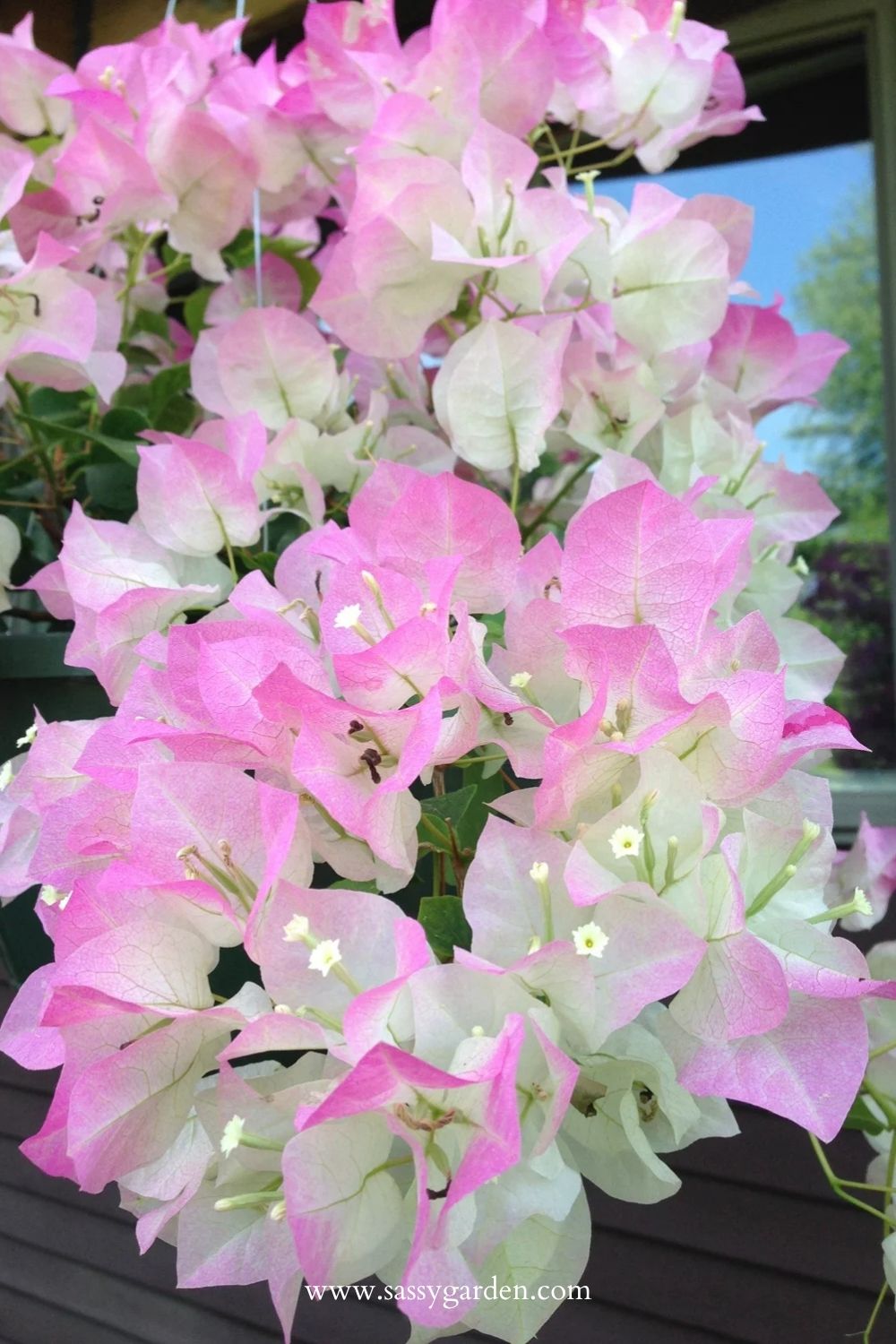
Summer Snow and Jamaica White give you clean white bracts around the cream flower, though white types often carry a faint pink blush in cooler weather. Imperial Delight and Apple Blossom open pink and fade toward white, so the plant carries both tones at once and looks like it’s blushing.
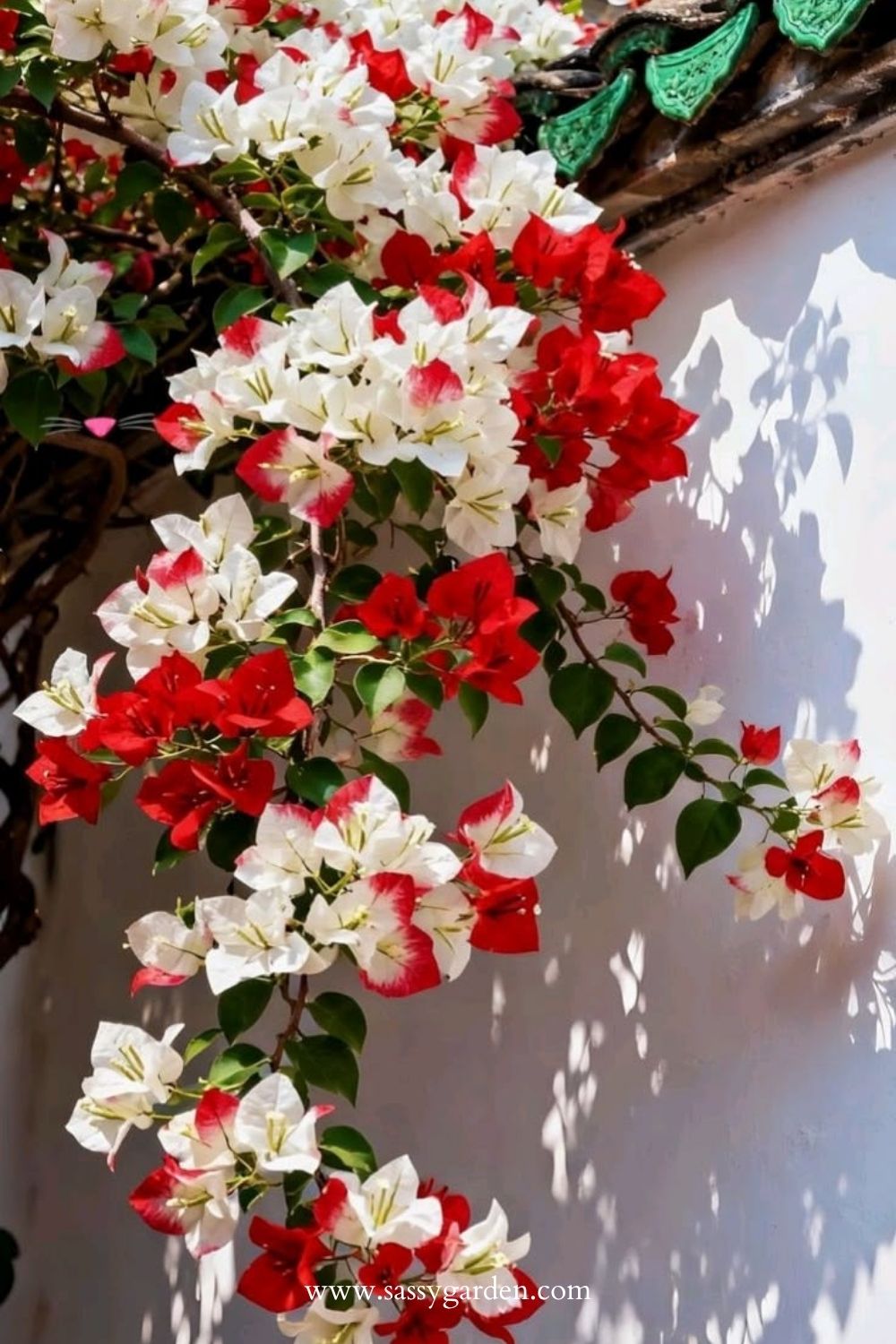
Then there are the true bicolors, like the red-and-white splashed types where each bract is marbled with two colors. They’re the showstoppers of the group, and no two blooms look quite the same, which is either delightful or maddening depending on how tidy you like your color scheme.
The nice thing about whites and pinks: they tend to be less vigorous, which makes them the easy choice for a container or a smaller support. That restraint also makes them lovely worked into gorgeous garden privacy screen ideas where you want color without a monster to manage.
Growing Any of Them Without Regret
Color is the fun part. This is the part that decides whether the plant lives.
What Zone Does Bougainvillea Need?
Bougainvillea is a warm-climate plant, hardy in the ground in USDA zones 9b through 11, and it starts taking damage once temperatures drop toward 40°F.
In zone 9 it’ll usually survive with a sheltered spot and some frost protection, though it may die back and regrow. Anywhere colder than that, growing it in the ground is a heartbreak waiting for the first freeze. Good news for the rest of us: it’s a fantastic container plant, which is the next question.
One reassurance while we’re here: bougainvillea is not classified as invasive in the US, including Florida, so you can plant it in the ground guilt-free where the climate allows.
Can You Grow Bougainvillea in a Pot?
Yes, and it’s the trick that lets zone 6 gardeners grow one at all.
Even better, bougainvillea blooms harder when its roots are a little crowded, so a container actually turns it into a flowering machine rather than holding it back. Don’t rush to pot it up into something huge, because a bougainvillea rattling around in a big pot puts its energy into roots and leaves instead of color.
Use a fast-draining mix (cactus or palm mix is ideal), give it at least six hours of full sun, and water deeply but let it dry out between drinks. Overwatering is the fastest way to trade flowers for a lush green plant that never blooms.
Then bring it in before nights drop below 40°F, park it in your brightest window, water sparingly, and stop feeding until spring. It’s the same forgiving, heat-loving temperament behind the best container plants that thrive on a hot, forgotten patio. Slightly neglected is exactly how it likes to be treated.
Is Bougainvillea Toxic or Dangerous?
Mildly, and the danger people worry about is the wrong one.
The sap is a mild irritant that can cause contact dermatitis on sensitive skin, and it’s mildly toxic to pets if chewed, though most animals leave it well alone. Nothing here is a poisoning emergency.
The real hazard is physical: the thorns. A prick can introduce bacteria and turn into a genuine infection, so glove up for pruning and rake up every fallen thorny stem before a barefoot kid or a dog finds it. That’s the honest safety note, and it matters more than the sap.
The cheat sheet, one best pick per color, for when you’re standing at the nursery:
- Magenta-red: Barbara Karst, the reliable classic.
- Deep red: San Diego Red, richer and darker.
- Purple: Purple Queen, saturated and vigorous.
- Orange and coral: California Gold or Afterglow, expect it to shift shades.
- White: Summer Snow, compact and pot-friendly.
- Pink-and-white: Apple Blossom or Imperial Delight, two tones on one plant.
Save this for the trip, because the tag at the store will often just say “bougainvillea, assorted” and the color in the pot that day is not a promise of the color you’ll get in full sun. Match the variety to your color, your zone, and whether it’s climbing a wall or living in a pot, and you’ll get the one you actually pictured.