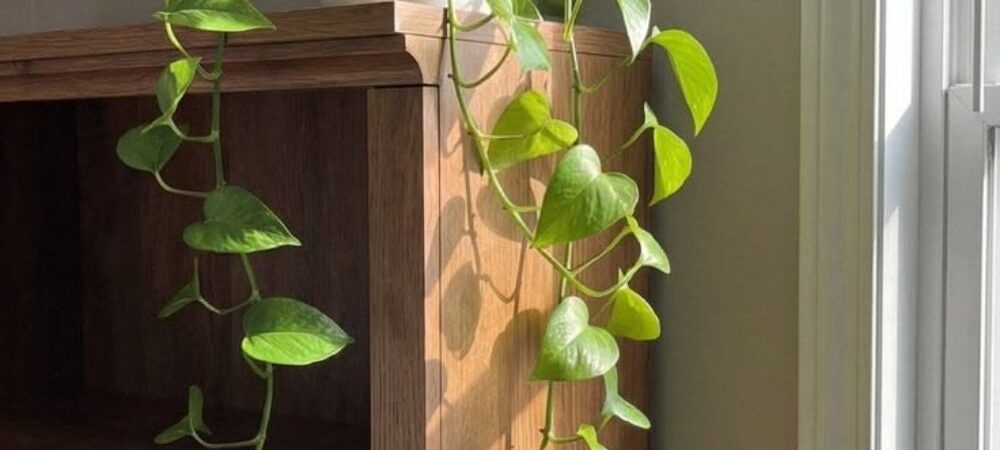
Your money plant isn’t sick. It’s reaching.
Those long bare vines with a tuft of leaves way out at the end aren’t a sign of neglect or disease. They’re a plant stretching for light it can’t find, thinning its stems and shrinking its leaves as it goes. And the fix for how to make a money plant fuller has almost nothing to do with how you water it.
It’s placement. Where the plant sits and what you give it to grow on, more than anything you pour into the pot.
I kept a money plant (pothos, Epipremnum aureum) in a dim corner for the better part of a year once, watering it faithfully, watching it turn into three sad bare strings. Then I moved it by an east window and gave it a pole to climb. Within a couple of months the new leaves came in twice the size. Same plant, same watering can, one change of address.
Here are the rules that turn a stringy money plant lush, starting with the placement trick that does most of the work.
First, Why Money Plants Go Leggy
A money plant grows toward its light source. When that light is weak or far away, the vine stretches to reach it, and stretched growth is thin, spaced-out, and small-leaved.
Left long enough, the stems keep trailing into even dimmer spots, getting thinner and sparser the whole way. That’s the leggy look: lots of vine, not much leaf, and a bald patch where the fullness used to be.
The Real Culprit Isn’t Water
Here’s where people go wrong. A leggy plant looks unwell, so the instinct is to water more, and insufficient light, not thirst, is the actual cause of a leggy pothos. Extra water on a light-starved plant just rots the roots.
Real talk: if your money plant is stringy, the answer is almost never in the watering can. It’s on the far side of the room, where the light is.
The Placement Trick, Explained
So here’s the trick, and it’s really three small rules working together. Get these right and the plant does the rest on its own.
Rule 1: Bright Indirect Light, Close to a Window
This is the single biggest lever for fullness. Move the plant within a few feet of a bright window, out of harsh direct sun but into genuinely bright indirect light, and it stops stretching and starts filling in.
A money plant that was leggy in a corner will grow noticeably denser just from this one move. East or north-facing windows are ideal, and a kitchen windowsill is a classic spot, which is why pothos shows up in so many kitchen plant decor ideas. Brighter light, tighter growth, bigger leaves. That’s the whole mechanism.
Rule 2: Give It Something to Climb
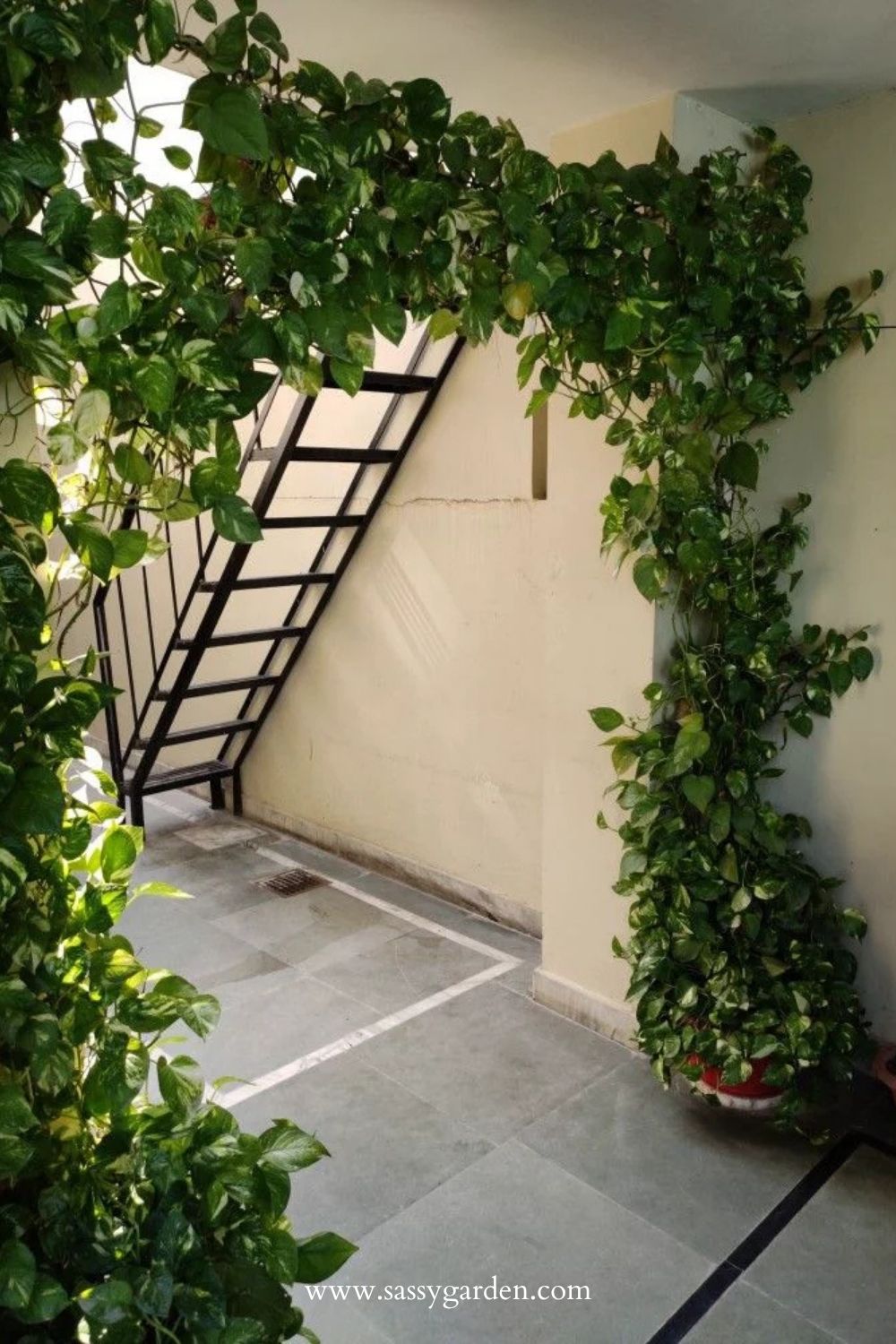
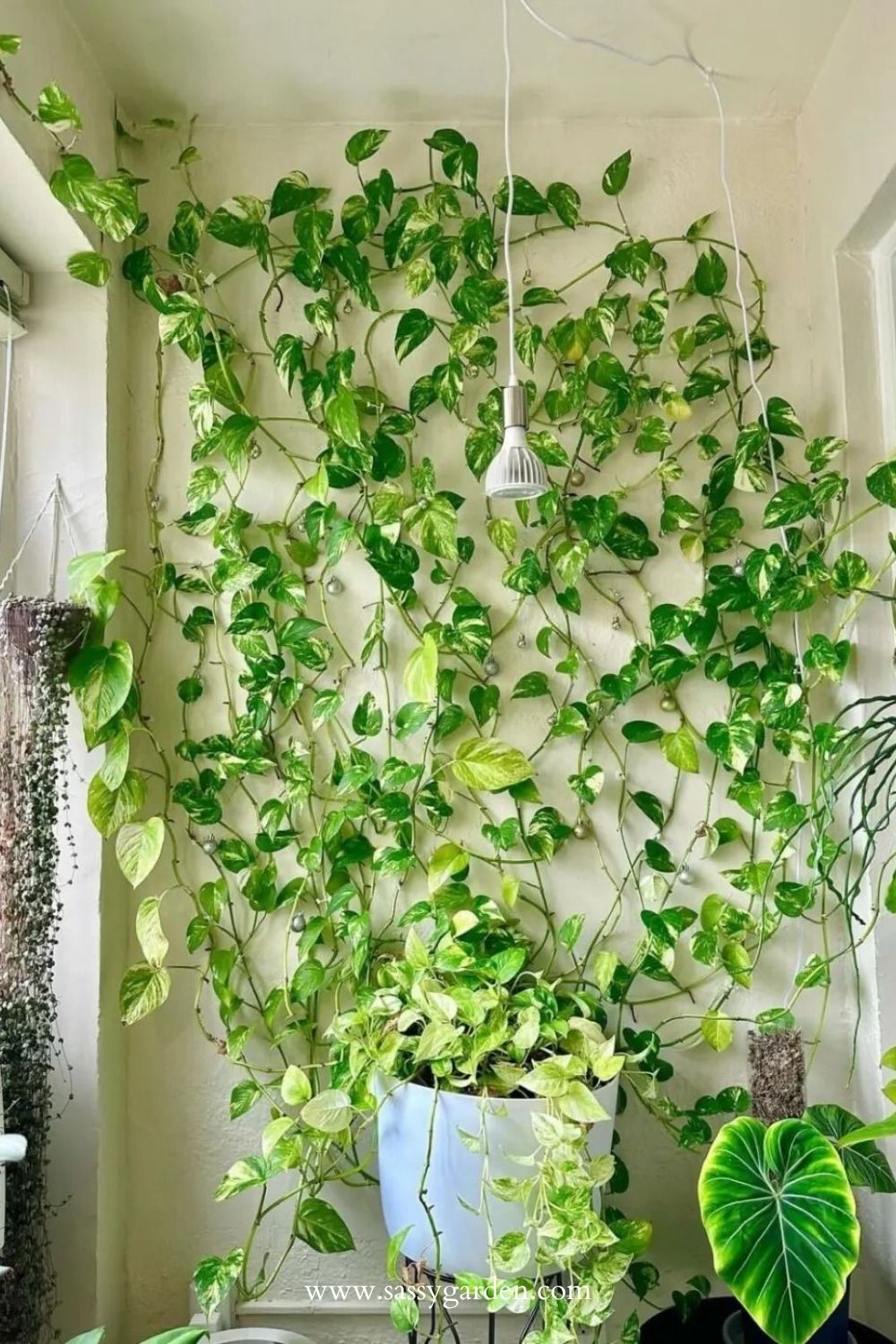
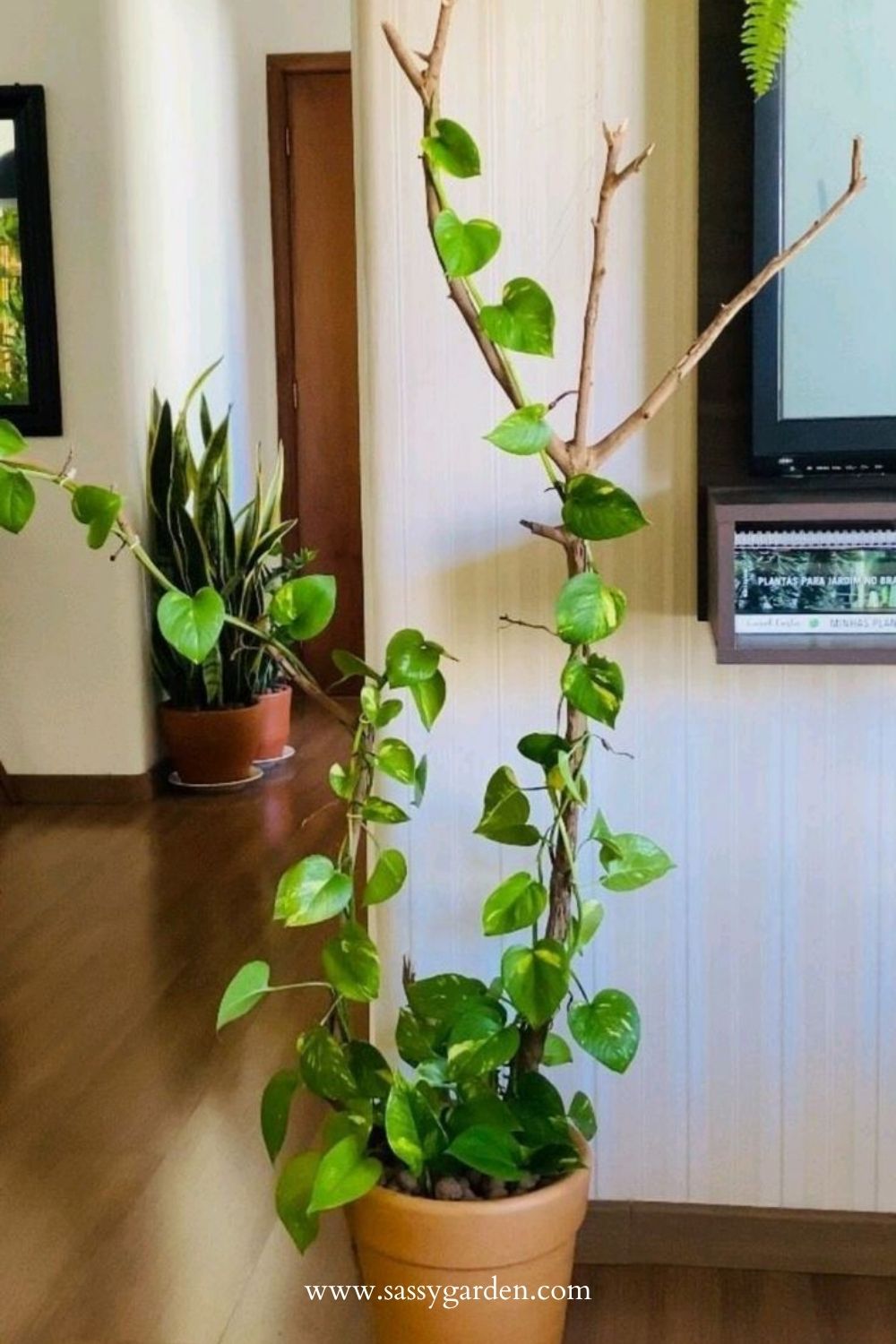
Here’s the part that surprises people. A money plant is a climber by nature, and when it climbs, it grows up rather than dangling down and it produces far bigger leaves. Set it on a damp moss pole and it grabs on with aerial roots, and climbing pothos can grow leaves three to four times larger than trailing vines.
That size jump is what makes a climbing money plant look so lush and full compared to a stringy hanging one. A moss pole, a coir pole, even a mossy branch works.
One important note while you’re handling it: pothos is toxic to cats and dogs. It contains insoluble calcium oxalate crystals that cause mouth irritation, drooling, and vomiting if chewed, so keep the vines and the pole out of a curious pet’s reach.
Rule 3: Rotate It So Every Side Gets Light
Plants grow toward light, which means the side facing the window fills in while the back goes bald. The fix costs you nothing.
Give the pot a quarter turn every week or two so every side gets its share. Do this and the plant fills in evenly all the way around instead of becoming a one-sided lean. (Set a reminder, because everyone forgets this one, me included.)
The Rules of a Full Money Plant (Beyond Placement)
Placement does most of the heavy lifting, but a few more moves push a good money plant into a great one.
Prune it, and prune it more than you think. Cutting a vine forces the plant to branch at that point, so one snipped stem becomes two, and the plant gets bushier instead of longer. Feed it a balanced fertilizer a couple of times a month in the growing season, and replant your cuttings straight back into the same pot to fill any gaps.
Where to Cut for the Bushiest Regrowth
The trick is where you cut. Always snip just above a leaf node, about a quarter inch up, because that’s where the new growth sprouts from.
Cut a leggy vine back to a node and it’ll push a fresh shoot from that point within a few weeks. Do heavier pruning in spring through early fall, when the plant has the energy to bounce back fast. Lighter pinching of the tips you can do any time.
When to Break the Rules
Not everyone wants a tall, tree-like money plant. Sometimes the rules bend.
If You Want a Trailing Money Plant Instead
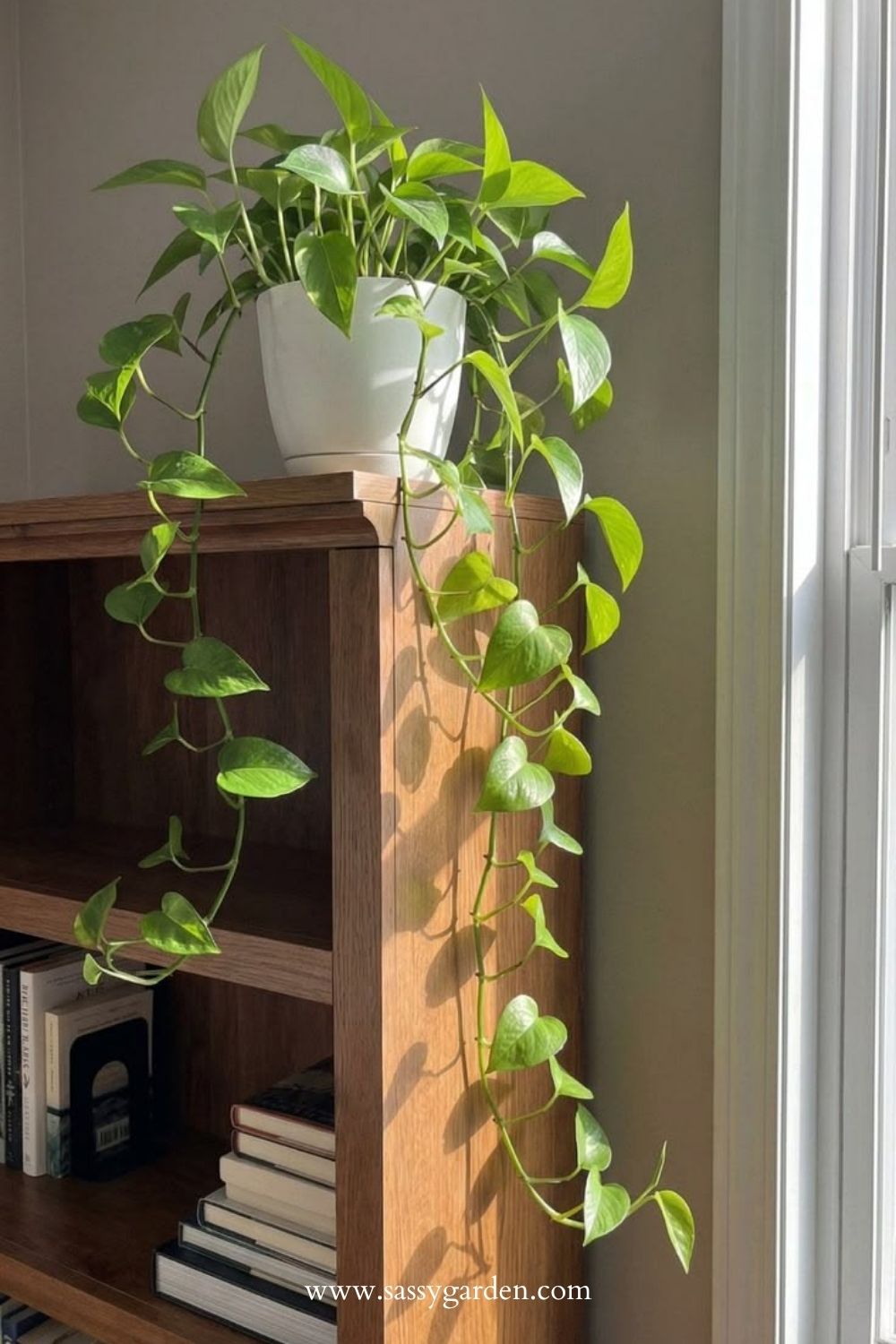
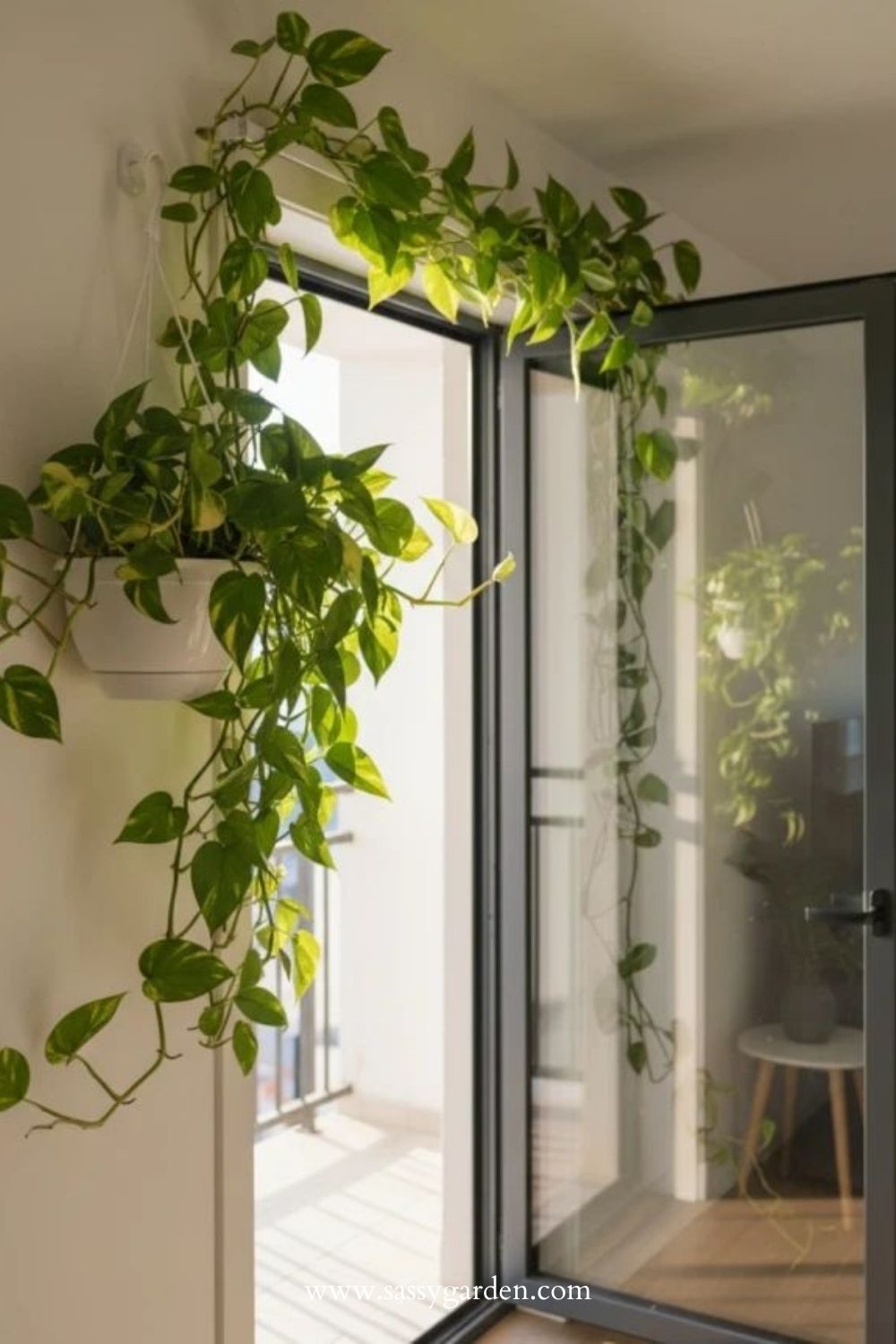
If you love the long cascading vine look off a shelf or a hanging pot, skip the moss pole entirely and lean into it. You’ll get smaller leaves and a more delicate trail, which is a perfectly good look.
Just keep Rules 1 and 3, bright light and rotating, or even the trailing version goes thin and bald. A full trail still needs light, it just doesn’t need to climb. Trailing vines also happen to be the easiest way to make a shelf look good, which is half of styling houseplants so they look intentional.
Low-Light Rooms and Winter
Money plants tolerate low light, but “tolerate” and “grow full” are different things. In a genuinely dim room, or through a dark winter, add a small grow light and drop your expectations on speed.
Growth slows way down in winter regardless, so don’t expect a leggy plant to fill in much between late fall and spring. Its low-light toughness is exactly why pothos tops so many lists of which plants actually survive in a bathroom, but survival and fullness aren’t the same goal.
Money Plant Questions
How Long Does It Take a Money Plant to Get Fuller?
A few weeks to see new shoots after pruning, and a couple of months for a real difference in the growing season.
Move it into better light and prune it, and you’ll spot fresh growth at the cut nodes within two to four weeks. Going from stringy to genuinely lush takes a season of active growth, so start in spring for the fastest results.
Winter is slower going. If you make these changes in December, be patient, the payoff mostly shows up when the days lengthen again.
Should You Put Multiple Cuttings in One Pot?
Yes, and it’s the quickest way to a full-looking plant.
A single vine will always look a bit sparse, but a pot packed with several rooted cuttings reads as full and bushy right away. It’s why nursery pothos look so lush, they’re usually many cuttings grown together.
Root a few cuttings in water, then plant them back into the mother pot to fill the gaps. Free plants, fuller pot, no downside.
The Fuller-Plant Payoff
Does a Money Plant Grow Bigger Leaves on a Pole?
Yes, and it’s the most dramatic change you’ll see. A trailing money plant makes small leaves, while a climbing one on a damp pole puts out leaves several times larger as it matures upward.
That’s the difference between a thin hanging vine and a full, tree-like plant. Keep the pole slightly damp so the aerial roots grab on, and give it good light, and the leaf size climbs right along with the vine.
A Quick Word on Watering the New Growth
Once the plant fills in, resist the urge to reward it with more water. A fuller money plant in good light will still want the top inch or two of soil to dry out between drinks.
Overwatering a thriving plant is the fastest way to undo all this work. Water when the top of the soil is dry, not on a fixed schedule, and let the fuller plant tell you when it’s thirsty by the weight of the pot.
The short version, for the next time your money plant goes stringy:
- Move it into bright indirect light near a window. This does most of the work.
- Give it a moss pole to climb for leaves three to four times bigger.
- Rotate the pot every week or two so it fills in evenly.
- Prune just above a node to force branching, in spring to early fall.
- Feed it twice a month in the growing season.
- Replant your cuttings back into the pot to fill the gaps fast.
Save this for the next time you catch yourself reaching for the watering can to fix a leggy plant. Nine times out of ten, the real fix is three feet closer to the window.