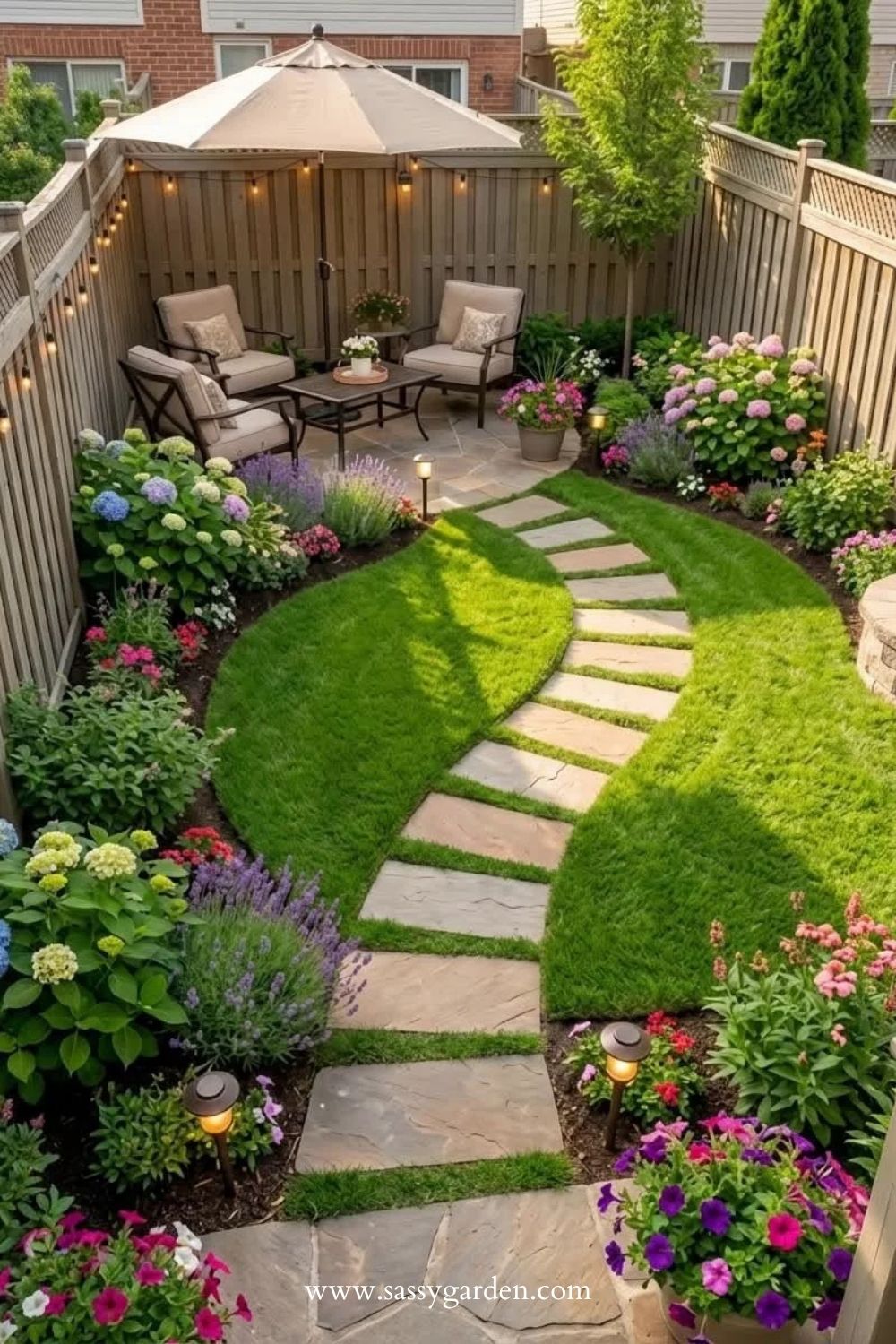
Here’s a fact that stops most people mid-scroll: a small garden laid out on the diagonal can feel bigger than a garden half again its size designed as a plain open rectangle.
That’s not a motivational fridge magnet. It’s how our eyes actually read space, and it’s the reason the best small garden landscaping ideas have almost nothing to do with square footage.
The first yard I ever designed was a plain rectangle with a border down each fence. It looked exactly as small as it was. The next year I turned the whole layout forty-five degrees, and the same patch suddenly felt like a proper garden. (Same dirt, same budget, completely different feeling.)
So size was never the real problem. Layout is. A tiny plot that’s broken up, layered, and given something to look at reads as roomy and deliberate, while a bigger plot you can take in at a single glance reads as cramped.
Here’s what actually works, why it works, and where to start.
Why Small Gardens Feel Small (and How to Fix It)
The problem is almost never the amount of space. It’s that you can see all of it at once.
The Open-Rectangle Trap
When you step out and take in the whole plot in one look, your brain measures it instantly and files it as “small.” There’s no mystery, nothing held back, nowhere for the eye to travel.
Break that single sightline and everything changes. A garden divided into zones or turned on the diagonal reads as larger because you can’t grasp it all in one glance, so it feels like there’s more to find. Hide part of the garden from the back door and you’ve instantly made it bigger in the only way that matters, which is how it feels.
The Focal-Point Test
Try this right now. Stand at your back door and notice where your eye lands.
If it stops dead on the fence, your garden feels small and you need a focal point. If it lands on a tree, a pot, a bench, or a splash of color, your design is already doing its job. The fix is simple: put something worth looking at where your eye currently hits a blank boundary. (A single good-looking pot will do it.)
Small Garden Landscaping Ideas That Actually Work
Six moves that punch above their size. Mix two or three, not all six, or you’ll overcrowd the very space you’re trying to open up.
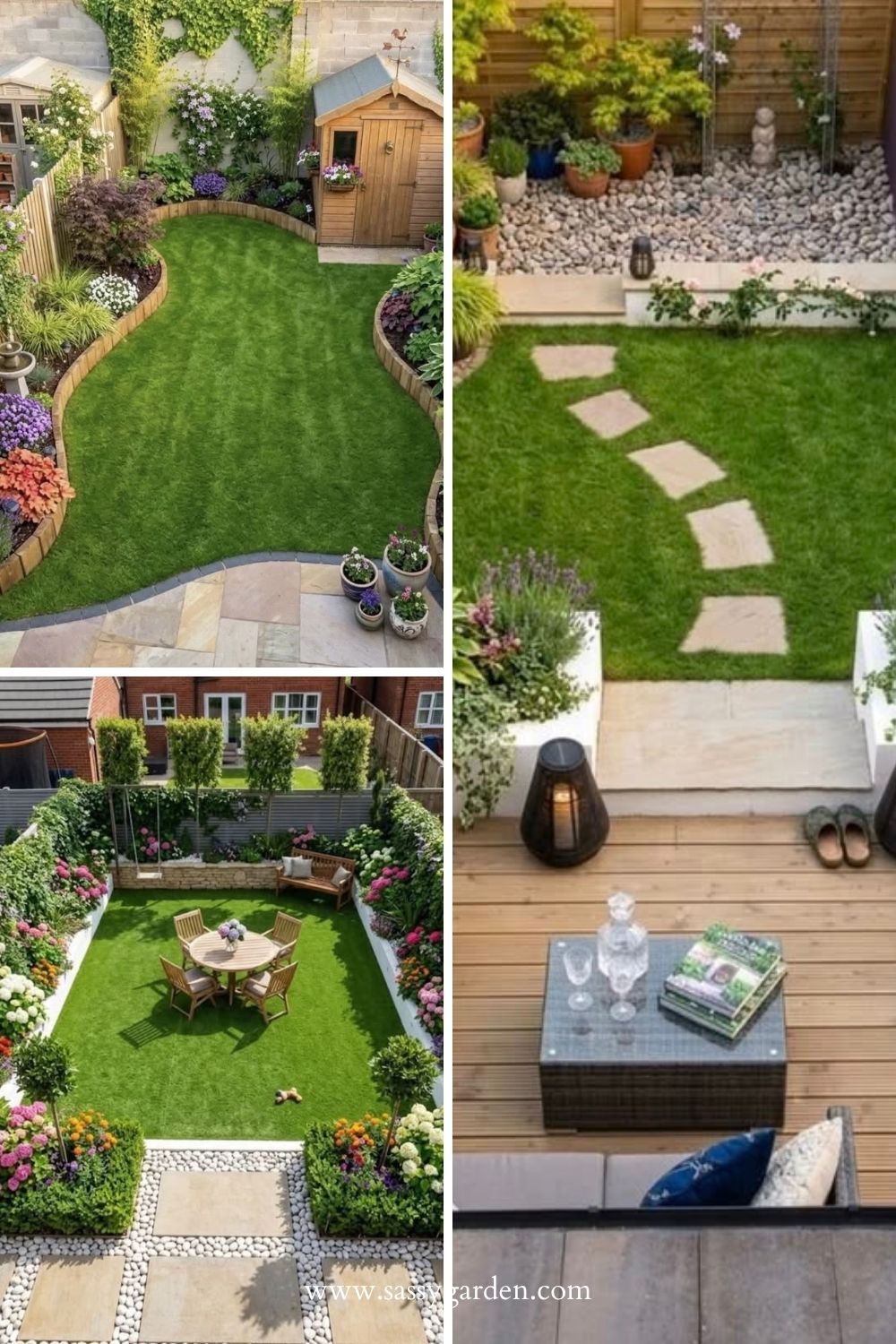
1. Turn the layout on the diagonal. The strongest trick here. Set your paving, lawn, and main sightline at forty-five degrees to the house instead of square to it. It sends the eye along the longest possible line across the plot, which is the diagonal, and a small square instantly feels wider and deeper.
2. Curve the lawn or path. A gentle curve that disappears behind planting makes the garden feel like it continues out of sight. It’s the same instinct behind circular garden design ideas, scaled down: a shape with no visible end reads as bigger than a straight edge you can measure.
3. Split it into two or three zones. A patio near the house, a lawn or gravel middle, a hidden seating nook at the back. Even a low hedge, a change of paving, or a single planted divider turns one small rectangle into a sequence of spaces, and a sequence always feels larger than a single room.
4. Go vertical. Walls and fences are growing space you already own, and going vertical can add real growing area to a tiny plot without touching the floor. Trellises, wall planters, and climbers stack greenery upward, and if you’re worried about upkeep, here’s the honest take on whether vertical gardens are hard to maintain. Short version: pick the right system and they’re easy.
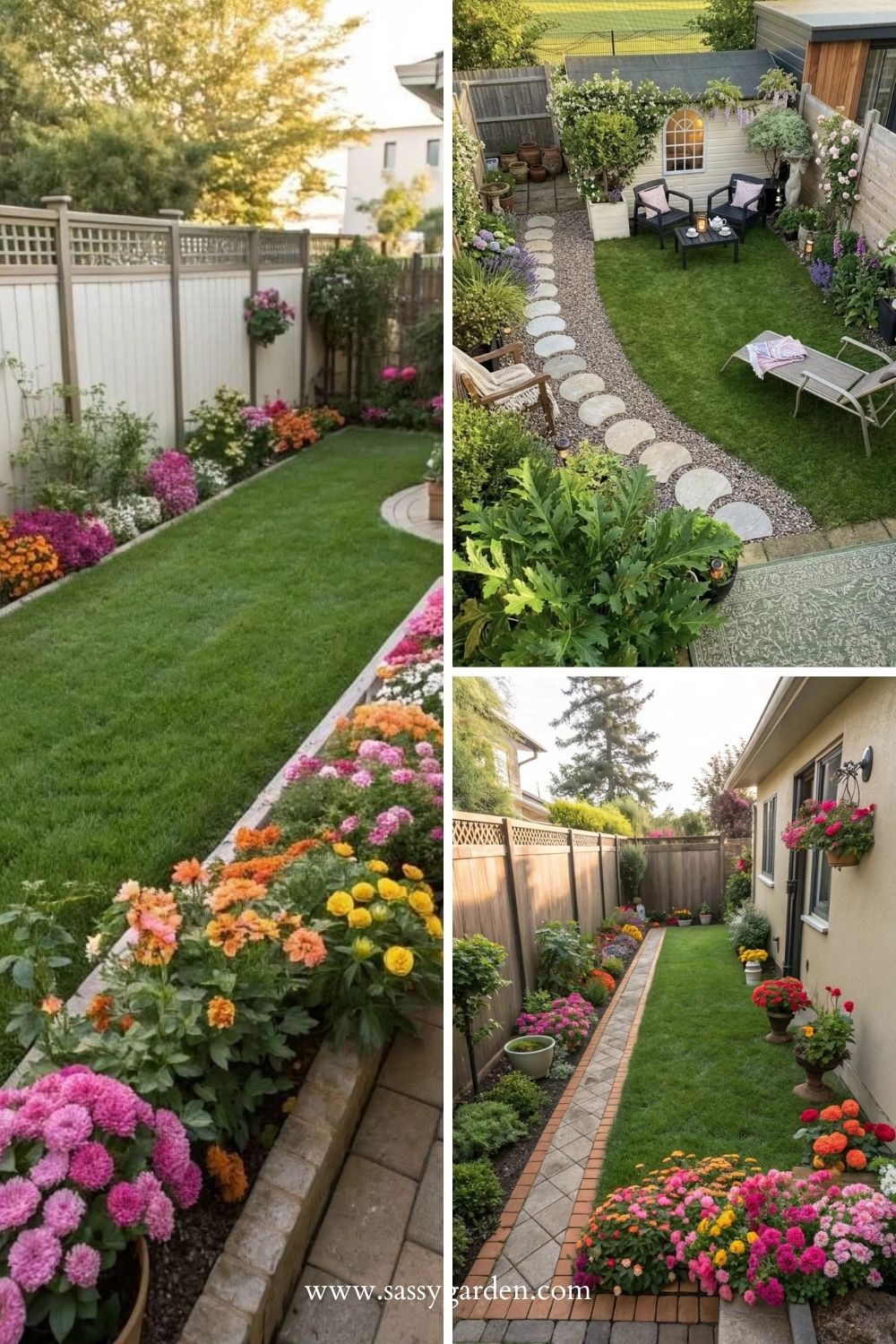
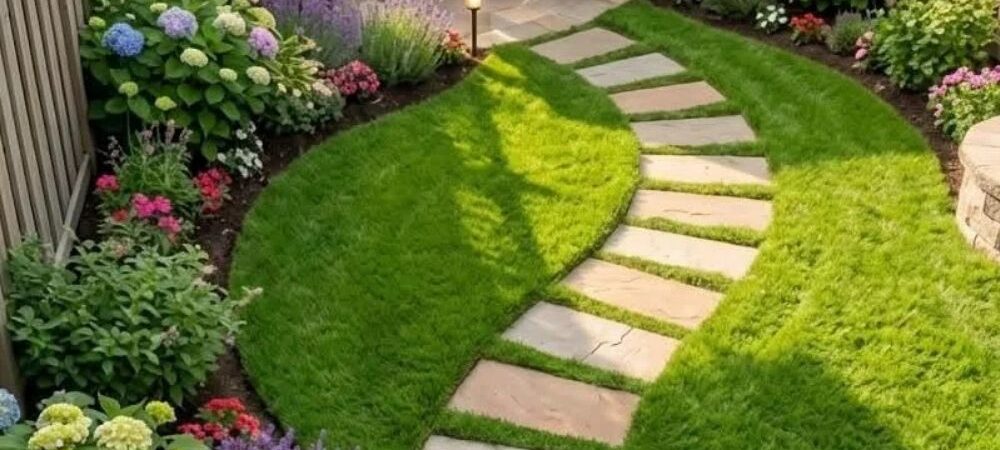
5. Pale paving and a stepping-stone path. Light-colored stone bounces light around and makes a space feel more open, while a path of pavers set into the lawn draws the eye through the garden and links the zones. Big pale slabs beat lots of small busy ones, since fewer joints read as calmer and larger.
A path also does something sneaky: it implies a destination. Even a few stepping stones curving off behind a shrub suggest the garden carries on somewhere, which makes the whole plot feel deeper than it is. Lay them slightly apart in the grass rather than tight together, and the lawn keeps showing through so the path never dominates.
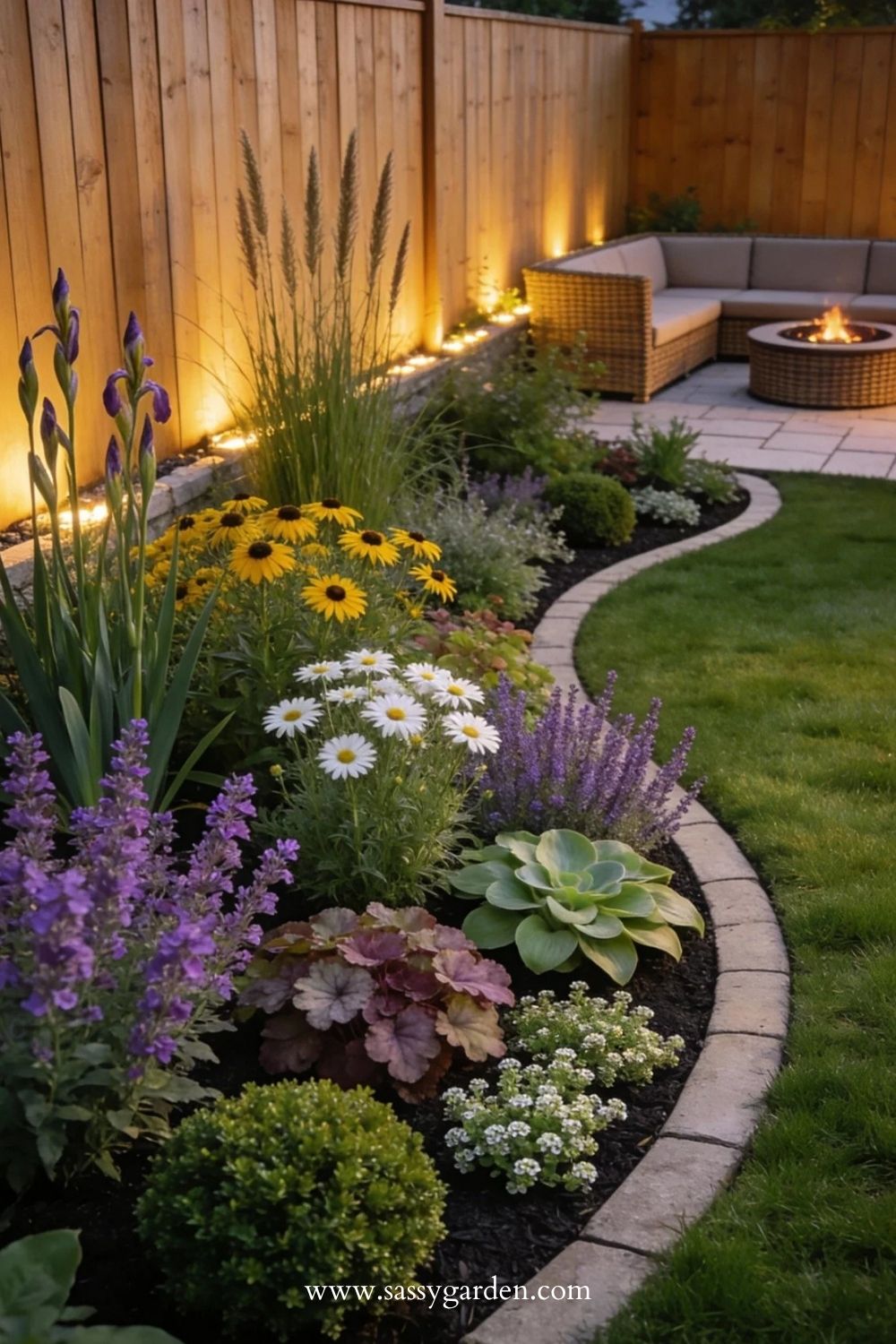
6. Layered planting with a focal point. Tall shrubs and grasses at the edges, medium plants in the middle, low stuff at the front, all leading the eye to one feature. A quick warning on two popular picks: hydrangea is lovely but toxic to cats and dogs if chewed, and for screening please skip running bamboo, which escapes and invades. Clumping bamboo or a climber on a trellis gives you the same privacy without the takeover. For pet-safe structure, ornamental grasses and hosta do the job.
Making It Feel Bigger: The Perspective Tricks
This is where small-garden design gets genuinely clever, borrowing straight from how painters fake distance.
Color Perspective
Warm colors (red, orange, yellow) jump toward you. Cool colors (blue, lavender, silver, soft pink) recede. So planting hot colors up front and cool, pale ones at the far end stretches the sense of depth, tricking your eye into reading the back of the garden as further away than it is.
It costs nothing to apply, since it’s just where you put which plants. Silvery foliage and lavender at the back fence, bright zinnias and marigolds near the house. Suddenly the plot has depth it didn’t have before.
The same logic works with pot and fence colors. Paint a far fence a soft muted green or grey and it recedes, while a bright feature wall up close pulls forward. Little of this shows on a plan, but standing in the finished garden it’s the difference between a flat box and a space with real distance in it.
Layering for Depth
Flat planting reads flat. Layered planting reads deep. Put your tallest plants at the edges and keep the middle open, and the garden gains a sense of dimension while the center stays airy and usable.
Tall planting at the boundary does a second job: it blurs the fence line, and a hidden boundary always feels further away than a visible one. It also handles privacy, which pairs neatly with a few good privacy screen ideas if you’re overlooked.
Furniture and Function in a Small Space
The fastest way to make a small garden feel smaller is to cram an oversized furniture set into it. I’ve watched a lovely little courtyard vanish under a giant sofa nobody could walk around.
Right-size it instead. A bistro table and two chairs, a slim bench, armless seats, or built-in seating along one edge leave breathing room and keep the floor visible, which keeps the space feeling open. Foldable or stackable pieces earn their place too, since you can clear them away when you want the room back.
How Do You Fit Seating in a Tiny Yard?
Pick one seating spot and do it well, rather than scattering half-measures.
Built-in benches along a boundary use dead edge space and double as low retaining walls for a raised bed behind them. A corner nook with two chairs and a small table is often all a tiny yard needs, and it reads as intentional rather than squeezed.
Then face that seat toward your best view or your focal point, not at the fence. Where the seat looks matters as much as where it sits.
Small Garden Questions
What Are the Best Plants for a Small Garden?
Compact, multi-season, and vertical wherever possible.
Look for plants that earn their spot more than once a year: a shrub with spring flowers and fall color, evergreens for winter structure, and climbers that go up rather than out. Dwarf and compact varieties are bred for exactly this, so a small yard doesn’t mean giving up on the plants you love.
Two cautions worth repeating. Hydrangea and boxwood are both toxic to cats and dogs if eaten, so choose ornamental grasses, hosta, or heuchera near pets, and keep screening to clumping bamboo or trellised climbers rather than running bamboo that spreads underground. Vertical climbers stretch your planting without stealing floor space, which is the whole game in a tiny plot.
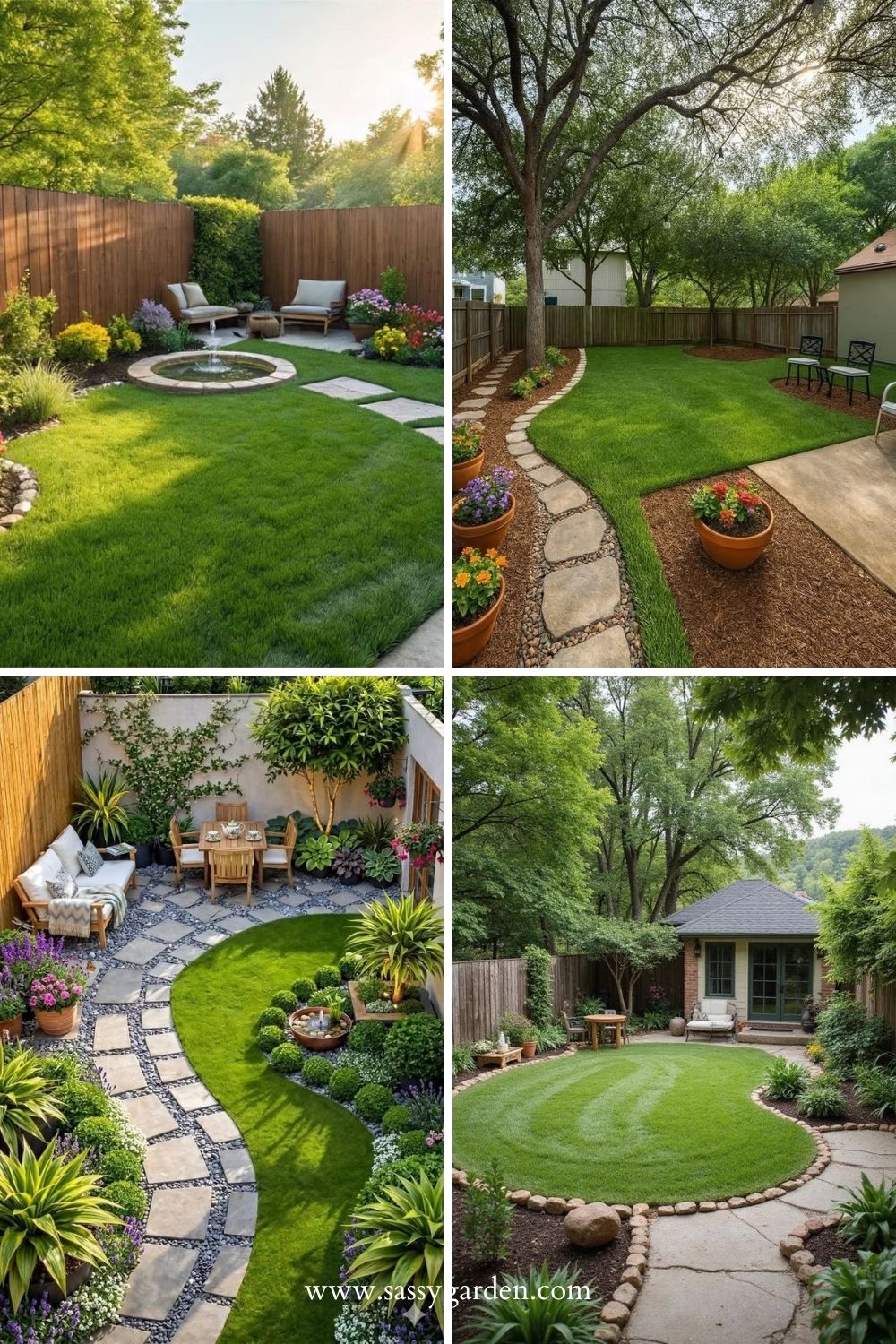
None of this needs a big budget or a designer. It needs two or three deliberate choices instead of a plain open rectangle, and you already know more about how to make your yard feel bigger than you did ten minutes ago.
So don’t try all six at once. Pick the one that fits your plot best, the diagonal layout if it’s a square, zoning if it’s a long thin strip, vertical planting if the floor’s already full, and start there this weekend. Lay it out with a hose or some string before you commit to anything, and just look at it.
You’ve got more garden than you think. It’s mostly a matter of arranging what’s already there so it finally feels that way.