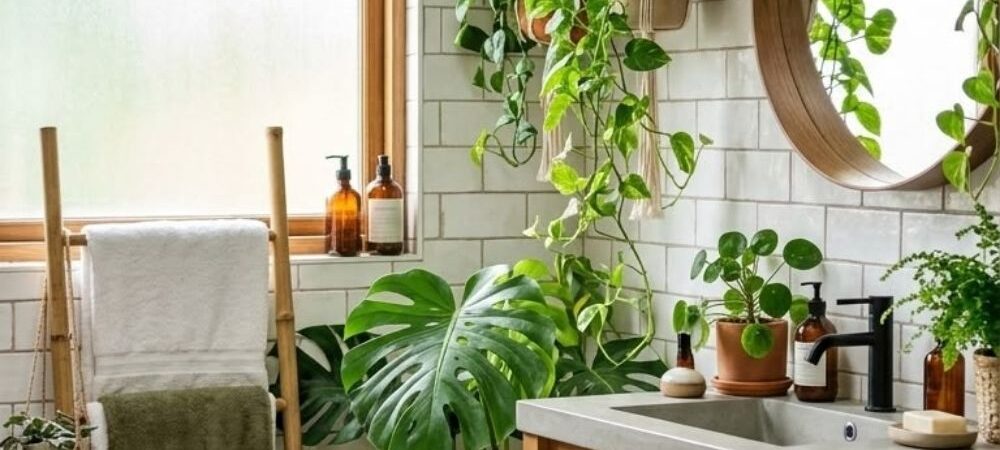
Your bathroom is not humid. Not in any way a plant cares about, anyway.
Every list of bathroom plants opens with the same line about steam and tropical conditions, and it’s why people keep buying ferns that go crispy by the end of the month.
Here’s what’s really happening: humidity spikes for fifteen minutes while you shower, the fan pulls it out, and the room goes back to being as dry as the rest of your house. Meanwhile the light never changes. Frosted glass, or no window at all.
So the question isn’t which plants like humidity. It’s which ones survive low light, a temperature that swings twice a day, and an owner who waters them out of guilt. Grouped by how much window you actually have.
Where the Steamy Bathroom Myth Came From
The Rainforest Comparison That Doesn’t Hold
Tropical understory plants live in high humidity around the clock, year round. Your bathroom manages that for the length of one shower.
Fair question, though: doesn’t some humidity beat none? Sure. It just isn’t the factor that decides whether the plant lives.
Twenty Minutes of Steam Is Not Humidity
An exhaust fan exists to remove moisture as fast as possible, because moisture in a bathroom means mold. You are actively fighting the thing you think is helping your plant.
Skip the fan and you get a longer damp window, plus mildew on the ceiling. Pick your battle.
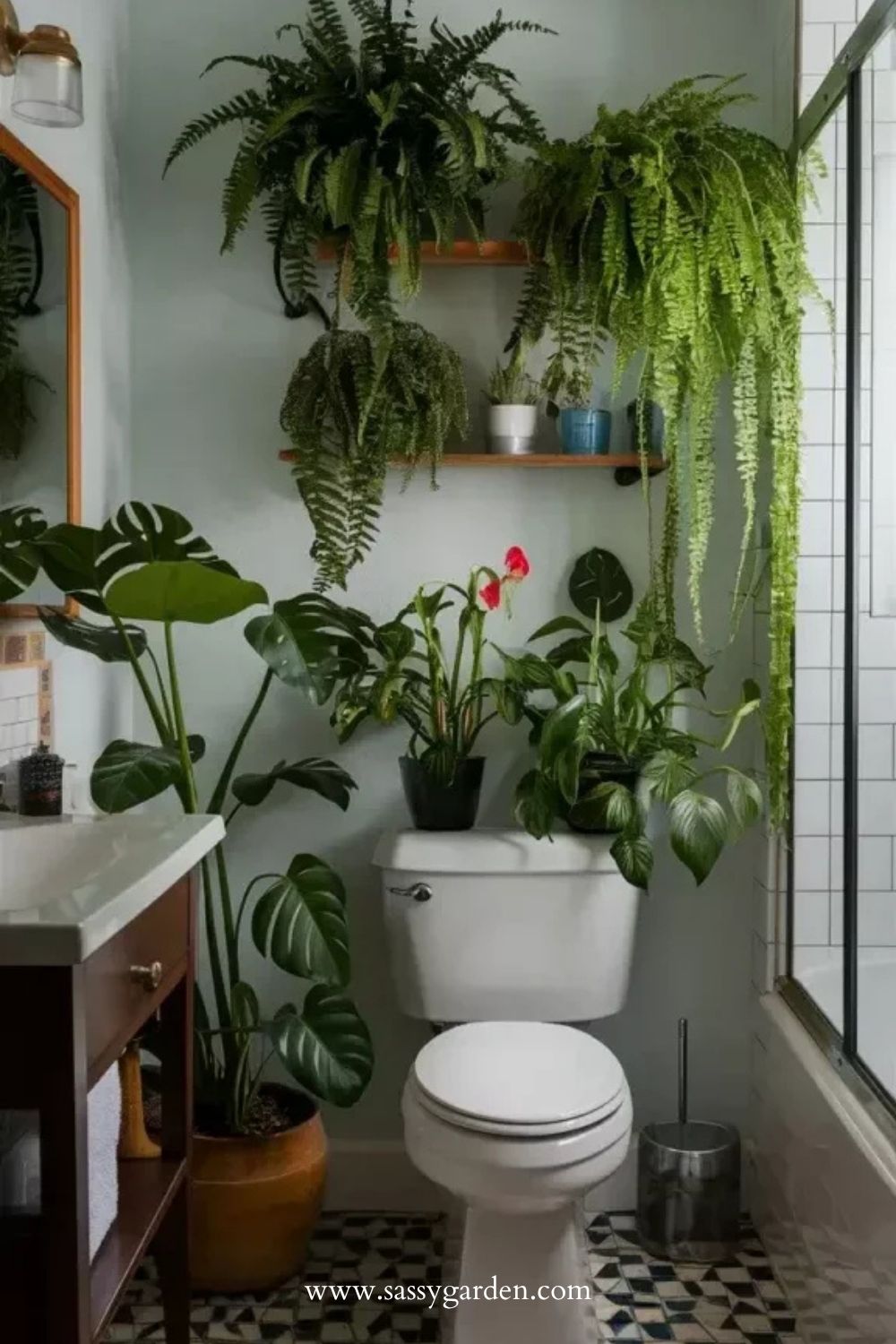
The Bathroom Photos You’re Comparing Yourself To
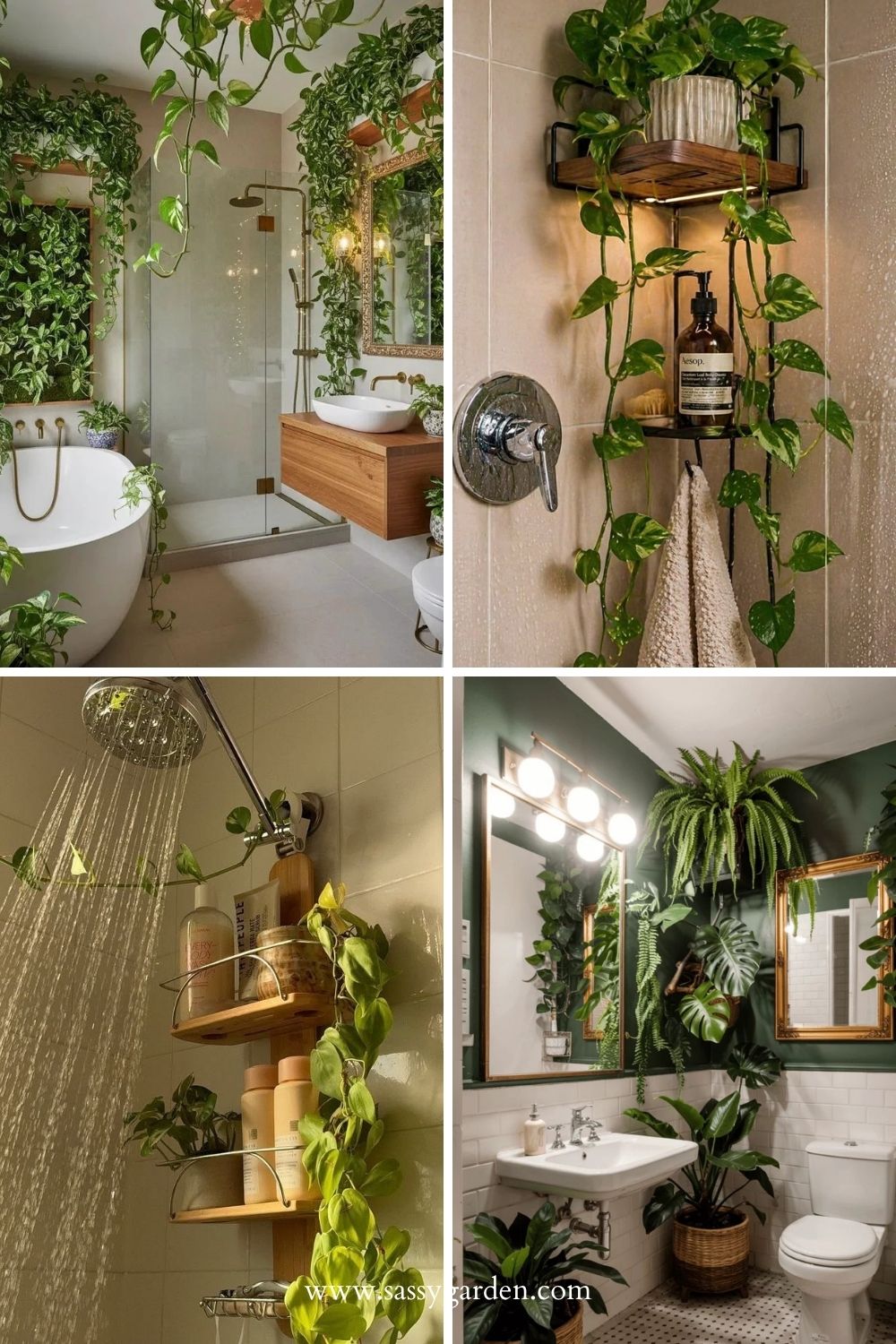
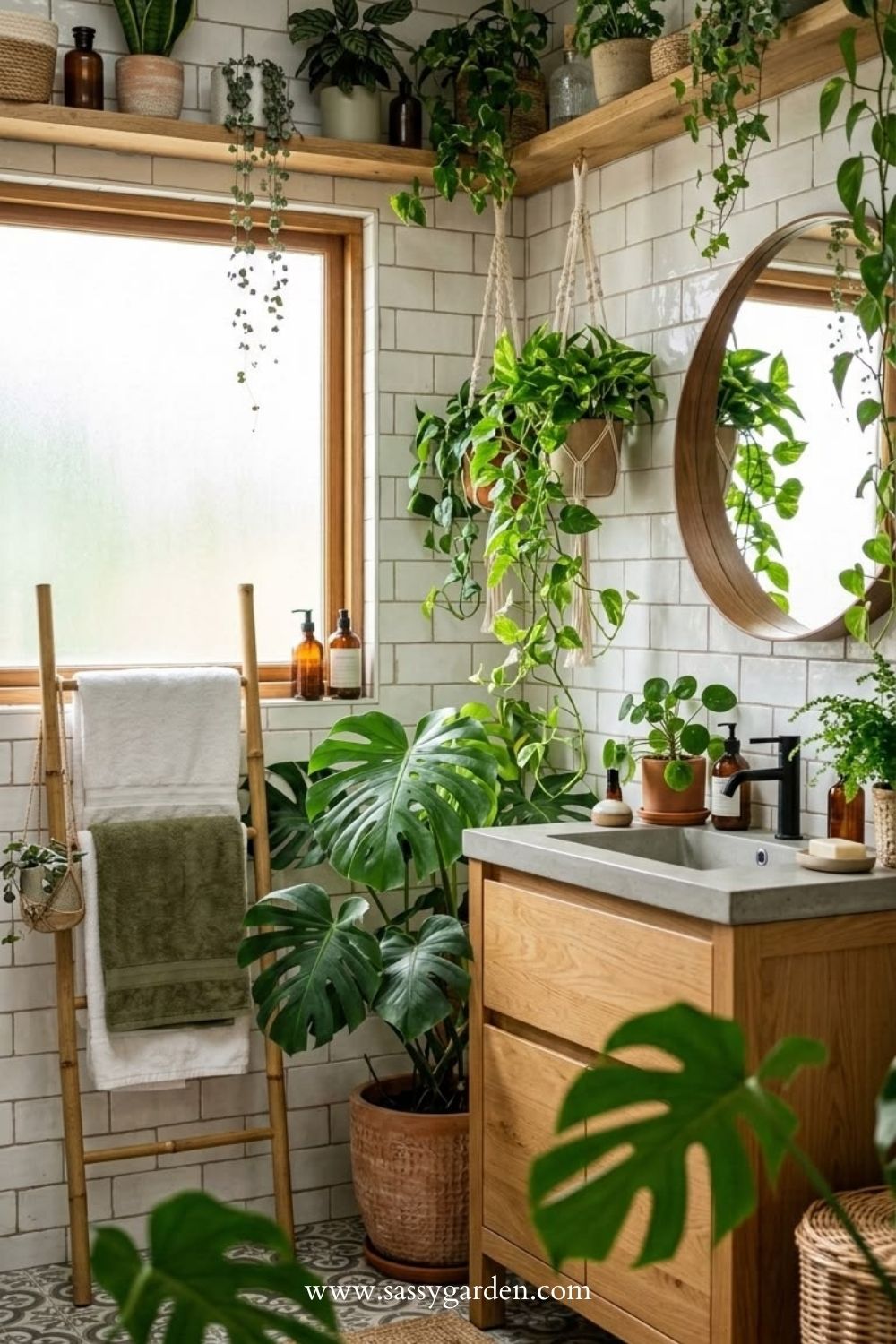
Those bathrooms have a real window. Often a big one, often south or west facing, sometimes a skylight.
The plants aren’t there because of steam. They’re there because that room gets more light than most people’s living rooms. (Okay, maybe a little bit of steam helps.)
What Actually Kills Bathroom Plants
Light, and It Isn’t Close
Almost every bathroom plant failure is a light failure wearing a humidity costume. Frosted glass cuts light hard, and a small north-facing window in winter is close to nothing.
I bought a maidenhair fern once specifically because “the bathroom is humid.” Dead in six weeks, and not from dry air.
The Temperature Swing Nobody Counts
A bathroom goes cool to warm and back twice a day. Add a draft under the door and a hot vent overhead, and you get a room that never settles.
Most houseplants shrug this off. Fussy ones like maidenhair and calathea do not.
Damp Air Plus Wet Soil Equals Rot
Here’s the cruel twist. In a dim room with damp air, potting soil dries painfully slowly, so the watering that would be perfect on a sunny windowsill drowns the plant here.
Low light means less water, always. That’s the rule people break the moment they move a plant into a bathroom.
Bathroom Plants That Actually Survive, Sorted by Window
No Window at All
Three real options: ZZ plant (Zamioculcas zamiifolia), snake plant (Dracaena trifasciata), and cast iron plant (Aspidistra elatior). These are the ones that genuinely hold up in no-light and low-light bathrooms rather than merely surviving long enough to look good in a photo.
Water all three sparingly, every two to three weeks at most, and less in winter. The ZZ stores water in its rhizomes and genuinely resents attention.
Toxicity: the ASPCA lists both ZZ and snake plant as toxic to cats and dogs. Cast iron plant is the pet safe pick of the three, and it’s also hardy outdoors in roughly zones 7 to 11 if you ever want to retire it to a shady bed.
One Small Frosted Window
Now you have options. Pothos (Epipremnum aureum), heartleaf philodendron (Philodendron hederaceum), and spider plant (Chlorophytum comosum) all handle dim corners and forgive a missed watering.
Pothos comes with two warnings. It’s toxic to cats and dogs, and UF/IFAS classifies it as invasive in south Florida, with Hawaii and Puerto Rico listing it too. Keep it indoors and never toss cuttings outside in a frost-free climate. If you want the same trailing look without either problem, spider plant is non-toxic and better behaved.
While we’re on pothos: light placement changes how full it grows, and the placement trick that makes money plants grow fuller works the same way in a bathroom as anywhere else.
A Real Window
With four or more hours of decent light you can finally use the humidity. Boston fern (Nephrolepis exaltata) is the classic and it’s non-toxic to pets. Peace lily (Spathiphyllum) blooms in surprisingly modest light but is toxic to cats and dogs, so skip it if your cat drinks from the tub.
Maidenhair fern belongs here too. It’s beautiful, it’s pet safe, and it will still punish you for one dry day. (Ask me how I know.)
What to Do Instead of Hoping
Add a Light, It Costs Less Than the Plants
A windowless bathroom isn’t a low light room, it’s a no light room until you put a bulb in it. A small clamp grow light or even a full-spectrum bulb in the existing fixture changes everything, as long as it runs eight to ten hours a day.
This one change makes the biggest difference, and it’s cheaper than replacing the fern twice.
Water by the Soil, Not by the Steam
Stick a finger two inches in. Dry means water, damp means walk away, and in a dim bathroom it will be damp far longer than you expect.
Also: drainage holes, no exceptions. A decorative pot with no hole in a humid dark room is a plant coffin.
The Rotation Trick That Fixes a Dark Bathroom
Keep two plants and swap them. One does a two-week shift in the bathroom, the other recovers on a bright windowsill, then they trade.
Sounds fussy, takes thirty seconds a fortnight. It’s how people get away with dramatic plants in rooms that shouldn’t support them, and it pairs well with styling houseplants so they look intentional. Same logic works for kitchen plant ideas in a dim galley.
Bathroom Plant Questions
Do Bathroom Plants Actually Reduce Mold or Humidity?
No, and you’d need a jungle before it registered.
A few pots move a negligible amount of moisture compared to a fan or a cracked window. Plants are there because you like looking at them, which is a perfectly good reason.
If anything, crowding pots into a damp corner with poor airflow gives mildew more surfaces to sit on. Space them out.
Can Plants Live in a Bathroom With No Windows?
Yes, but only three or four species, and only if you accept slow growth.
ZZ plant, snake plant, and cast iron plant hold their looks for months in a windowless room. They won’t push much new growth, because growth needs light and there isn’t any.
Add a timer and a grow bulb and that same room supports pothos, philodendron, and ferns. (Trust the process. Or at least trust this one.)
Why Do My Bathroom Plants Get Yellow Leaves?
Overwatering, nine times out of ten.
Soft yellow lower leaves mean the roots are sitting wet. Dry, crispy yellow edges mean the opposite, or a draft from the door.
Cut watering in half before you do anything else, and check that the pot drains. Most bathroom plants I’ve seen rescued were rescued by doing less.
You know the deciding question now, which puts you ahead of most of the advice out there. Not “does this plant like humidity” but “how much light does this room get at two in the afternoon in January.”
Answer that and the list picks itself. No window means ZZ, snake plant, or cast iron plant. A frosted window opens up pothos and spider plant. A real window means you can finally have the fern.
Pick one, matched to your actual light, and give it a season before you decide whether you’re a bathroom plant person. Most people aren’t failing at plants, they’re failing at matching, and that’s a much easier thing to fix.