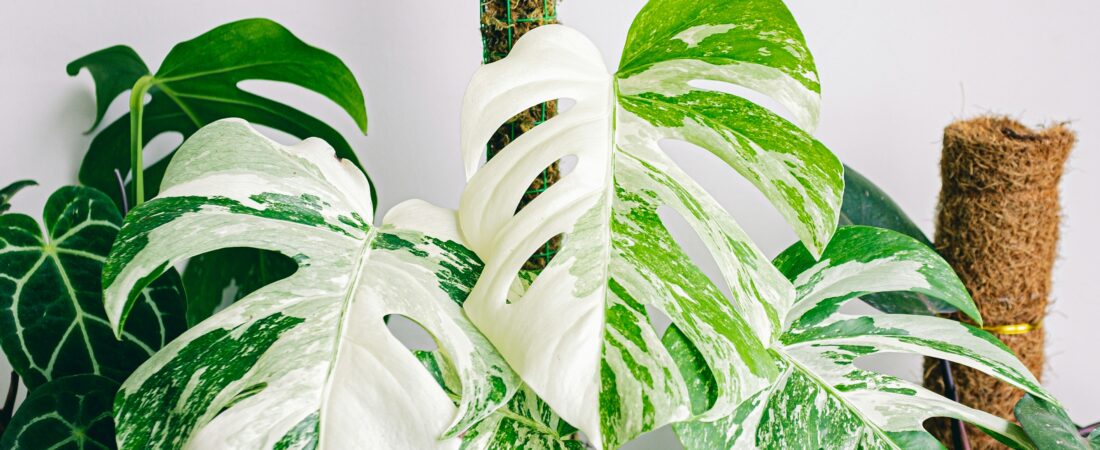
Good monstera care comes down to four things: bright light without harsh sun, water only when the top of the soil has dried, a chunky mix that lets the roots breathe, and something to climb. Get those right and a monstera grows fast, pushes out big split leaves and forgives most other mistakes. Get one wrong and it tells you, usually with yellow leaves, droopy stems or new leaves that stubbornly refuse to split.
This guide covers the whole plant, from the first pot to the moss pole, the aerial roots everybody worries about, and how to turn one plant into three.
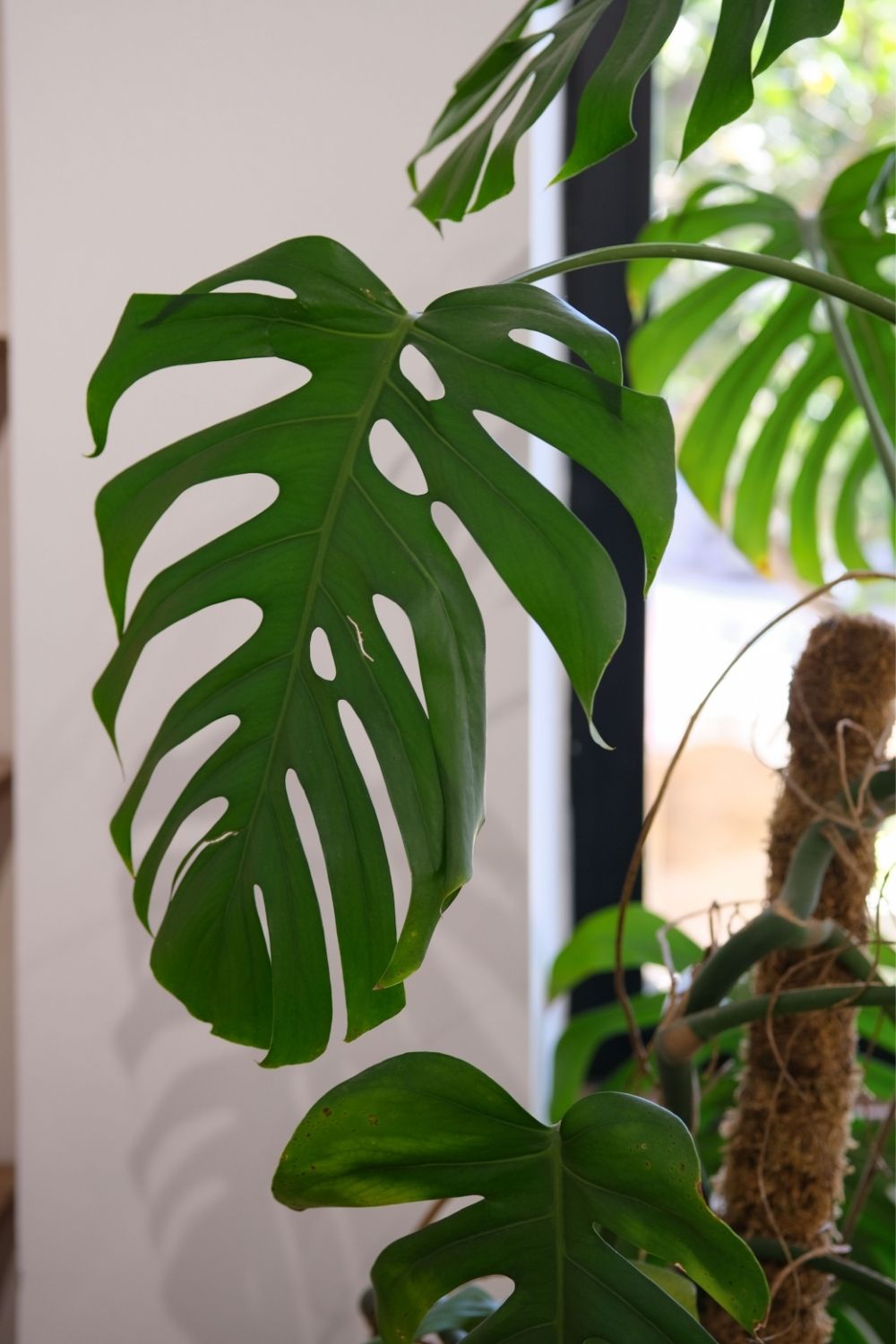
Photo by Esra Afşar on Pexels
| Quick facts | Monstera deliciosa |
|---|---|
| Common names | Monstera, Swiss cheese plant, split-leaf philodendron |
| Hardiness | Outdoors only in USDA zones 10–12; a houseplant everywhere else |
| Light | Bright, indirect light; some gentle morning sun is fine |
| Water | When the top 1–2 inches of soil are dry |
| Temperature | 60–85 °F; keep away from cold drafts |
| Humidity | Above 50% is ideal, though it copes with average homes |
| Size indoors | Usually 6–8 feet tall with support |
| Toxicity | Toxic to cats, dogs and people if chewed or eaten |
Light decides almost everything
In monstera care, light comes first. A monstera grows in the understory of tropical forests, climbing toward the light that filters through the canopy. At home that translates to a spot a few feet from a bright window, where it sees the sky but not hours of hot midday sun through the glass. An east-facing window is close to ideal; a south or west window works with a sheer curtain or a few feet of distance.
Light is also the answer to the most common monstera care question: why won’t the leaves split? Fenestrations, the holes and slits, appear as the plant matures, and a plant in dim light stays in its juvenile, heart-shaped phase much longer. It also stretches, with long bare stems between small leaves. If your Swiss cheese plant looks leggy and every new leaf is solid, move it closer to the window before you change anything else. Direct afternoon sun, on the other hand, scorches leaves into pale, crispy patches.
The same logic applies to smaller plants on a sill; I looked at which houseplants cope with which windows in my post on turning a kitchen windowsill into a mini jungle.
Water when the top 2 inches are dry
The Penn State Extension puts it simply: water thoroughly, then let the top 1 to 2 inches of soil dry out before watering again. In practice, monstera plant care means pushing a finger into the pot rather than watering on a schedule. In summer, in a warm, bright room, that might be once a week. In winter, when growth slows and the soil stays wet longer, it might be every two or three weeks.
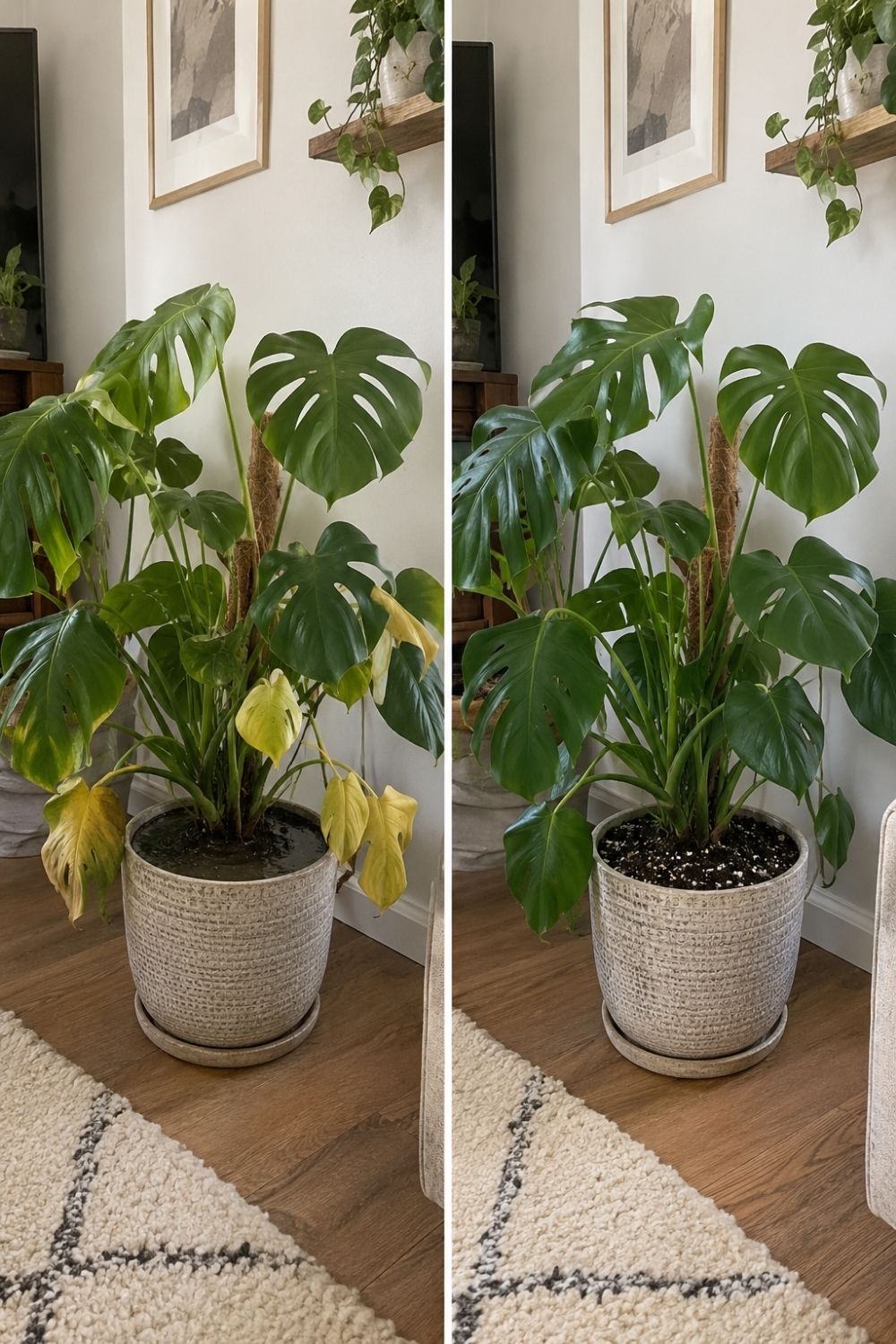
Photo by SassyGarden
The before and after above shows what overwatering looks like and how quickly a Swiss cheese plant recovers once it stops. On the left, several lower leaves have turned yellow and are collapsing over the rim of the pot. On the right, the yellow leaves have been cut off at the base, the soil has been allowed to dry out between waterings, and the plant looks full and green again. Yellowing that starts on older, lower leaves while the soil stays damp for days almost always points to too much water. If the roots have started to rot (brown, soft and smelly instead of firm and pale), trim the damaged parts and repot into fresh, dry mix.
When you do water, water properly: pour until it runs out of the drainage hole, then empty the saucer after 15 minutes. A monstera sitting in a puddle is one of the fastest ways to lose one.
Soil, pots and repotting
In monstera care, the roots need air as much as water. Regular potting soil on its own packs down and stays wet, so most growers use an airy “aroid mix”: roughly equal parts good potting mix, orchid bark and perlite, sometimes with a handful of horticultural charcoal. The goal is a mix that drains in seconds and still holds some moisture.
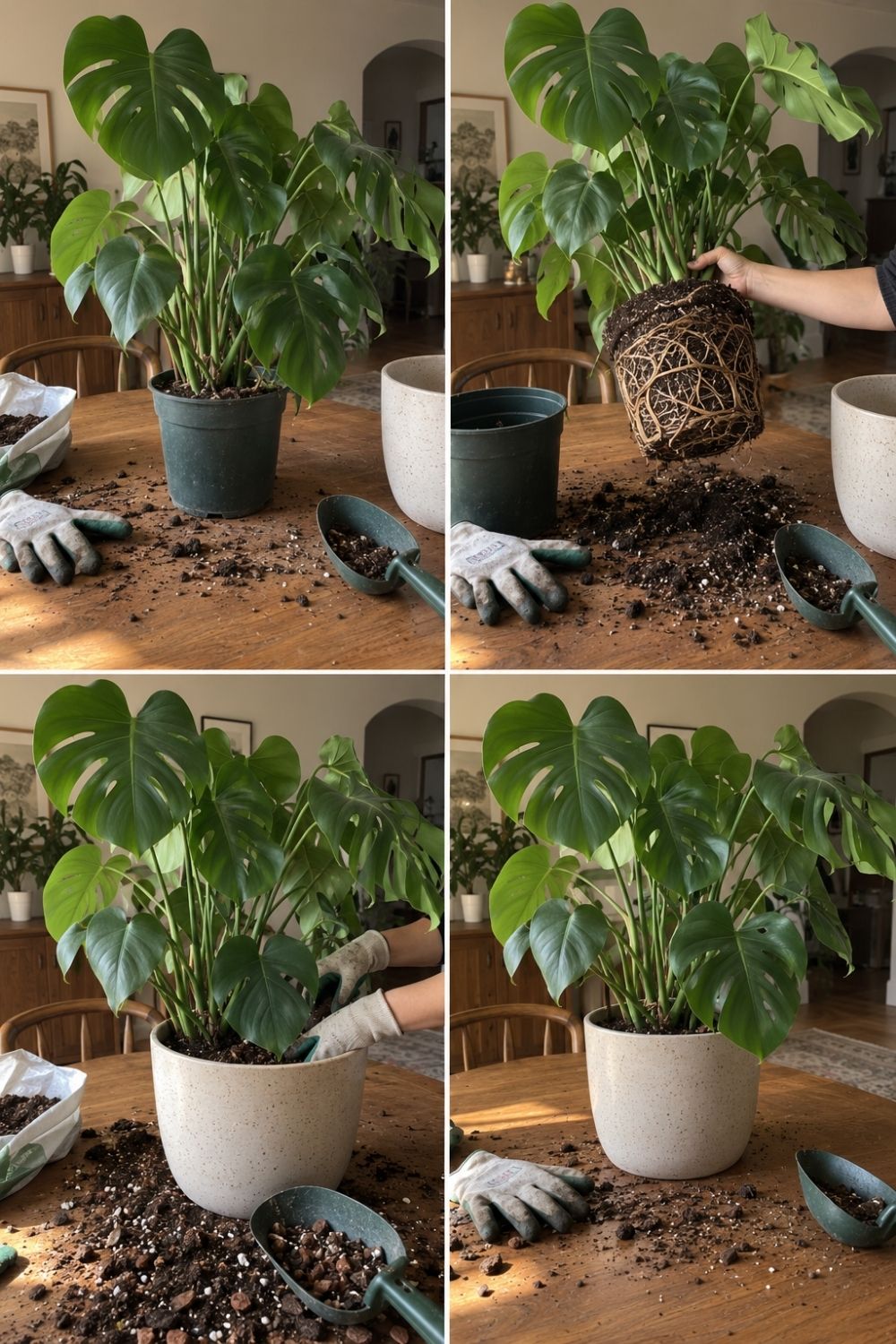
Photo by SassyGarden
Repotting a monstera every 2–3 years, in spring or early summer, keeps it growing. The four steps above show the process: a plant that has filled its nursery pot, the root ball lifted out with roots circling the outside, the plant set in a new pot only one size larger (about 2 inches wider) on a layer of fresh mix, and the gaps filled in and firmed gently. A much bigger pot holds more wet soil than the roots can use, which invites rot.
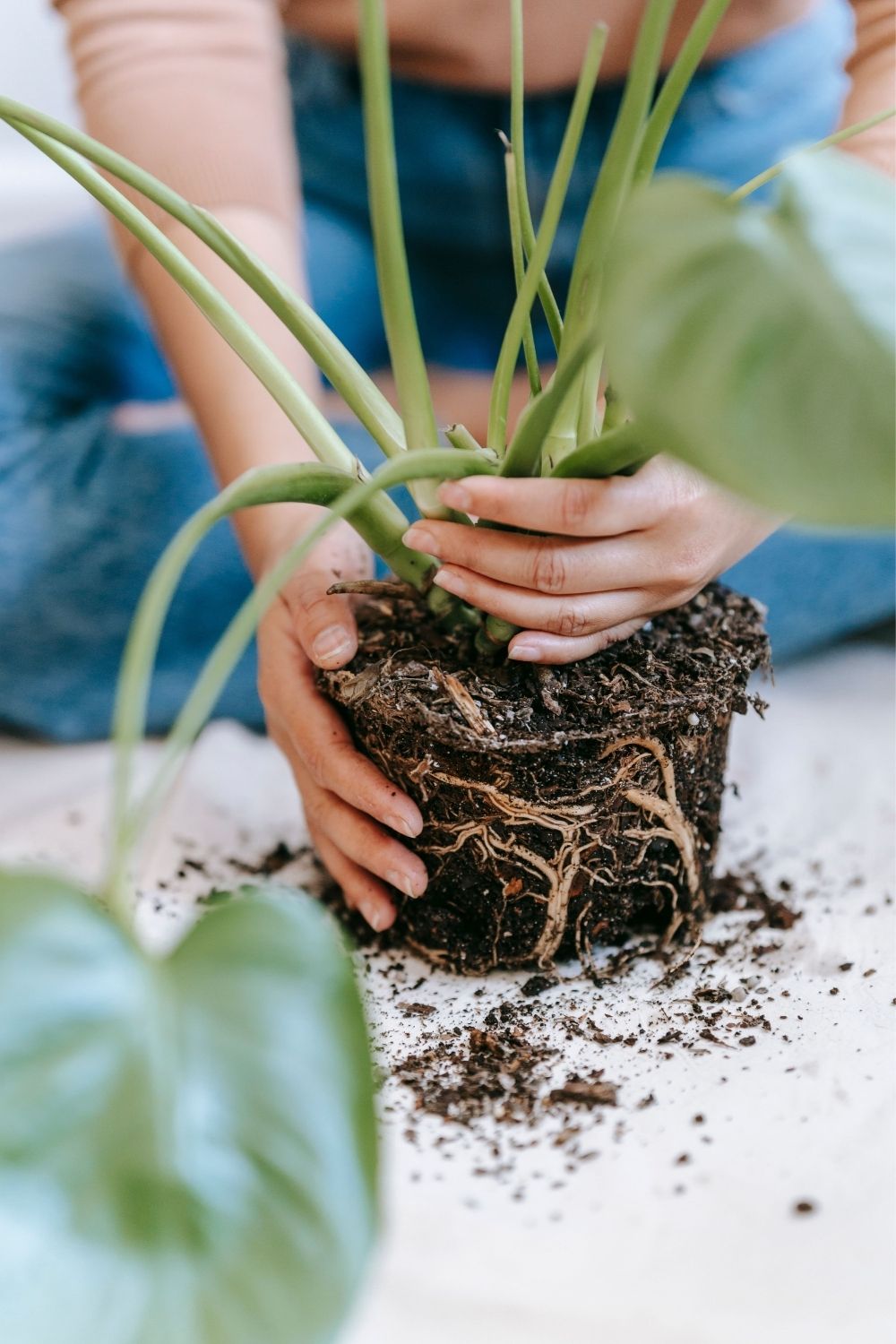
Photo by Teona Swift on Pexels
Signs it’s time for repotting a monstera: roots coming out of the drainage holes, water running straight through without soaking in, or a root ball like the one above, where the roots have wrapped around the soil. Loosen circling roots gently with your fingers before replanting. The pot needs a drainage hole, whatever it looks like on the outside; if you love a decorative pot without one, use it as a cover and keep a plastic nursery pot inside. More on pairing plants and pots is in my guide to container gardens.
For monstera care in the growing season, feed with a balanced houseplant fertilizer, following the dilution on the label. Most growers cut back or stop in winter.
Give it something to climb
In the wild, a Swiss cheese plant climbs trees. Indoors, without support, it sprawls sideways, the stems lean, and the leaves stay smaller. A moss pole or a coir pole gives it something to grip, and as it climbs, new leaves generally come in larger and more deeply split.
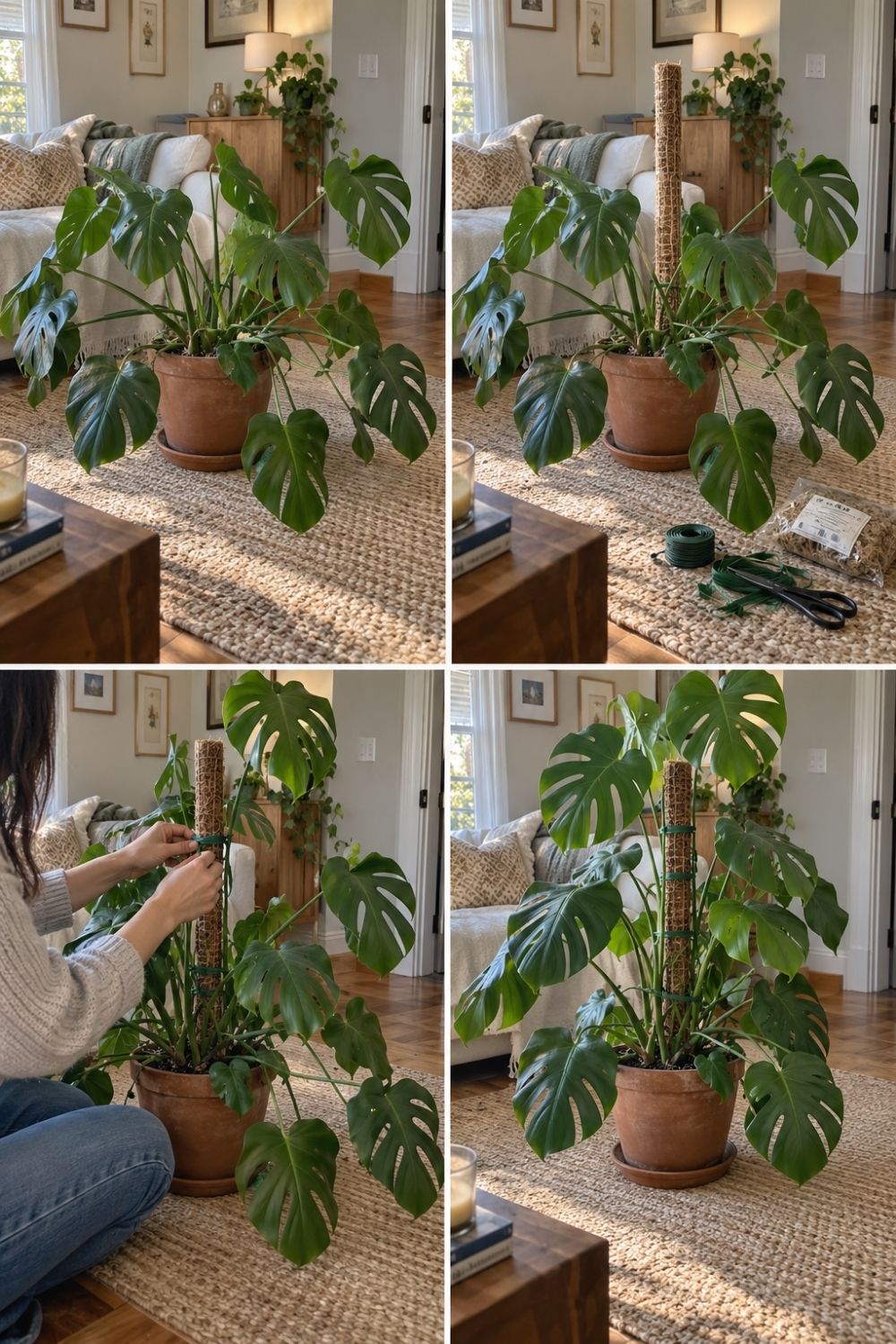
Photo by SassyGarden
The four photos show a sprawling plant getting a moss pole: the pole pushed into the pot behind the main stem, the stems gathered and tied to it with soft plant ties, and the result a few weeks later, standing upright instead of spilling over the rug. A few tips that make it easier:
- Place the pole on the side the plant grows toward, behind the thickest stem, and push it all the way to the bottom of the pot.
- Tie loosely with soft ties or velcro, never wire. Stems thicken, and tight ties cut in.
- Mist or water the moss now and then so aerial roots grow into it.
- Choose a pole taller than you think you need, or one you can extend. A healthy plant outgrows a short pole within a year.
What to do with aerial roots
Aerial roots are the long brown cords that grow out of the stem and wander into the air. They look alarming but they’re normal: in nature they anchor the plant to trees.
You have three options, and all of them are fine. Leave them alone. Guide them into the moss pole, where they’ll grip and help the plant climb. Or tuck them into the soil, where they often turn into regular roots. If a root is in the way, you can cut it off with clean, sharp scissors without hurting the plant, but don’t cut them all as routine: they’re part of what keeps a large monstera stable.
Propagating a cutting in water
Monstera propagation is easy as long as you remember one word: node. It’s also the part of caring for a monstera that people enjoy most. A node is the bump on the stem where a leaf joins it, often with a small aerial root nearby. A leaf without a node will sit in water for months and never grow a new plant.
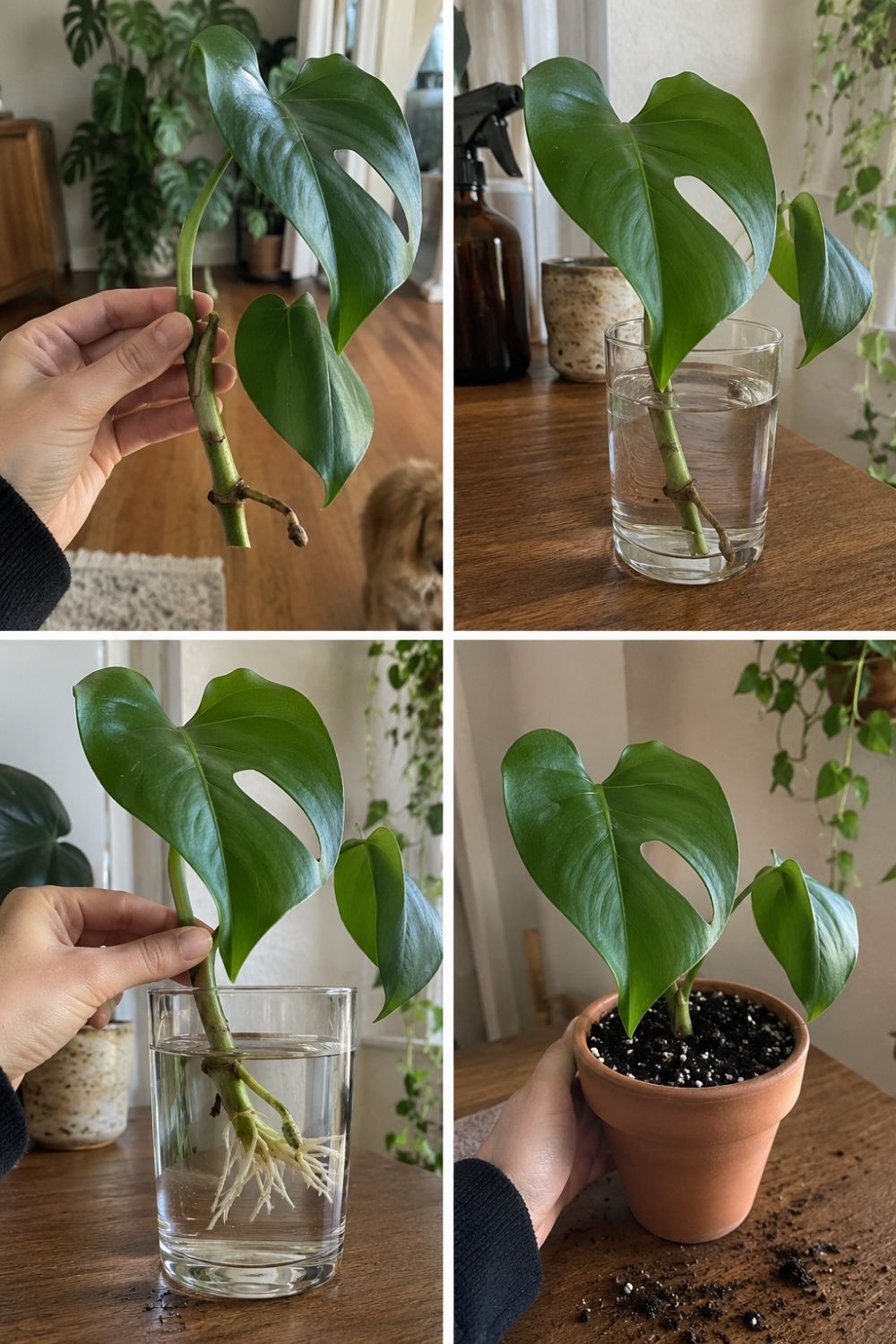
Photo by SassyGarden
- Cut below a node with clean scissors, keeping at least one leaf and ideally a small aerial root on the cutting.
- Put it in a glass of water so the node is submerged and the leaf stays above the rim.
- Keep it warm and bright, out of direct sun, and change the water every few days.
- Wait for roots about 2–3 inches long, which usually takes several weeks.
- Pot it up in a small pot of airy mix and keep it slightly more moist than usual for the first couple of weeks.
The four photos above follow the same path: cutting, glass of water, roots, terracotta pot. Wear gloves when cutting, because the sap can irritate skin.
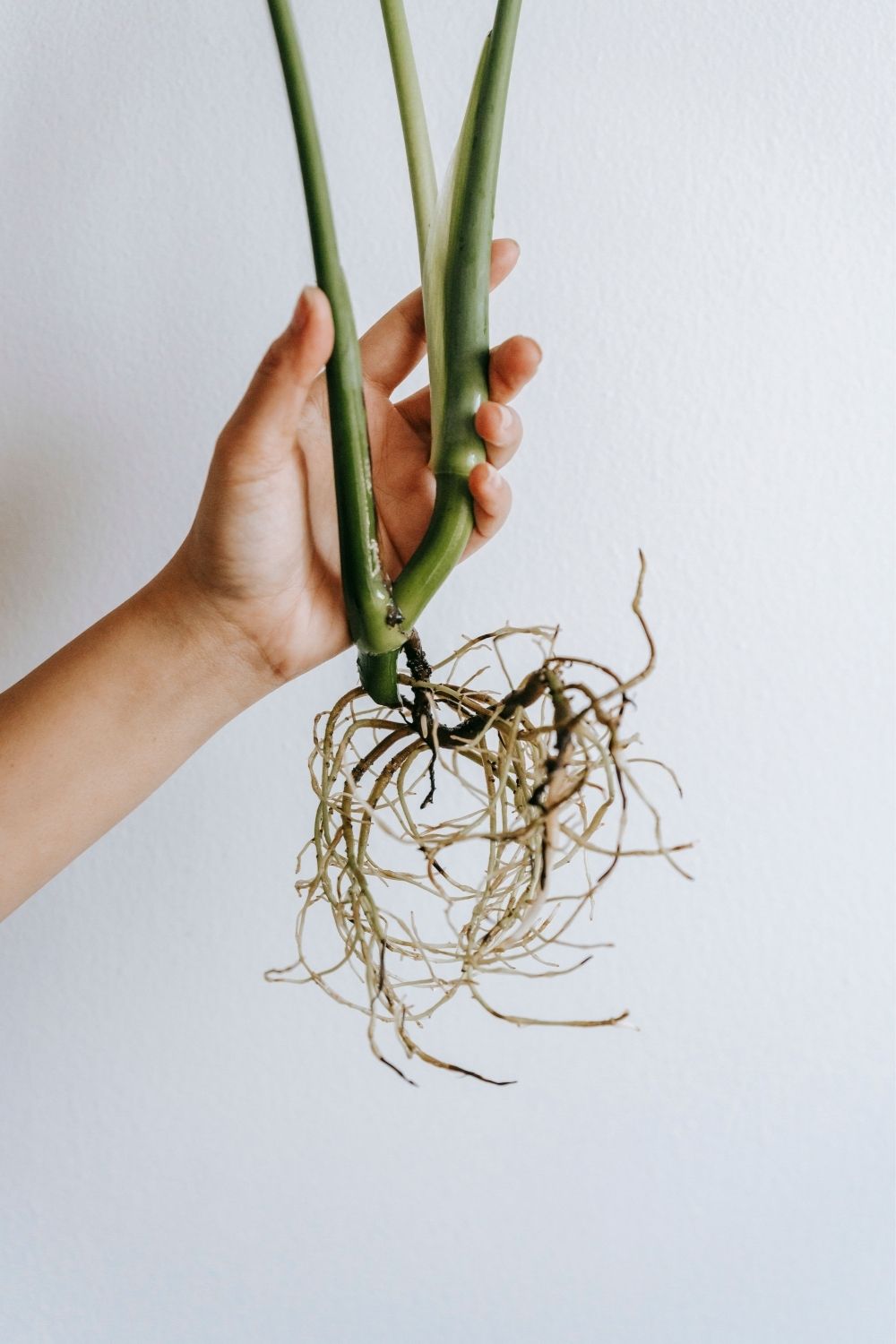
Photo by Teona Swift on Pexels
A rooted cutting like this one, with a thick tangle of pale roots, is ready for soil. Waiting too long has a downside: roots grown in water are adapted to water, and a cutting kept there for months can take longer to adjust to a pot. Propagating plants in water is fun to watch, which is why it’s so popular; I used the same glass-of-water approach for an avocado from seed. For monstera propagation on a bigger scale, air layering, rooting a stem while it’s still attached to the mother plant, is the other method extension services recommend for monstera, and it suits large, tall plants.
Plants that make pups are even easier
Monsteras don’t produce offsets, so cuttings are the way to go. Some other houseplants do the work for you by growing pups, small new plants at the base with roots of their own.
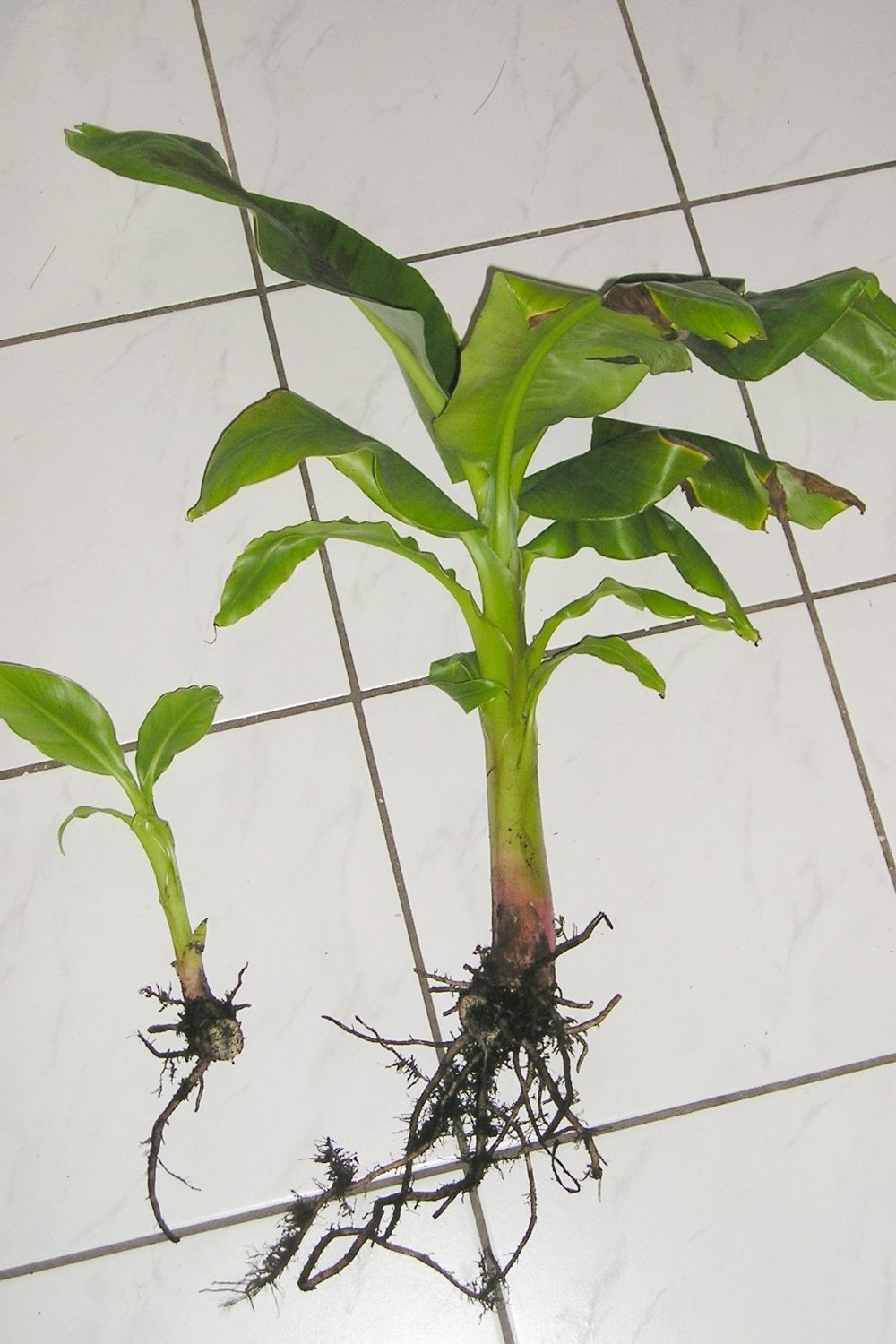
Photo by Maja Dumat on Flickr, CC BY 2.0
The photo shows two banana plant (Musa) pups separated from a parent, each with its own roots. Snake plants (Dracaena trifasciata), spider plants and aloe grow pups the same way. Wait until a pup is a few inches tall and has its own roots, slide the plant out of the pot, cut the pup away with a clean knife, and pot it on its own. It’s the most reliable kind of plant propagation there is, since the new plant is already rooted.
Monstera care through the year
A monstera doesn’t need a different routine every month, but it does notice the seasons, mostly through light and heating.
Spring is the busiest time for monstera care. Growth picks up, so this is the moment for repotting, adding or extending a pole, taking cuttings and starting to feed again.
Summer brings the fastest growth. Check the soil more often, since a big plant in a warm room can dry out within a week, and keep it back from windows that get strong afternoon sun. If it summers outdoors, keep it in shade and bring it in before nights drop below about 55 °F.
Fall is a slowdown. Taper off feeding and let the soil dry a little further between waterings.
Winter is where most monstera care goes wrong, usually through kindness. Growth nearly stops, the soil stays wet much longer, and watering on the summer schedule leads straight to yellow leaves. Keep the plant away from radiators and cold drafts, and if the air gets very dry from heating, a humidifier nearby helps more than misting.
Reading the leaves
Most monstera care problems show up on the leaves first. This table covers the common ones:
| What you see | Most likely cause | What to do |
|---|---|---|
| Lower leaves turning yellow, soil damp | Overwatering, poor drainage | Let soil dry, check roots, repot into airy mix |
| Brown, crispy leaf edges | Dry air or underwatering | Water deeply when dry, raise humidity |
| New leaves small and without splits | Too little light, no support | Move closer to a window, add a pole |
| Pale, bleached patches | Direct hot sun | Move back from the glass or add a sheer curtain |
| Whole plant drooping | Very dry soil or root rot | Check the soil first, then the roots |
| Sticky leaves, webbing, tiny insects | Scale, mealybugs, spider mites, thrips | Wipe leaves, isolate the plant, treat with insecticidal soap per the label |
Wipe the leaves of your Swiss cheese plant with a damp cloth every few weeks; dust blocks light, and you’ll spot pests early.
Monstera and pets
Every part of a monstera except the fully ripe fruit contains calcium oxalate crystals, which cause mouth pain, drooling and vomiting if chewed. The NC State Extension Plant Toolbox lists it as toxic to cats, dogs and horses, and the sap can irritate skin. Keep your Swiss cheese plant out of reach of pets and small children, wear gloves when pruning or propagating, and call your vet or a poison control line if an animal has chewed the leaves.
To sum up: bright indirect light, water only when the top 2 inches are dry, an airy mix in a pot one size up, and a pole to climb. Everything else in monstera care, from aerial roots to the size of the splits, follows from getting those four right.