Some pots look like a garden center display, full and balanced from every angle. Others look like three plants that happened to end up in the same pot. The difference is usually a simple formula that professional designers have used for decades: thriller, filler, spiller. Once you know it, putting together container gardens that look full and finished becomes almost foolproof, whether you’re planting one big pot by the front door or a whole balcony.
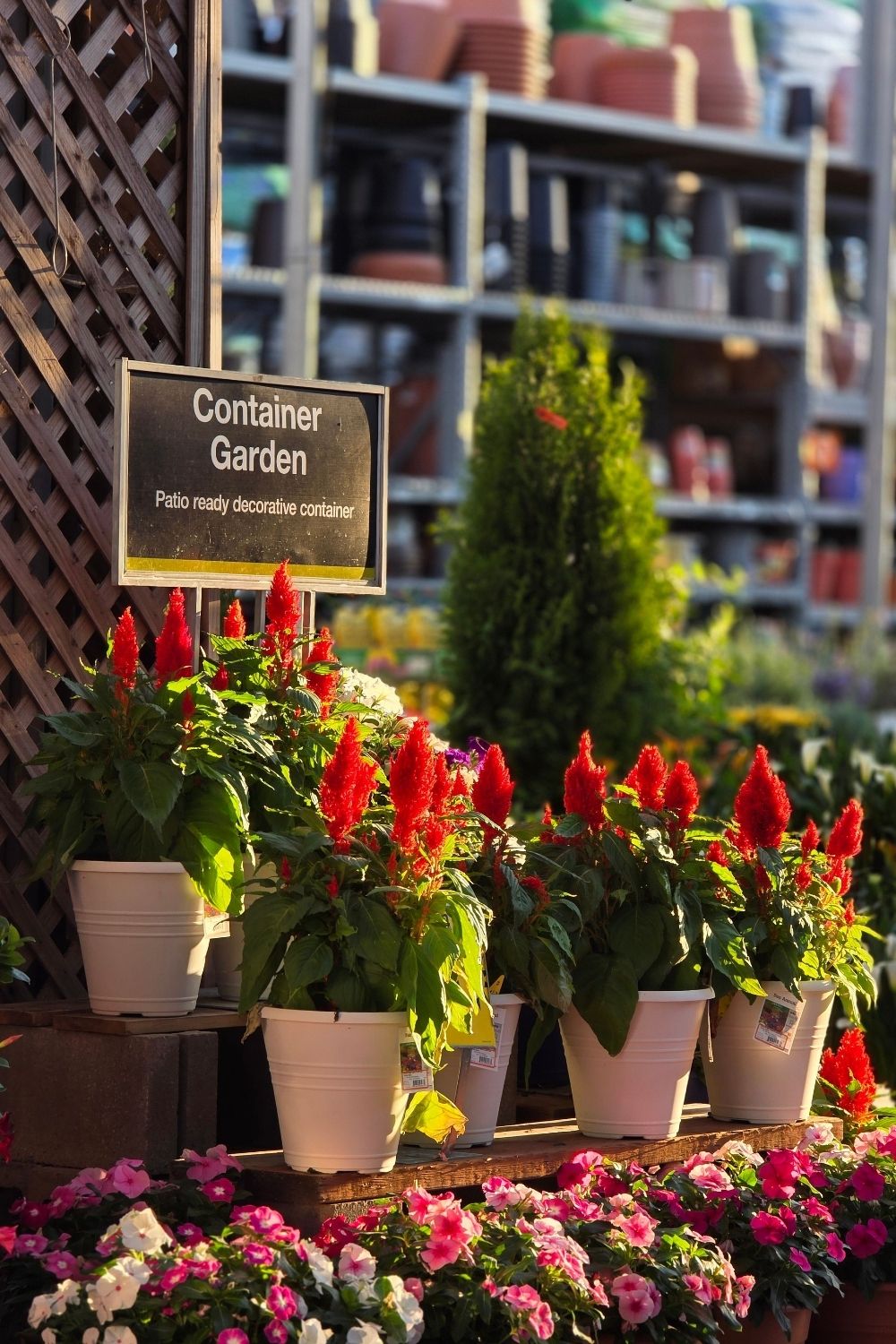
Photo by Inderjit Singh on Pexels
This garden center display, with a “Container Garden” sign above pots of bright red celosia, pink and white impatiens below and a slim evergreen behind, shows the idea at work. Tall plants give height, mounded plants fill the middle, and low, spreading flowers soften the front. The thriller-filler-spiller formula simply puts those three layers into a single pot.
The formula, step by step
Every pot gets three roles: one tall plant that grabs attention, a few mounded plants that fill in around it, and trailing plants that spill over the edge.
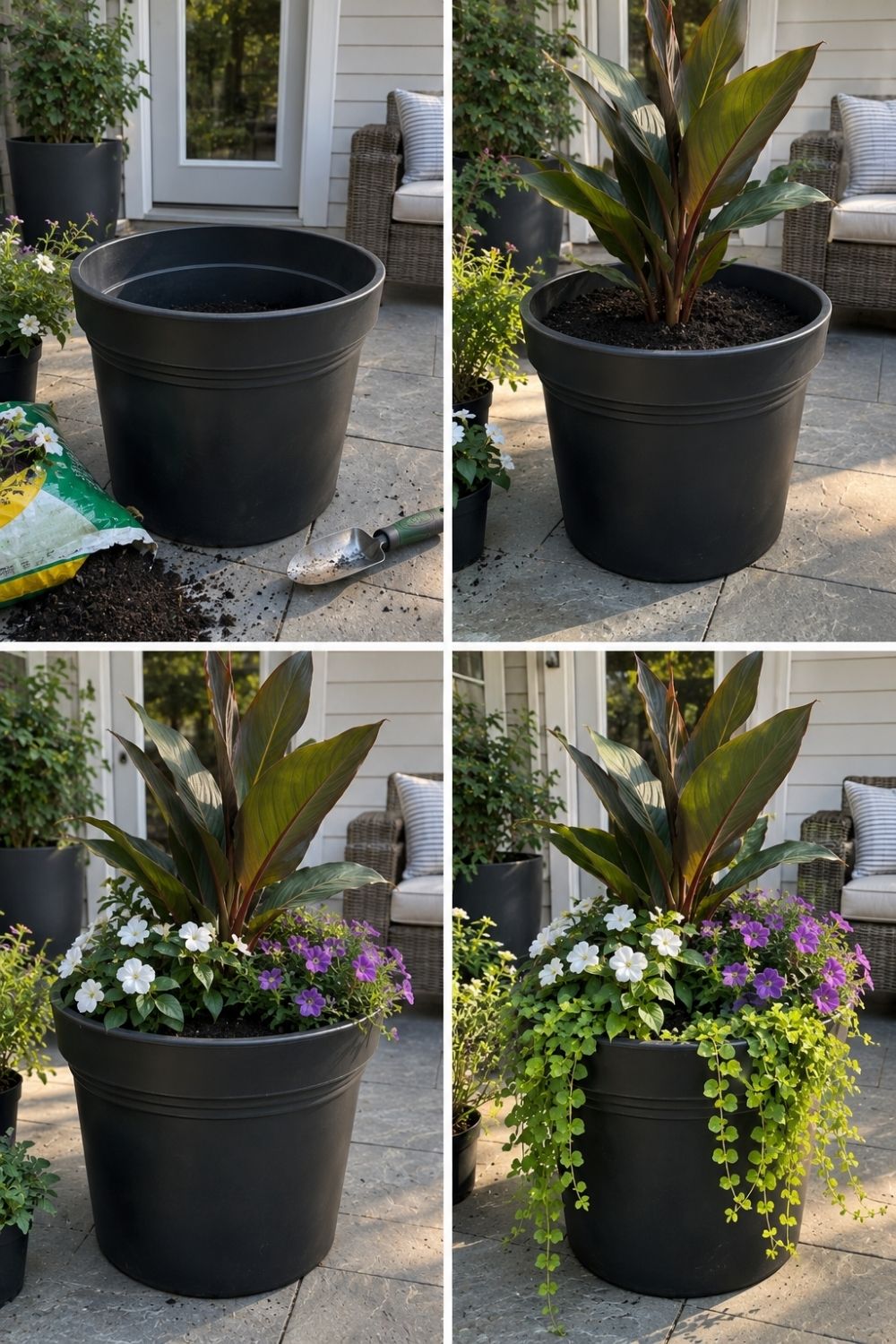
Photo by SassyGarden
The four stages above build one thriller-filler-spiller pot on a patio: an empty black planter with a bag of potting mix beside it, then a tall canna with dark, paddle-shaped leaves planted in the center, then white and purple flowering plants added around it, and finally golden creeping Jenny tumbling over the rim. Here is what each role does:
- Thriller. The tall, eye-catching centerpiece, usually one plant. Grasses, cannas, cordylines, dwarf shrubs and upright herbs like rosemary all work. Place it in the center of a pot seen from all sides, or at the back of a pot against a wall.
- Filler. Mounded plants that surround the thriller and hide the soil. Use two to five, depending on the size of the pot. Petunias, begonias, impatiens, coleus, salvia and lantana are classic fillers.
- Spiller. Trailing plants planted near the rim that soften the edge of the pot. Sweet potato vine, calibrachoa, creeping Jenny, ivy and trailing lobelia are reliable spillers.
A good rule of thumb for height: the thriller should be roughly one to one and a half times the height of the pot. Any shorter and it gets lost; any taller and the pot looks top-heavy.
Start with the right pot and soil
The prettiest combination will struggle in the wrong pot, and a good container garden starts with the container itself. Bigger is almost always better: a 16-inch pot or larger holds enough soil for a thriller, fillers and spillers, and it dries out far more slowly than a small one.
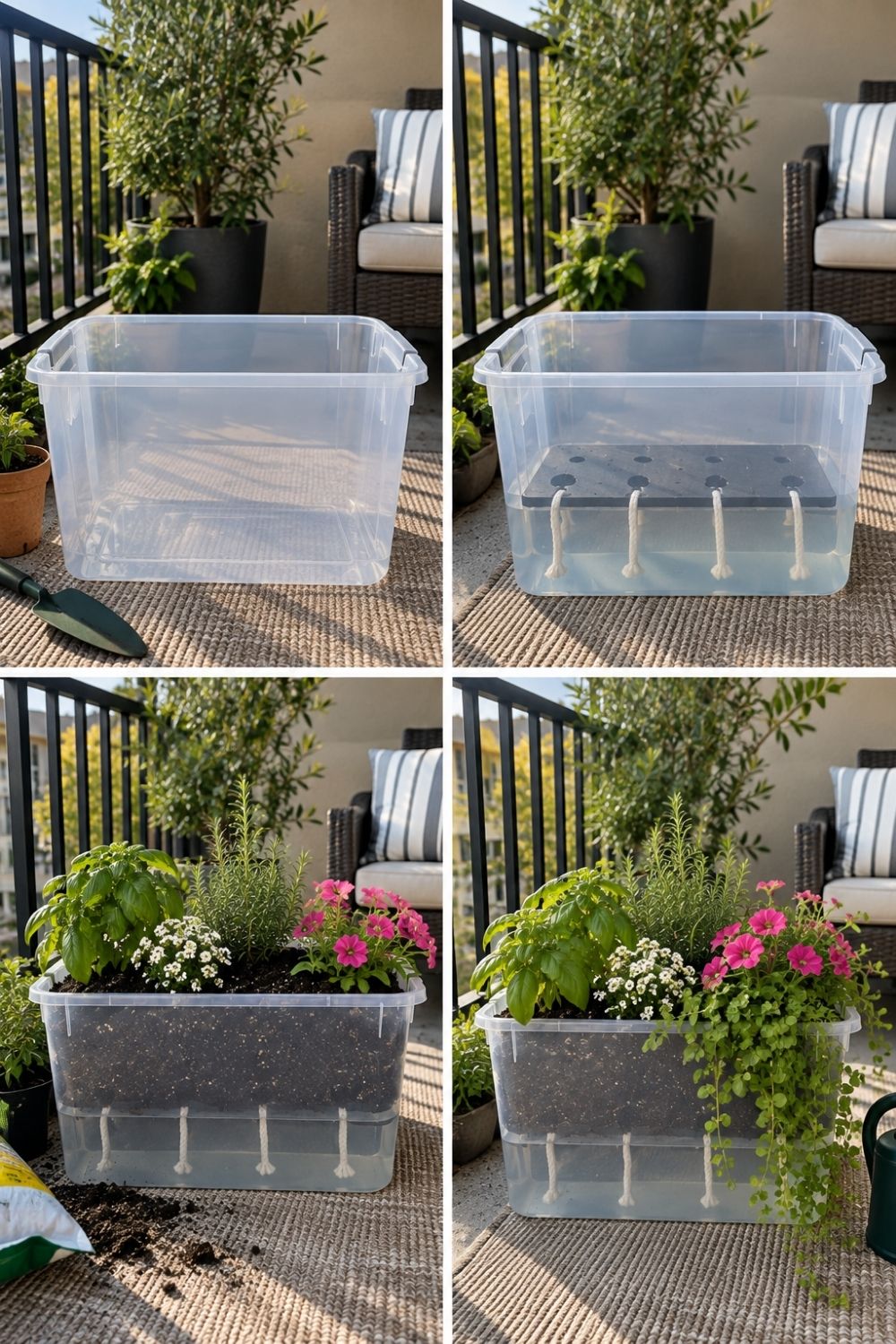
Photo by SassyGarden
The four photos above show a clever DIY option: turning a clear plastic storage tote into a self-watering planter. First the empty tote on a balcony, then a false floor with small cups pushed through it to wick water up from a reservoir below, then the tote filled with potting mix and planted with basil, white flowers and pink impatiens, and finally trailing plants spilling over the side. A self-watering container like this can go several days between waterings in summer, which is a huge help on a hot balcony.
Whatever pot you choose, it needs a drainage hole. Use a good-quality potting mix, never garden soil, which packs down and suffocates roots in a pot. Skip the old advice about a layer of gravel in the bottom; it actually raises the wet zone in the pot rather than improving drainage. Mix in a slow-release fertilizer at planting time, and your container gardens will have what they need for the first couple of months.
Which pot material?
- Terracotta looks classic and breathes, which suits herbs and succulents, but it dries out fast and can crack in hard frost.
- Glazed ceramic holds moisture better and comes in strong colors, though it’s heavy and also needs protecting from freezing.
- Fiberglass and resin look like stone or clay, weigh far less and handle winter well; they’re the easiest choice for large container gardens on a balcony.
- Wood planters stay cooler in summer and look natural; line them with plastic to slow rot.
- Metal looks sharp but heats up in full sun, so use it for shade plants or line it.
Combination recipes
Here are some thriller-filler-spiller combinations that work reliably in container gardens. Match the recipe to the light the pot will get:
| Situation | Thriller | Filler | Spiller |
|---|---|---|---|
| Full sun, colorful | Canna or purple fountain grass | Lantana, salvia, petunias | Sweet potato vine, calibrachoa |
| Shade | Caladium or Japanese forest grass | Begonias, impatiens, coleus | Creeping Jenny, lamium |
| Herbs for the kitchen | Rosemary or lemongrass | Basil, parsley, chives | Creeping thyme, oregano |
| Low water | Cordyline or yucca | Sedum, lavender, gaura | Silver dichondra, trailing sedum |
| Native and pollinator-friendly | Little bluestem grass | Butterfly weed, coreopsis | Moss phlox |
| Fall | Switchgrass or ornamental millet | Mums, ornamental kale | Ivy, heuchera |
For more plant ideas for each situation, see my posts on shade plants, drought-tolerant plants, herb gardens and native pollinator plants. Nourish and Nestle’s guide to thrillers, fillers and spillers has even more combinations with photos.
Keep all the plants in one container garden matched for light and water. A sun-loving lantana and a shade-loving begonia in the same container will never both be happy, however good they look together on the day you plant them.
Group pots like a designer
A single pot is lovely, but a group of pots turns a few plants into a real container garden with much more impact. Grouping also makes watering easier and creates a little microclimate where the plants shade each other.
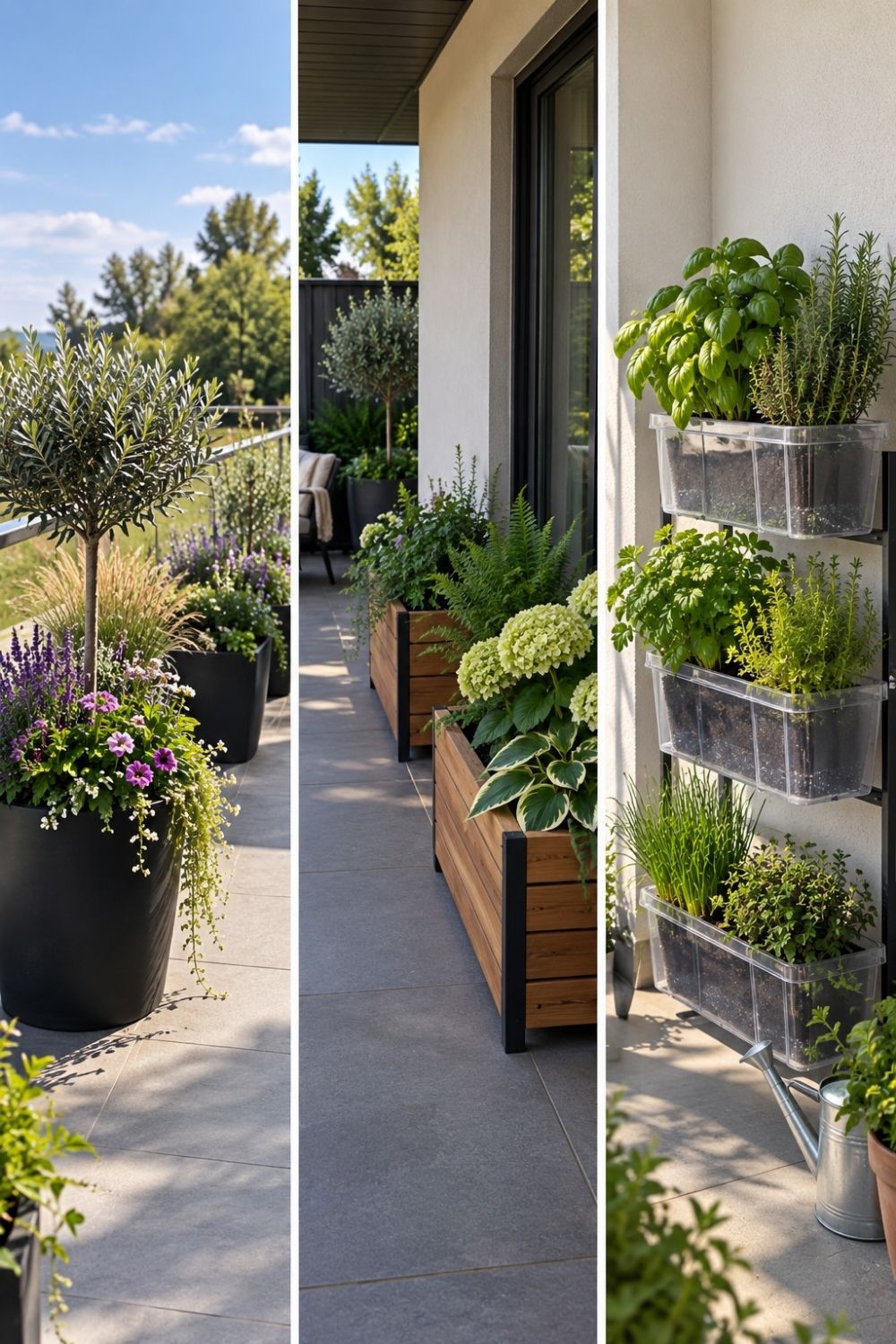
Photo by SassyGarden
The three photos above show different ways to group containers on a long balcony: a cluster of tall black pots with a small olive tree, lavender and trailing flowers; a row of wooden raised planters filled with hostas, hydrangeas and ferns; and a stacked herb tower of clear boxes planted with basil, parsley and rosemary.
To group pots well:
- Use odd numbers of three or five, which look more natural than pairs.
- Vary the heights. Put the tallest pot in the container garden at the back and step down to the front, or raise smaller pots on bricks or stands.
- Repeat something. The same pot color, the same plant in each pot or the same flower color ties the group together.
- Mix sizes. One large statement pot with two smaller ones looks better than three identical medium pots.
Small spaces: go up and plan the floor
On a small balcony or patio, floor space is precious, so the wall and the layout matter as much as the plants in a container garden.
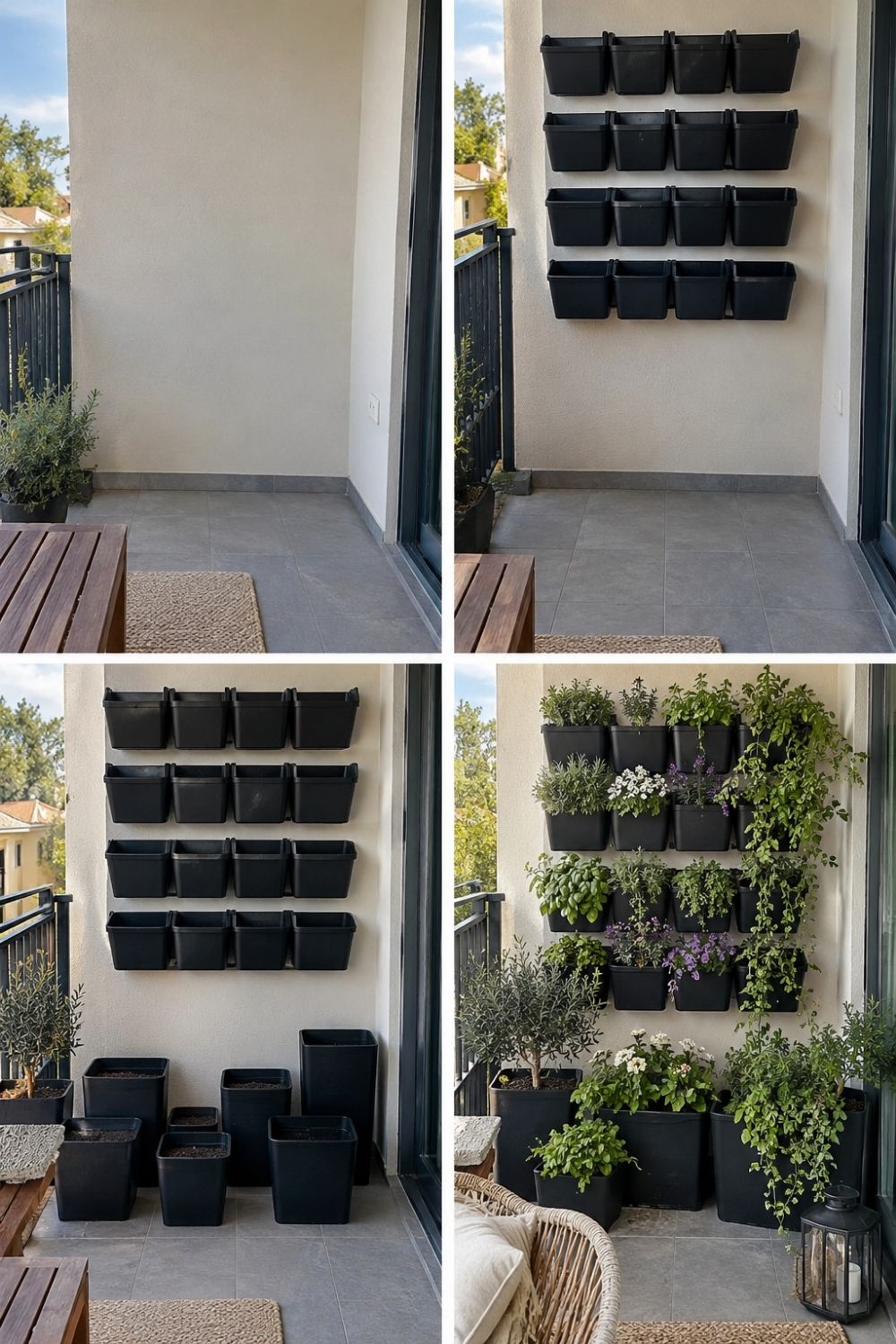
Photo by SassyGarden
The four stages above turn a bare balcony wall into a living wall: first the empty wall, then a grid of black wall-mounted planters fixed in rows, then more pots arranged on the floor below, and finally the whole wall and floor filled with herbs, trailing plants and a small olive tree.
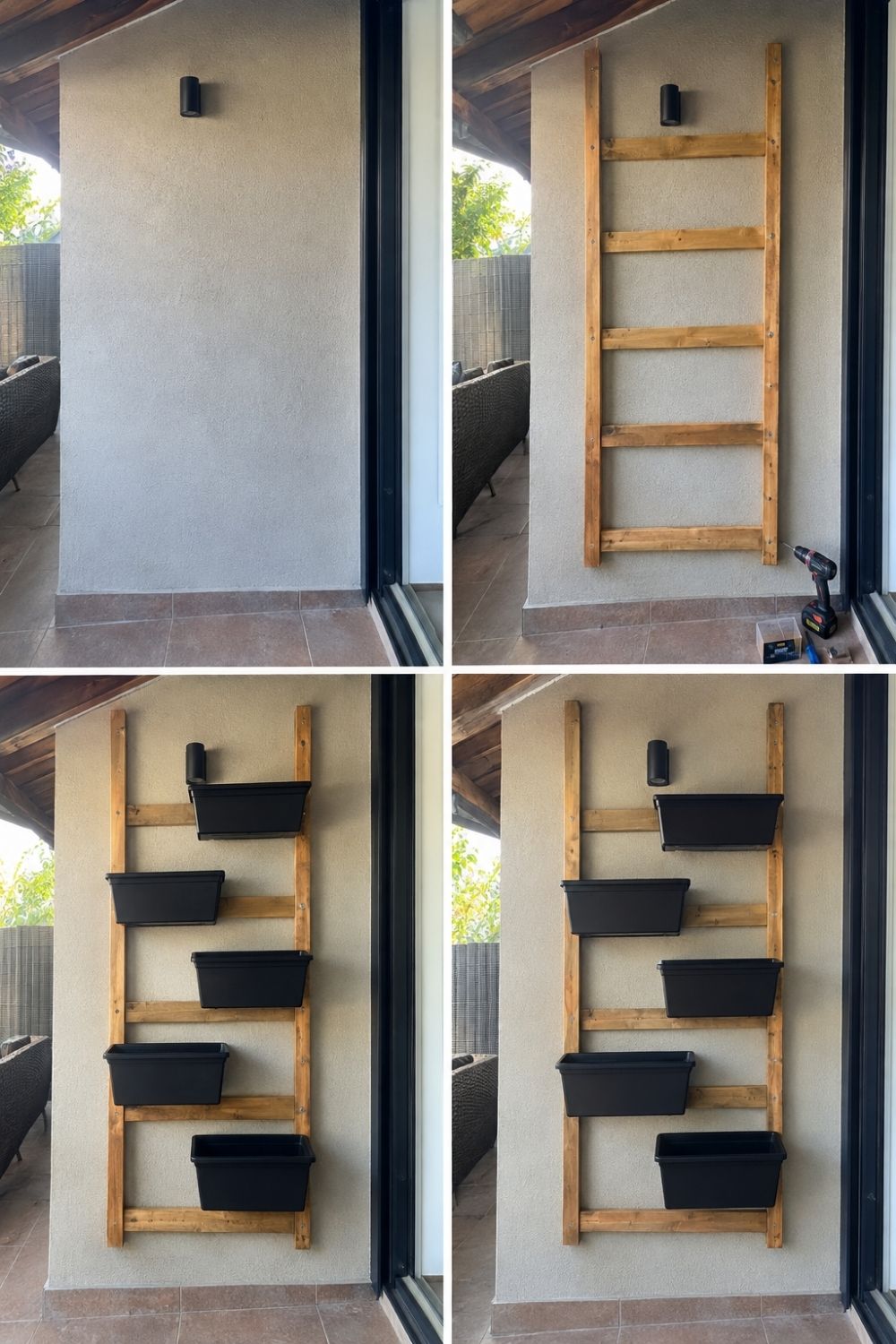
Photo by SassyGarden
A simpler version, shown above, uses a wooden ladder leaned or fixed against the wall with black trough planters hung on its rungs in a zigzag. It’s cheap, needs very few screws and can move with you. For many more ideas, see my guide to vertical gardening ideas.
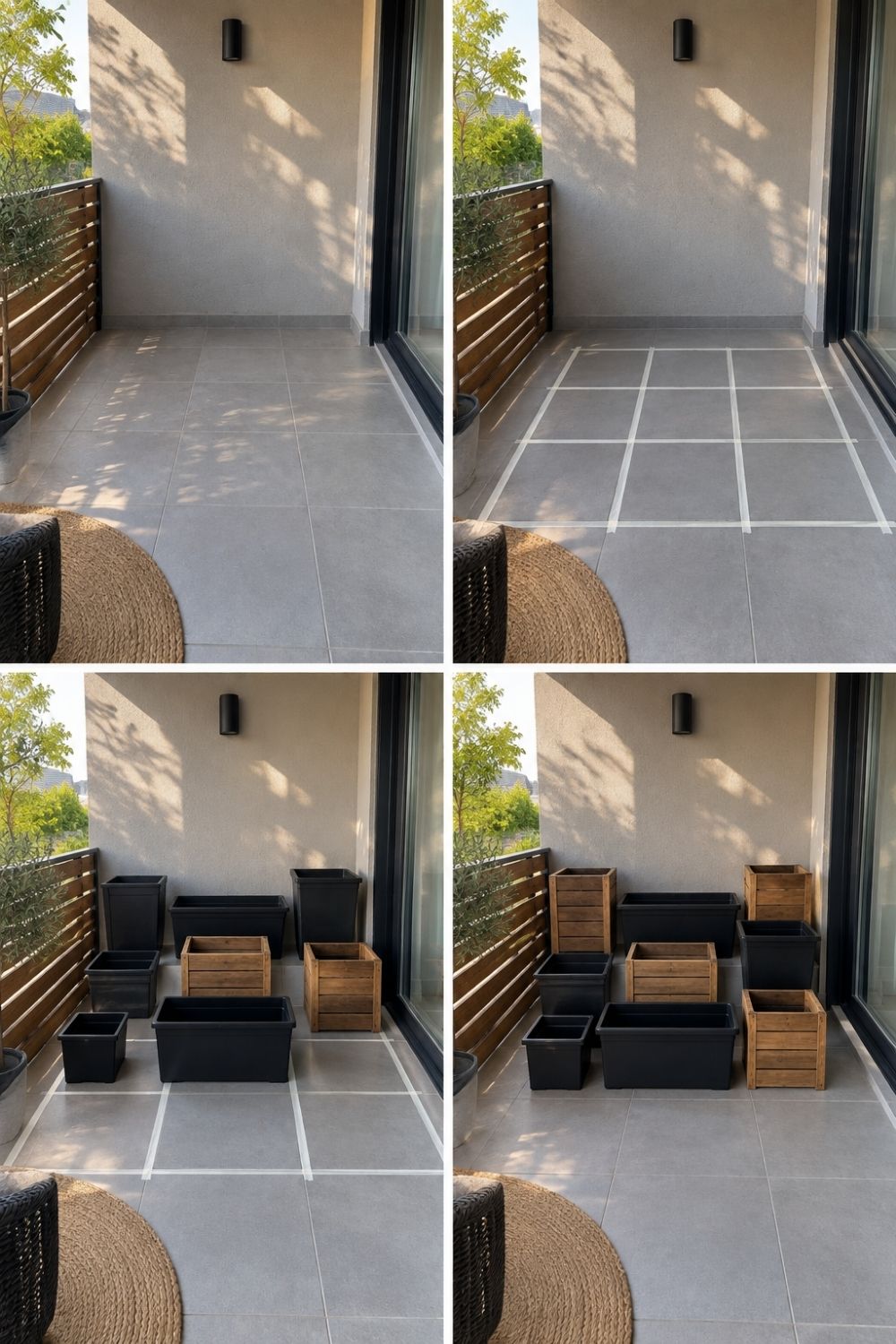
Photo by SassyGarden
Before buying pots for a small space, plan the layout. In the photos above, a bare balcony floor is marked out with tape in rectangles, then pots and wooden crates of different sizes are placed in those spots to test the arrangement. Taping the floor shows you exactly how much room you’ll have left to walk and sit, and it’s much easier than returning pots that turn out too big.
Make heavy pots movable
Large container gardens full of wet soil are heavy, often too heavy to move once planted. Putting them on wheels solves the problem.
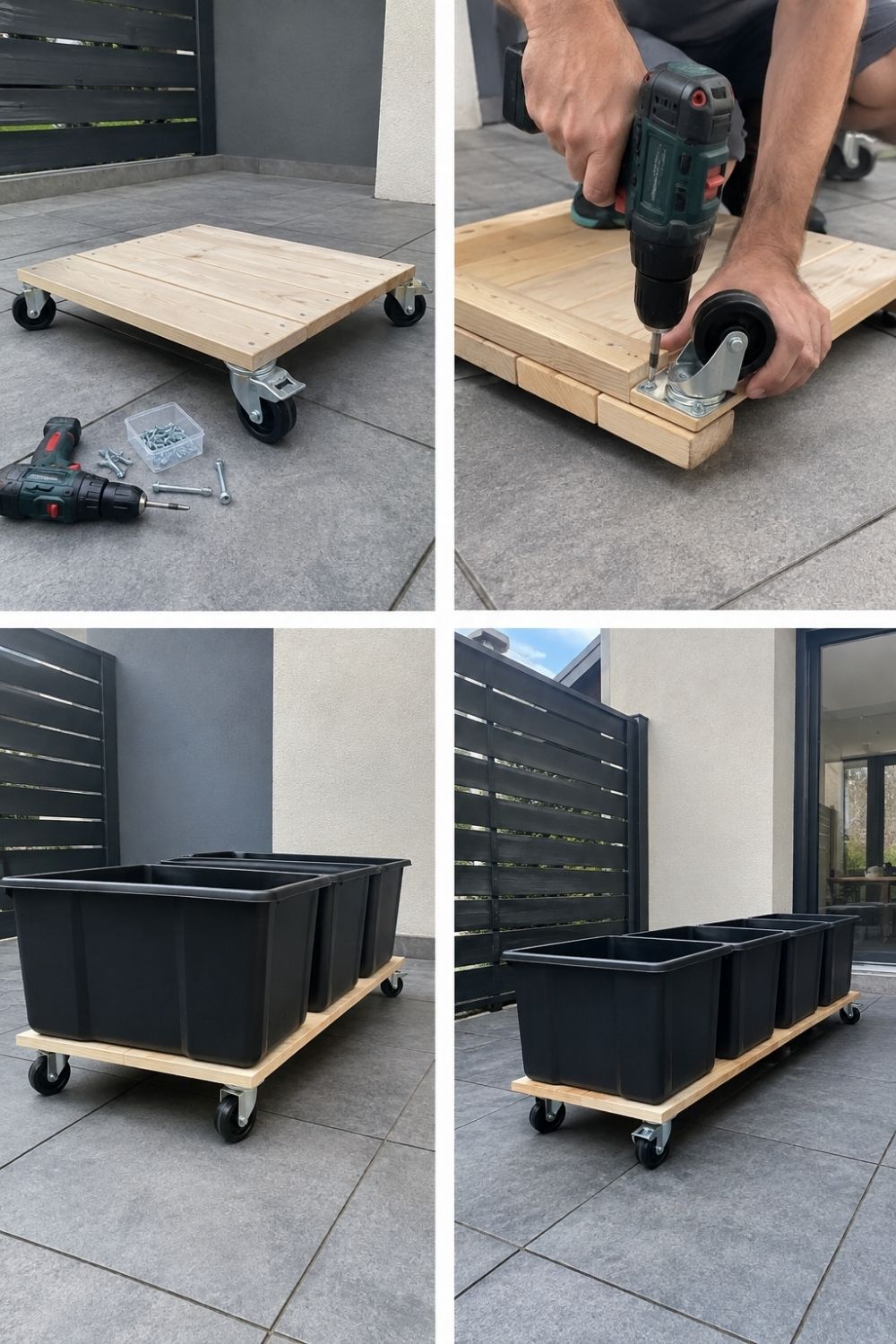
Photo by SassyGarden
The four photos above show a simple DIY plant caddy: a wooden board platform, locking caster wheels being screwed onto the underside, and finally a row of long black planters sitting on the finished rolling base. With a caddy like this, you can move container gardens into the sun, out of a storm or into a sheltered corner for winter. Use locking casters so the pots stay put on a sloping balcony.
Refresh with the seasons
Container gardens don’t have to stay the same all year. A thriller that lasts, like a dwarf conifer, a cordyline or an ornamental grass, can stay in the pot while the fillers and spillers change with the seasons. In spring, tuck in pansies, violas and small bulbs like tulips or daffodils. In summer, switch to heat lovers such as petunias, lantana and sweet potato vine. In fall, swap in mums, ornamental kale and heuchera. For winter, cut evergreen branches, berries and dogwood stems can fill the pot until spring. Changing only the smaller plants each season is cheaper than replanting from scratch, and it keeps the same pots looking fresh by the front door all year.
Care that keeps pots looking full
- Water deeply until it runs from the drainage hole. In summer, small pots may need water every day; check by pushing a finger into the soil.
- Feed regularly. Top up the slow-release fertilizer with a liquid feed every two weeks from midsummer, since frequent watering washes nutrients out.
- Deadhead fillers like petunias and salvia to keep them blooming.
- Trim spillers that get too long or leggy, and pinch back fillers that start to crowd out the thriller.
- Rotate pots a quarter turn every week or two so they grow evenly.
- Replace tired plants mid-season. Swapping one faded filler for a fresh one keeps the whole pot looking new.
Once you’ve planted one pot with the thriller-filler-spiller formula, you’ll start seeing it everywhere, from shop displays to hanging baskets. Pick one tall plant, surround it with a few mounded fillers, let something spill over the edge, and your container gardens will look full, balanced and planned from the first week.