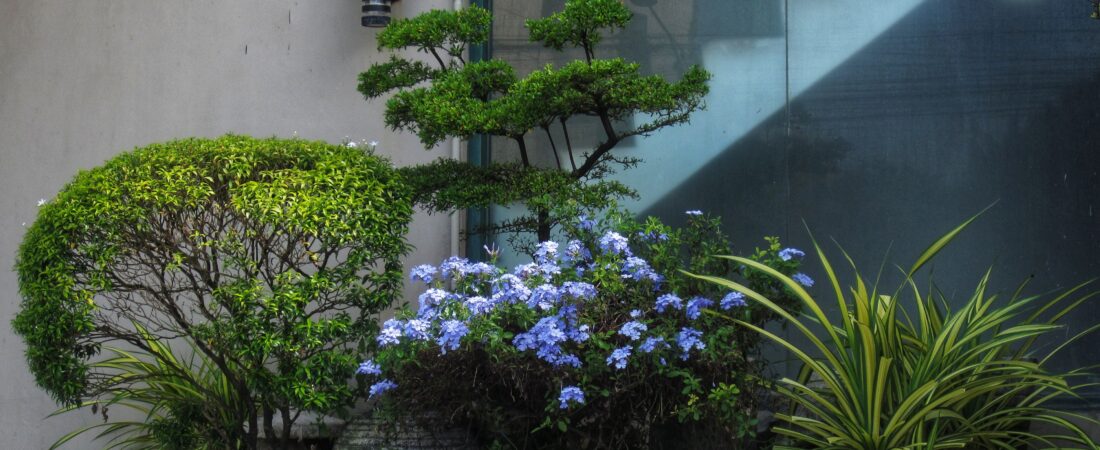
When people picture a drought-tolerant garden, they often imagine a few spiky plants dotted across a sea of gravel. That’s one version, and not the most appealing one. A water-wise garden can be just as full, soft and green as a thirsty one. The difference is in how it’s designed: which plants you choose, how closely you plant them and how you water them in the first year. Lushness comes from planning, not from the hose.
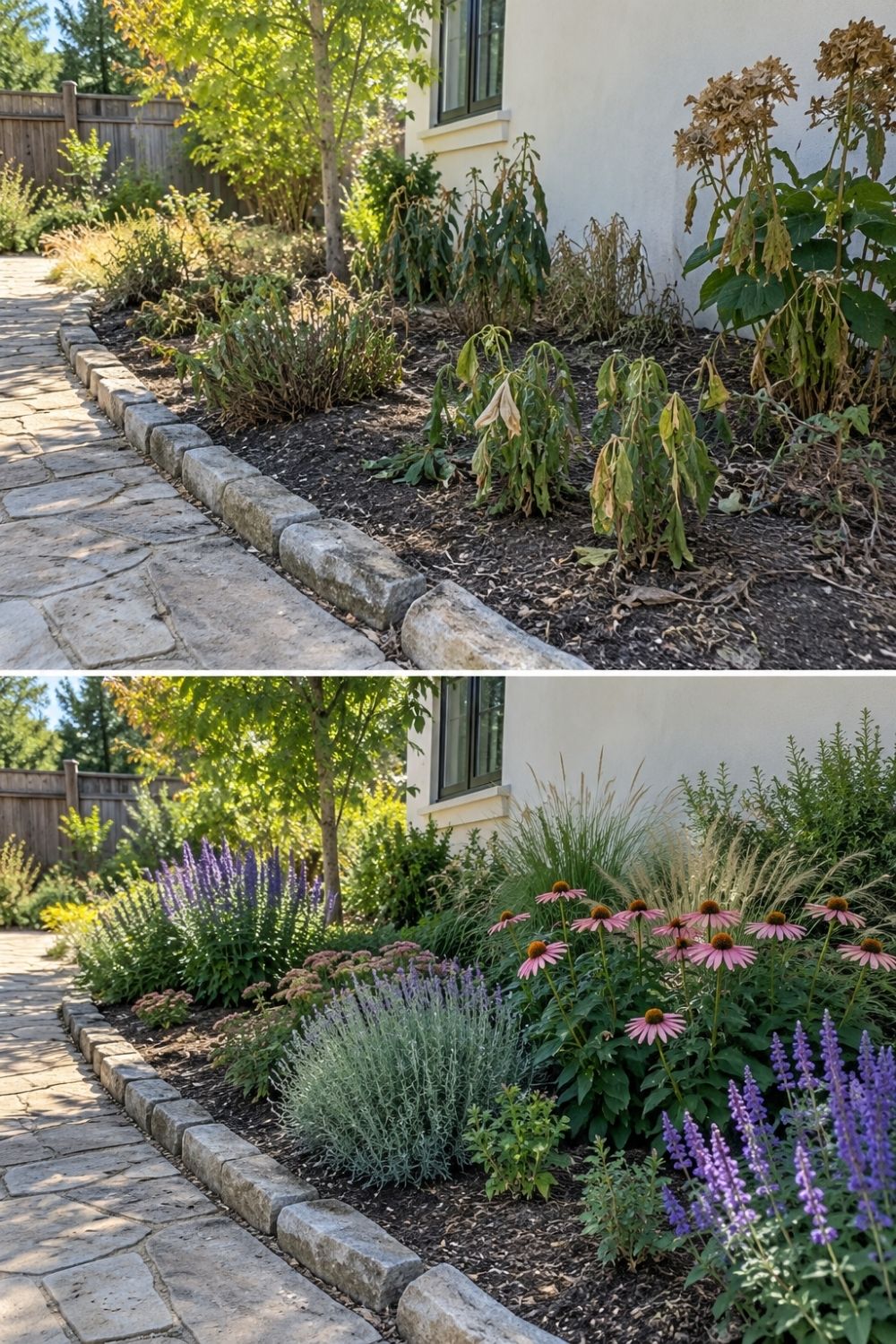
Photo by SassyGarden
The before and after above shows the same border beside a stone path. In the first photo, the plants are wilted, yellowing and spaced far apart, with bare mulch showing between them. In the second, the border is packed with purple salvia, pink coneflowers, silvery lavender and soft grasses. Both borders get roughly the same amount of water. The second one simply uses plants that are built for dry summers and puts them close enough together to look generous.
Swap the thirsty lawn, not the green
Lawns are usually the thirstiest part of a yard, and in hot summers they’re the first thing to go brown. Replacing some or all of a front lawn with drought-tolerant plants is the biggest single change you can make, and it doesn’t have to look sparse.
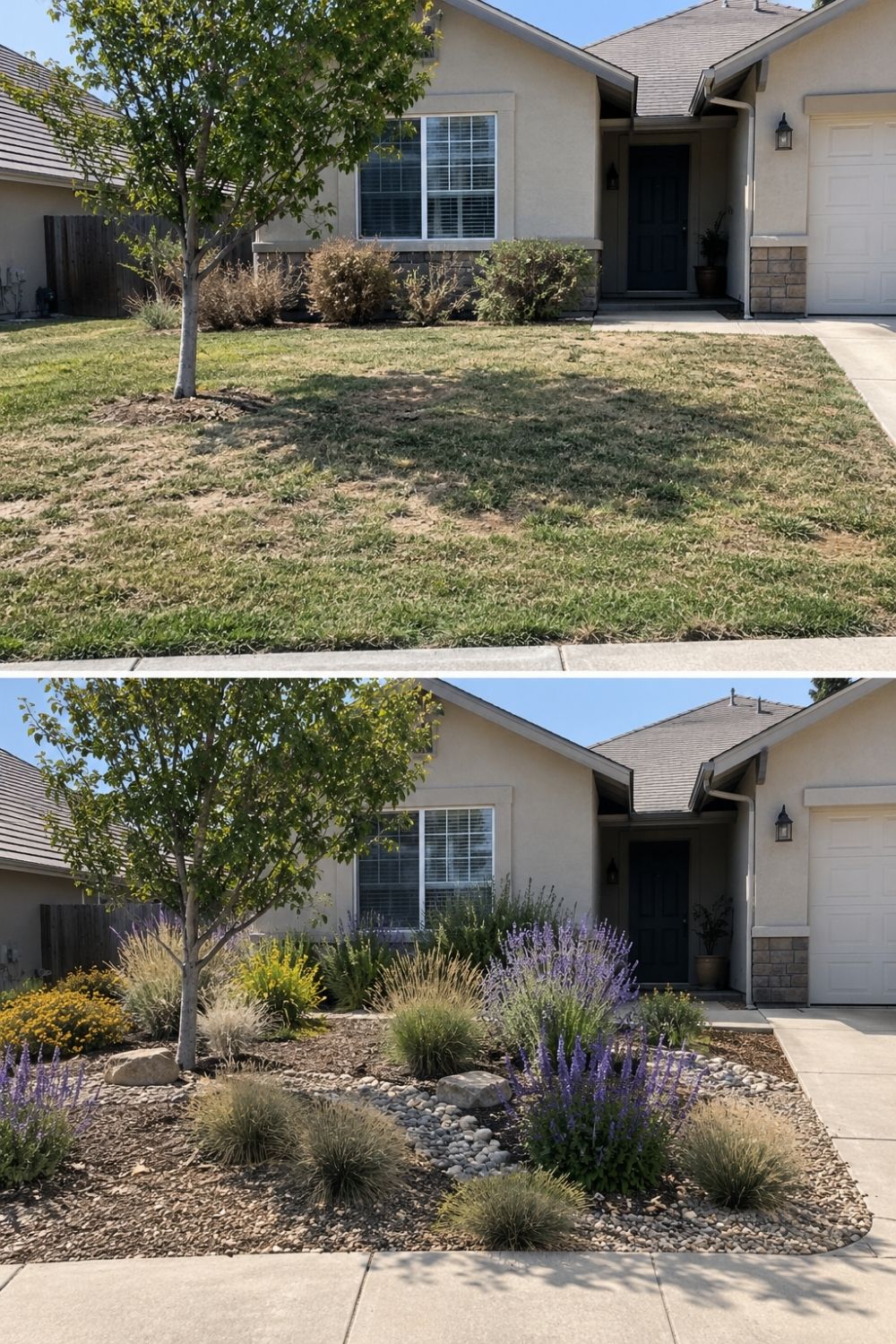
Photo by SassyGarden
The before and after above makes the point well: a patchy, sunburnt lawn in front of a house becomes a planted front yard with lavender, ornamental grasses, low shrubs and a dry creek bed of rounded stones curving through the middle. The tree and the house haven’t changed. The yard now looks full in August instead of tired.
You don’t have to remove every blade of grass. A smaller lawn where you actually use it, surrounded by drought-tolerant beds, keeps the soft green look and cuts watering dramatically. A dry creek bed is also a practical addition, since it carries rainwater away from the house during storms. My post on river rock landscaping covers how to build one.
If you’d like to keep something soft underfoot, look at lawn alternatives. Micro clover mixed into existing grass stays green longer in dry spells, and creeping thyme or low sedums work well between stepping stones or in small areas that get light foot traffic. None of them take the wear of a football game, but they cope with summer far better than a standard lawn.
Plant in layers, and plant close
The most common reason a water-wise garden looks thin is spacing. Plant tags list spacing for fully mature plants, and following them exactly leaves a lot of bare ground for the first two or three years. Bare ground dries out faster, grows more weeds and looks unfinished.
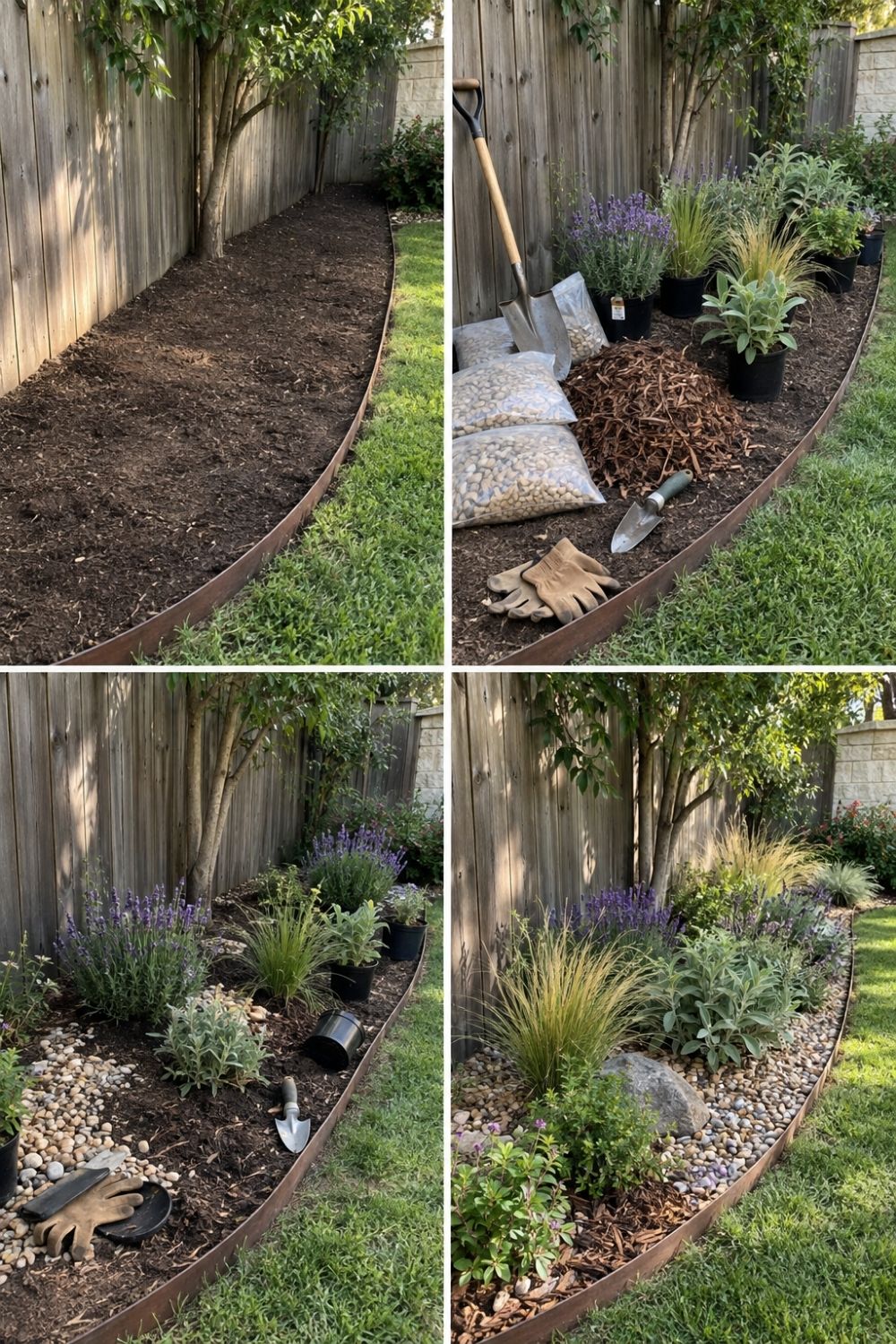
Photo by SassyGarden
The four stages above follow a curved border along a wooden fence: the bed prepared with fresh soil and a metal edge, then the plants set out in their pots with bags of gravel and mulch nearby, then planting, and finally the finished border with lavender, grasses and silver foliage filling it in layers. Three layers are enough for most beds:
- A tall back layer of shrubs or large grasses, such as Russian sage, rosemary or feather reed grass, to give height and screen the fence.
- A middle layer of flowering perennials like salvia, coneflower, yarrow and agastache, which carry the color.
- A front layer of low, spreading plants such as creeping thyme, sedum and catmint, which cover the soil and spill over the edge.
Plant at about two-thirds of the recommended spacing, and stagger the plants rather than lining them up. The canopy closes faster, the leaves shade the soil and keep it cooler, and the whole bed looks lush a season or two sooner.
Lean on foliage: silver, blue and bold shapes
Flowers come and go, but foliage is there all season. Many drought-tolerant plants have silver, gray or blue leaves, a trick that reflects sunlight and reduces water loss, and those colors look fresh and cool even in a heat wave.
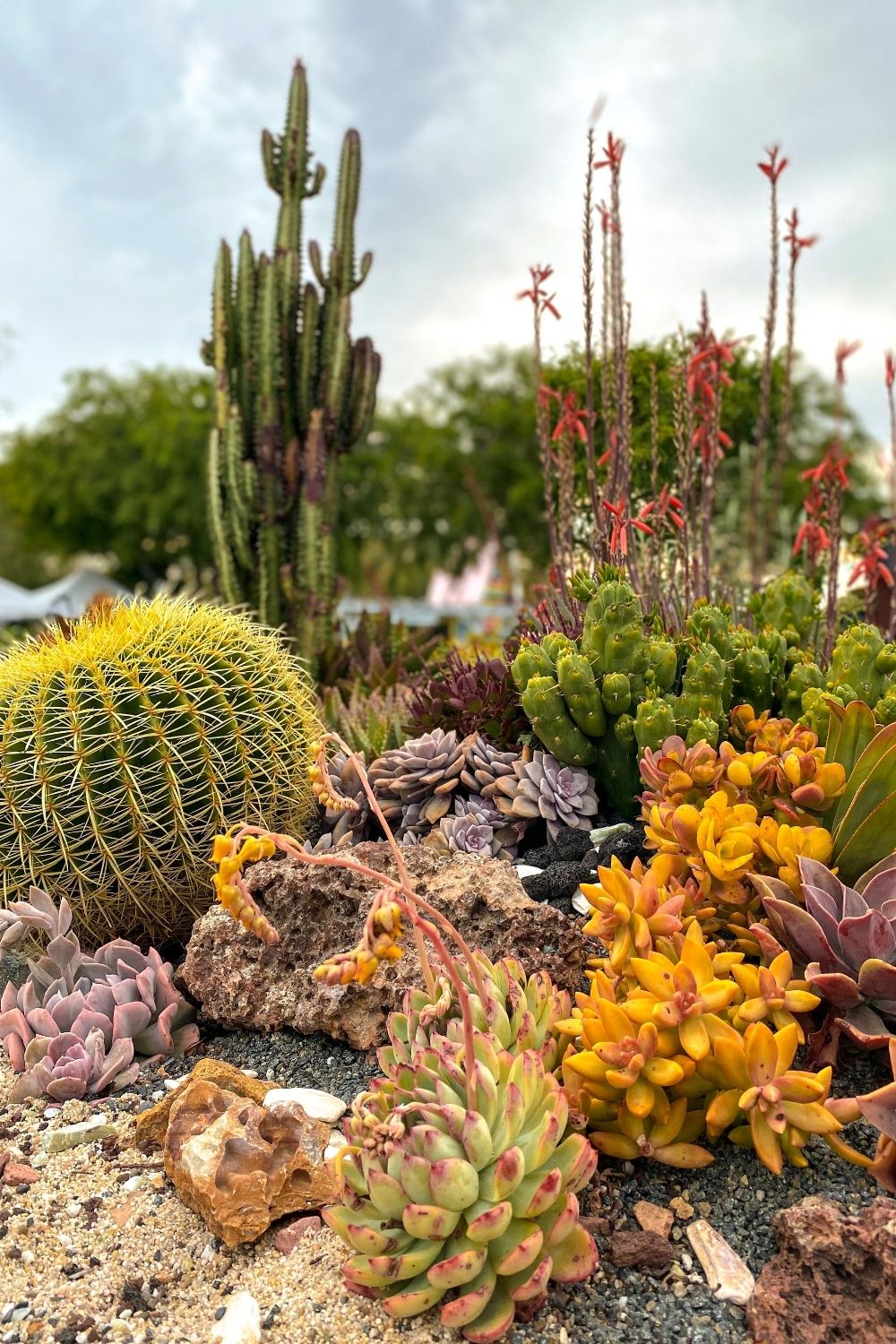
This bed shows how much color can come from leaves alone: a round golden barrel cactus, orange and yellow sedum, pink-edged echeveria rosettes, a tall columnar cactus and red aloe flower spikes, all packed between chunks of volcanic rock. Hardly anything in it is a traditional flower, yet it’s one of the most colorful beds you’ll see. Mixing contrasting shapes, like round with spiky, and fine grasses with broad rosettes, keeps a dry garden interesting without any extra water.
Borrow from desert gardens
Even if you live nowhere near a desert, desert gardens are a good lesson in how to make a small number of tough plants look abundant.
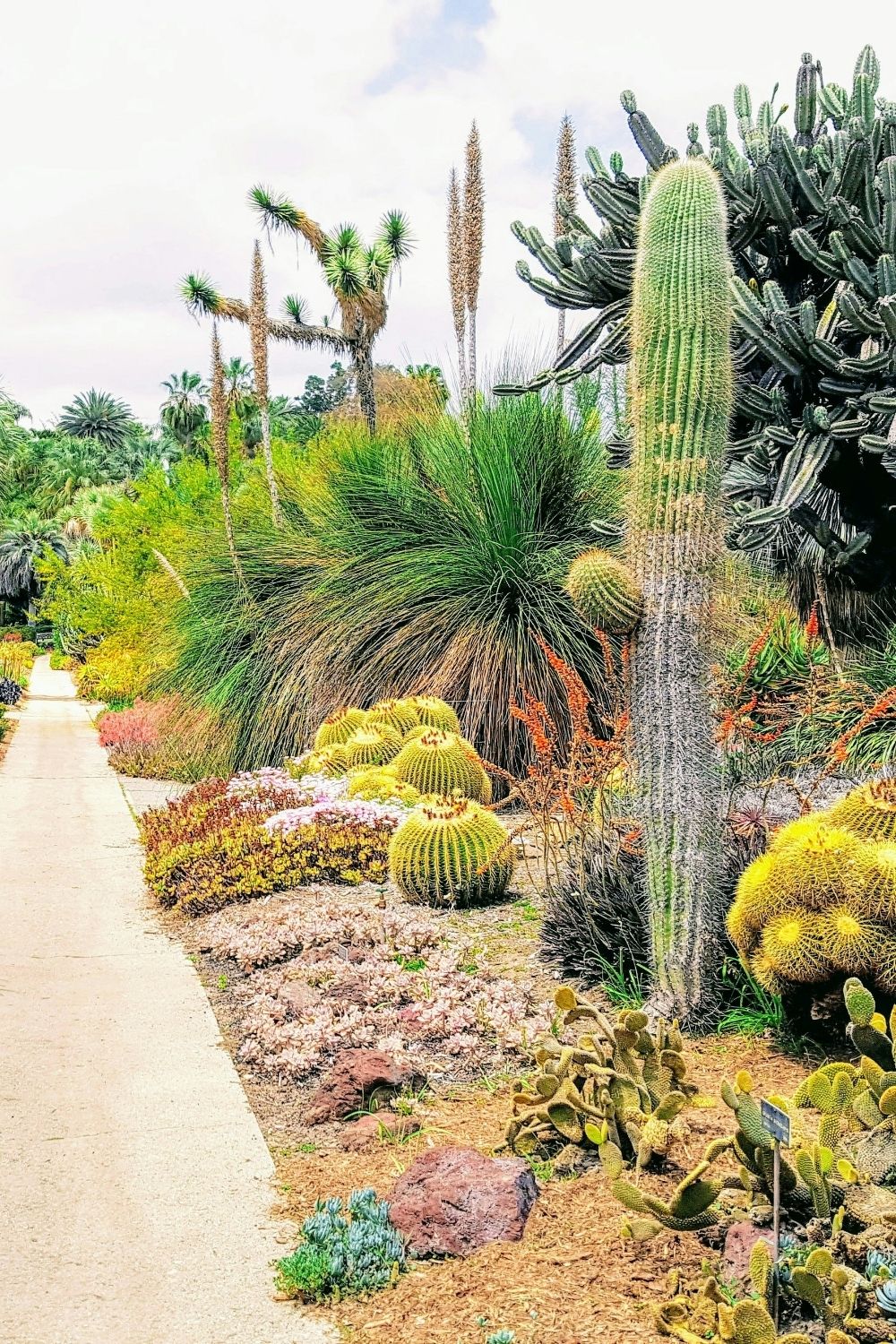
Photo by Chris Chatham on Unsplash
A pale path runs through this botanical garden between drifts of golden barrel cactus, tall columnar cacti, spiky yuccas and carpets of low pink and orange succulents. The secret is repetition. The same plants appear again and again in groups, so the eye reads them as a planted landscape rather than a collection. At home, pick five to seven favorite drought-tolerant plants and repeat them in groups of three or five along a bed, instead of buying one of everything at the nursery. Fill the spaces between groups with low, spreading plants rather than gravel alone, and the planting will look deliberate from the first season. Pale paths and warm-toned stone also help, because they make the greens and silvers around them look brighter.
The right plant for your sun and soil
A drought-tolerant plant only stays drought tolerant in the right spot. Lavender that thrives in sandy, sunny soil will rot in wet clay, and a sun-lover will struggle in shade. Match the plant to the conditions first:
| Conditions | Plants that cope | Approx. USDA zones |
|---|---|---|
| Full sun, sandy or gravelly soil | Lavender, rosemary, agastache, yucca, sedum, blue fescue | 4–10 (varies by plant) |
| Full sun, heavy clay | Coneflower, black-eyed Susan, baptisia, little bluestem, yarrow | 3–9 |
| Part shade, dry soil | Epimedium, hardy geranium, bergenia, lamb’s ear (sun to part shade) | 3–9 |
| Hot, reflected heat by walls | Aloe, agave, Russian sage, catmint, santolina | 4–11 (aloe and agave only in warm zones) |
Check your own zone before you buy, since many desert plants such as agave and aloe survive frost only in the warmest parts of the country. In colder areas, grow them in pots and bring them in for winter. For a full list of drought-tolerant designs and plant pairings, Gardenia’s guide to lush drought-tolerant garden design has plenty of combinations to browse.
Many of these plants are also excellent for bees and butterflies. Salvia, agastache, catmint and coneflower are pollinator magnets, and native choices do double duty; my post on easy pollinator gardens with native plants has more.
Soften walls and corners
Hot corners and bare walls are where a drought-tolerant garden really earns its place, because those spots are usually too hot and dry for anything else.
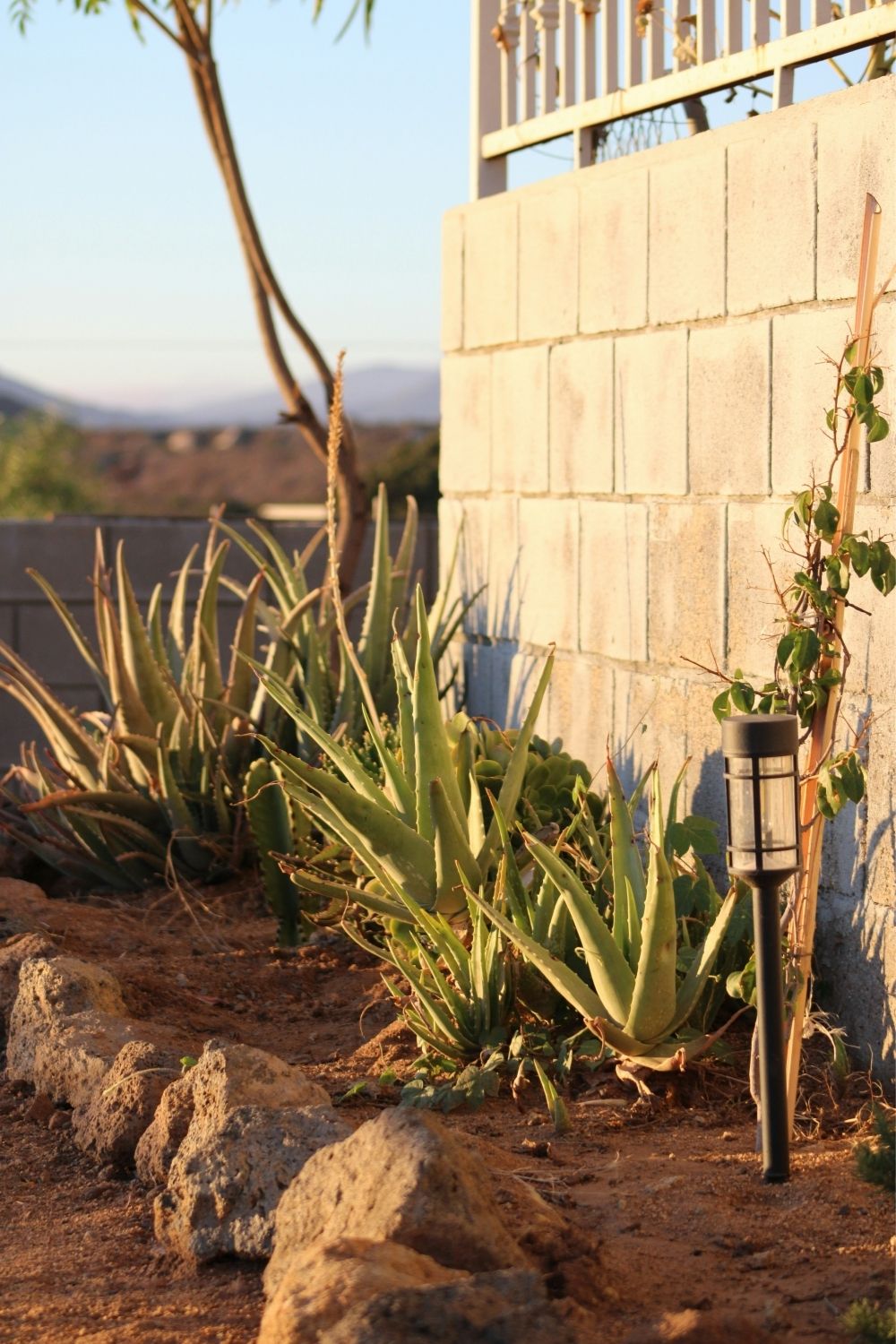
Photo by Vivian Luciano on Unsplash
In the photo, a row of aloe plants grows along the base of a sunlit cinder block wall, edged with rough stones and lit by a small solar lamp. The aloes soften the hard line of the wall and cope with the reflected heat that would scorch most plants. A few larger rocks along the front give the planting a finished edge.
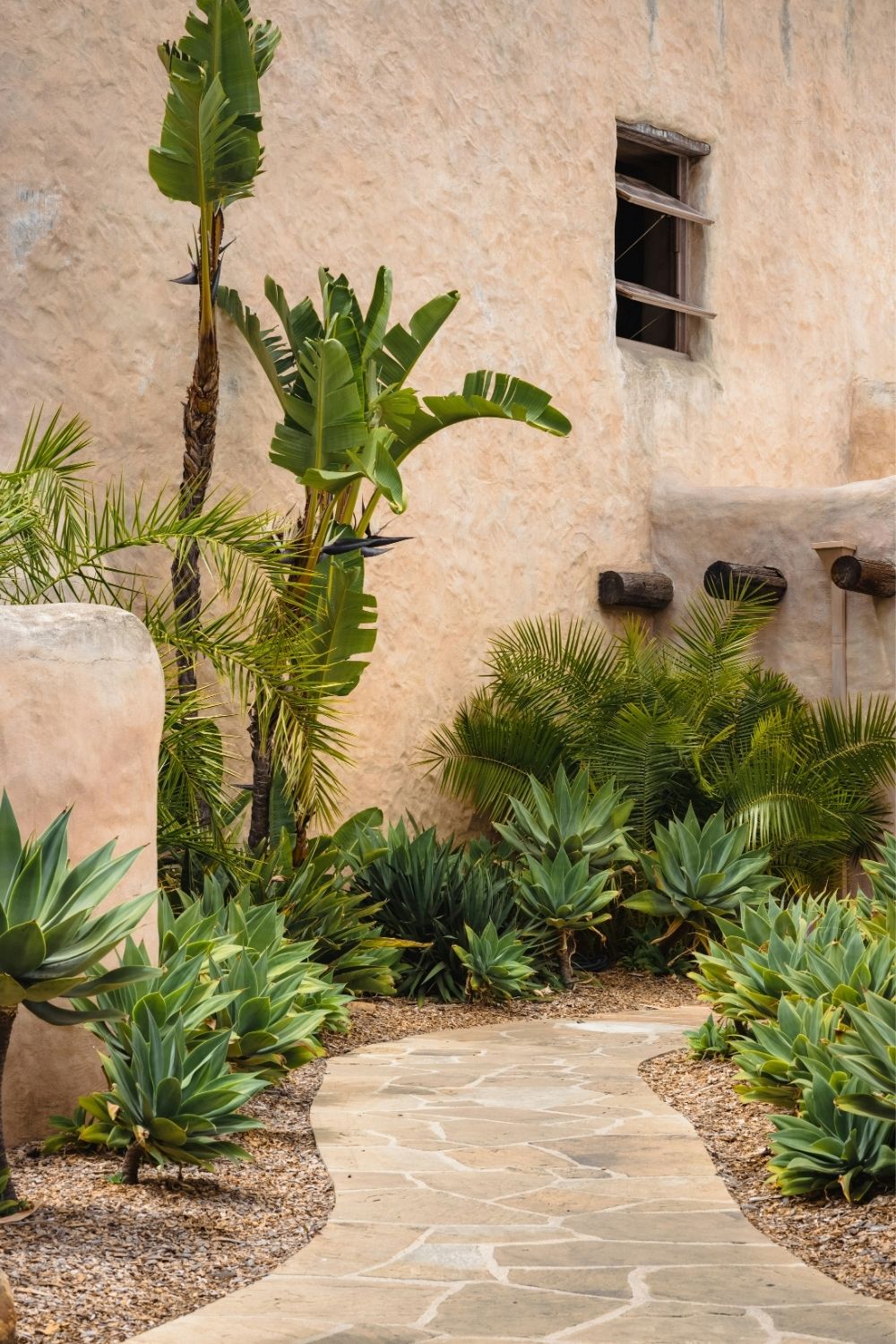
Photo by Jason Leung on Unsplash
This courtyard takes the same idea further: a flagstone path curves between warm, textured adobe-style walls, with soft agaves, palms and a tall banana-like plant filling every corner. Even with gravel on the ground, the courtyard feels green and enclosed because the planting is dense and reaches up the walls. One practical note: many agaves have sharp tips and spines along their leaves, so plant them a step back from paths and seating. Soft-leaved types such as Agave attenuata are much friendlier near walkways. For more ideas on warm, Mediterranean-style planting, see my post on Mediterranean landscaping for small yards.
Drought-tolerant containers
Pots dry out faster than beds, so they’re the place where plant choice matters most. A patio of drought-tolerant plants in large containers can go several days between waterings even in summer.
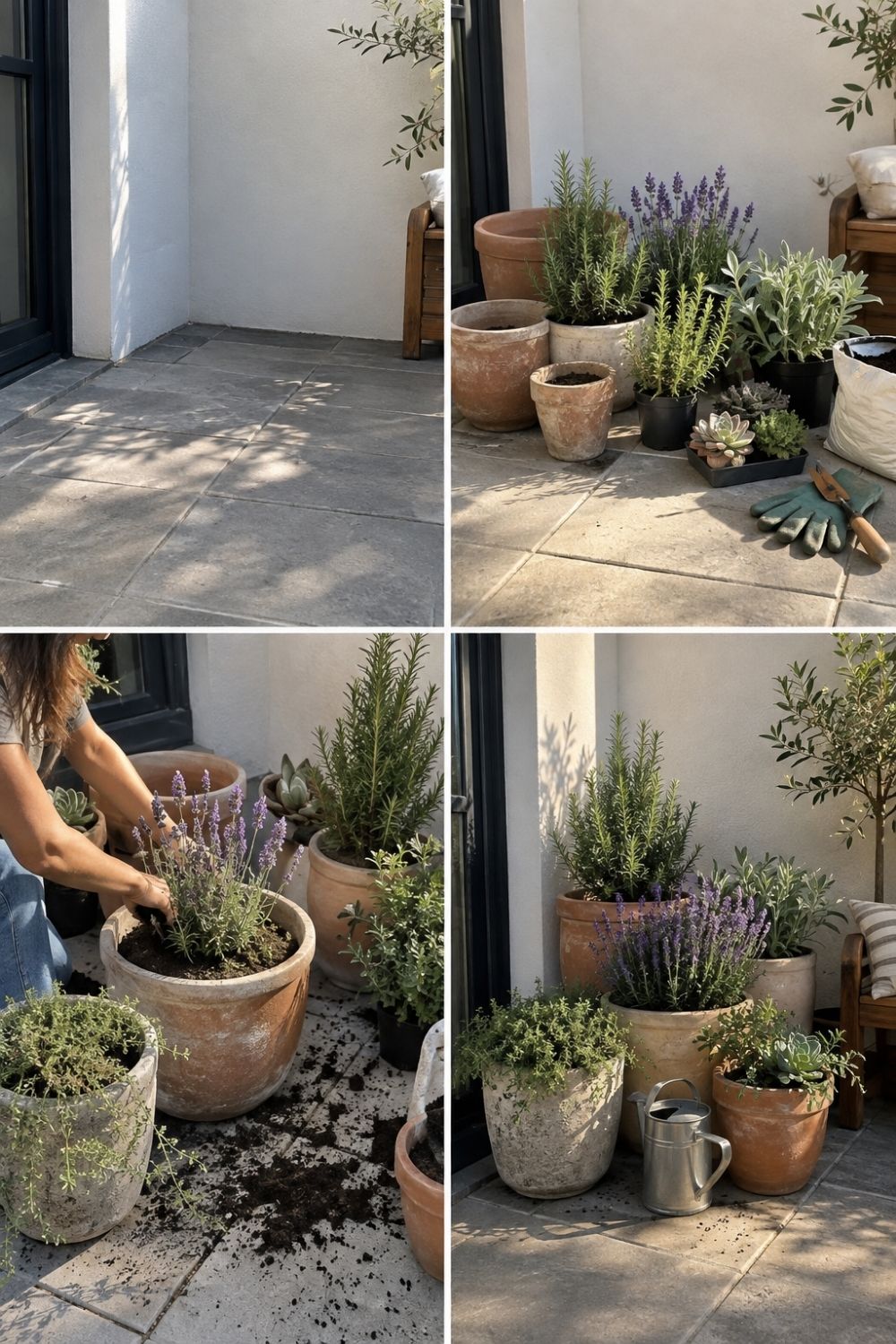
Photo by SassyGarden
The four photos above turn an empty patio corner against a white wall into a cluster of terracotta and stone pots: first the bare corner, then the plants and pots gathered with soil and gloves, then lavender being planted into a large pot, and finally the finished group of lavender, rosemary, thyme, a small olive tree and succulents. A few rules keep container plants happy with less water. Go for the biggest pots the space allows, because more soil holds more moisture. Mix in some grit or perlite for Mediterranean herbs, which hate soggy roots. Group the pots together so they shade each other, and top the soil with a layer of gravel to slow evaporation. For more on combining plants in pots, see my guide to container gardens.
Water deeply for the first year, then back off
A drought-tolerant plant isn’t drought tolerant on day one. Its roots need time to grow down into the soil before it can cope on its own, and that takes most of the first growing season.
For the first few weeks after planting, water every two or three days, depending on the heat. Then stretch it to once or twice a week through the first summer, always watering deeply so the soil is moist several inches down. From the second year, most water-wise plants need water only during long dry spells. Deep, occasional watering trains roots to grow down, while a quick sprinkle every day keeps them near the surface, where they dry out first.
Two things make this easier. A drip line or soaker hose puts water at the roots, not on the leaves or the path, and wastes far less than a sprinkler; I wrote about setting one up in my post on raised garden beds. And a 2–3 inch layer of mulch, whether bark, compost or gravel, keeps the soil cool and cuts evaporation. Keep mulch a couple of inches back from plant stems to avoid rot.
Common mistakes that make a dry garden look thin
- Spacing plants too far apart, which leaves gaps that dry out and fill with weeds.
- Too much bare gravel. A little is attractive; a whole yard of it with a few plants reads as empty and heats up.
- Overwatering established plants. Many drought-tolerant plants flop, rot or lose their compact shape when they get too much water.
- Mixing thirsty and dry-loving plants in the same bed, so one group is always either too wet or too dry.
- Skipping the first-year watering, then deciding the plants weren’t tough after all.
One last thing: be patient with the first summer. A newly planted drought-tolerant garden always looks a little sparse at first. By the second year, when the roots have settled in and the plants have filled out, it can look fuller than the lawn it replaced, and you’ll barely remember when you last dragged the hose out.