
Most yards have a few problem spots: a patch where grass never grows, a strip beside the house that turns to mud every time it rains, a narrow side yard nobody wants to mow. River rock is one of the simplest ways to fix them. Smooth, rounded and naturally varied in color, river rock looks good in almost any style of garden, lasts for decades and never needs replacing like mulch. Used well, it turns bare, awkward areas into features that look deliberate.
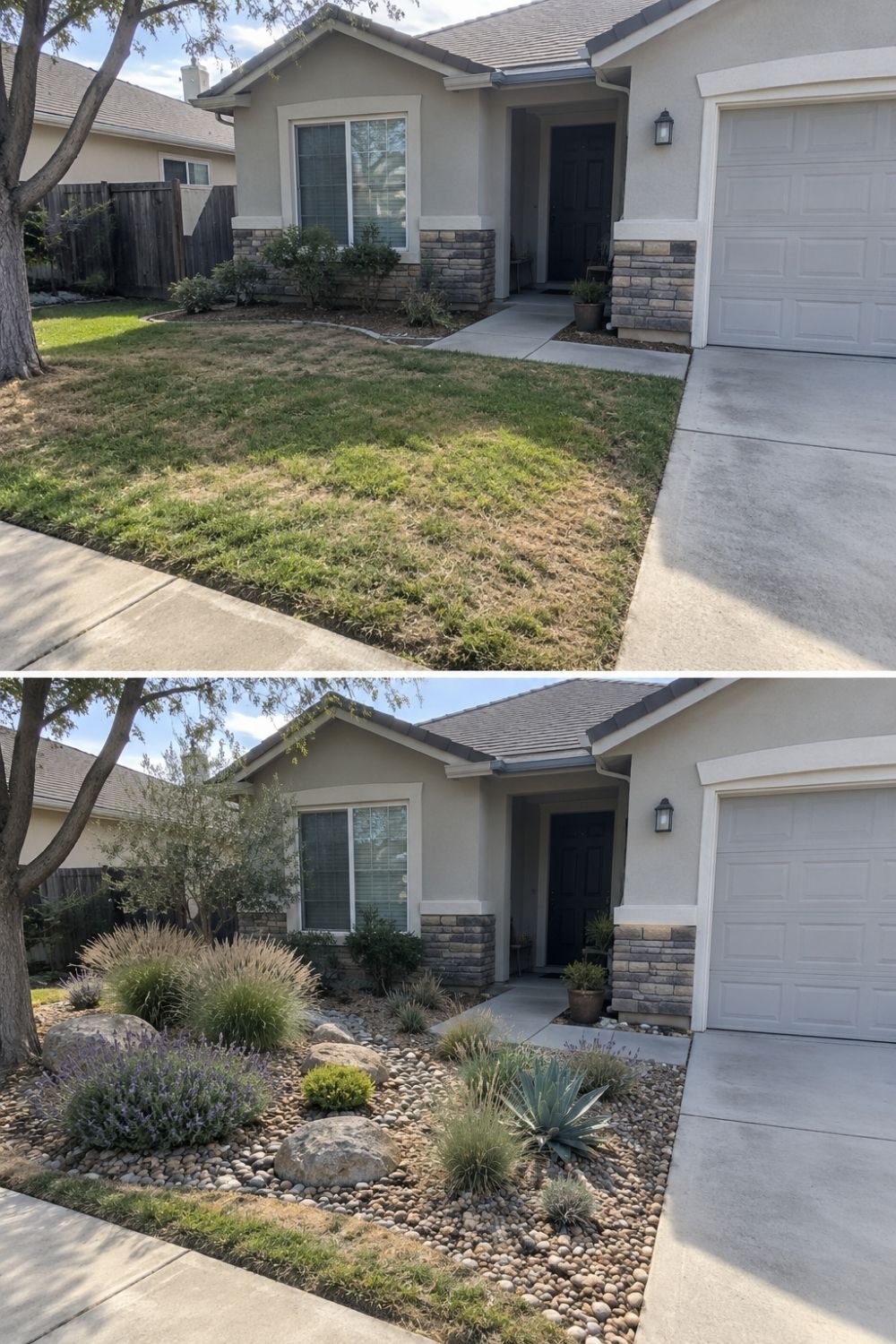
Photo by SassyGarden
The before and after above shows a front yard where a patchy, sunburnt lawn ran right up to the house. After, a bed of mixed river rock sweeps across the same space, planted with ornamental grasses, lavender, an agave and a small tree, with a few larger boulders for structure. It uses a fraction of the water the lawn did, and it looks good all year.
Turn a washout into a dry creek bed
If rainwater already cuts a channel across your yard, don’t fight it. Line it with river rock and turn it into a dry creek bed that carries water in storms and looks like a natural stream the rest of the time.

Photo by SassyGarden
The four stages above follow the transformation: a muddy, eroded channel running through a lawn beside a house; the channel dug out into a smooth, curving trench; black landscape fabric laid down and covered with river stones of mixed sizes, with a few boulders along the edges; and finally the finished creek bed, softened with planting along its banks.
Use a mix of sizes: smaller stones along the bottom where water flows, fist-sized rocks up the sides and a few large boulders at the bends to look natural and slow the water. Make the creek curve rather than run straight, and make sure the lower end drains somewhere safe. For more on managing runoff, see my post on backyard drainage problems.
Stop splash under the gutter
The ground right under a roof edge or beside a downspout takes a beating in every storm. Soil splashes onto the siding, mulch washes away and puddles form against the foundation.

Photo by SassyGarden
The three stages above show the fix: first a muddy strip with standing water beside a downspout, then the area dug out and lined with landscape fabric, and finally a clean, 12- to 18-inch-wide band of river rock running along the base of the house. This “drip edge” breaks the force of falling water, stops soil splashing onto the walls and lets rain soak in gradually.
Slope the ground under the rock away from the house, keep the top of the stones at least 6 inches below any siding, and pair the strip with a downspout extension that carries water farther out into the yard.
Edge a lawn border
A narrow band of river rock between a lawn and a flower bed makes a crisp edge that stops grass creeping into the border and gives the mower a clean line to follow.

Photo by SassyGarden
The three stages above show a curving edge along a border of hydrangeas and pink flowers: first the lawn meeting the bed with no clear edge, then a narrow trench dug along the curve with a spade and kneeling pad, and finally the trench filled with smooth, pale river stones. Dig the trench 4–6 inches deep and about 6 inches wide, lay fabric in the bottom, and set the stones slightly below the lawn so the mower wheels can run along it. It’s a quick afternoon project that makes a border look finished.
Replace mulch in a foundation bed
Foundation beds along the front of the house are often mulched, which means a fresh load every year. River rock is a longer-lasting alternative in the right spot.
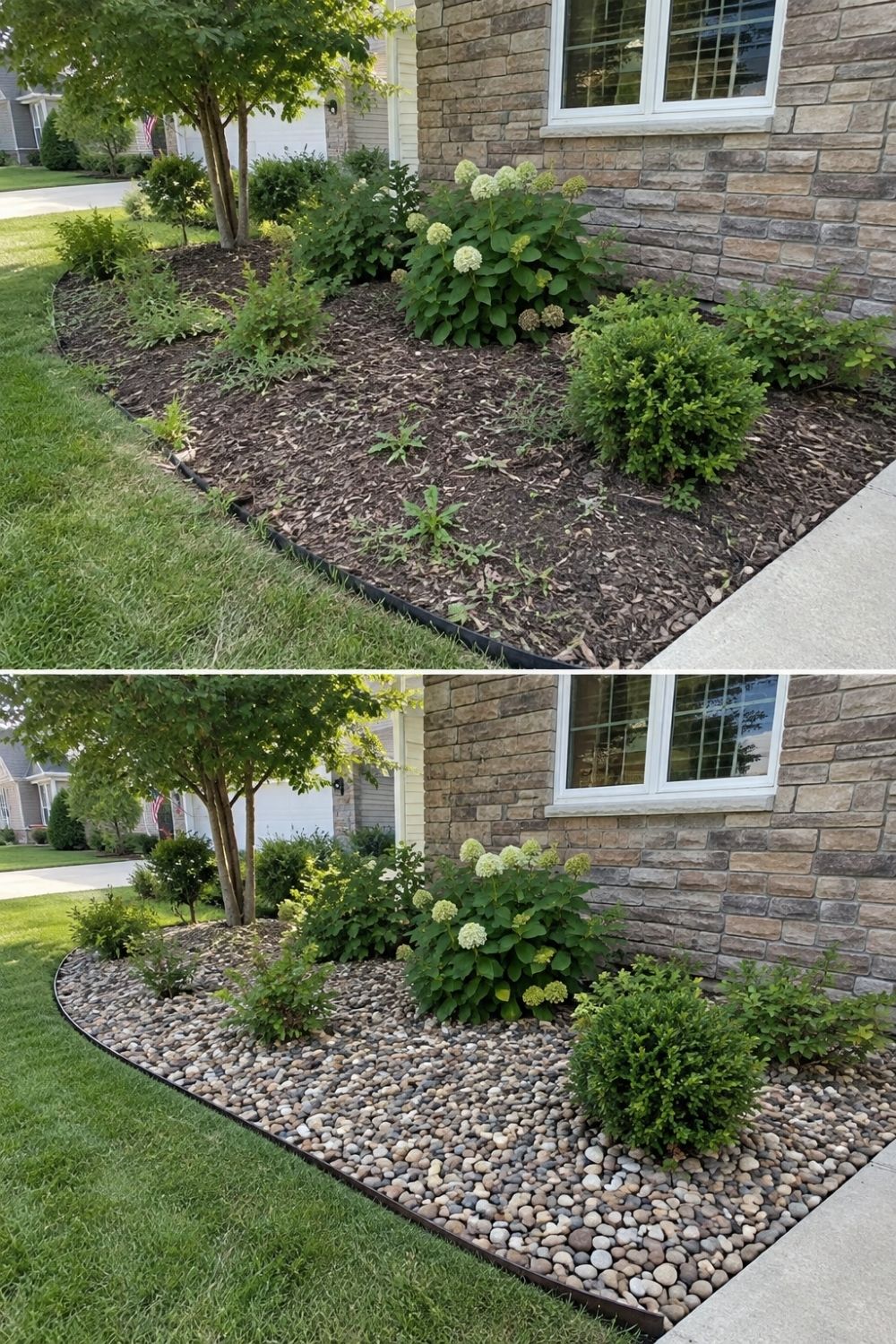
Photo by SassyGarden
The before and after above shows a curved bed along a stone house front with hydrangeas, boxwoods and small shrubs. First it’s covered in dark mulch; after, the same bed is topped with a layer of mixed river rock, finished with a black edge along the lawn. The stone gives the bed a cleaner, lighter look and won’t wash onto the walkway.
This works best with established shrubs and drought-tolerant plants. Rock doesn’t break down to feed the soil the way mulch does, so add compost around the plants before laying the stone, and keep a small ring of mulch or bare soil around each plant’s base. In very hot climates, lighter-colored stones stay cooler than dark ones, which helps shrubs planted close to a sunny wall.
Pave a side path
Side yards are often too shady for grass and too narrow to mow. A river rock path solves both problems.

Photo by SassyGarden
The four stages above follow a side path from start to finish: first the route marked on bare soil with two lines of spray paint, then the path dug out, then edging and small gravel laid along it, and finally a finished path of small, rounded river rock curving past planting to a wooden gate. For walking on, choose smaller stones, around 3/8 to 3/4 inch, since big rounded stones roll underfoot.
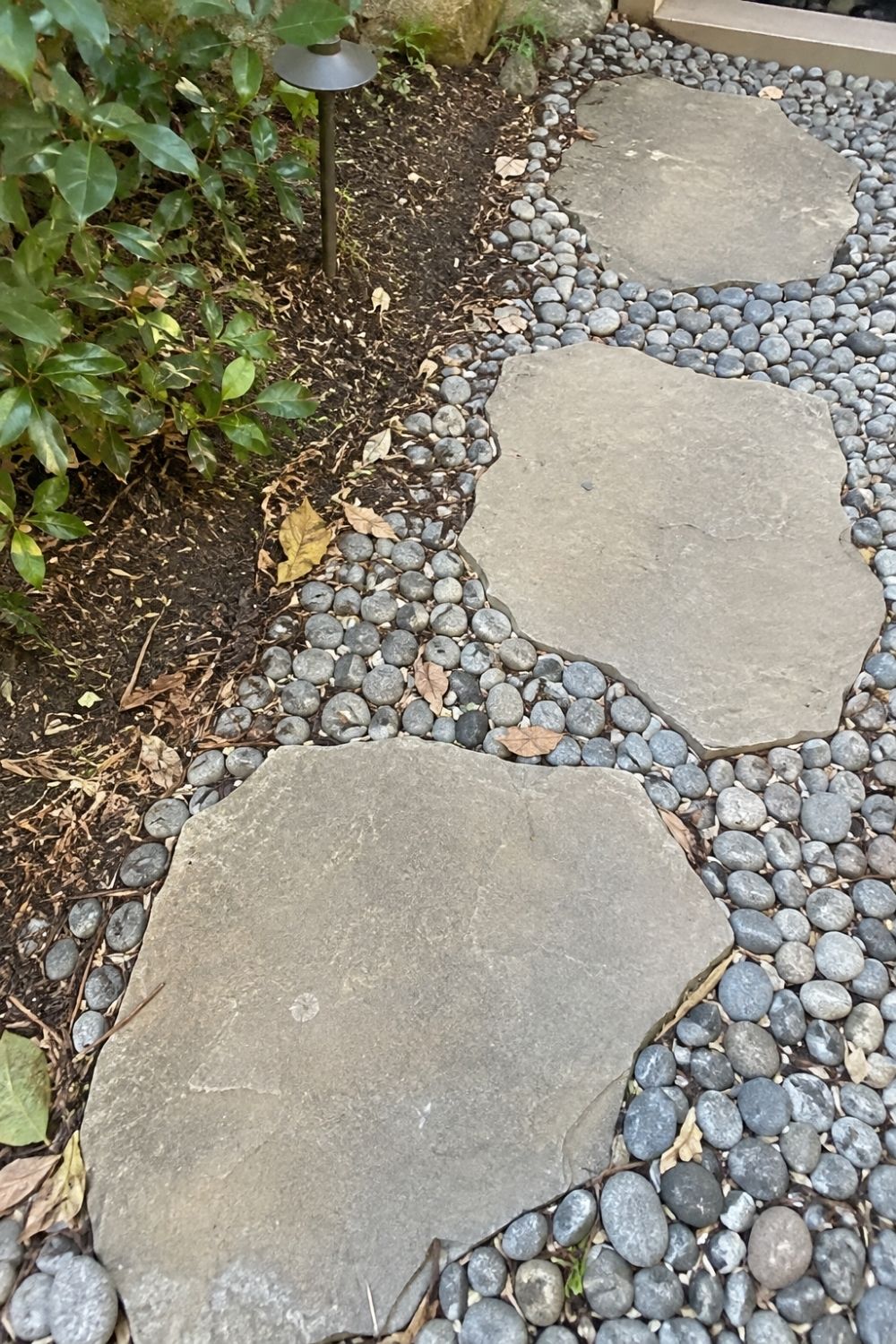
Photo by SassyGarden
For a firmer surface, set large flat stepping stones into the river rock, as in the photo above, where irregular gray flagstones sit in a bed of smooth, dark pebbles beside a planted border. This combination is comfortable to walk on and still lets rain soak through. My post on what makes a garden path look really good has more ideas for widths, edging and planting.
Mix sizes along a walkway
The strip between a walkway and the house or lawn is another spot where river rock shines, especially if you layer different sizes.
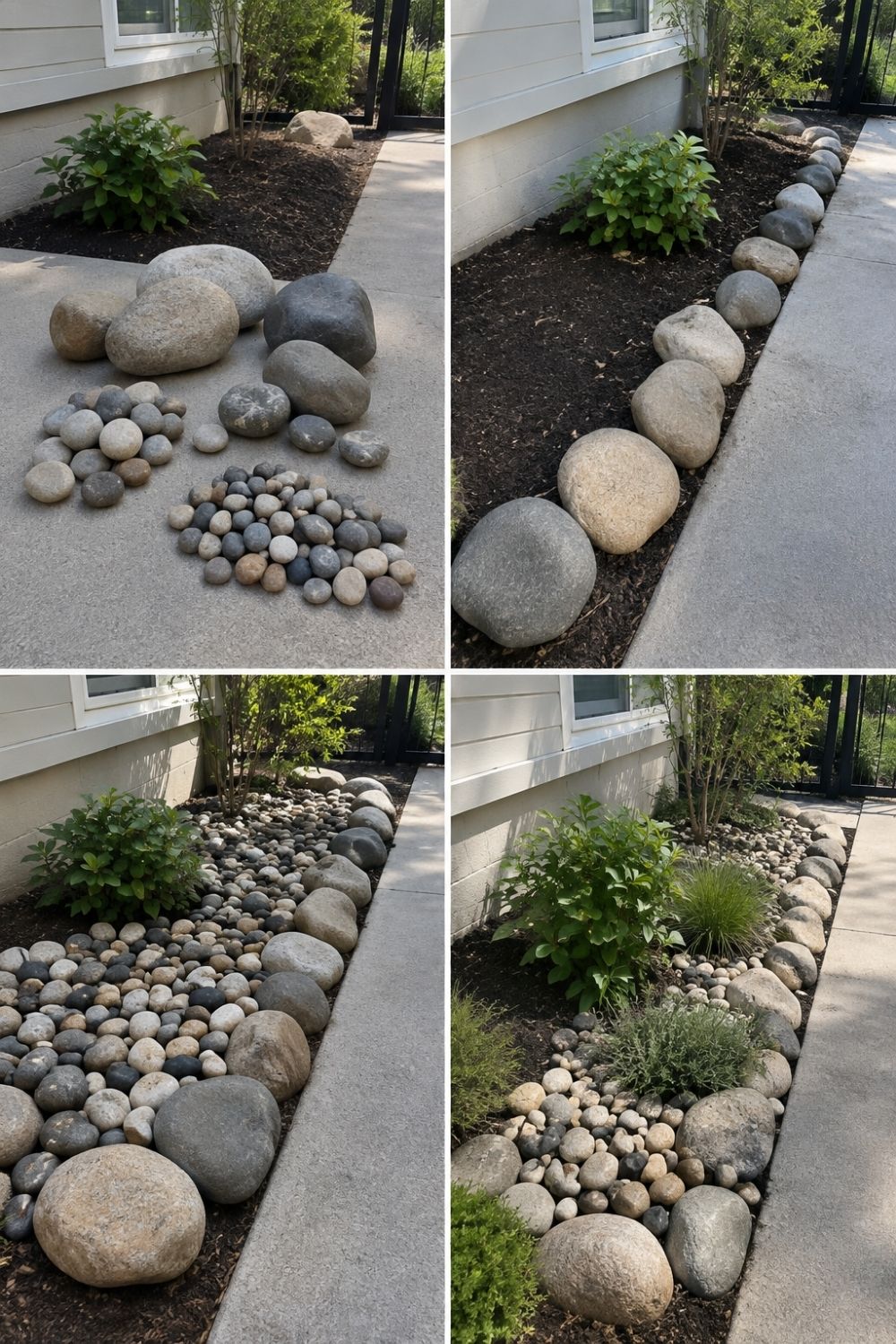
Photo by SassyGarden
The four stages above change a plain strip of soil beside a concrete walkway: first large boulders, medium river rock and small pebbles laid out on the path, then a row of big rounded stones placed along the walkway edge, then smaller stones filled in behind, and finally a finished bed of mixed river rock with a few grasses and shrubs. The large stones define the edge, the medium ones fill the bulk of the area and the small pebbles fill the gaps, which looks far more natural than a single size.
River rock or mulch?
Both have a place. This is how they compare:
| River rock | Wood mulch | |
|---|---|---|
| Lifespan | Decades | Replace every 1–2 years |
| Upfront cost | Higher | Lower |
| Soil health | Doesn’t feed the soil | Breaks down and improves soil |
| Heat | Absorbs and reflects heat | Keeps soil cool |
| Erosion and splash | Excellent | Can wash away |
| Best for | Drainage areas, dry gardens, paths | Vegetable beds, shrub borders, woodland plants |
River rock can heat up in full sun and reflect warmth onto nearby plants and walls, so it suits drought-tolerant plants better than thirsty ones. Leaves and debris also settle between stones, so plan on raking or blowing them out in fall. For a fuller comparison, Davey Tree’s pros and cons of rocks vs. mulch is a helpful read.
Choosing sizes and colors
- Small (3/8 to 3/4 inch): paths, filling gaps and small beds.
- Medium (1 to 3 inches): borders, drip edges and dry creek bottoms.
- Large (3 to 5 inches): edges, creek banks and covering larger areas.
- Boulders: focal points and anchors for creek beds and slopes.
Mixed-color river rock, with its blend of gray, tan, rust and white, looks the most natural and hides dirt well. Gray or black stones suit clean-lined houses, and warm tan stones pair well with brick and Mediterranean-style gardens. Wet a sample before you buy; river rock looks darker and more colorful when wet.
How to install river rock
- Mark the area with spray paint or a garden hose.
- Remove grass and weeds, digging out 2–4 inches of soil depending on the stone size.
- Level and slope the base away from the house.
- Lay landscape fabric, overlapping the seams by several inches and pinning them down.
- Install edging of metal, stone or brick to keep the rocks in place.
- Spread the stones 2–3 inches deep for small rock and 3–4 inches for larger rock.
- Plant through the fabric by cutting an X, planting and folding the fabric back around the plant.
Order a little more than you think you need: as a rough guide, a ton of river rock covers somewhere between 50 and 80 square feet, depending on the size of the stones and how deep you lay them.
Keeping it looking clean
River rock is low maintenance, not no maintenance. A little care keeps it looking crisp for years:
- Pull weeds while they’re small. A few seeds always blow in and sprout in the dust between stones; a quick pass every couple of weeks in spring and summer keeps them under control.
- Clear leaves before they rot. Fallen leaves break down into soil between the stones, which gives weeds a place to grow. A leaf blower on a low setting or a stiff rake works well in fall.
- Rinse dusty stones. In dry weather, a spray with the hose brings back the color, especially near driveways and paths.
- Top up thin spots every few years, as stones slowly sink or get kicked onto the lawn.
- Watch for moss in shade. In damp, shady spots, stones can turn green; better drainage or more light usually fixes it.
Plants that pair with river rock
River rock suits plants that enjoy sun, sharp drainage and dry conditions. Ornamental grasses, lavender, sedum, yucca, agave (in warm zones), Russian sage, coneflowers and yarrow all look at home among stones. Along a dry creek bed, moisture-tolerant plants like irises and sedges can grow near the bottom where water collects. For more plant ideas, see my posts on drought-tolerant gardens, Mediterranean landscaping and native pollinator plants. River rock also makes a natural edge for a small pond or fountain; see my post on DIY water features.
Pick one bare spot: the muddy strip under the gutter, the washout across the lawn or the side yard nobody likes. Give it a layer of river rock, a few well-chosen plants and a clean edge, and the problem area becomes one of the easiest, best-looking parts of the garden.