One morning a fat striped caterpillar sits on the milkweed by the fence. The next morning the leaf is empty. Wasps, spiders, birds and ants find most monarch caterpillars long before they reach the chrysalis stage, and a butterfly cage is the simplest way to see a few of them through to wings.
The short answer: yes, as long as the numbers stay small, the caterpillars come from your own yard or neighborhood, the cage is kept clean, and you follow current guidance on monarchs where you live.
What a butterfly cage is for, and what it isn’t
A butterfly cage does two jobs. It keeps predators and parasites away from caterpillars during the weeks when they’re most exposed, and it lets you watch the whole change from caterpillar to butterfly up close, which is the part most people fall for.
What it isn’t is a conservation program. Researchers and monarch groups are fairly united on this. The Xerces Society and other scientists advise against large-scale captive rearing for release and against releasing purchased butterflies, including the boxes of monarchs sold for weddings and parties, because crowded rearing spreads disease and captive-raised butterflies tend to be weaker. Small-scale rearing at home is a different thing: a handful of wild caterpillars, raised for curiosity, teaching or community science.
Monarch rules are also in flux. The monarch was proposed for listing as a threatened species in the US in December 2024, and the final decision has been delayed, possibly to late 2026 or beyond. Check what applies in your state before collecting any caterpillars, since state rules and future federal rules can differ.
Pop-up mesh, wooden cabinet or walk-in butterfly cage
Most beginners start with a pop-up mesh butterfly cage. It folds flat, costs little, zips open from the side and can go straight over a potted milkweed.
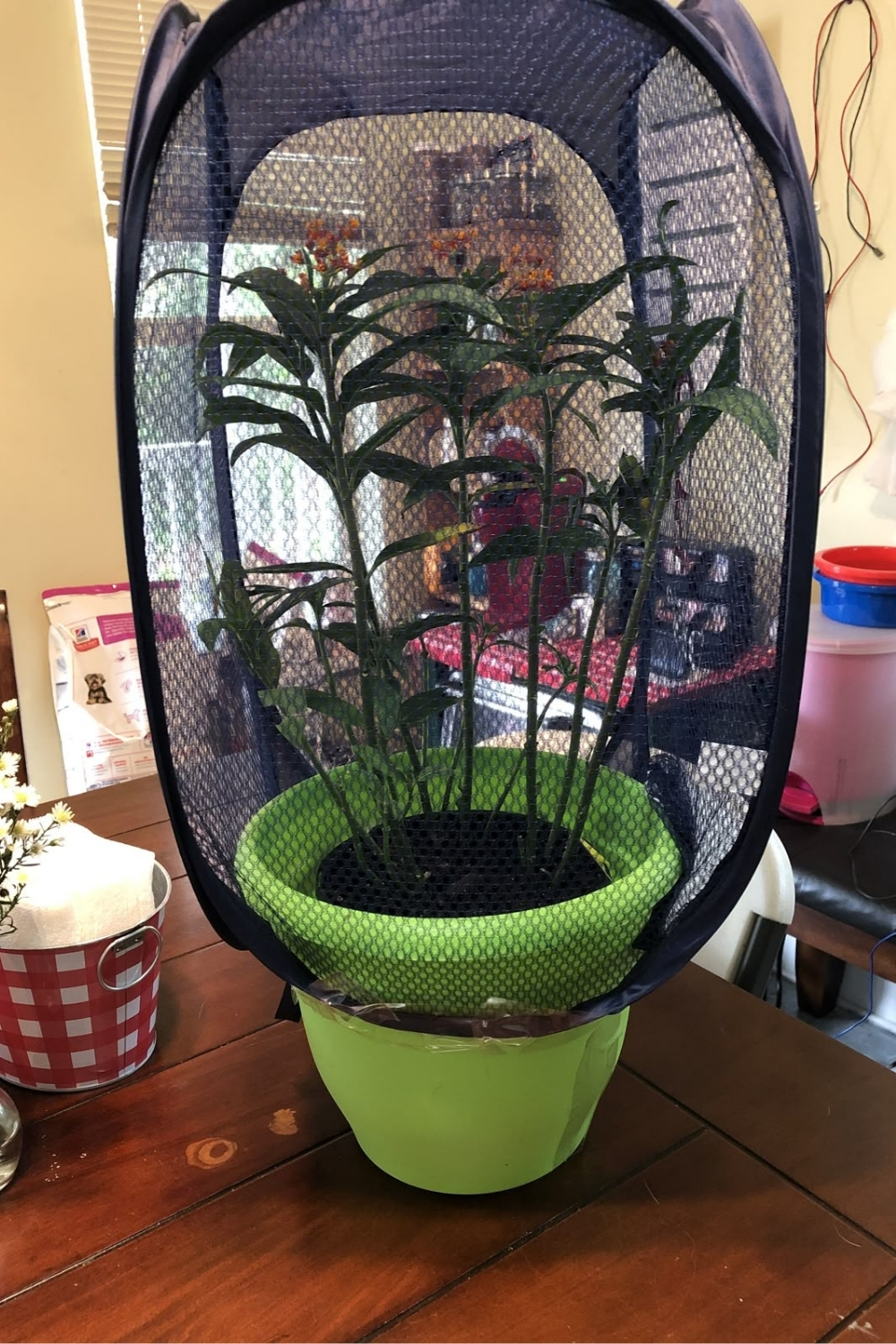
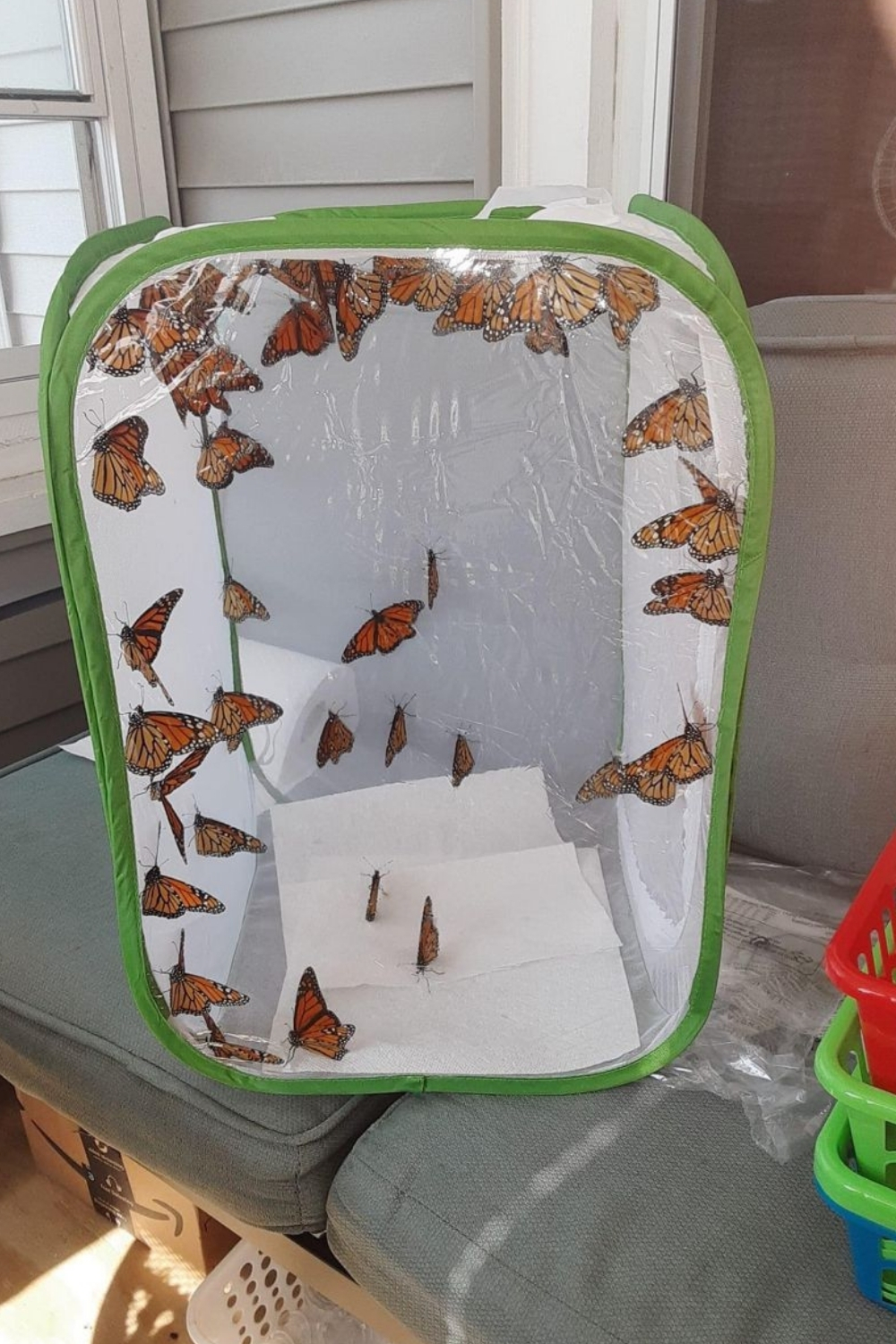
The downside shows up once there are more than a few caterpillars: mesh cages are hard to clean thoroughly and get crowded fast. Fair enough for a first try, though.
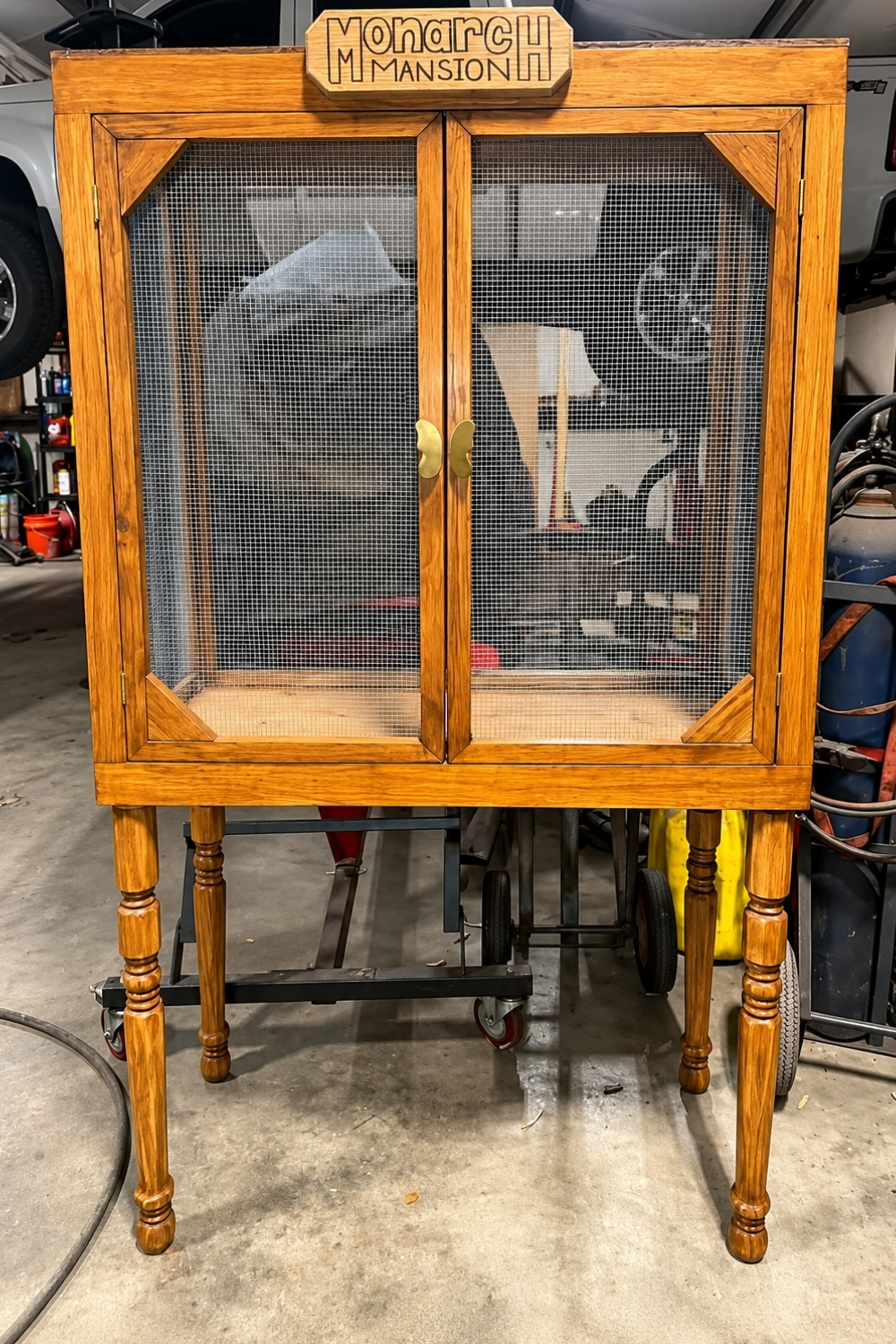
A butterfly enclosure with a rigid frame, metal or wood with fine screen panels, is easier to wipe down and holds its shape. Look for a door large enough to get a hand and a potted plant through, a solid or removable floor, and screen on at least two sides for airflow. Soft, fine mesh is kinder to wings than metal hardware cloth, which has sharper edges and larger openings.
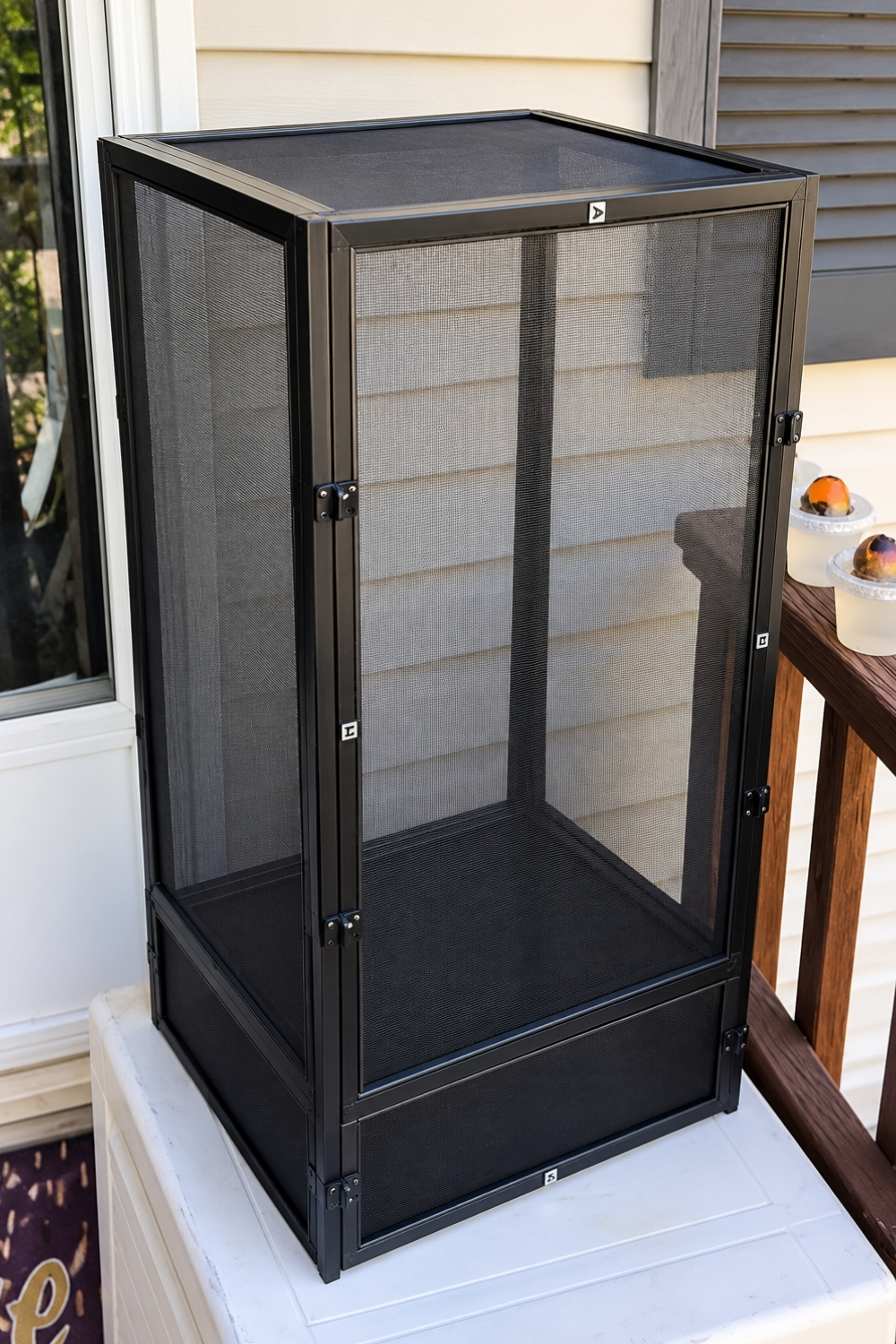
Walk-in enclosures are a butterfly habitat cage on the scale of a garden shed. They suit someone who wants to plant nectar flowers inside and sit among the butterflies. If we’re being honest, they’re a big step up in cost and effort for a hobby that runs a few weeks a year.
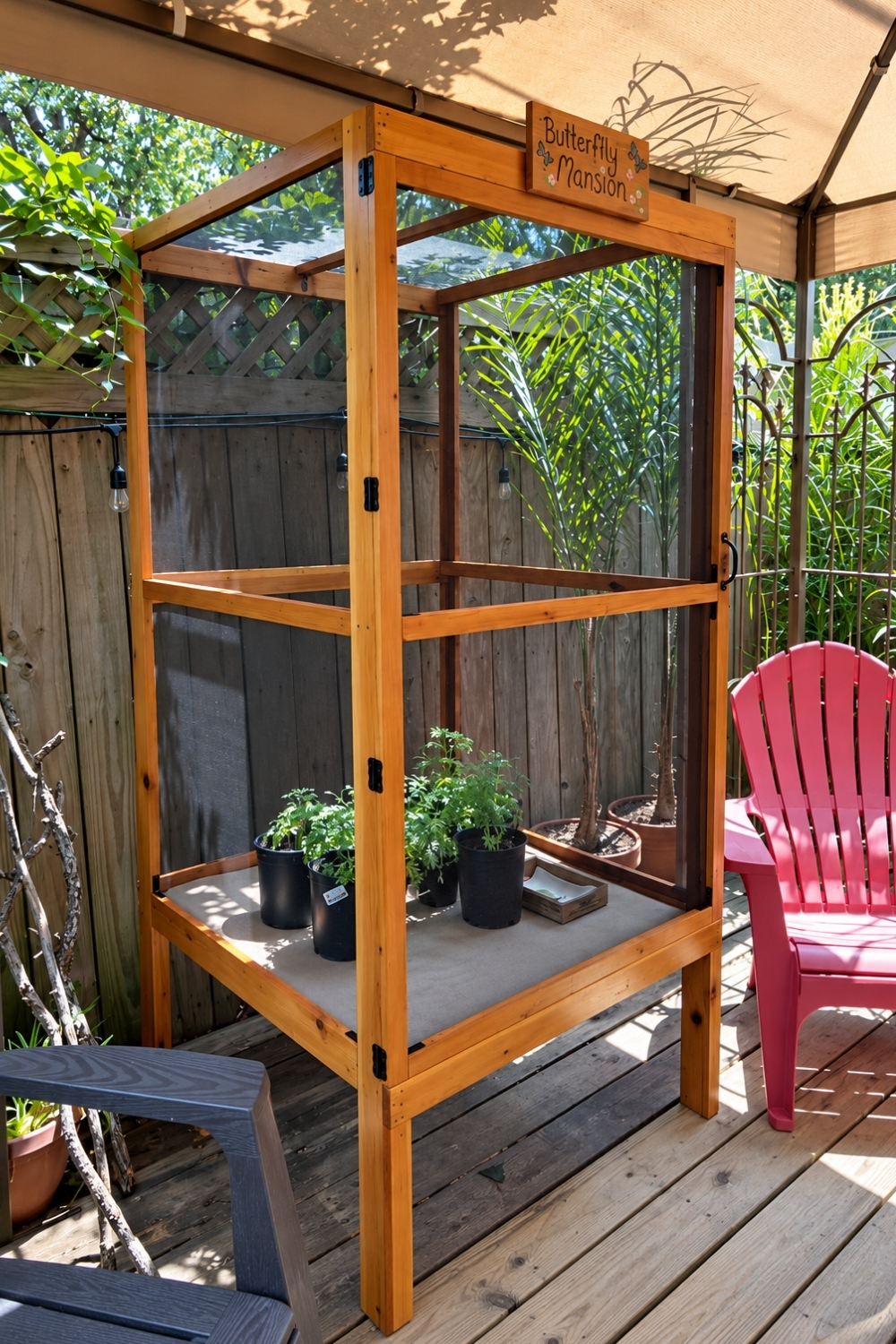
Wherever the butterfly cage goes, keep it out of direct afternoon sun. A small mesh box in full sun overheats quickly, and caterpillars can’t move anywhere cooler. A covered porch, a shaded patio or the bright side of a garage works well, as long as the cage gets fresh air and stays away from anywhere insecticides or flea treatments are used.
Size matters less than most product listings suggest. A butterfly cage of roughly 2 by 2 by 3 feet is plenty for a few caterpillars and the plant they eat, with enough height for chrysalises to hang and for a new butterfly to spread its wings without touching the floor.
Host plants inside the butterfly cage
Caterpillars eat only their host plant. For monarchs that means milkweed (Asclepias), and nothing else will do.
Monarchs get the attention, but they aren’t the only choice for a butterfly cage. Black swallowtails (Papilio polyxenes) lay eggs on parsley, dill and fennel, so a herb pot often comes with caterpillars already on it, and painted ladies feed on thistles and mallows. Raising whichever species already visits your yard keeps things local, which is the whole idea.
Native milkweeds are the best choice. Common milkweed (Asclepias syriaca), swamp milkweed (A. incarnata) and butterfly weed (A. tuberosa) all grow across zones 3–9, and between them they cover dry, average and damp soil. Tropical milkweed (A. curassavica) is sold widely and is easy in pots, but in mild southern areas it keeps growing through winter, which can encourage monarchs to stay and breed instead of migrating and lets a protozoan parasite called OE build up on the leaves. Many monarch groups suggest cutting it back to the ground each fall where it grows year-round.
There are two ways to feed caterpillars in a cage. A potted host plant inside the cage looks natural and stays fresh, though a few large caterpillars can strip a small pot in two or three days. Fresh cuttings stood in a narrow vase of water are easier to swap out daily; cover the neck of the vase with a bit of foil or cotton so caterpillars can’t fall in and drown. Milkweed is toxic to dogs, cats and other pets if eaten, and the milky sap irritates skin and eyes, so wash your hands after handling it.
Outside the cage, nectar plants finish the job, since the adults need food once they’re out. These easy pollinator garden ideas with native plants pair milkweed with the flowers that feed the butterflies after release.
From caterpillar to chrysalis
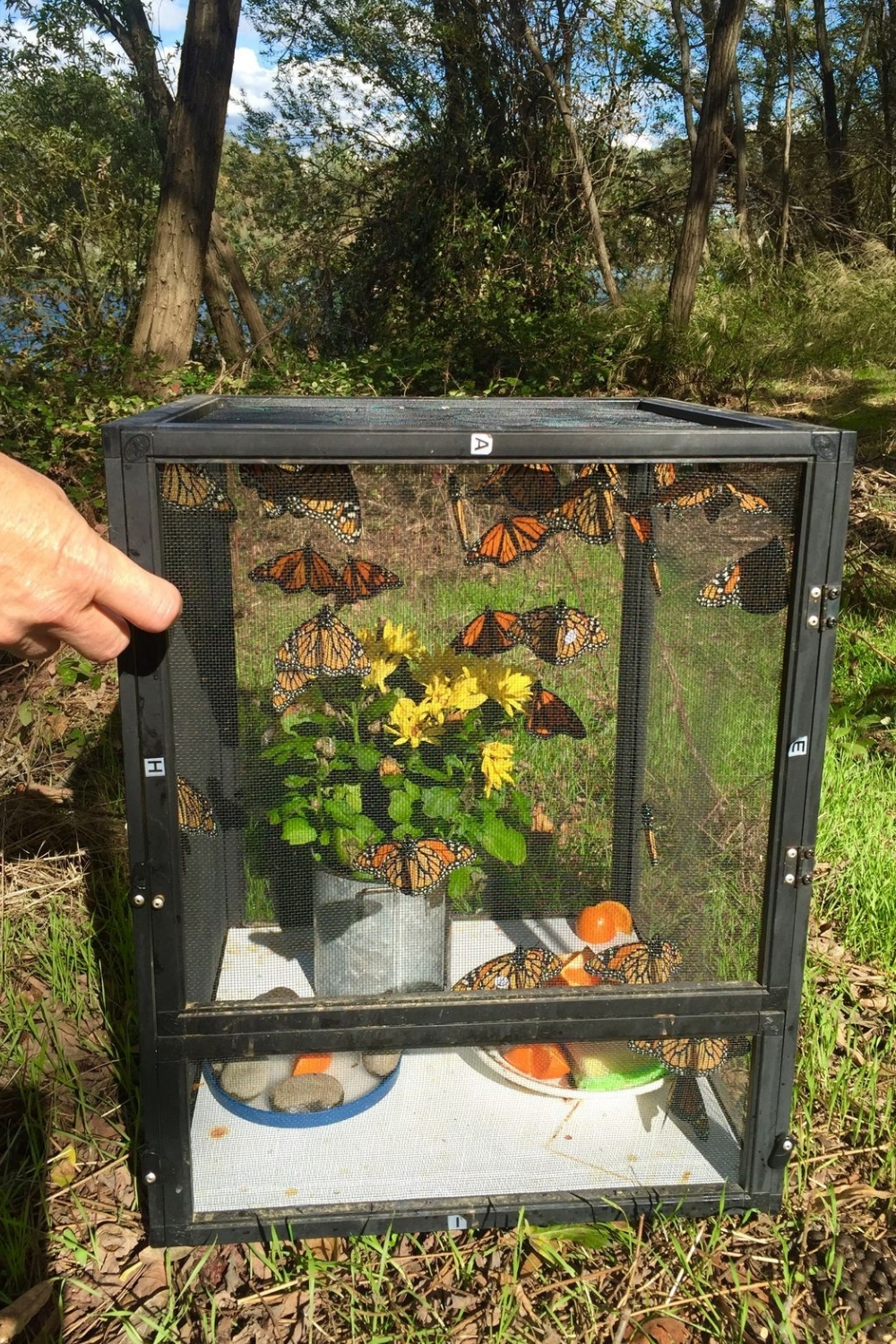
A caterpillar grows from a speck to about 2 inches in roughly two weeks, eating almost nonstop. Then it climbs, usually to the roof of the cage, hangs upside down in a J shape, and within about a day turns into a green chrysalis.
Clean the butterfly cage every day while the caterpillars are eating. Their droppings, called frass, pile up quickly and mold in a closed space, and old wilted leaves do the same. A paper towel on the floor makes this a one-minute job.
Once a chrysalis forms, leave it alone. Don’t touch it, move it or open the door to look at it every hour. The chrysalis stage usually lasts around two weeks in warm weather, and the case turns clear a day or so before the butterfly comes out, so you can see the orange and black wings folded inside. If a caterpillar chose the door of the butterfly cage for its chrysalis, open and close that door slowly from then on, since a hard knock can tear the silk pad it hangs from. You get the idea: patience is most of the work here.
When and how to let them go
A newly emerged butterfly hangs from its empty case while its wings fill out and harden. According to Save Our Monarchs’ guide to releasing monarchs, this takes about 3–4 hours, and the wings shouldn’t be touched while they’re still soft.
Release on a warm, sunny day, ideally in the morning or early afternoon. If it’s raining, freezing or very windy, keep it inside the butterfly cage until the weather passes. Open the door near a patch of nectar flowers and let it walk out onto a plant in its own time. Let it go in the same area where you found the caterpillar, not across town or at a friend’s place. Once the last butterfly is out, empty the butterfly cage, wash it, and let it dry in the sun before the next caterpillar moves in.
Keep it small and keep it clean
Disease is the biggest risk in any butterfly cage, and crowding makes it worse. The Monarch Larva Monitoring Project’s rearing guidance recommends collecting only small numbers of eggs or caterpillars, as locally as possible, raising them one per container, and sterilizing containers with a 20% bleach solution after each butterfly emerges. Remove any caterpillar or chrysalis that looks sick right away, and keep adult butterflies away from cages where caterpillars are still feeding, since adults can carry OE spores onto the leaves.
I’d also recommend looking at several reliable sources rather than relying on the first explanation we happen to find, because rearing advice online ranges from careful to careless. University extension pages and monarch research groups are the safest places to start.
Building your own cage
A homemade butterfly cage is a simple woodworking project, and it lasts far longer than a pop-up.
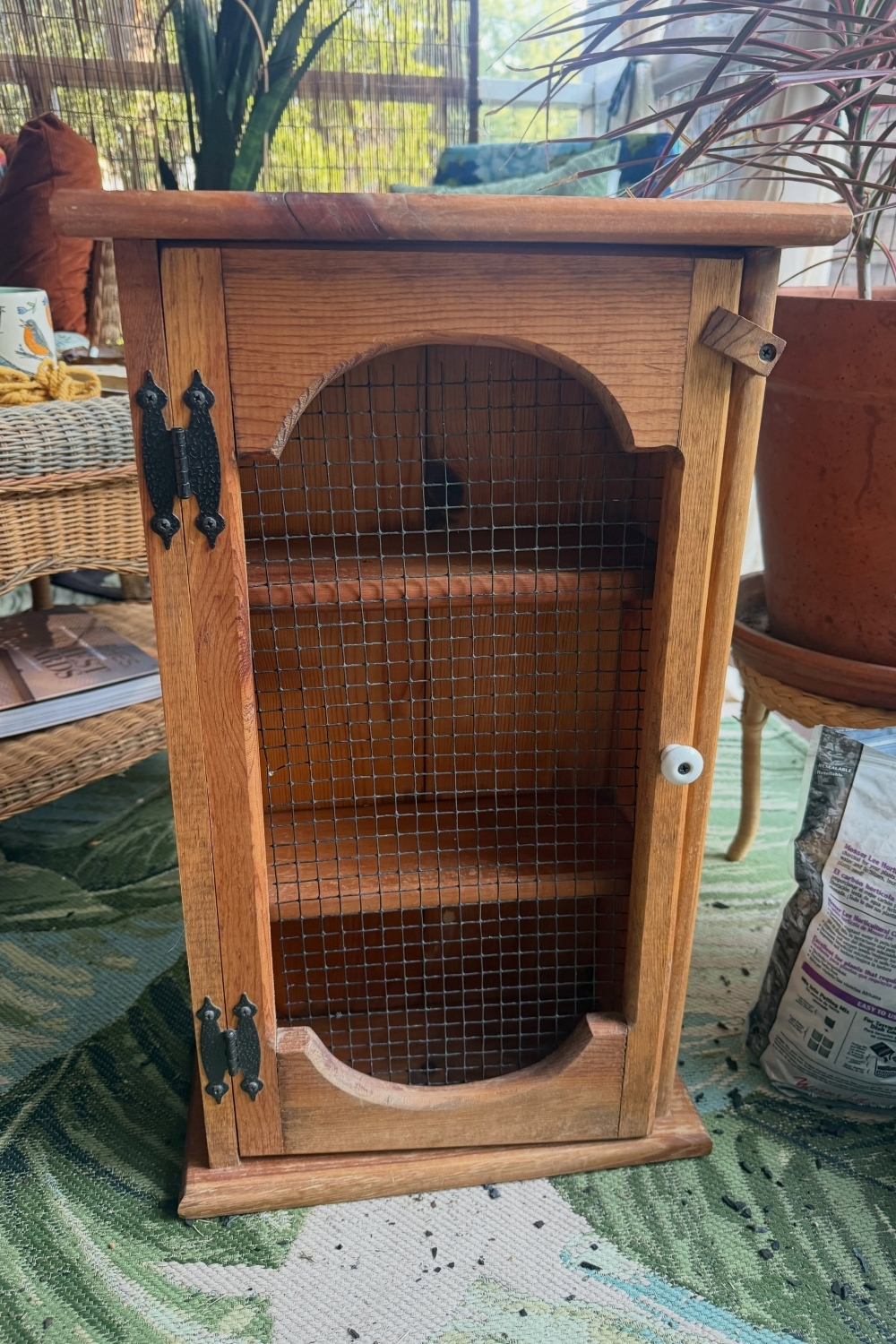
1. Build a box frame from 1×2 or 2×2 lumber. Around 2 feet wide and deep and 3 feet tall holds a potted plant and leaves room at the top for hanging chrysalises.
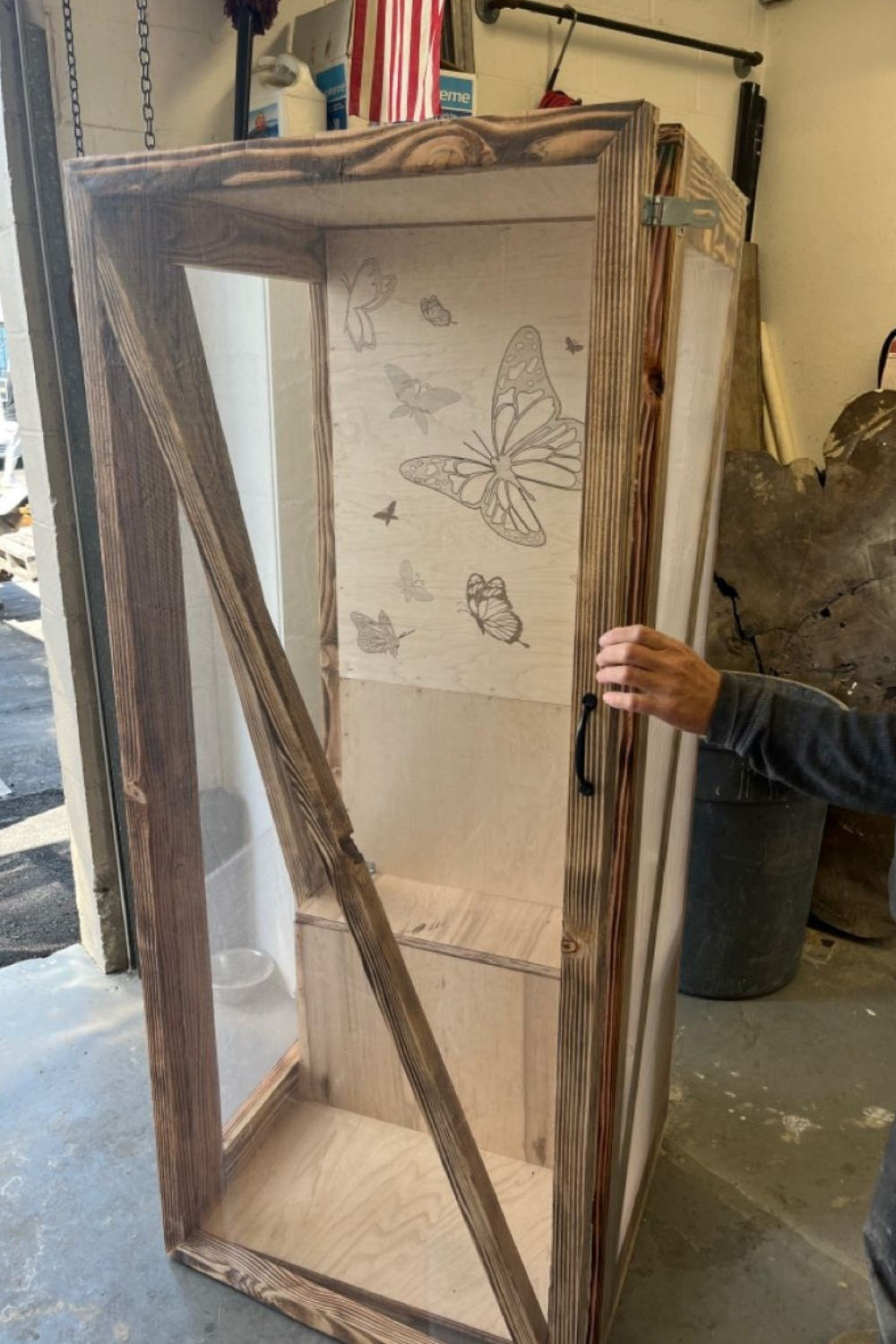
2. Staple or tack fine window screen or mesh to the sides, pulled tight, with the cut edges covered by thin wood strips.
3. Add a hinged door on the front, big enough for a pot and a hand, with a simple latch.
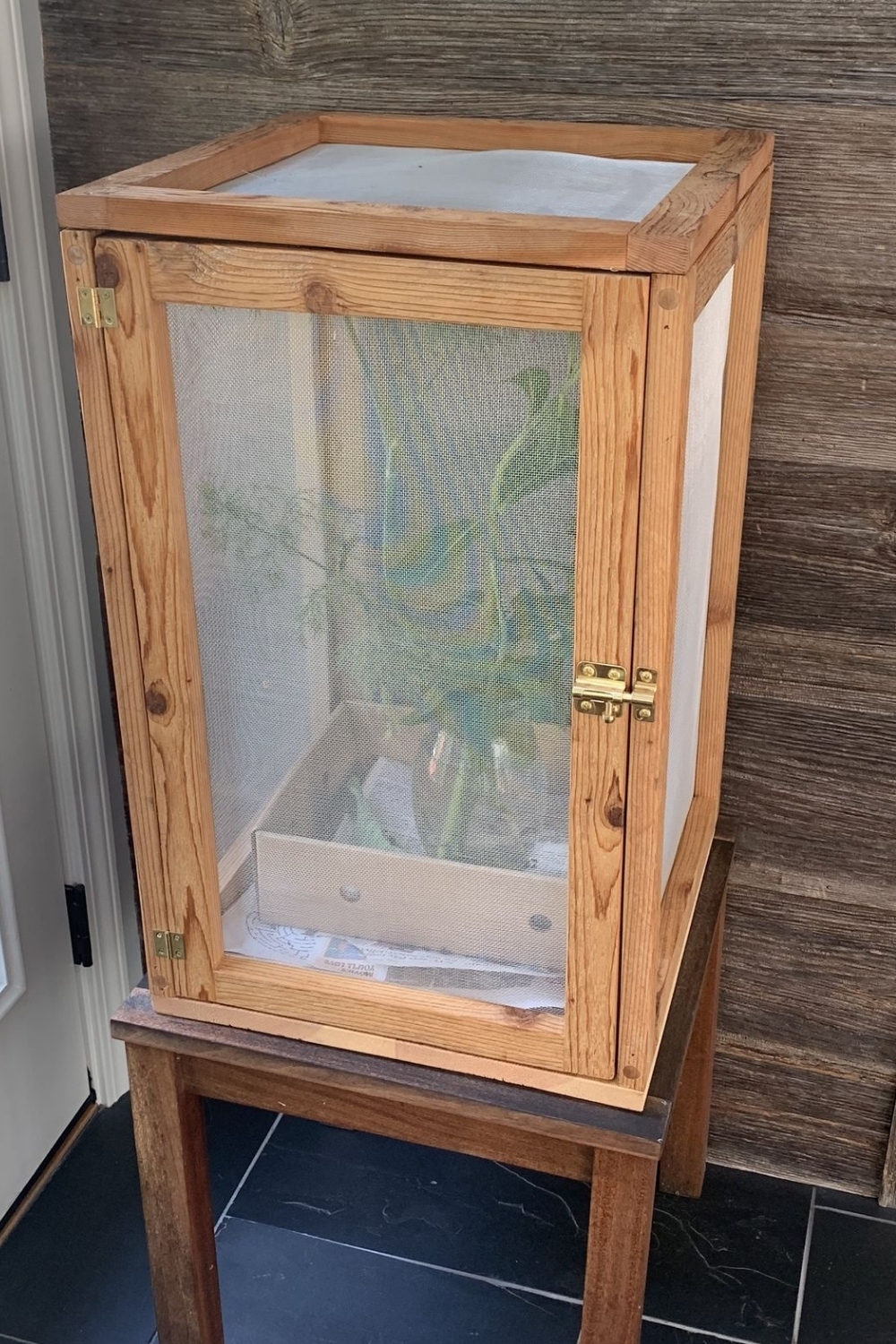
4. Give it legs or set it on a stand, so it sits off the ground and away from ants and the splash of rain.
5. Make the floor removable, or line it with a tray, so cleaning means sliding something out instead of reaching in.
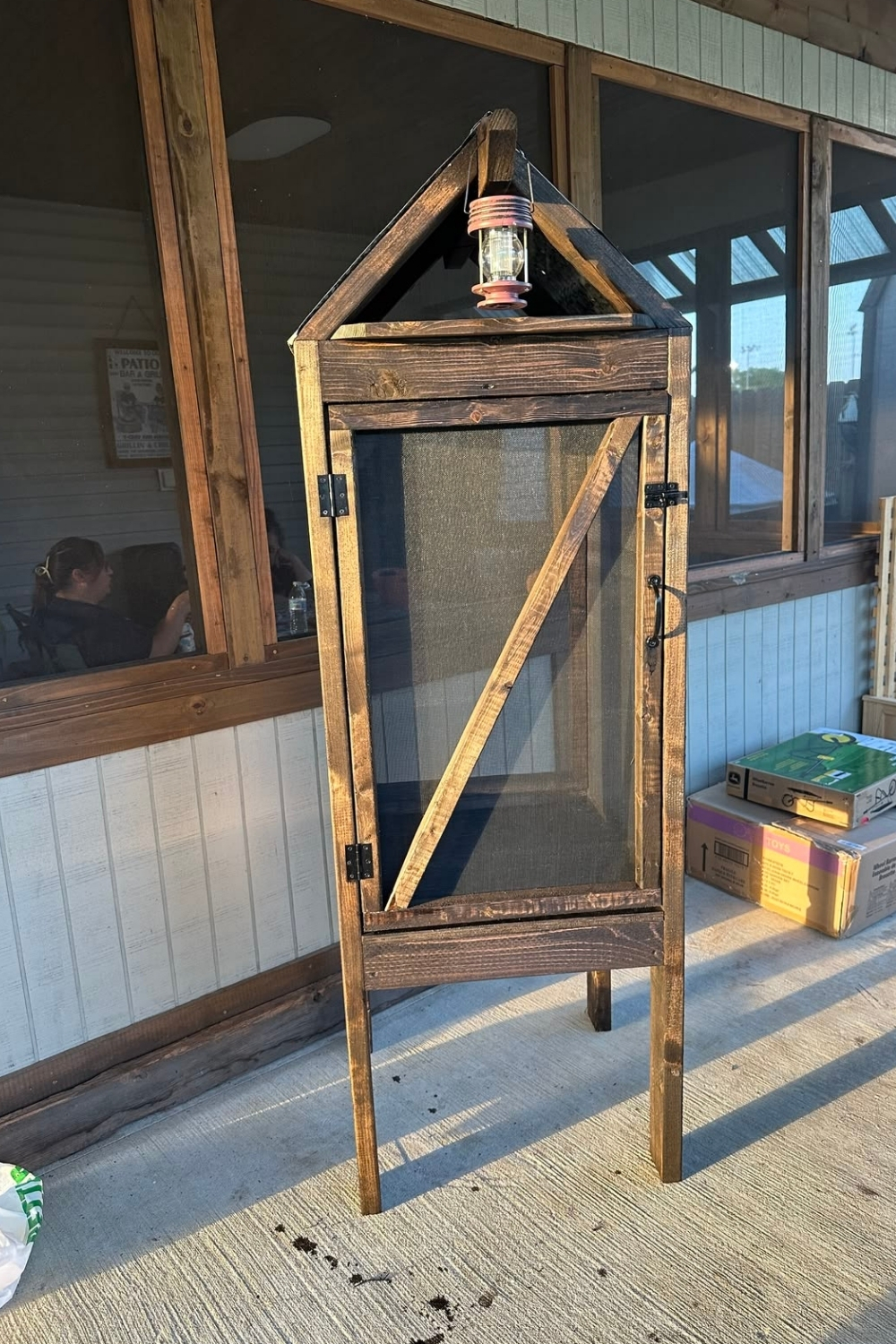
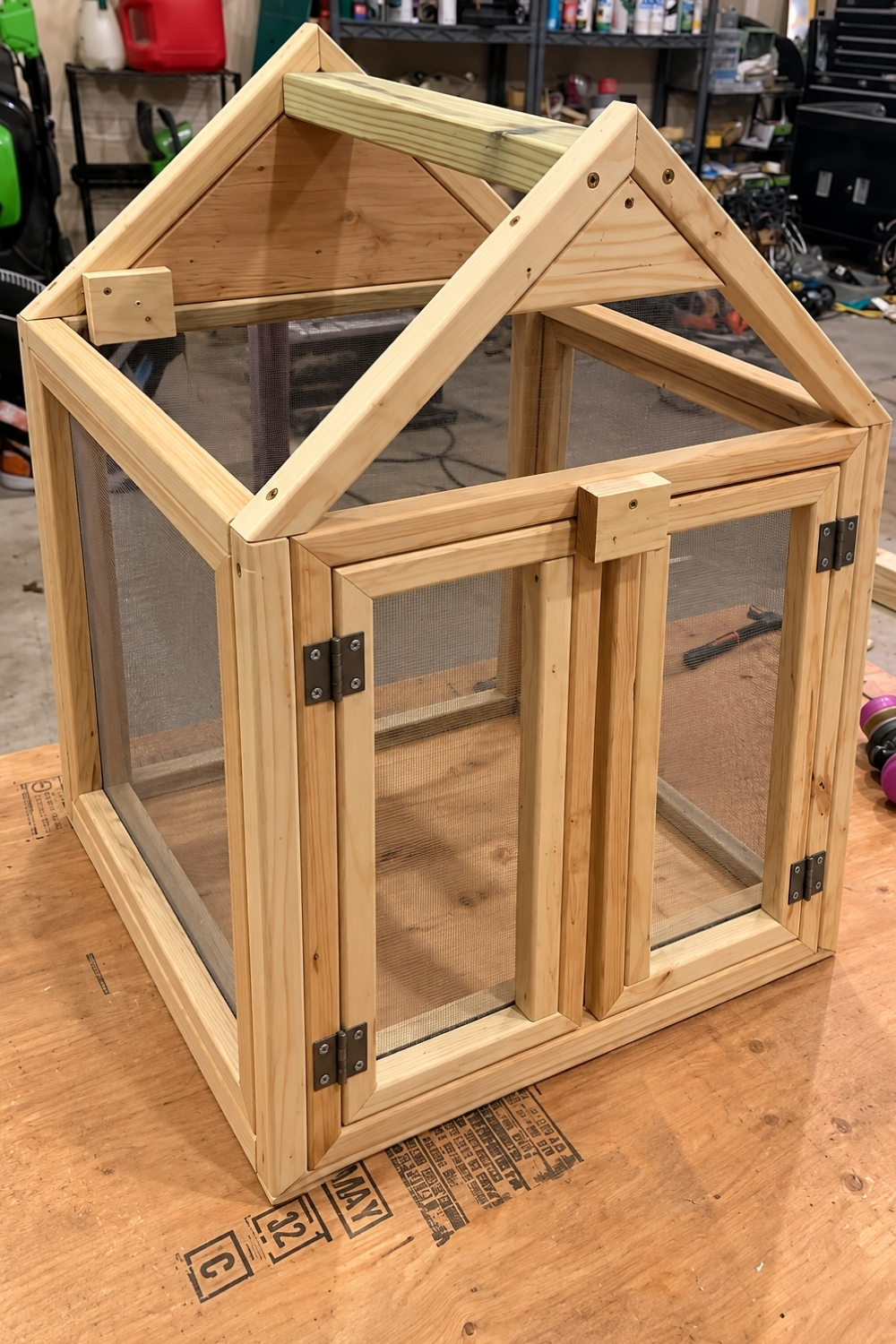
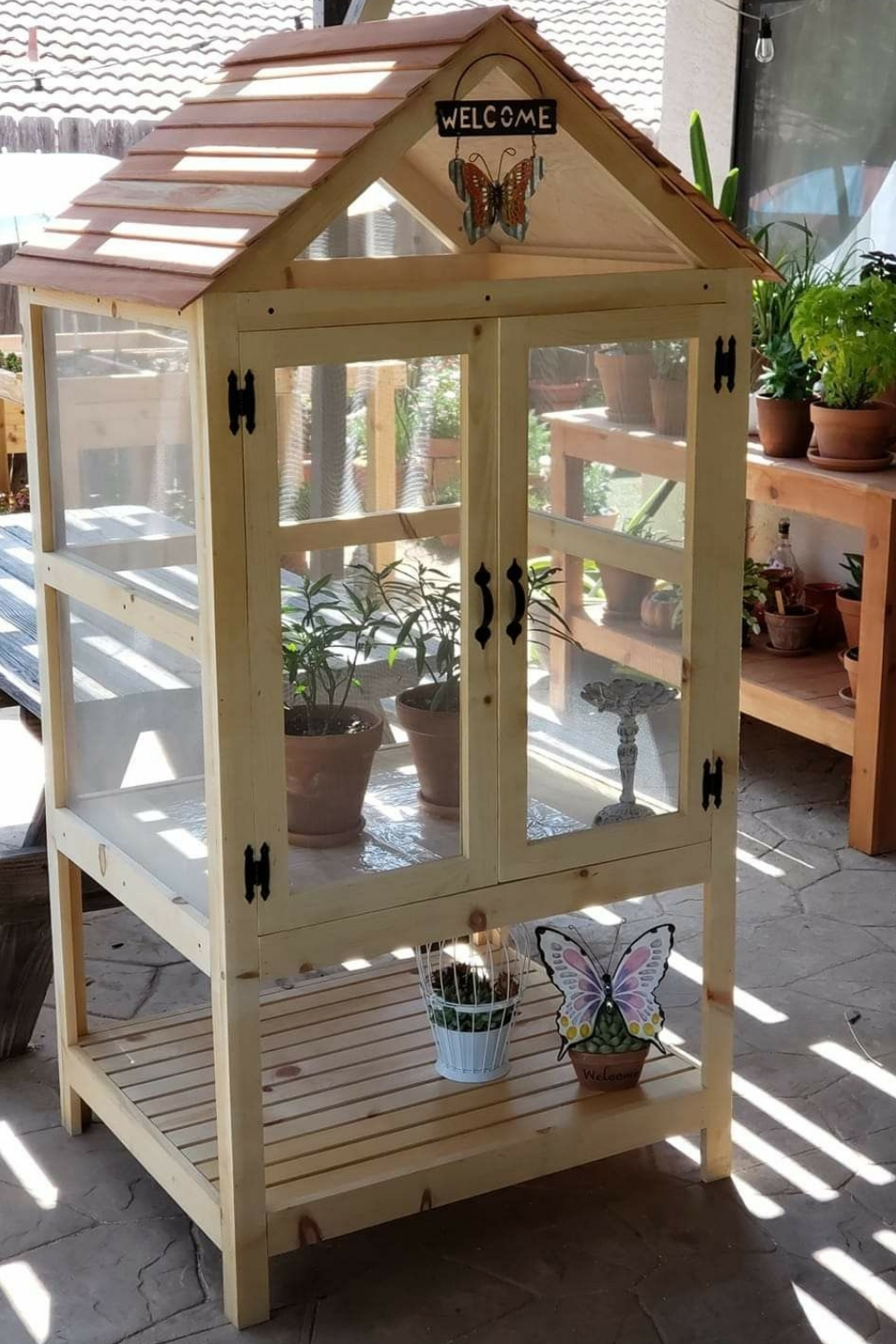
An A-frame roof sheds rain if the cage lives outside, and a coat of exterior stain helps the wood last. Placed in the garden, a wooden cage on legs becomes part of the scenery, and the same thinking about scale and placement in these tips on choosing garden statues without overdoing it helps it sit naturally in a bed instead of looking like storage.
That’s the gist: a few local caterpillars, native milkweed, a clean butterfly cage out of the hot sun, and a release on a warm day close to home.