
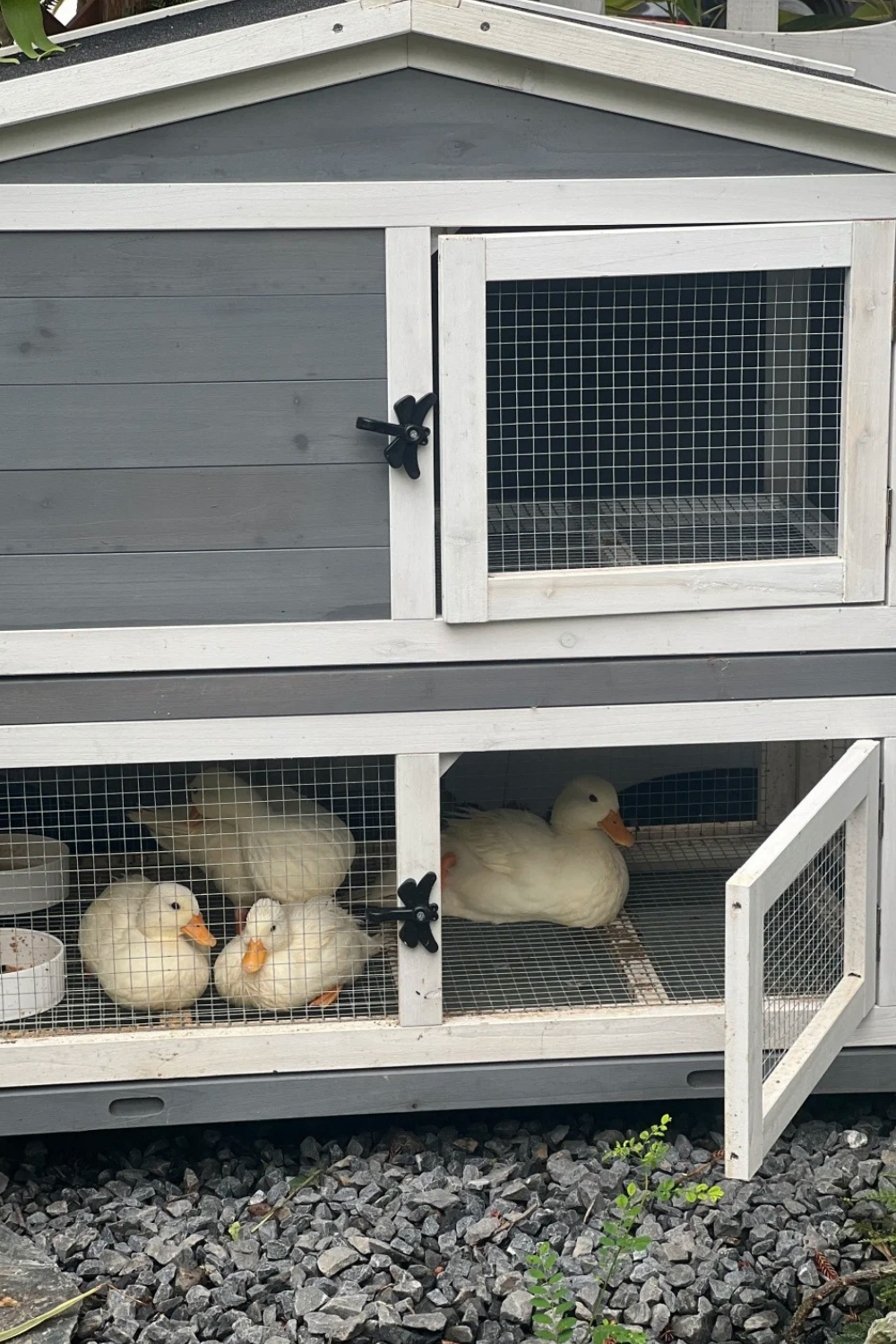
Take the roost bar out. That one change turns a lot of chicken coops into a workable duck coop, and it sums up the whole difference: chickens live up, ducks live down. Chickens hop onto perches at dusk and lay in raised nest boxes. Ducks walk in, flop onto the straw and sleep on the floor, and they’ll lay their eggs wherever the bedding is deepest.
I grew up with a chicken coop and the morning routine of collecting eggs, so the chicken side of this feels familiar. Ducks follow different rules, and most of them come down to floor space, water and moisture.
At a glance
| Chickens | Ducks | |
|---|---|---|
| Where they sleep | On roost bars, off the floor | On the floor, in straw |
| Coop height | Tall enough for roosts | About 3 feet is enough |
| Floor space inside | Less, since they use height | More, about 4 sq ft per duck |
| Nest boxes | Raised, off the floor | On the floor, in a dim corner |
| Water | Drinker only | Deep enough to dunk the whole head |
| Door and ramp | Small pop door, steep ramp is fine | Wide, low door, gentle ramp |
| Moisture | Moderate | High, needs strong ventilation |
Floor space and bedding
Since ducks don’t roost, every duck needs room on the floor to settle for the night. According to this guide to converting a chicken coop into a duck house, plan on about 4 square feet of floor per duck, compared with roughly 1 square foot inside the coop for each chicken, which has its perch space up high. A duck house also doesn’t need to be tall, about 3 feet does it, so a low, wide coop suits ducks better than a tall, narrow one.
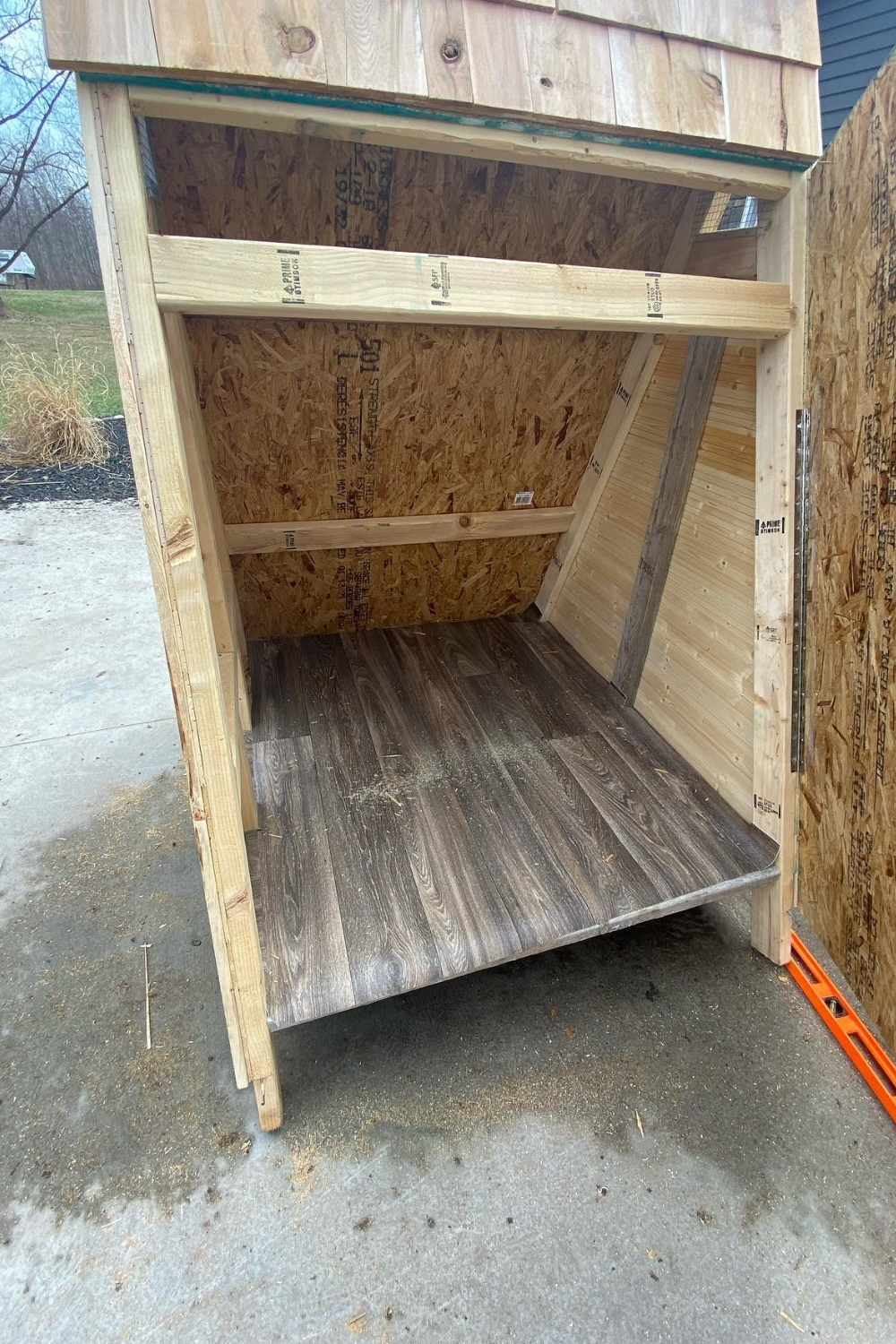
Bedding matters more in a duck coop too. Ducks are messy and wet, and straw spread several inches deep keeps them warm and dry overnight. Change it often, at least weekly, since damp straw grows mold quickly. A wipe-clean floor under the straw, like the vinyl sheet in this half-built coop, makes those changes much faster than bare wood.
Water: the biggest difference
Chickens need a drinker. Ducks need water deep enough to submerge their entire head, because they use it to clean their eyes, nostrils and bills, and they can’t swallow dry food comfortably without it. A deep bowl or bucket is the minimum.

Most duck keepers add a small pool too. A kiddie pool, a stock tank or a preformed pond liner set into the ground gives them space to bathe and paddle, which keeps feathers clean and waterproof. Ducks with a pool are, to be fair, much happier ducks.
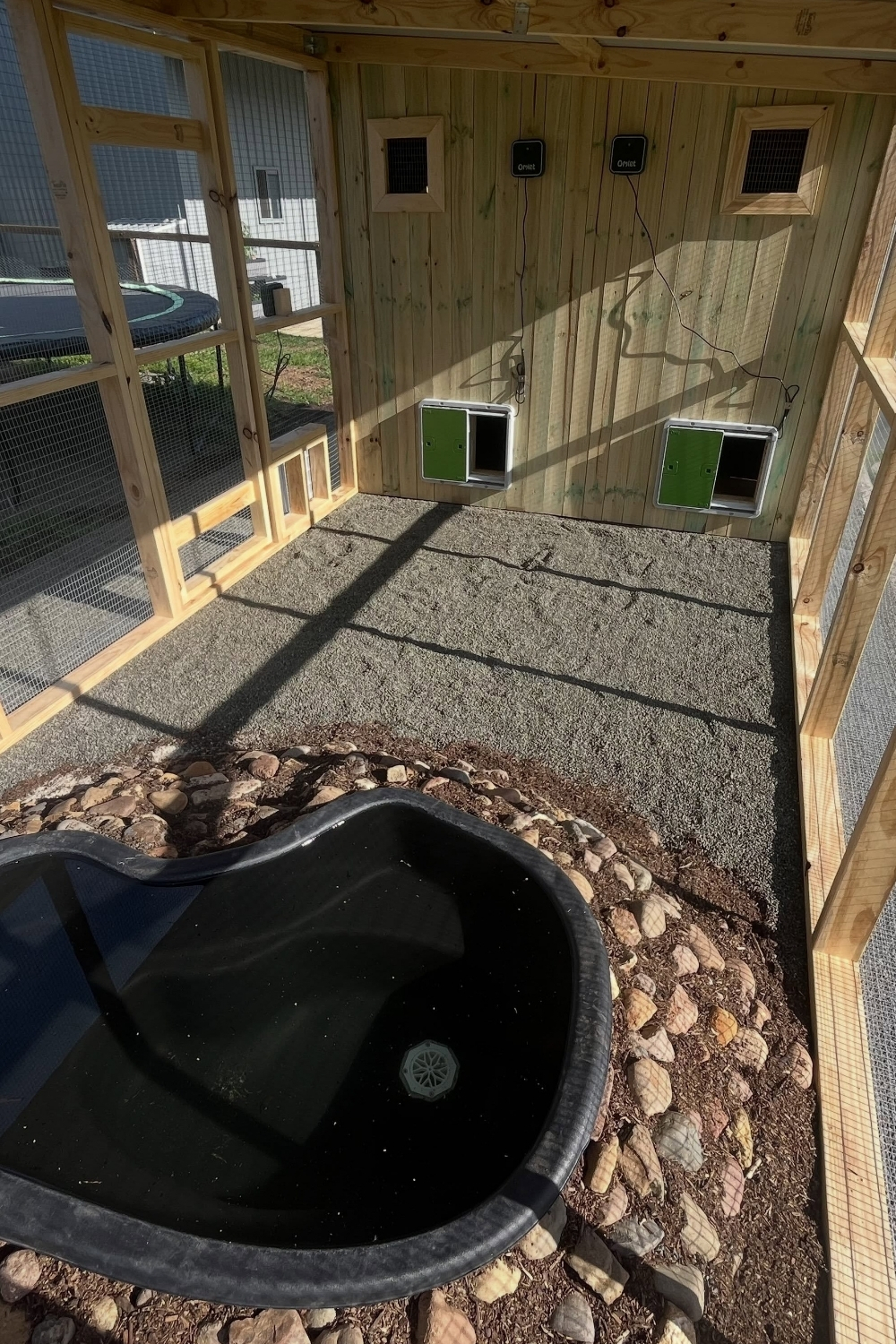
What matters most is keeping all that water out of the duck coop itself. Ducks splash, drip and spread water everywhere, and wet bedding turns into a smelly, moldy mess within days. Put the pool and water in the run, on the opposite side from the coop, ideally on lower ground so spills drain away from the house. A ring of river stones or gravel around the pool, like the one here, gives them a “beach” and keeps the run from turning to mud.

For a bigger garden, a real pond is the dream setup. A small, planted container pond is not the same thing, though; ducks will eat the plants and stir up the water, so a duck pond needs sturdier edges and frequent cleaning.
Ventilation high up
Ducks breathe out a lot of moisture, more than chickens for their size, and with their wet feet and drippy bills, the air in a closed duck coop gets damp fast. Damp air in winter leads to frostbite and respiratory trouble.
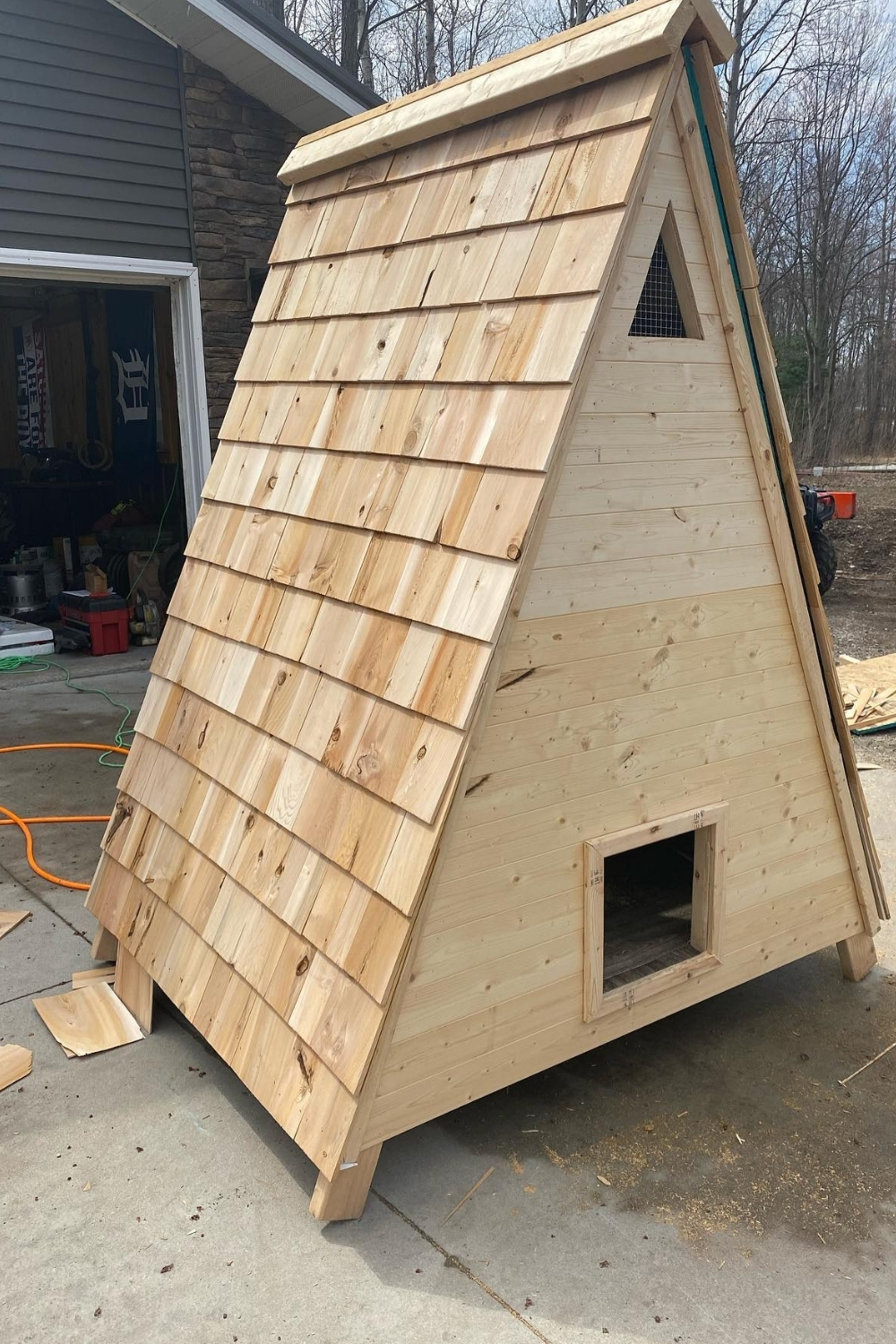
The fix is duck coop ventilation near the roof, where warm, wet air rises and escapes, without drafts at floor level where the ducks sleep. The triangle vents high in the gable of these A-frame coops do exactly that. Cover every vent with hardware cloth so nothing can get in through it.
Doors and ramps
Chickens jump and flap up steep ramps without a second thought. Ducks can’t. Their legs are set far back on the body, which makes them great swimmers and clumsy climbers, so a duck coop door should be wide and close to the ground.
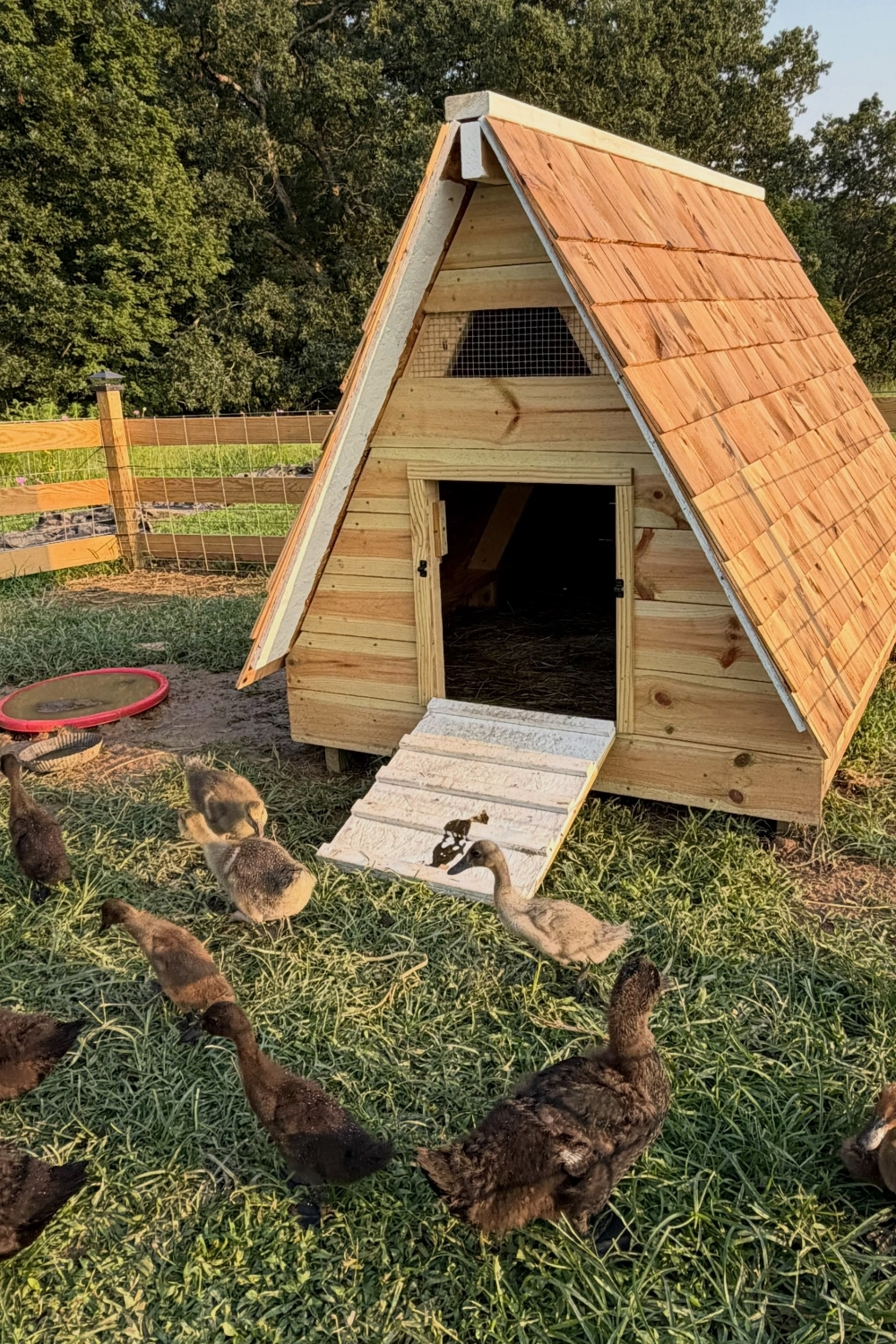
If the coop is raised, add a wide, gentle ramp with thin strips nailed across it for grip. The same guide suggests a duck coop door at least 14 inches square, with the ramp at least as wide as the door. Ducklings like these manage a low ramp easily; a steep, narrow chicken ladder is a struggle for them.
Nest boxes on the floor
Ducks don’t use the raised nest boxes of a chicken coop. They lay on the floor, usually in a dim, quiet corner, often very early in the morning before they’re let out. Floor-level boxes, open boxes at least 14 inches square with a low front lip, give them a defined spot and keep eggs cleaner.

A row of simple wooden boxes along the back wall, filled with straw, does the job. Keep ducks in until mid-morning for a while, and they’ll usually learn to lay in the coop rather than in the run or the pond.
Predator-proofing
Ducks are slower and more vulnerable than chickens, and at night they sleep on the ground, which makes predator protection non-negotiable.
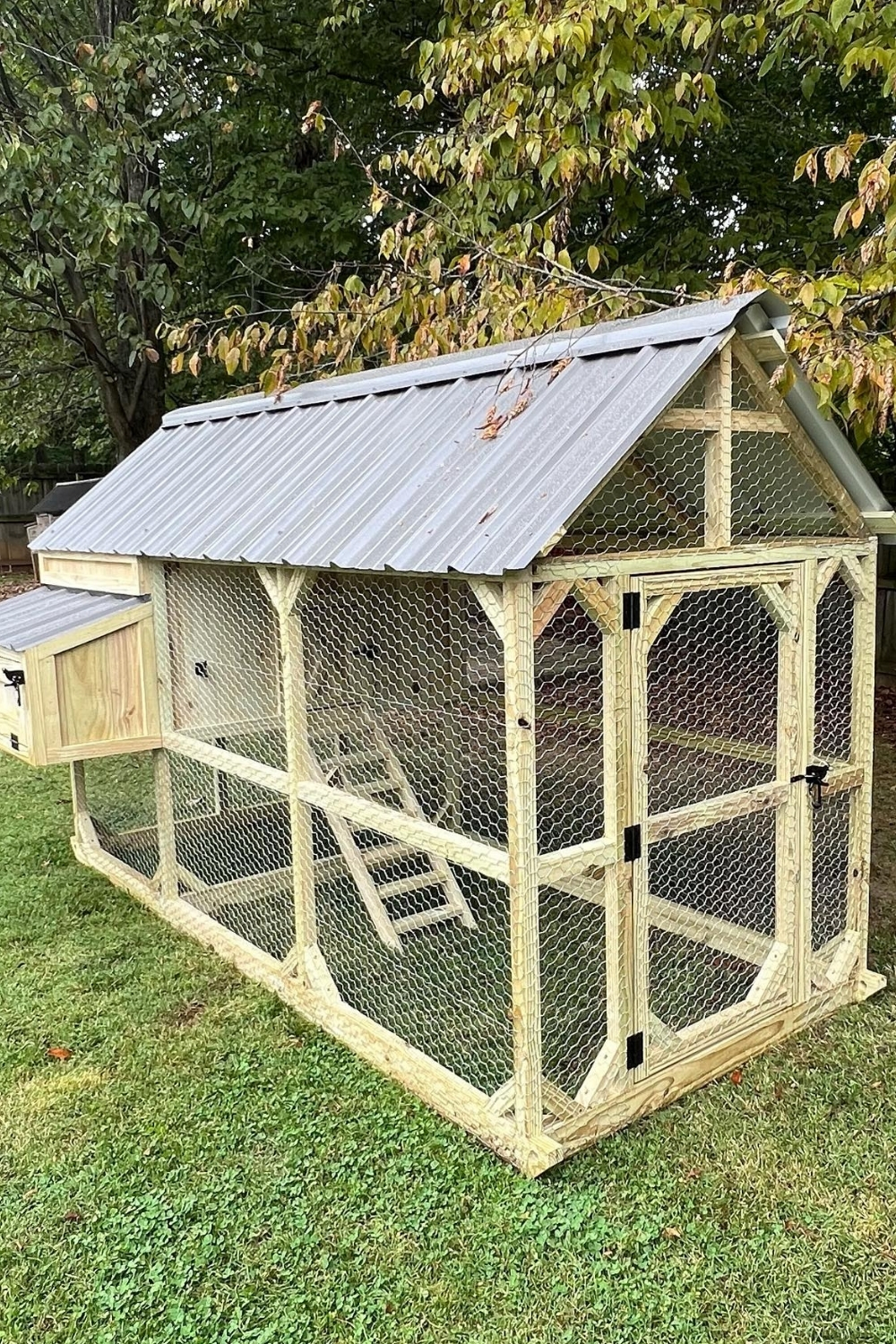
On a duck coop and run, use hardware cloth, a stiff welded wire mesh with small square holes, for the run and every vent and window. Chicken wire, the thin hexagonal mesh on many coops like this one, keeps chickens in but doesn’t keep raccoons out. Raccoons can reach through it or tear it. Lock the coop door at night with a latch a raccoon can’t open, since their paws work almost like hands.
Bury an apron of hardware cloth around the outside of the run, laid flat and extending out about a foot under the soil, so digging animals hit wire before they get under the wall. Cover the run with netting or wire on top if hawks or owls are around.
Can ducks and chickens share a coop?
Yes, with some planning. Many backyard keepers house them together, and they generally get along. The catch is that ducks and chickens want different conditions inside.
The simplest setup gives chickens their roosts and raised nest boxes along one wall, and ducks the floor and floor boxes along another. Keep all water out of the coop entirely, since ducks will soak the chickens’ bedding. In a shared run, place duck water away from the chicken feeding area. So basically, it’s two coops in one, sharing a roof. Separate coops in a shared run is even easier, especially for larger flocks.
Coop shapes that work for ducks

A-frame duck houses are popular for small flocks: low, wide floor space, good drainage off the steep roof and simple to build. Converted garden sheds work well for larger flocks, since they offer lots of floor space and a full-size door for cleaning. Raised hutches with an attached run suit two or three ducks in a small yard, as long as the ramp is gentle.
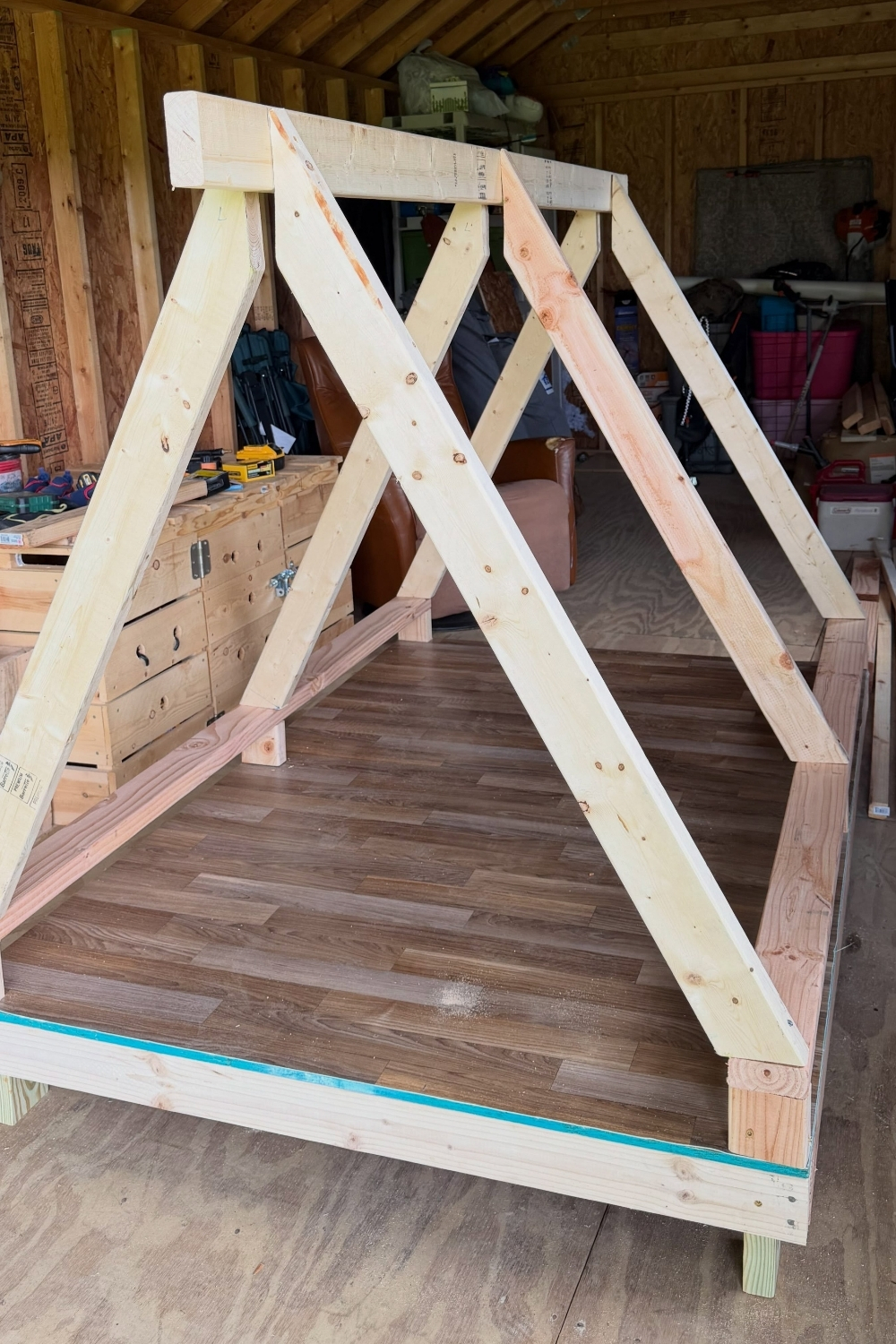

Building an A-frame is a manageable weekend project: a rectangular base, a few triangular frames, plywood or OSB sheathing, and a door in one end. DIY Danielle’s duck coop build shows another route, a small box coop with a vent along the back covered in hardware cloth and a storage bay for straw and feed beside it. I mean, fair, a storage bay is the kind of thing you only wish you’d added after the first rainy week.
Ducks also earn their keep in the garden. They eat slugs and snails, and a fenced section of a garden after harvest gets cleaned up fast, though they’ll trample and nibble young plants, so keep them out of the beds in spring. A pollinator garden outside the run fence is a nice pairing.
A simple starter setup
For raising ducks for beginners, three or four ducks is a comfortable first flock, since ducks are social and fret when kept alone. That means a duck coop with about 16 square feet of floor, a run several times bigger, a deep water bowl plus a kiddie pool in the run, and a few bales of straw stored somewhere dry. Add a floor-level nest box or two, a gentle ramp if the door is off the ground, and vents high on the walls covered in hardware cloth.
Feed is simpler than many expect: waterfowl feed or an unmedicated all-flock feed, set out near the water so they can dunk as they eat, but never inside the duck house. Ducklings need niacin, a B vitamin that chick starter often doesn’t have enough of, so a waterfowl starter or a niacin supplement is worth asking about at the feed store.
The daily routine is short: let them out in the morning, collect eggs, refresh the water, top up feed, and lock the duck coop at dusk. The pool gets dumped and refilled every day or two, and the bedding gets changed weekly. It’s more water hauling than chickens, but ducks are hardy, quiet compared with a rooster, and lay well through cold weather.
Thinking of adding ducks to an existing chicken setup? Then the first question is simple: where will the water go?