Fill the container, add the plants, and then wait at least two weeks before buying a single fish. That pause, plus a few drops of dechlorinator (a water conditioner that neutralizes the chlorine in tap water), does more for a container pond with fish than any pump or fancy bowl. Most of what goes wrong with patio ponds comes from rushing that step or from one of the mistakes below.
Picking a bowl that’s too small
A small bowl looks charming as a container pond, and it’s easy to fill. The trouble is that a small amount of water changes fast. It heats up on a sunny afternoon, cools down overnight, and every bit of fish waste or rotting leaf shows up in the water quality within a day or two. Fish handle slow changes far better than sudden ones.
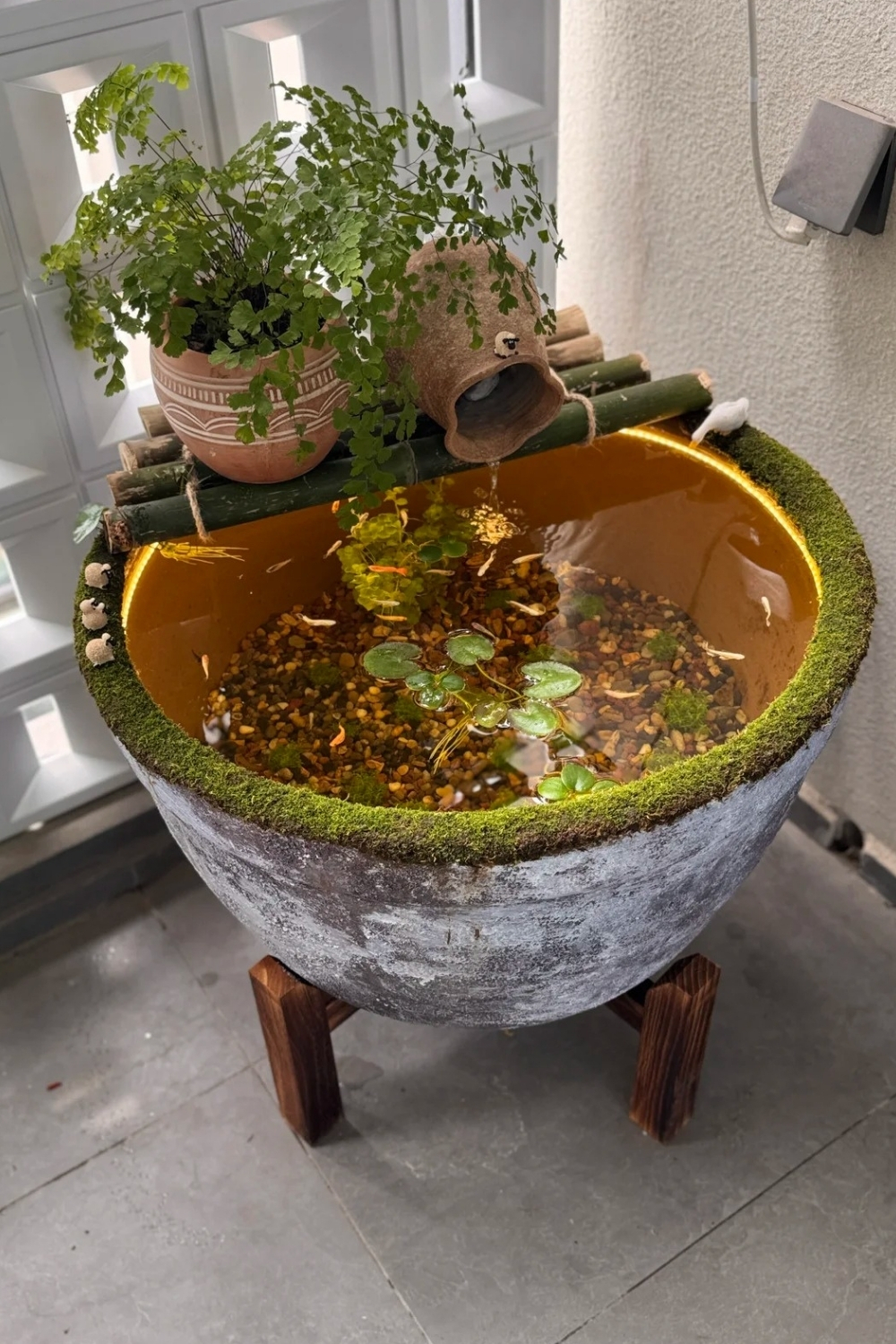
So go bigger than feels necessary. Glazed bowls, half barrels, galvanized or plastic stock tanks (the troughs sold at farm stores for watering livestock) and a sturdy tub sunk into the ground all work. For a container pond that holds fish, about 25 gallons is a sensible minimum, and 50 to 100 gallons is far easier to keep stable. Make sure the container is food-safe or pond-safe inside: an old half barrel that held wine or whiskey usually needs a pond liner or a plastic insert, and anything that held chemicals is out.
Weight matters on a balcony. Water weighs a little over 8 pounds per gallon, so a 50-gallon pond weighs well over 400 pounds once it’s filled, gravel and all. Check what the balcony can carry before setting it up.
Choosing fish that outgrow the pond
Goldfish are the obvious choice, and the wrong one for most container ponds. A goldfish bought at 2 inches can reach 6 inches or more within a few years. According to Empress of Dirt’s guide to adding fish to a garden pond, a common rule is about one adult goldfish per 100 gallons of water. Koi need a real in-ground pond, hundreds of gallons per fish. They don’t belong in a tub at all.
Small fish fit a container pond much better. White cloud mountain minnows (Tanichthys albonubes) stay under 2 inches and handle cool water well. Medaka, also called Japanese rice fish (Oryzias latipes), are tiny, peaceful and happy in planted water. A handful of either suits a 25- to 50-gallon pond. A couple of small goldfish can work for a season, I guess, yeah, as long as someone has a plan for where they’ll go once they grow.
Introduce them gently. Float the closed bag on the pond surface, out of direct sun, for about 30 minutes so the temperatures match, then mix in a little pond water before letting the fish out.
Skipping the layers
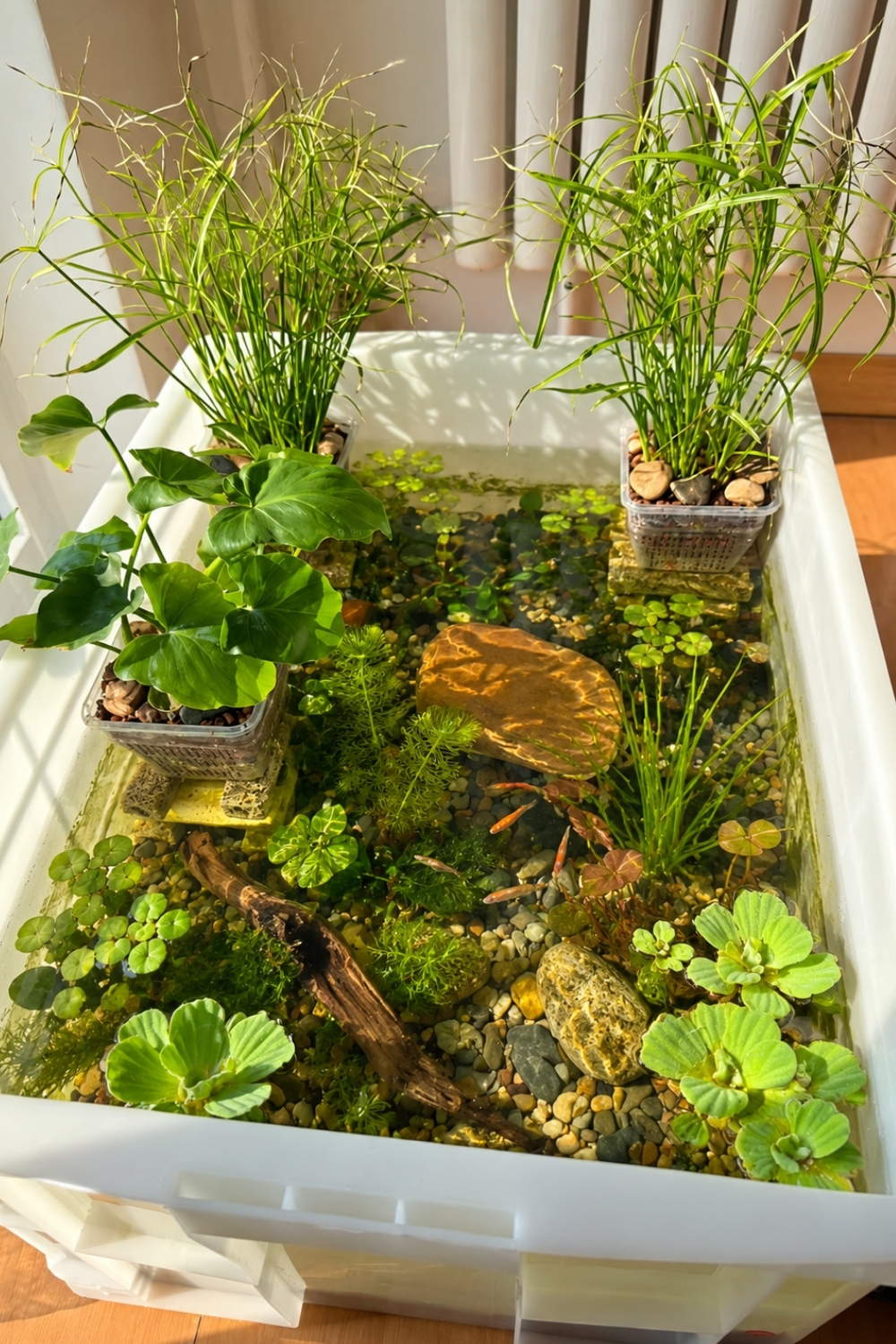
A bare container pond, just water and fish, is hard on everyone. Layers give the fish hiding spots, give plants something to root in and give helpful bacteria surfaces to live on.
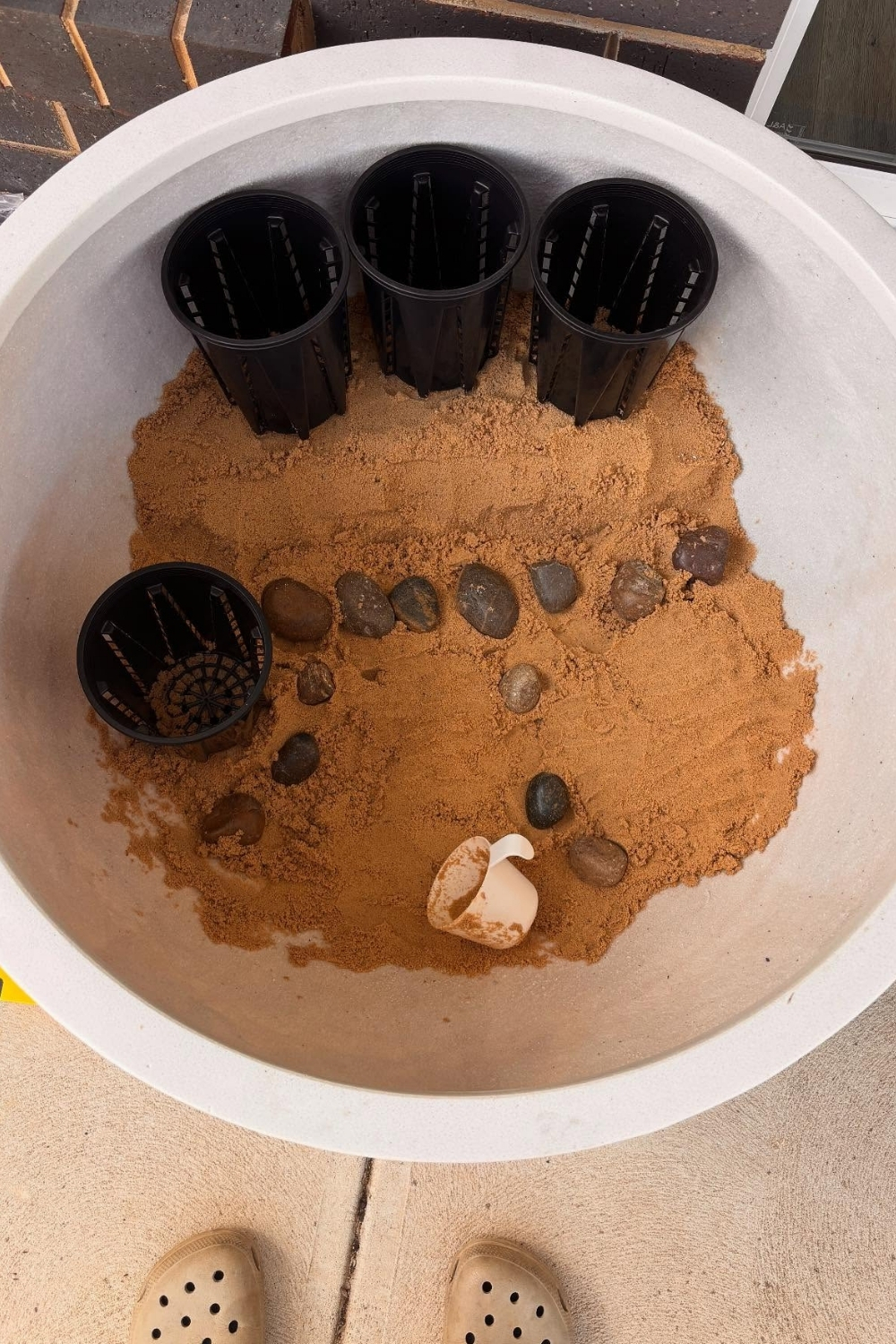
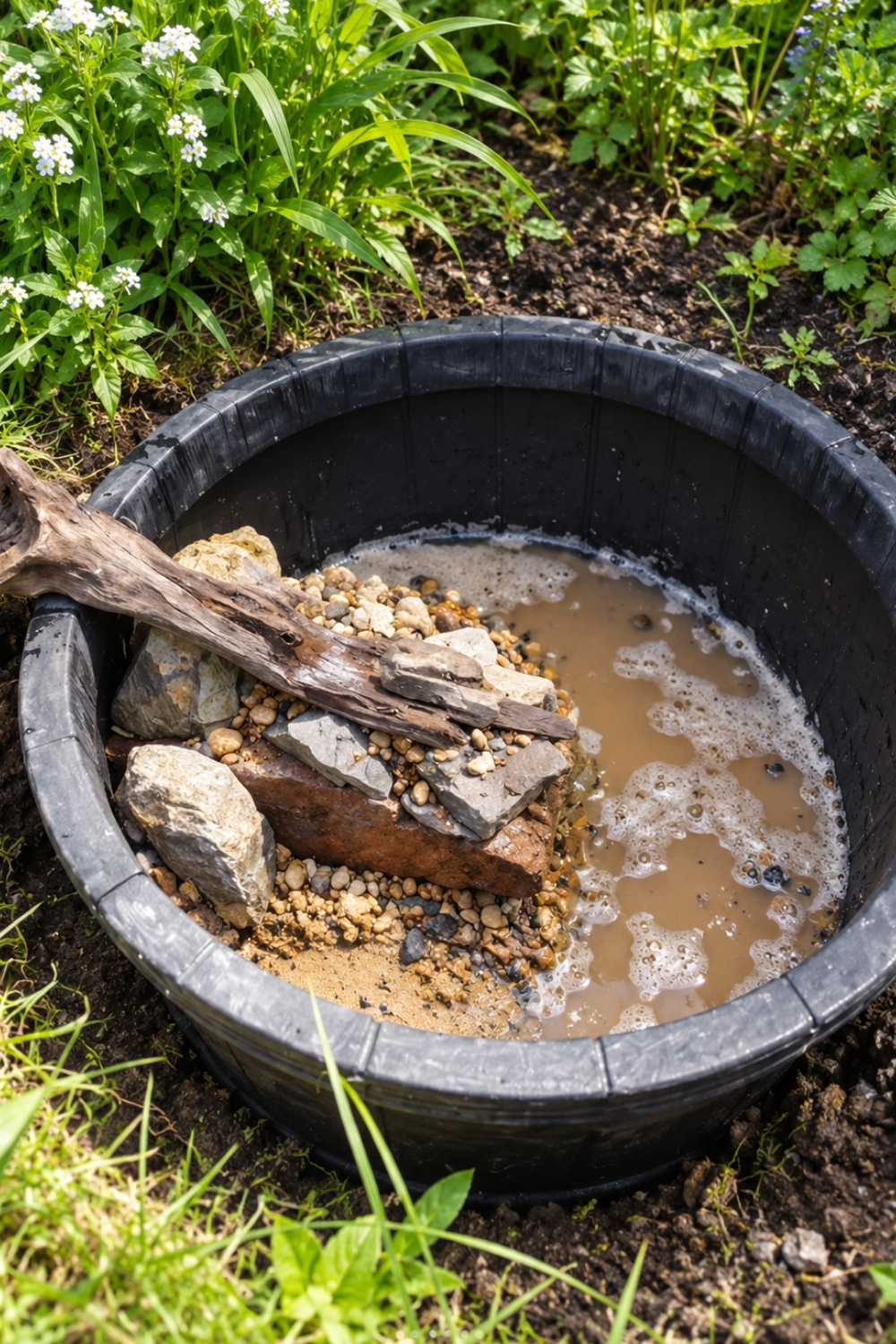
Start with a few inches of rinsed sand and small gravel on the bottom, and set aquatic baskets on top. These are pots with open mesh sides, so water flows through the soil while the roots stay contained.
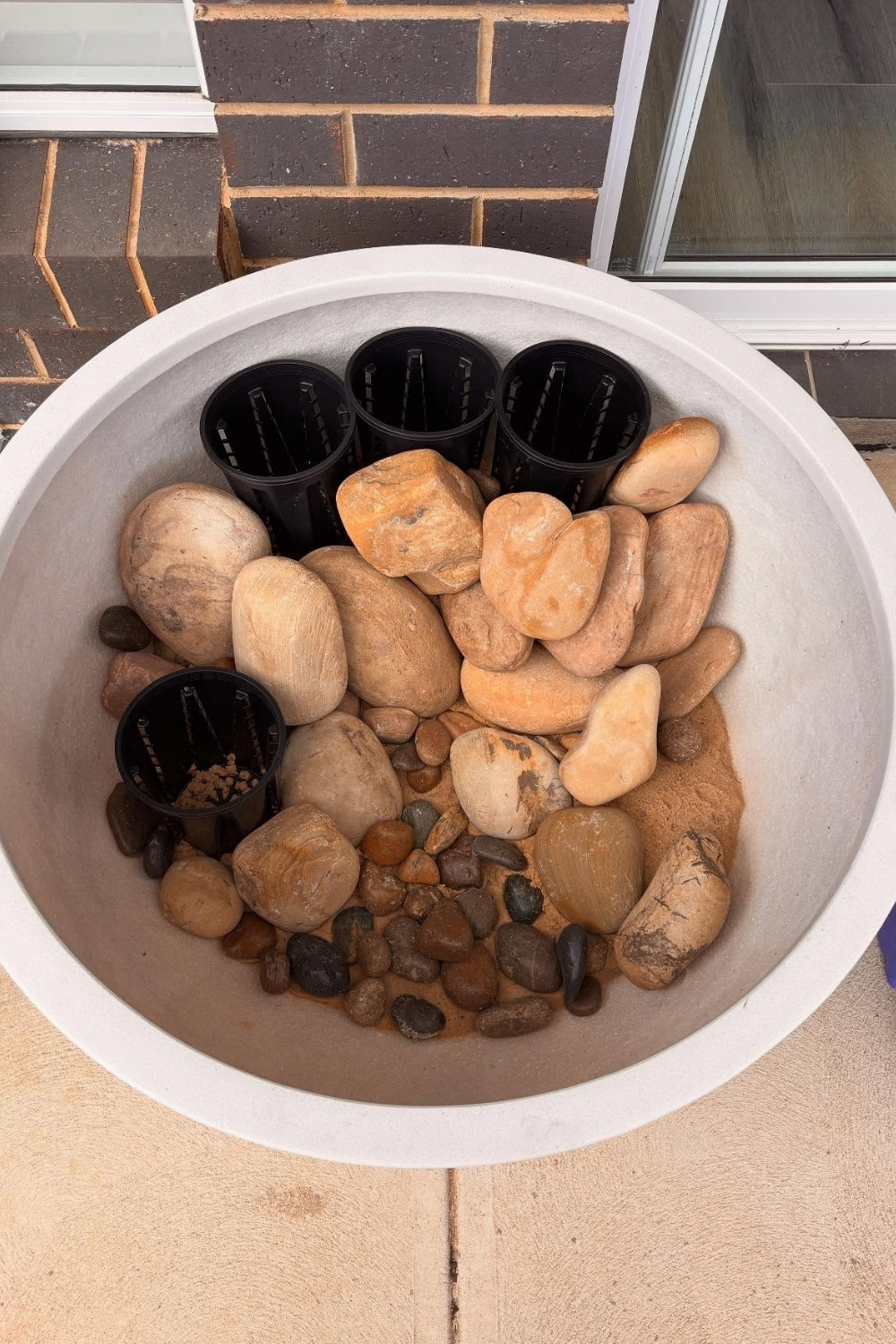
Next come larger rocks and river stones around the baskets, and later, a little moss along the rim. They hold the baskets in place and create shady gaps where fish can hide.
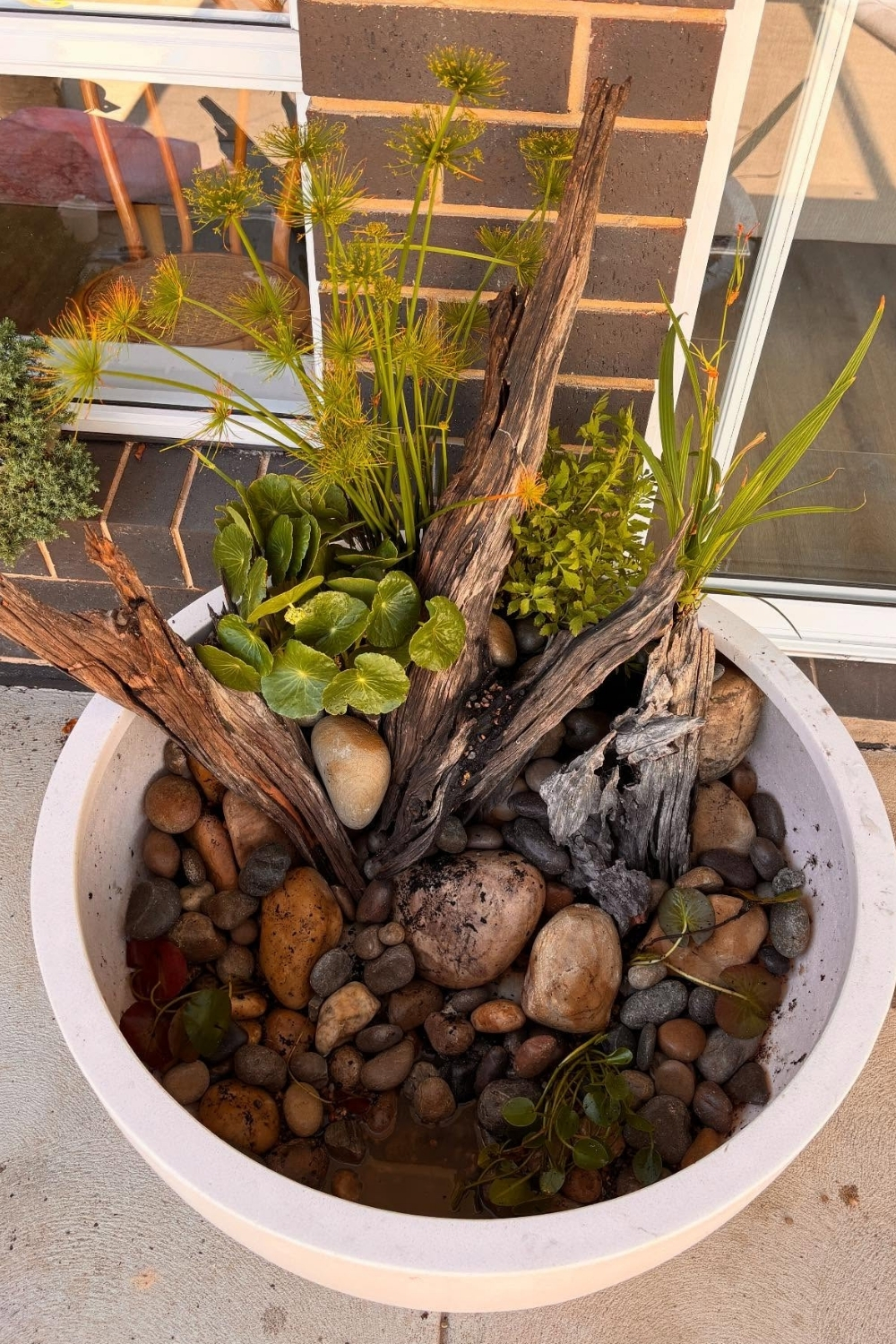
Then the plants go into the baskets and a piece of driftwood leans across the top, giving height and a resting spot for birds and dragonflies.
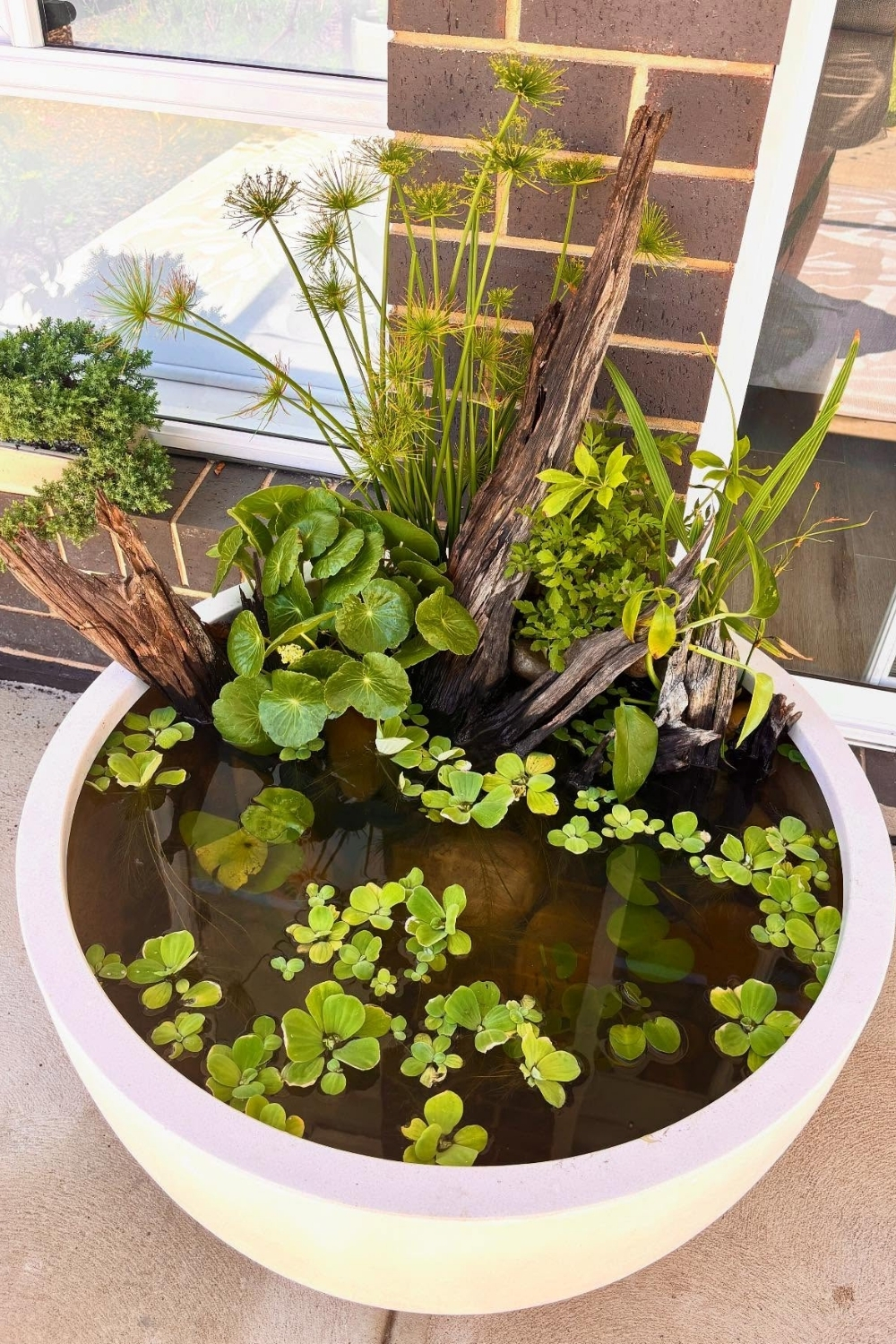
Fill it slowly, pouring onto a plate or a flat stone so the sand doesn’t cloud the water. Anyway, that’s that: the water will look murky for a day or two before it settles.
Leaving the water bare
Plants do most of the work in a container pond. Floating leaves shade the water and keep it cooler, and plants use up the nutrients from fish waste that would otherwise feed green algae.
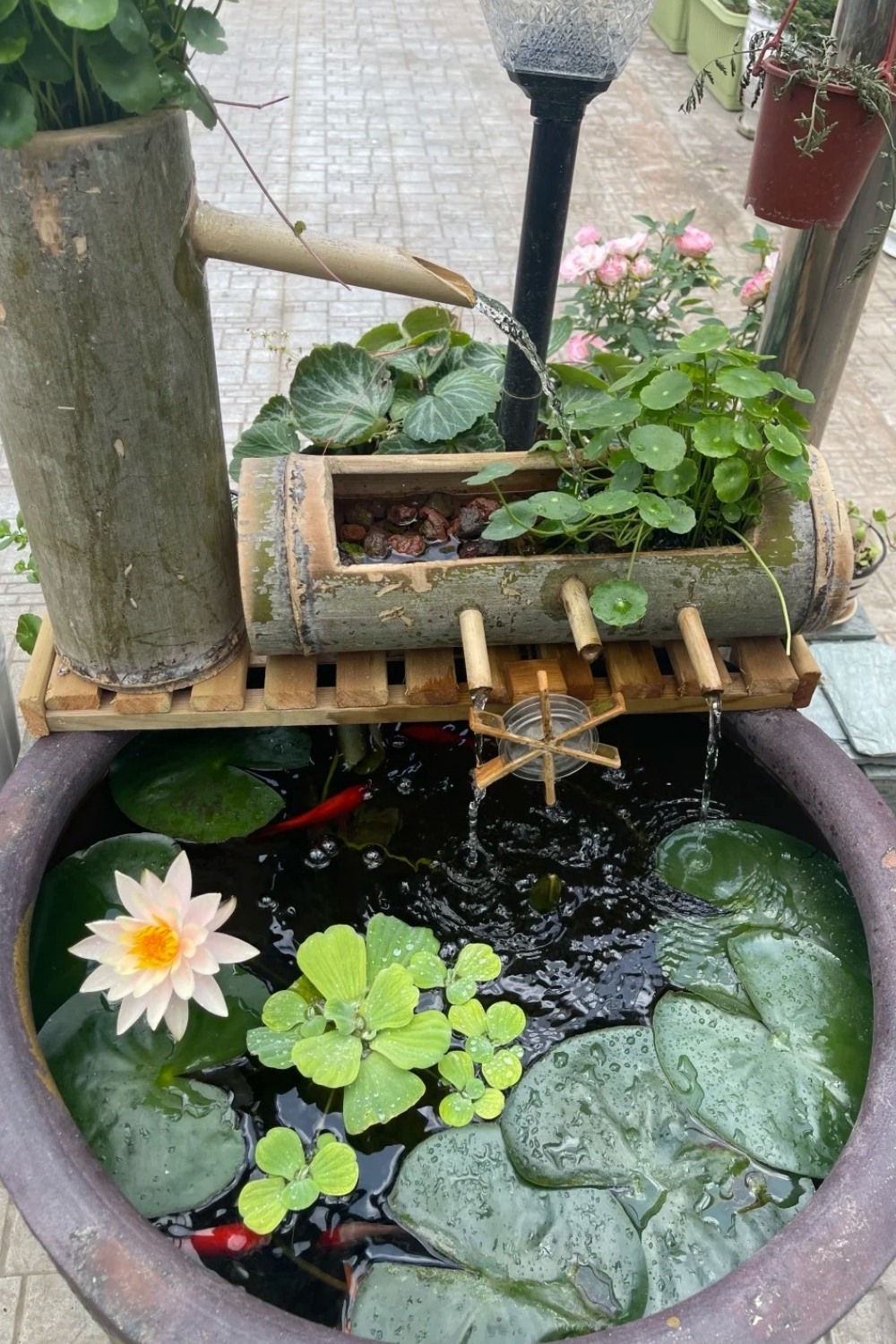
A small or dwarf water lily is the classic choice for shade: its leaves spread across the surface, and it blooms through summer. Oxygenators are underwater plants, such as hornwort, that grow fully submerged and release oxygen into the water during the day. Marginals are plants that grow at the water’s edge with their roots wet and their leaves in the air; a pot of dwarf papyrus or a small rush set on a stone near the rim adds height. Dwarf papyrus is tender, so in most zones it’s grown as an annual or brought inside for winter.
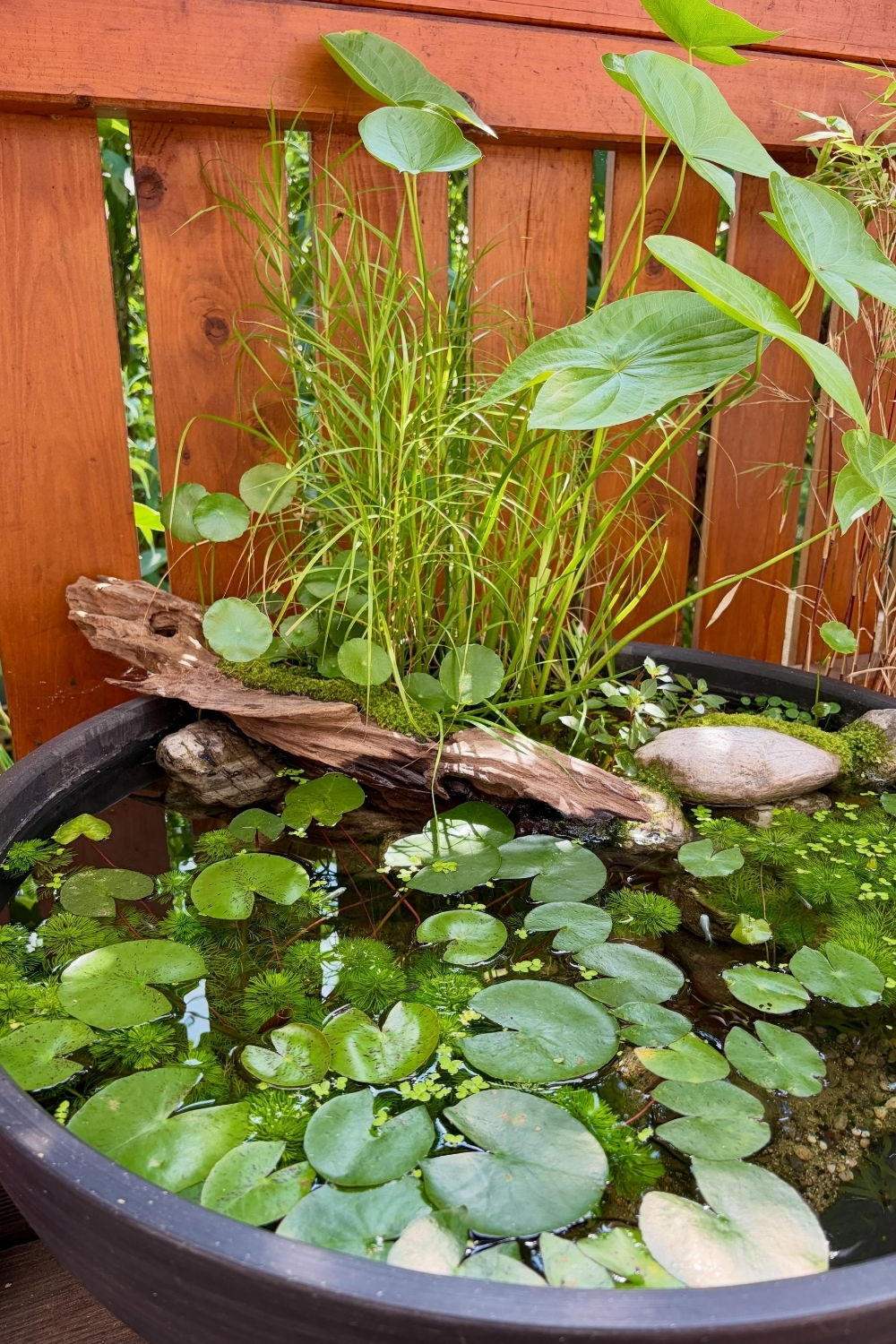
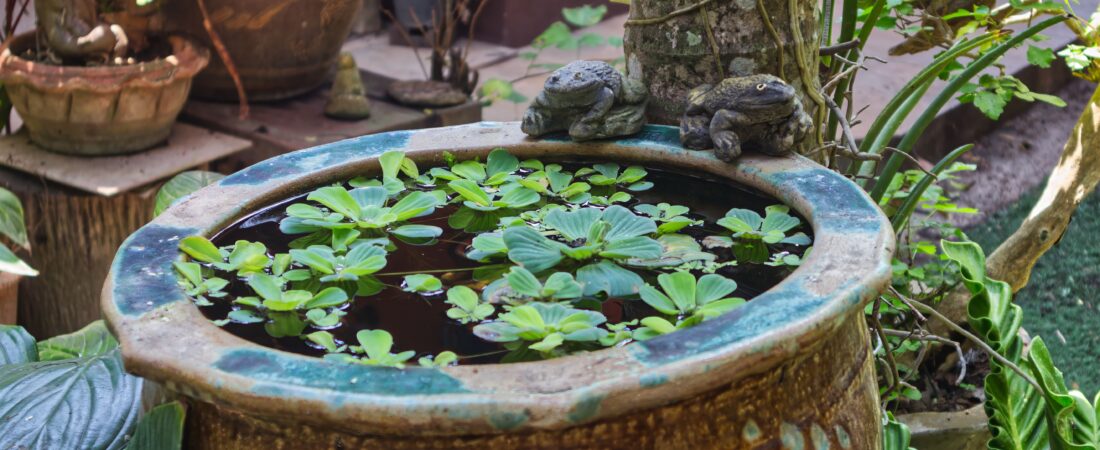
Aim to cover about half of the surface with leaves. The floating rosettes in some of these ponds look like water lettuce (Pistia stratiotes), which is invasive in warm states and illegal to sell in some. A water lily or native floating plants from a local nursery do the same job without the risk, and whichever plants you use, never tip them into a creek or lake when cleaning out the pond. A pond also brings dragonflies, birds and bees looking for a drink, and these easy pollinator garden ideas turn the area around it into a small habitat.
Adding fish before the water is ready
New water in a container pond has no helpful bacteria in it yet. Those bacteria turn fish waste, which is toxic to fish, into less harmful compounds, a process called the nitrogen cycle. They build up on gravel, rocks and plant roots over a few weeks. Fish added on day one live in their own waste until that happens.
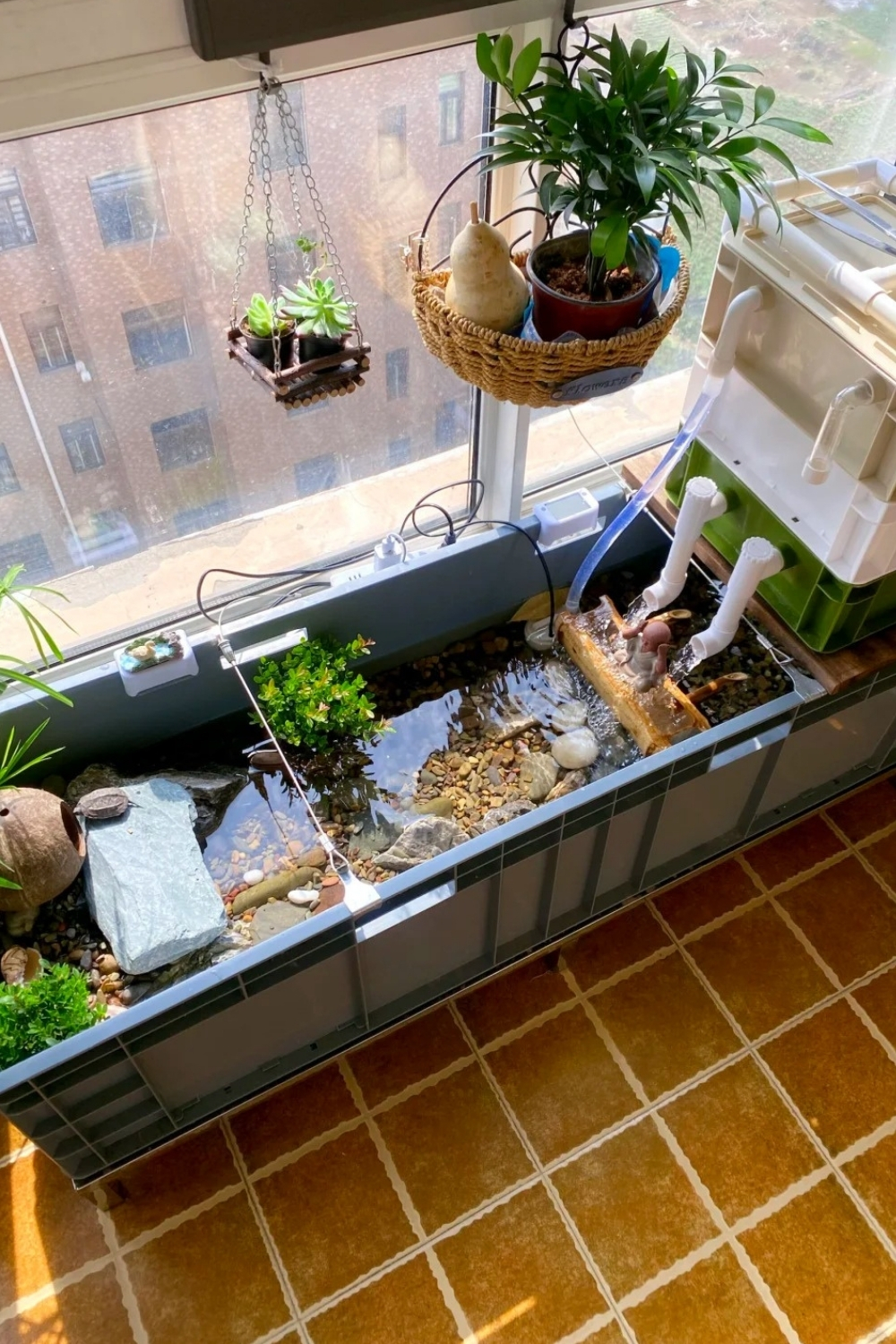
So treat tap water with a dechlorinator, let the planted pond run for at least two weeks, and add a few fish first, more later. A small air pump with a bubbler stone, or a little fountain pump (solar fountain pumps work too, in sun), keeps the surface moving and adds oxygen. Plug-in pumps need an outdoor outlet with a ground fault protector, the type with a reset button that cuts the power if something gets wet.
Once fish are in, feed sparingly: only what they eat in about two minutes, once a day. Uneaten food rots and fouls the water quickly in a container pond. Change about a tenth of the water every week or two with dechlorinated water at a similar temperature, scooping from the bottom where debris settles.
In summer heat, a container pond can lose an inch or more of water a week to evaporation. Top it up with dechlorinated water, or with rainwater from a barrel, and fish out fallen leaves before they sink and rot. Fish also take care of a common worry: they eat mosquito larvae, so a container pond with fish in it rarely breeds mosquitoes, while a still bowl without fish can turn into a nursery for them within a week or so.
Putting a container pond in full sun
A container pond in all-day sun turns into a warm bath. Water in a small container can climb into the high 80s °F on a summer afternoon, and warm water holds less oxygen just when fish need more. Half-day sun at most, with shade in the afternoon, keeps it in a range fish handle well. Morning sun is fine and helps water lilies bloom.
Sinking a container pond into the ground helps a lot, too, since the soil around it keeps the water temperature steadier than a pot standing on hot paving. It also makes the pond look like it has always been there. These DIY water feature ideas for a quiet corner cover how to place one in a planted bed.
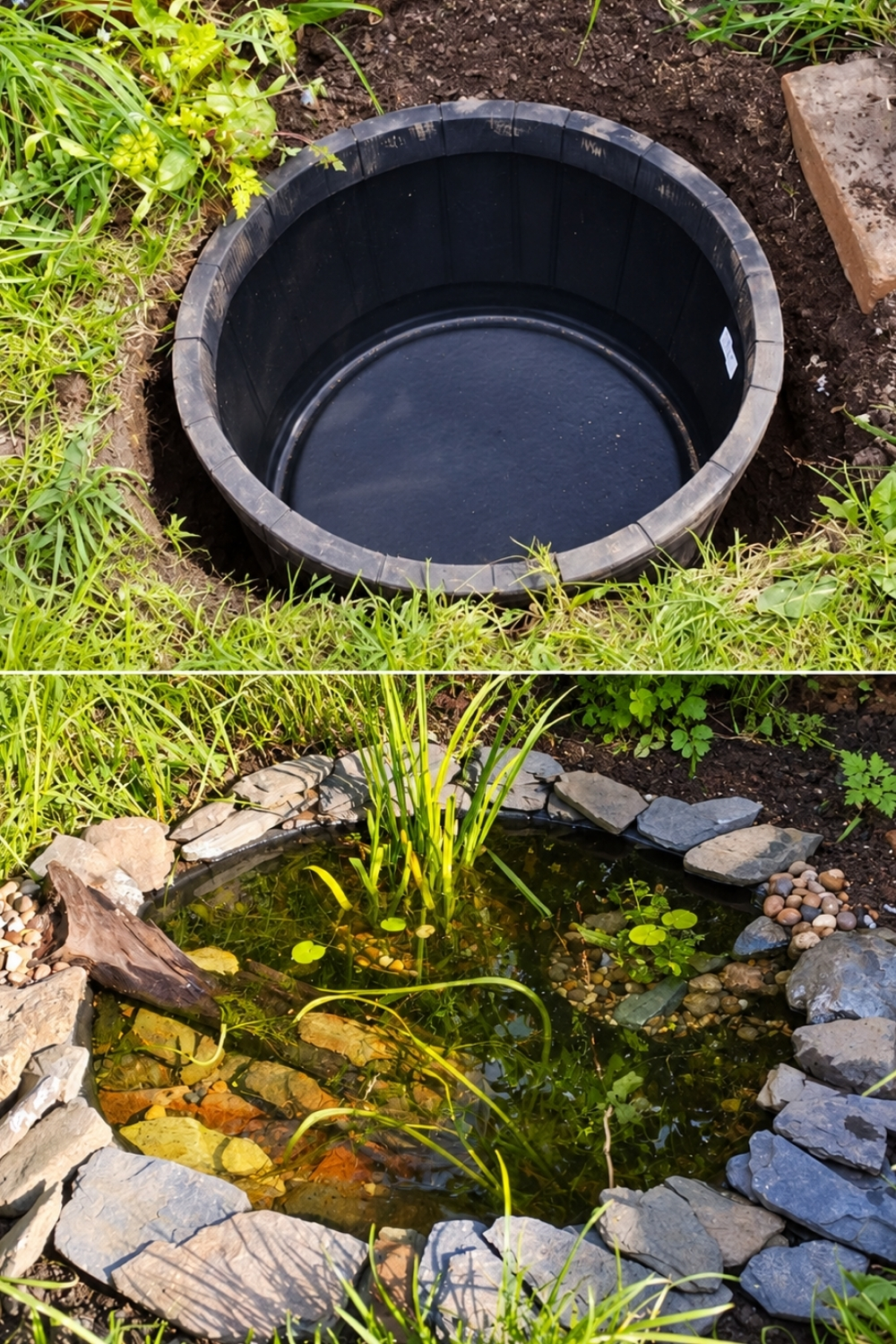
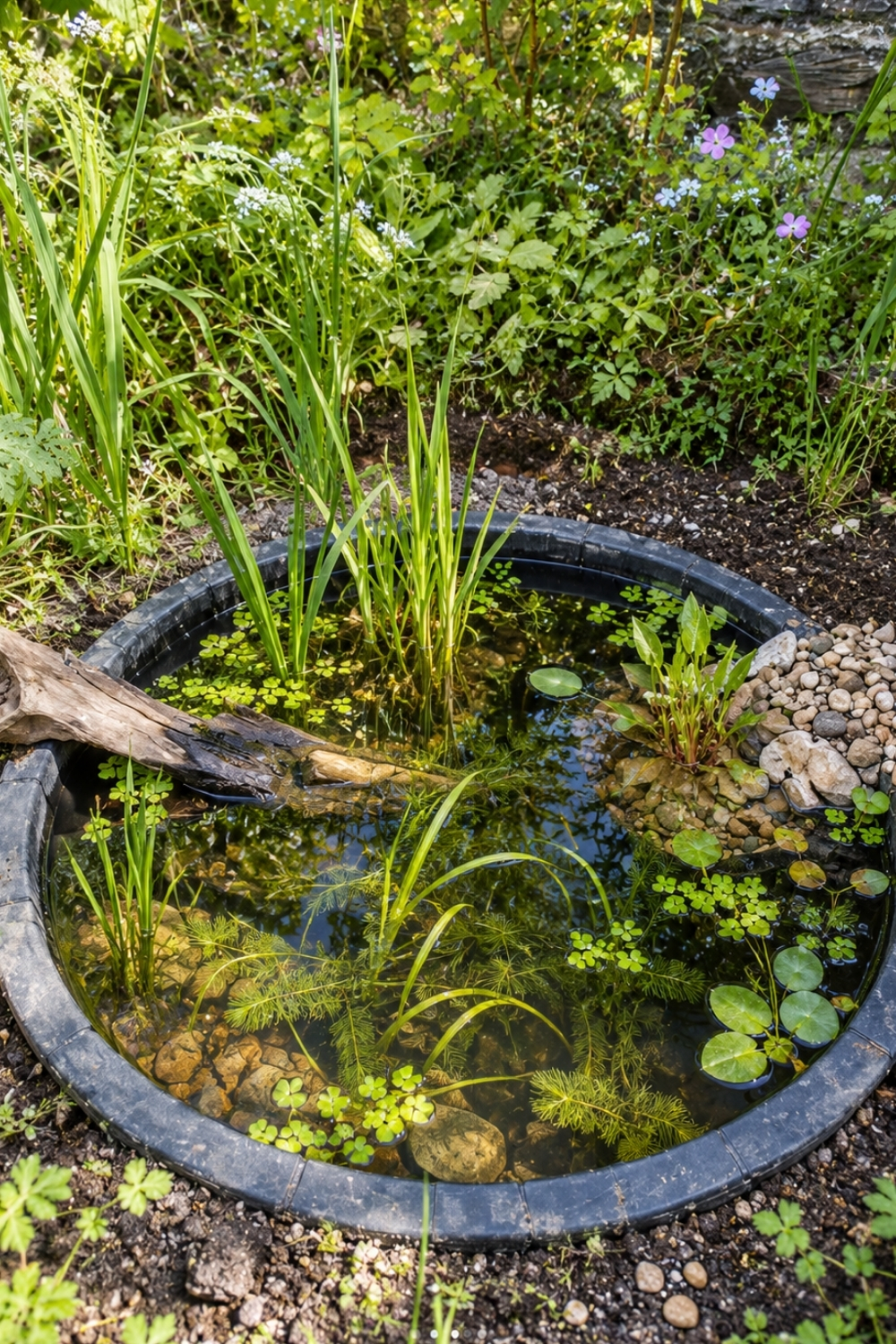
A ring of flat stones or river rock around the rim hides the plastic edge and gives frogs a way in and out. These river rock landscaping ideas show how to finish the edge so it blends into the bed.
No plan for the container pond in winter
A container pond freezes much faster and deeper than an in-ground pond. According to Pond Trade Magazine’s guide to overwintering pond fish indoors, small and above-ground ponds are especially at risk of freezing solid, and fish need to come inside before the water ices over for good. Anywhere with a hard winter freeze, plan on it every year. It is what it is: a few gallons of water can’t hold enough warmth to protect fish through a hard freeze.
Set up an indoor tank or tub before the first frost. Fill it partly with water from the pond, about a fifth to a half, and acclimate the fish slowly, over an hour or more if the temperatures differ a lot. Kept cool indoors, around 50 °F or below, the fish barely need feeding; in a warmer room, feed lightly and change some water every few weeks.
In mild zones, a container pond can often stay outside if it’s moved to a sheltered spot against the house. Keep a small hole open in any ice by floating a ball on the surface or setting a pot of hot water on it; never smash the ice, since the shock waves stress the fish.
A big container, a few small fish, half-day sun, plenty of plants, and a warm place to spend the winter.