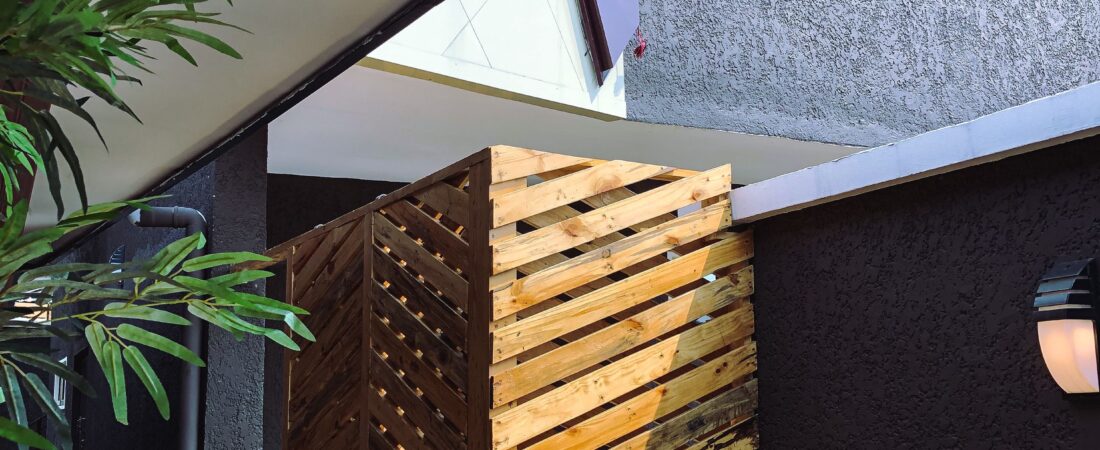
Few things spoil a patio faster than feeling watched. You settle in with coffee, look up, and a neighbor’s window is pointing straight at your chair. The good news is that you rarely need a tall fence around the whole yard to fix it. A well-placed privacy screen, a row of planters or a few years of hedge growth can turn an exposed yard into a place you actually want to sit.
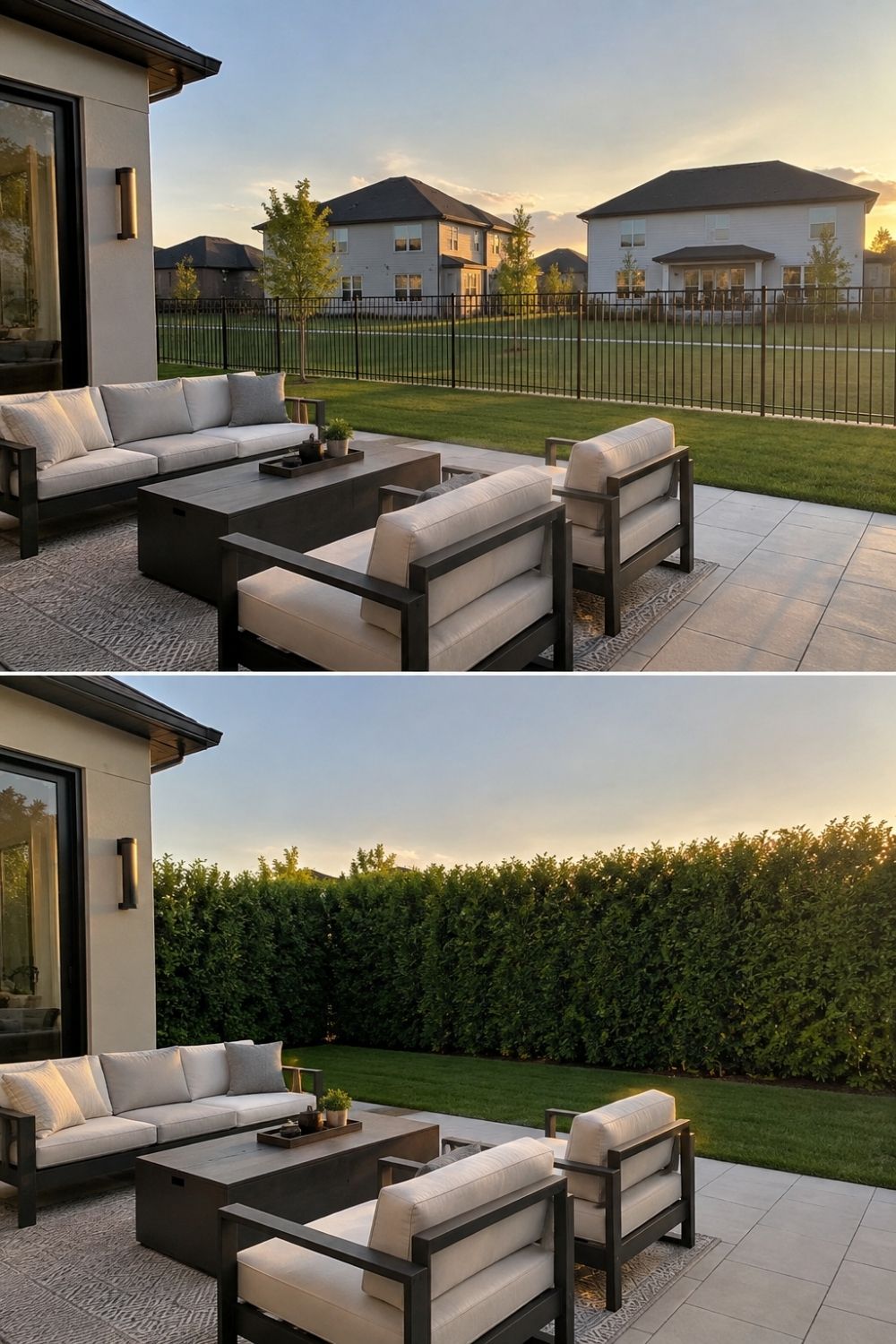
Photo by SassyGarden
The before and after above shows the difference. In the first photo, a patio with a sofa and armchairs sits behind a low black metal fence, with the neighbors’ houses and windows in full view across the lawn. In the second, a dense evergreen hedge runs along the same boundary, and the patio suddenly feels like an outdoor room. Same furniture, same yard, completely different feeling.
Start with the sightline, not the whole boundary
Before you buy anything, sit where you actually spend time, on the patio, the deck or the bench, and look around. Note exactly where you can see into other people’s windows and where they can see you. Most yards have only one or two problem sightlines, not four.
- Screen close to where you sit. A 6-foot screen right beside your seating blocks far more of the view than the same height at the far end of the yard.
- Focus on the gaps. One panel between two trees or a hedge filling a gap in an existing fence often does the job.
- Think about height from above. If you’re overlooked from an upstairs window, a pergola roof, a large umbrella or a tree canopy works better than any fence.
- Check the rules first. Many towns limit backyard fences to around 6 feet and front-yard fences to 3–4 feet, and HOAs often have their own rules. A freestanding privacy screen may still count as a fence, so check before you build.
Living screens: hedges that grow into privacy
A hedge is the softest privacy screen there is. It absorbs sound, feeds birds and looks better with age, as long as you’re willing to wait a few seasons.
Good choices for a privacy hedge, with approximate USDA zones:
| Plant | Growth rate | Zones | Good to know |
|---|---|---|---|
| Thuja ‘Green Giant’ | Fast, 3–5 ft a year when young | 5–8 | Evergreen and tall; needs room to spread |
| Emerald Green arborvitae | Slow to moderate | 3–7 | Narrow, great for tight spaces |
| Cherry laurel | Moderate | 6–9 | Glossy, shade tolerant; leaves and seeds are toxic |
| Clumping bamboo (Fargesia) | Fast | 5–9 | Stays in a clump; avoid running bamboo |
| Holly (Ilex) | Slow to moderate | 5–9 | Evergreen, prickly, berries for birds |
| Feather reed grass or switchgrass | Fast, seasonal | 4–9 | Privacy from midsummer to winter only |
Two words of warning. Running bamboo (Phyllostachys) spreads by underground runners and can invade your neighbor’s yard; if you want bamboo, choose a clumping type or grow it in a container with a root barrier. And cherry laurel, like many laurels, is toxic to people and pets if eaten, so think twice if you have a dog that chews shrubs. Great Garden Plants’ guide to privacy hedge plants has plenty more options by size and growth rate.
Plant hedge shrubs a little closer than the tag suggests if you want privacy sooner, and water them well for the first two summers. A temporary garden screen, like reed matting, can fill the gap while the hedge grows.
Slatted wood screens
A slatted wood privacy screen gives instant privacy and looks sharp in nearly any style of garden. It’s also one of the easiest privacy screens to build yourself.
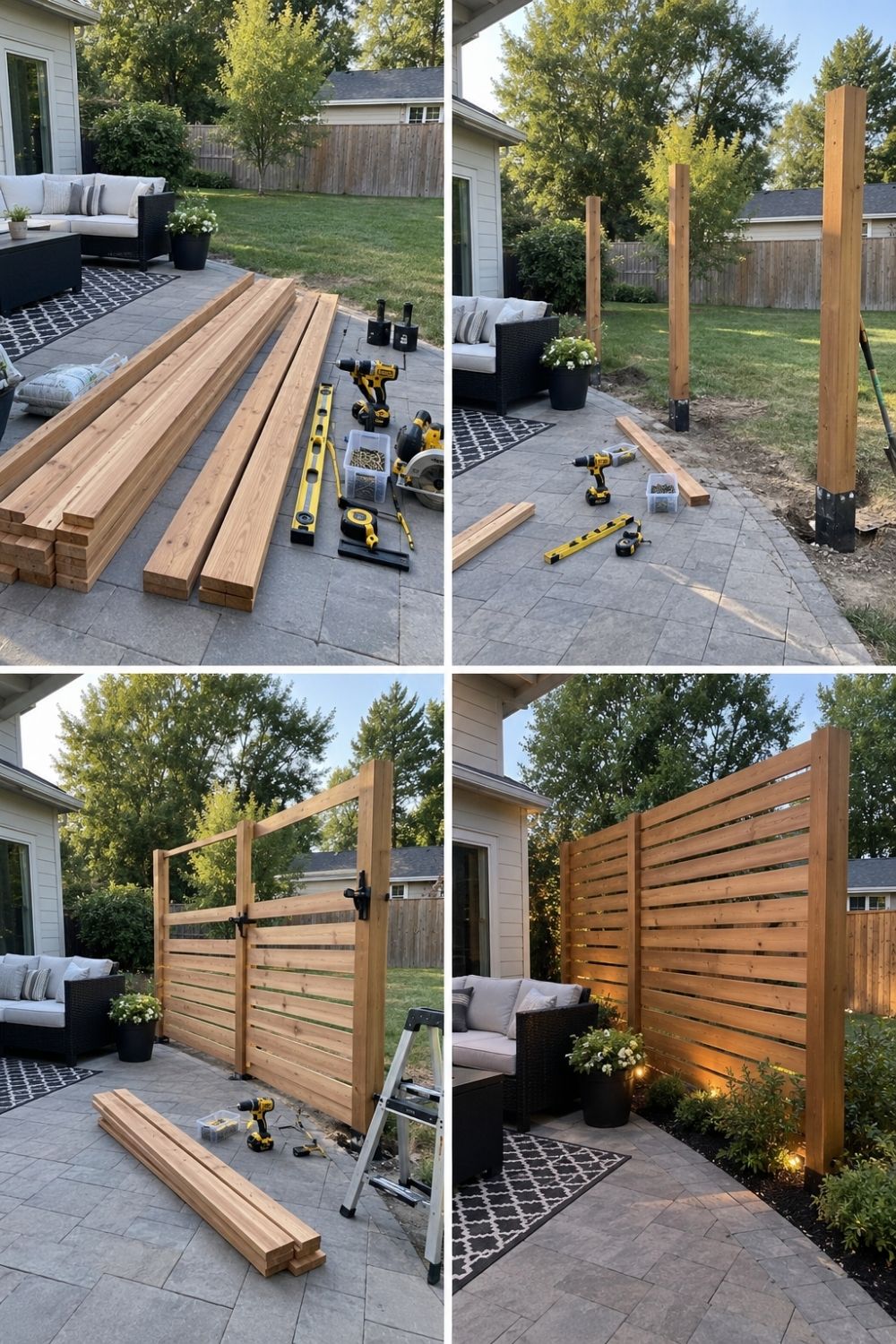
Photo by SassyGarden
The four photos above follow a build beside a paver patio: boards, posts and tools laid out; three posts set upright; horizontal slats being screwed on from a ladder; and finally the finished screen, with small garden lights at its base and planting in front. Use 4×4 posts set at least 2 feet deep or bolted to metal post bases on a hard surface, and space them 6–8 feet apart. Leave gaps of about half an inch to an inch between the slats. That keeps the screen from acting like a sail in strong wind while still blocking the view.
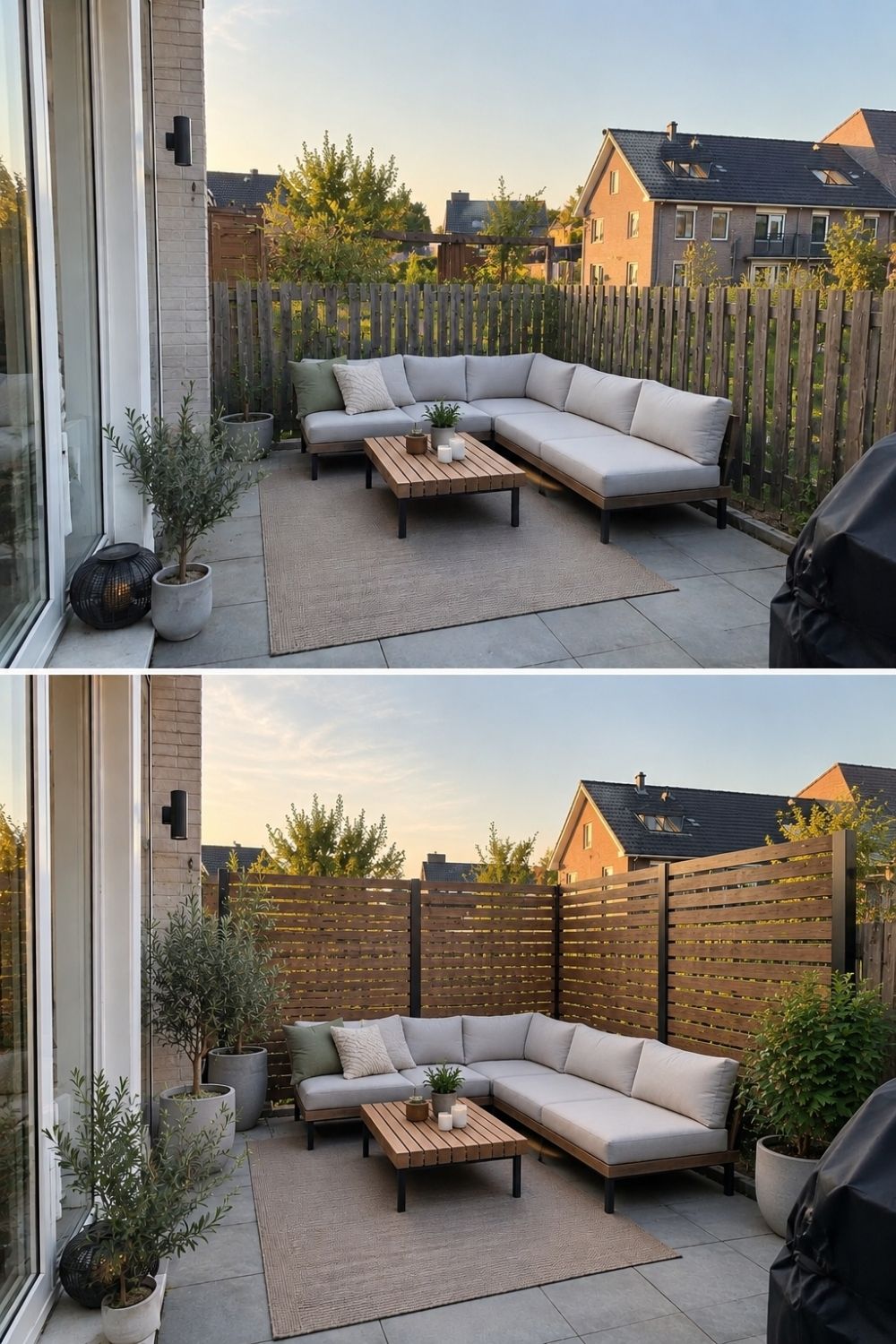
Photo by SassyGarden
This before and after shows the same idea wrapped around a corner. At first, a lounge corner with a sofa and coffee table sits in front of a low, gappy fence with neighboring houses clearly visible. After, a taller horizontal slatted screen in warm wood encloses two sides of the corner, with potted olive trees and grasses softening it. Lighting along the base turns it into a relaxing evening spot; my post on solar garden lighting ideas has plenty of ideas.
Planters with a built-in trellis
A planter box with a trellis on the back is a privacy screen you can move. That makes it ideal for renters, narrow side yards and patios where you can’t dig.
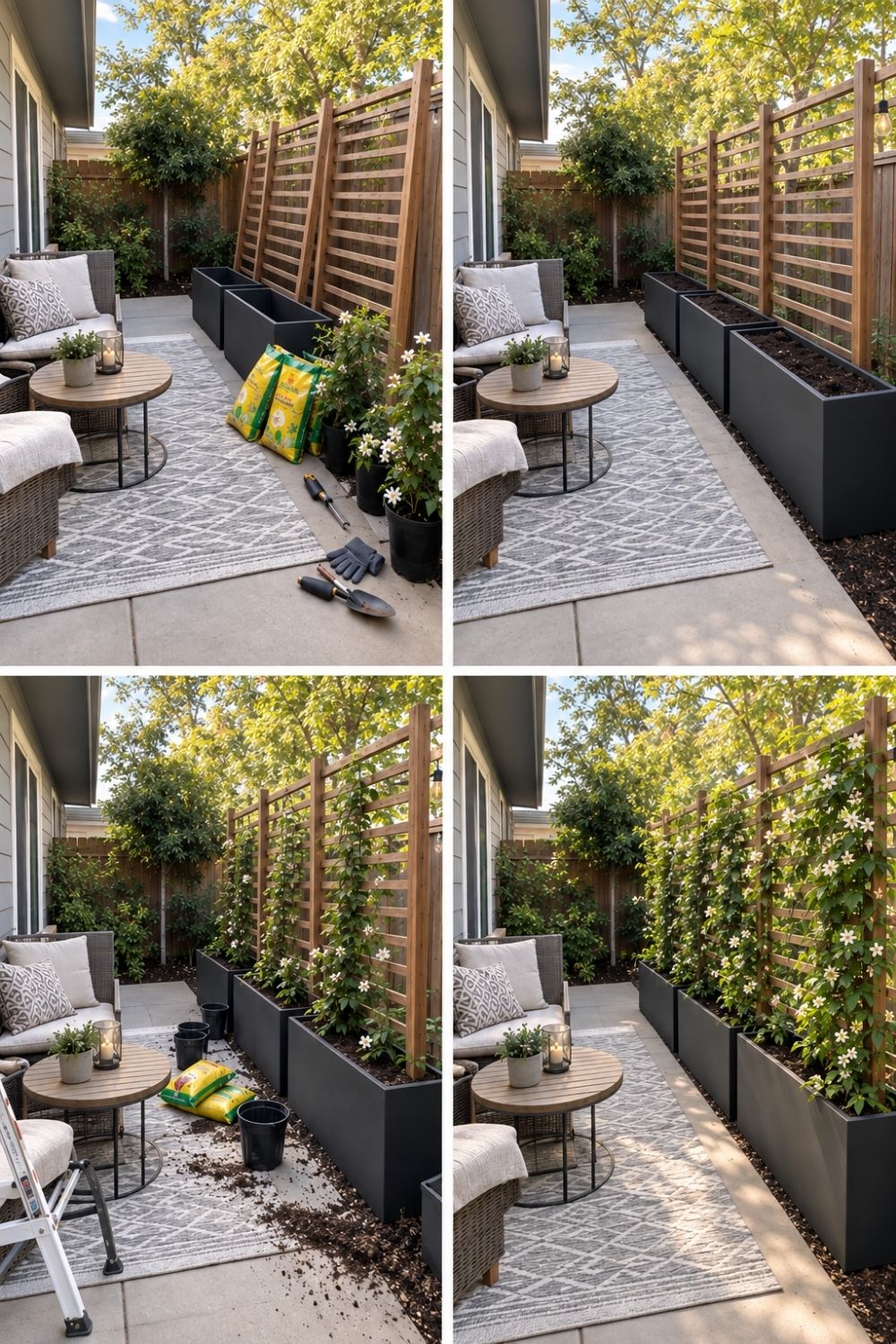
Photo by SassyGarden
In the four stages above, a narrow side patio with a small table and chairs gets a row of long black planters, then wooden trellis panels fixed to their backs, then star jasmine planted at the base, and finally a green, flowering wall along the boundary. Star jasmine, clematis and climbing hydrangea are good choices, and annual climbers like morning glory or climbing nasturtiums give a quick first-summer cover. Use deep planters, at least 16–18 inches, and heavy ones, since a trellis covered in leaves catches a lot of wind. For choosing the right support for each climber, see my post on garden trellis ideas.
Decorative metal panels
Metal privacy panels work almost like garden art. Laser-cut panels throw patterned shadows across a deck in the afternoon and take up very little space.
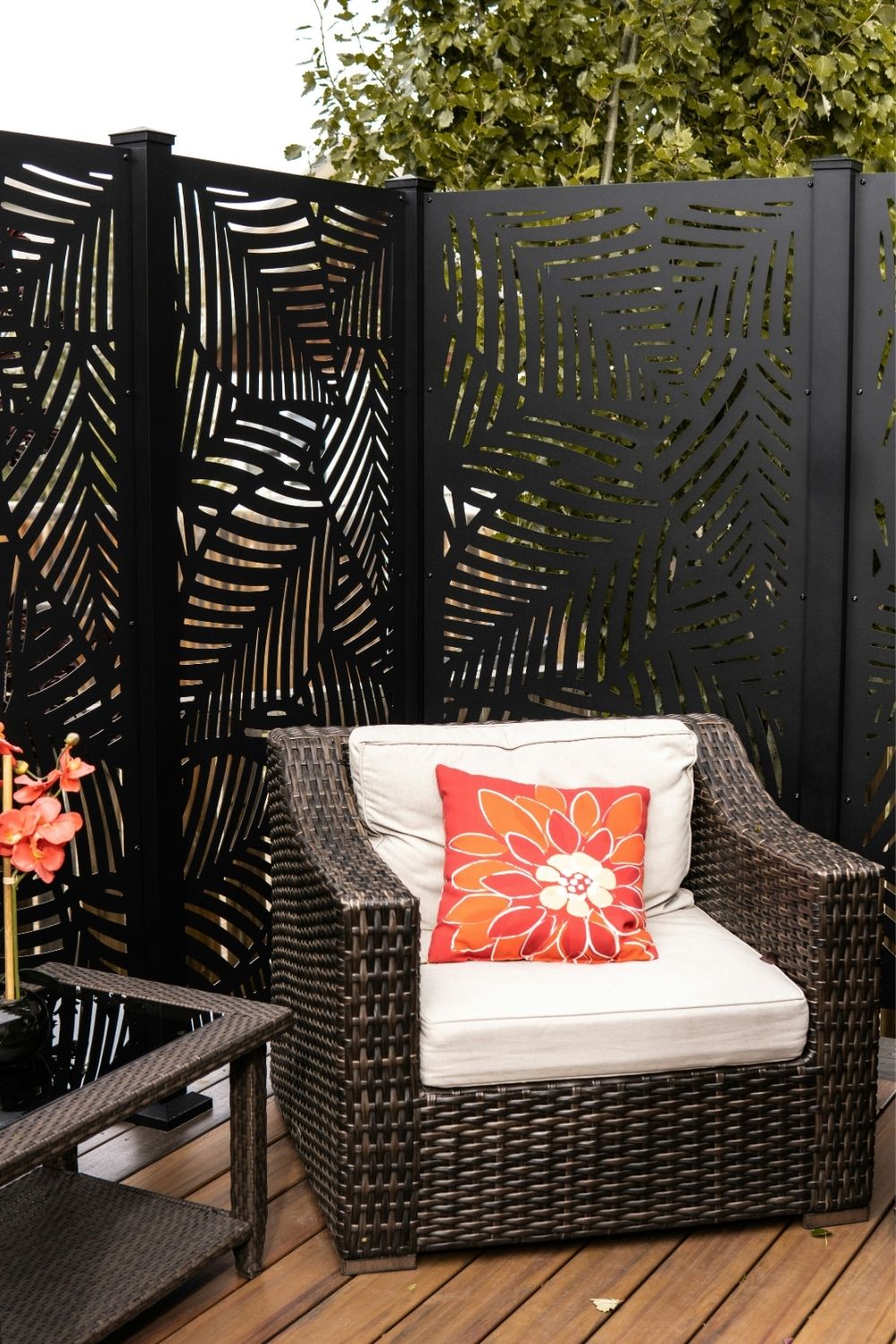
Photo by HideAway Inc. on Unsplash
Here, black panels with a cut-out palm-leaf pattern stand behind a wicker armchair with a white cushion and a bright orange pillow on a wooden deck. The pattern lets light and air through but blocks most of the view, and dark colors fade into the greenery behind them. Powder-coated aluminum or steel panels need almost no maintenance. Look for panels with at least 50–60% solid material if privacy, rather than decoration, is your main goal.
Budget screens: bamboo, reed and brushwood
Rolls of natural garden screening are the cheapest way to get instant privacy. You can fix them to an existing fence, a railing or a simple frame of posts and wire in an afternoon.
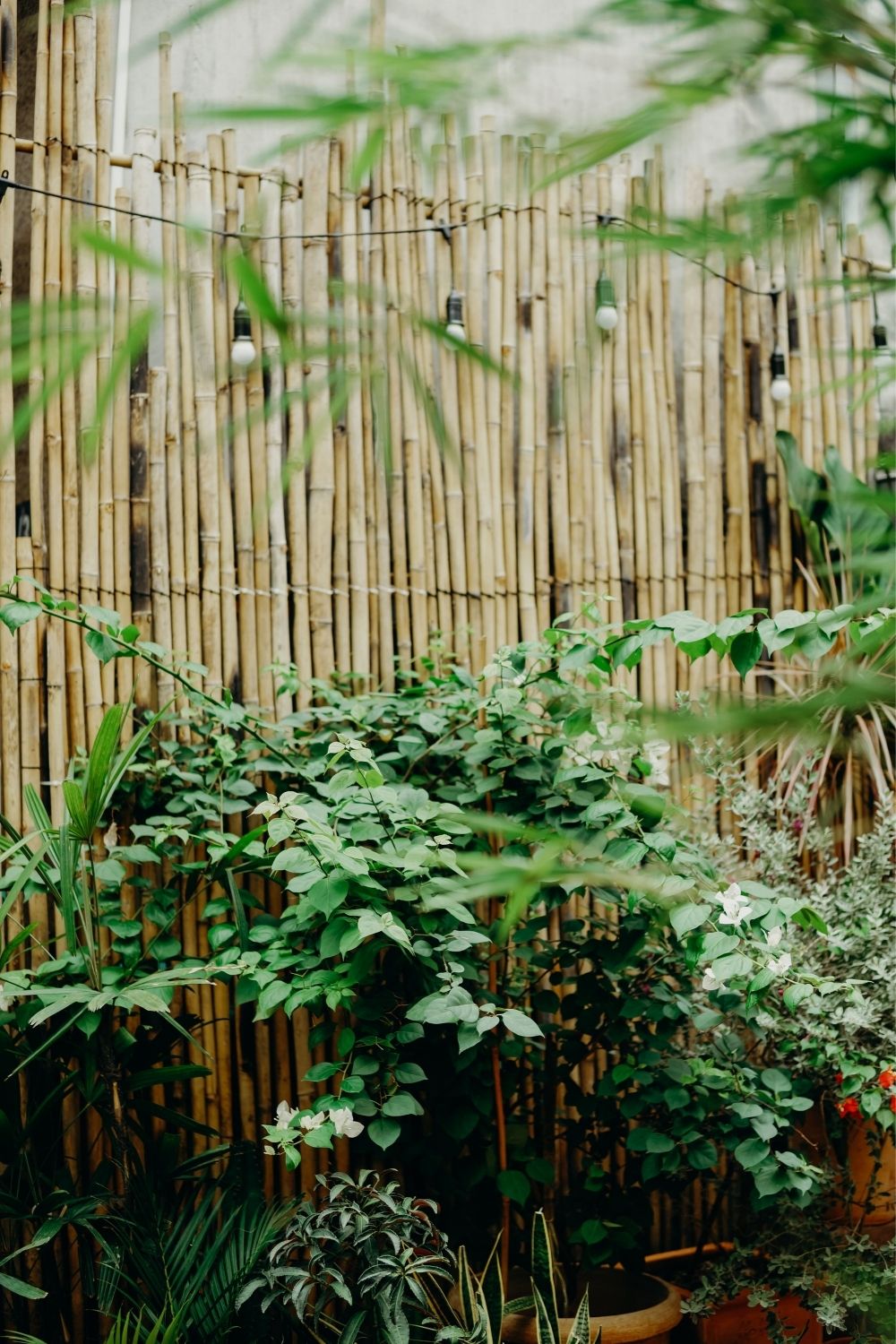
Photo by Van Nguyen Hoang on Pexels
This bamboo screen, strung with a few bulb lights along the top, forms a warm golden backdrop for a mix of leafy plants below. Bamboo rolls last about 5–8 years outdoors; reed and willow are cheaper but wear out faster, usually in 2–4 years.
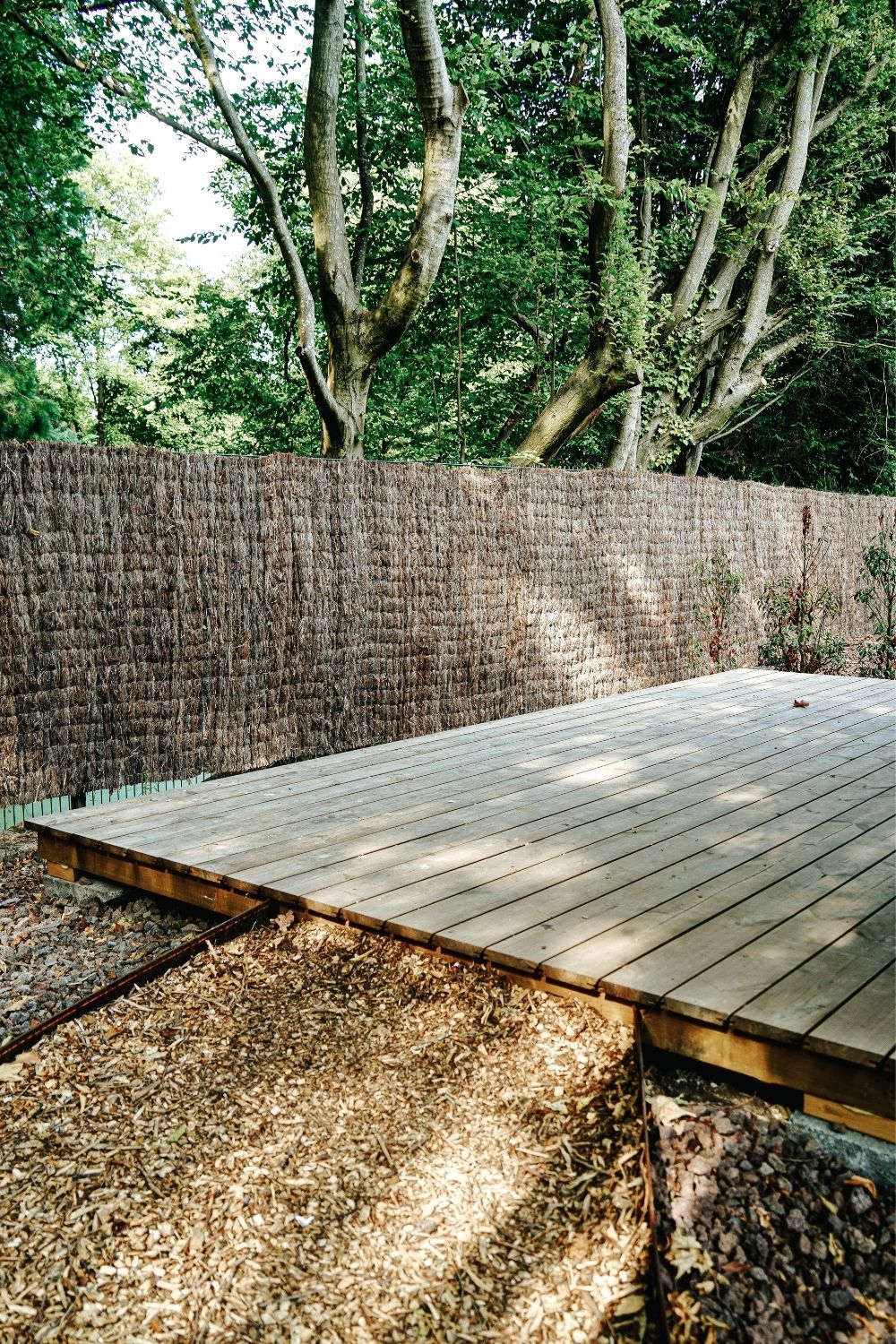
Photo by Marion Batteur on Pexels
Brushwood or heather garden screening, like the one behind this wooden deck with tall trees beyond it, has a wilder, more natural texture. It blends into a woodland garden almost completely. Fix any natural roll screen at the top, middle and bottom to stop it sagging, and keep the bottom edge off the ground so it doesn’t rot. For more low-cost ideas, see my post on budget fence ideas.
Tiny spaces and balconies
On a balcony, even a small privacy screen makes a big difference, but the rules are stricter. Wind is stronger higher up, and building managers or landlords often limit what you can attach.
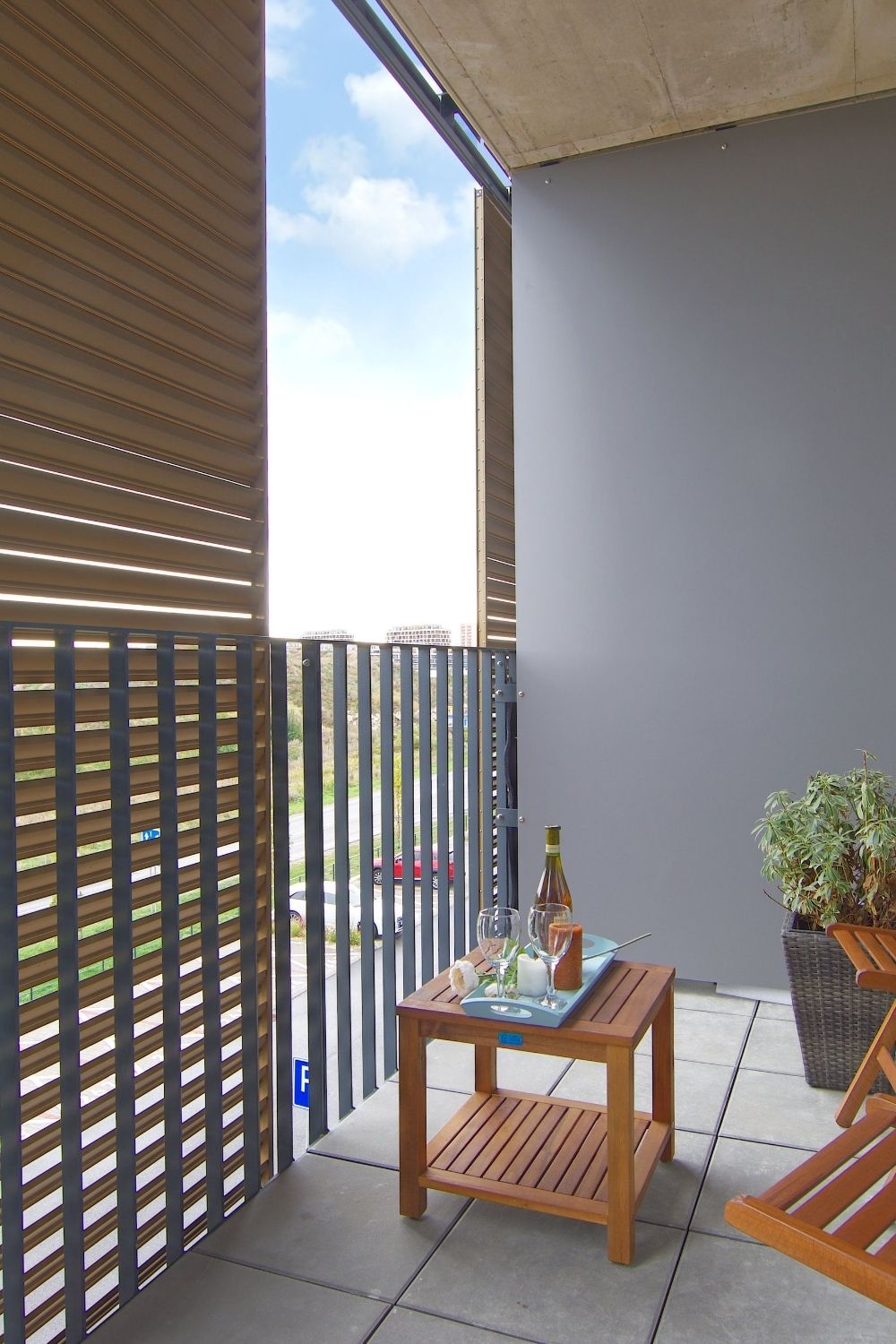
This balcony uses a tall panel of dark horizontal slats beside the railing, with a small wooden side table and a folding chair tucked in its shelter. Freestanding screens, tall planters and clip-on railing covers avoid drilling altogether. Make sure anything tall is weighted or tied securely, since a gust can topple an unanchored screen off a balcony. For more ways to use height in a small space, see my guide to vertical gardening ideas.
Overhead privacy for overlooked yards
Sometimes the problem isn’t the neighbor beside you but the one above you. If upstairs windows or a taller building look down onto your patio, no fence or privacy hedge will help, because the view comes from above.
The answer is a roof of some kind. A pergola with slatted or reed-covered beams breaks up the view from above while still letting in light, and a climbing vine over the top makes it even more effective within a couple of seasons. A shade sail stretched between the house and two posts works in an afternoon and can be taken down in winter. A small multi-stem tree, such as a serviceberry or a Japanese maple, planted beside the seating does the same job more gently, with its canopy acting as a living umbrella. I covered pergola ideas in more detail in my post on Mediterranean landscaping for small yards.
Which privacy screen is right for you?
| Option | Cost | Time to privacy | Upkeep |
|---|---|---|---|
| Evergreen hedge | Low to medium | 2–5 years | Trimming once or twice a year |
| Slatted wood screen | Medium | Immediate | Stain every 2–3 years |
| Planters with trellis | Medium | 1–2 seasons | Watering and tying in |
| Metal panels | Medium to high | Immediate | Almost none |
| Bamboo or reed rolls | Low | Immediate | Replace every few years |
The best privacy screen is the one that blocks the view you actually mind, from the spot where you actually sit. Start small with one panel, one planter or one gap in the hedge, live with it for a few weeks, and add more only if you still feel on show.