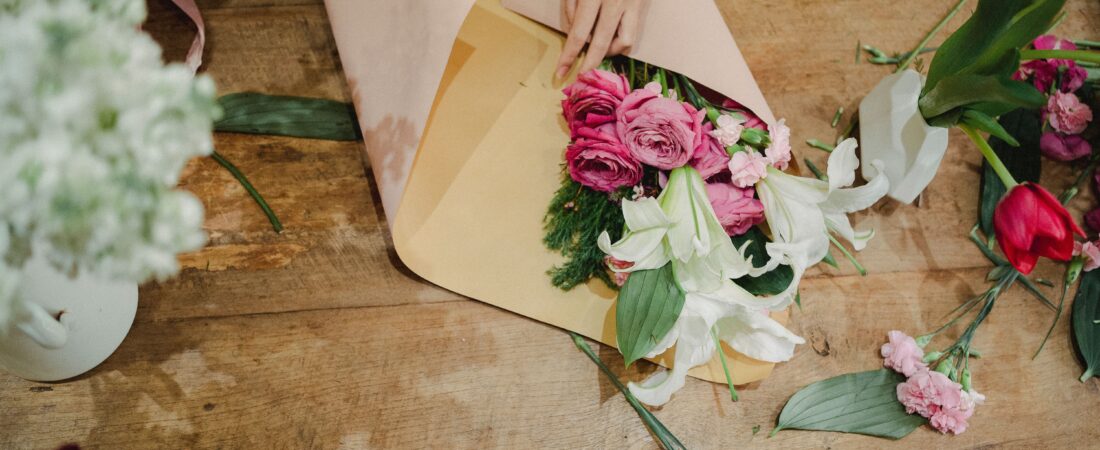
Roses and lilies work together because they’re opposites. A rose is compact, round and layered; a lily is big, open and star-shaped, with a scent that fills a room. Put them in the same vase and the roses give the arrangement weight while the lilies give it height and drama. That’s why a rose and lily bouquet turns up at weddings, on Valentine’s Day, at birthdays and at funerals alike: change the colors and the proportions, and the same two flowers can say almost anything.
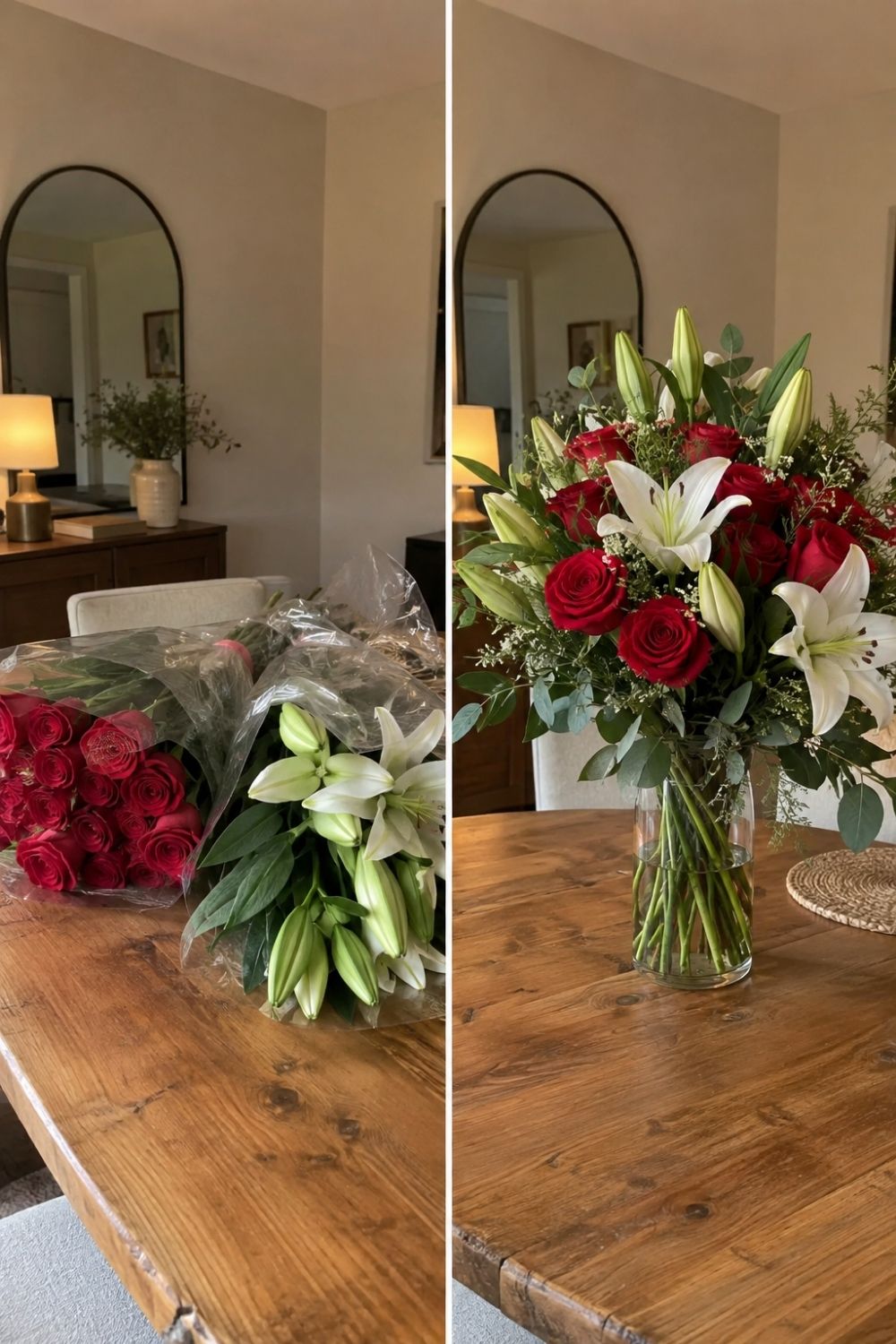
Photo by SassyGarden
The photo above shows the starting point for most of us: two plastic-wrapped supermarket bunches, one of red roses and one of white lilies, dropped on the dining table. Next to them is the same pair turned into a proper arrangement in a glass vase, with a little greenery and gypsophila filling the gaps. The difference is ten minutes of work and a few simple rules.
How to arrange a rose and lily bouquet at home
You don’t need florist training for this. You need sharp scissors or pruners, a clean vase, some string or raffia, and a bit of patience with the lily stems.
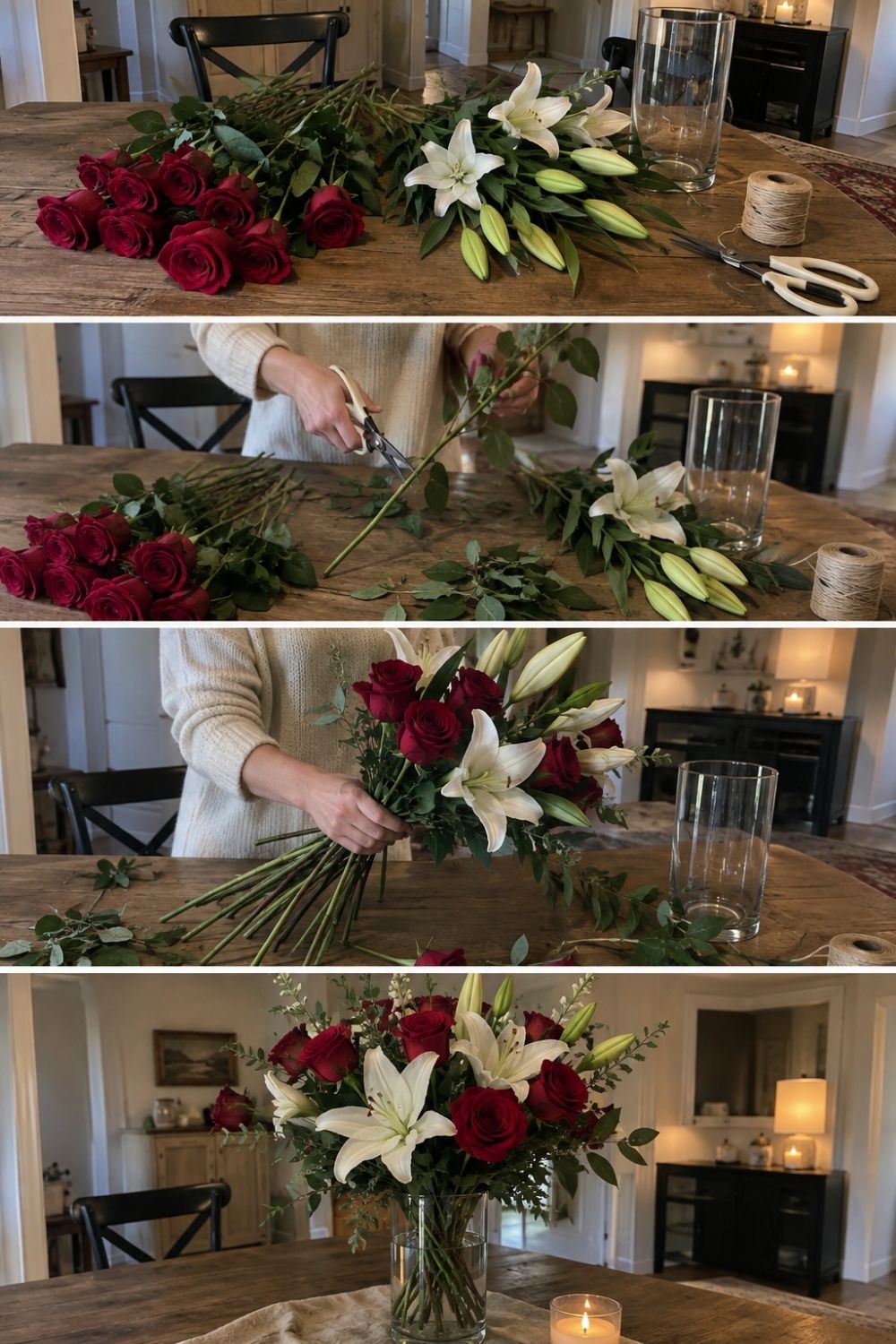
Photo by SassyGarden
The four stages above follow the whole process, from loose stems on the table to a finished arrangement in a clear vase:
- Prepare the stems. Strip every leaf that would sit below the waterline, because submerged leaves rot and cloud the water. Remove the outer “guard petals” on roses if they look bruised.
- Cut at an angle. Trim each stem about an inch at a 45-degree angle, ideally under running water, so the cut end can take up water instead of air.
- Build a spiral. Hold one stem as the center and add the others at a slight angle, all tilting the same way, turning the bunch a little after each addition. The stems end up crossing at one point, which keeps the bouquet round and lets it stand in the vase on its own.
- Tie at the crossing point. Wrap string or raffia tightly where the stems cross, then trim all the stem ends to the same length.
- Check the height. A good starting ratio is flowers about one and a half times the height of the vase.
If you want to see the spiral technique in motion, Bloom & Wild’s guide to hand-tied bouquets walks through it clearly. The first attempt usually looks a bit lopsided. The third looks like you paid for it.
When you buy the flowers, check the lily buds and the rose heads. Lilies should have one or two blooms just opening and the rest in tight green buds; roses should feel firm when you gently squeeze the head, not soft. A supermarket rose bouquet with floppy heads and brown edges won’t recover. Buying separate bunches and building your own rose and lily bouquet usually costs noticeably less than a ready-made arrangement of the same size.
Wedding bouquets: white on white
For weddings, an all-white rose and lily bouquet is the classic choice for a reason: it photographs well, suits any dress, and lets texture do the talking instead of color.
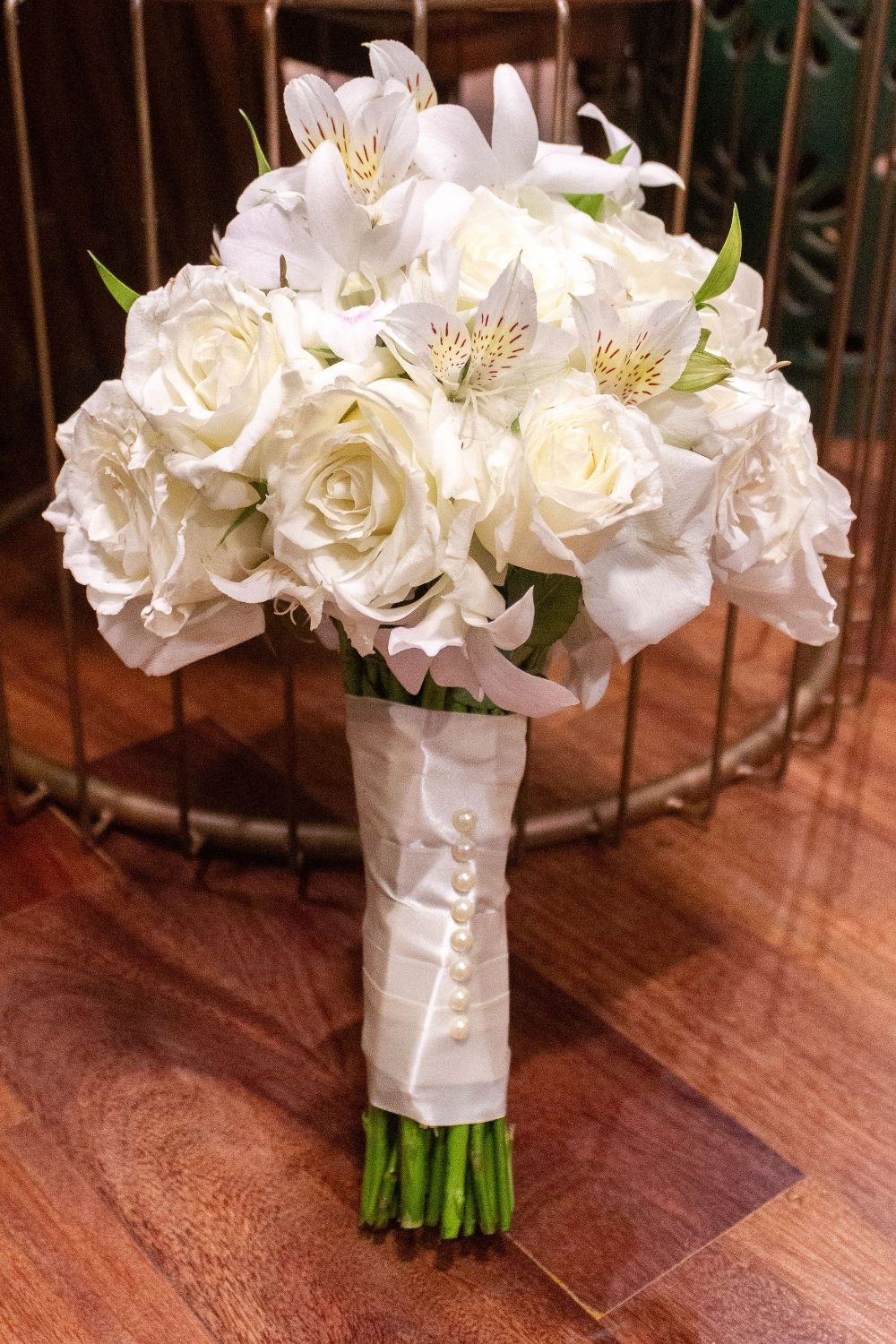
Photo by Paloma Lima on Pexels
This bridal rose bouquet packs white roses tightly with speckled white alstroemeria, and the stems are wrapped in ivory satin held with pearl pins. It’s a compact, domed shape that suits a formal dress. For a looser, garden-style look, lilies with longer stems and a lot of greenery work better.
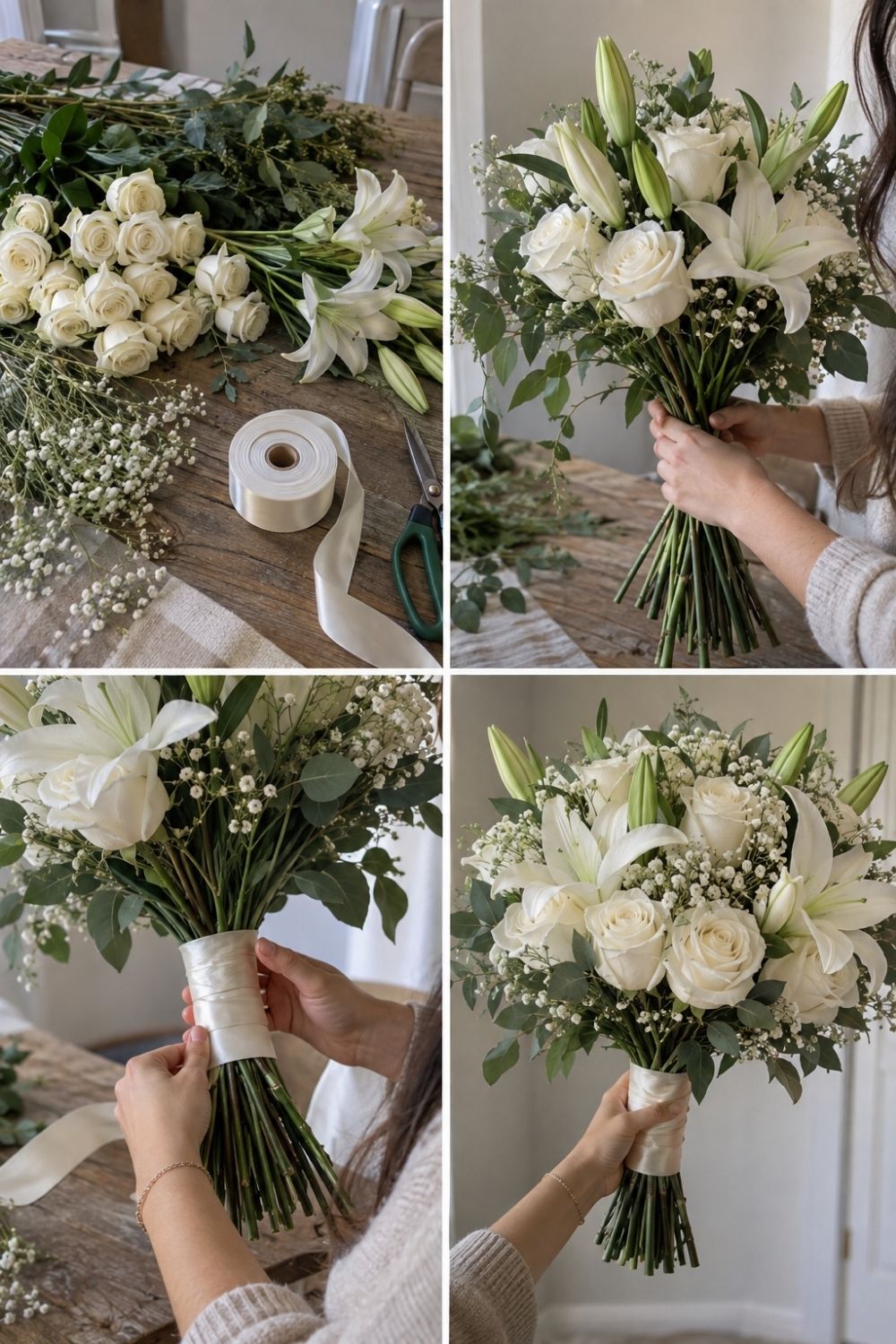
Photo by SassyGarden
The four steps above show a DIY bridal bouquet from start to finish: white roses, white lilies, eucalyptus and baby’s breath laid out on the table; the stems gathered into a spiral in one hand; the binding point wrapped in wide ivory ribbon; and the finished bouquet held up. Make a bridal bouquet the day before at most, keep it in water in a cool room overnight, and wrap the ribbon on the morning of the wedding so the stems don’t sit dry for hours. If succulents are part of your plans, my post on succulent wedding ideas covers how to mix them in.
Red roses and pink lilies for Valentine’s Day
A red rose bouquet alone says “Valentine’s Day.” Add pink lilies and the bouquet looks less like a formula and more like a choice.
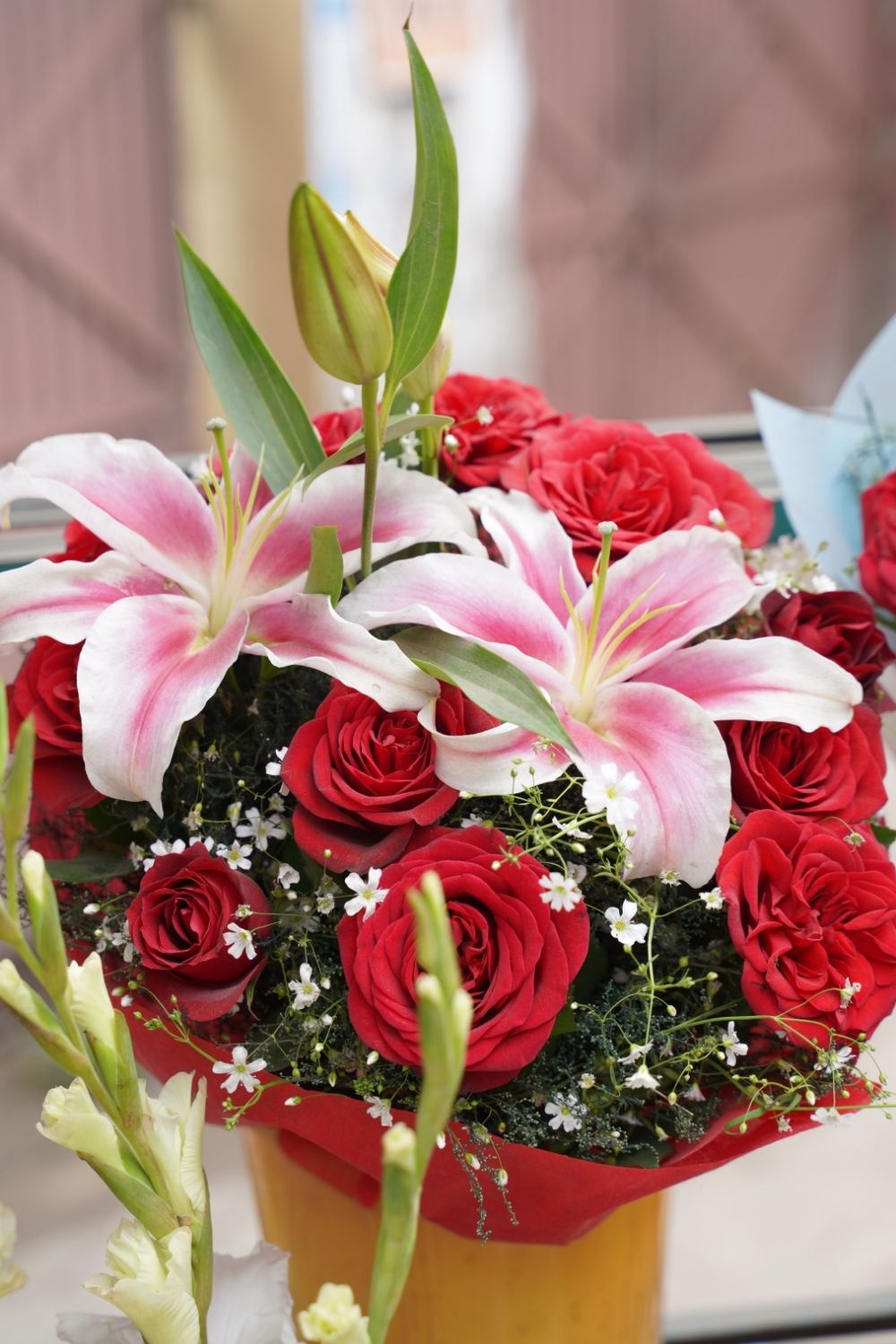
Photo by shalender kumar on Pexels
This bouquet combines deep red roses with pink-and-white Stargazer lilies and small white filler flowers, wrapped in red paper. Stargazers are one of the most fragrant lilies, so they’re a good pick when scent matters. Keep the lily count low, two or three stems for a dozen roses, or the lilies take over. Buy lilies with some buds still closed; they’ll open over the following days and keep the bouquet changing for a week or more.
Soft palettes: peach, blush and alstroemeria
Not every rose and lily bouquet needs to be red or white. Peach, blush and apricot tones feel warmer and suit birthdays, Mother’s Day and “just because” gifts.
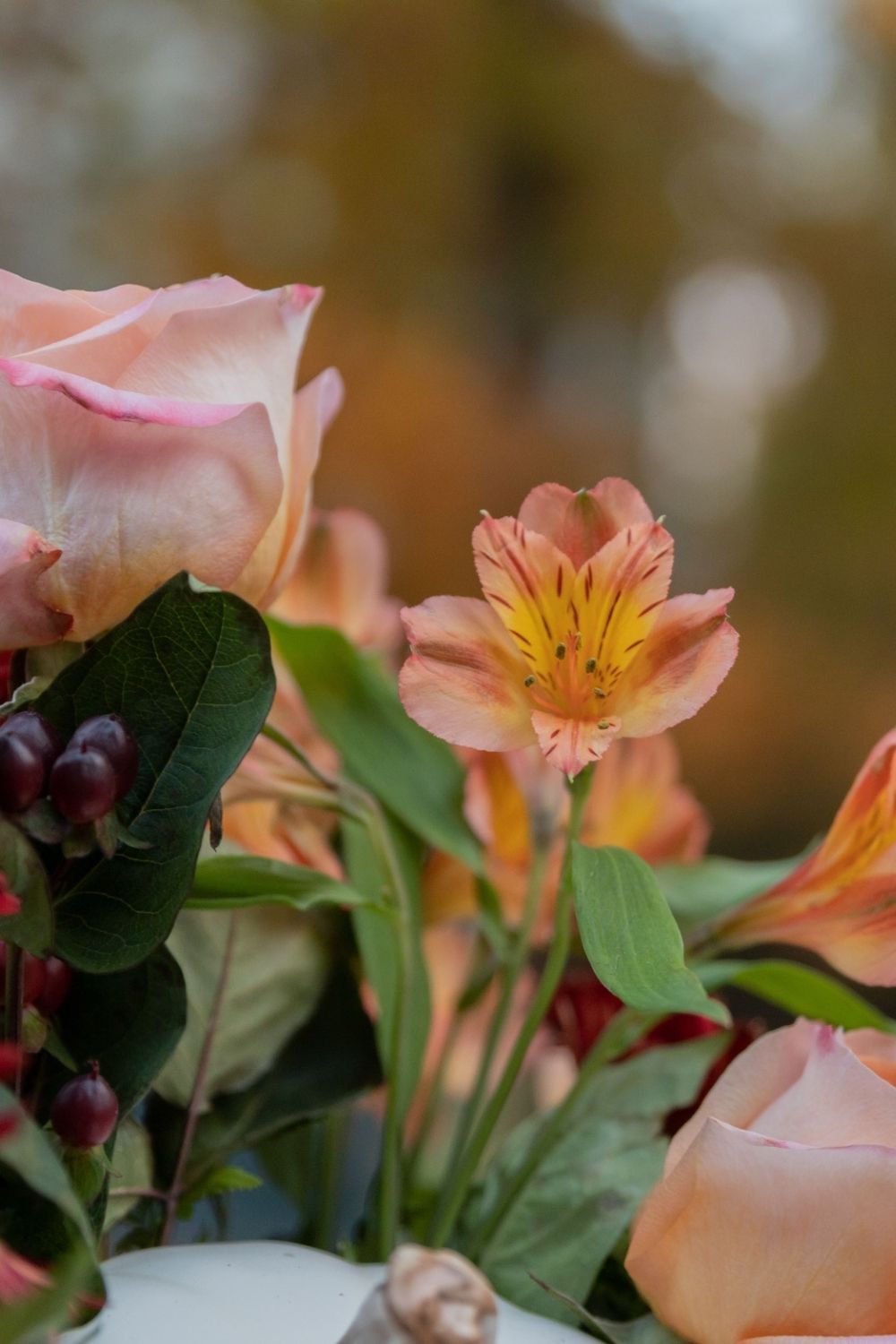
Photo by Binti Malu on Pexels
Here, peach roses sit beside orange alstroemeria and dark red hypericum berries. Alstroemeria (Alstroemeria), often sold as Peruvian lily, isn’t a true lily at all, which has a few advantages: it’s cheaper, it often lasts two weeks in a vase, it has no pollen that stains, and it’s much safer around cats than true lilies. When a true lily is too big or too strongly scented for a gift, alstroemeria gives a similar lily look in a smaller bouquet of flowers.
Everyday vases and centerpieces
The vase changes the arrangement as much as the flowers do.
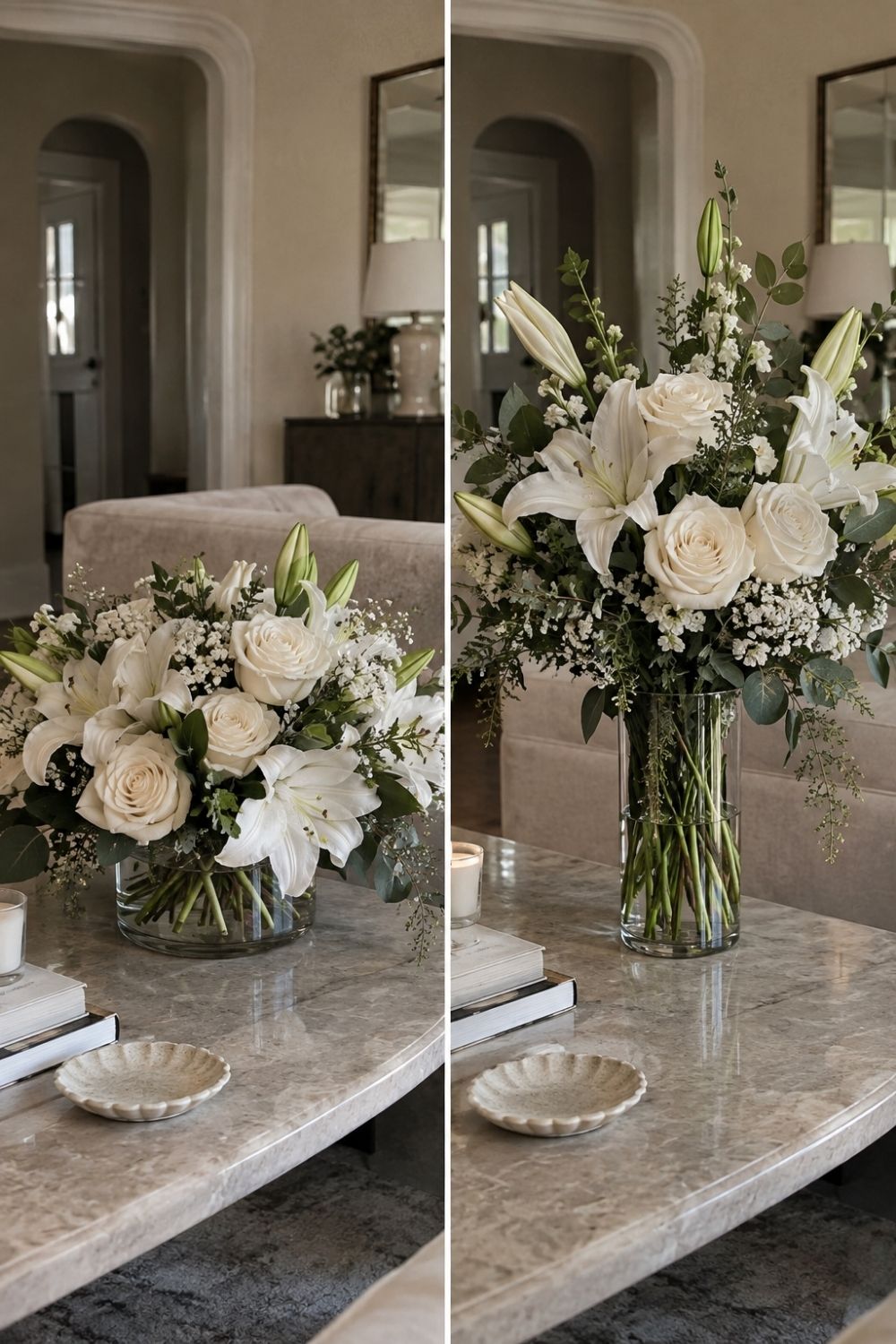
Photo by SassyGarden
In this living room, the same white roses, lilies and eucalyptus appear twice: first cut short in a low, wide glass bowl on the coffee table, then left long in a tall, straight vase. The low version reads as a centerpiece you can talk across; the tall one reads as a statement for a sideboard or entryway. A few rules of thumb:
- Dining tables: keep arrangements under about 12 inches tall so guests can see each other.
- Tall, straight vases: suit long-stemmed lilies and a loose, open shape.
- Round or fishbowl vases: suit short, tight rose arrangements.
- Narrow-necked vases: hold stems upright on their own, useful for just three or five flowers.
Colors and what they’re said to mean
Flower meanings are more tradition than rule, but they’re worth knowing before you send a bouquet to someone who might read into it.
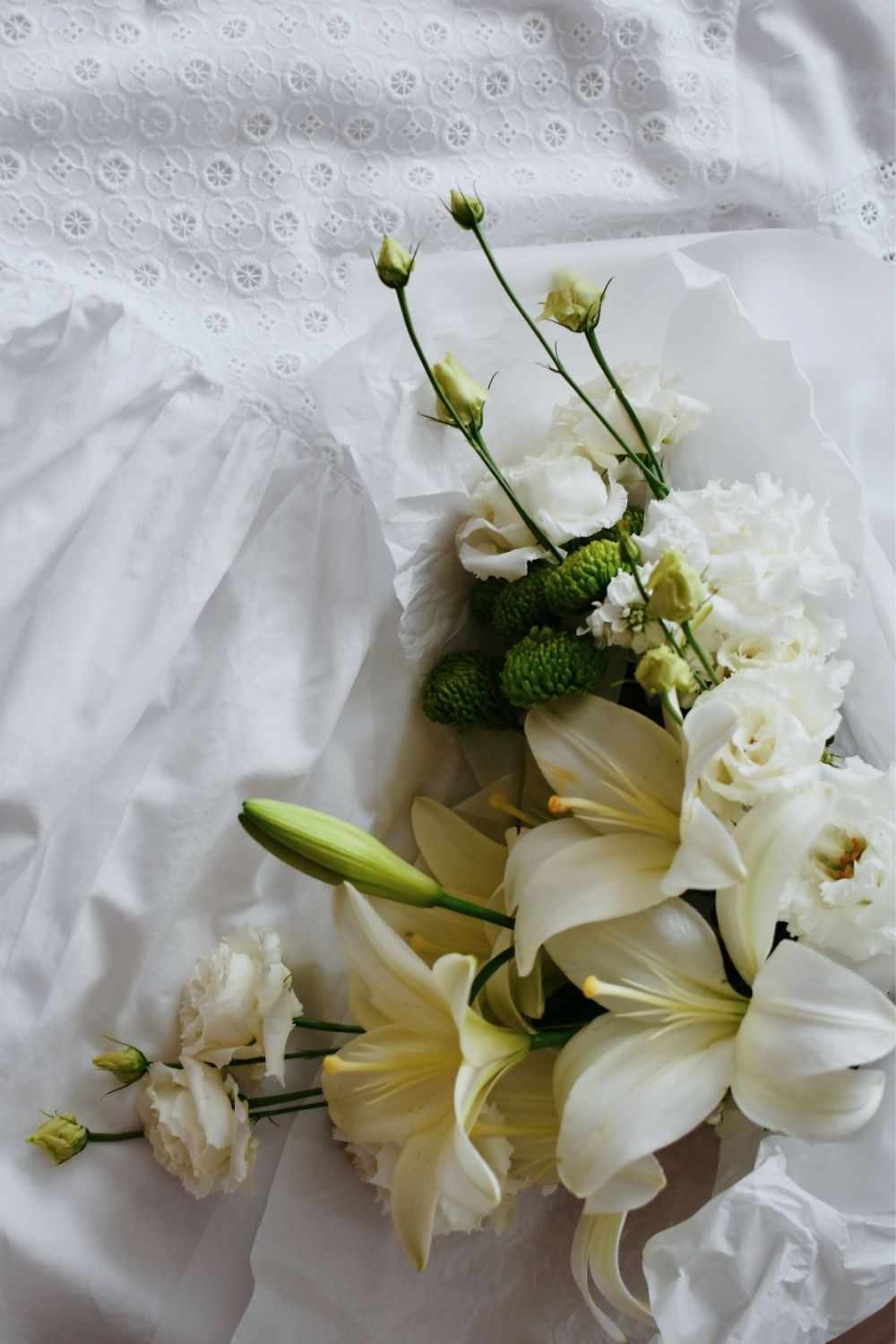
Photo by Darya Grey_Owl on Pexels
| Color | Traditional associations | Works well for |
|---|---|---|
| Red roses | Romantic love | Valentine’s Day, anniversaries |
| White roses and lilies | Purity, new beginnings, remembrance | Weddings, Easter, sympathy |
| Pink roses and lilies | Admiration, gratitude, gentleness | Mother’s Day, thank-you gifts |
| Peach and apricot | Warmth, appreciation | Birthdays, friendship |
| Yellow | Friendship, cheer | Get-well bouquets, casual gifts |
White lilies deserve a special note: in many places they’re strongly associated with funerals and sympathy. The white lily and rose bouquet above, laid on a white dress, reads as bridal here, but the same flowers in a tall vase can read as remembrance. If you’re sending white lilies to someone who’s unwell, a pop of another color avoids any confusion.
Making them last (and keeping cats safe)
A well-kept rose and lily bouquet lasts about a week, sometimes longer. These habits make the biggest difference:
- Change the water every two days and wash the vase, since bacteria clog the stems.
- Recut the stems by about half an inch each time you change the water.
- Use flower food or a small pinch of sugar and a drop of bleach if you have none.
- Keep the vase away from direct sun, radiators and the fruit bowl, as ripening fruit releases ethylene that ages flowers faster.
- Pull off lily anthers as the flowers open. The orange pollen stains fabric and tablecloths, and it’s much easier to remove the anthers with a tissue than the stain.
If you have a cat, skip true lilies entirely. All parts of true lilies (Lilium) and daylilies (Hemerocallis), including the pollen and the vase water, can cause sudden kidney failure in cats, even in small amounts. Choose roses with alstroemeria instead, and if a cat has been near a lily bouquet, call a vet right away rather than waiting for symptoms.
If a bouquet starts drooping, a rose head that bends over can often be revived by recutting the stem and standing it in deep, cool water for an hour. For more houseplant and styling ideas indoors, see my post on kitchen windowsill plants.
If nothing else sticks, let it be this: cut the stems at an angle, strip the leaves below the water, keep the lilies few and the water fresh, and keep true lilies away from cats. The rest is just picking colors you love.