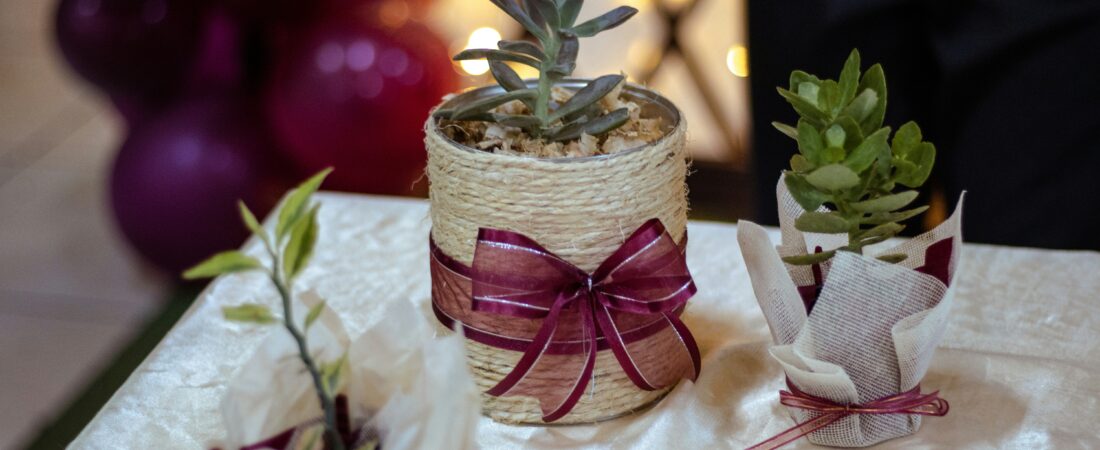
Cut flowers have a clock running from the moment they leave the field. Succulents don’t. They can be bought weeks before the wedding, they sit happily through a hot afternoon without wilting, they cost less per stem than most roses, and at the end of the night guests can take them home and keep them for years. That combination is why succulent wedding decor has moved well beyond desert venues and into barns, gardens, city lofts and classic ballrooms.
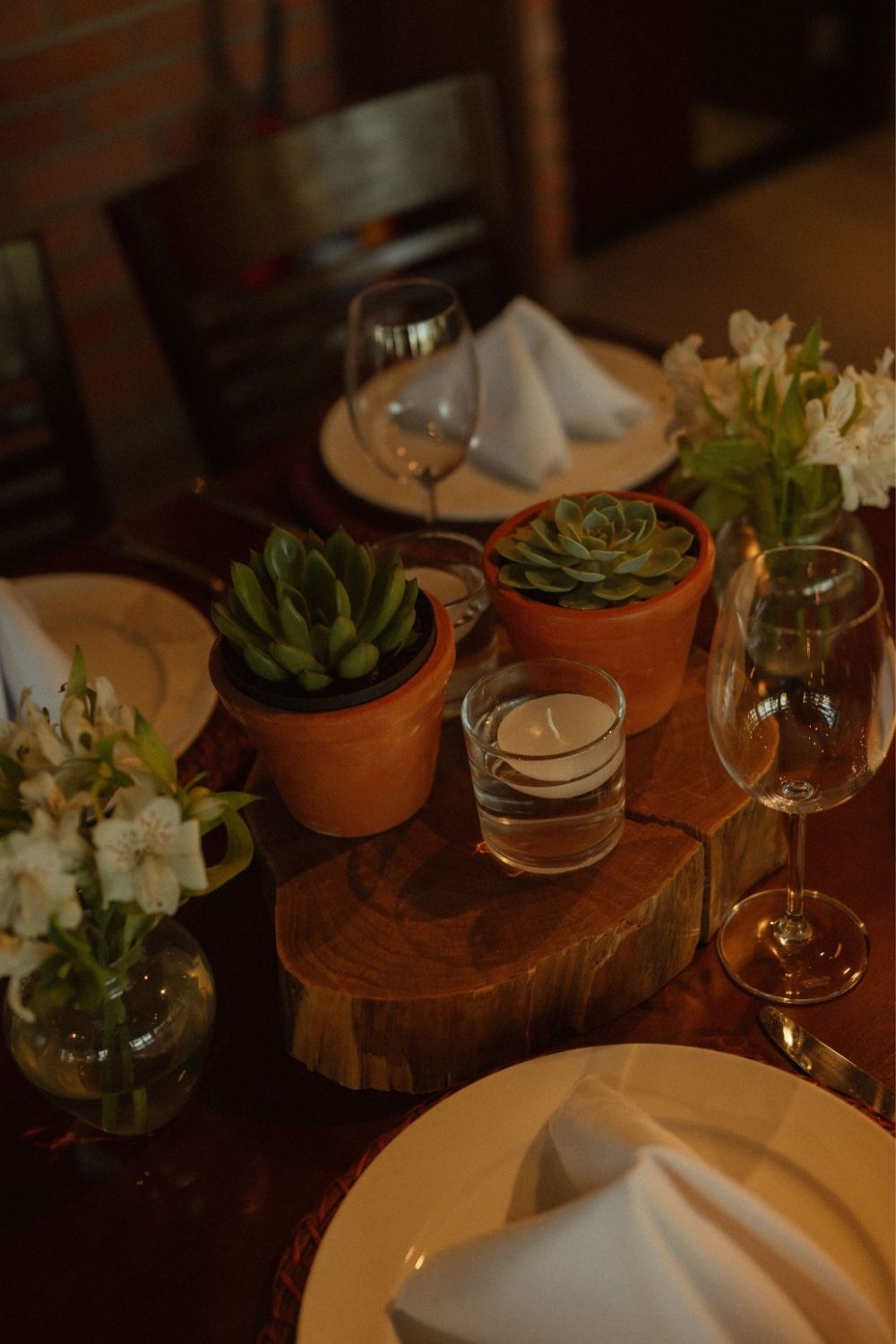
Photo by Alexander Mass on Pexels
The table above shows how quietly they can fit in: small terracotta pots of echeveria on a slice of wood, a lit candle, a few white flowers and a plain place setting. Nothing about it shouts “succulents.” It simply looks calm and green. The ideas below follow the wedding day in order, from the ceremony to the favors, with the practical details that make each one work.
Which wedding styles suit succulents?
Almost all of them, as long as you match the plants and their partners to the mood. Succulents come in soft blue-gray, sage, blush, deep burgundy and near-black, so the palette is wider than most people expect.
| Wedding style | Succulents that fit | Pair them with |
|---|---|---|
| Boho | Echeveria, string of pearls, trailing sedum | Pampas grass, dried flowers, macramé, terracotta |
| Desert or rustic | Agave, aloe, larger echeveria | Wood slices, burlap, cacti, warm candlelight |
| Contemporary | Single sculptural rosettes, haworthia | White or concrete pots, lots of empty space |
| Romantic | Blush and lilac echeveria, graptoveria | White roses, ranunculus, eucalyptus, ivory ribbon |
If you’re unsure, echeveria is the safest choice for succulent wedding decor. Its rose-shaped rosettes blend in with flowers, and it’s the plant most florists already stock for a succulent wedding.
Dress the ceremony arch
An arch covered only in flowers needs replacing if the ceremony gets postponed by a day. An arch built with succulents and greenery will look the same the next morning.
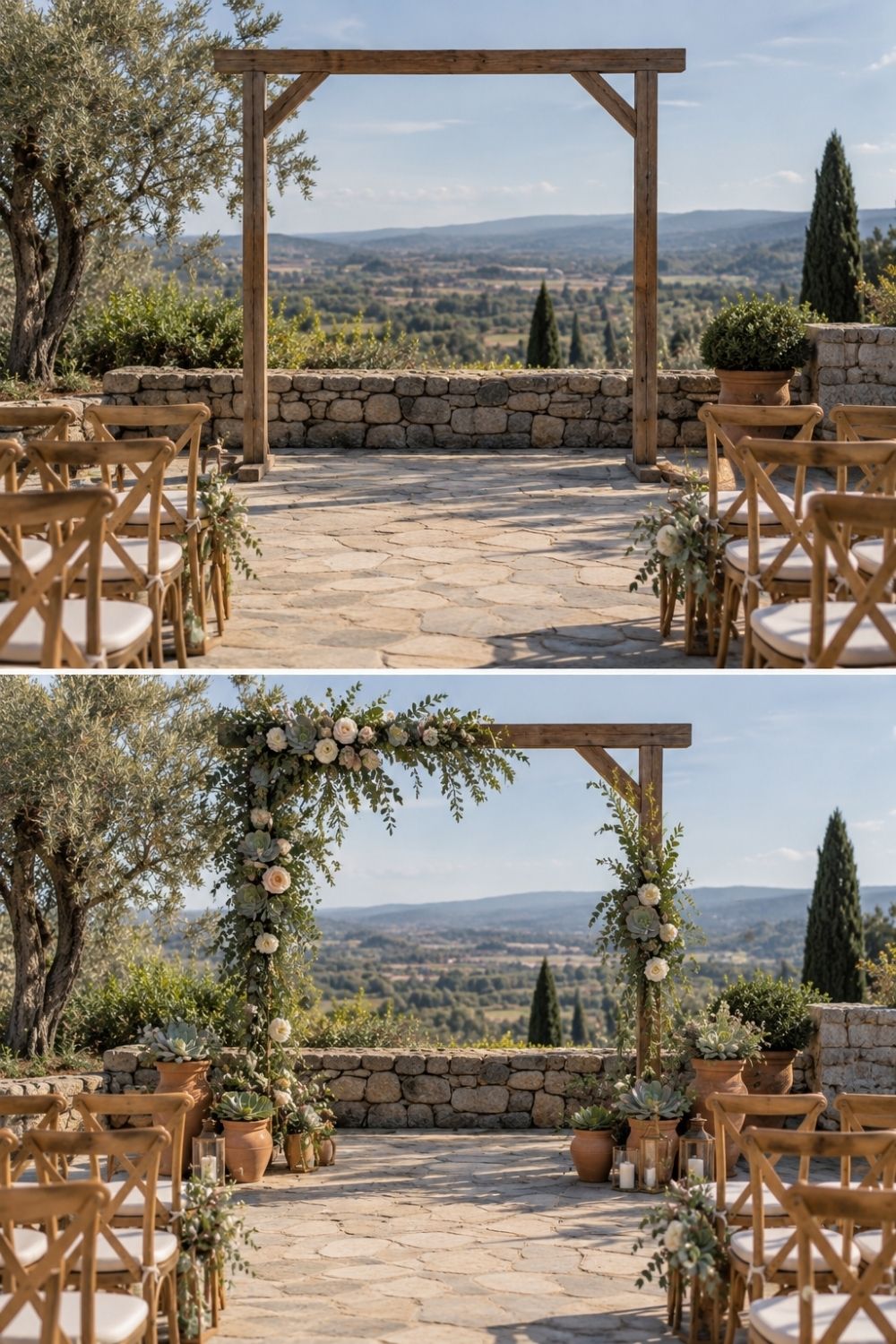
Photo by SassyGarden
The before and after above takes a bare wooden arch on a stone terrace and adds a cluster of succulents and trailing greenery at the top corners and down one side. Clusters in two or three spots look more generous than a thin line along the whole frame, and they use far fewer plants. Attach each rosette to a wooden florist pick or a short length of wire pushed through the base, tape the stem with florist tape, and fix the picks into a block of wet floral foam or a moss-filled cage tied to the frame. Succulents are heavier than flowers of the same size, so check that the arch is weighted or staked before you load it, especially outdoors in wind. It’s one of the few succulent wedding ideas that works as well at a garden ceremony as in a ballroom.
A succulent bouquet that holds together
A succulent bouquet is one of the most memorable things a bride can carry, and it can be made at home with a bit of practice.
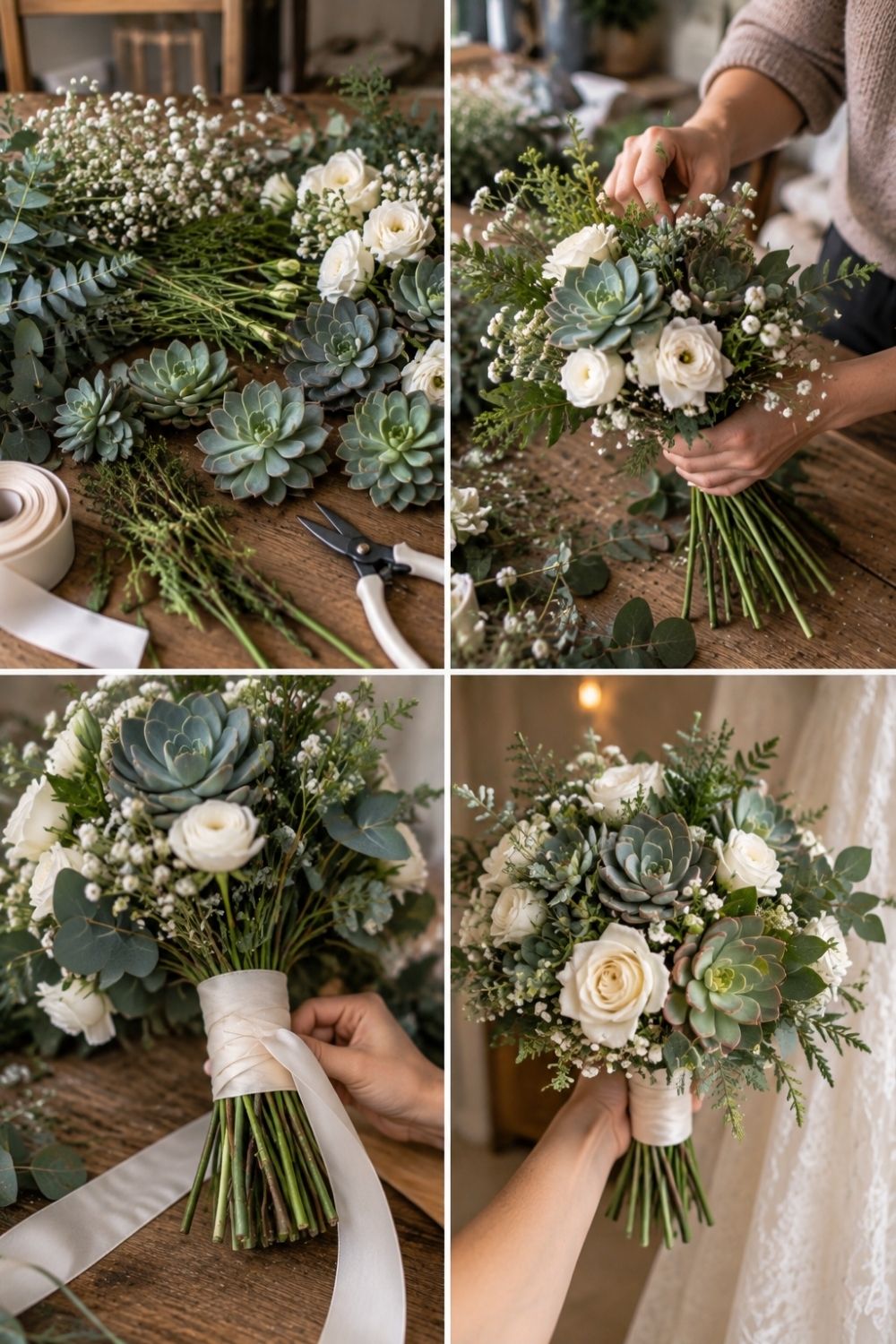
Photo by SassyGarden
The four stages above go from white roses, baby’s breath, eucalyptus and a few echeveria rosettes laid out on the table, to the rosettes being wired, to the bouquet gathered in one hand, and finally the finished bouquet wrapped in ribbon. The wiring step is the part that matters. Cut the rosette off with about half an inch of stem, push a florist wire through the base and bend both ends down to form a false stem, then wrap it in tape. Wired succulents can be prepared two or three days ahead and kept on a tray in the shade.
Keep the number of rosettes low, three to five for a medium bouquet, because a succulent bouquet gets heavy fast and the bride will hold it for hours. The spiral technique for the flowers is the same one I described in my rose and lily bouquet ideas.
Centerpieces that double as decor later
Succulent centerpieces have one big advantage over flowers: after the wedding they become houseplants rather than compost.
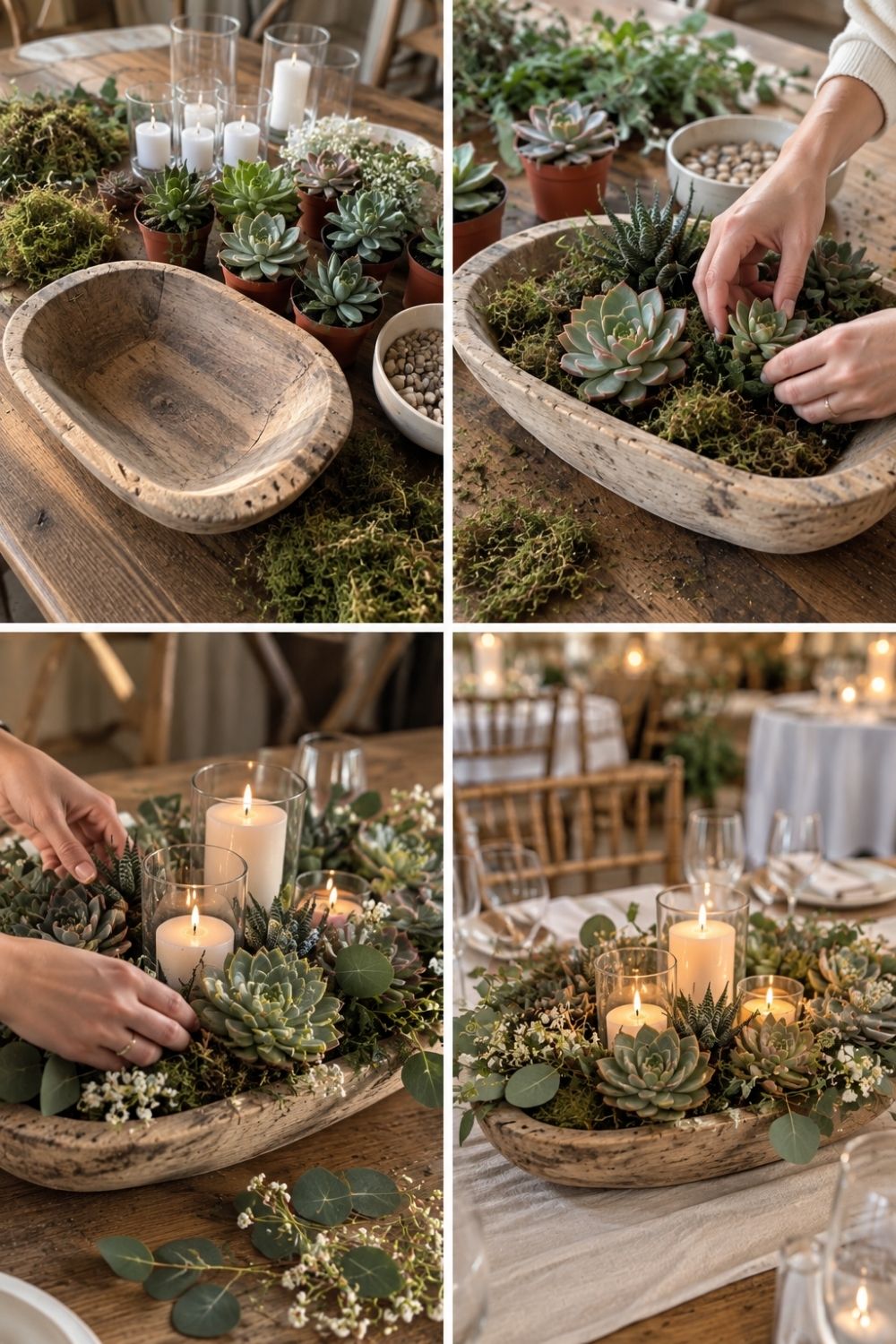
Photo by SassyGarden
In the four photos, an empty wooden dough bowl gets a layer of gritty soil, then a mix of echeveria and other small succulents, then a covering of moss and three pillar candles, ending up as a long, low succulent centerpiece on a dining table. A shallow bowl like this is ideal for a table because it keeps everything below eye level, so guests can talk across it. Plant the bowl two to three weeks before the wedding so the roots settle, and keep candles on their own plates or in glass holders so wax doesn’t drip onto the plants. If you like building arrangements in pots, the same layering ideas appear in my guide to container gardens.
On the cake: a few rules
A few echeveria rosettes on a white cake make a striking succulent wedding detail in photos, but they need some care.
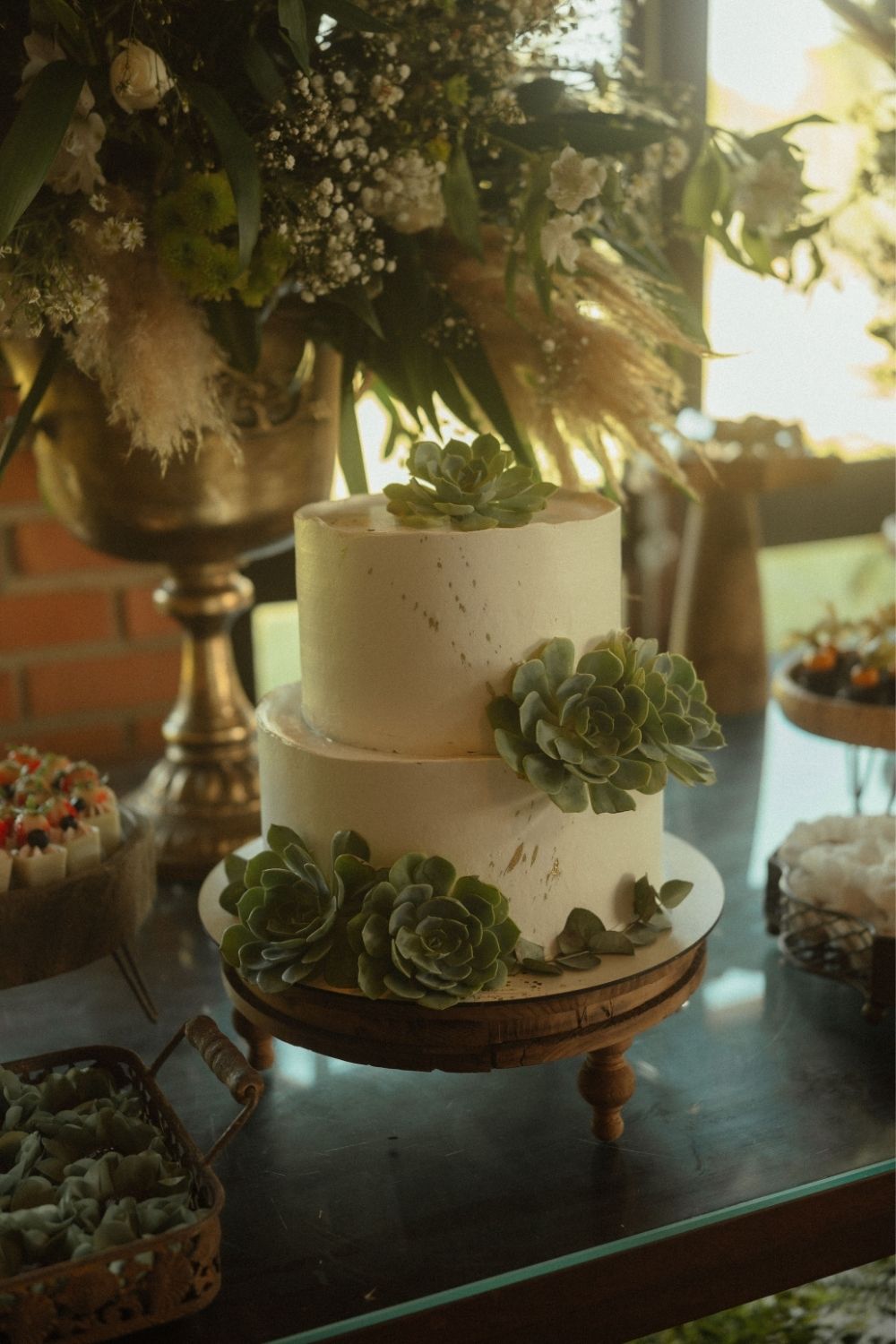
Photo by Alexander Mass on Pexels
This two-tier cake has blue-green rosettes cascading down one side of smooth white icing. Real succulents are not edible, so they should never touch the cake directly. Wrap each stem in florist tape and set it into a food-safe flower pick or on a small disc of parchment, remove soil completely, and take the plants off before the cake is cut. Talk to your baker early: many prefer to add live decorations themselves, and some will offer sugar succulents instead, which avoids the question entirely.
Favors guests will keep
Succulent favors are the idea most couples start with, and they’re popular for a reason: they’re cheap, they travel, and they last far longer than a bag of almonds.
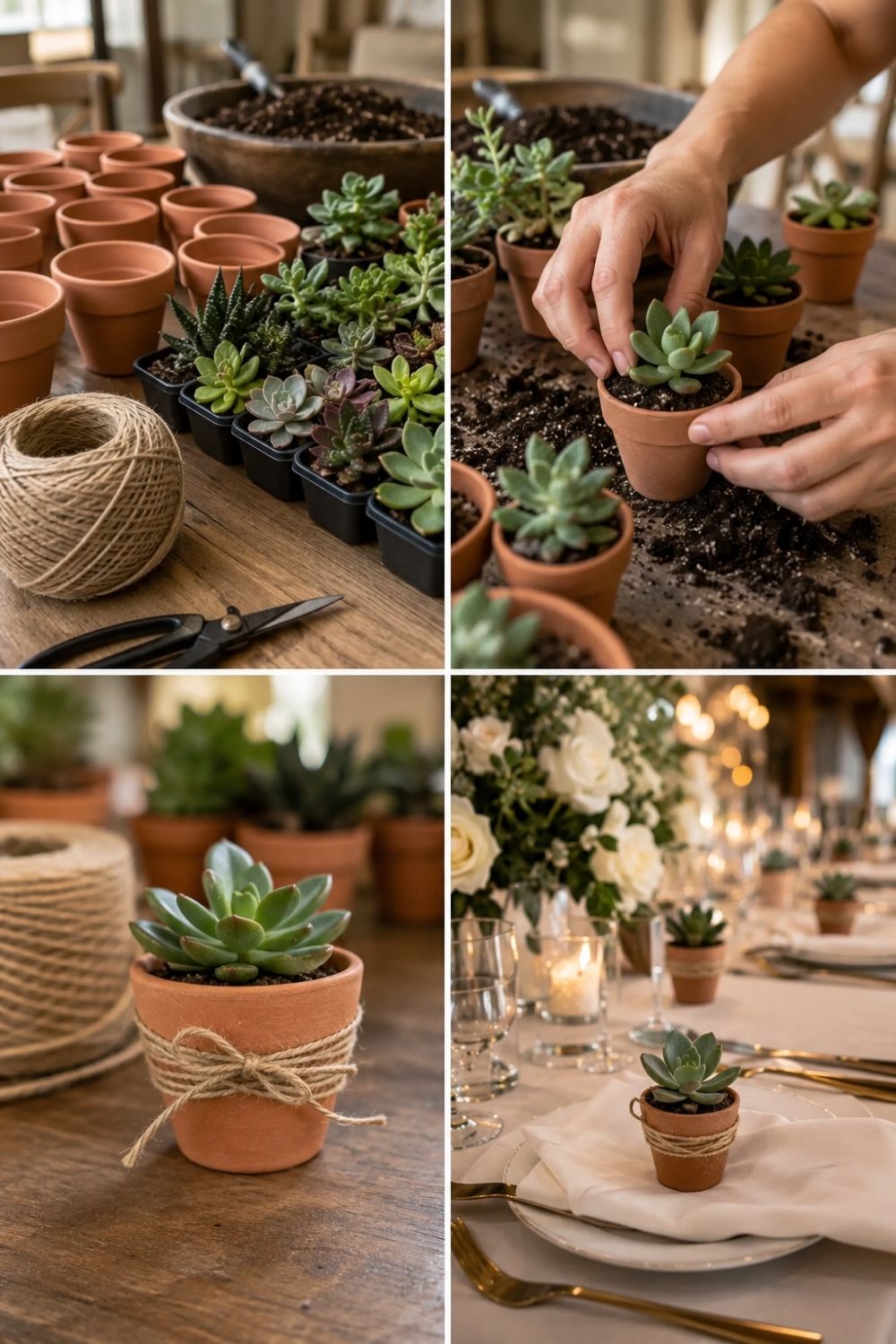
Photo by SassyGarden
The four stages above show small succulents being potted into terracotta pots, tied with twine and a tag, and set at each place setting. Mini pots of 2–3 inches are the sweet spot: big enough to survive, small enough to fit in a bag.
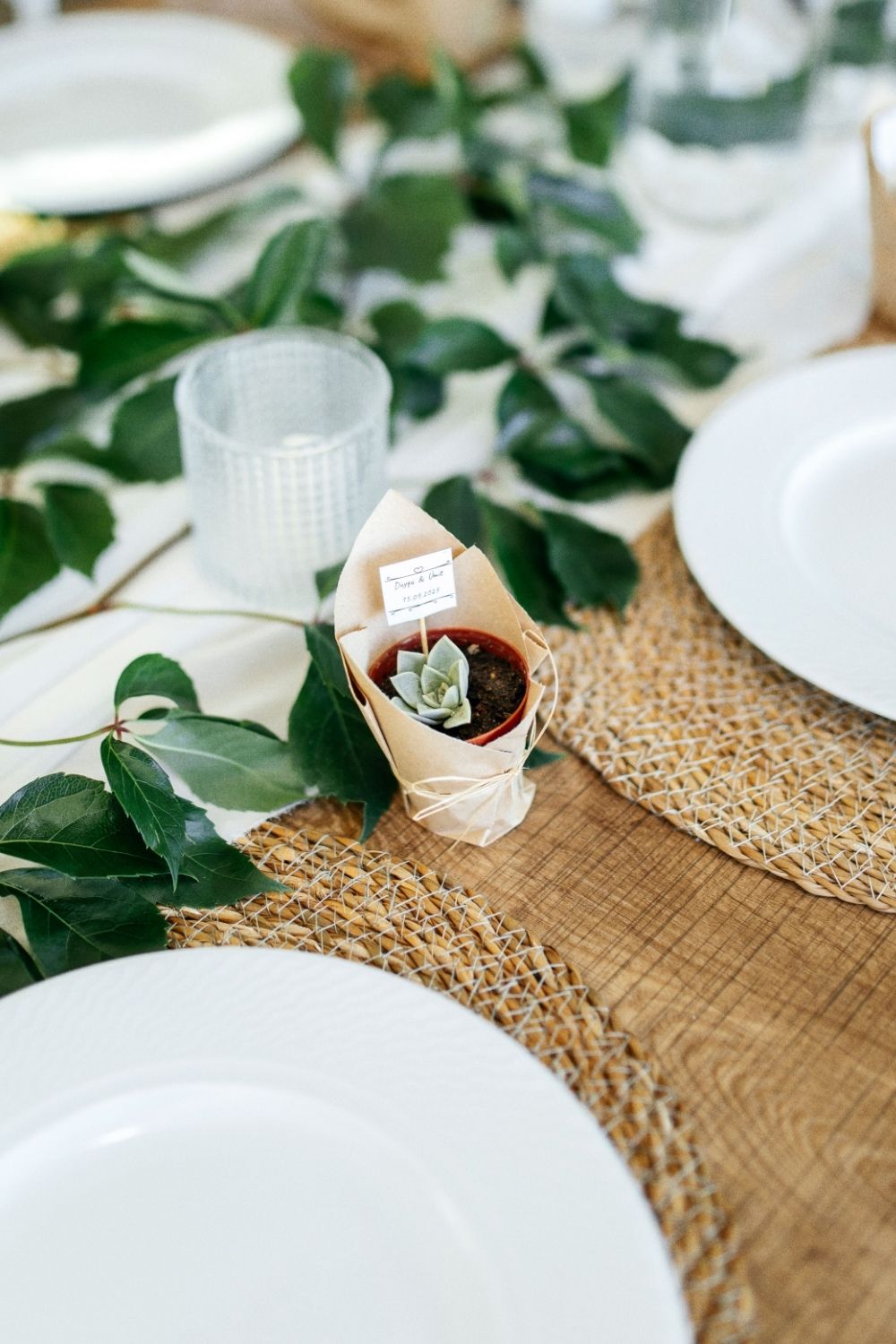
A cheaper version skips the pot: wrap the root ball in kraft paper and tie it with a name tag, as in the favor on the woven placemat above. It doubles as a place card, which saves one more thing to print.
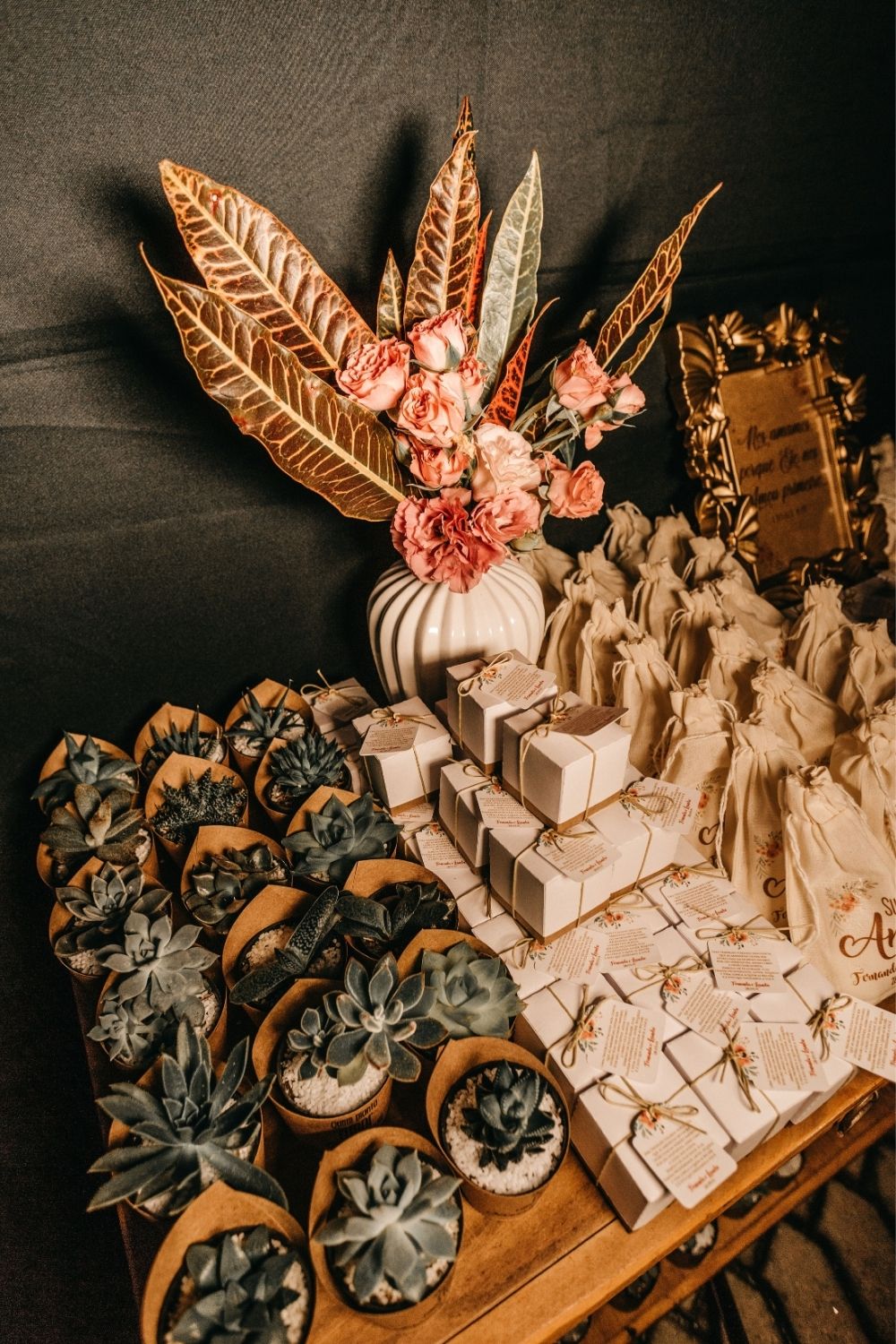
Photo by Jonathan Borba on Pexels
For a bigger crowd, a favor table works well: dozens of potted succulents grouped together with a sign asking guests to take one, like the table above with its gift boxes and pink flowers. Add a small care card: “Bright light, water when the soil is dry.” Buying in bulk from a nursery or wholesaler usually brings the price per plant well below what a florist charges. Succulents and Sunshine’s guide to DIY succulent wedding favors has more ideas on sourcing and packaging.
Timing, care and transport
Succulents are forgiving, but not on the day they’re squeezed into a hot car. This timeline keeps succulent wedding decor looking fresh:
- Four to six weeks before: buy the plants, or order them so they arrive by then. This gives time to replace any that arrive damaged.
- Right away: unpack them and give them bright, indirect light for a week before moving them into full sun. Plants from a dim greenhouse scorch easily.
- Two to three weeks before: plant the centerpieces and pot the favors in a fast-draining succulent mix.
- Three to four days before: water everything thoroughly, then stop. Dry soil is lighter, cleaner and less likely to spill on linens.
- The day before: wire rosettes for the bouquet and cake, and store them in the shade.
- On the day: transport plants in flat boxes with the air conditioning on, and keep them out of full afternoon sun under a tent or in the shade until the guests arrive.
One more thing for guests with pets: some popular wedding succulents, including jade, aloe and kalanchoe, are toxic to cats and dogs. Echeveria and haworthia are generally considered safe, so they’re the better picks for succulent favors. If you’d like to keep using water-wise plants in your garden after the wedding, see my post on drought-tolerant gardens.
So, could succulents work with your wedding? The answer is simple: if you can match the rosettes to your colors and give them a few weeks of preparation, yes. Keep the bouquet light, the centerpieces low, the cake decorations off the icing, and let every guest leave with a little plant that will still be growing on their windowsill at your first anniversary.