An herb garden needs plenty of sun and very little space. Most culinary herbs are small, happy in pots, and more productive the more you cut them, which makes them the easiest edible crop for a windowsill, a wall, a balcony railing or a wooden crate by the back door. The questions below cover where herbs fit in a small home, which ones to grow where, and what to do when you suddenly have more basil than pasta.
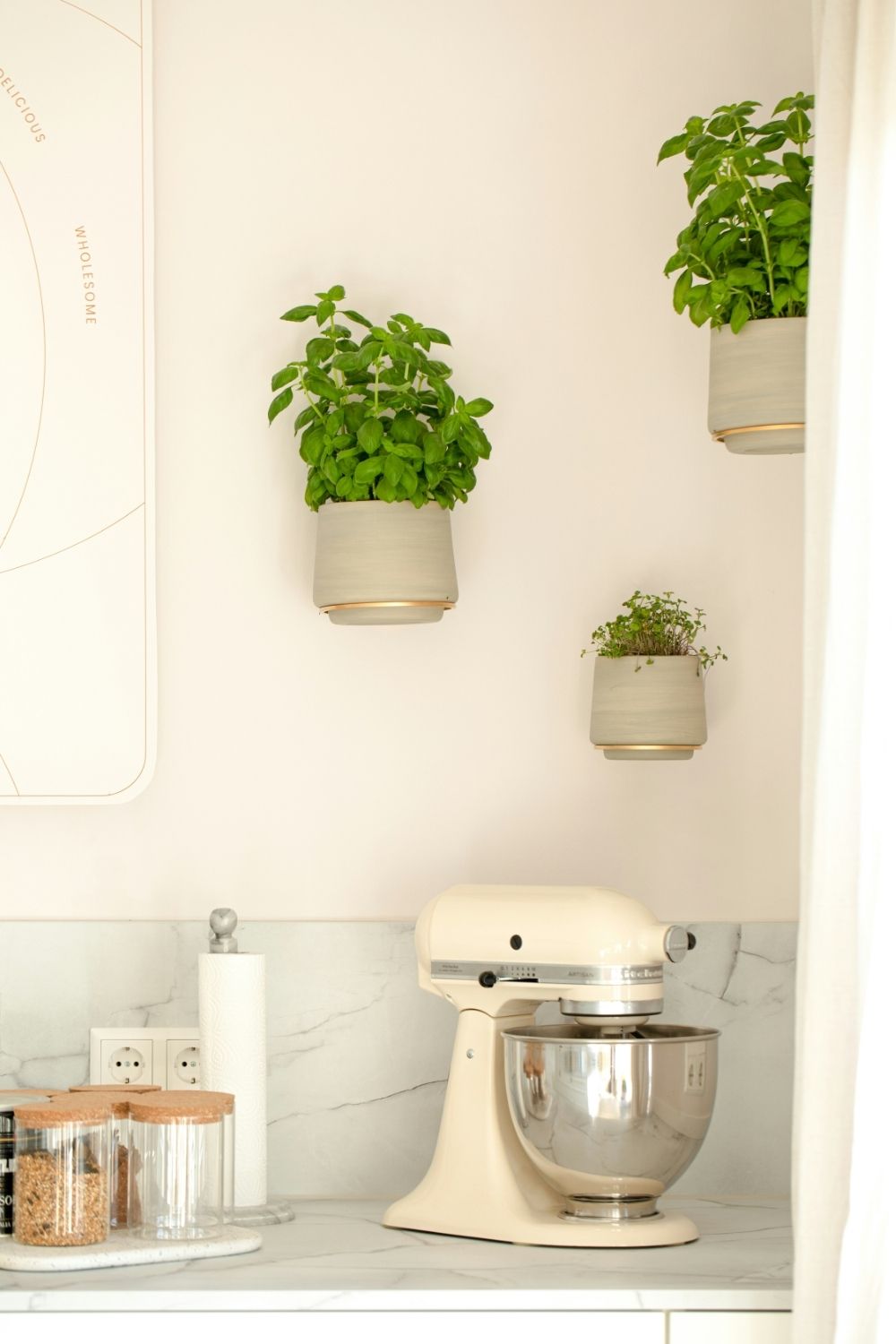
Photo by Bakd&Raw by Karolin Baitinger on Unsplash
The kitchen above has three herb pots mounted straight on the wall beside a window, well clear of the counter. It’s a neat example of the whole idea: herbs close to where you cook, at a height where they get light, taking up no workspace at all.
Which herbs actually grow on a windowsill?
Basil, parsley, chives, thyme, oregano and mint all grow indoors, as long as the window is bright. Herbs want about 6 hours of direct sun, so a south-facing window is ideal, and east or west windows work in summer. A north window rarely gives enough light for a productive indoor herb garden; that’s where a small LED grow light earns its place.
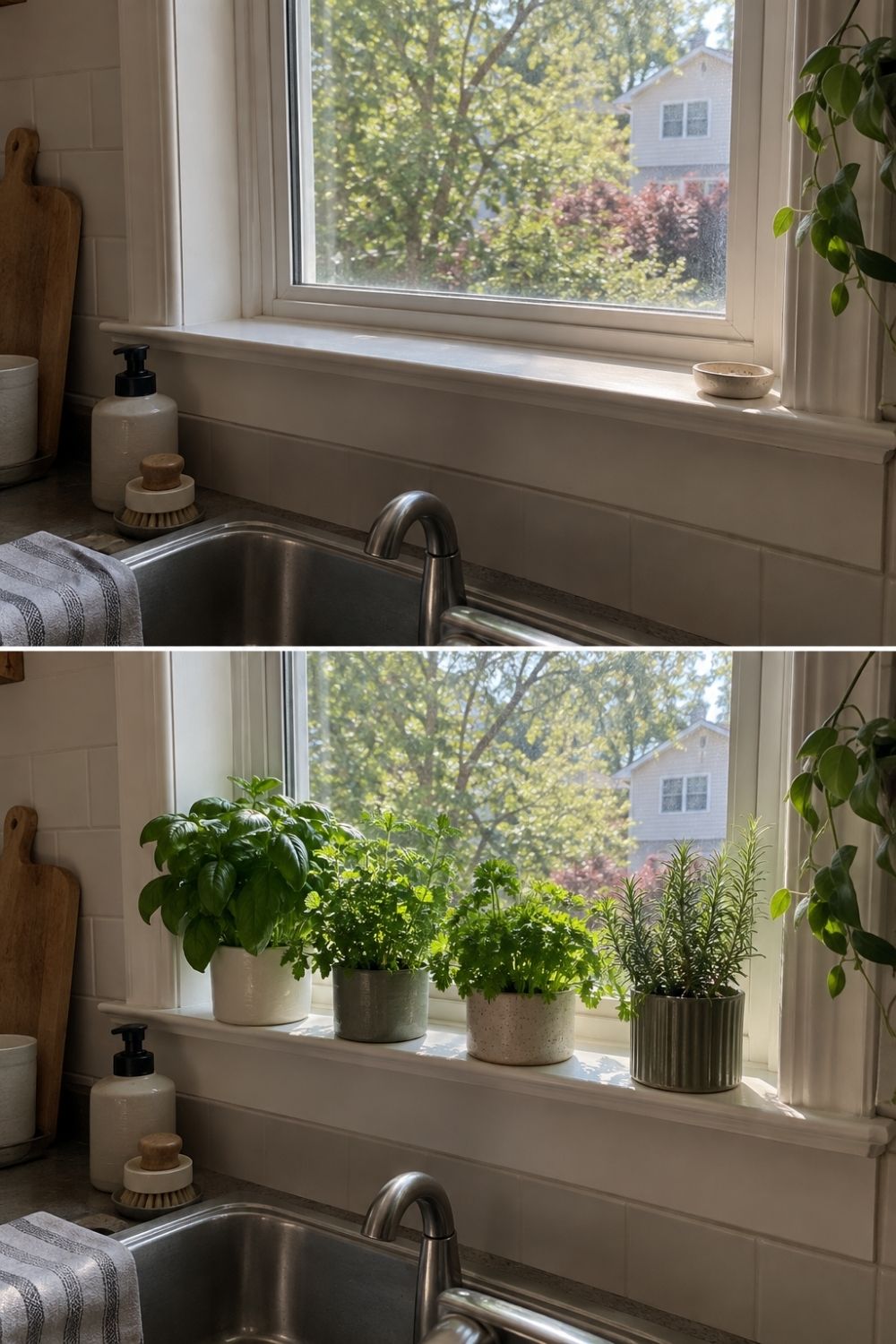
Photo by SassyGarden
The before and after above turns an empty sill above a sink into a row of five herbs in matching pots: basil, parsley, cilantro and rosemary among them. A few things make an indoor herb garden like this last longer than a few weeks. Turn the pots every few days so the plants don’t lean toward the glass. Pick the leaves often; basil and parsley grow bushier the more you harvest from the top. And don’t expect supermarket pots to thrive as they are: they’re usually packed with dozens of seedlings, so split them into two or three smaller clumps and repot them in fresh mix.
For more on arranging plants around a kitchen window without turning it into a jungle, see my post on kitchen windowsill plants.
How do you fit herbs on a small balcony?
For a balcony herb garden, use one long planter instead of many small pots. A balcony herb garden in a single trough dries out more slowly, is easier to water, and looks tidier than a scatter of pots on the floor.
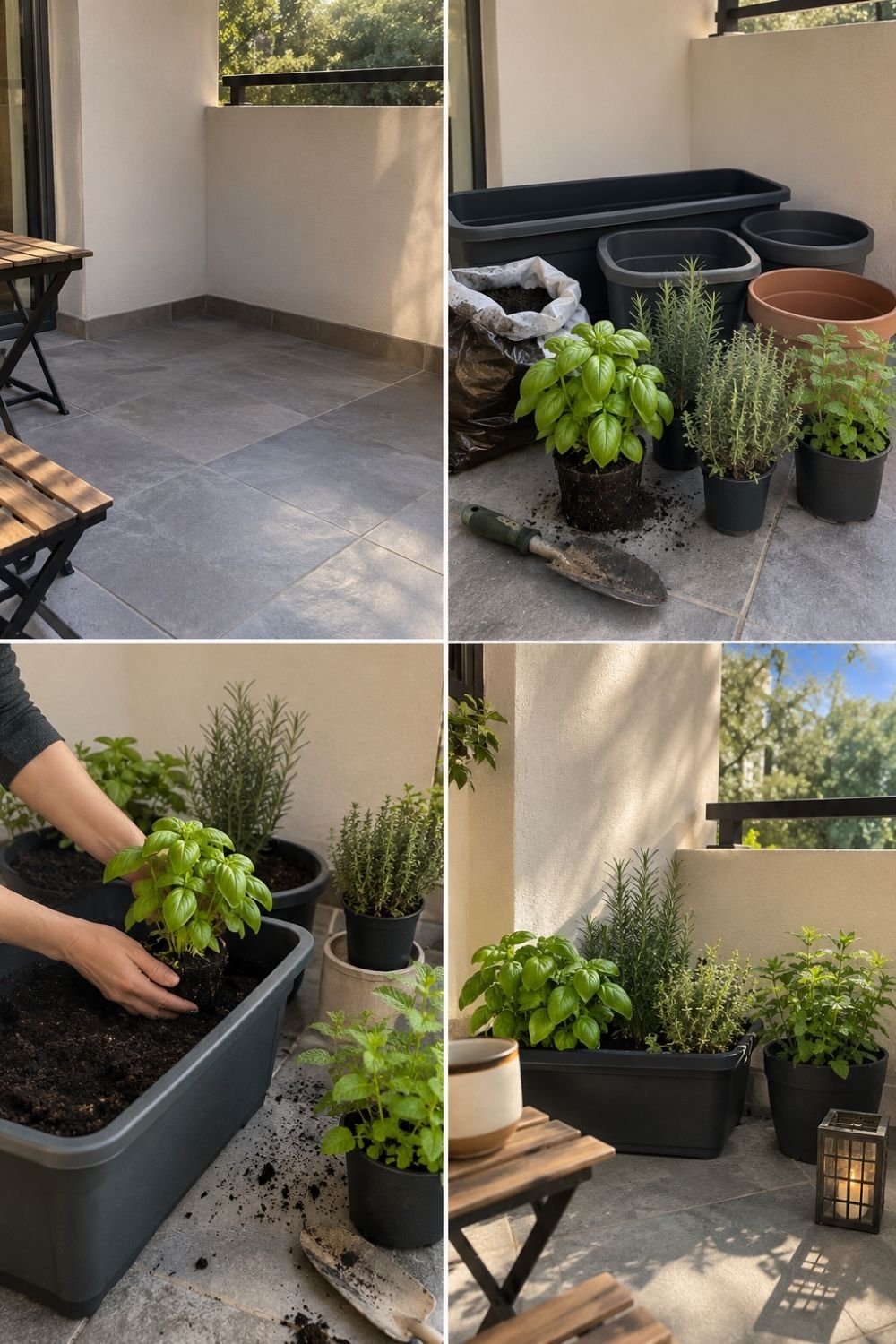
Photo by SassyGarden
The four photos show an empty tiled balcony, the herbs and a long dark planter waiting with a bag of potting mix, the herbs being planted in a row, and the finished trough with basil, rosemary, thyme and parsley beside a small bistro set. Group herbs by their needs when a herb garden shares one planter. Rosemary, thyme and oregano like to dry out between waterings; basil and parsley want steady moisture. Put the thirsty ones at one end and the dry-loving ones at the other, or give each group its own trough.
Mint is the exception to every sharing rule. It spreads by runners and will take over a whole planter in one season, so give it a pot of its own. Many herbs, from lavender to basil, also make a pleasant patio border; I covered the scented ones in plants that keep mosquitoes away from your patio.
Can a wall become a herb garden?
Yes, and it’s one of the best space-saving herb garden ideas for a small kitchen or a narrow balcony. A wall-mounted planter with several pockets or troughs holds a dozen plants in the footprint of a single pot.
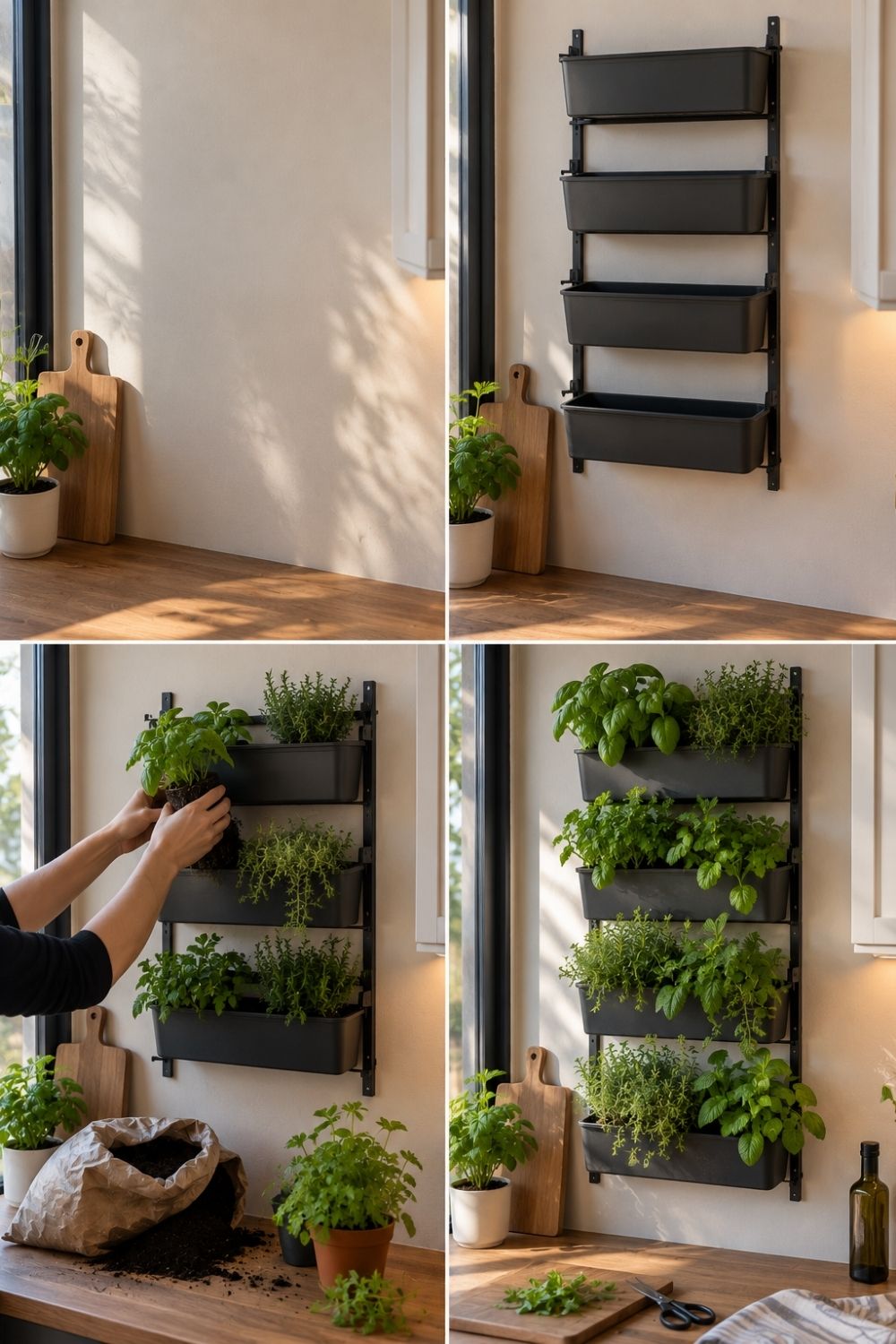
Photo by SassyGarden
In the four photos, a bare sunny wall beside a window gets a black metal frame with four troughs, then herbs are planted into it, and finally the finished wall is full of basil, thyme, parsley and oregano above the counter. Water a vertical herb garden from the top trough and let the excess trickle down, and put a tray or towel below the lowest level if it’s indoors. The top rows dry out faster than the bottom ones, so put rosemary and thyme up high and parsley and basil lower down. For bigger systems and outdoor living walls, see my guide to vertical gardening ideas.
What about hanging herb planters?
A hanging herb garden uses the one space nobody else is using: the air. Macramé hangers or hooks under a balcony ceiling can hold trailing herbs like thyme and oregano, plus a few upright ones.
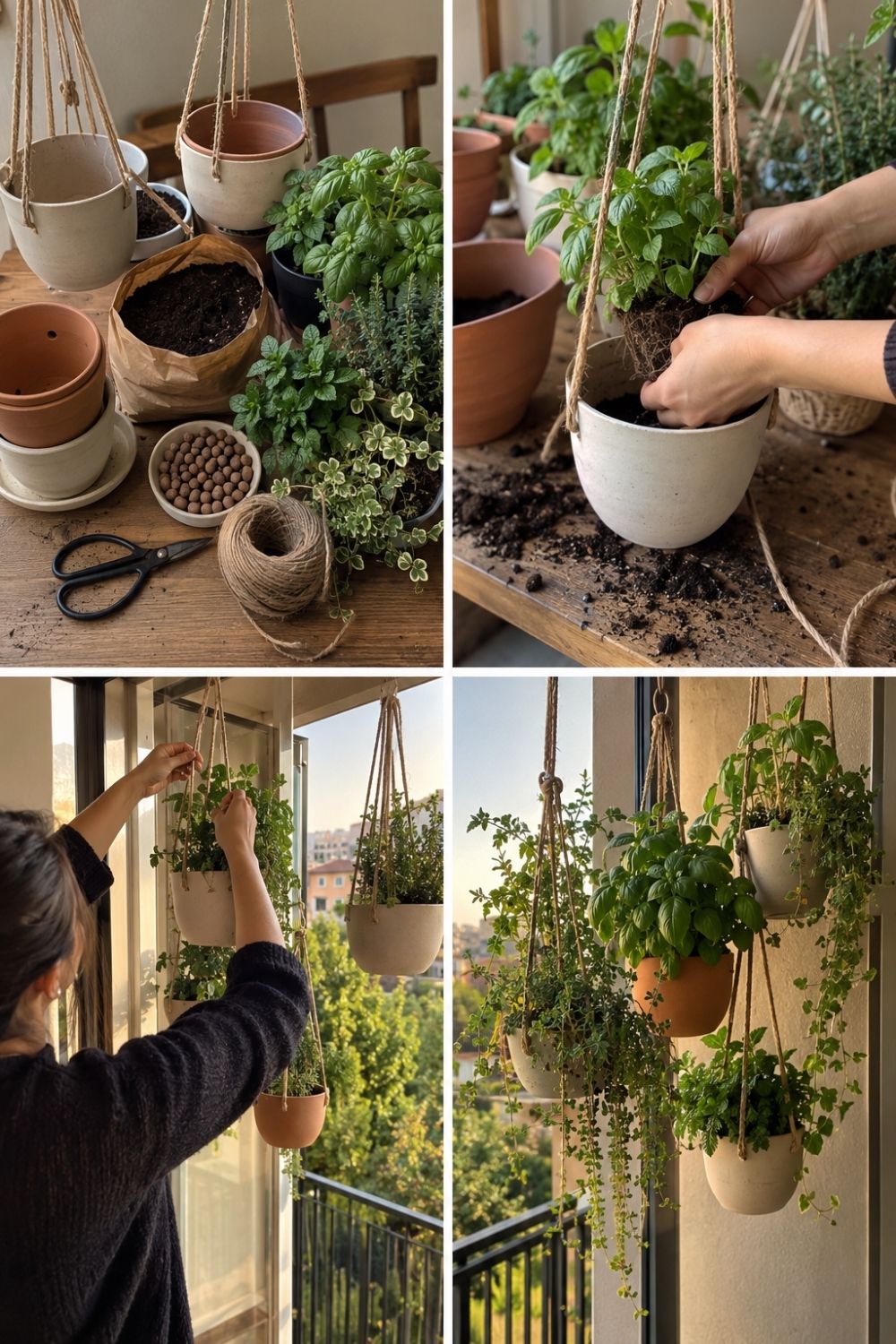
Photo by SassyGarden
The four steps above go from a table of pots, macramé cord, soil and herbs, to potting basil into a white ceramic pot, to hanging the pots from hooks at a balcony window, and finally a cluster of hanging herbs at different heights against the city view. Staggering the heights matters: pots at the same level shade each other, while pots hung at different heights all get light. Hanging pots dry out fastest of all, since warm air rises and wind hits them from every side, so check them daily in summer and use a mix with some added compost to hold moisture.
Are crates and upcycled boxes worth trying?
They are, as long as the herb garden drains. A wooden crate makes a charming herb garden for a patio step or a garden table, and you can move it into the sun as the season changes.
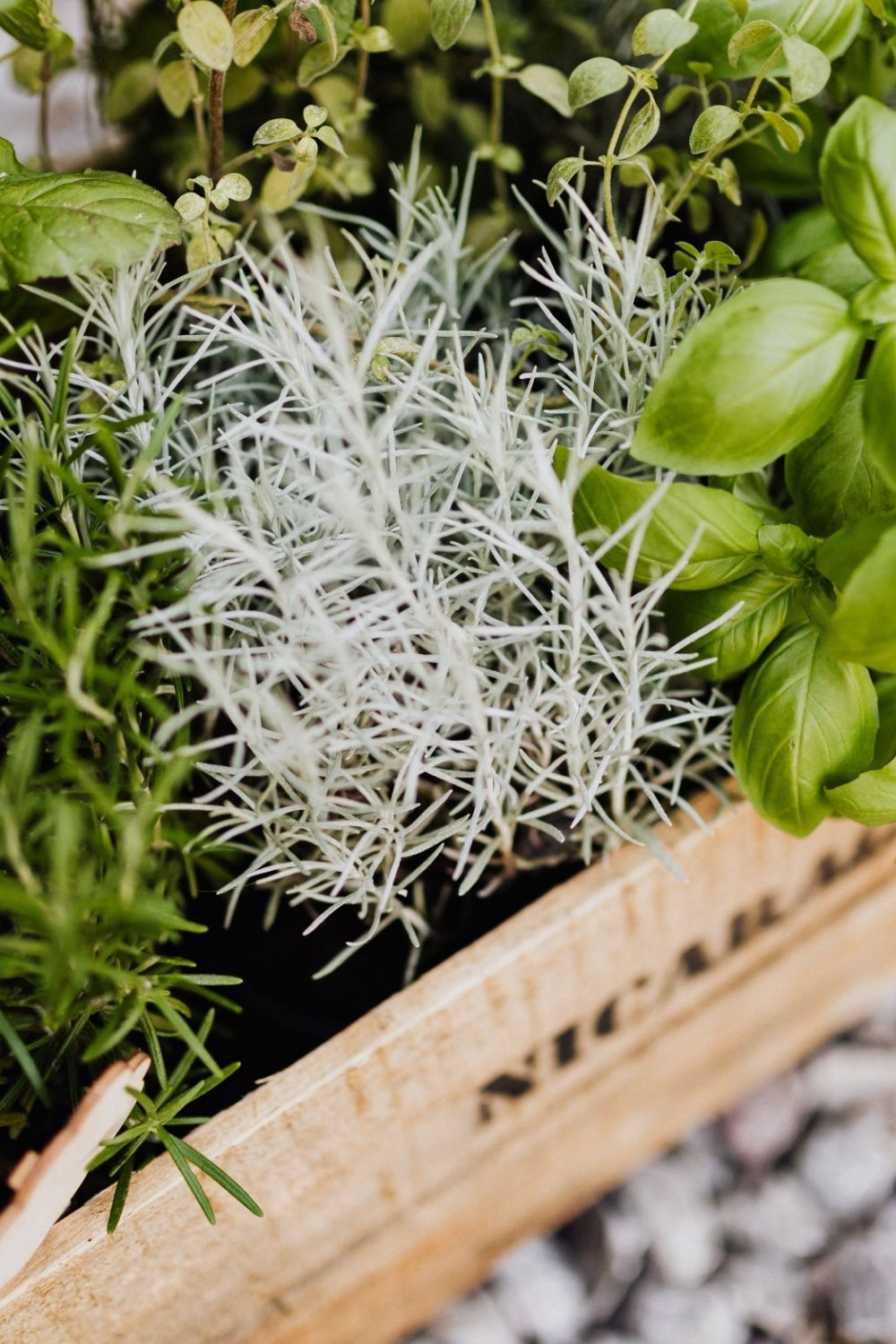
Photo by Kaboompics.com on Pexels
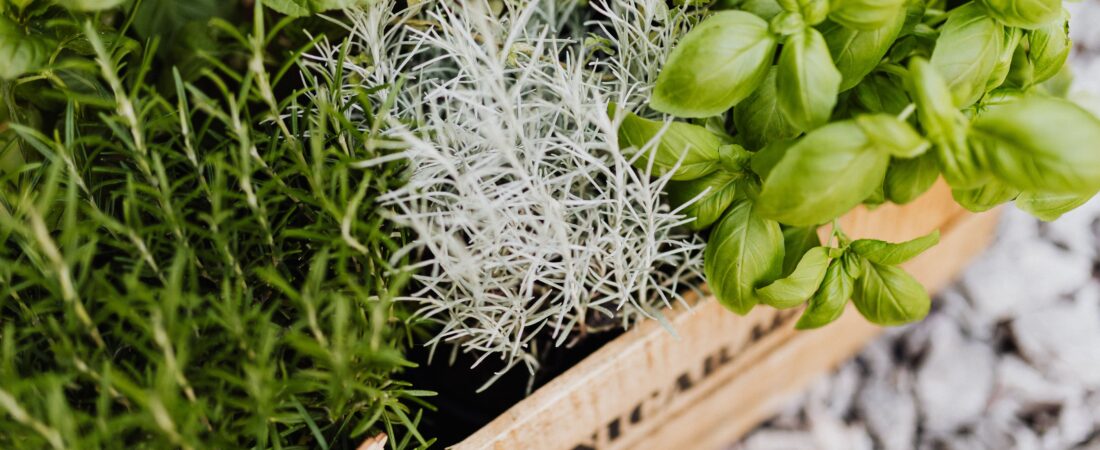
This crate holds basil, rosemary and a silvery curry plant (Helichrysum italicum) packed together on gravel. One note on that silver plant: despite the name, it isn’t where curry powder or curry leaves come from. It’s grown mainly for its scent and foliage, so treat it as an ornamental rather than a kitchen herb. To use a crate, line it with landscape fabric or a pierced plastic sheet, leave drainage gaps at the bottom, and raise it on two bits of wood so water can escape. Untreated wood will slowly rot, which is part of the charm; a coat of food-safe oil buys it a few more seasons.
Should you grow herbs from seed or buy plants?
Both, depending on the herb. Fast, annual herbs such as basil, dill, cilantro and parsley are cheap and easy from seed. Woody perennials like rosemary, thyme, sage and oregano are slow from seed, so buying one small plant saves months.
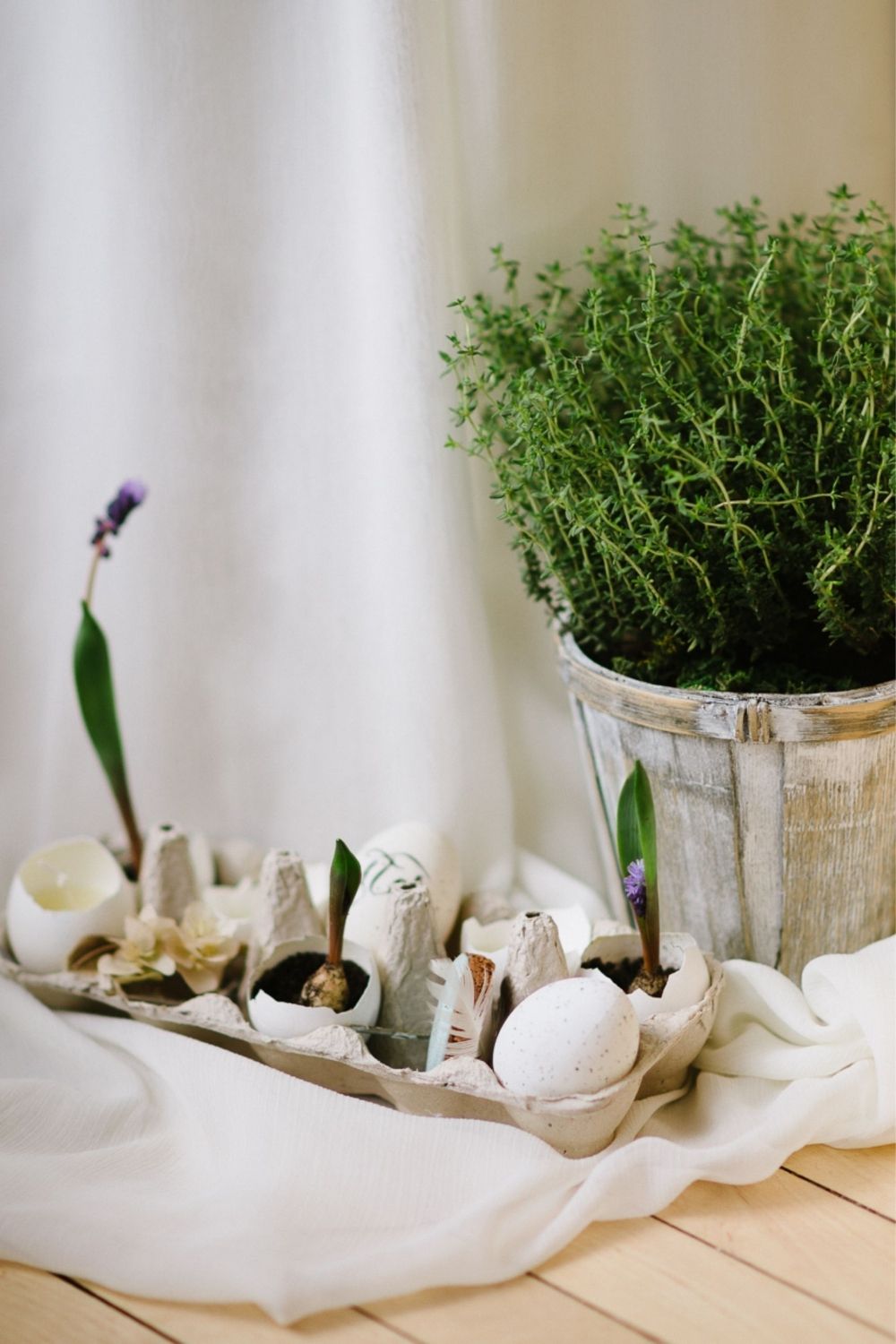
The photo shows seedlings sprouting in eggshells set in an egg carton, next to a large pot of thyme. Eggshells make cute seed starters for a windowsill herb garden, but they need a small hole in the bottom for drainage, and the seedlings need moving into proper pots once they have a couple of sets of true leaves. Sow basil indoors about 6 weeks before your last frost and move it outside only when nights stay above 50 °F; it’s one of the first herbs to sulk in the cold. Cilantro, on the other hand, prefers cool weather and bolts in summer heat, so sow it in spring and again in late summer.
Which herbs go together?
Herbs from similar climates share the same needs, which makes them easy neighbors. This is roughly how they group:
| Group | Herbs | Light | Water |
|---|---|---|---|
| Mediterranean, drought-tolerant | Rosemary, thyme, sage, oregano, lavender | Full sun | Let dry between waterings |
| Leafy, thirsty | Basil, parsley, cilantro, chives, dill | Full sun to light shade | Keep evenly moist |
| Pollinator-friendly (let some flower) | Thyme, oregano, chives, borage, lavender | Full sun | Varies |
| Spreaders (give them their own pot) | Mint, lemon balm | Sun to part shade | Keep moist |
A few herbs are worth knowing about if you have pets. Chives and other alliums are toxic to cats and dogs, and oregano and mint can upset their stomachs; basil and parsley are generally considered safe. If you want more ideas for tight spots, Epic Gardening’s tips for herb gardening in small spaces is a handy companion to this list, and my post on kitchen gardens covers herbs alongside vegetables.
How do you harvest and dry herbs?
Harvest your herb garden little and often, and cut from the top. Removing no more than a third of the plant at a time keeps it growing, and pinching out flower buds on basil, mint and oregano keeps the leaves tender and full of flavor. The best time to pick is mid-morning, after the dew has dried but before the heat of the day.
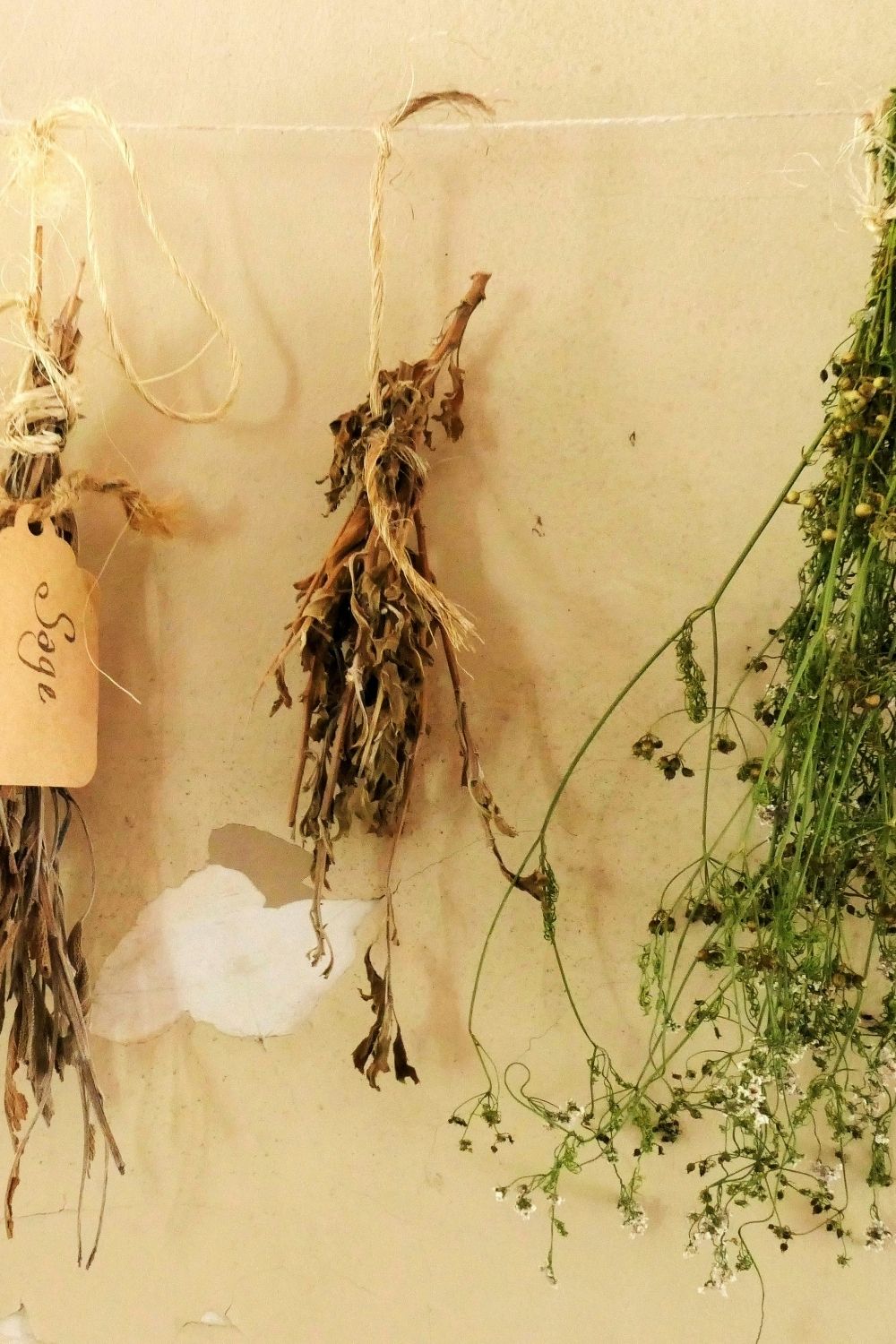
Photo by Ilse Orsel on Unsplash
Small bundles of sage and other herbs hang from a string on a pale wall in the photo, with a handwritten “Sage” tag on one of them. Air-drying works well for woody herbs:
- Tie small bundles of 5–10 stems with twine, so air reaches the middle.
- Hang them upside down somewhere warm, dry, dark and airy, out of direct sun, which fades color and flavor.
- Wait 1–2 weeks, until the leaves crumble between your fingers.
- Strip and store the leaves in airtight jars, away from light.
Rosemary, thyme, sage and oregano dry beautifully this way. Basil, parsley and chives lose most of their flavor when dried, so freeze them instead: chop them into an ice cube tray, cover with a little olive oil or water, and drop a cube straight into sauces.
That’s really all it takes: the sunniest spot you have, pots grouped by thirst, mint in a pot of its own, and regular snipping. A small herb garden that gets cut every week will outgrow its space long before you run out of recipes.