Short answer: almost certainly yes. A kitchen garden doesn’t need acres, a greenhouse or a farmhouse. It needs sun, water within reach, and a spot close enough to the kitchen that you’ll walk out in slippers to grab a handful of basil. That last part sounds like a joke, but it decides whether a kitchen garden gets used or quietly turns into a weed patch by July.
Below are the kitchen garden ideas I like most, sorted by the kind of space you actually have: a proper backyard, a fence line, a skinny side yard, a balcony, or a shady city courtyard. Pick the one that looks like your place and skip the rest.
Photo by Bostani Me on Unsplash
What does a kitchen garden actually need?
Three things, in this order.
Sun. Fruiting vegetables such as tomatoes, peppers, squash and beans want 6–8 hours of direct sun a day. Leafy greens and most herbs cope with less, roughly 4–6 hours. If your only free spot gets two hours of morning light, that doesn’t rule out a kitchen garden, it just changes what goes in it.
Water nearby. A watering can gets heavy by the third trip. If the hose doesn’t reach, plan for a rain barrel or a drip line, or pick the spot closer to the faucet. Containers dry out much faster than beds, sometimes daily in midsummer, so this matters twice as much on a balcony.
Distance from the door. The old potager idea, a kitchen garden right outside the kitchen, survived for a reason. What you see every day gets picked and watered. What sits behind the garage gets forgotten, and lettuce bolts while nobody’s looking.
Good soil comes fourth only because you can buy it. In-ground beds need loose soil with plenty of compost; raised beds and containers need a proper mix, not bagged topsoil, which packs down like concrete in a pot.
Could a backyard potager work for you?
If you have a real backyard, a potager is my favorite kind of kitchen garden. The word is French for a kitchen garden where vegetables, herbs and flowers grow together in a layout that looks planned, usually with paths and a clear center. Think less “farm field,” more “outdoor room that happens to feed you.”
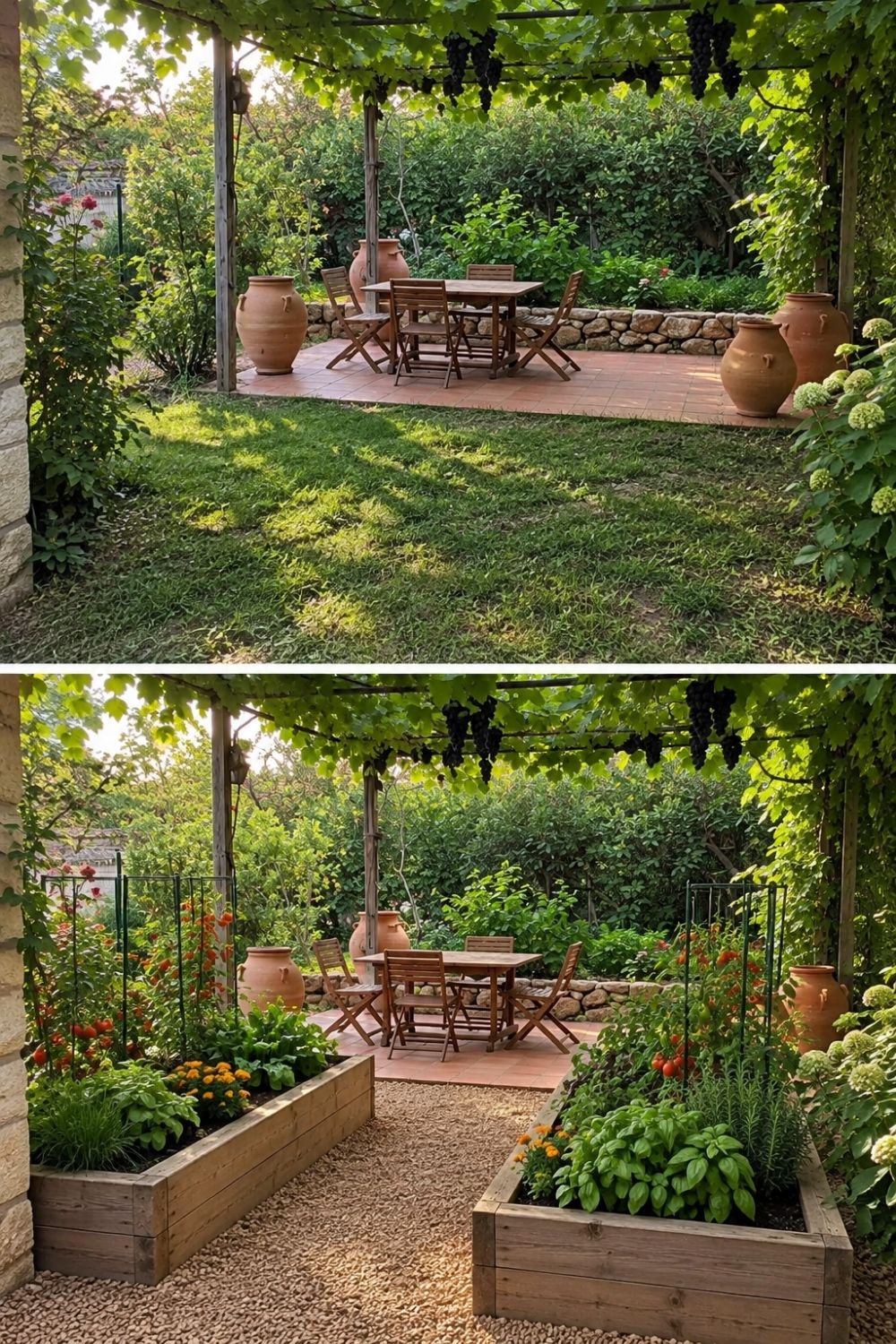
Photo by SassyGarden
The before and after above is a good example of a kitchen garden layout that works in an ordinary yard. A plain lawn under a grape pergola turns into two long raised beds on either side of a gravel path, with tomatoes on cages, marigolds, basil and lettuce, and a dining table under the vines at the end. The beds are simple timber boxes, the gravel keeps mud off your shoes, and the table gives the whole kitchen garden design a reason to be visited even on days when nothing needs picking.
A few layout rules that make a backyard kitchen garden easier to live with: keep beds no wider than 4 feet so you can reach the middle from both sides, leave paths at least 18–24 inches wide for a wheelbarrow or a basket, and put the tallest crops (tomatoes, pole beans) on the north side so they don’t shade everything else. If you’re still deciding where things go overall, my guide to planning a garden that feels designed walks through the order, and the pros and cons of beds get their own post: are raised garden beds worth it.
What if all you have is a fence line?
Then you have a salad-focused kitchen garden. A sunny fence is one of the most underused spots in most yards, and long, narrow planters along it make a kitchen garden that takes up almost no lawn.
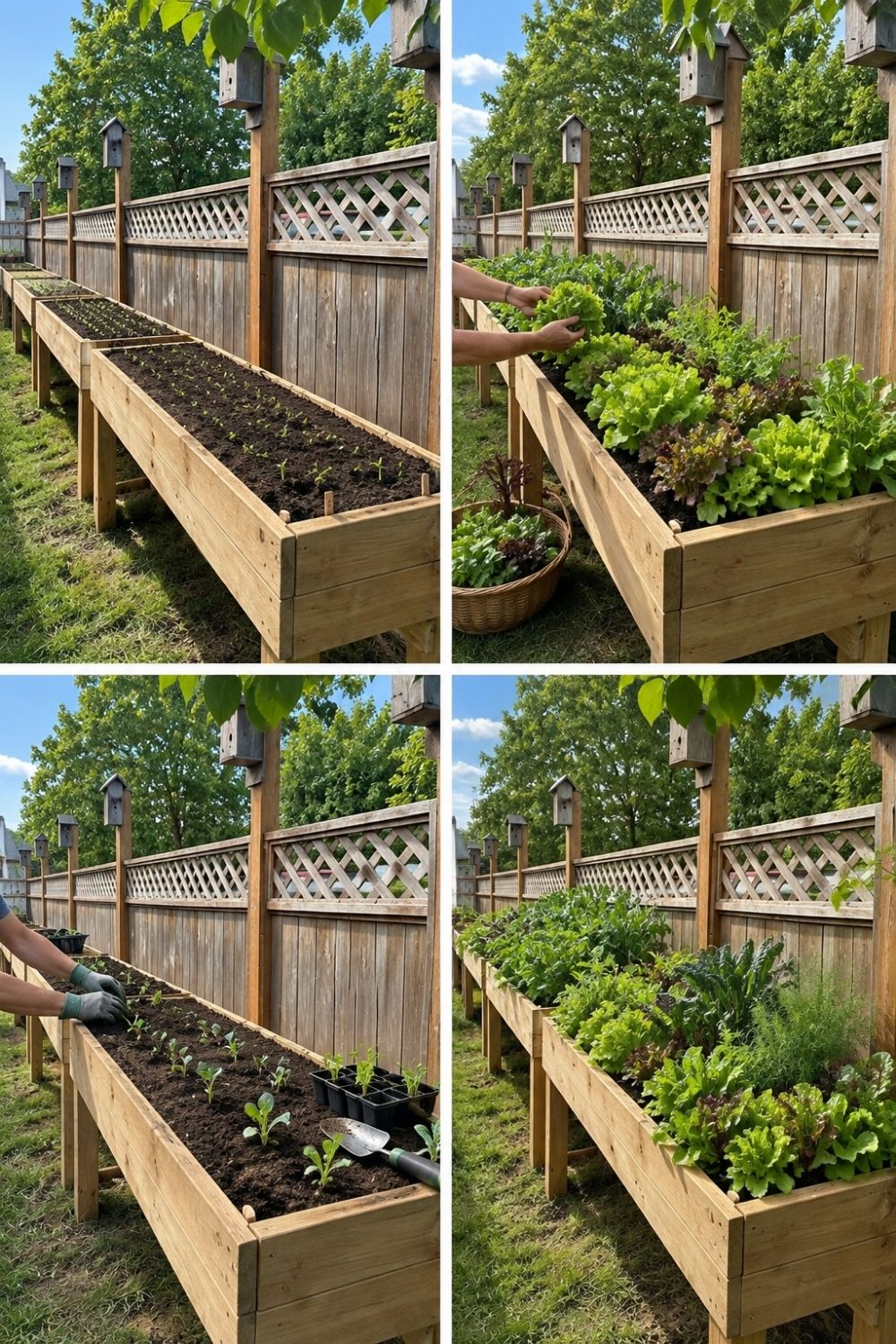
Photo by SassyGarden
The four stages in this photo show the whole idea: long wooden planters on legs along a lattice-topped fence, filled with soil, sown and planted in rows, and a few weeks later full of lettuce and greens. Planters on legs have one underrated advantage: nobody has to kneel.
A fence-line bed is also where succession planting pays off. Instead of sowing the whole row of lettuce at once and drowning in it for two weeks, sow a short stretch every 7–14 days. Lettuce takes roughly 35–65 days from sowing to harvest and radishes only about 25–35, so small, staggered sowings keep a steady supply instead of a glut followed by nothing. It’s the least exciting kitchen garden tip I know, and still the most useful.
Can a narrow side yard grow food?
Yes, as long as it gets sun. The trick is to stop thinking about floor space. A side yard might be 4 feet wide, but the wall or fence next to it could be 6 feet tall, and that vertical space is where the harvest goes.
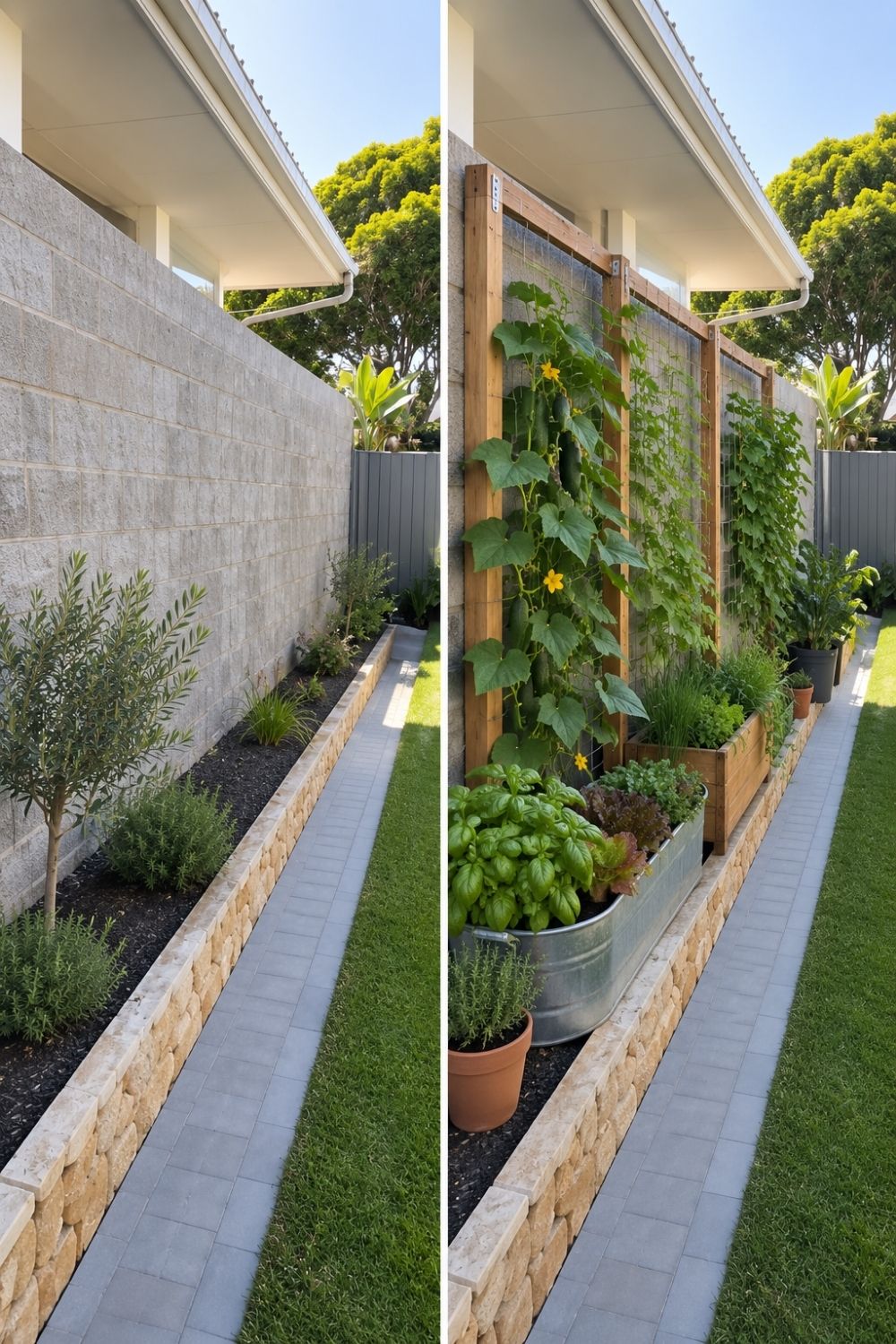
Photo by SassyGarden
In this side yard, a strip of gravel and a few shrubs along a wall become a narrow kitchen garden: wooden trellis frames against the wall with cucumbers climbing up, a galvanized tub of basil and lettuce at the base, and pots of herbs along the path. Vining crops are made for this: cucumbers, pole beans, peas, small winter squash and even some melons on a sturdy frame. Heavy fruit needs slings, or pick small-fruited varieties.
One thing to watch: a wall on the south or west side reflects heat, which tomatoes and peppers love and lettuce hates. A wall on the north side of a side yard may leave it in shade most of the day, so check the light before you build trellises. More support ideas and systems are in my post on vertical gardening for small patios and balconies.
Is a balcony kitchen garden worth it?
It is, with realistic expectations. A balcony kitchen garden won’t feed a family, but it keeps you in herbs, salad and cherry tomatoes all summer, which already beats paying for sad supermarket basil.
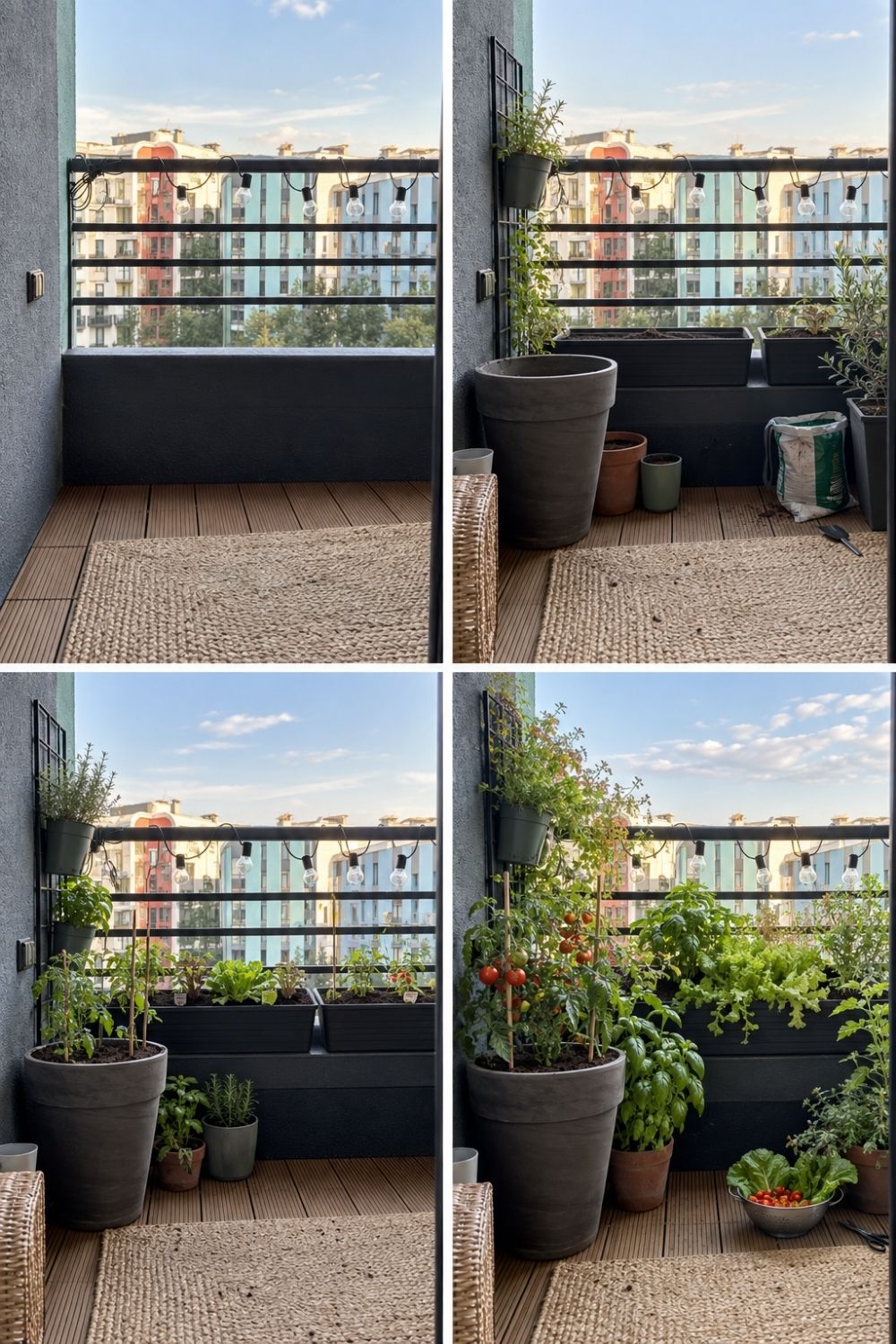
Photo by SassyGarden
This balcony goes from an empty deck to a small kitchen garden in four steps: a large pot for a tomato plant, railing planters for herbs and greens, a wall grid for climbers, and a few smaller pots filling the gaps. Containers are where most balcony gardens go wrong, usually because of size. Small pots look tidy and dry out by lunchtime. These are the minimum container sizes the University of Maryland Extension recommends:
| Crop | Minimum soil volume | Depth |
|---|---|---|
| Tomatoes | 8–10 gallons | 12–16 inches |
| Peppers (standard size) | 8–10 gallons | 8–12 inches |
| Peppers (dwarf) | 4–6 gallons | 8–12 inches |
| Lettuce, spinach and other greens | 1–3 gallons | 4–6 inches |
| Small herbs (basil, thyme, cilantro) | 1–3 gallons | 4–6 inches |
| Rosemary | 4–6 gallons | 8–12 inches |
Every pot needs drainage holes. A layer of gravel at the bottom doesn’t help drainage; it actually raises the wet zone closer to the roots. Put pots on feet or a brick instead, and empty saucers after watering. Before you load up a balcony, check the weight limit with your building, because wet soil is heavy. For arranging pots so they look good as well as produce, see my post on building container gardens.
What about a shady courtyard or a city lot?
Shade narrows the menu of a kitchen garden but doesn’t cancel dinner. With 3–4 hours of direct sun you can still grow lettuce, spinach, arugula, chard, kale, parsley, chives and mint. Fruiting crops will sulk.
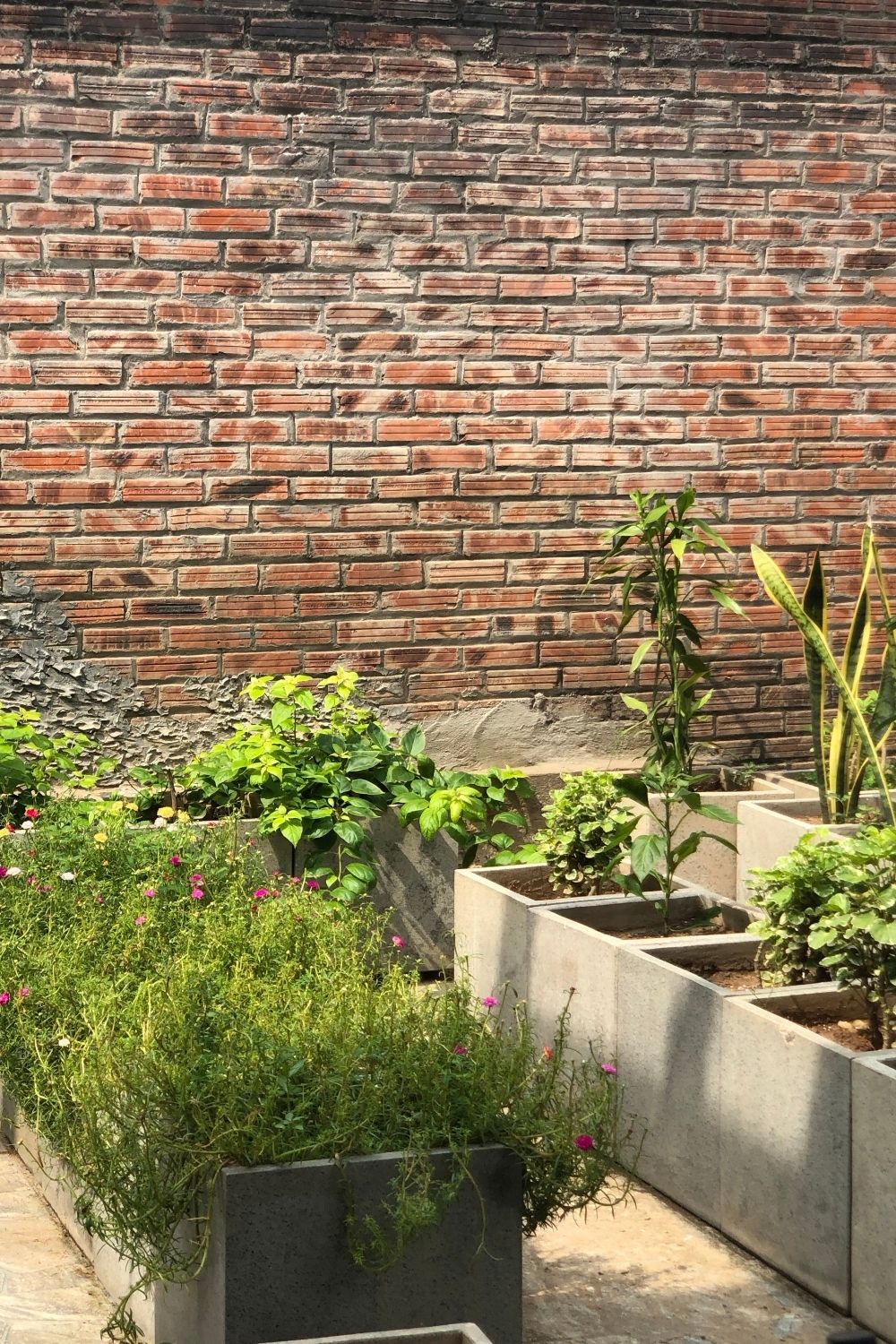
This urban courtyard uses square concrete planters against an old brick wall. Brick holds warmth and gives back a little heat in the evening, which helps in a cool spring. Planters also sidestep a common city problem: soil of unknown history. In older urban lots, lead from old paint or past traffic can sit in the ground, so growing edibles in raised beds or containers with fresh mix is the safer default until you’ve had the soil tested. A courtyard is also a natural home for a kitchen herb garden; I collected ideas for tight spots in space-saving herb garden ideas.
Mint deserves one warning: it spreads by runners and will take over a shared bed. Give it its own pot.
Which plants belong side by side?
Companion planting is one of those topics where tradition is louder than evidence. Some pairings have a sensible reason behind them, some are mostly folklore, and many are simply about using space well.
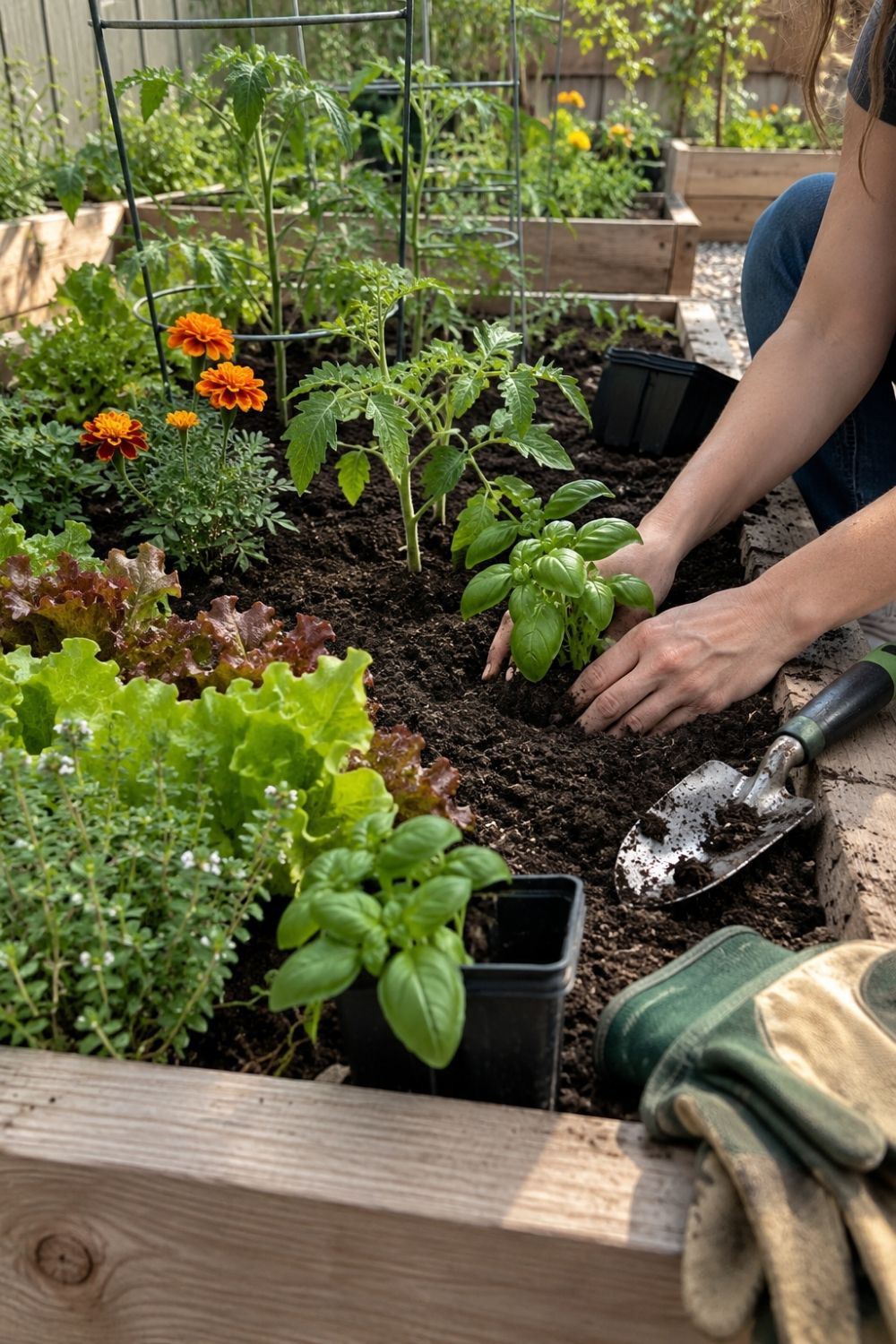
Photo by SassyGarden
The classic kitchen garden trio is in this photo: basil (Ocimum basilicum) planted at the foot of tomatoes (Solanum lycopersicum), with French marigolds (Tagetes patula) nearby. The honest case for it is practical. Basil and tomatoes want the same sun, water and warmth, basil fills the bare soil under the tomato, and both go into the same dish. Marigolds bring color and flowers that draw in hoverflies and other beneficial insects. Claims that basil makes tomatoes taste better are a nice story I wouldn’t bet a harvest on.
Other pairings with a clear logic: fast lettuce or radishes between slow crops like peppers, harvested before the big plants need the space; low herbs like thyme along the edge of a bed; and tall crops kept to the north side so they don’t shade short ones. If you have pets, note that tomato leaves and stems are toxic to dogs and cats, and marigolds can cause mild stomach upset if chewed.
What should you plant first?
Start with what you actually cook and with crops that forgive beginners. My short list:
- Lettuce and salad greens: fast, happy in part shade, fine in shallow containers.
- Radishes: ready in about a month, which does wonders for motivation.
- Bush beans: no trellis, steady picking all summer.
- Cherry tomatoes: more forgiving than big slicers and ideal for pots.
- Basil, parsley and chives: the herbs you’ll reach for most.
Timing depends on your zone, not the calendar. Cool-season crops (lettuce, radishes, peas, spinach) can go in a few weeks before the last spring frost, once the soil is workable. Warm-season crops (tomatoes, peppers, basil, beans) wait until after the last frost, when nights stay above about 50 °F. Across US zones 3–9, that date ranges from late February in the warmest areas to early June in the coldest, so check yours locally.
Peppers deserve a special mention, because they taught me some humility. A year or two ago I tried growing Chocolate Habanero from seeds I’d ordered online. They sprouted nicely in a homemade foil tent under a full-spectrum light, went out to the garden around May, and by autumn gave me exactly two yellowish peppers, neither with any heat at all. My garden is in a Central European climate, roughly comparable to US zones 6–7, and hot peppers want a long, warm season. Well… if you’re starting out, I’d put the habanero dream on hold for a year and begin with a mild, early variety.
How do you keep the harvest coming?
A kitchen garden produces more when you pick more. Beans, zucchini, cucumbers and herbs slow down once fruit or flowers are left to mature, so picking every couple of days during peak season keeps the plants working. Pinch basil above a pair of leaves instead of stripping single leaves, and it branches out rather than shooting up into flowers.
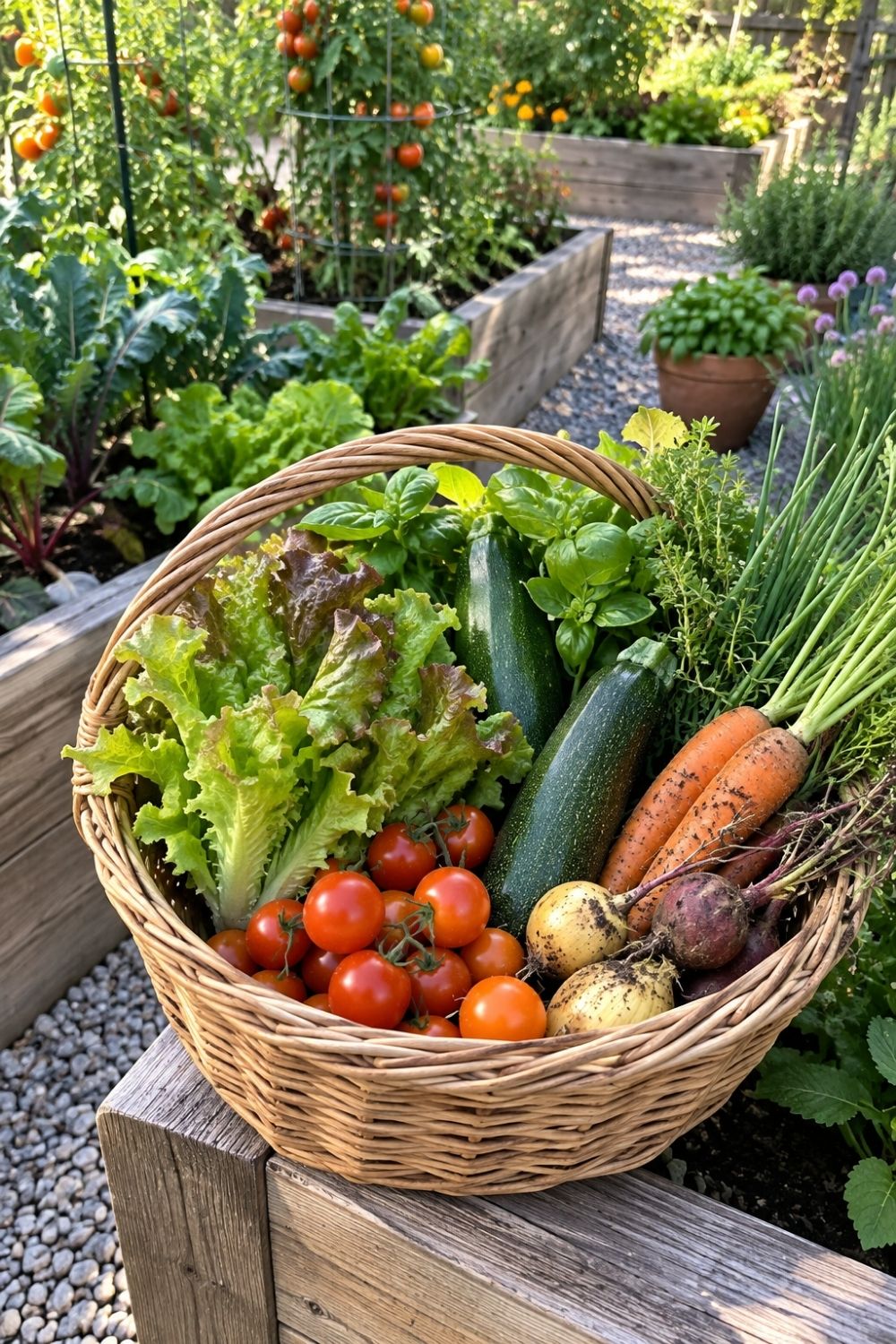
Photo by SassyGarden
The other half is never leaving a gap empty. When a row of lettuce or radishes finishes, sow something else in its place the same week: more greens in spring, bush beans in early summer, and cool-season crops like spinach and kale again in late summer for a fall harvest. A small bed replanted three times through the season can easily out-produce a bigger bed planted once. That’s how small vegetable gardens end up filling baskets like the one above.
In short: find 6 hours of sun near the kitchen door, pick the space type that matches your yard or balcony, use containers big enough to hold water, and plant a little, often. A kitchen garden that’s easy to reach gets used, and one that gets used keeps producing.