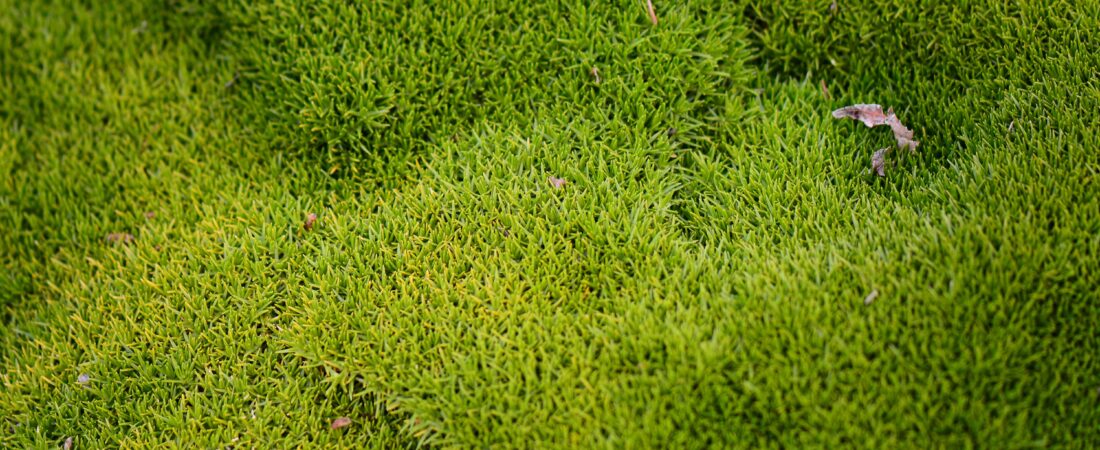
In a shady, damp yard with acidic soil, yes. In a sunny, dry yard where kids play ball and the dog runs laps, no. A moss lawn is one of the best grass alternatives for the right spot and one of the worst for the wrong one, and the dividing line is sharper than most lawn decisions.
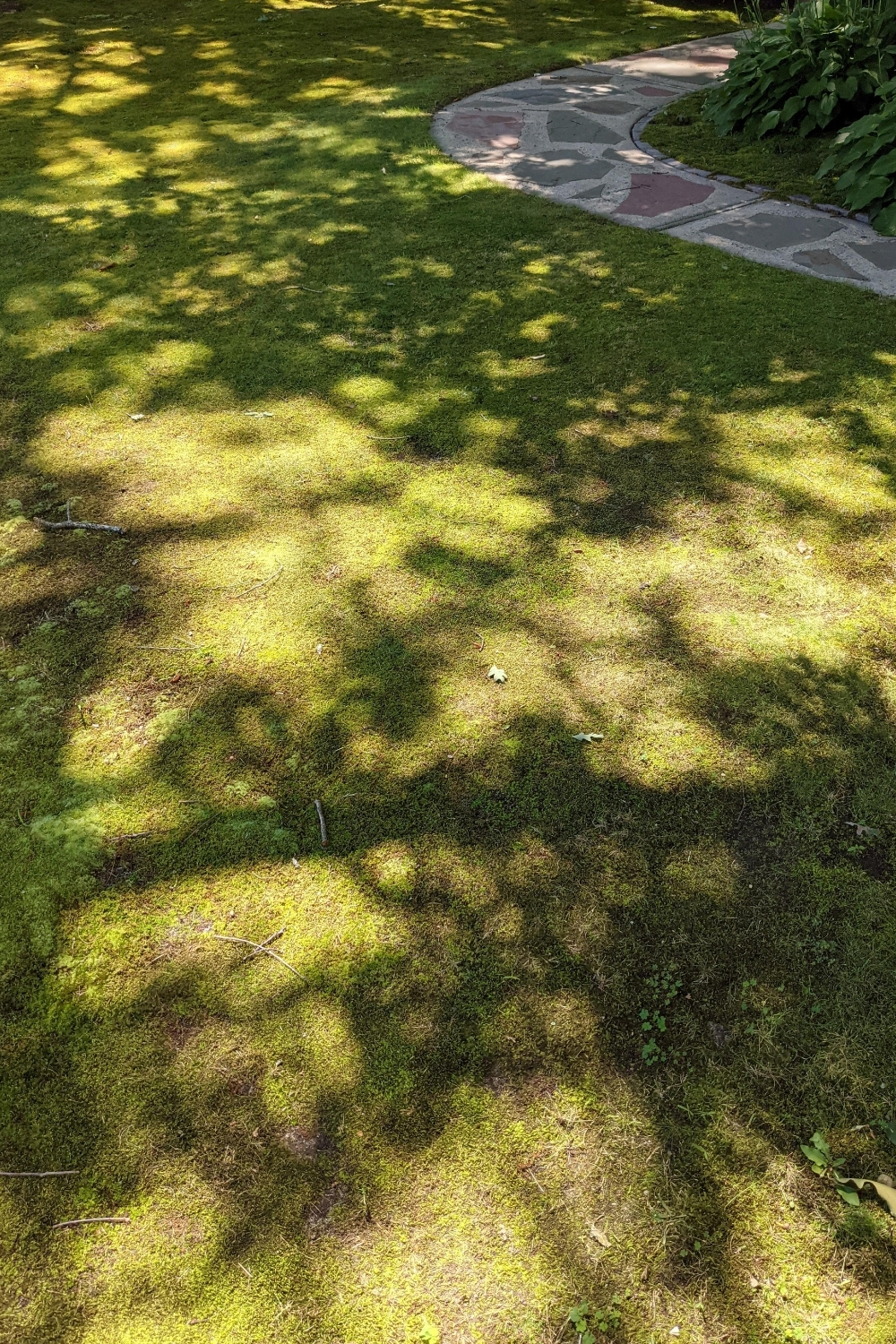
The good news is that the yard usually tells you which side it’s on. (For smaller doses, these ways to use moss in the garden work even in a yard that keeps its grass.) If moss is already creeping into your grass and the grass keeps thinning no matter what you do, the yard has made its choice.
Where moss wins
Moss has no real roots, only fine threads that anchor it to the surface, and it takes in water through its leaves. That makes it the opposite of grass in almost every way. It thrives exactly where grass struggles.
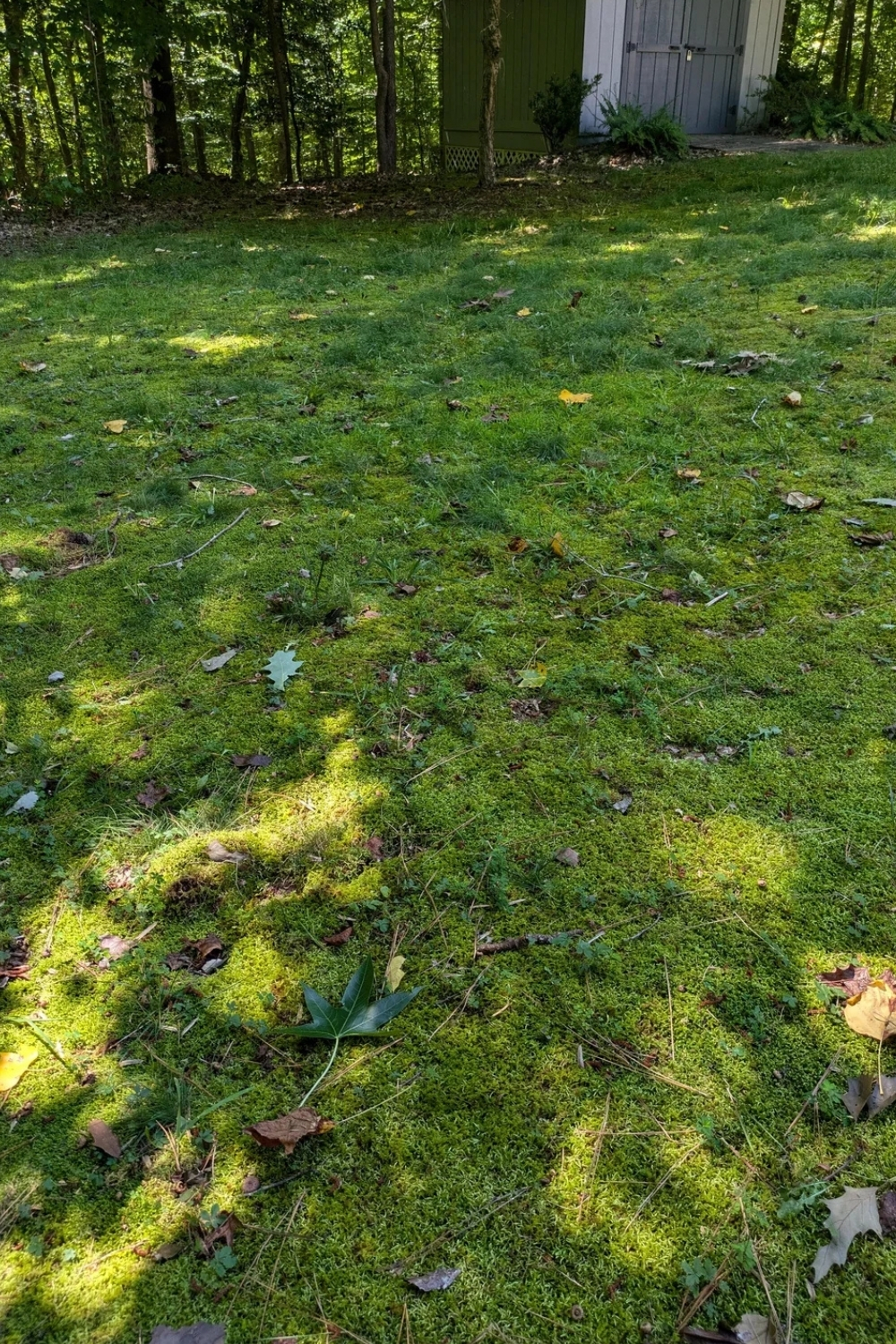
Shade is the big one. Under mature trees, on the north side of a house or a fence, or anywhere that gets only dappled light, grass grows thin and patchy while moss fills in. Afternoon shade matters most, since that’s when the sun is hottest and driest.
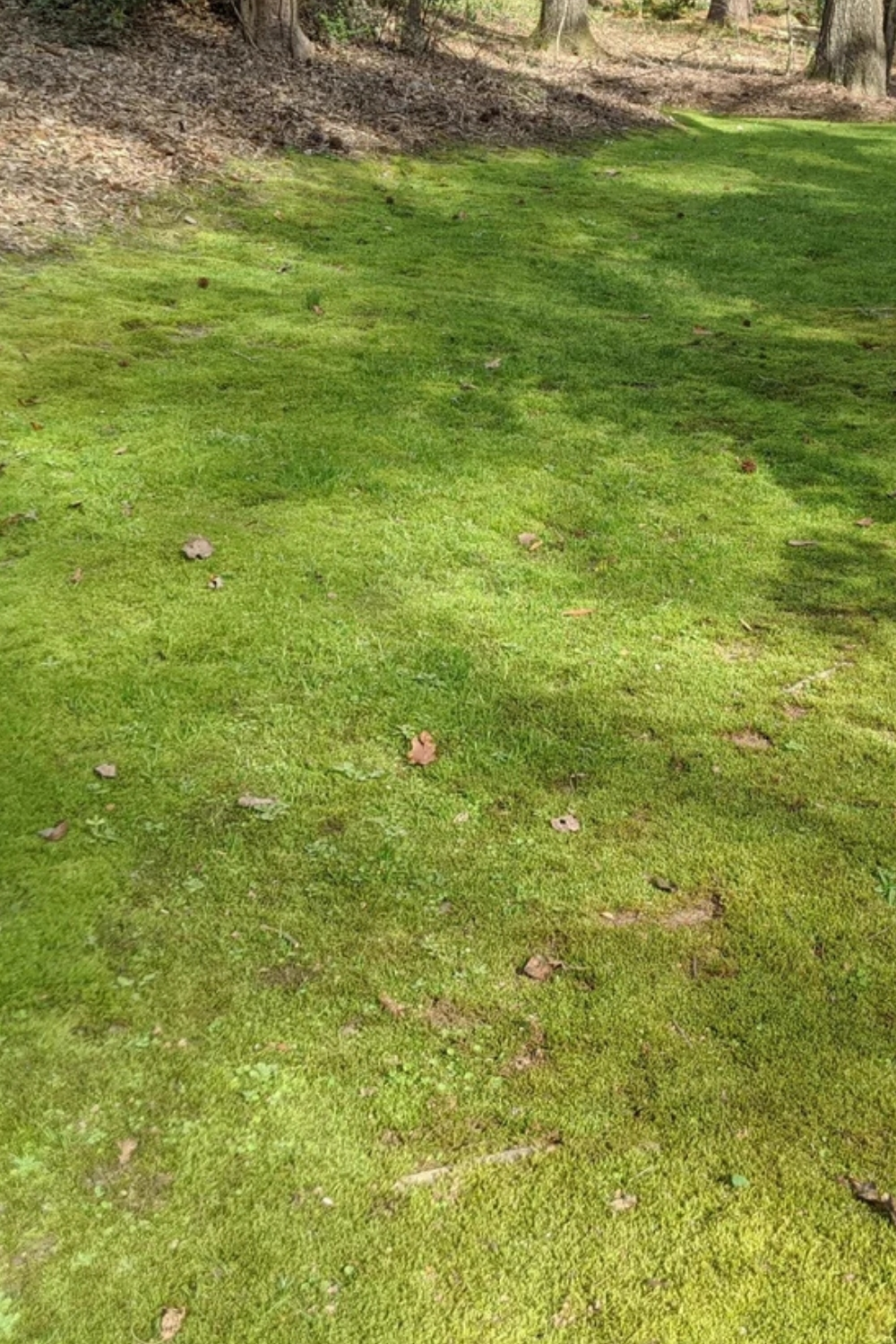
Damp, compacted and acidic soil helps too. Acidic means sour soil, low on the pH scale gardeners use to measure it. According to Epic Gardening’s guide to moss lawns, the ideal range for most lawn mosses is a pH of about 5.0 to 6.0, which is more acidic than most lawn grasses like. Heavy clay that stays wet and hard-packed ground under trees are both easy territory for moss.
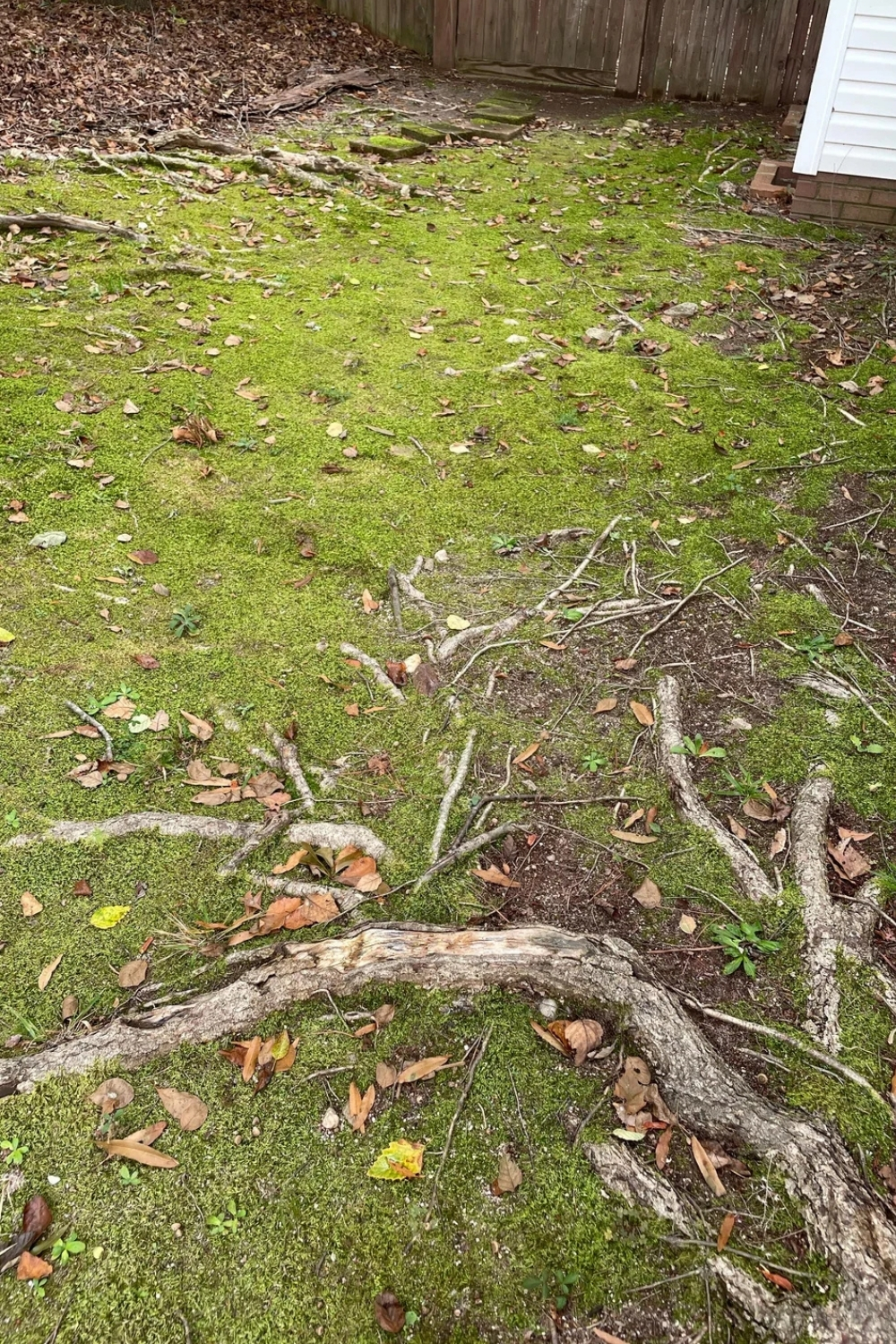
It also handles surface roots better than any lawn. Grass can’t grow over a tangle of tree roots, but a moss lawn spreads right across them and softens the whole area.
Where it fails
Full sun is where a moss lawn goes wrong. Most lawn mosses dry out and turn brown or yellow in strong sun, and while they often green up again after rain, a sunny moss lawn spends much of the summer looking dead. Some mosses tolerate more sun than others, but none of them look as lush in full sun as they do in shade.
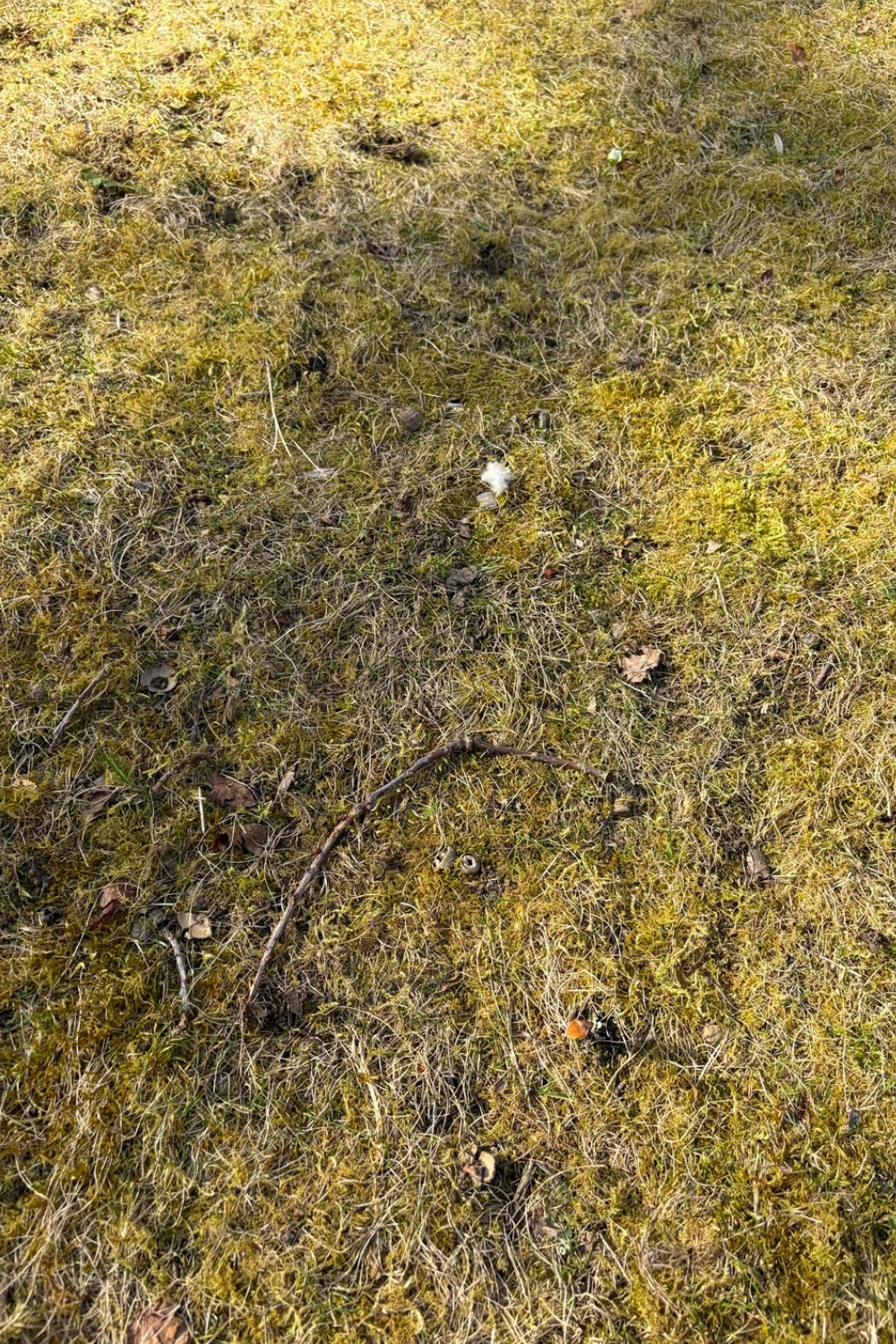
Dry climates are the second problem. Moss depends on moisture in the air and soil, and in long dry spells it goes dormant, which is a polite word for brown and crunchy. Watering keeps it going, but at that point, the low-maintenance lawn needs a sprinkler schedule. Make it make sense.
Foot traffic is the third. Moss handles light walking, the occasional trip across the yard, but not daily paths, games of tag or a dog that runs the same line along the fence. Those spots wear down to bare soil and take a long time to fill back in.
Score your yard
A quick test before tearing out any grass. Give the yard one point for each yes.
1. Does the area get less than about four hours of direct sun a day, especially in the afternoon?
2. Does the soil stay damp for a day or two after rain?
3. Is there already moss growing in the lawn, on paths or at the base of trees?
4. Is the area mostly looked at or walked across lightly, not played on?
5. Do you get regular rain, or at least humid summers, rather than long dry spells?
Four or five points: a moss lawn will probably thrive. Three: it can work in the shadiest part of the yard, with grass or another ground cover in the rest. Two or fewer: grass, clover or a planted bed will be less work.
Encouraging moss vs planting it
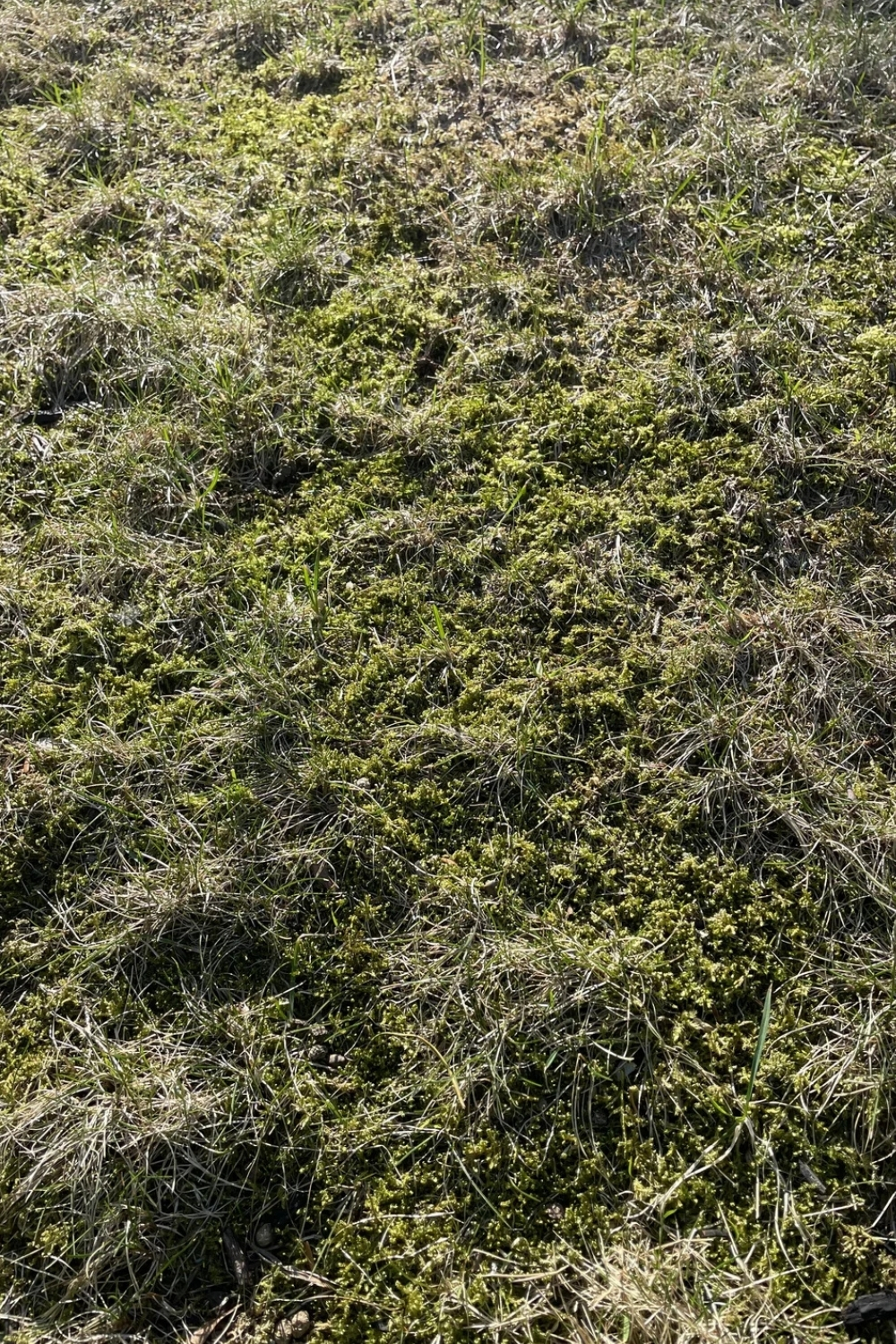
The easiest moss lawn is the one that’s already starting. In a shady lawn where moss is moving in, stop fighting it. Skip the lime, fertilizer and moss killers, since lime raises the pH and fertilizer feeds the grass, and many lawn products contain chemicals that kill moss. Rake out dead grass gently, keep fallen leaves off, and let the moss spread into the gaps.
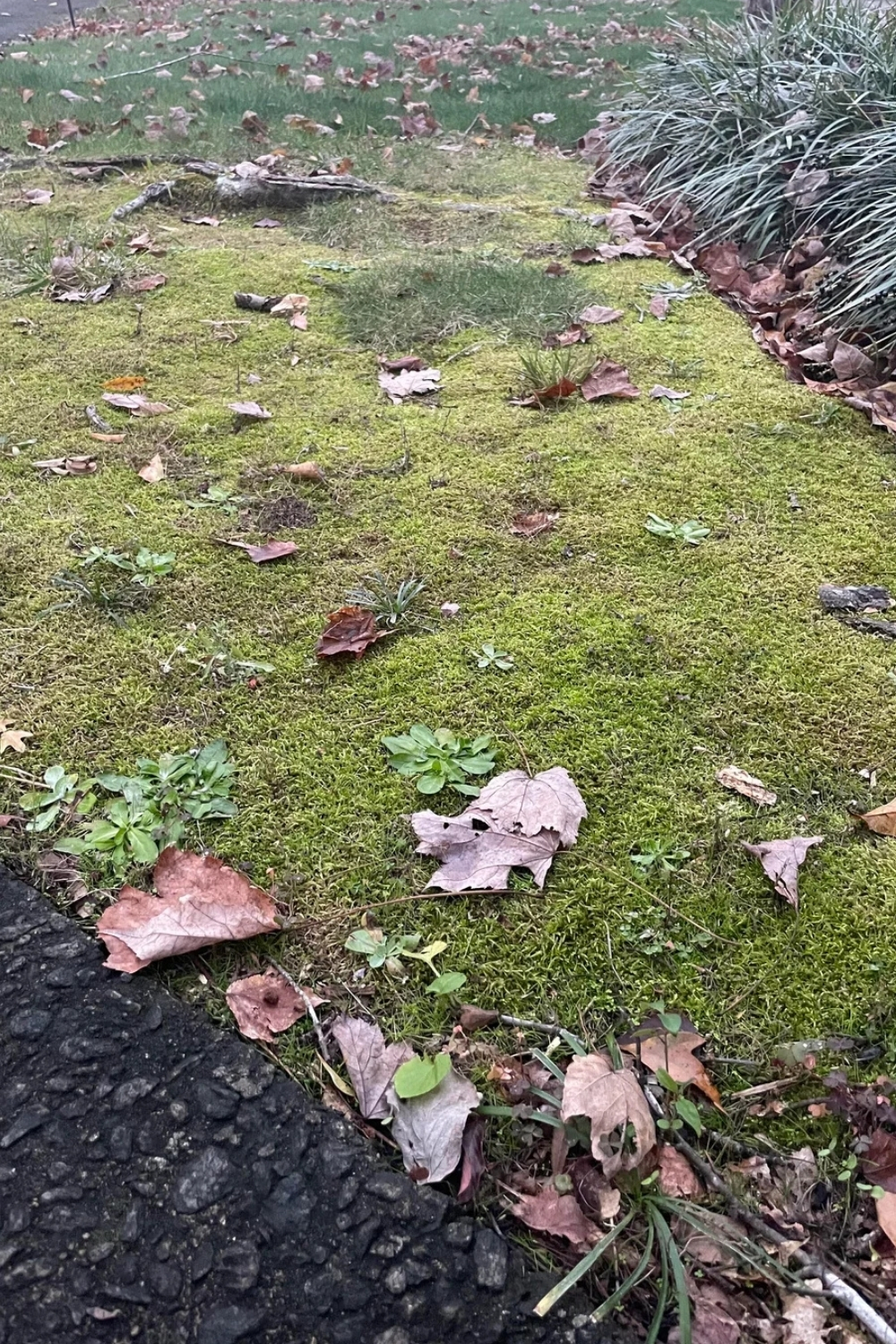
For bare spots or a faster start, transplant moss from elsewhere in your yard, or buy it from a nursery that grows it. There are a few types of moss used for lawns, and they behave differently. Sheet mosses and fern mosses creep sideways in flat mats and spread fastest. Cushion mosses grow in rounded clumps and handle a bit more dryness. Clear the area of weeds and debris, rake the soil to roughen the surface, press the moss down firmly so it touches the soil everywhere, and pin larger pieces with landscape staples.
According to Lawn Love’s guide to growing a moss lawn, new moss needs watering daily for about four to six weeks until it attaches, and a full moss lawn can take 12 to 18 months to fill in. Patience is part of the deal.
Getting rid of the grass first
Moss can’t grow through living grass, so a full conversion starts with clearing it. On a small area, the simplest method is to slice off the turf with a flat spade or a rented sod cutter, which lifts the grass in strips with its roots and leaves bare soil behind. Most shady lawns are thin enough that this goes quickly. Lightly firm the bare soil, then lay or transplant the moss right away so weeds don’t move in first.
On a bigger area, a slower route works too. Stop feeding and liming the lawn, mow it short and keep raking out the dead grass. Over a season or two, in the shadiest parts, the grass weakens and the moss takes the space on its own. It’s less work up front and gives you time to see which parts of the yard actually turn into a moss yard and which stay stubbornly grassy.
Either way, start small. Convert the shadiest patch first, a strip under one tree or along the north fence, and let that moss lawn prove itself for a year before tackling the rest.
Paths and stepping stones
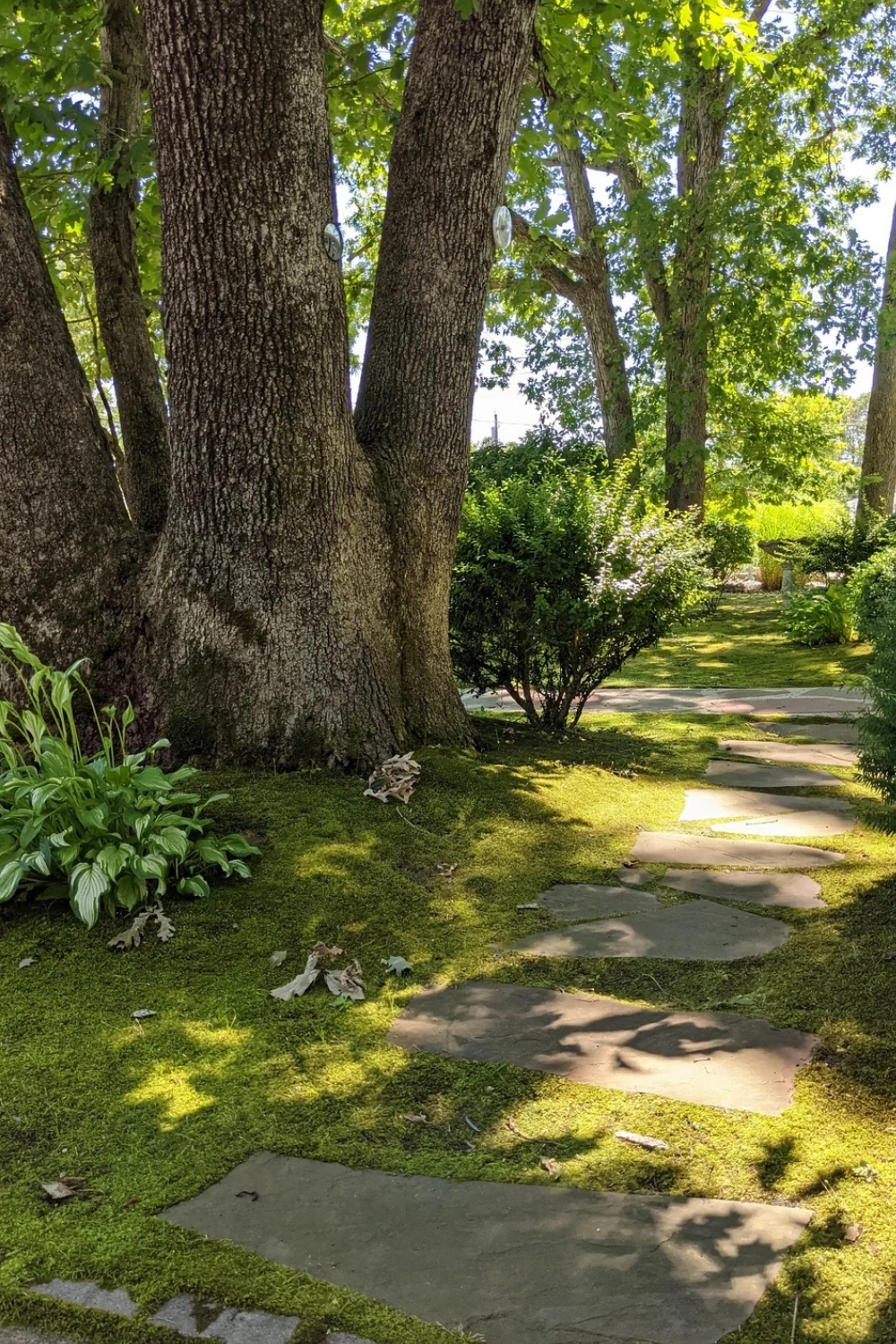
Since moss doesn’t like being walked on every day, give the regular routes a path. Flagstones or large stepping stones set into a moss lawn take the footsteps, and moss fills in around their edges, which is the look most people picture when they think of a Japanese moss garden.
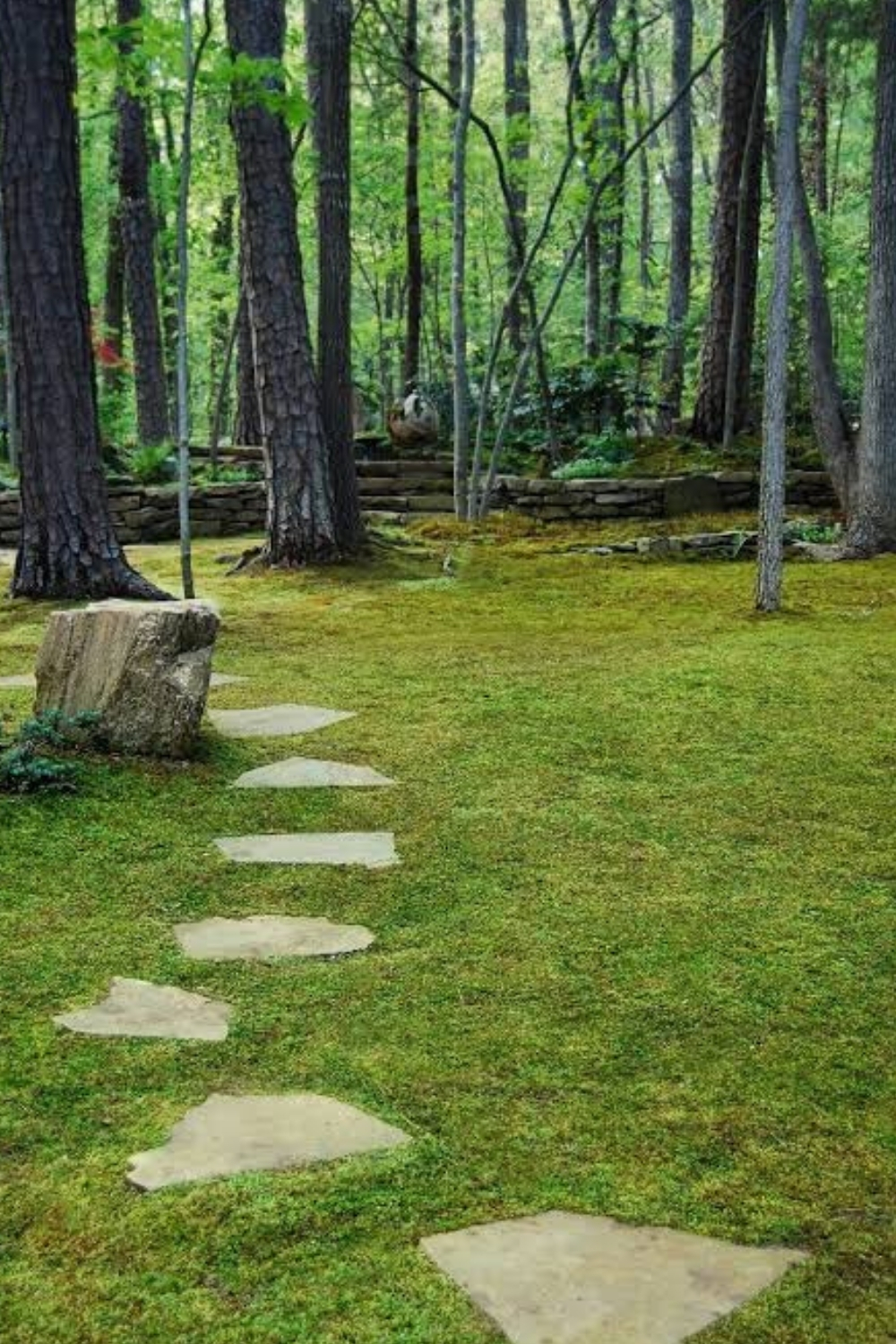
Space the stones at a comfortable stride, roughly 24 inches center to center, and set them level with the surface so they don’t catch a rake. This guide to what makes a garden path look good goes into curves, edging and spacing.
Upkeep
A moss lawn never needs mowing, fertilizing or aerating, but it does need a few things.
Fallen leaves are the biggest threat. A layer of leaves blocks light and holds wet against the moss, and it can rot underneath within weeks. A leaf blower on a low setting or a soft plastic rake clears them without tearing up the moss; do it often in fall. I’m over raking, personally, and a blower makes this much quicker.
Water in dry spells. Established moss survives on rain and humidity most of the year, but a light watering in a long drought keeps it green. Pull weeds by hand while they’re small, since weed killers harm moss too.
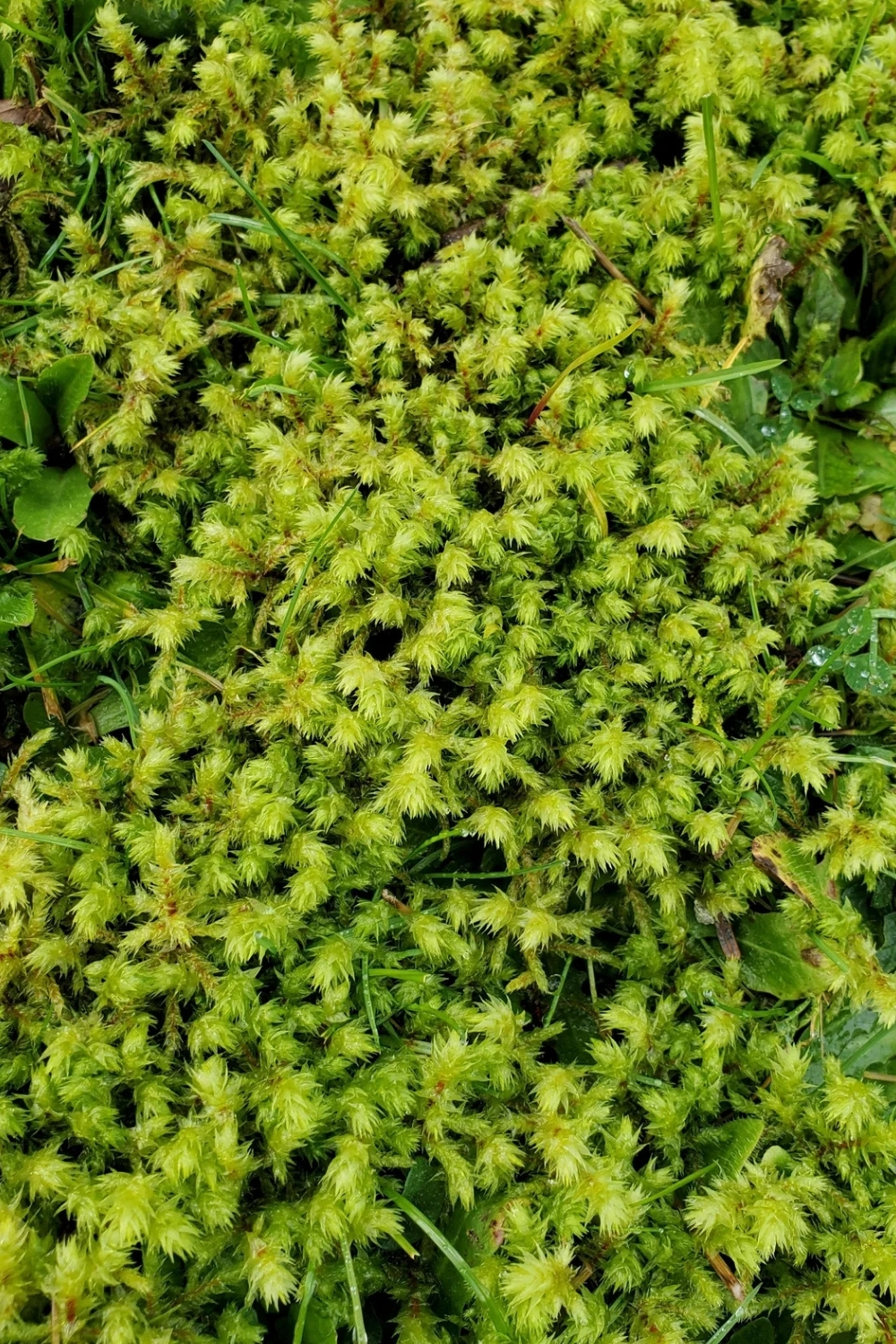
Moss, clover or grass for a shady yard
Grass is the toughest option for play and foot traffic, but in shade it needs shade-tolerant seed, regular overseeding and still tends to thin out. It’s the high-effort choice in a dark yard.
Clover handles light shade and more foot traffic than moss, needs little mowing and stays green in dry weather. It’s a good middle ground for a lawn that gets some sun and some use.
Moss is the winner in deep, damp shade with light traffic. It needs the least upkeep of the three once it’s established, and nothing else looks as soft. For mixed shady spots, these plants that grow well in shade can fill the edges and beds around it.
Living with a mix of moss and grass
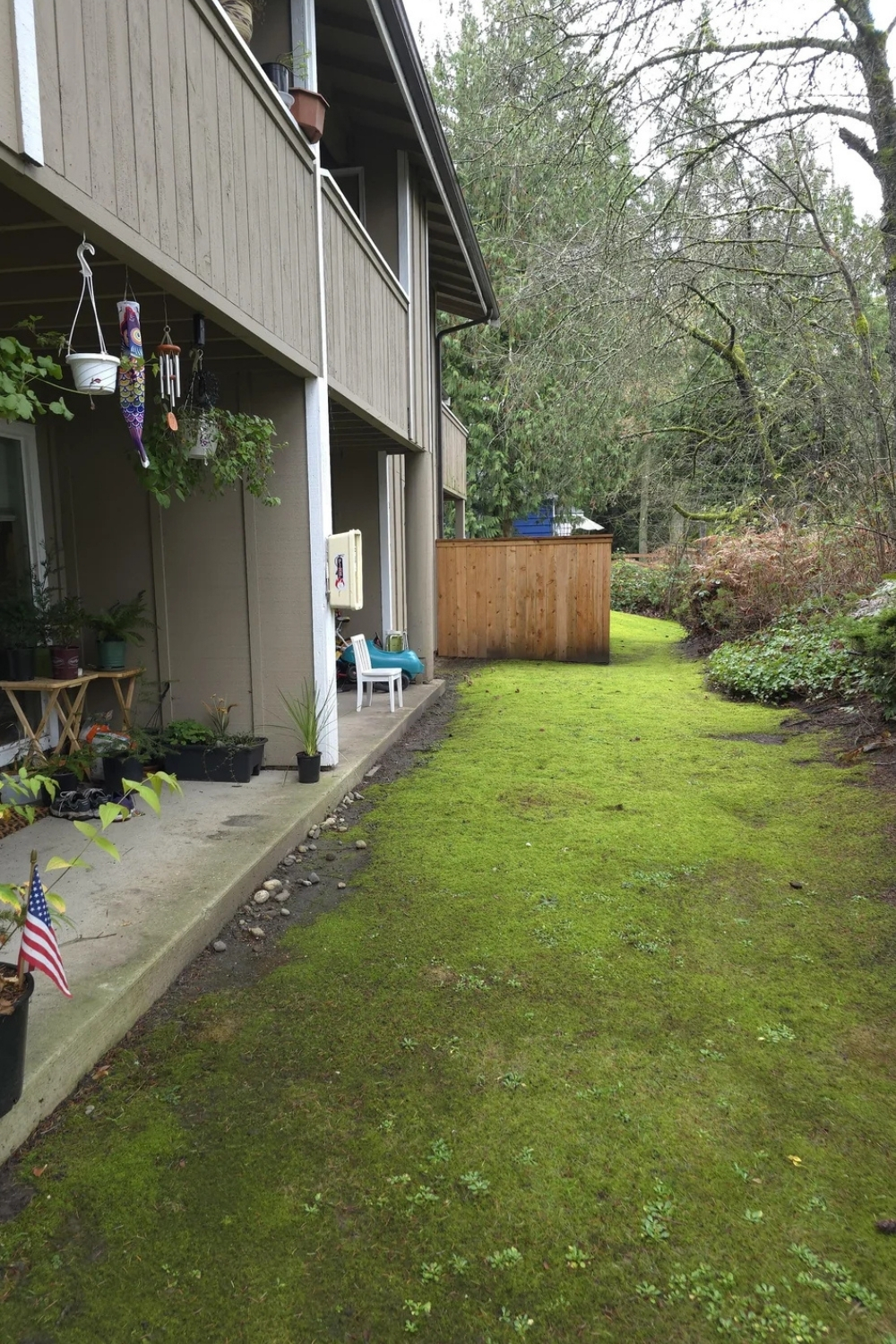
Not every yard has to pick a side. Many lawns end up as a patchwork: grass in the sunnier middle, moss under the trees and along the north side of the house, and a soft, uneven blend where they meet. Mowed at the usual height, a mixed lawn like this looks green, feels soft and needs less work than a pure grass lawn fighting the shade. A natural lawn, whatever that means to each homeowner, can absolutely include moss.
This fall, once the leaves come down and you’ve cleared them, walk the yard and mark every spot where moss is still bright green. Those are the places to let it take over first.