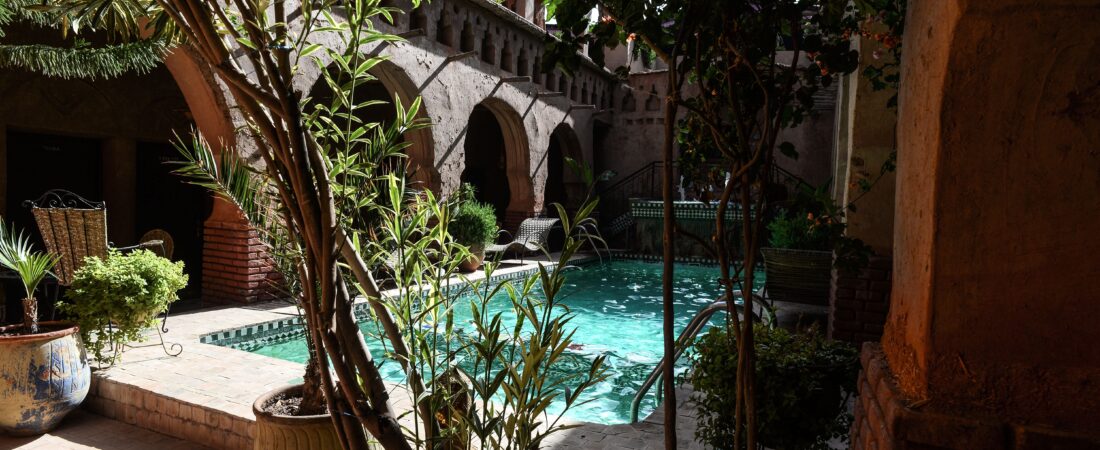
A Mediterranean pool doesn’t need a cliffside in Mallorca. It needs warm stone underfoot, terracotta pots, a few silver-leaved plants that smell good in the heat, and some shade to retreat to. The pool itself can be small, even a plunge pool in a courtyard. What makes it feel like a getaway is everything around the water, and that’s the part you can build in an ordinary suburban backyard.
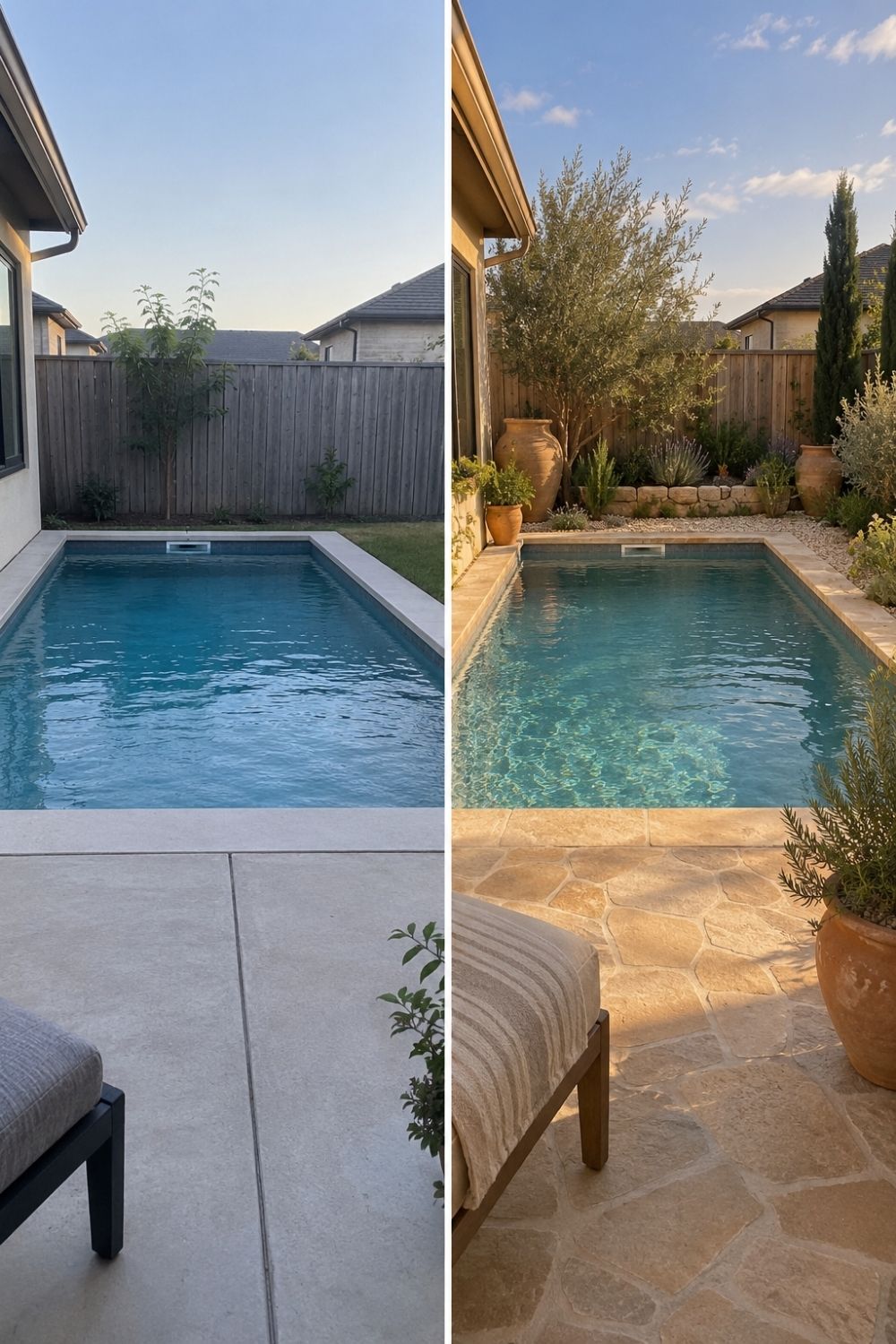
Photo by SassyGarden
The before and after above makes the point. On the left, a standard rectangular pool with a plain concrete deck, a wooden fence and not much else. On the right, the same pool with warm flagstone around it, big terracotta pots, an olive tree, a slim cypress and grasses softening the fence. The water didn’t change at all. The pool landscaping did.
Start with warm stone around the edge
In Mediterranean pool landscaping, the surface around the water sets the tone more than anything else. Mediterranean gardens use stone in warm, sun-bleached shades: travertine, limestone, sandstone, or concrete pavers in a creamy beige. Gray concrete reads as suburban; honey and cream read as southern Europe.
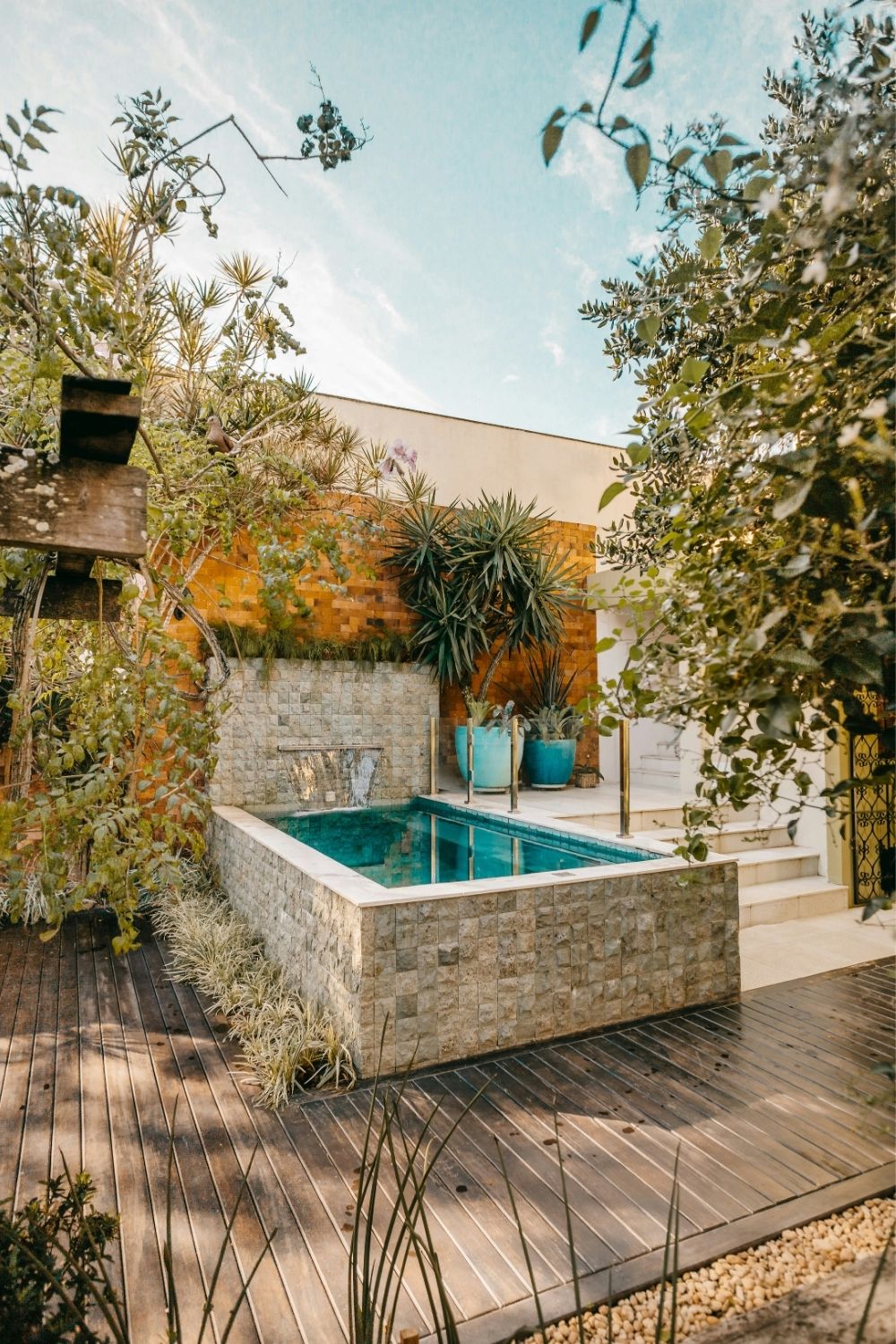
Photo by Jonathan Borba on Unsplash
This raised plunge pool is clad in rough stone blocks and sits on a wooden deck, with a stone wall behind it and olive and palm foliage all around. Cladding the sides of a raised pool is a clever trick in a small yard: it turns the pool into a piece of garden architecture rather than a hole in the ground. Whatever stone you choose, pick a finish with some texture so it isn’t slippery when wet, and a light color so it doesn’t get too hot for bare feet in July.
Terracotta pots do half the work
If you do only one thing, add terracotta. Big clay pots are the fastest way to give any garden pool a Mediterranean feel, and they let you grow plants that wouldn’t survive in your ground or your winters.
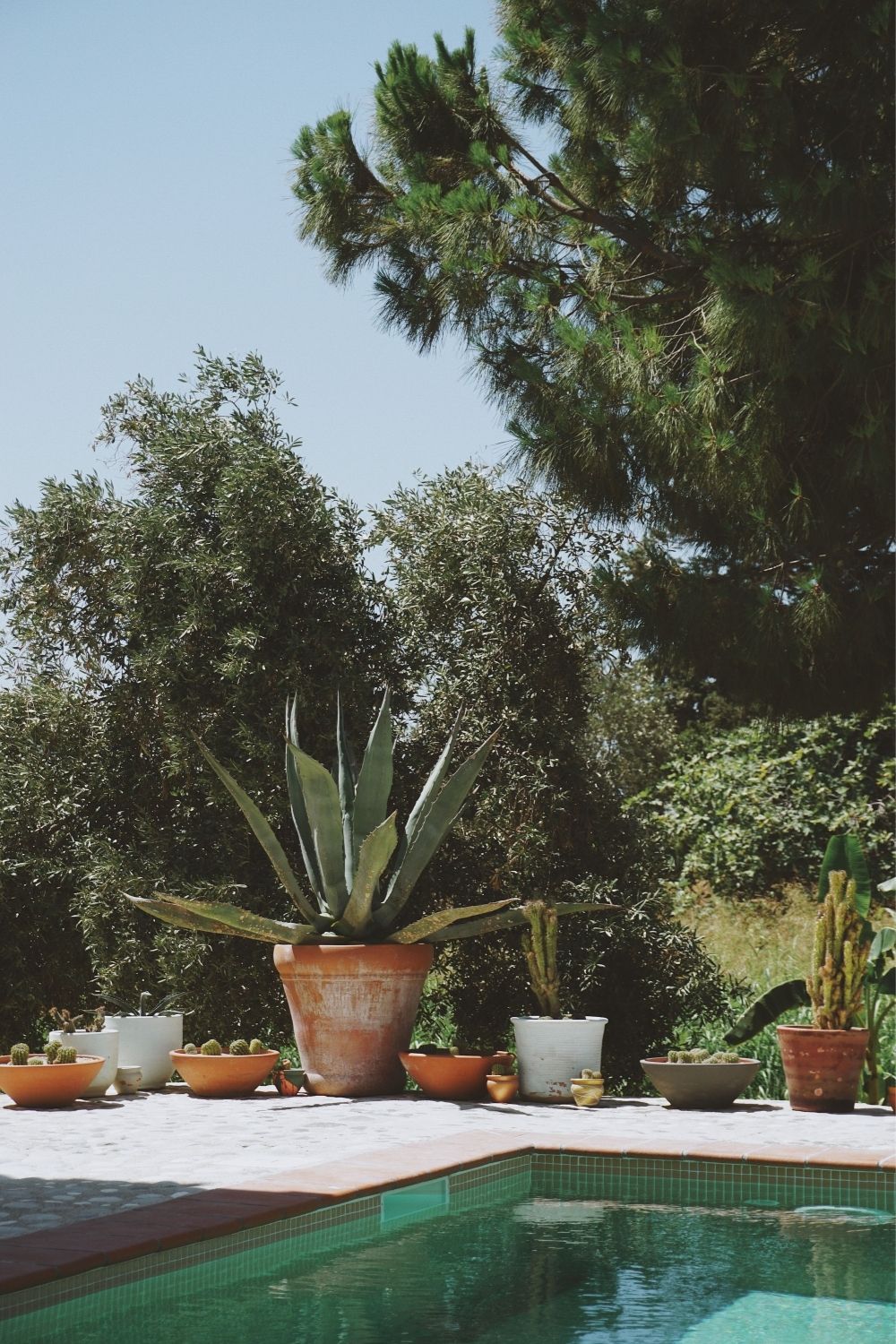
Photo by Dilruba Sarıçimen on Pexels
Here, a row of pots sits along the edge of a pool deck: one large agave in a tall terracotta pot, small cacti and succulents in bowls, and a pine and olive trees behind. Grouping pots in odd numbers and varying their heights looks more natural than a neat row of identical ones. Go big where you can, too. One pot at 20 inches or more has more presence than five small ones, and it dries out far more slowly.
One practical warning: agaves and spiky cacti belong at the back of the deck or in corners, never along the route people walk barefoot and wet. Agave leaves have sharp tips and the sap can irritate skin.
Plant olives, lavender and rosemary, in pots if winters are cold
The classic Mediterranean garden palette is silver, gray-green and purple, and most of those plants love the same thing a pool deck offers: full sun, reflected heat and dry roots.
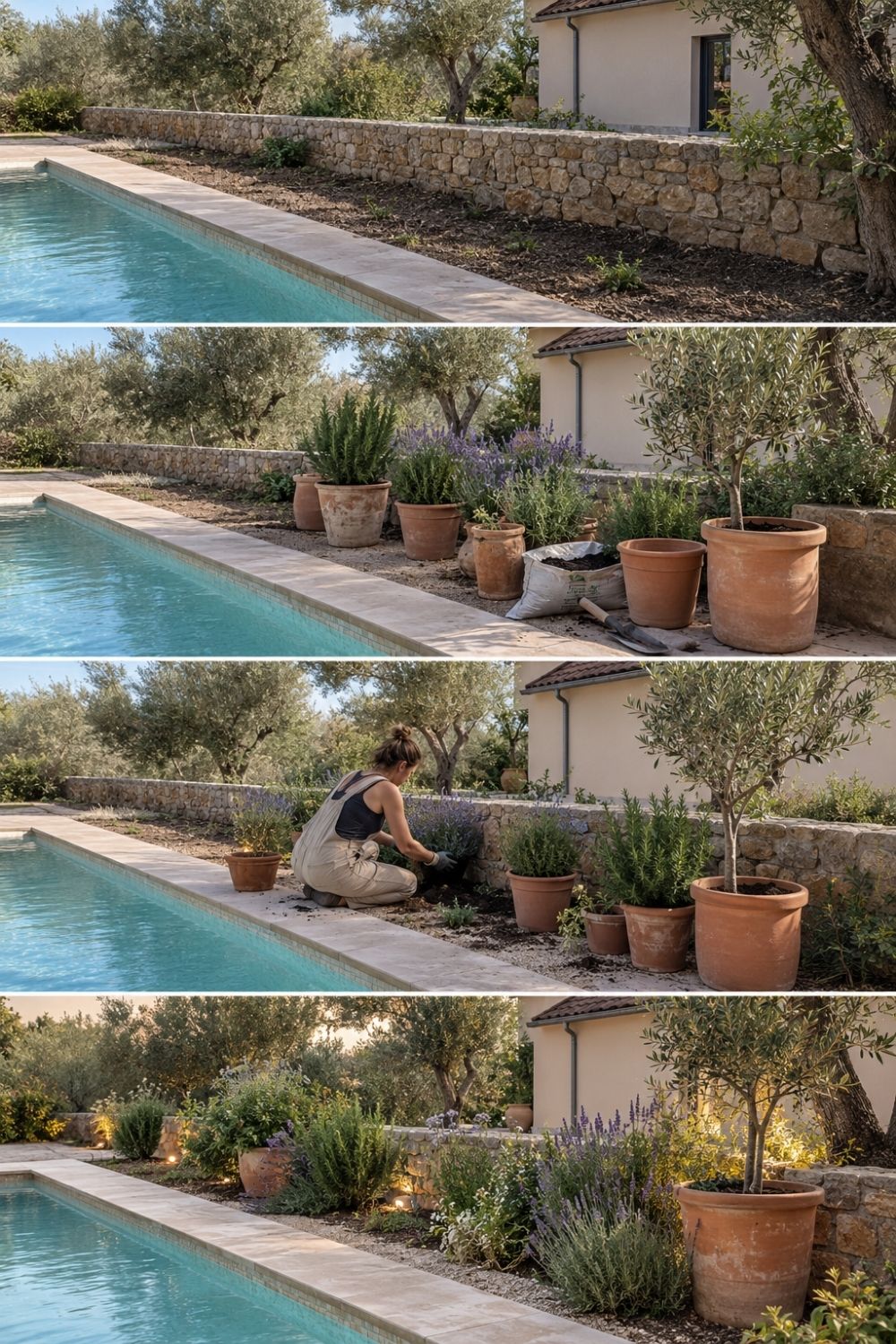
Photo by SassyGarden
The four stages above show a narrow strip between a pool and a stone wall being planted: bare gravel first, then pots of olive, lavender and rosemary set out, then planting, and finally the finished border with low lights glowing at dusk. Good choices for this kind of pool landscaping, with their approximate US hardiness zones:
- Olive tree (Olea europaea), zones 8–11. In colder areas, grow it in a large pot and bring it into a cool, bright room for winter.
- English lavender (Lavandula angustifolia), zones 5–9. Hardier than French or Spanish lavender.
- Rosemary (Salvia rosmarinus), zones 7–10, or in pots anywhere colder.
- Italian cypress (Cupressus sempervirens), zones 7–10, for vertical accents.
- Ornamental grasses and santolina for movement and silver foliage.
Lavender is mildly toxic to cats and dogs in quantity, so keep an eye on pets that chew plants. For more plants that thrive in the heat with little water, see my post on drought-tolerant gardens, and for herbs you can also cook with, space-saving herb garden ideas.
Shade is part of the design
A pool deck without shade is a place you visit for ten minutes. Mediterranean style solves this with pergolas, reed or bamboo roofing and climbing plants, which also make a small yard feel enclosed and private.
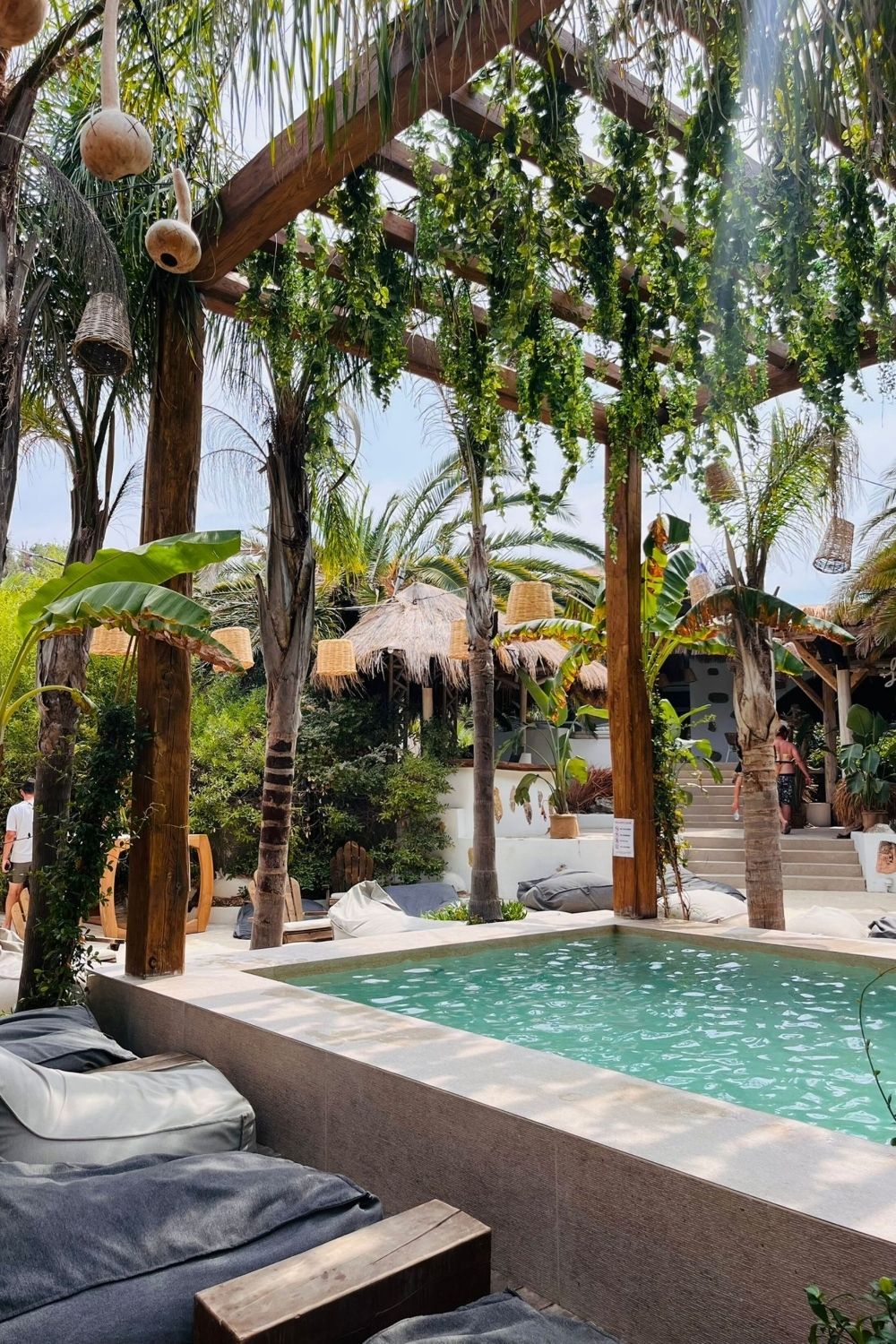
Photo by Djordje Petrovic on Pexels
This pool sits under a timber pergola with climbers hanging down, dried gourds and woven lamps, palms and banana plants around it, and low floor cushions along the raised edge. It leans tropical, but the principle is the same: filtered shade over part of the water and the seating.
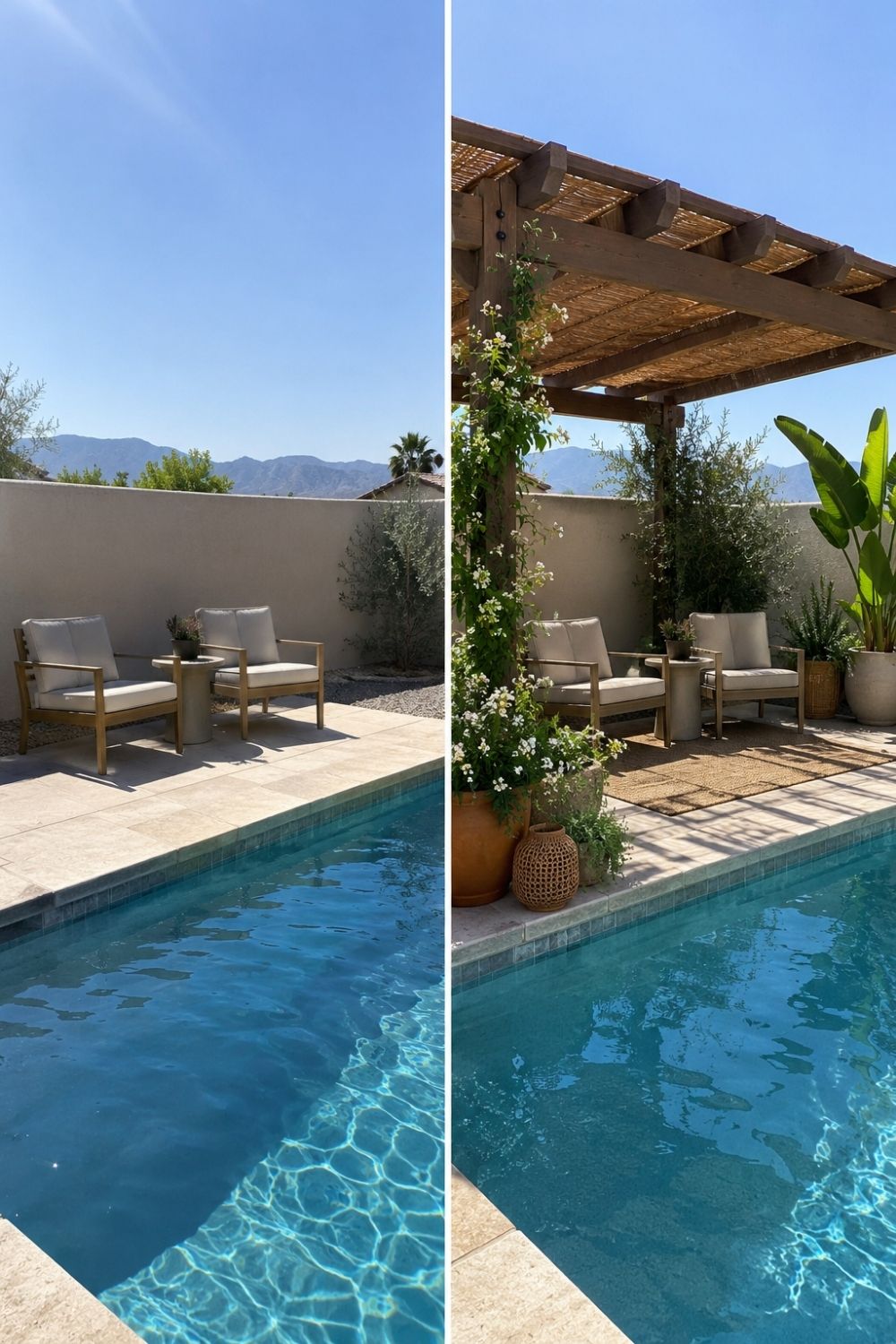
Photo by SassyGarden
The before and after above shows a simpler version in a walled courtyard: an open, sun-baked corner with two armchairs becomes a shaded lounge under a timber pergola with a reed roof, with jasmine climbing the posts, a banana plant and potted herbs. Reed matting is cheap, lets some light through and looks right in this style. Climbers such as star jasmine or grapevines take a couple of seasons to cover a pergola, so combine them with reed or a shade sail at first. If the pergola also needs to block a neighbor’s view, my post on garden screening ideas has more options.
Courtyard pools and plunge pools
In a truly compact yard, a plunge pool or a small courtyard pool fits where a full lap pool never would. You won’t swim laps, but you can cool off, sit on the steps with a drink and hear the water.
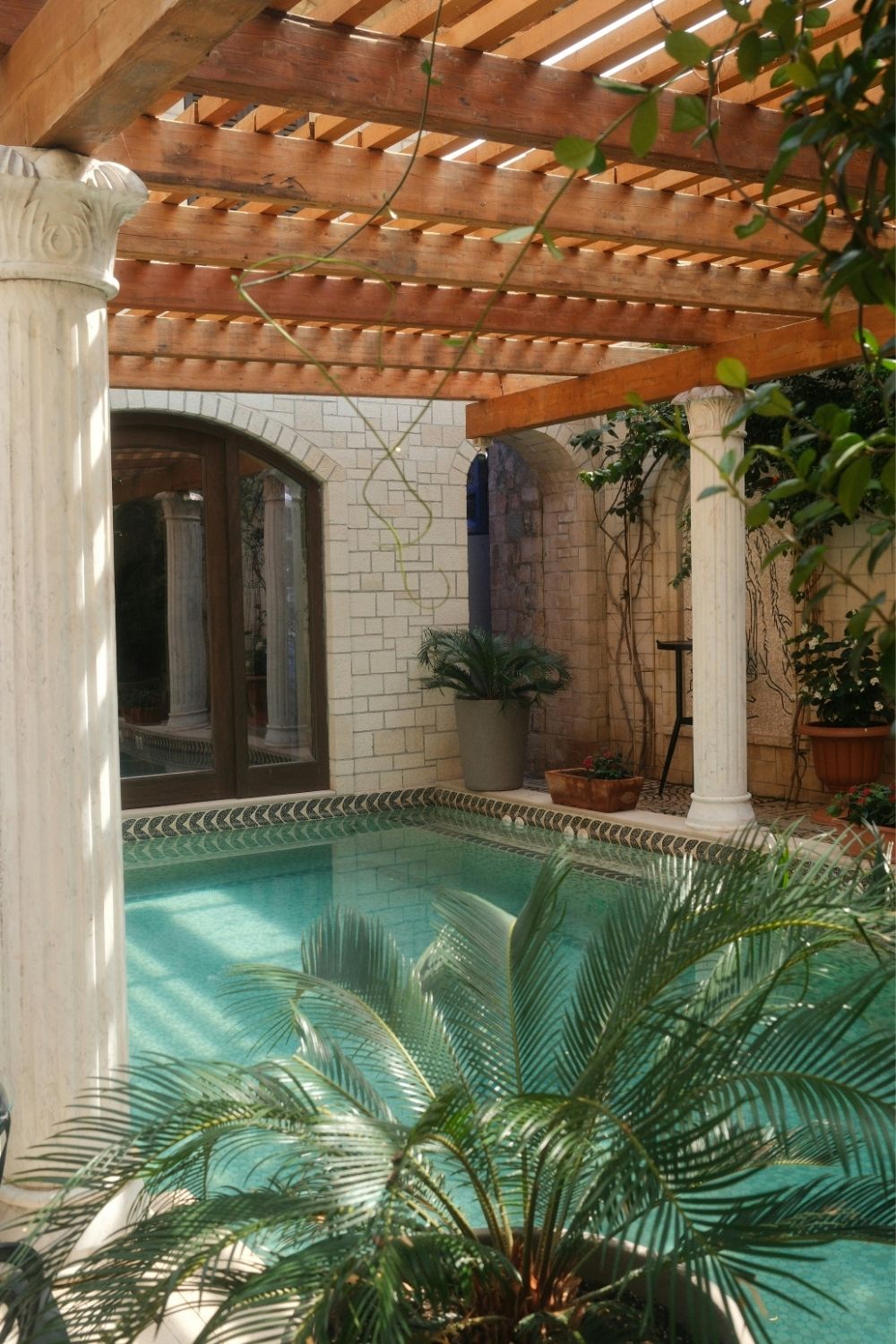
Photo by Michael Blösch on Unsplash
This courtyard pool is framed by classical white columns, a timber pergola overhead, a palm in the foreground and arched doors behind. It shows how architecture can carry the look when planting space is tight. Arches, whitewashed walls, a few columns or even a single stone urn say “Mediterranean pool” as clearly as any olive tree. For more ideas on bringing that southern European feel into an ordinary yard, Melanie Jade Design’s Mediterranean garden ideas is a good browse.
Light it for warm evenings
Summer evenings are when a Mediterranean pool earns its keep, so plan the lighting with the planting. Low, warm-white lights at the base of an olive trunk or along a lavender border give the same glow you see in the photo of the planted strip above, without lighting up the whole yard like a parking lot. Underwater pool lights look best on a warm setting rather than icy blue. Hang a few lanterns or woven pendants from the pergola, and put candles or solar lanterns on the steps.
Keep light fixtures and cables well back from the water and use outdoor-rated, low-voltage systems; anything wired near a pool is a job for a licensed electrician. Solar lights sidestep the wiring entirely, which makes them an easy first step for small pool landscaping on a budget.
Keep it water-wise and low-mess
Around a Mediterranean pool, practical choices keep the look going without extra work.
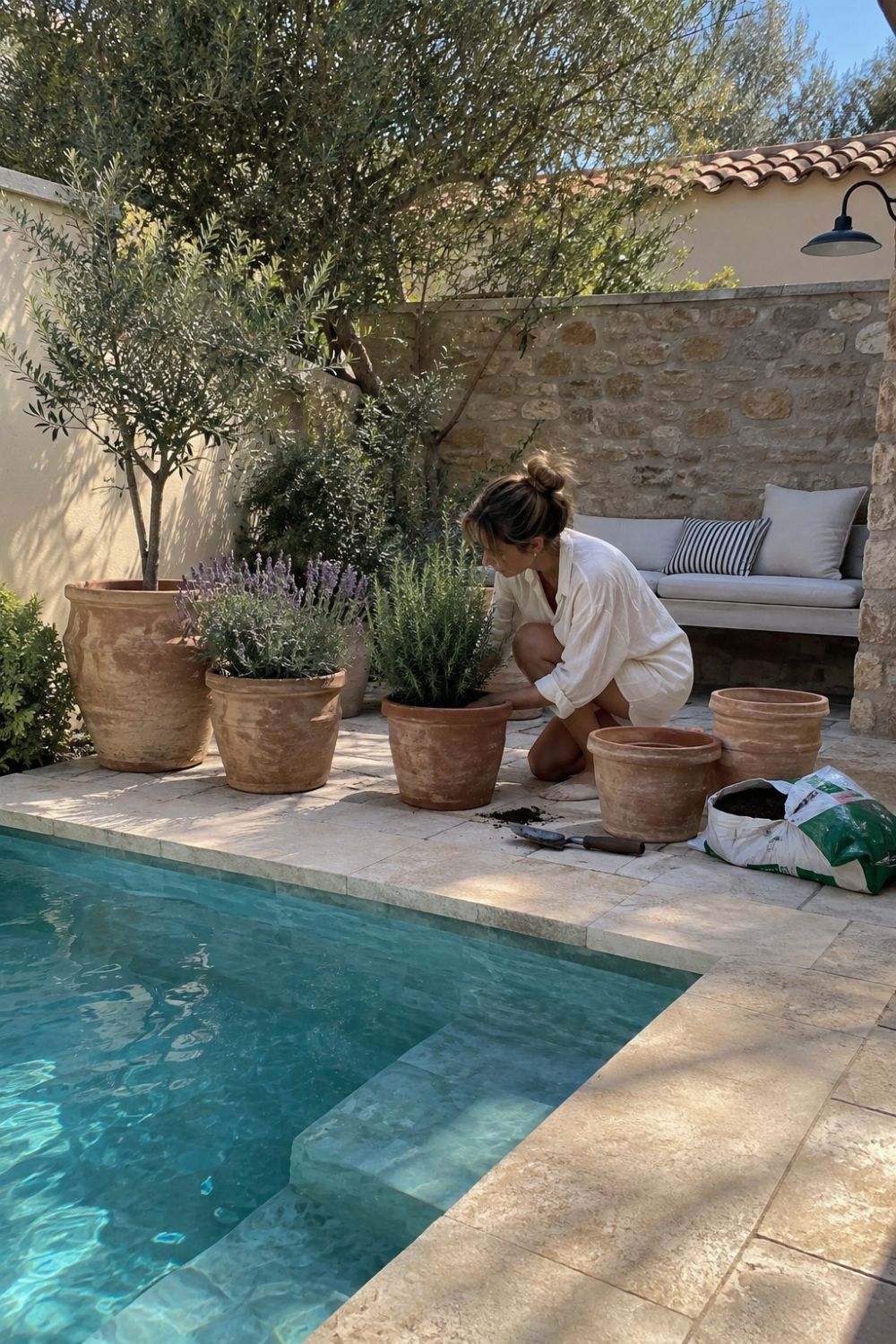
Photo by SassyGarden
In this small courtyard pool area, lavender and rosemary are being potted into terracotta beside the water, with an olive tree, a bench with striped cushions and a stone wall behind. A few habits help:
Keep trees that drop lots of leaves, flowers or fruit away from the water, or you’ll spend summers skimming. Olives are fairly tidy; many flowering trees are not. Water pots with a drip line on a timer rather than a hose, since Mediterranean plants prefer deep, occasional watering to a daily sprinkle. Set planting a couple of feet back from the pool edge where possible, because chlorinated splash can scorch leaves. And check your local rules on pool barriers and fencing before you design the layout; most areas require a fence and a self-closing gate, and it’s much easier to plan planting around it from the start. If you’re planning the whole yard, not just the pool area, start with planning a garden that feels designed.
Warm stone, big terracotta pots, silver plants that like heat, and shade over part of the water. Get those four right and even a small Mediterranean pool feels like somewhere you went on vacation.