A trellis is one of the cheapest ways to make a small garden feel bigger. It turns a bare fence into a wall of flowers, lifts cucumbers off the ground and gives roses a frame to show off. The catch is that not every trellis suits every plant. A climbing rose, a clematis and a bean plant all climb in completely different ways, and the right support depends on which one you’re growing.
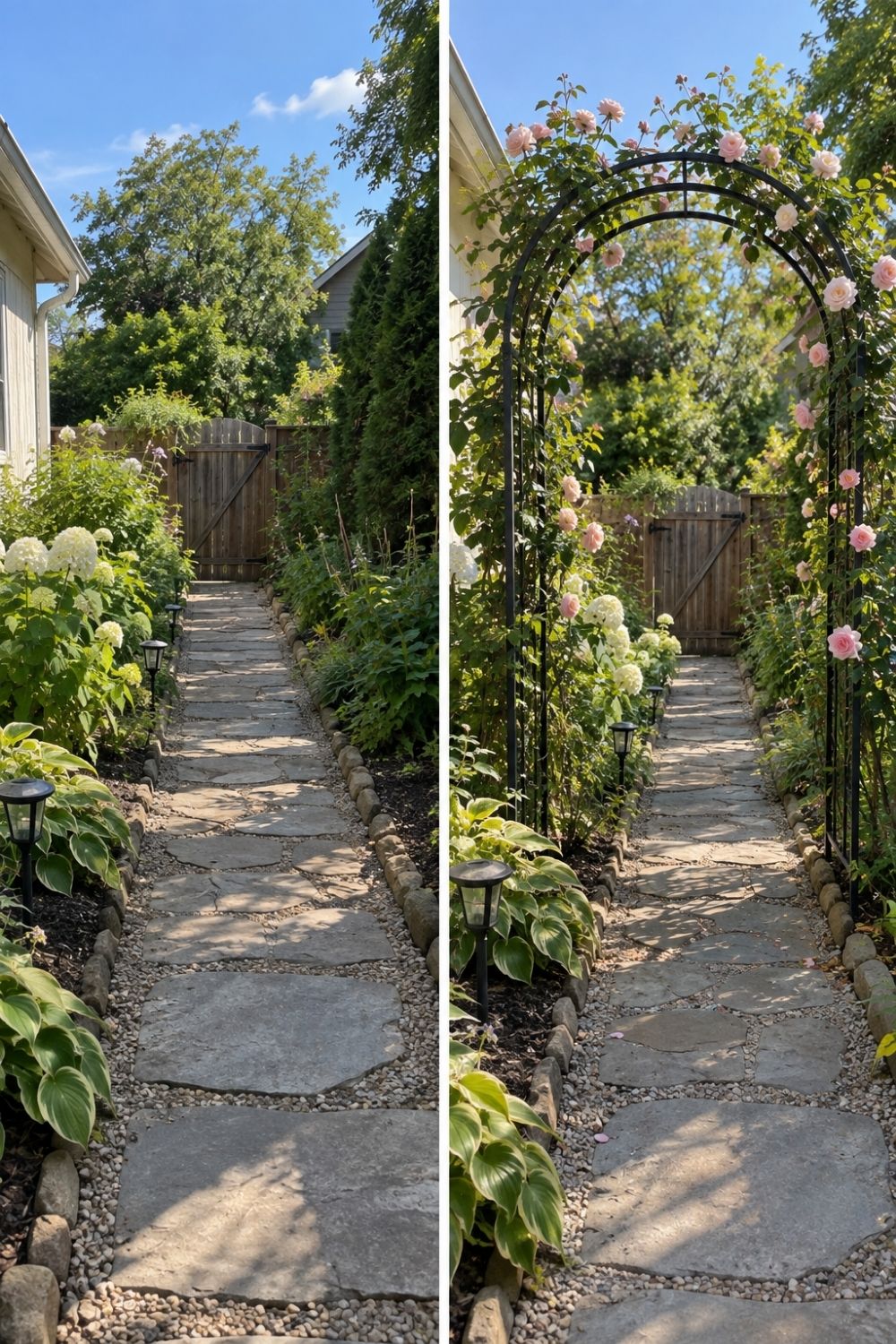
Photo by SassyGarden
The before and after above shows how much one structure can change a space. On the left, a narrow flagstone path runs between hydrangeas and hostas toward a wooden gate. On the right, a black metal arch spans the path, covered in pale pink climbing roses, and the walk to the gate suddenly feels like an entrance.
Match the trellis to how the plant climbs
Before choosing a trellis, look at how your plant holds on. That tells you what kind of support it needs:
| How it climbs | Examples | Best support |
|---|---|---|
| Tendrils that curl around thin supports | Peas, cucumbers, sweet peas, passionflower | Netting, wire mesh or string, less than 1/2 inch thick |
| Twining stems that spiral around | Pole beans, morning glory, honeysuckle, wisteria | Poles, strings or vertical wires |
| Twining leaf stalks | Clematis | Thin wire or netting; add string to thick posts |
| Aerial roots or sticky pads | Ivy, climbing hydrangea, Virginia creeper | A wall or solid fence; no trellis needed |
| No grip at all; needs tying | Climbing roses, blackberries | Sturdy trellis with horizontal wires or bars to tie to |
The most common mistake is giving a tendril climber something too thick to grab. Peas and cucumbers simply can’t wrap around a 2-inch post, so they flop until you add netting or string.
Trellises for climbing roses
Climbing roses don’t climb on their own; they have long, stiff canes that need to be tied to a support. That means the trellis has to be strong and have plenty of places to tie to.
A wall trellis in a planter
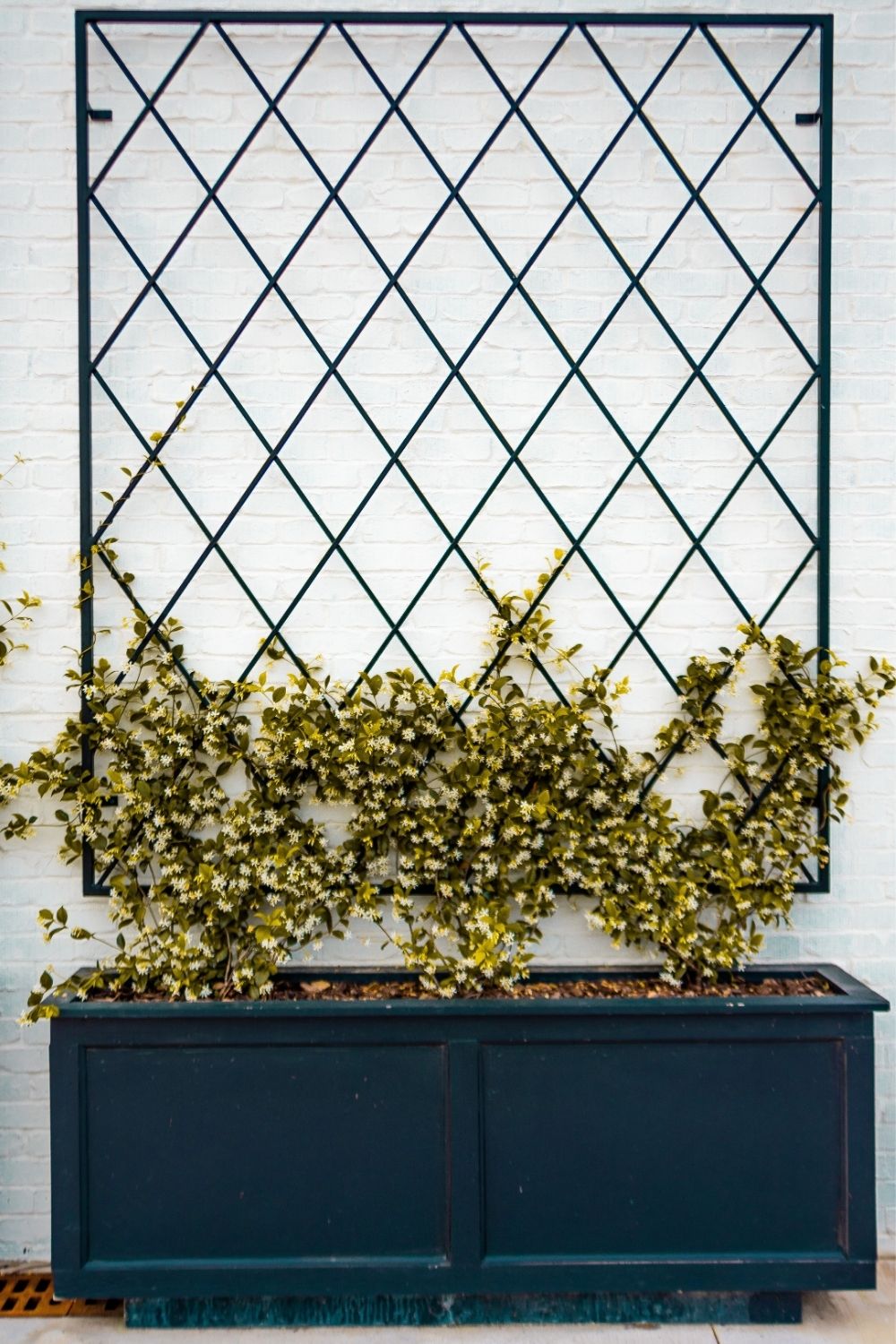
Photo by Caleb Oquendo on Pexels
This dark green metal diamond trellis is fixed to a white brick wall above a matching planter box, with a young variegated climber starting to spread along the bottom. A trellis like this works well for a rose, a clematis or star jasmine on a patio or beside a door. Mount it 2–3 inches away from the wall on spacers, so air can circulate behind the leaves and you can tie stems in easily. That gap also keeps damp away from the wall. If you plant into a box rather than the ground, choose one at least 18 inches deep for a rose.
An arch over a path
An arch is the classic support for climbing roses, and the arch in the first photo of this post shows why. Plant one rose at the foot of each side and train the canes up and over. The trick for more flowers is to bend the canes as close to horizontal as you can, spiraling them around the uprights instead of tying them straight up. Horizontal canes produce many more flowering side shoots than vertical ones. P. Allen Smith’s guide to training a climbing rose on a trellis shows the tying technique step by step. For more on making paths look their best, see my post on garden path design.
Use soft ties such as garden twine, strips of old T-shirts or stretchy plant tape, and leave a little slack so they don’t cut into the canes as they thicken.
Trellises for vines and flowering climbers
Twining vines and tendril climbers are much easier than roses: give them the right support, and they’ll do most of the climbing themselves.
A lattice panel on a bare wall
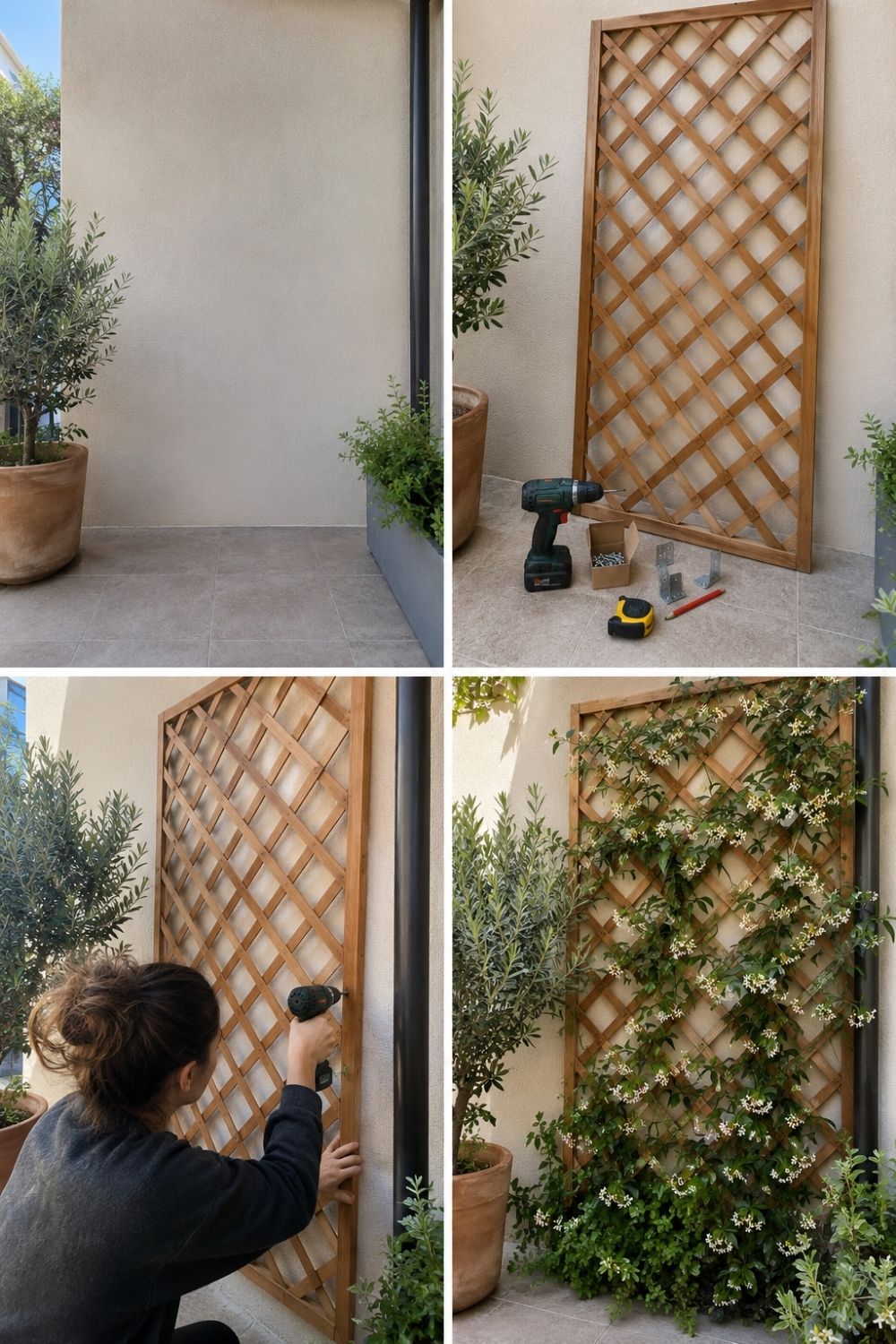
Photo by SassyGarden
The four photos above show a plain corner of a pale wall with a potted olive tree, then a wooden lattice panel with a drill and screws ready, then the panel being fixed to the wall, and finally the same trellis covered in white-flowered star jasmine. Lattice is cheap, easy to cut to size and suits nearly any twining vine: jasmine, clematis, honeysuckle or climbing nasturtiums. A panel like this also makes a quick privacy screen on a patio; my post on garden screening ideas has more options.
Rustic branch trellises
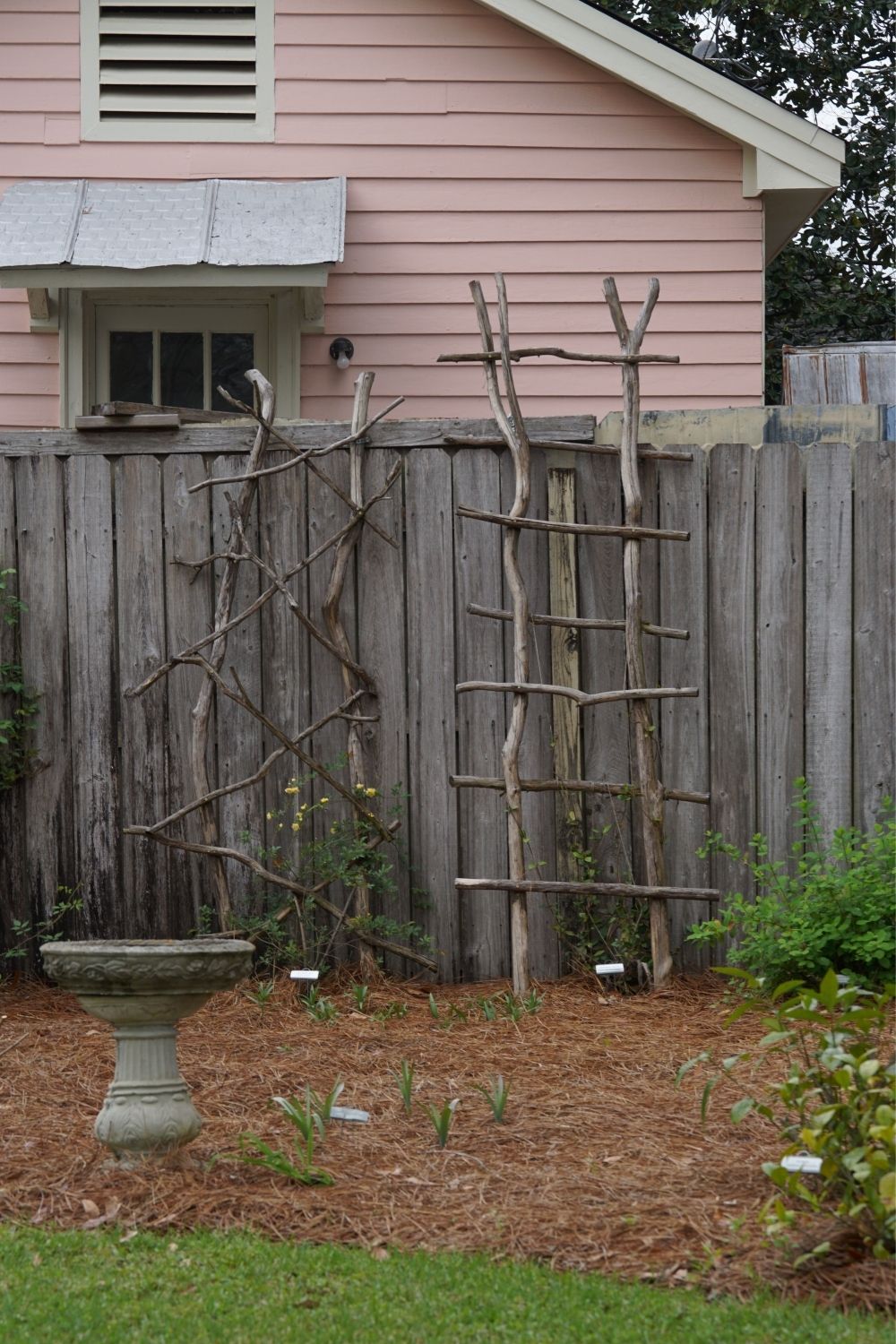
Against this weathered wooden fence, two homemade trellises built from branches and sticks lean behind a freshly mulched bed with a stone birdbath in front. A branch trellis costs nothing if you have trees or shrubs to prune, and it looks right at home in a cottage or wildlife garden. Lash the branches together with garden twine or thin wire, and use hardwoods like hazel, willow or birch if you can. They last two or three seasons, which is plenty for annual climbers such as sweet peas and morning glories. For more cottage-style ideas, see my post on English cottage gardens.
A pergola roof for vigorous climbers
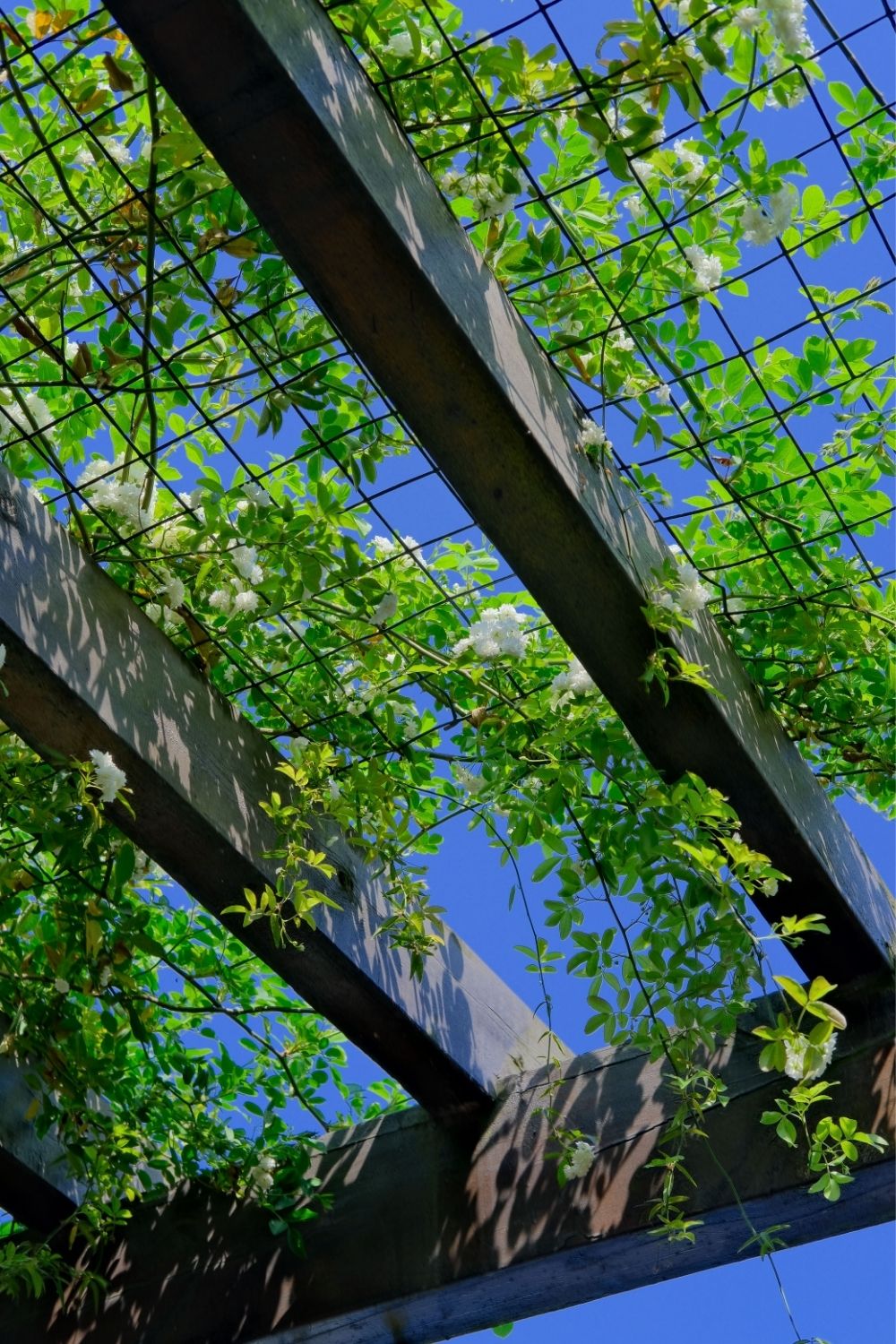
Looking up through this timber pergola, a fine metal grid between the beams carries a bright green climber with small white flowers against a blue sky. Adding wire mesh or tensioned cables across the top of a pergola gives vines something to hold onto, and within a few years it creates a green, shady roof.
Choose vigorous climbers carefully, though. Wisteria is spectacular but becomes extremely heavy with age and needs a solidly built structure. Chinese and Japanese wisteria are also invasive in parts of the US, so check before planting; American wisteria (Wisteria frutescens) is a smaller, better-behaved native alternative. All parts of wisteria, especially the seeds, are toxic to people and pets if eaten.
Trellises for climbing vegetables
A vegetable trellis saves space, keeps fruit clean and off the soil, and makes harvesting easier on your back. Cucumbers, pole beans, peas, small melons and indeterminate tomatoes all do better growing up than sprawling.
A trellis along a raised bed
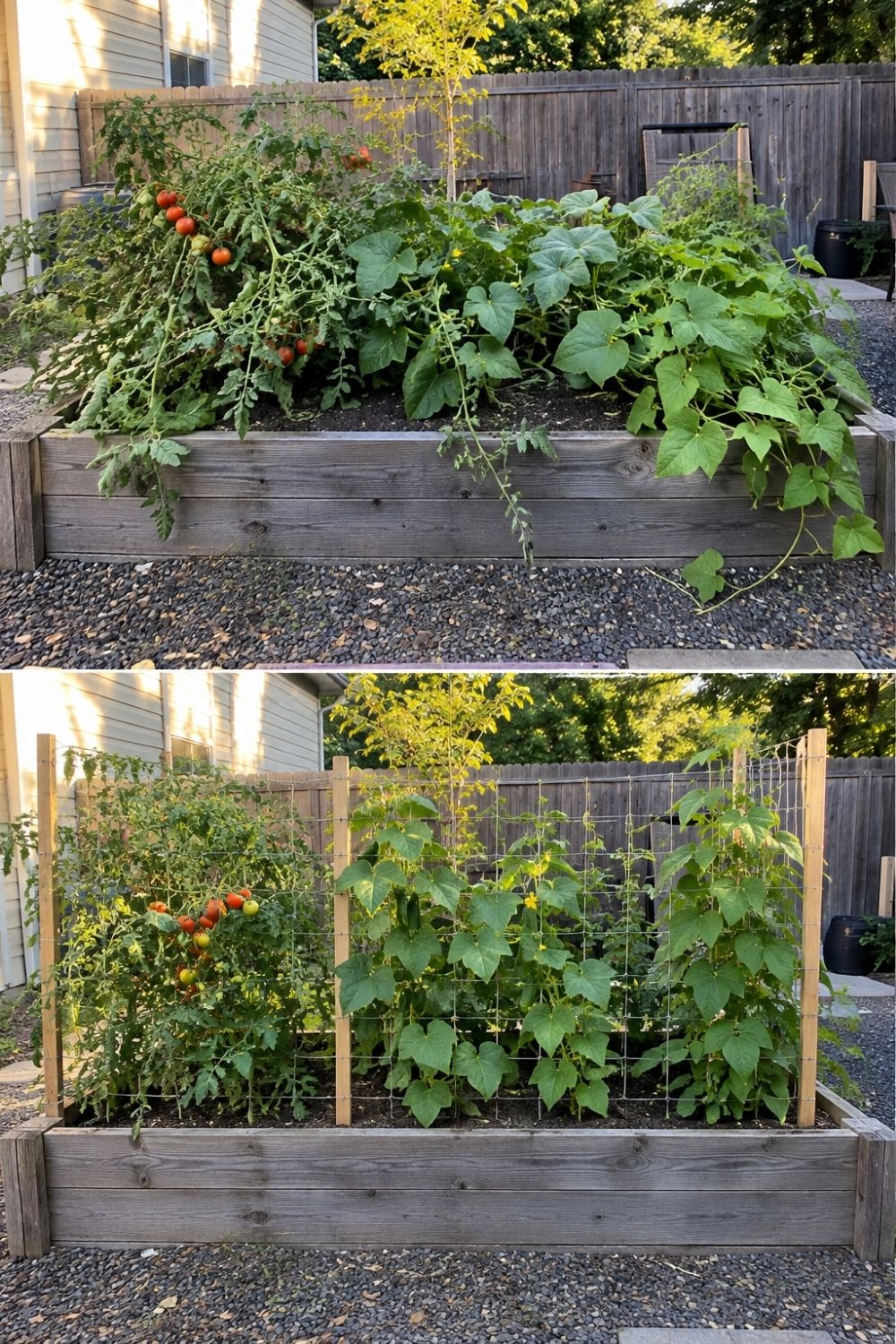
Photo by SassyGarden
The before and after above shows a raised bed where tomatoes, cucumbers and squash first sprawl over each other and the edges, then climb neatly up a simple trellis of wooden posts and wire mesh along the back. The bed looks tidier, air circulates better and every fruit is easy to see. Put the trellis on the north side of the bed so it doesn’t shade other crops, and choose mesh with openings of at least 4 inches so you can reach through to pick. My post on raised garden beds covers the rest of the setup.
A DIY A-frame trellis
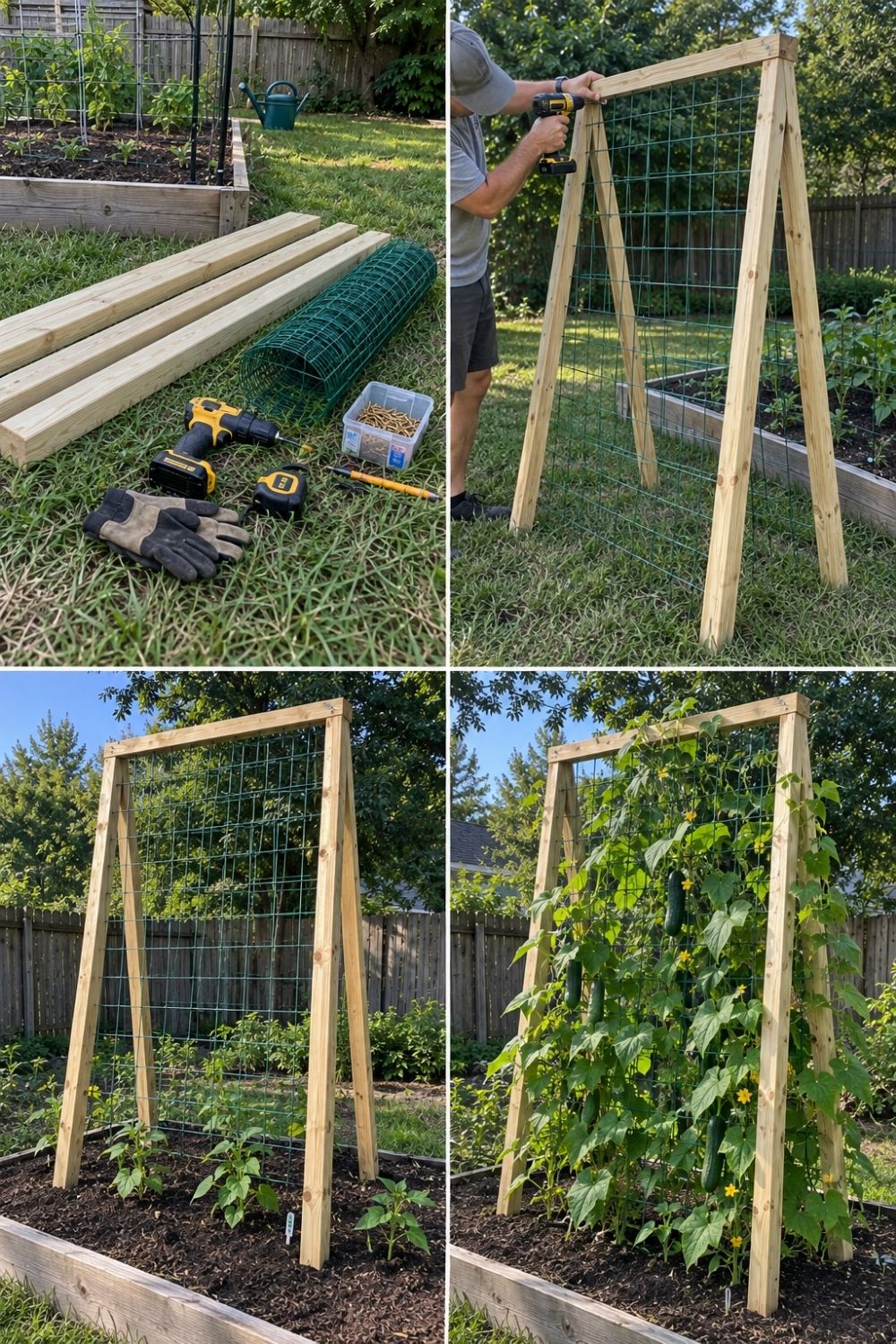
Photo by SassyGarden
The four stages above follow an A-frame build: boards, a roll of wire mesh, gloves and a drill laid out on the lawn; the frame being assembled; the finished A-frame standing in a raised bed with young plants at its base; and finally the whole frame covered in beans. An A-frame is stable without being fixed to anything, and it gives you two growing sides for the space of one. Six-foot legs set about 3 feet apart at the base suit most climbing beans and cucumbers. Plant on both sides, and grow lettuce or spinach underneath in summer, where the shade keeps them from bolting.
An obelisk for small spaces
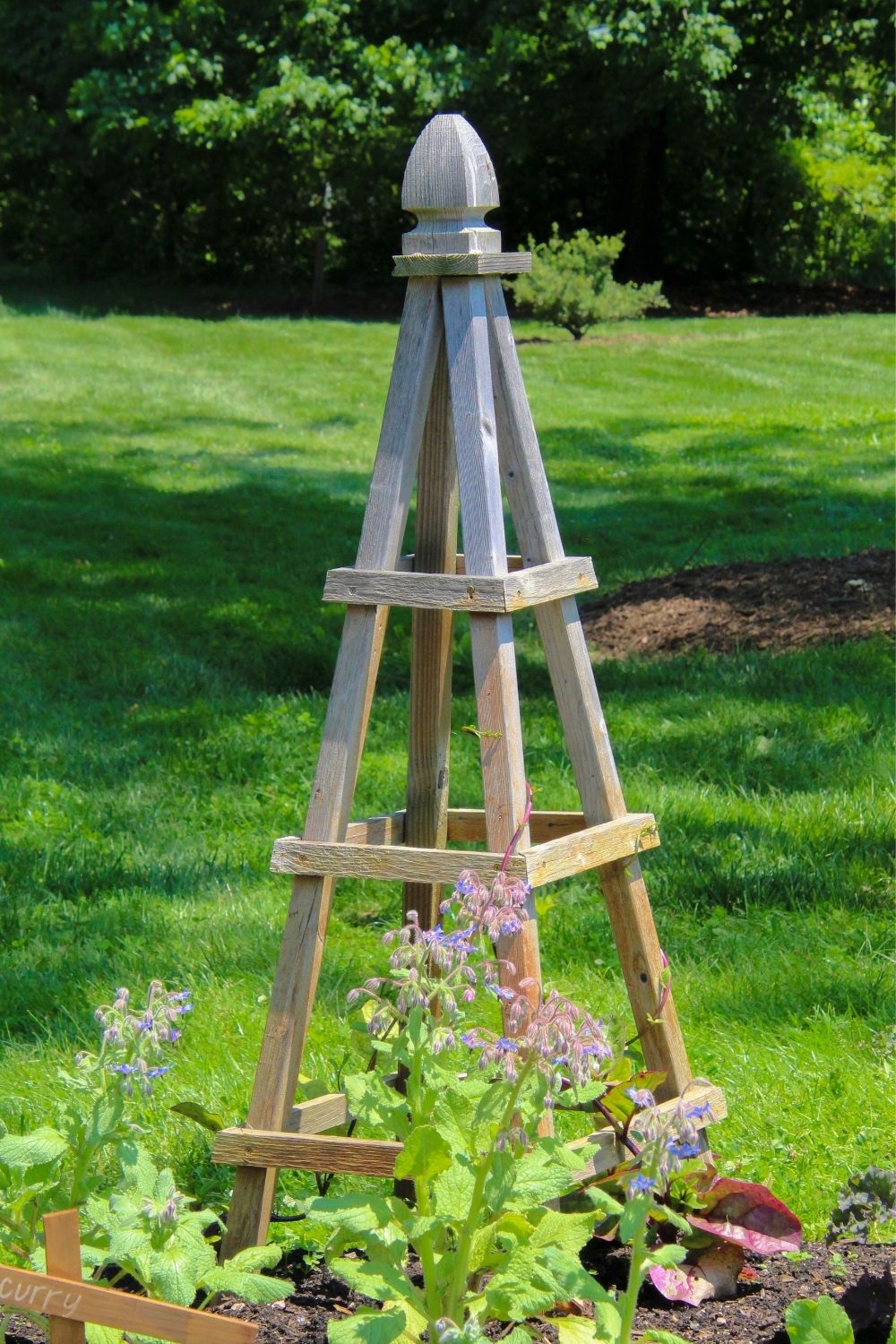
This weathered wooden obelisk with a finial on top stands in a bed of borage and young vegetables, with a green lawn and shrubs behind. An obelisk takes up very little ground but works as a focal point, which makes it a good fit for small gardens and large containers. Grow sweet peas, climbing beans or a compact clematis up it, and wrap the lower half with string or netting so tendril climbers can get a start. For more ways to grow upward in a small space, see my guide to vertical gardening ideas.
Anchor it well
A climber in full leaf catches a surprising amount of wind, and a wet summer vine can weigh more than you expect. Freestanding supports should go at least 18–24 inches into the ground, or be screwed to metal post spikes or set in concrete for anything taller than 6 feet. Put the support in before planting, so you don’t damage roots digging post holes later. Once a year, in late winter, check every tie, loosen any that are cutting into stems and replace rotten ones. Wood lasts longer with a coat of exterior stain, and metal with a fresh coat of rust-resistant paint every few years.
If you’re building your first one, start with a single trellis matched to one plant you really want to grow: an arch for a rose, a lattice for jasmine or an A-frame for beans. Get the support right for how that plant climbs, fix it firmly before planting, and let the plant take it from there.