The English cottage garden looks as if it simply happened: roses tumbling over a doorway, foxgloves leaning across a path, flowers packed so tightly that you can barely see the soil. In reality, that relaxed look is planned. It comes from a handful of repeatable ingredients, and once you know them, you can create a cottage garden in a big backyard, a narrow side yard or a small front garden.
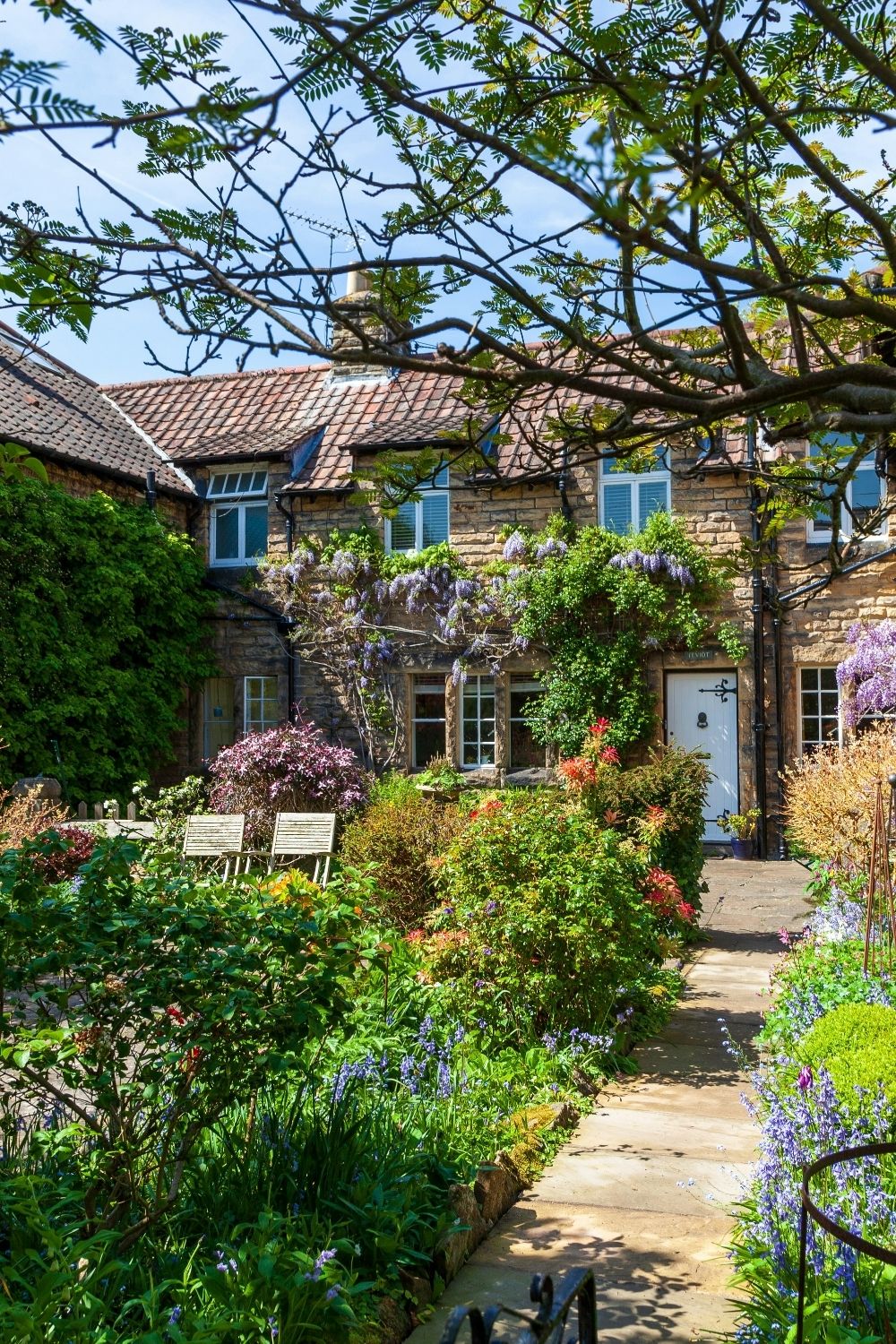
Photo by Darren Richardson on Unsplash
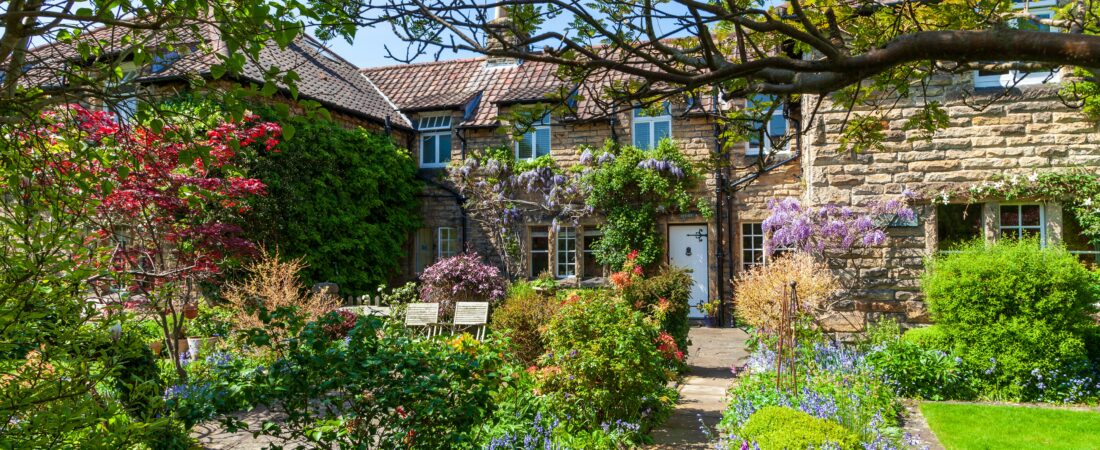
The photo above shows the style at its best: an old stone house with purple wisteria climbing the walls, a paved path running to the front door, and borders overflowing with bluebells, shrubs and a red Japanese maple, all framed by the branches of an overhanging tree. Nothing looks forced, yet every part of it has been placed with care.
Pack the borders with layers of flowers
The heart of any cottage garden is the planting. Instead of neat rows and bare soil between plants, cottage borders are dense, layered and mixed, with tall spires at the back, rounded plants in the middle and soft edgers spilling onto the path.
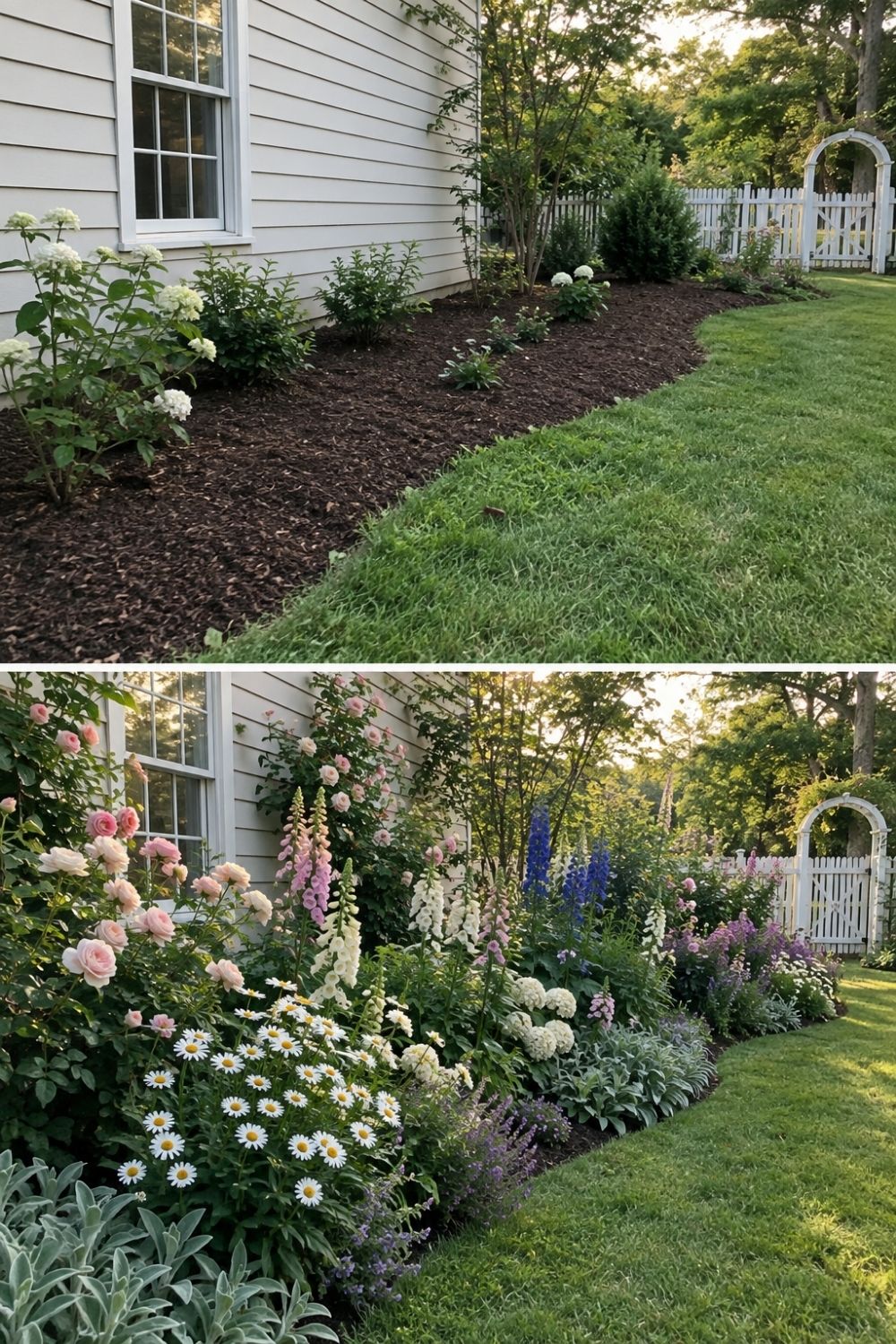
Photo by SassyGarden
The before and after above shows a border along a white clapboard house, first freshly mulched with a few young shrubs spaced far apart, then overflowing with pink roses, foxgloves, blue delphiniums, white daisies and silvery lamb’s ear, with a white arbor and picket gate at the end. The difference is density. Cottage-style planting uses many more plants per square foot than a typical mixed border.
A simple cottage garden plant palette, with approximate USDA zones:
| Layer | Plants | Approx. zones |
|---|---|---|
| Tall, at the back | Hollyhocks, foxgloves, delphiniums, climbing roses, lupines | 3–8 |
| Middle | Shrub roses, peonies, garden phlox, salvia, Shasta daisies | 3–9 |
| Front edge | Catmint, lady’s mantle, lamb’s ear, hardy geraniums, dianthus | 3–9 |
| Fillers and annuals | Cosmos, nigella, snapdragons, sweet peas, calendula | Annual |
Repeat a few plants along the border rather than using one of each, and mix flower shapes: spires, daisies, globes and sprays. A palette of pinks, blues, purples and white with touches of soft yellow is the classic look, but cottage gardens can be bold, too.
A safety note: foxgloves, delphiniums and lupines are toxic if eaten, so plant them away from where small children or pets might nibble.
Pick a loose color scheme
Cottage gardens look abundant rather than chaotic when the colors hang together. The simplest approach is to choose two or three main colors and one accent. Soft pink, lavender blue and white is the classic English palette, and it works in almost any light. Warmer schemes of apricot, deep red, gold and purple feel richer and suit late summer, when rudbeckias, dahlias and heleniums take over.
White flowers are the secret glue of a cottage border. White daisies, phlox, cosmos and foxgloves separate stronger colors and glow at dusk, just when you’re most likely to be sitting outside. Silver foliage from lamb’s ear, artemisia or catmint does the same job between flowers and softens any color clashes. If you’re unsure, walk around a nursery with a basket and group plants together on the cart before you buy; if they look good side by side there, they’ll look good in the border too.
Let a path wander
A cottage garden path is rarely straight or formal. It curves gently, is softened by plants spilling over its edges, and is made from simple, natural materials like gravel, brick or old stone.
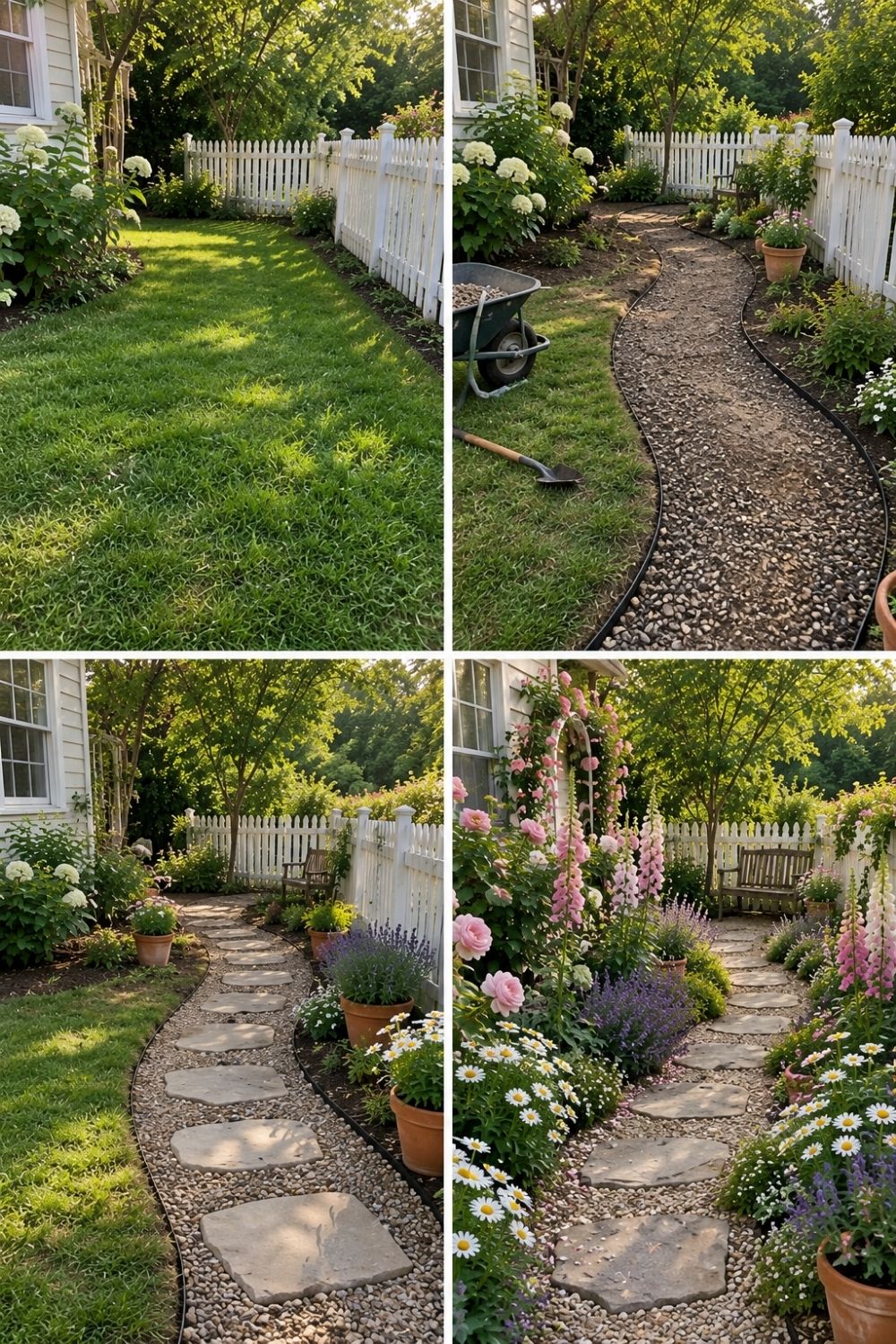
Photo by SassyGarden
The four stages above follow a side yard beside a white picket fence: first plain lawn, then a curving path dug out and filled with gravel, then stepping stones set into it and plants tucked in along both sides, and finally the finished path running between billowing roses, foxgloves, lavender and daisies. Let low plants like catmint, lady’s mantle and creeping thyme spill over the edges; that softening is what makes the path feel established. Make it at least 3 feet wide so the plants can flop without blocking it. For more on choosing materials and shapes, see my post on what makes a garden path look really good.
Frame the view with an arch and a gate
Arches, arbors and gates are part of the cottage look. They create a sense of entry, give roses and clematis somewhere to climb and turn a simple path into a journey.
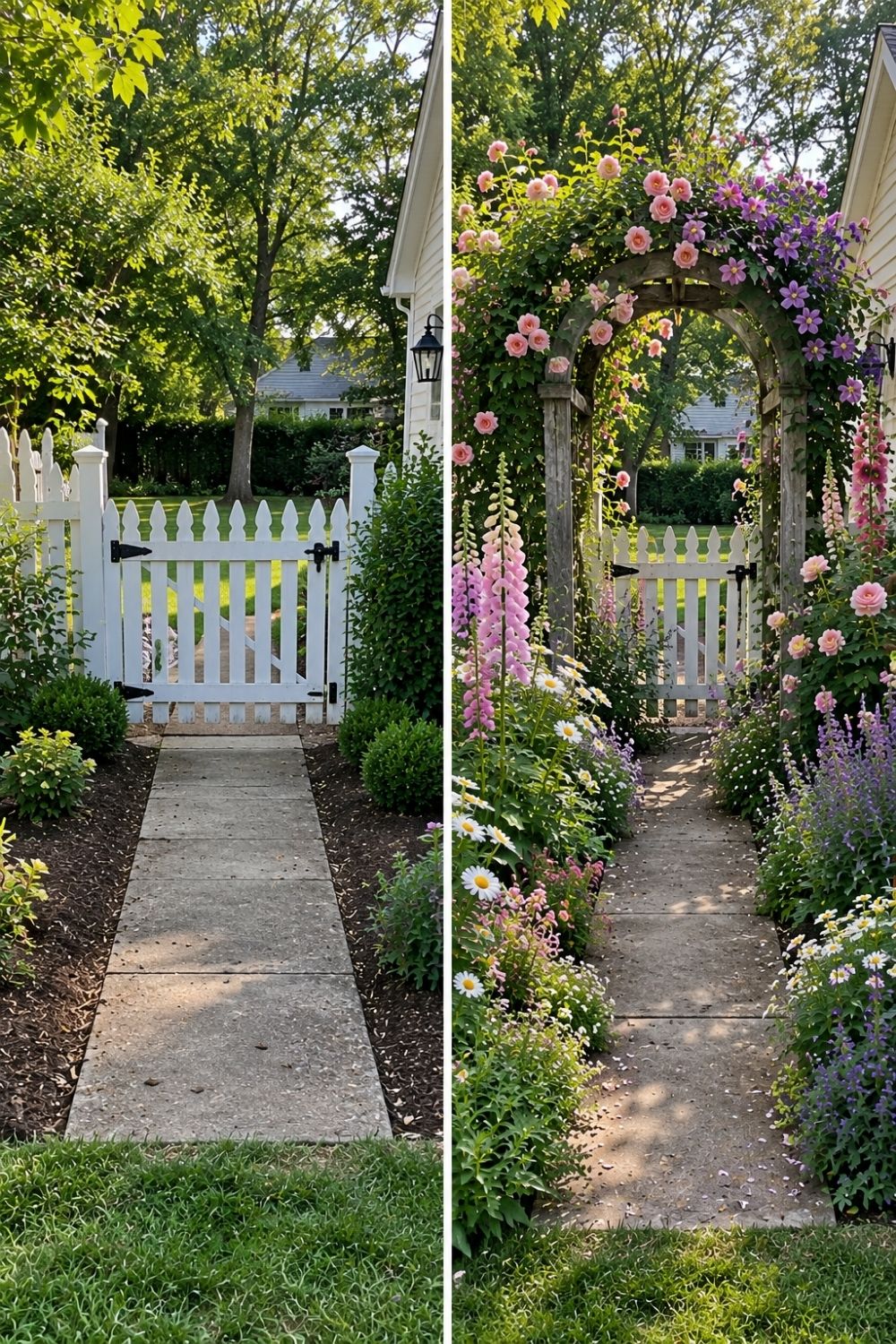
Photo by SassyGarden
In the before and after above, a plain concrete path with bare mulch on both sides leads to a white picket gate. After, a wooden arch covered in pink roses and purple clematis frames the same gate, and pink foxgloves, lavender and white flowers crowd the path. The gate and path haven’t changed at all; the arch and the planting did all the work.
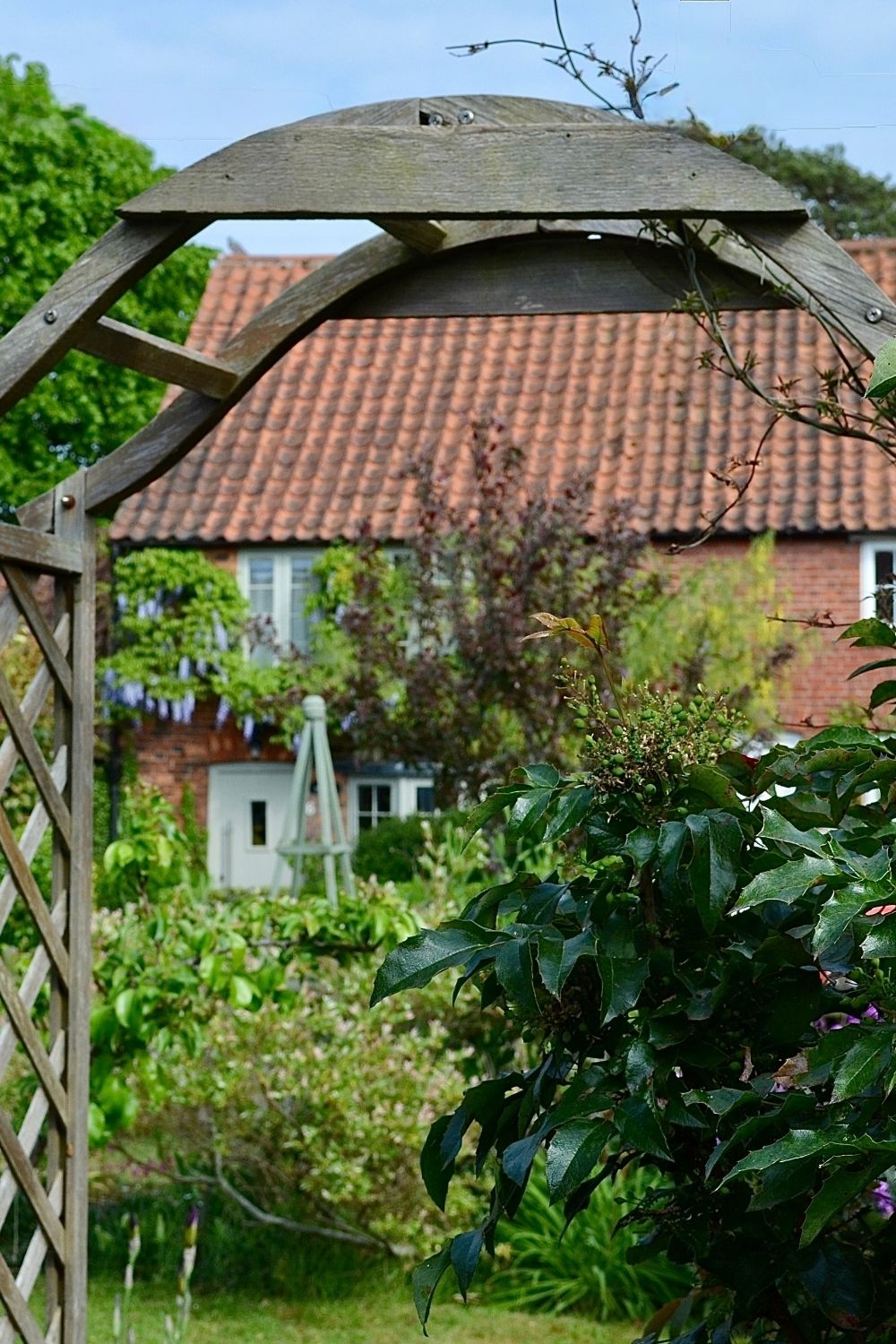
Photo by Neville Hawkins on Pexels
This weathered wooden arch frames a red-roofed brick cottage beyond, with dense shrubs and perennials filling the view. Placing an arch so that it frames something, like a door, a bench or a view down the garden, makes it far more effective than one standing alone in the lawn. For choosing the right support for roses and climbers, see my post on garden trellis ideas.
Add the little details
The final layer of a cottage garden is the small, lived-in touches: a bench, a birdbath, old pots and tools, things that suggest someone spends time here.
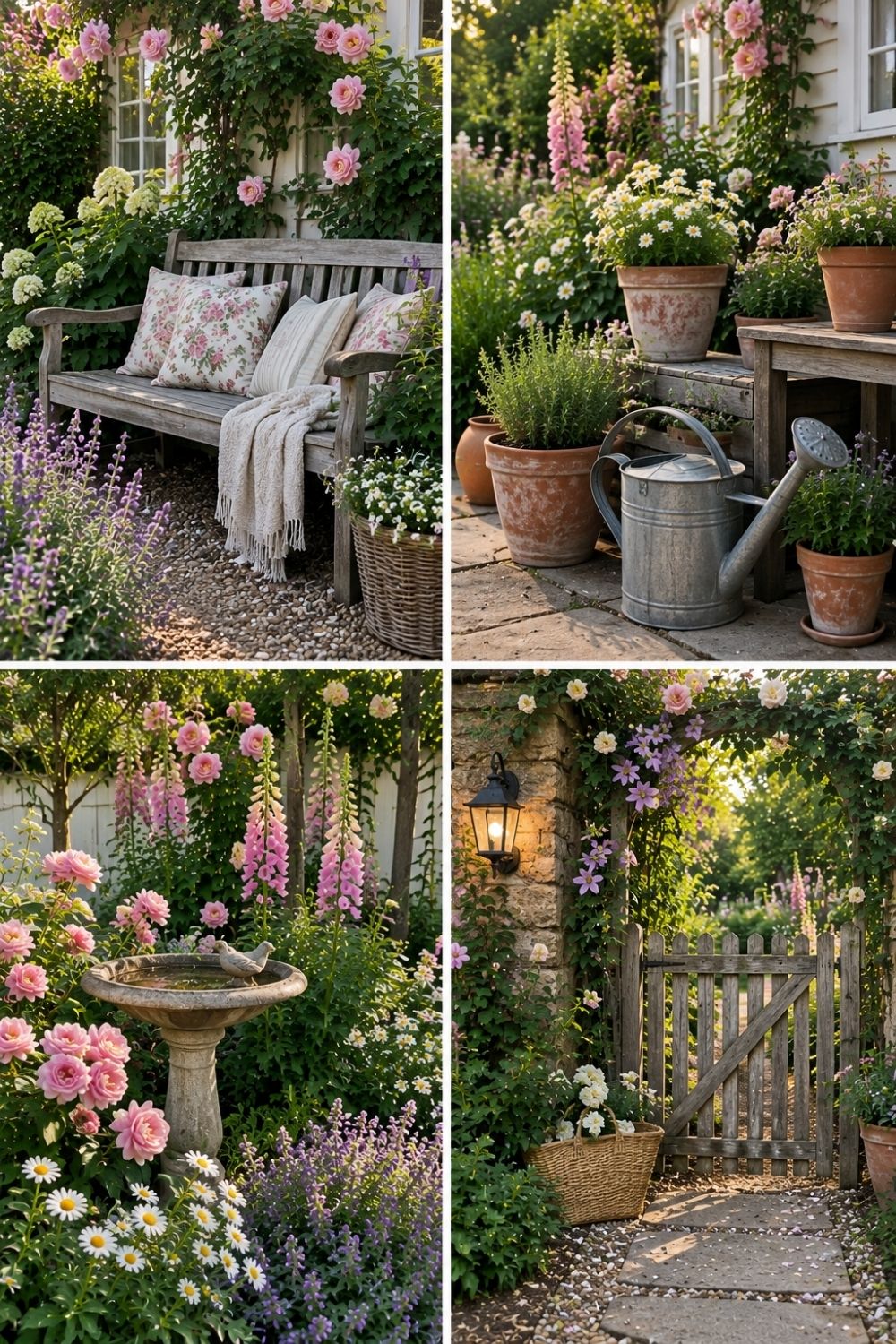
Photo by SassyGarden
The four vignettes above show the idea: a weathered wooden bench with floral cushions and a throw among roses and hydrangeas; a group of terracotta pots with a galvanized watering can; a stone birdbath surrounded by pink roses and foxgloves; and an old wooden gate under an arch of clematis with a lantern beside it. None of these objects is expensive, and many can be found at flea markets. Choose weathered materials like wood, stone, terracotta and galvanized metal, and avoid anything too shiny or new.
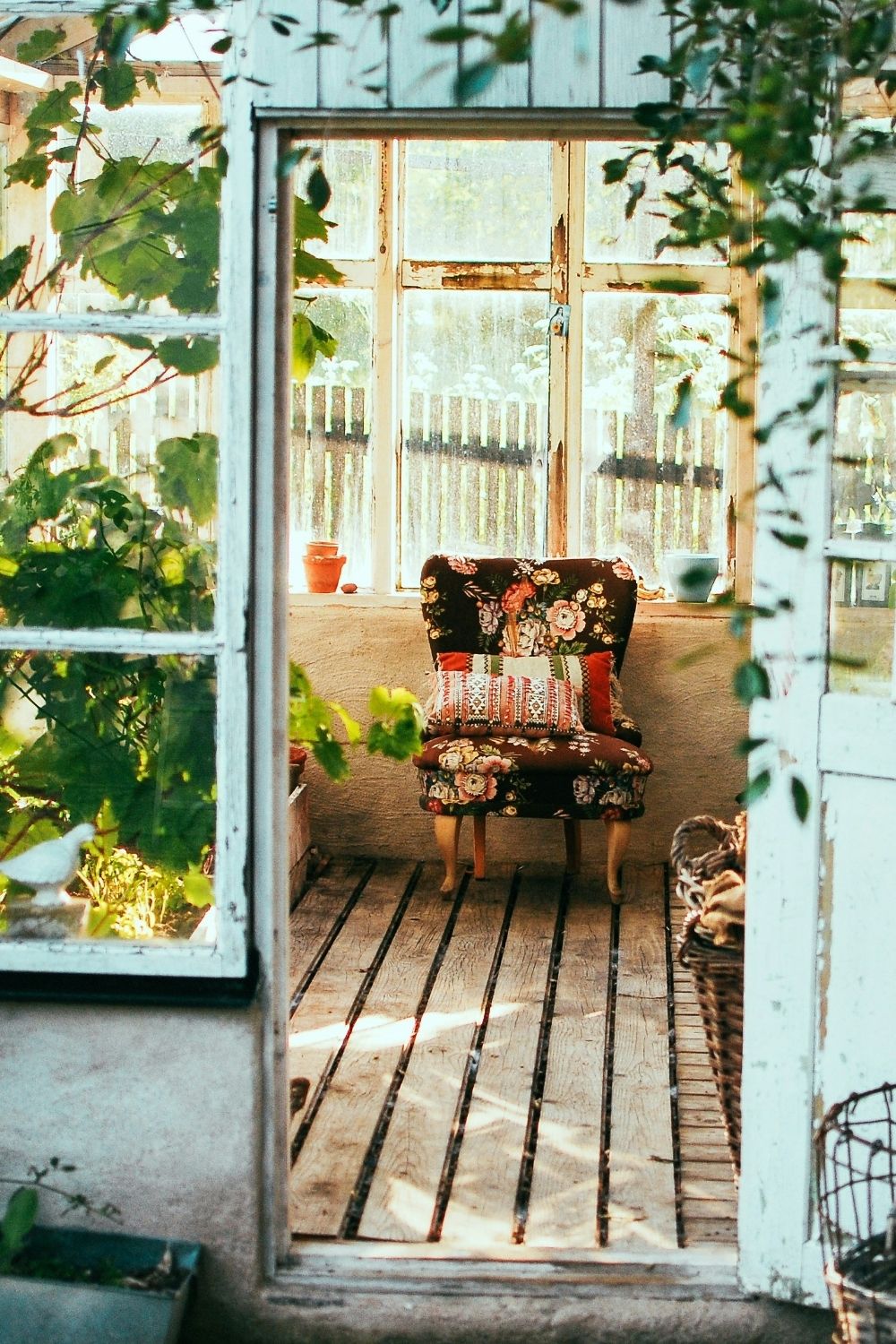
Photo by Arno Smit on Unsplash
The photo above takes the same idea indoors, or nearly: an old greenhouse with peeling white paint and an open door reveals a floral armchair on a wooden floor, with climbing plants creeping over the glass. A garden shed, greenhouse or potting bench dressed like this becomes a focal point in itself. For a single sculpture or ornament, my post on garden statues and sculptures covers placement.
Cottage style in pots
No garden beds? A cluster of pots can capture the cottage garden look on a patio, balcony or doorstep.
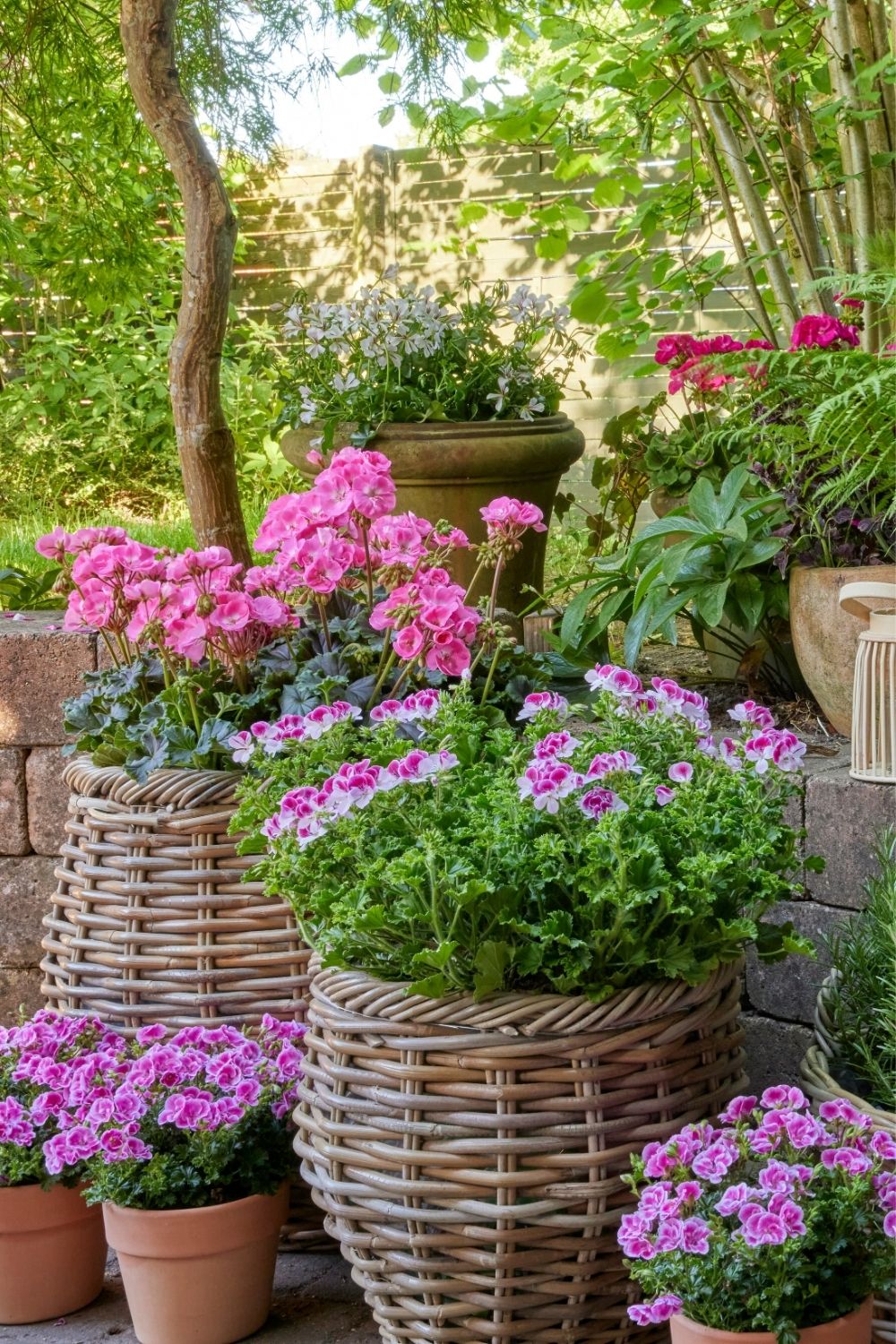
Photo by Shayla Bruins on Unsplash
These pink and purple pelargoniums in woven baskets and terracotta pots, grouped at different heights against a sunny wall, show how well it works. Mix sizes and heights, use natural containers like terracotta, wicker-look planters and old tubs, and pack each one full. Check them daily in hot weather, since tightly packed containers dry out quickly. Good cottage container plants include pelargoniums, dwarf roses, lavender, trailing verbena, snapdragons and sweet peas on a small support. For combining plants in one pot, see my guide to container gardens.
Give it structure for the rest of the year
A cottage garden in full bloom is hard to beat, but from November to April many of those perennials disappear. A little structure keeps the garden interesting through the quiet months. Clipped boxwood or yew balls, a low lavender hedge along the path, an evergreen climber on the arch and a few shrubs such as hydrangeas and old-fashioned roses give shape when the flowers are gone.
Spring bulbs fill the gap before the perennials wake up. Plant drifts of tulips, alliums, daffodils and snowdrops between the perennials in fall; their fading leaves are hidden by the new growth of plants like peonies and hardy geraniums. Alliums in particular are a cottage favorite, with their purple globes floating above the border in early summer and seed heads that stay decorative for weeks.
A small front-yard cottage garden
A front yard is one of the best places for a cottage garden, and many classic English cottage gardens were small front plots between the house and the lane. Replace a strip of lawn with a border on each side of the front path, add a low picket fence or a simple gate, and plant densely right up to the path edges. Frame the front door with a climbing rose or a pair of pots, and let lavender or catmint edge the walk so it brushes your legs as you pass. In a small space, stick to a tight color scheme and repeat just five or six plants, so it looks abundant rather than busy.
A native, lower-maintenance twist
Traditional cottage plants like delphiniums and hollyhocks can be fussy in hot, humid summers. In North America, many native plants create the same loose, flower-filled look with less care: purple coneflower, bee balm, native garden phlox, black-eyed Susan, beardtongue, wild columbine and asters. Mix them with a few classic roses and some annuals, and you get the cottage look plus plenty of bees and butterflies. My post on pollinator gardens with native plants has more options. For a detailed plan with plant lists by season, Lovely Greens’ guide to creating an English cottage garden is a good companion.
Keeping it effortless
Cottage gardens look wild but need a little steady care to stay beautiful rather than messy:
- Plant densely to leave little room for weeds, and mulch any bare patches until plants fill in.
- Let some plants self-seed. Foxgloves, nigella, forget-me-nots and calendula pop up in new spots each year, which is part of the charm.
- Try the “Chelsea chop.” Cutting back phlox, asters and sedum by a third to a half in late May or early June gives bushier plants that bloom a little later and flop less.
- Deadhead roses and annuals to keep them flowering, but leave some seed heads in fall for birds.
- Stake tall plants early with twiggy branches or hoops before they need it.
- Divide crowded perennials every few years in spring or fall.
Give it a season or two: a new cottage garden always looks a little thin at first, but by the second summer the plants knit together, the self-seeders find their places and that effortless, overflowing look arrives on its own.