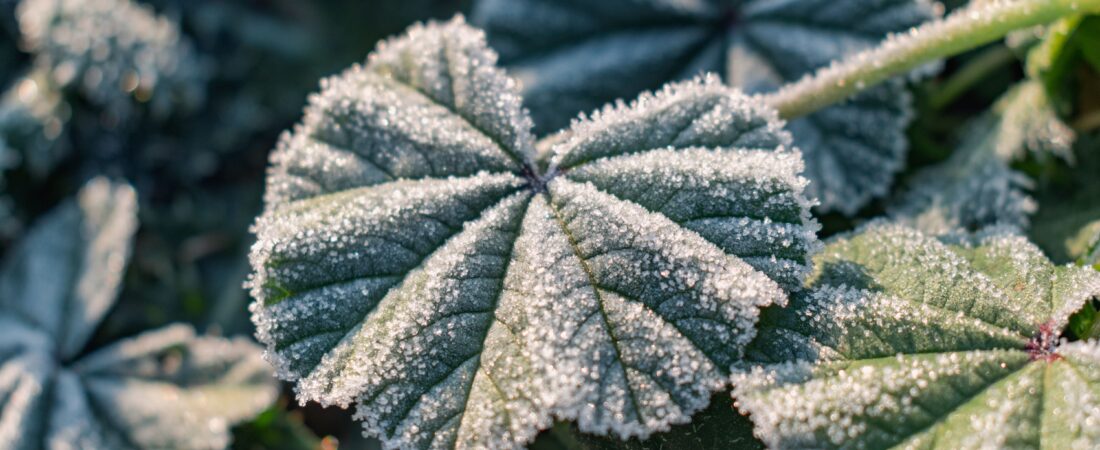
The first frosty morning usually announces itself on the dahlias. Leaves that were green at sunset hang black and limp by breakfast, the geraniums on the steps look boiled, and the lemon tree in its pot has a few curled, brown edges. A single clear, still night does all of that. Knowing how to overwinter plants mostly comes down to understanding what that night did, and then blocking it.
What frost actually does to a plant
When the temperature drops below freezing, water inside the leaves and stems turns to ice. The ice crystals rupture the cells, and once the plant thaws, the damaged parts turn dark, soft and mushy. Plants from cold climates have ways to cope; plants from warm ones don’t.
The plants worth the effort to overwinter are mostly tender perennials, plants that would come back year after year in a warm climate but die at the first hard frost elsewhere: dahlias, geraniums, cannas, bougainvillea, mandevilla and most tropical houseplants summering outdoors. Potted citrus, loquats and figs in cold zones need protection too, as do potted roses and young shrubs in their first winter, even when the same plant would be hardy in the ground.
Pots are the weak spot when overwintering plants. In a garden bed, the soil around the roots holds warmth, and roots sit below the frost. In a pot, cold reaches the roots from every side, so a plant that’s hardy in the ground can lose its whole root ball in a container. As a rough rule, a plant in a pot needs to be rated about two zones colder than your own to survive without help.
Cold sky, cold wind: overwinter pots in a walk-in or pop-up greenhouse
On a clear, still night, the ground and plants lose heat straight up into the sky. Clouds act like a blanket; a cloudless sky doesn’t. Wind adds to it by carrying away whatever warmth is left near the leaves. A simple greenhouse cover blocks both.
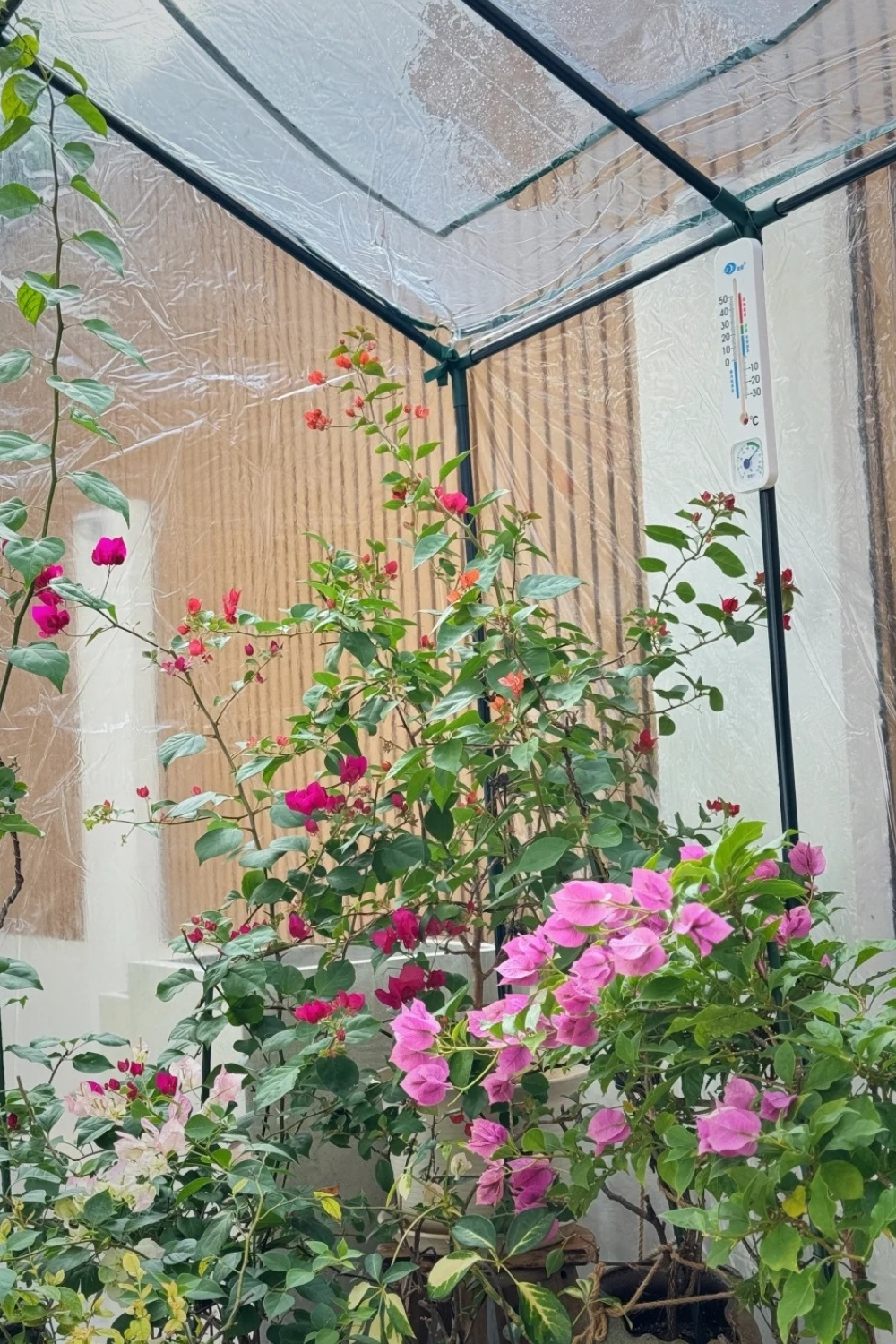
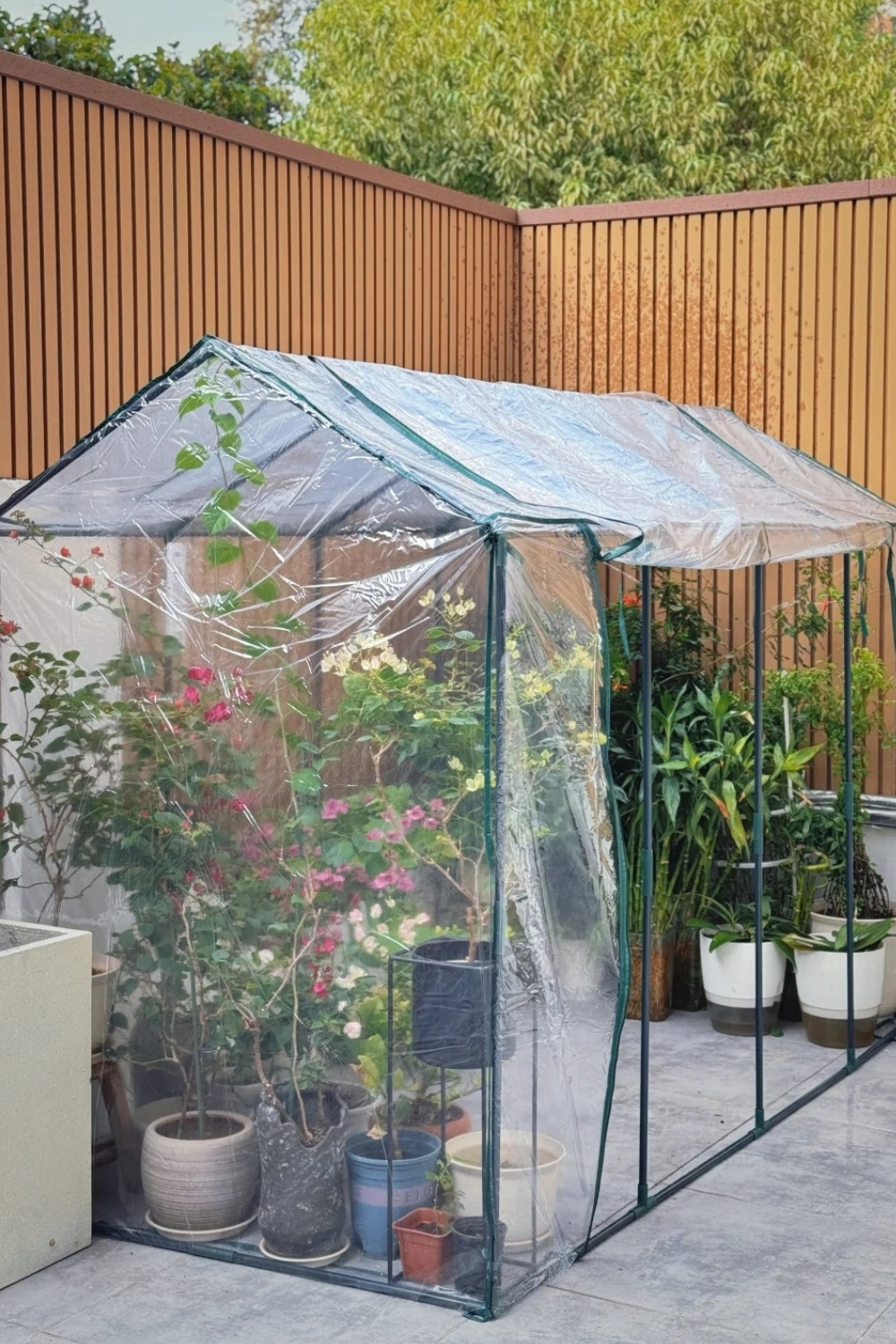
A walk-in or pop-up greenhouse, a metal frame with a clear plastic cover, turns a corner of the patio into a shelter for potted plants. Group the pots you want to overwinter inside, close it up on cold nights, and the air inside stays a few degrees warmer than outside, while wind can’t get in at all.
Two habits make these work. First, open the doors on sunny days, even cold ones; a closed plastic house heats up fast in sunshine, and plants can scorch or start soft new growth. Second, anchor it well. These covers act like sails, so weigh the base with bricks or sandbags or tie the frame to a fence or wall.
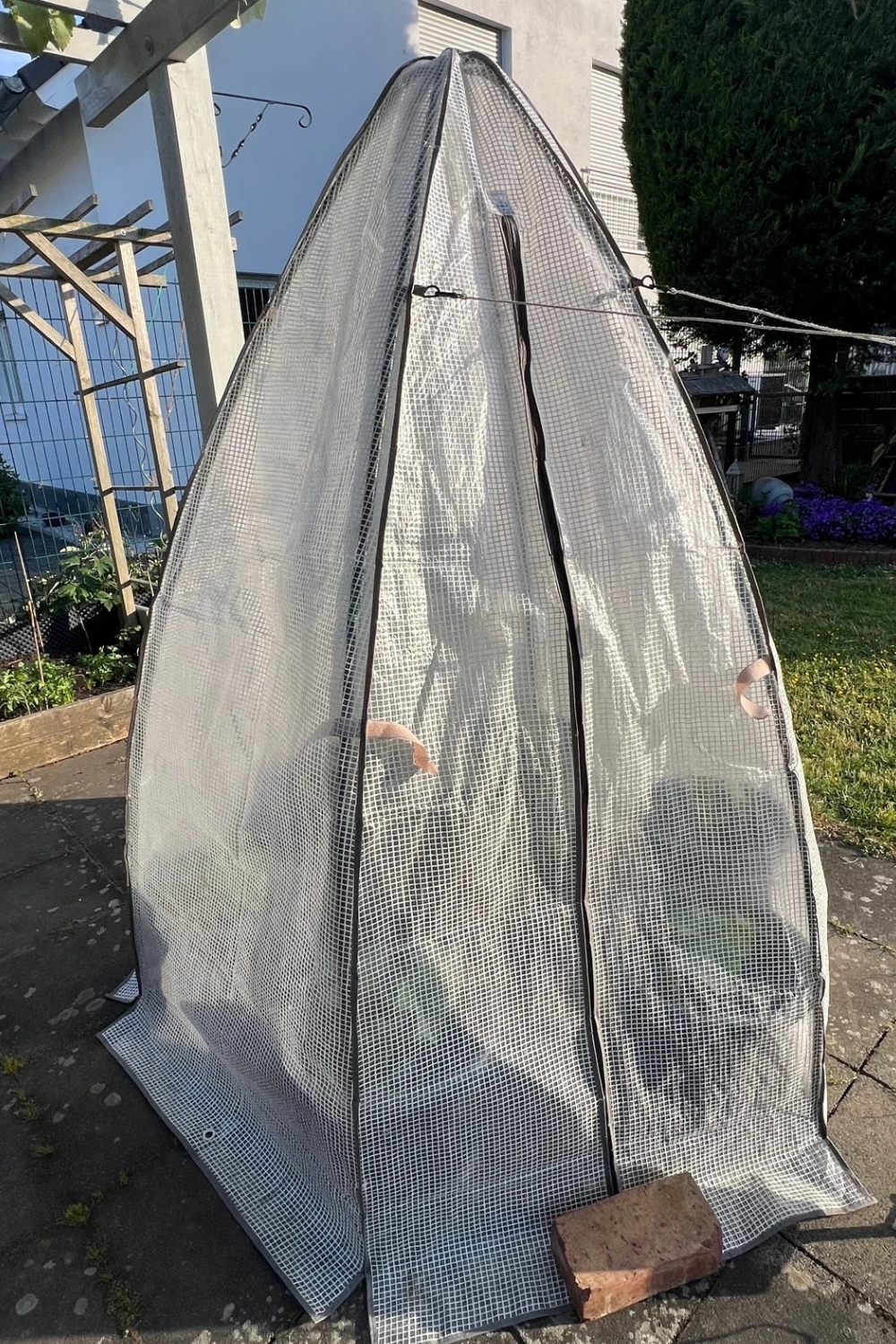
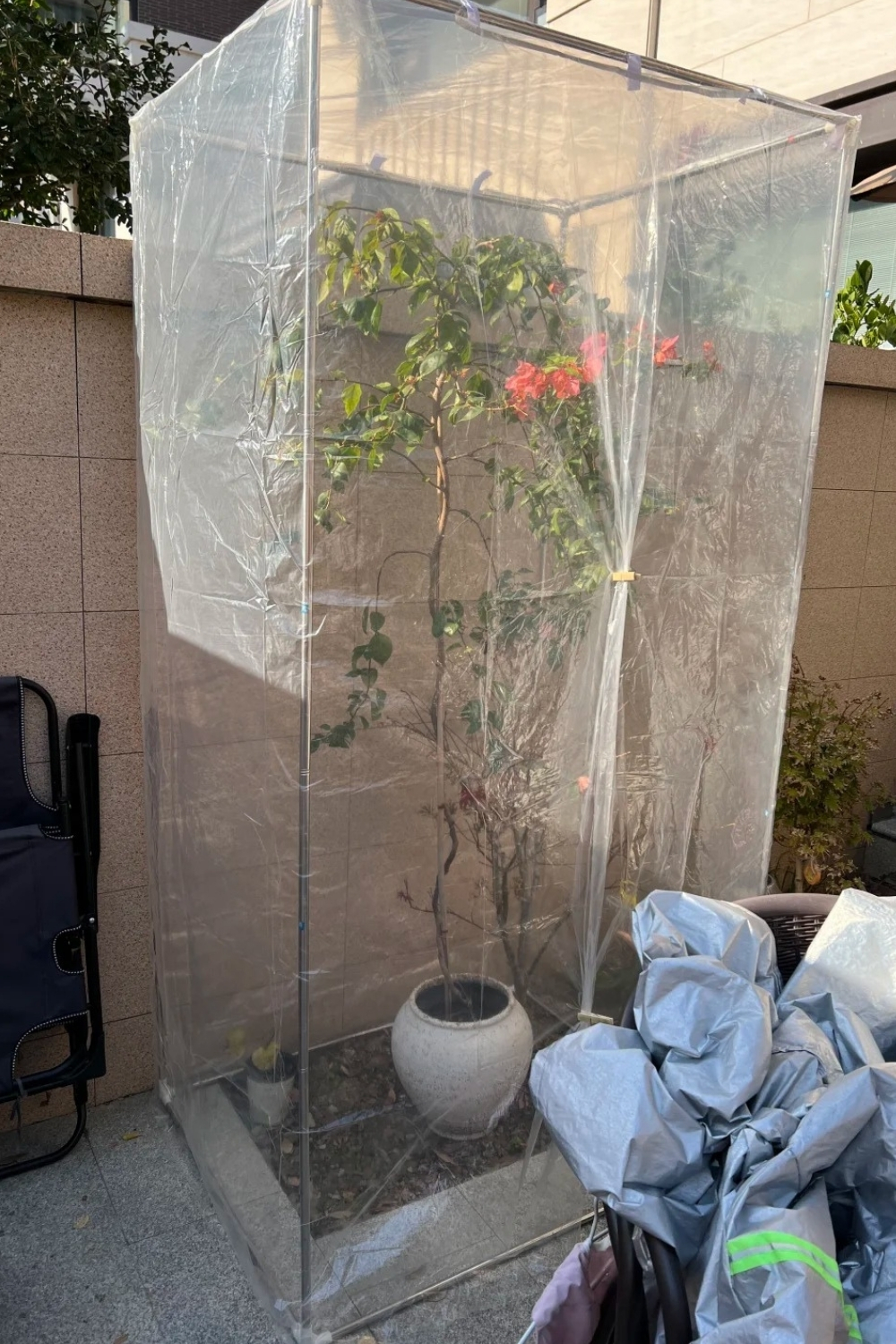
For a single plant, a tall, narrow cover or a pop-up mesh cone does the same job on a smaller scale. I can’t even lie, the mesh ones look a little odd on a patio, but a bit of odd beats a dead lemon tree.
Overwintering potted plants: wrap the container
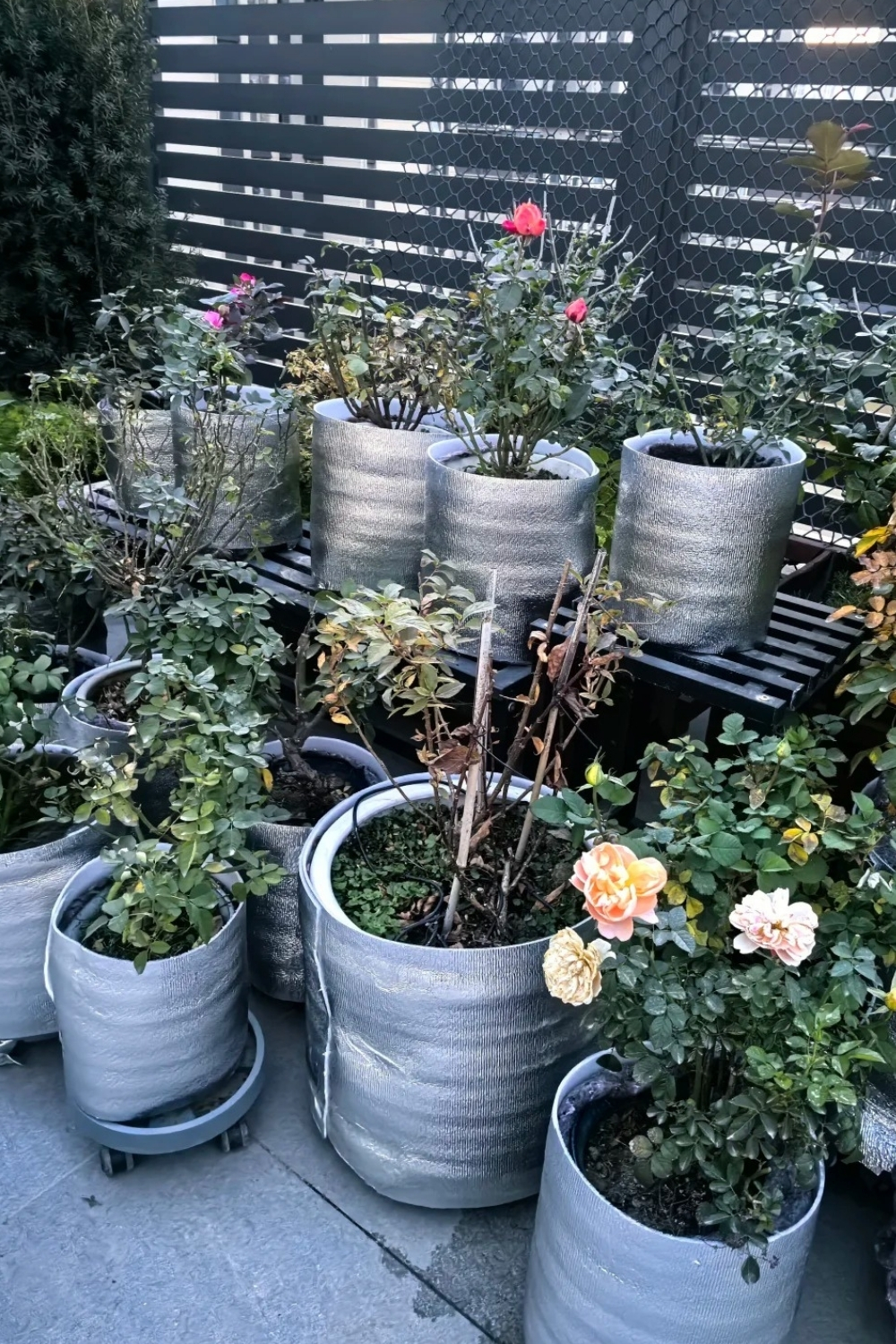
Since pot roots freeze first, protecting the container often matters more than covering the leaves. Wrapping pots is one of the jobs on this November garden checklist, and garden beds need their own winter prep. Wrap the pot itself in bubble wrap, foam insulation or a padded plant sleeve, from the soil line down to the base. Silver insulating wrap works too and reflects a little sunlight in the day.
Lift pots off cold paving with pot feet, bricks or a wooden plant caddy, so they’re not sitting on a surface that pulls heat out all night. Pushing pots close together against a house wall helps as well, since the wall gives off some of the heat it stored during the day. Wrapped pots still need a drink now and then. Check them every few weeks in dry spells and water lightly on a mild day, since roots that dry out over winter die just as surely as frozen ones. Raised beds can lose heat in a similar way through their sides, and this look at whether raised garden beds are worth it covers how materials and depth change that.
Small and hanging pots: cloches
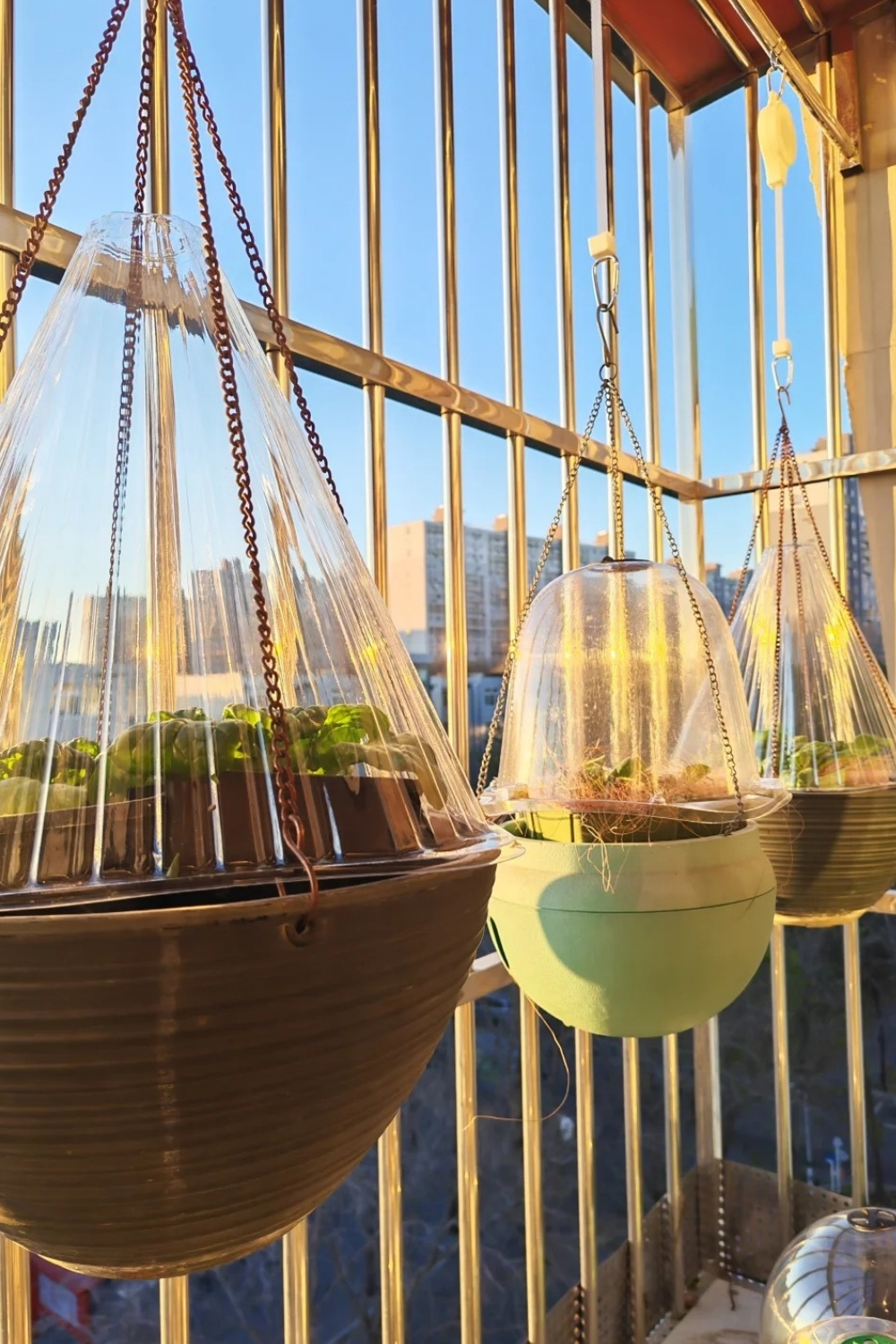
A cloche is a bell-shaped clear cover that sits over a single plant, like a glass dome over a cake. Plastic cloches are cheap and light, and they fit hanging baskets and small pots that are fiddly to wrap. They trap a pocket of warmer air around the plant overnight, which makes them a simple way to overwinter herbs and small plants on a balcony. Lift them or prop them open on sunny days, since the inside heats up quickly.
Frost cloth, not plastic, against the leaves
Frost cloth, also sold as plant fleece or row cover, is a light, white fabric that lets air and some light through while holding warmth around the plant. According to Dallas County Master Gardeners’ comparison of frost cloth, sheets and plastic, frost cloth can keep plants about 4 to 10 °F warmer underneath, depending on its thickness. Old bedsheets work for a light, short freeze, but less well for a hard one. For overwintering plants in the ground, frost cloth is the most useful single tool to keep on hand.
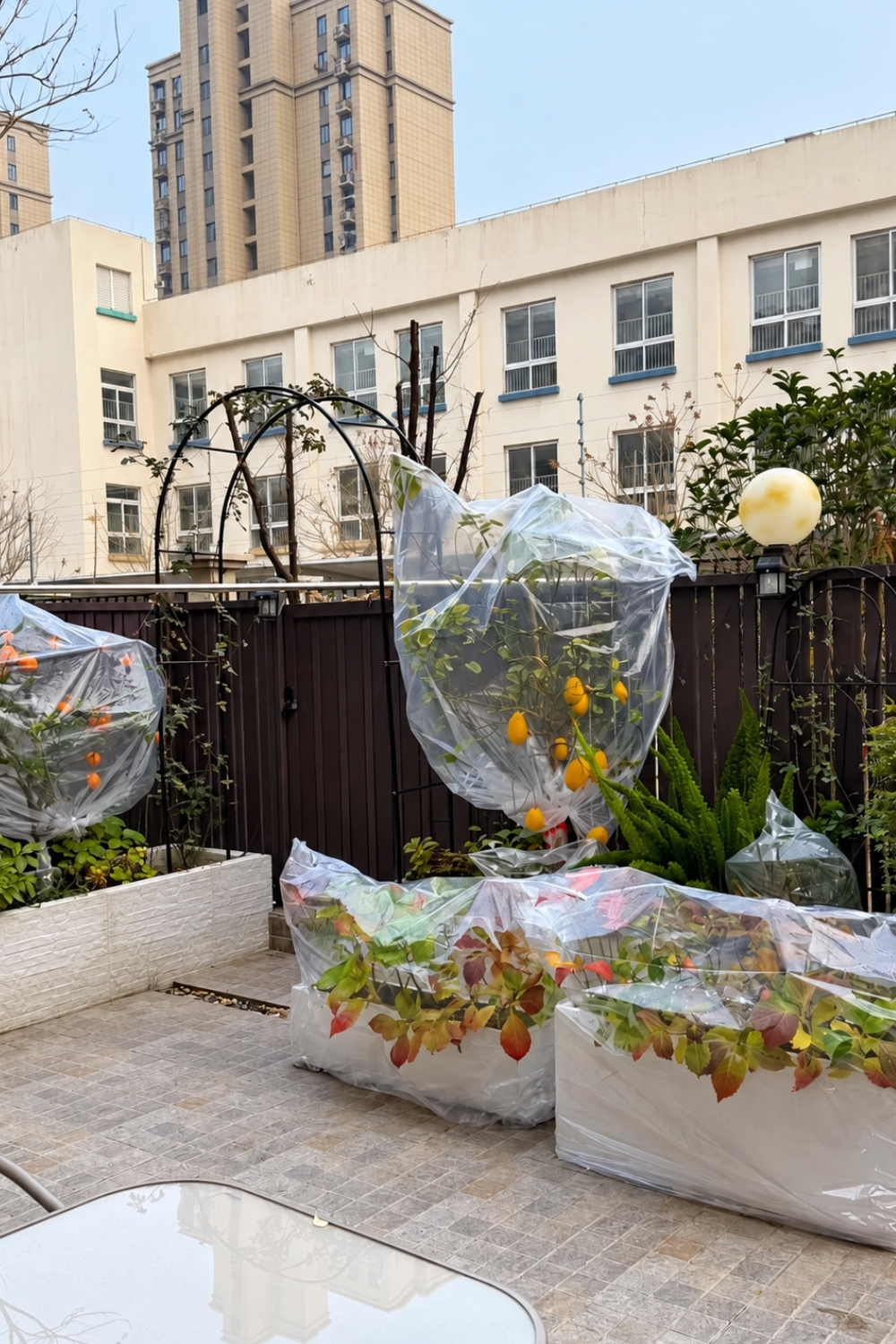
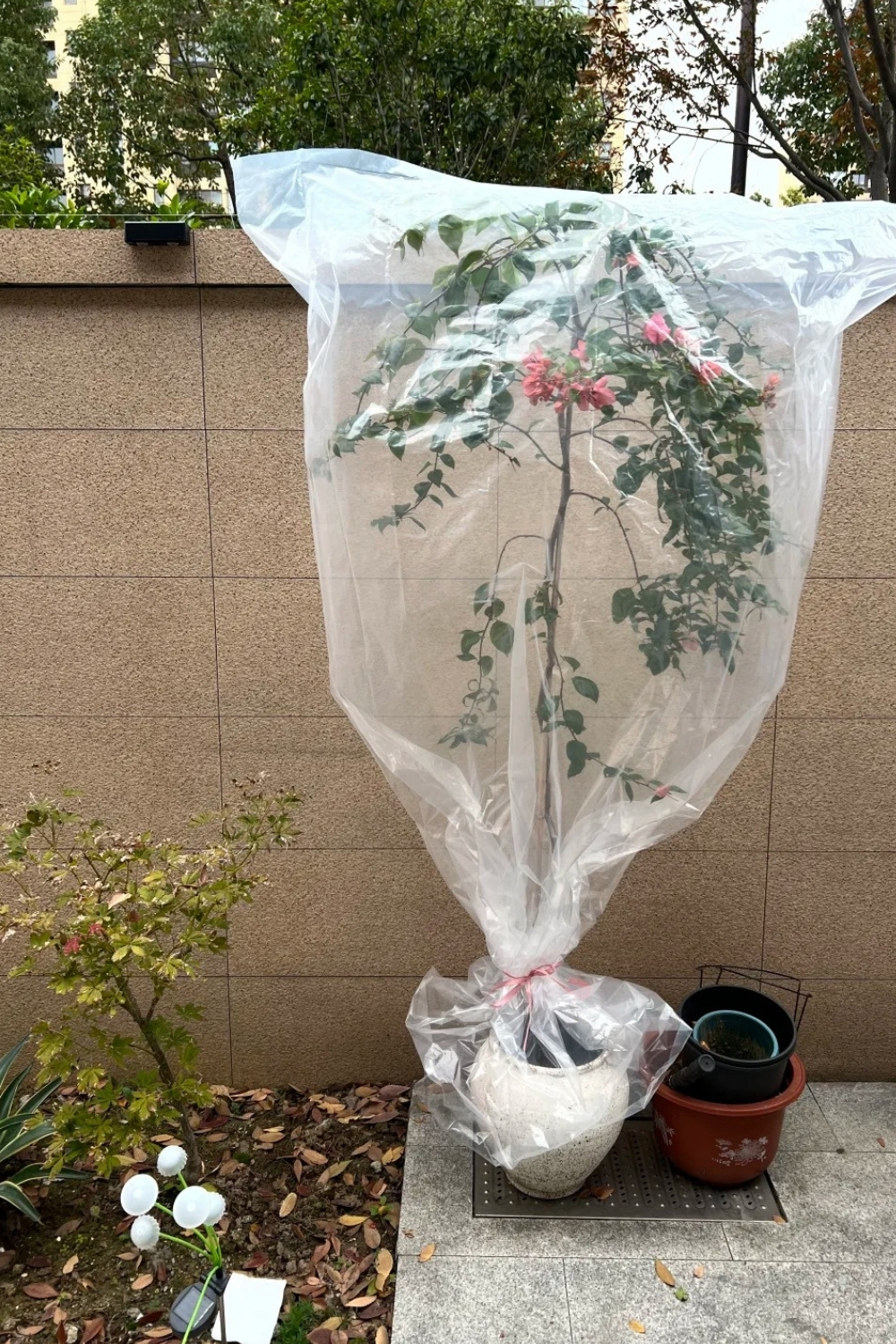
Plastic is a different story. It doesn’t insulate, and where it touches the leaves, the cold passes straight through and causes freeze burn, the same black, wilted patches the plastic was supposed to prevent. Draping clear plastic directly over plants and beds, or pulling a plastic bag over a shrub, as in these photos, is one of the most common mistakes. Use plastic only as an outer layer over a frame or over frost cloth, never resting on the foliage.
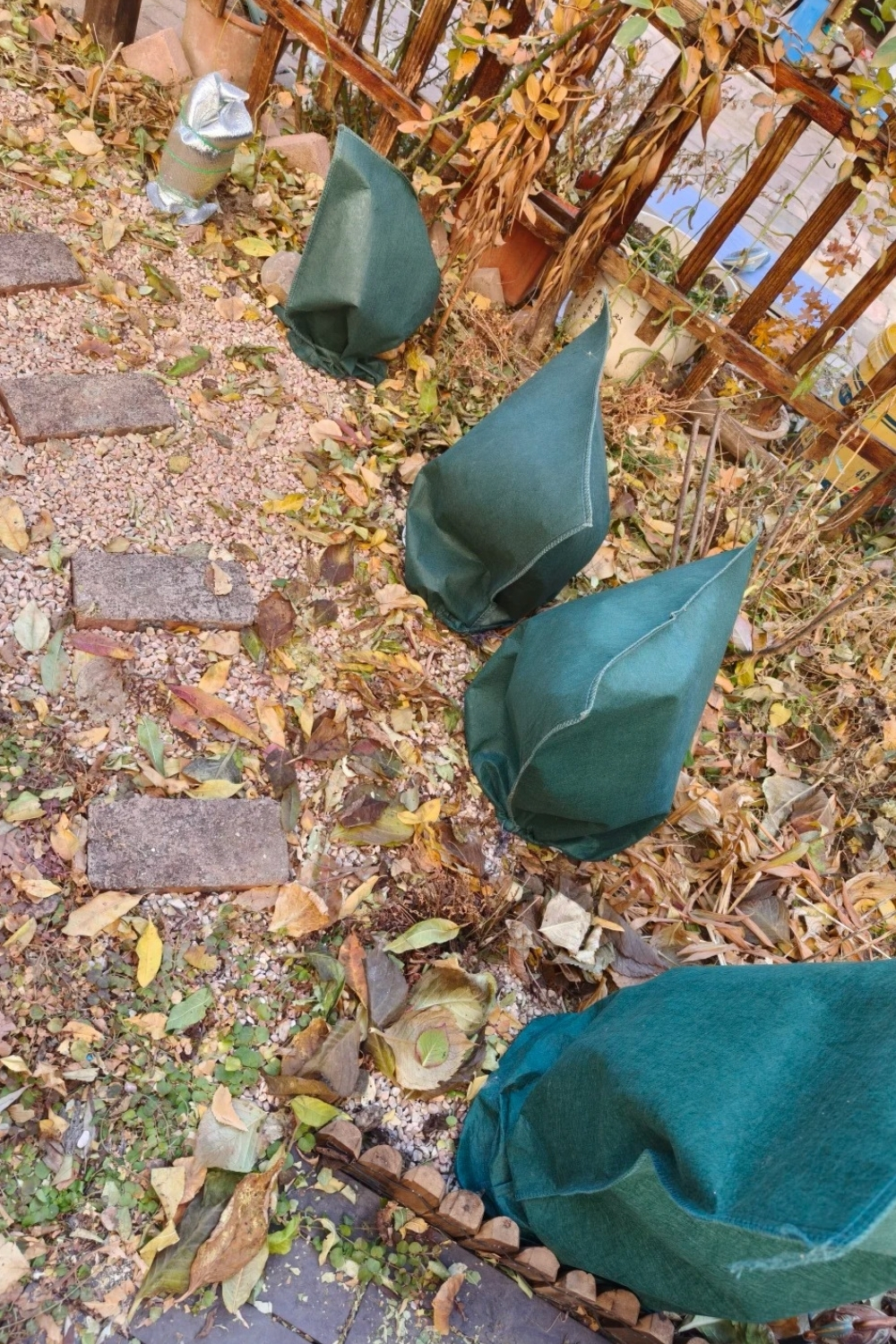
Ready-made fleece bags, sold for overwintering shrubs, slip over a shrub or a small plant and tie at the bottom, which is easier than wrapping a loose sheet. Whatever the cover, let it reach all the way to the ground and weigh the edges. The warmth that protects a plant at night comes up from the soil, so a cover that stops halfway down lets it escape.
Burlap and straw for tropical trees
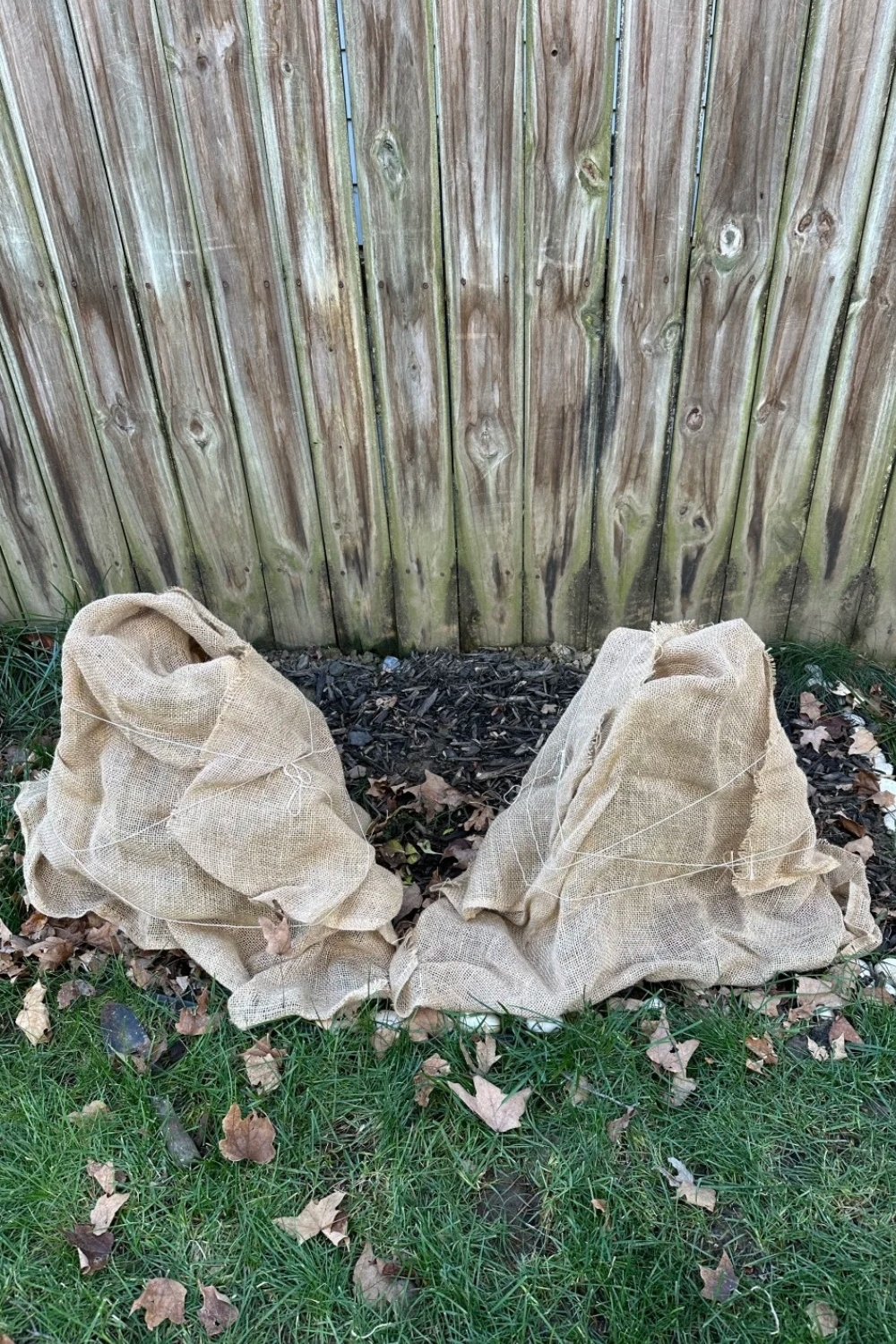
Burlap, the coarse brown fabric used for sacks, works well for trees and shrubs that need a few extra degrees and a break from drying winter wind. It breathes, so moisture doesn’t build up inside, and it doesn’t heat up in the sun the way plastic does.
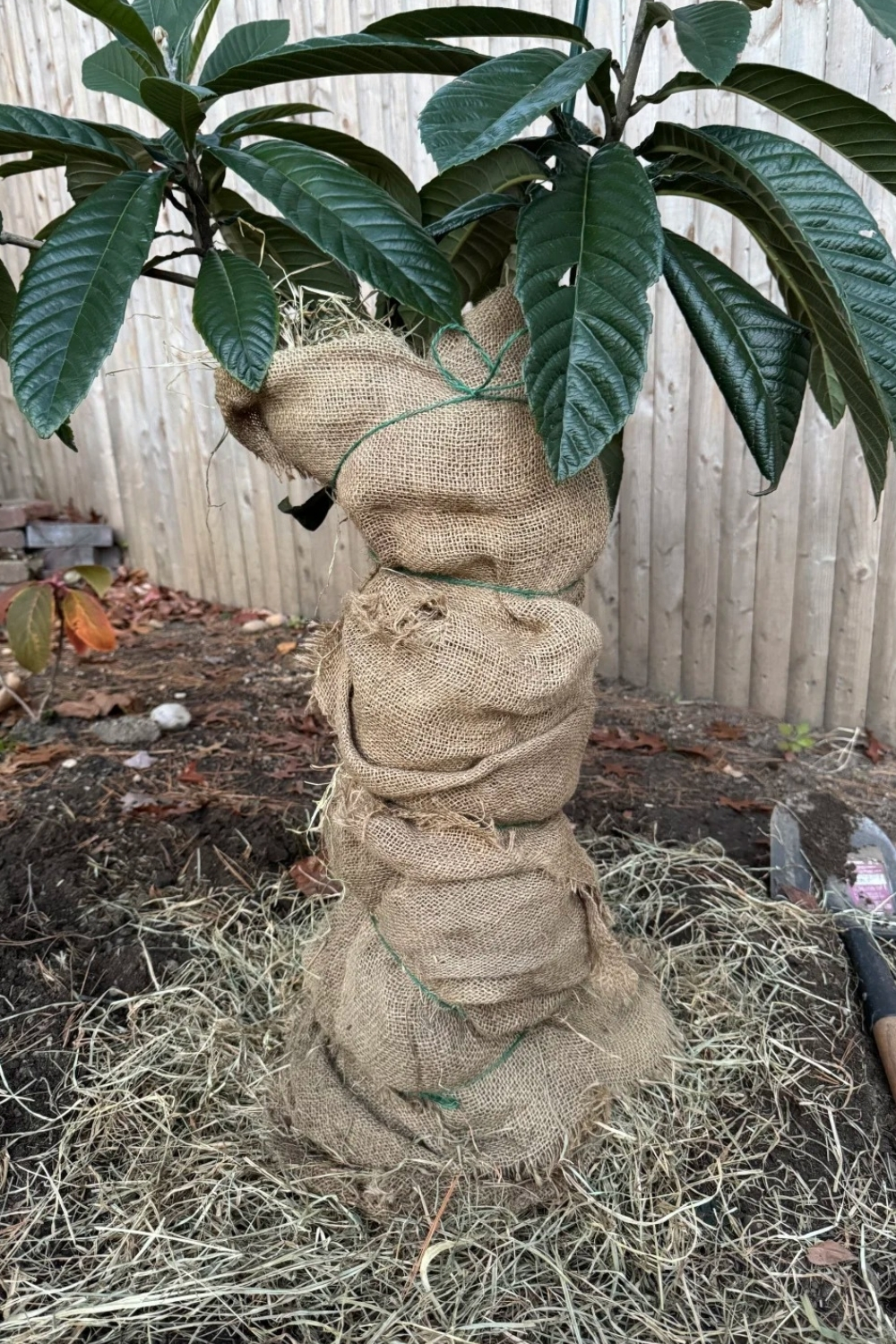
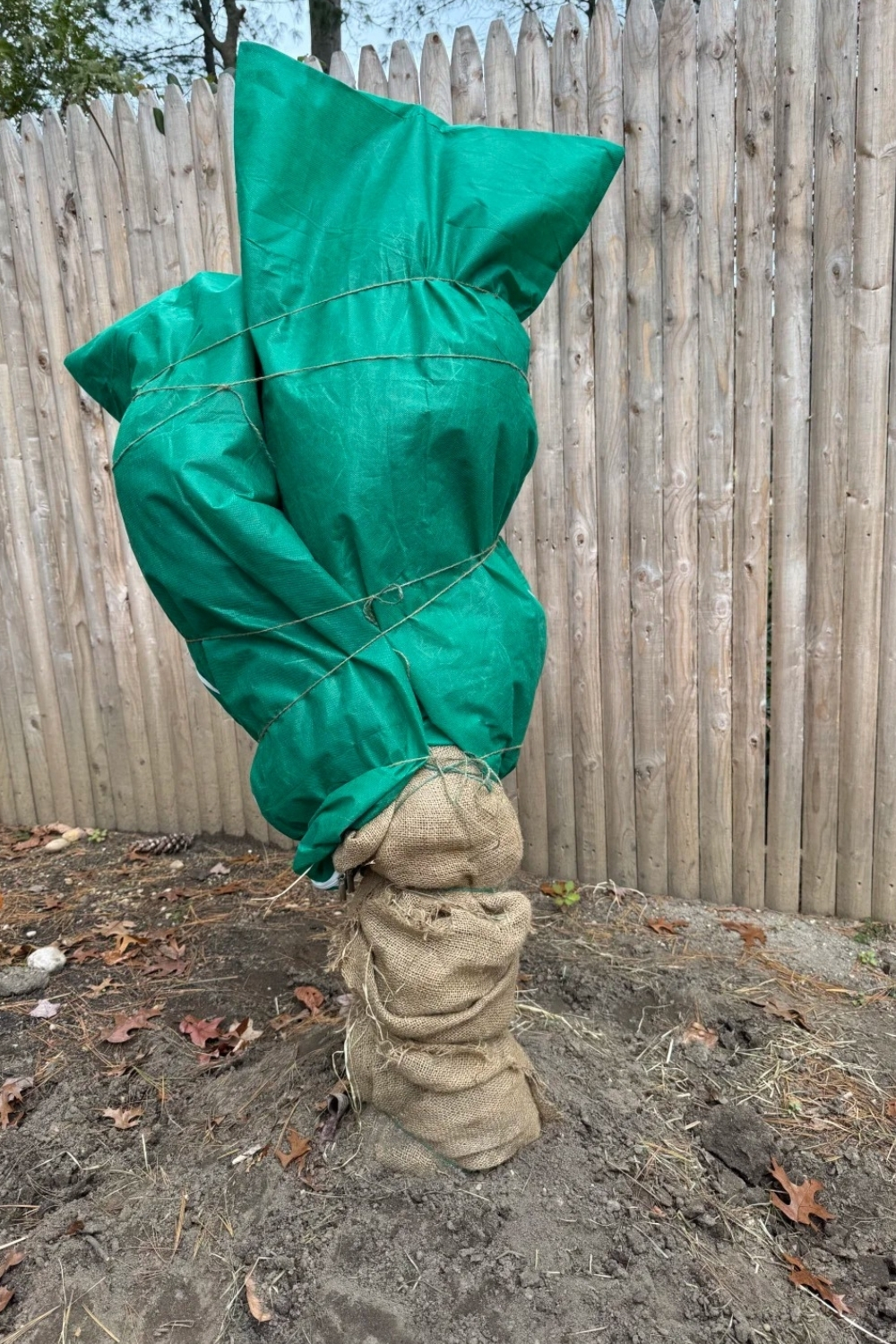
For low shrubs, a loose burlap bag or a wrap tied with twine is enough. To overwinter a tender tree like a young loquat, citrus or fig, wrap the trunk and lower branches in burlap, then stuff loose straw between the burlap and the plant as insulation. Spread a thick layer of mulch over the root zone, too. A green frost jacket over the top, whatever you wanna call it, adds one more layer over the canopy on the coldest nights.
Bringing plants indoors for winter
Some plants are easier to overwinter inside than to protect outdoors. Tropical plants, citrus in small pots and anything that sulks below about 50 °F usually do better on a bright, cool windowsill or in a sunroom.
Before bringing plants indoors for winter, check the leaves and soil for insects, rinse the foliage with a hose and pick off any dead leaves. Move them in gradually if you can, a few hours a day over a week, since the jump from outdoor sun to indoor light makes many plants drop leaves. Indoors, they grow slowly, so water less than in summer and skip fertilizer until spring.
Dormant plants, such as figs and some potted roses that have dropped their leaves, can overwinter in a cold garage or shed instead, as long as it stays above about 20 °F and the soil gets a little water once a month.
When to cover and when to uncover
Cover in the late afternoon, before the evening cools, so the cover traps some of the day’s warmth. Water dry pots and beds a day ahead, too; moist soil holds heat better than dry soil, you know what I mean, as long as it isn’t waterlogged.
Uncover or open things up in the morning, once the temperature climbs above freezing. Fabric covers can stay on through a few cloudy days in a row, but clear plastic and closed greenhouses need venting on any sunny day. Overwintering under covers works best when they come off in mild spells; leaving covers on all winter in mild weather tends to cause more harm, through mold and soft growth, than the cold would.
Young shrubs planted this fall, such as hydrangeas, often need a wrap or a cover only to overwinter their first year. This guide to the best time to plant hydrangeas covers how to give them a good start before the cold.
Overwintering dahlias and geraniums
Overwintering dahlias starts with knowing they grow from tubers, swollen roots that store food. In zones 8 and warmer, they can often stay in well-drained ground under a thick mulch. In colder zones, the ground usually freezes deep enough to kill them, so they need lifting. According to Longfield Gardens’ guide to storing dahlia tubers, the time to dig is about five to seven days after the first killing frost blackens the leaves. Cut the stems back, lift the clump carefully with a fork, brush off the soil and let the tubers cure, meaning dry off, somewhere shaded and airy for a day or two. Store them in slightly damp peat moss, vermiculite or wood shavings, at about 40–50 °F, and check them once a month for shriveling or rot.
Overwintering geraniums comes down to three options. Bring the pots inside and grow them on a sunny windowsill as houseplants through winter. Take cuttings, 4- to 6-inch tips rooted in moist potting mix, which take up far less space than whole plants. Or lift the plants, shake off the soil, and store them bare-root and dormant, hanging upside down in a cool basement, then pot them up again in late winter.
Frost is predictable once you know how it works: still, clear nights, cold rising from the ground and roots stranded in pots. Most of what it takes to overwinter plants is simply giving them the shelter they’d find on their own in a warmer place.