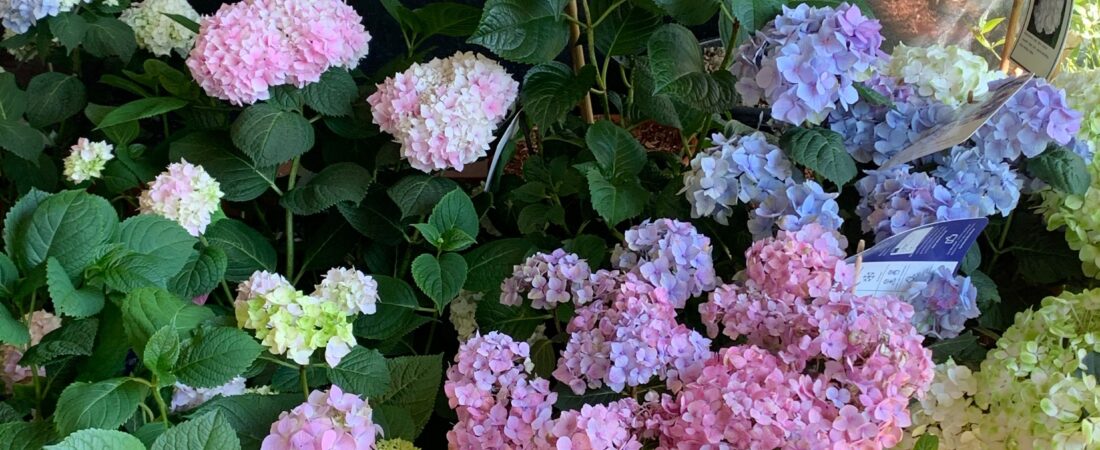
Hydrangeas are forgiving shrubs once they’re settled, but they’re fussy about their first few months in the ground. Plant hydrangeas at the wrong time, especially in the heat of midsummer, and they can wilt every afternoon, drop their flowers and spend a whole season just trying to survive. Plant them at the right time, and they root in quietly and reward you with big, healthy blooms the following year.
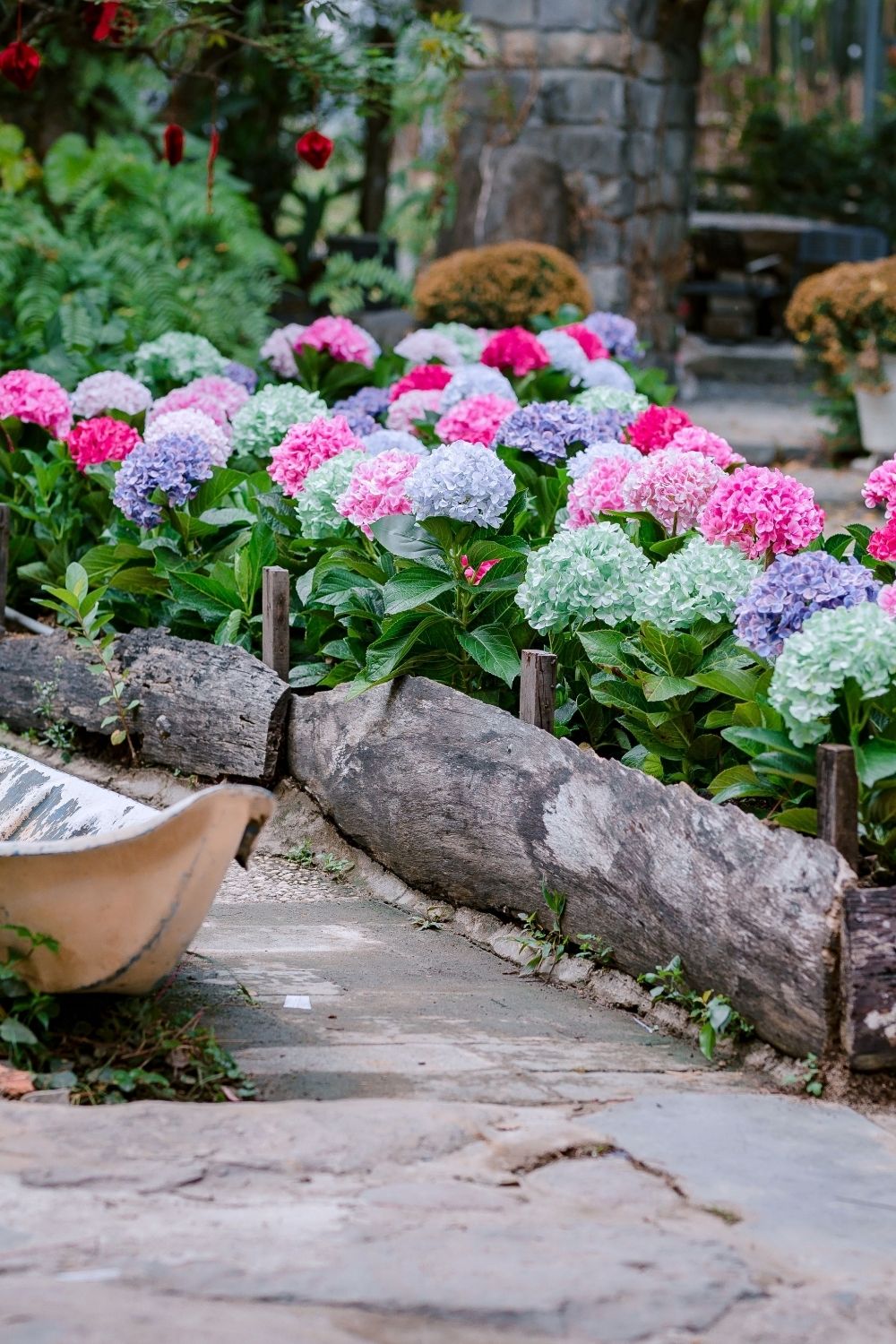
Photo by Nguyễn Tiến Thịnh on Pexels
This bed shows what well-established hydrangeas can do: mophead blooms in pink, magenta, lavender, blue and pale green, packed behind a rustic edge of logs beside a stone path. A display like that starts with good timing, because when you plant hydrangeas shapes how they grow for years. Below is a season-by-season guide to when to plant hydrangeas, which seasons to avoid and how to give new plants the best start.
Early fall: the best time for most gardens
For most gardeners, early fall is the ideal time for planting hydrangeas. The soil is still warm from summer, which encourages roots to grow, while the air is cooler and the sun is gentler, so the leaves lose less water. Autumn rain helps too.
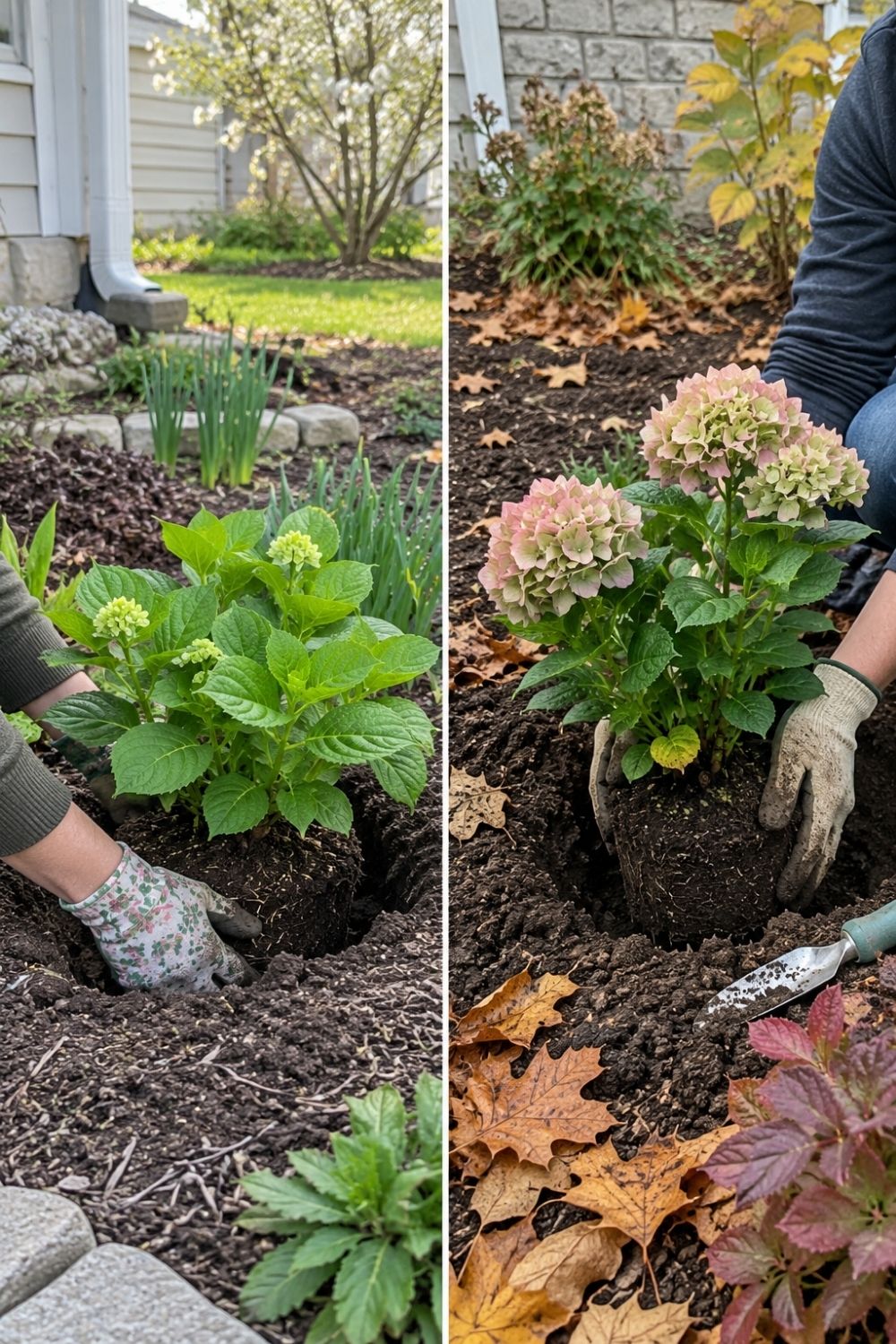
Photo by SassyGarden
The two photos above compare the two main planting seasons. On the left, a gardener in gloves sets a young hydrangea with fresh green leaves into a bed in spring, with daffodil foliage and a blossoming tree behind. On the right, a hydrangea with faded, rosy autumn blooms goes into the ground among fallen orange leaves. Both work, but the fall-planted shrub gets several extra months of root growth before its first summer.
When planting hydrangeas in fall, aim for about six weeks before your first expected frost. That gives the roots time to establish before the ground freezes. In most of the US, that means September or early October; in warm southern zones, you can plant hydrangeas well into November. The Martha Stewart Blog has a lovely look at planting hydrangeas in fall in a large garden, with plenty of photos of the process.
Spring: a close second
Spring is the next best choice for planting hydrangeas, and in cold climates (zones 3–5) it’s often the better one, because fall-planted shrubs may not have time to root before hard frost.
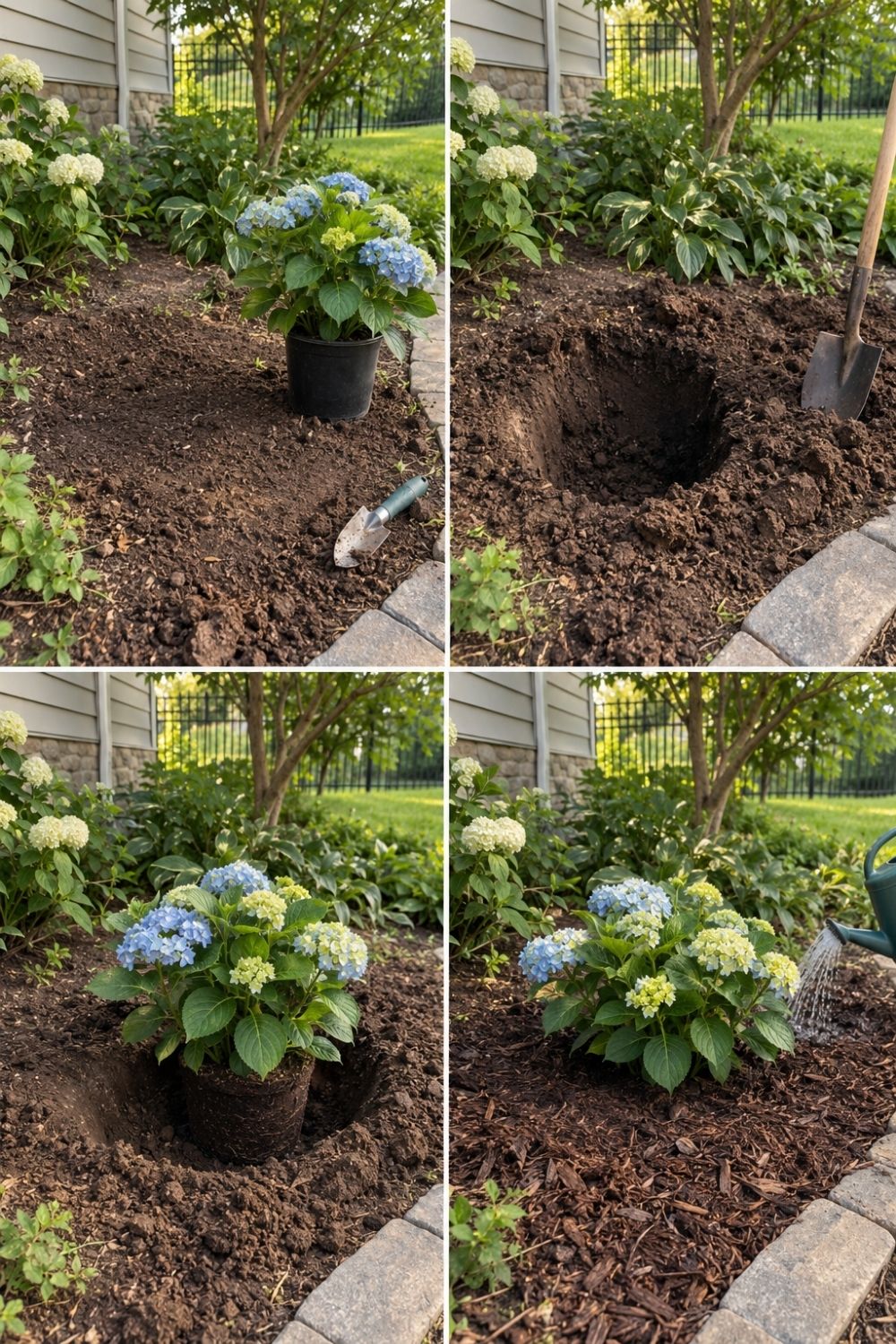
Photo by SassyGarden
The four stages above show the planting process step by step: a potted blue hydrangea set on prepared soil beside a stone edge, a wide hole dug with a spade, the plant settled into the hole at the same depth it grew in the pot, and finally the finished planting, mulched and being watered. Follow the same steps whenever you plant hydrangeas:
- Dig a hole two to three times as wide as the root ball, but no deeper.
- Loosen circling roots gently with your fingers if the plant is pot-bound.
- Set the plant at the same depth it grew in the pot; burying the stem invites rot.
- Backfill with the native soil mixed with some compost, and firm it gently.
- Water deeply, then add 2–3 inches of mulch, keeping it a couple of inches away from the stems.
Plant after your last frost, once the soil has warmed and can be worked easily, and ideally before late-spring heat arrives.
Summer: why it’s risky
Garden centers are full of hydrangeas in bloom in June and July, and it’s tempting to buy one and plant it straight away. Summer is the hardest time for planting hydrangeas, though. Big leaves lose water quickly in heat, and a new shrub doesn’t yet have the roots to replace it.
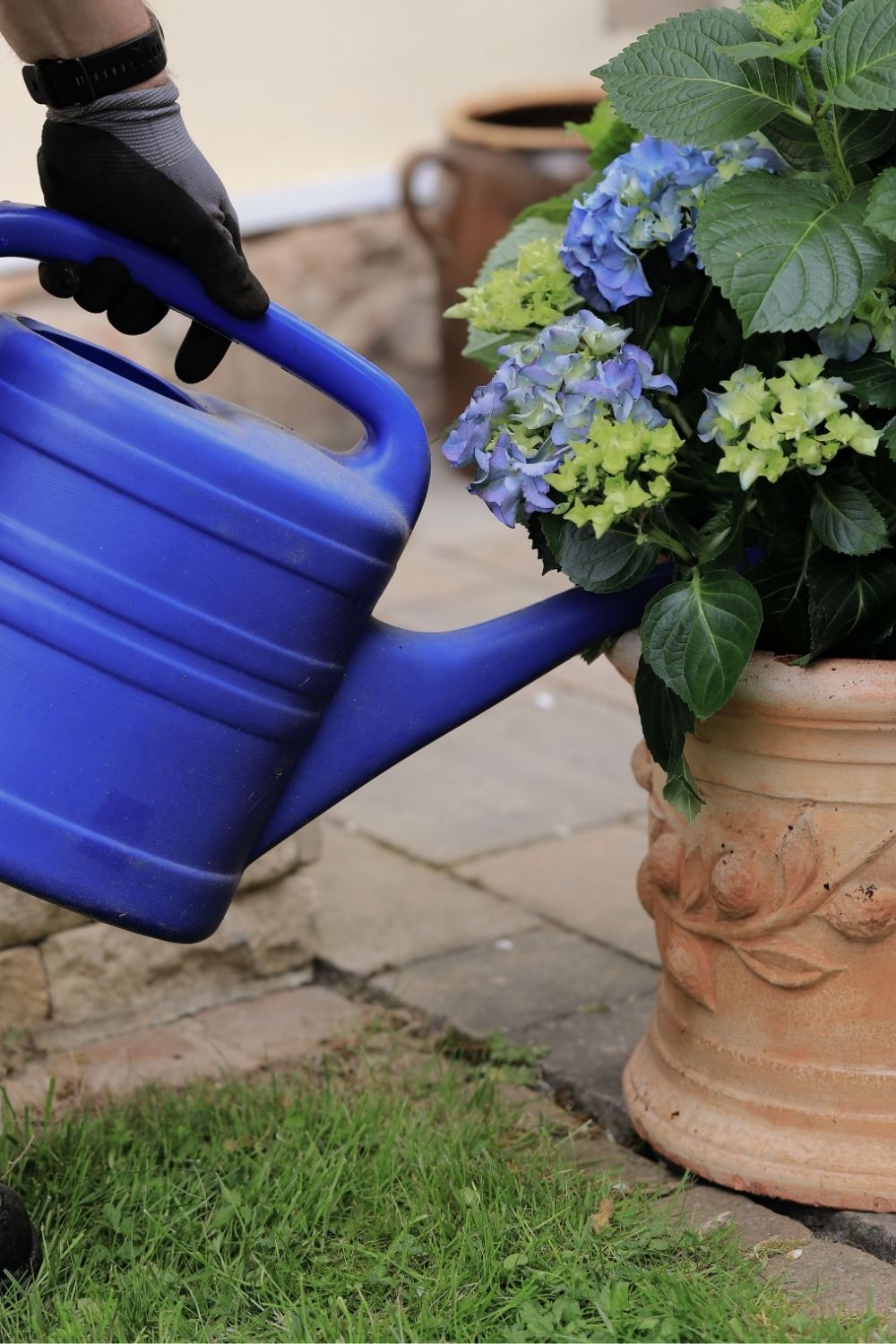
Photo by Christina & Peter on Pexels
In this photo, a gloved hand pours water from a blue watering can into a terracotta pot holding a blue and lime-green hydrangea. If you buy a hydrangea in summer, this is a good place for it: keep it in its pot in light shade, water it daily, and plant it out in early fall. Potted shrubs dry out fast in summer, so check them morning and evening. If planting hydrangeas in summer can’t wait, do it on a cloudy day or in the evening, water every day for the first few weeks, and give it some afternoon shade with a shade cloth or a patio umbrella. Expect some wilting in the afternoon; if the leaves perk up by morning, the plant is coping.
Late fall and winter: only for moving
Once the leaves have dropped, hydrangeas are dormant, and that’s the best time to move an established shrub. The plant isn’t actively growing, so it loses less water, and the roots can settle over winter.
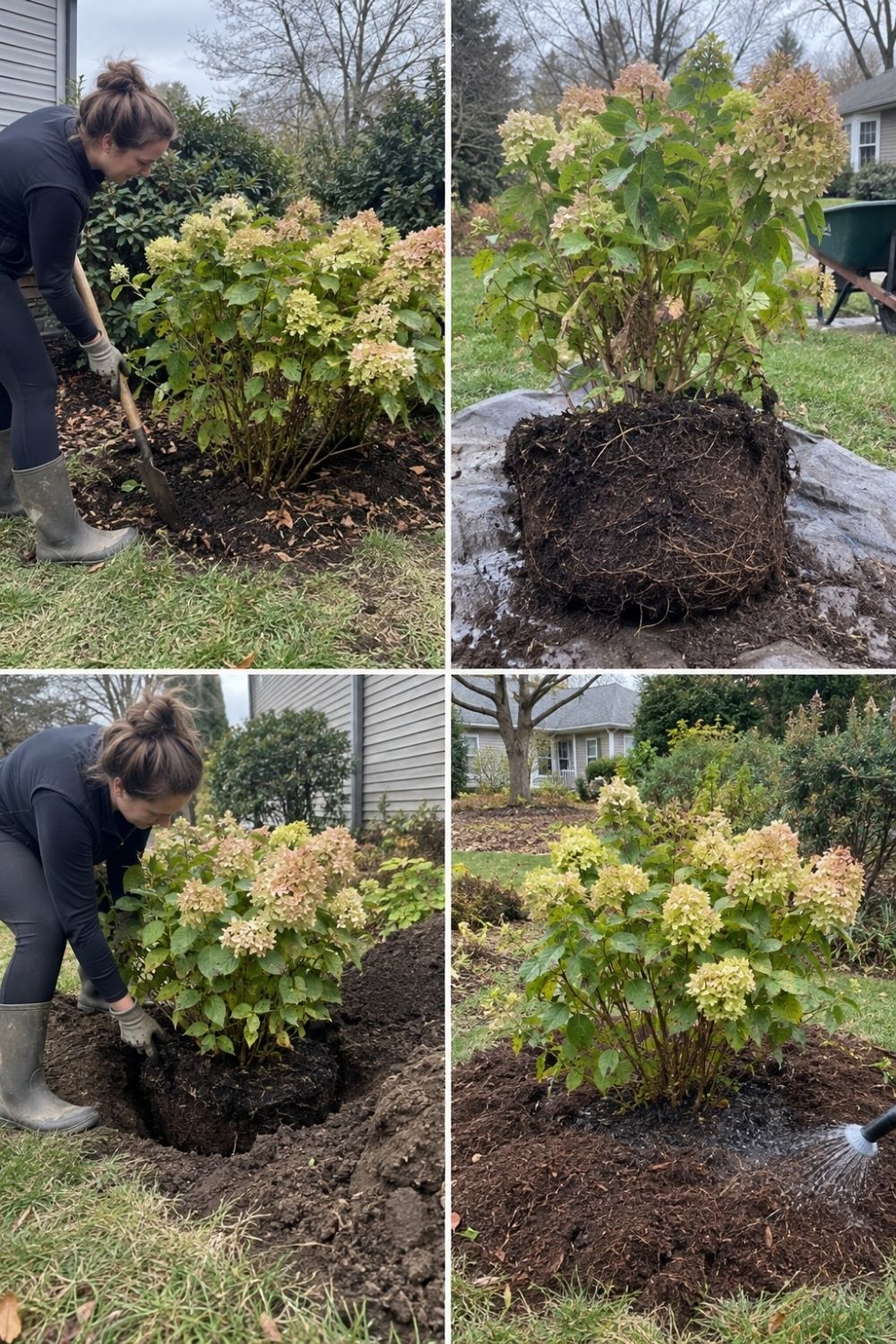
Photo by SassyGarden
The four stages above show transplanting hydrangeas step by step: a gardener digging a wide circle around an established panicle hydrangea with faded blooms, the shrub lifted out with a big root ball onto a tarp, the shrub lowered into its new, prepared hole, and finally the replanted hydrangea being watered in. Take as large a root ball as you can manage, at least as wide as the drip line if possible. Move it the same day, and water it well. In mild climates (zones 7–9), you can move hydrangeas any time during winter when the ground isn’t frozen; in colder areas, do it in late fall or very early spring.
Buying hydrangeas for fall planting
One bonus of planting hydrangeas in early fall: many garden centers mark down their shrubs at the end of summer. A hydrangea with faded or browning flowers is usually perfectly healthy underneath, and it doesn’t need its blooms to root in well. Look for plants with plenty of healthy, green leaves, several strong stems and roots that fill the pot without circling tightly around it. Skip plants with wilted, yellowing or spotty leaves, dry, cracked soil pulling away from the pot or roots growing out of the drainage holes in a thick mat. Check the label for the type and hardiness zone before you buy; a bigleaf hydrangea sold in a zone 4 garden center may never flower reliably there.
Timing by zone
| USDA zone | Best time to plant | Also possible |
|---|---|---|
| 3–5 | Spring, after last frost | Late summer to early fall for hardy panicle and smooth types |
| 6–7 | Early fall | Spring, before the heat |
| 8–9 | Fall through early winter | Late winter to early spring |
Does the type of hydrangea matter?
The timing rules for planting hydrangeas are the same for all types, but hardiness and care differ between types. Knowing which one you have also helps you avoid cutting off next year’s flowers by pruning at the wrong time.
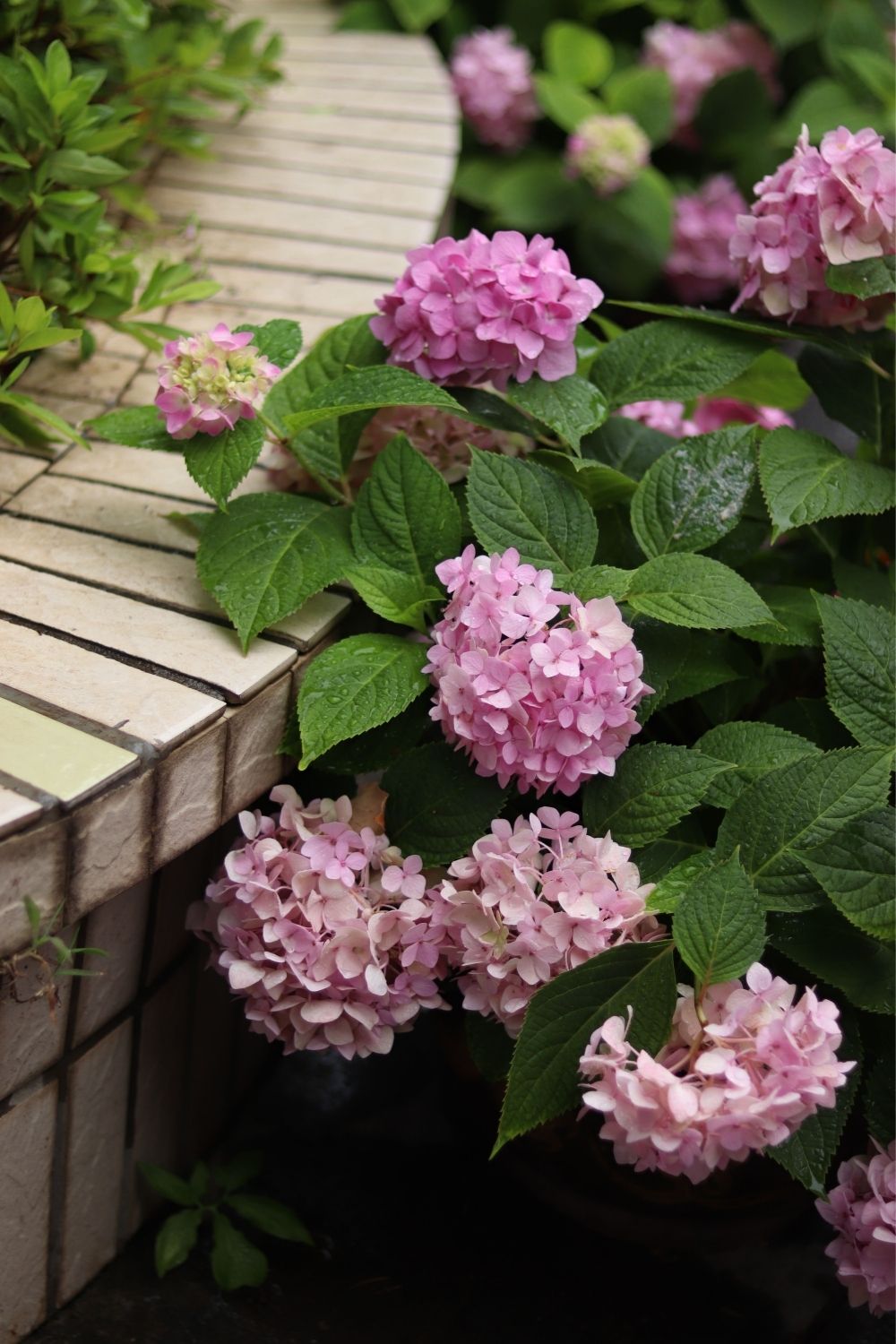
The pink mophead hydrangeas above, spilling over a pale curved bench, are bigleaf hydrangeas, the most popular type and the most sensitive to timing and cold.
| Type | Approx. zones | Light | Blooms on | Prune |
|---|---|---|---|---|
| Bigleaf (H. macrophylla) | 5–9 | Morning sun, afternoon shade | Old wood (rebloomers also new) | Right after flowering |
| Oakleaf (H. quercifolia) | 5–9 | Part shade to sun | Old wood | Right after flowering |
| Mountain (H. serrata) | 5–9 | Part shade | Old wood | Right after flowering |
| Panicle (H. paniculata) | 3–8 | Full sun to part shade | New wood | Late winter |
| Smooth (H. arborescens, ‘Annabelle’) | 3–9 | Part shade | New wood | Late winter |
Bigleaf flower color depends on your soil: acidic soil (pH below about 6) gives blue flowers, and neutral to alkaline soil gives pink. Panicle, oakleaf and smooth hydrangeas don’t change color with soil.
Pick the right spot
Even perfectly timed hydrangea planting fails if the spot is wrong. Most hydrangeas want morning sun and afternoon shade, moist but well-drained soil, and shelter from strong wind.
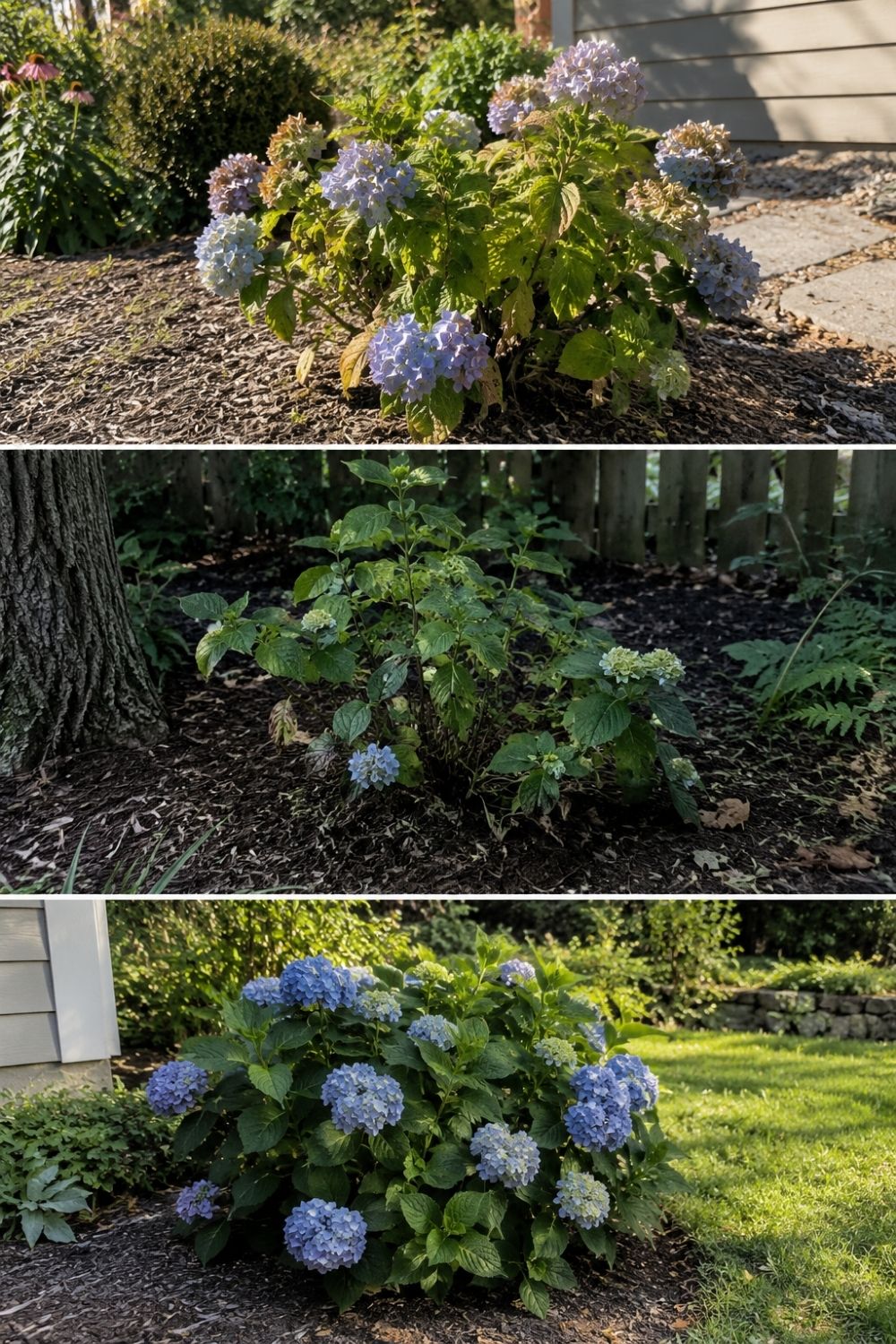
Photo by SassyGarden
The three photos above compare three locations. At the top, a hydrangea in full, hot sun has scorched, droopy leaves. In the middle, one under a large tree in deep shade has sparse leaves and hardly any flowers. At the bottom, one on the east side of a house, with sun in the morning and shade in the afternoon, is lush and covered in blue blooms. That bottom spot is what you’re aiming for.
The direction your beds face makes a big difference; I covered this in my post on planting north-, south-, east- and west-facing gardens. For deeper shade, see my list of plants that grow well in shade; smooth and oakleaf hydrangeas cope best with less sun.
Signs of transplant shock, and what to do
Even with ideal timing, some wilting is normal after planting hydrangeas or moving an established shrub. Watch for leaves that droop even in the morning, turn brown and crispy at the edges, or yellow and drop from the bottom of the stems. Flower buds may fall or blooms may be smaller in the first season.
Most plants recover if you keep the soil evenly moist, not soggy, and give them time. Check the soil daily for the first two weeks. Add temporary shade in hot weather, and don’t fertilize a stressed plant, since that pushes new growth the roots can’t support. If a few stems die back completely, cut them to the base in late winter. A hydrangea that looks unhappy in its first summer often bounces back strongly in its second.
First-year care
The first year after you plant hydrangeas decides how well they establish. Their roots are still small and shallow, so they depend on you for water.
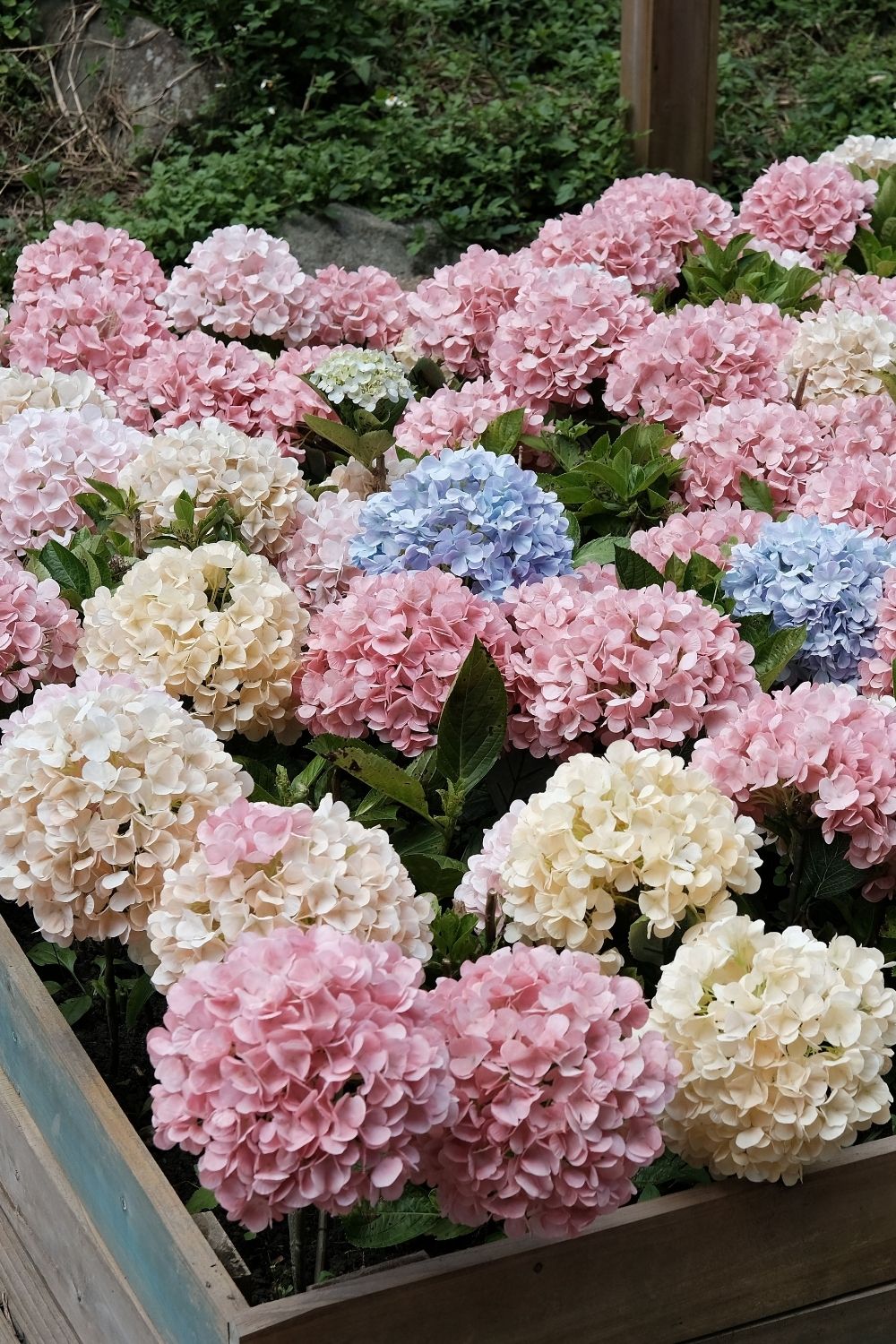
This raised wooden bed packed with pink, cream and blue hydrangeas shows how well they grow with steady moisture and rich soil. If your soil is heavy clay or poorly drained, a raised garden bed like this is a good way to give hydrangeas the conditions they like.
- Water deeply once or twice a week, about an inch of water in total, more in hot spells. Check the soil a few inches down before watering.
- Keep a 2–3 inch layer of mulch over the roots to hold moisture and keep the soil cool.
- Hold off on fertilizer at planting; a light feed the following spring is plenty.
- Don’t prune in the first year, except to remove damaged stems.
- Protect bigleaf types in cold zones with a thick layer of mulch or leaves around the base over their first winter.
One safety note: all parts of hydrangeas are toxic to cats, dogs and horses if eaten, so keep an eye on pets that chew plants. Hydrangeas also pair beautifully with roses, foxgloves and catmint in a relaxed border; my post on English cottage garden ideas shows how.
Mark your calendar: plant hydrangeas about six weeks before your first fall frost, or in spring after the last frost, skip the heat of summer, and move established shrubs only while they’re dormant. Get the timing right, and your hydrangeas will spend their first year growing roots instead of fighting to survive.