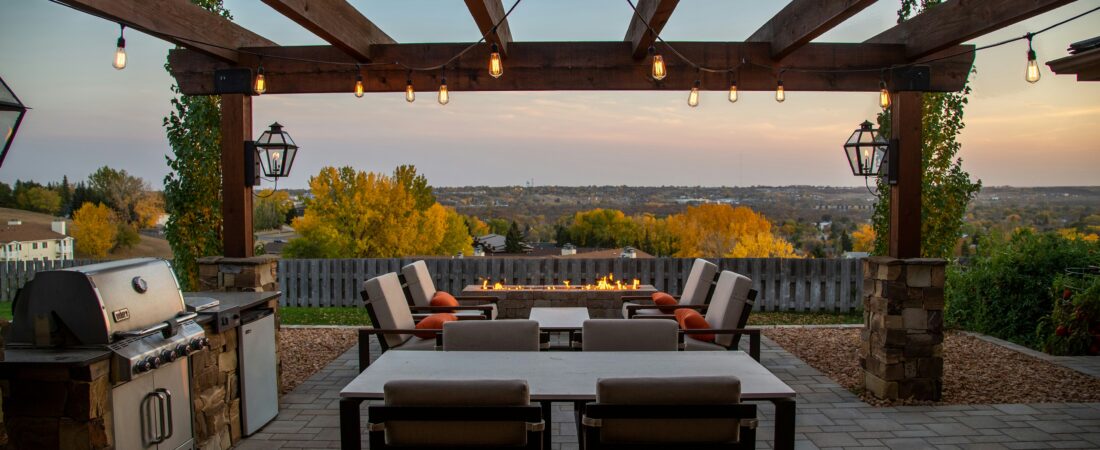
A lot of pergola ideas get picked from photos taken at noon. Then the first dinner happens at six in the evening, the sun comes in low from the west, and everyone at the table squints into it through the gaps in the roof.
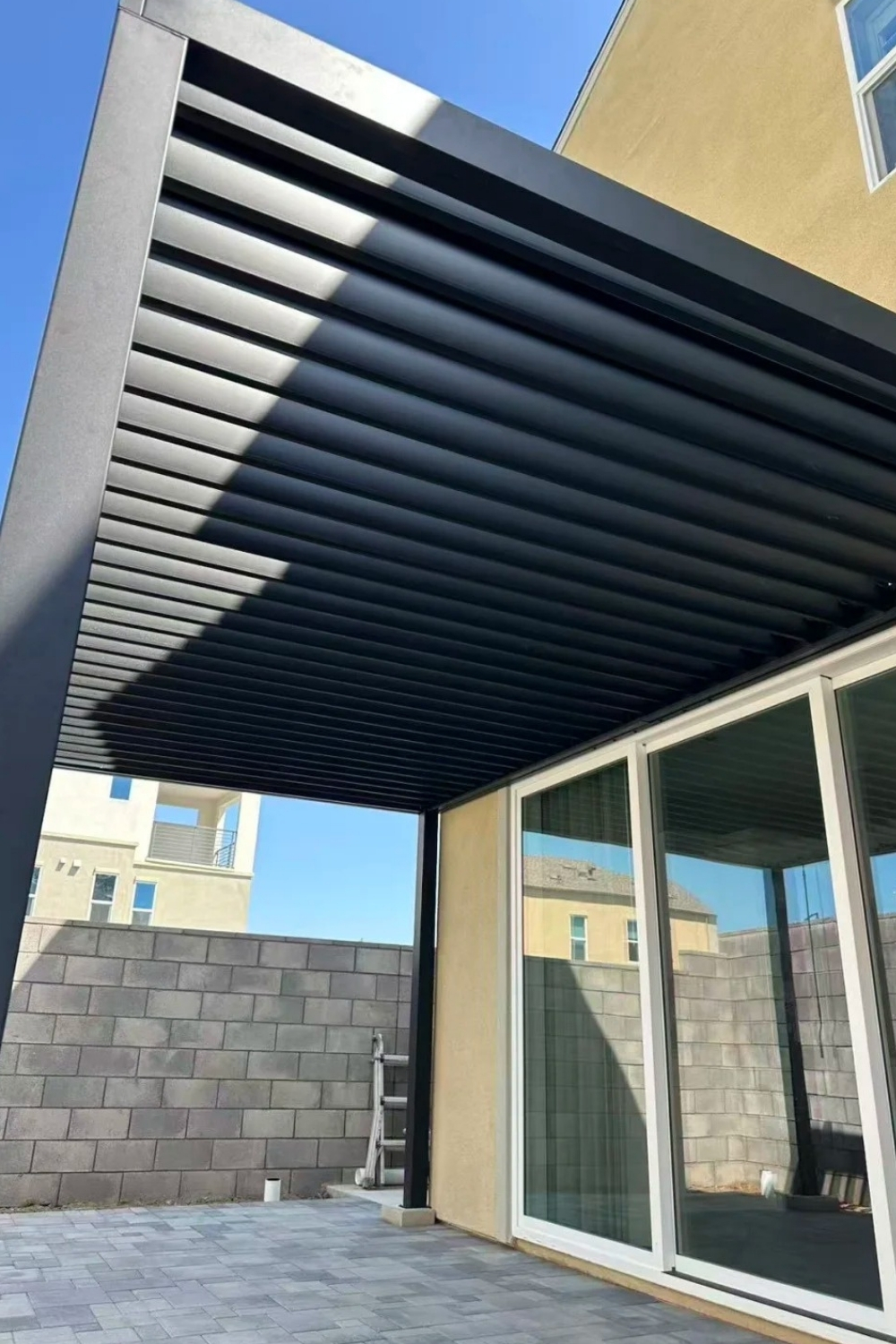
The direction of the roof slats decides when a pergola gives shade. Slats running east to west block the high midday sun, because the sun crosses over them from the south. Slats running north to south catch the low morning and evening sun from the side. So for a dinner table, run the slats north to south, or pick a roof that closes completely. In a small yard, where every square foot of shade counts, these Mediterranean landscaping ideas for compact yards show how a pergola works alongside walls, trees and planting.
Attach it to the house as an outdoor living room
An attached pergola is fixed to the house on one side and stands on posts on the other. It works like an extension of the room behind it: open the sliding doors and the kitchen or living room simply continues outside. It’s the easiest way to get a covered spot right outside the door, and it needs only two posts instead of four.
The side against the house hangs on a ledger board, a heavy beam bolted flat to the wall. That beam has to be bolted into the house’s actual framing, not just into siding or brick facing, and the wall behind it needs flashing (thin metal strips that stop rain from running in behind the beam).
The catch: a structure fixed to the house almost always needs a permit, and a bad connection can let water into the wall.
Freestanding pergola ideas for a dining room in the yard
A freestanding pergola stands on its own four posts, away from the house. That turns a corner of the yard into a separate outdoor dining room, often placed where the view is best or where the sun goes down.
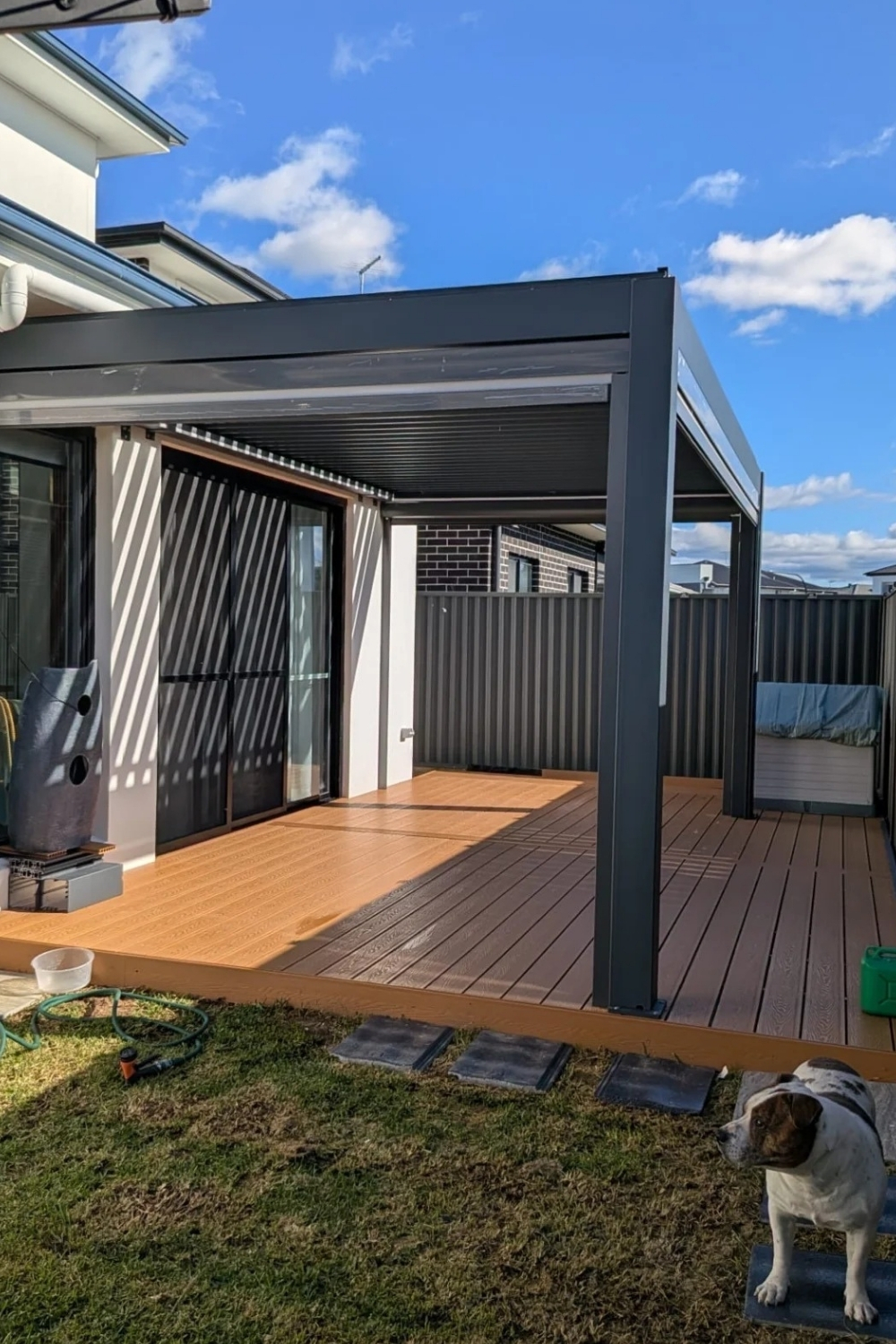
On a deck, it gives the boards a ceiling and makes the deck feel like a room rather than a platform. On a patio at the end of a lawn, it gives people a reason to walk out there. Before settling on a spot for a backyard pergola, check what’s overhead: a big tree drops sap, twigs and leaves on any roof, and roots make digging post holes hard work.
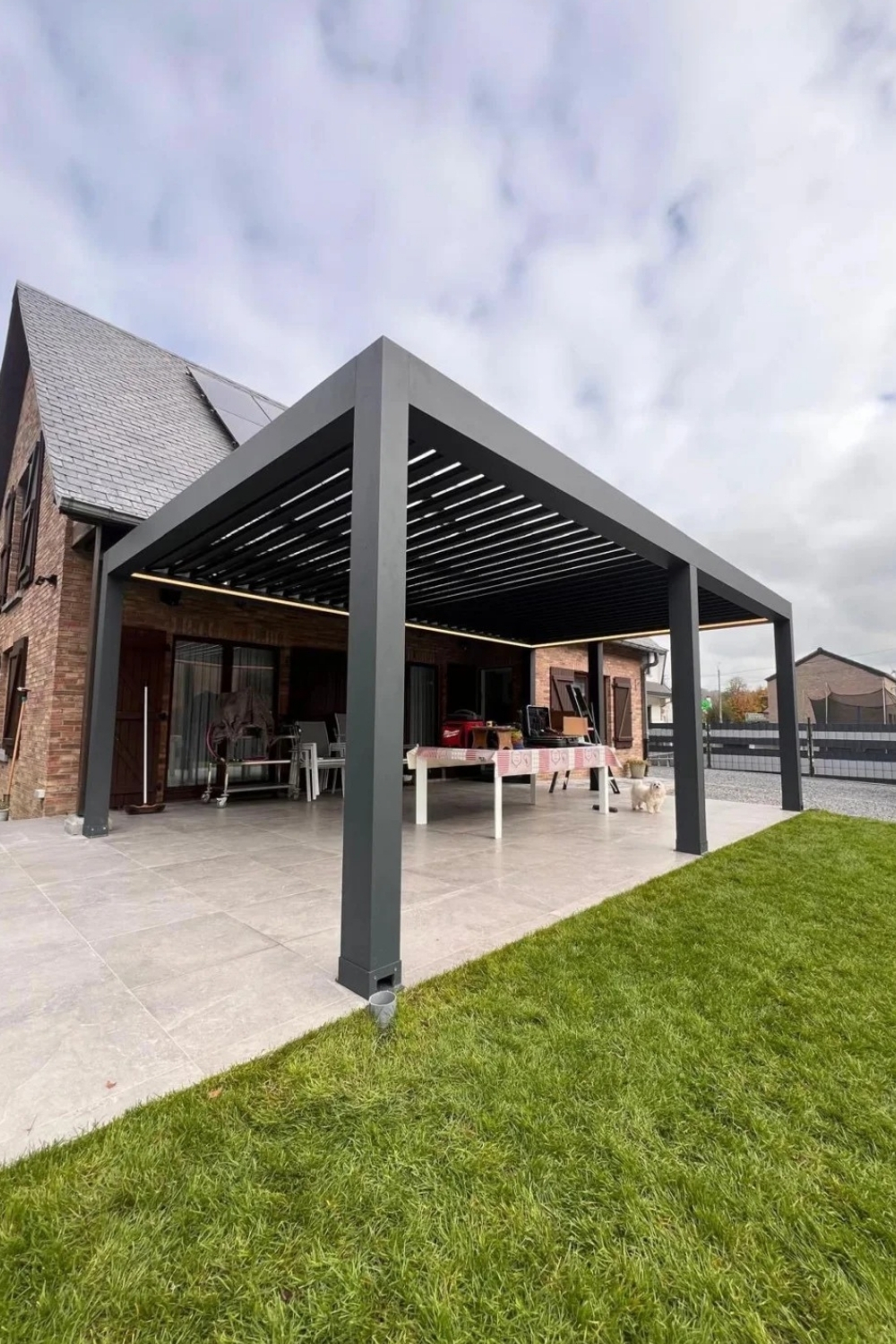
The catch: with nothing to lean on, a freestanding pergola needs bigger concrete bases under its posts, because wind pushes on the whole frame and can try to tip or lift it.
Adjustable louvers for shade on demand
Louvers are roof slats that rotate, like a giant window blind laid flat. Open them and light and air come through; close them and they form a solid roof that sheds rain. Most louvered pergola designs are aluminum, turned by a crank or a small motor.
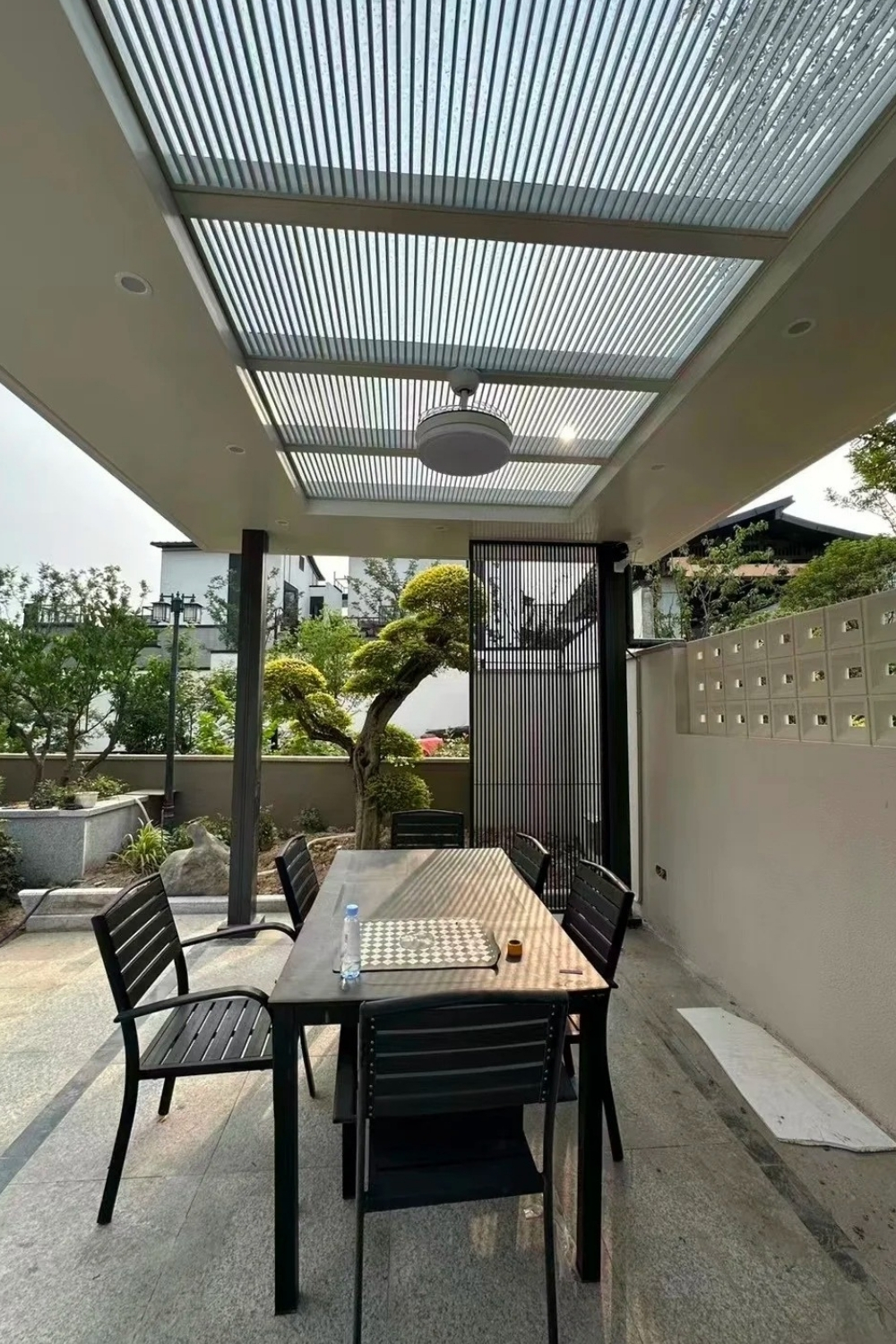
With the slats closed, rain runs into a gutter built into the frame and down through the hollow posts, so it doesn’t pour off the edge onto whoever is sitting there. Not gonna lie, watching a summer storm from under a closed louvered roof is a pretty good argument for the price.
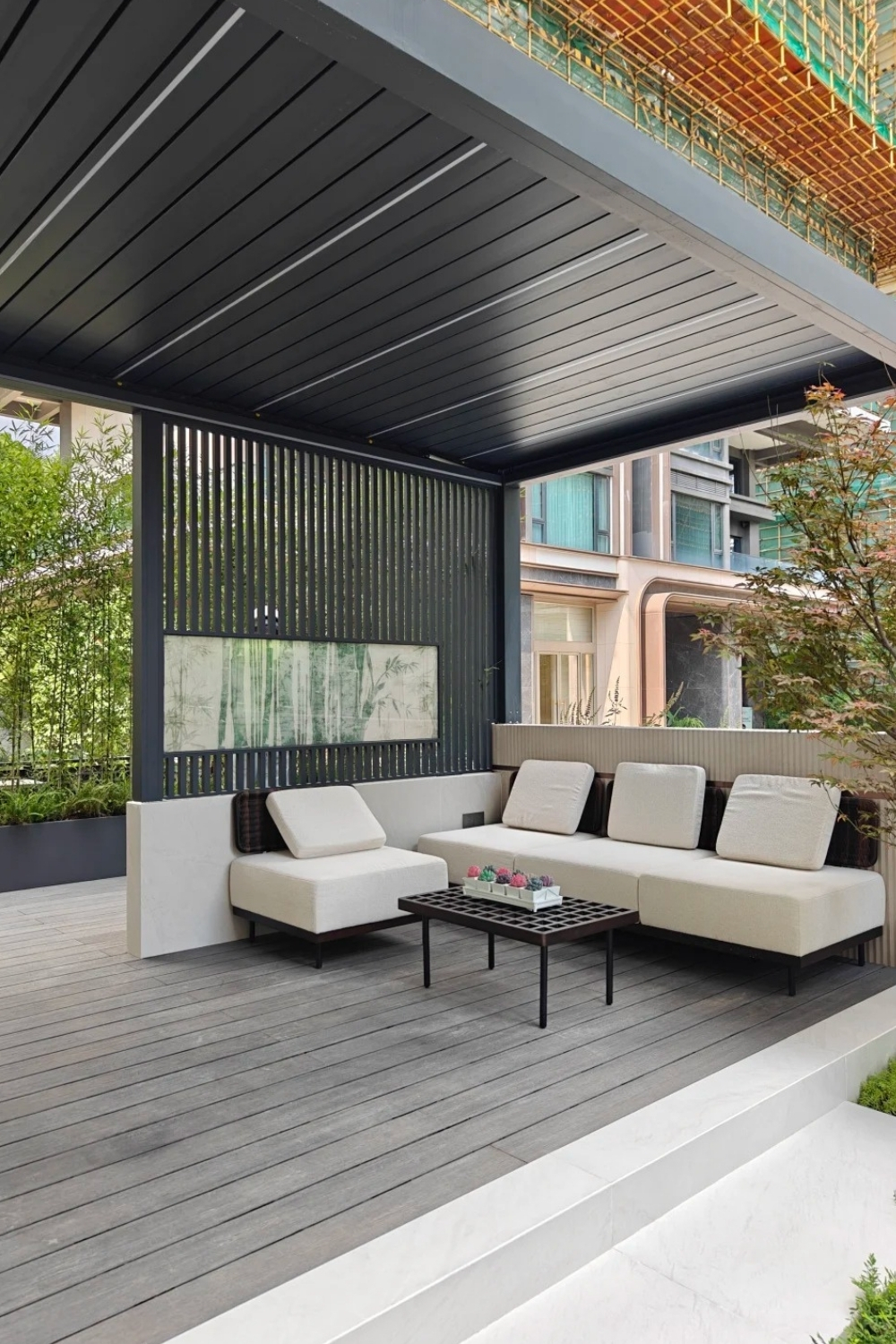
In snowy areas, check the snow rating before buying. Most louvered roofs are meant to be opened during heavy snow so it falls through instead of piling up, and the maker’s manual says how much weight the closed slats can hold.
The catch: louvered roofs cost far more than wood, and a motorized one needs power run to it, which is a job for an electrician.
Glass or polycarbonate roofs for rainy-day dinners
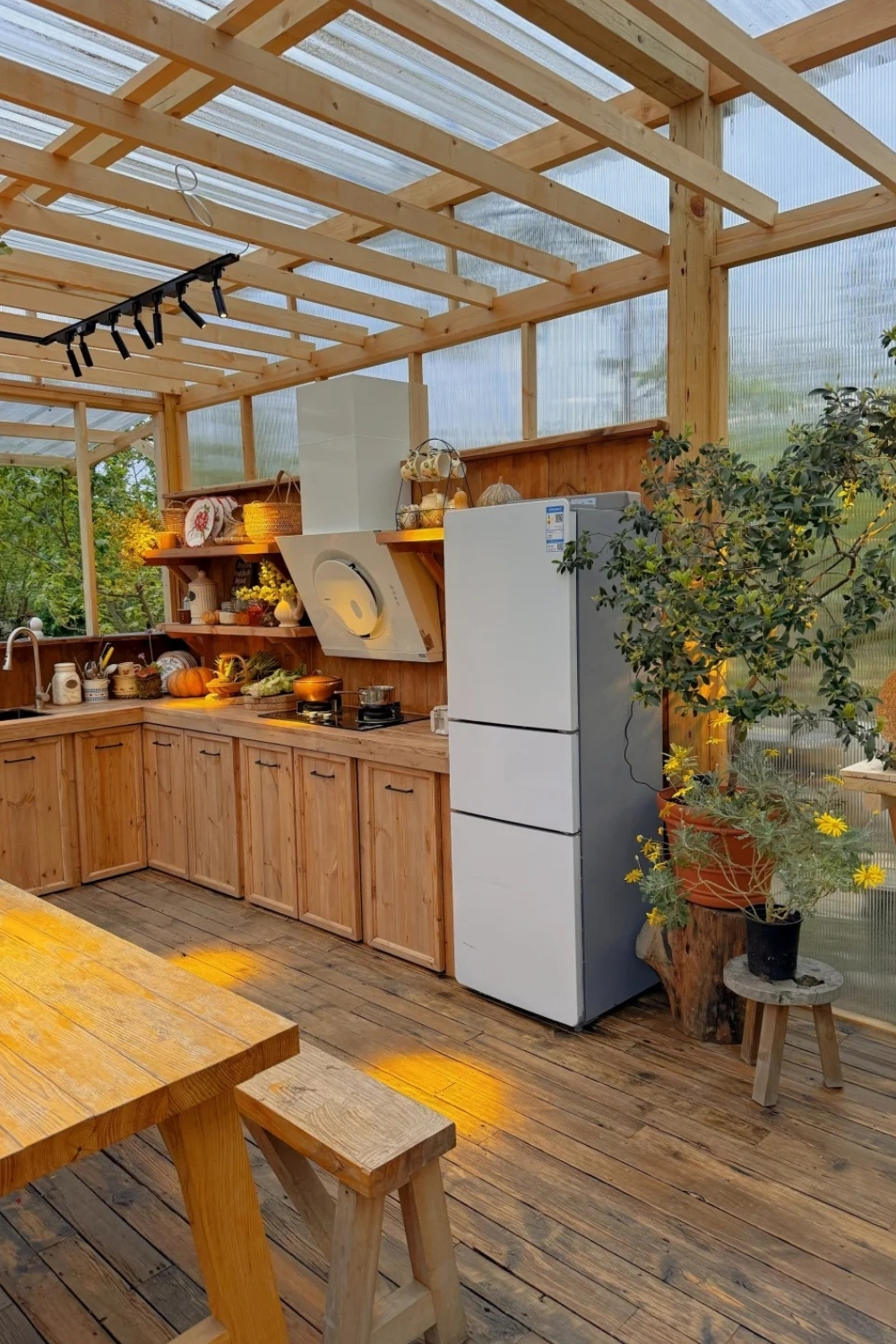
A clear roof keeps the light and stops the rain. Glass looks the cleanest and stays clear for years. Polycarbonate (stiff, clear or frosted plastic sheets, the same kind used on many greenhouses) is lighter, cheaper and easier to cut, and it doesn’t shatter.
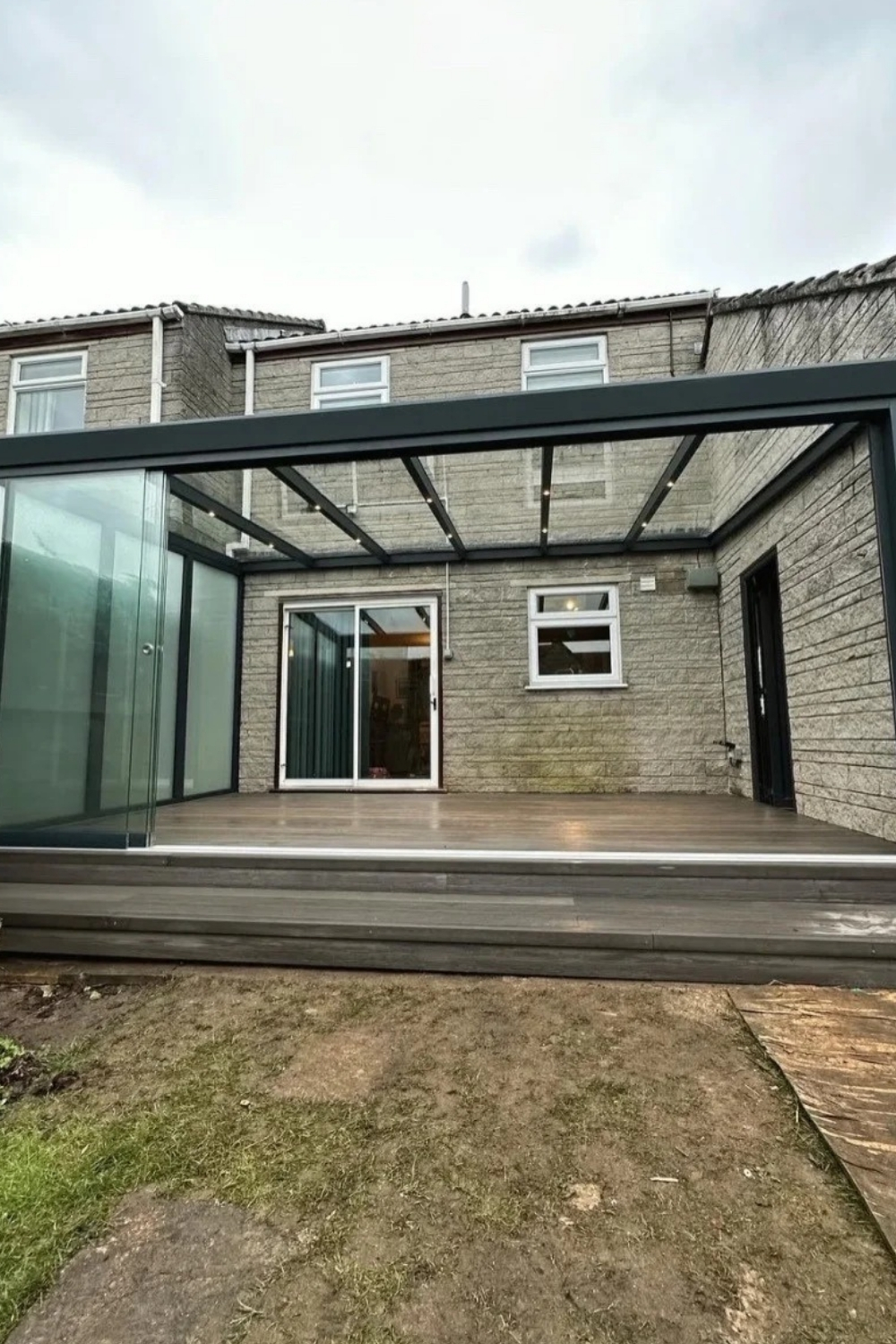
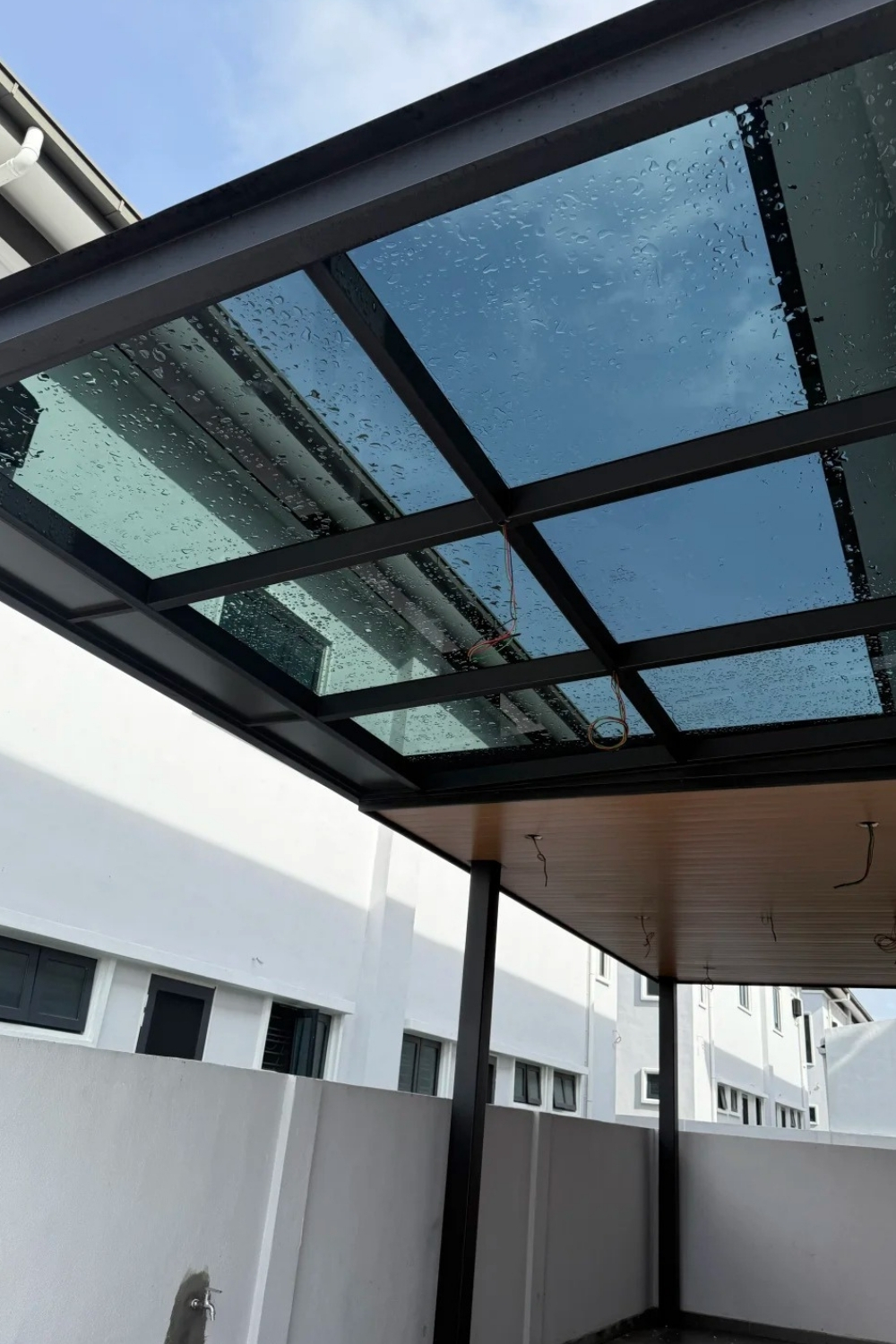
Against the back of a house, a glass-roofed pergola can work almost like a sunroom without walls: dry enough for a sofa, bright enough that the room inside doesn’t go dark.
Leaves, pollen and bird droppings show up on a clear roof in a way they never do on wood, so plan on hosing it down or using a soft brush on a long pole now and then.
The catch: clear roofs trap heat on a sunny afternoon. A shade cloth or a retractable fabric panel under the roof helps, and so does a frosted panel rather than a clear one.
Slatted wood and wood-look ceilings
Wood slats overhead feel softer than metal and look at home next to plants. Fixed slats give partial shade all day, more or less depending on how close together they’re spaced.
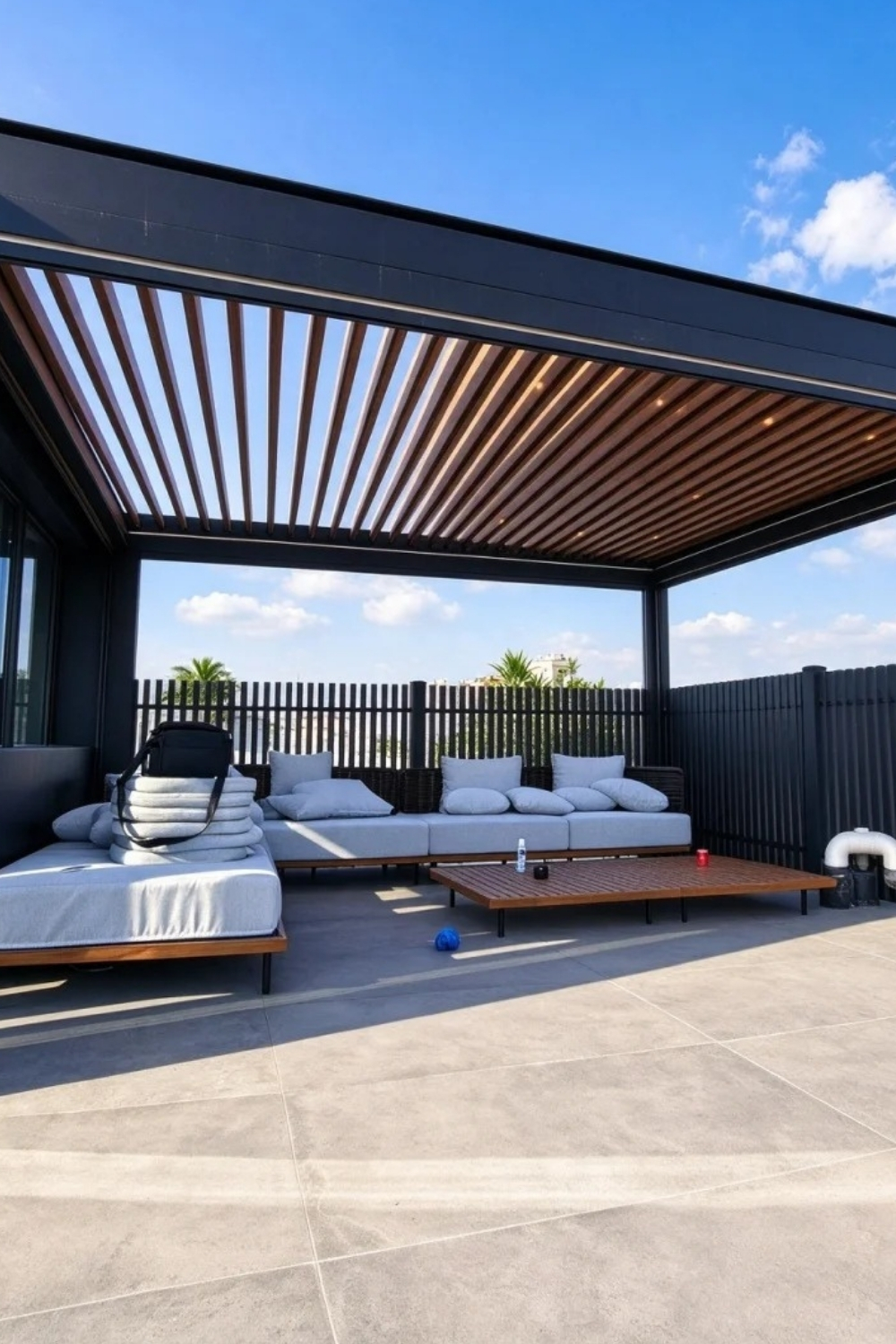
Some aluminum pergolas come with a wood-look finish: metal slats printed or coated to look like wood. They give the warm color without the yearly staining. A solid wood-look ceiling under a closed roof, with small recessed lights set into it, makes an outdoor lounge feel like an indoor room.
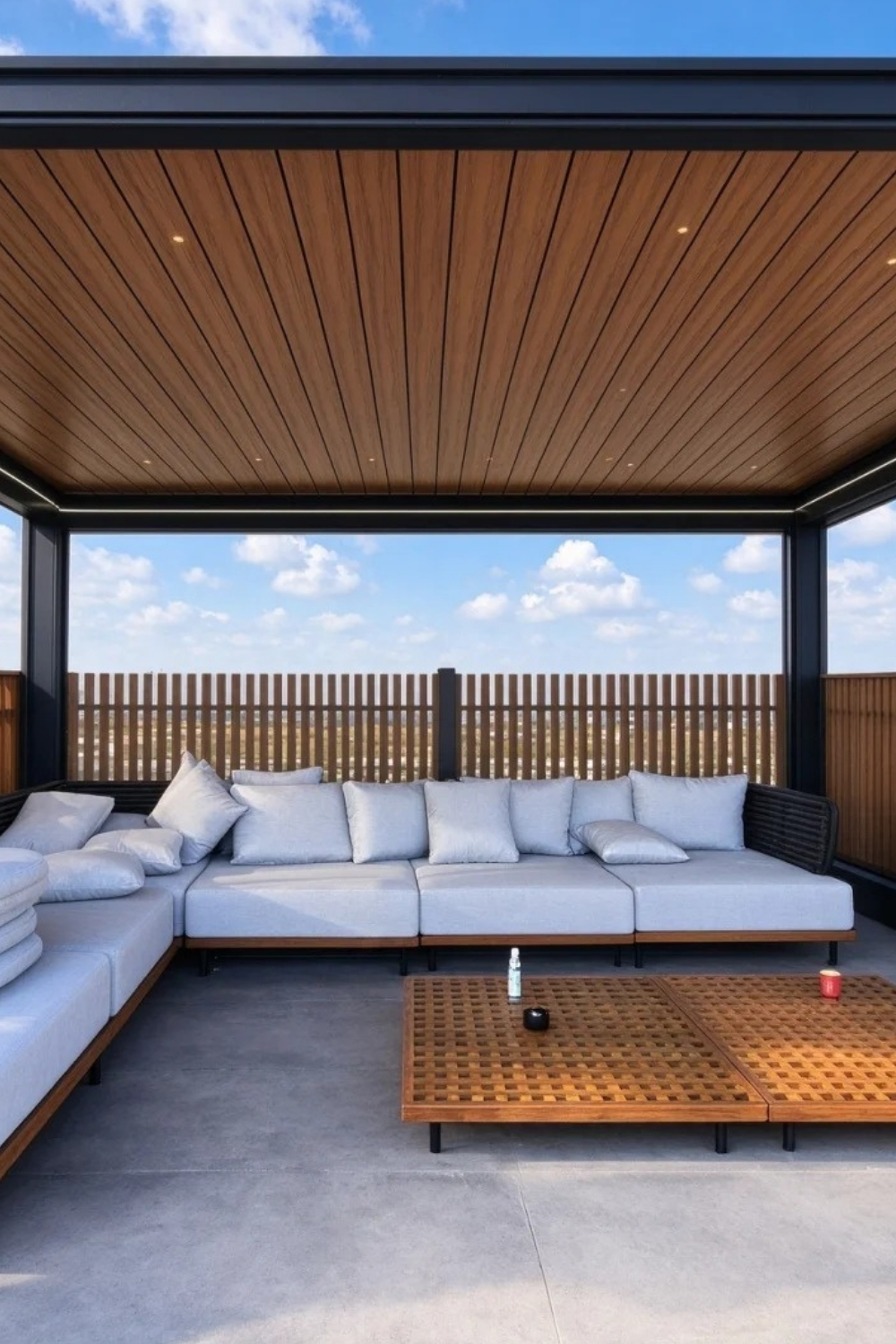
Wood is also where a DIY pergola makes the most sense. Cedar kits come with precut posts, beams and rafters, and two people with a level and a ladder can usually put one up over a weekend. The posts still need proper concrete bases, though, and that part is worth doing slowly. Among all the pergola ideas here, a simple wood kit is the one most people can build themselves.
The catch: real wood needs a coat of stain or oil every year or two, and fixed slats can’t be closed against rain.
Light it for evenings
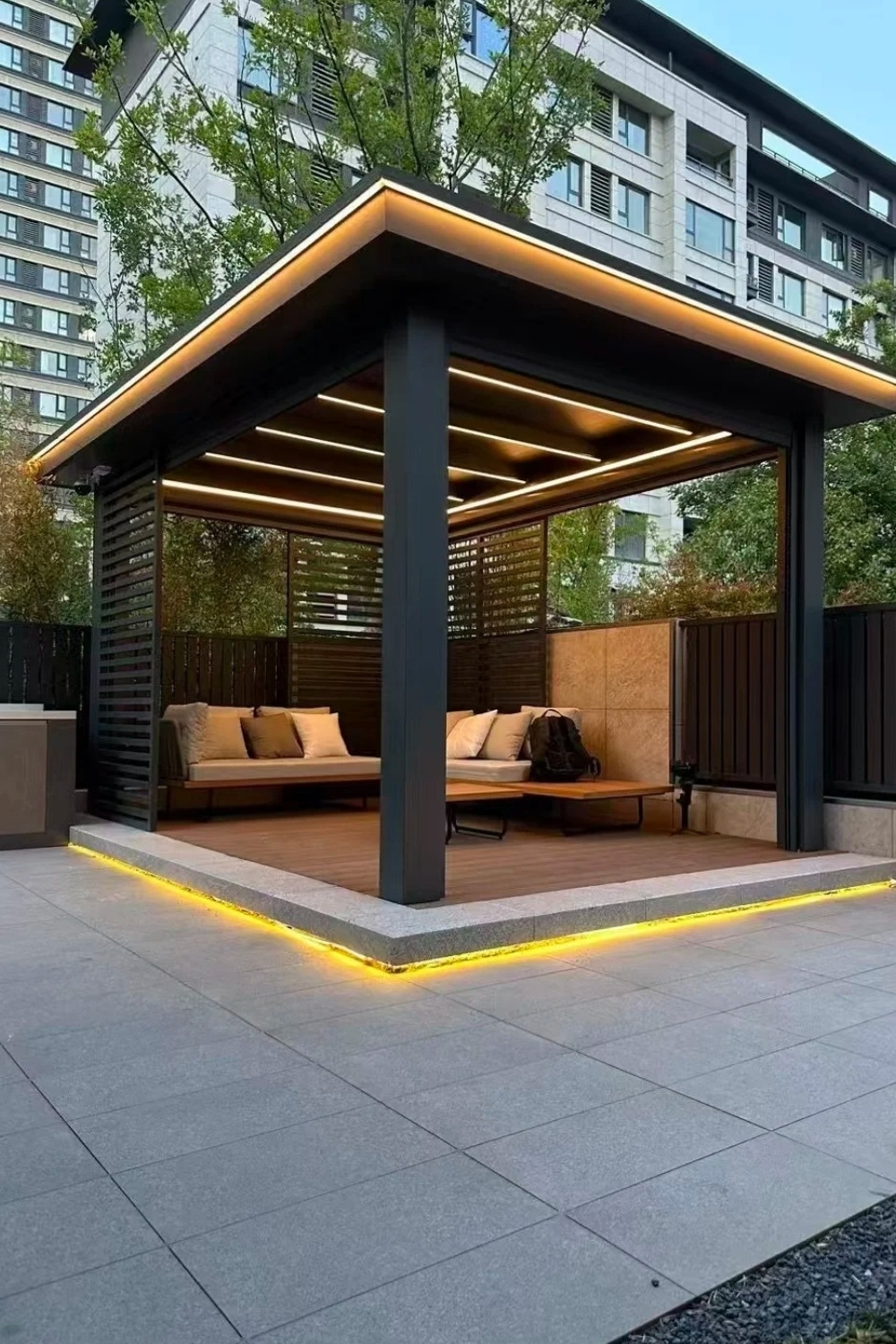
A pergola that’s lit gets used after dark; one that isn’t goes empty at sunset. Three kinds of light do most of the work. LED strips tucked into the frame give an even glow without a single visible bulb. A ceiling fan moves air on still evenings and keeps bugs from landing, but it has to be wet-rated, meaning built to handle rain, not just humid air. Uplighting, small lamps at the base of the posts aimed upward, makes the whole structure glow from across the yard.
Hardwired lights and fans need an electrician. For a no-wiring option, these solar garden lighting ideas cover string lights and lanterns that charge in the sun.
An outdoor kitchen or bar underneath
Okay, hear me out: the pergola is often the cheapest part of an outdoor kitchen, and it’s the part that makes cooking outside work in July heat and in light rain.
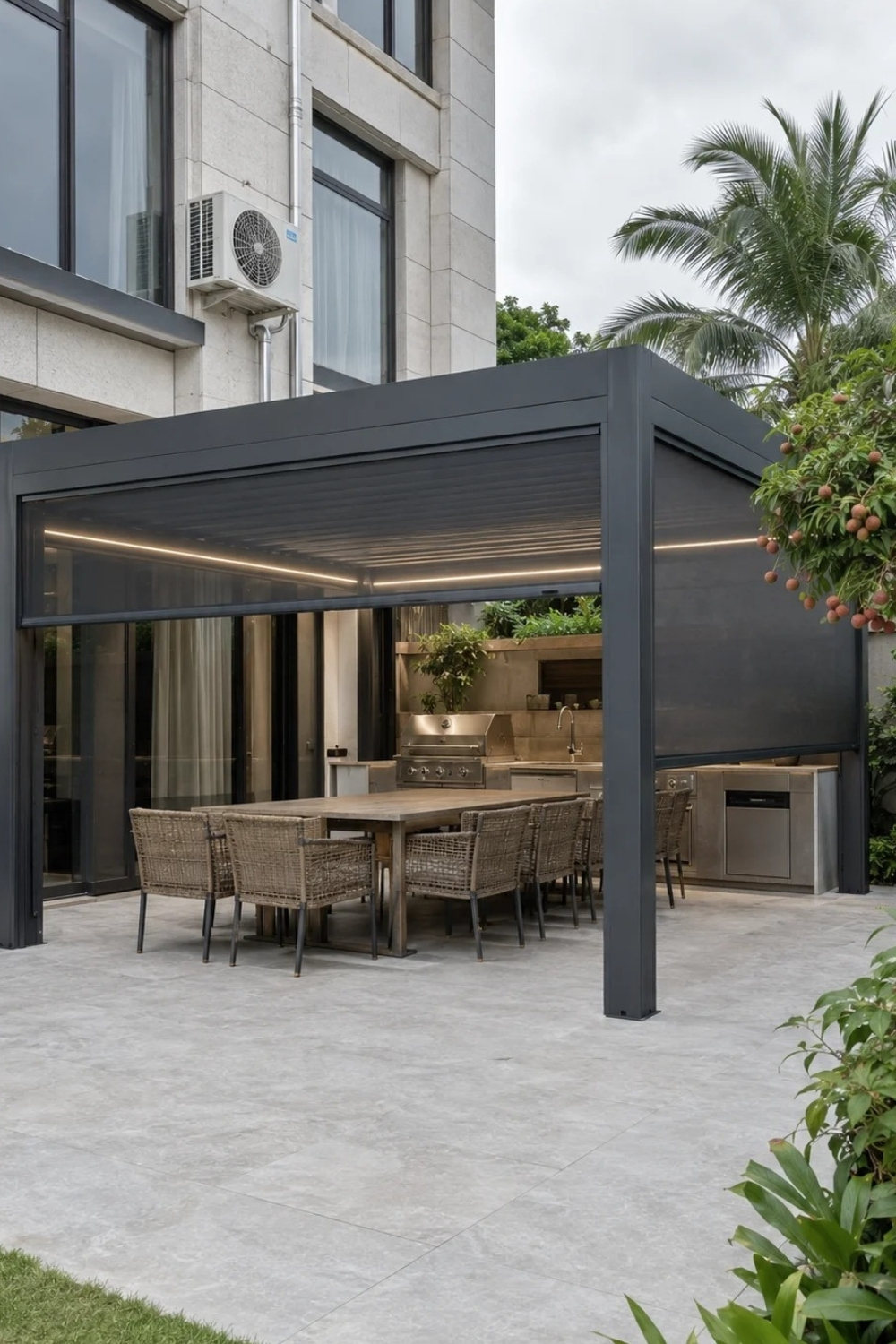
A grill under a roof needs room for smoke to escape. Keep it well clear of a wood ceiling, follow the grill maker’s clearance distances, and choose an open or louvered roof over the cooking area rather than a closed one. A closed polycarbonate roof suits the prep counter and fridge side better, where the job is keeping things dry.
Climbing plants on an open wood pergola
The classic pergola with climbing plants still works, as long as the roof is open wood. Clematis, climbing roses and grapes are all good choices. They grow up the posts, spread across the beams, and give dappled shade by midsummer.
Louvered and glass roofs are a different story. Vines work their way between moving slats and jam them, and they leave sap and debris on glass. Keep climbers to the posts or skip them.
Wisteria is the plant most people picture on a pergola. Chinese and Japanese wisteria, though, are aggressive and escape into the wild in many states, and the vines grow heavy enough to strain a light frame. American wisteria (Wisteria frutescens) is a native alternative for zones 5–9. According to Duke Gardens’ notes on American wisteria, it grows more slowly and blooms a few weeks later, after its leaves are out. For more supports to train vines on, these garden trellis ideas for roses, vines and climbing vegetables pair well with a pergola.
Size it for chairs pulled out
The table fits; the question is whether people can get out of their chairs. A six-person table is about 6 feet long, but each chair needs roughly 3 feet behind it to pull out, so the whole dining area runs closer to 10 by 12 feet. According to Globus Gates’ pergola size guide, a 10 × 14 or 12 × 12 foot pergola suits six people, a corner sectional fits under 12 × 12, and an L-shaped sectional or a compact outdoor kitchen with seating needs about 12 × 16. Neither size is necessarily better in every situation. It really depends on whether the space is mainly for eating, lounging or both.
Permits, footings and where the rain goes
Footings are the concrete bases the posts stand on. They need to go below the frost line, the depth to which the ground freezes in winter in your area, because frozen soil swells and can lift posts out of level. Attached pergolas and any pergola with a solid roof usually need a permit, and some towns treat a solid-roofed pergola as a patio cover, with its own rules for drainage and snow load. A call to the local building department before ordering anything saves a lot of trouble.
A solid roof also sends a lot of water to one place. Direct the downspouts away from the house and the patio, toward a bed or a gravel strip. And if the pergola needs a wall or two for privacy, these garden privacy screening ideas cover slats, screens and living walls that attach to the posts. All things considered, I’d recommend starting small and expanding gradually: a frame that fits the table now can take a lighting kit, a fan or side panels later.
This week, mark the footprint on the patio with chalk or a garden hose, set the table and chairs inside it, and sit there at six in the evening to see where the sun lands.