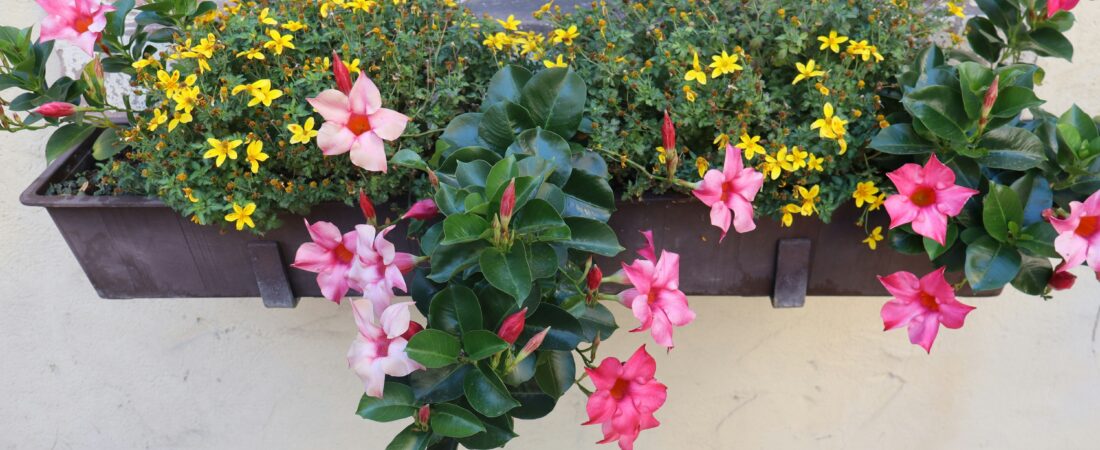

For a sunny window, petunias, calibrachoa, salvia, lantana and sweet potato vine; for a shady one, begonias, impatiens, ferns, caladiums and heuchera. Those are the best flowers for window boxes because they bloom or color up for months in a small amount of soil, and the shade ones look full without much sun. The rest is putting them together so the box looks planned, then swapping in mums, heather and ornamental kale when the nights turn cool.
Start with the box, not the flowers
A window box dries out faster than any bed in the garden. It’s shallow, it hangs in the wind and it often sits under a roof overhang that keeps rain off. So the box itself matters as much as the plants.
Pick a box at least 8 inches deep and as wide as you can fit, since a bigger volume of soil holds water longer. According to the Chicago Botanic Garden’s window box recipe, drainage holes are a must, and the box should be filled with a lightweight potting mix, the bagged soil made for containers, not garden soil, which packs down and stays soggy. In hot, dry weather, be prepared to water daily, and feed flowering annuals with a water-soluble fertilizer about every other week.
A self-watering window box, with a hidden water reservoir under the soil, stretches the time between waterings to two or three days in summer, which helps if the box hangs over a spot that’s awkward to reach. Wooden boxes last longer with a plastic liner inside, so the wood isn’t wet all season.
Mount the box on sturdy brackets screwed into the wall framing. A 3-foot box full of wet soil and plants can easily weigh 50 pounds or more, and it hangs over a sidewalk or a door.
The thriller, filler, spiller idea in a long box
The easiest way to plan any container is the thriller, filler, spiller formula. The thriller is one taller plant with presence, the filler is the mounding plant that fills the middle, and the spiller trails over the front edge. In a round pot, the thriller goes in the center. In a long window box, it works better repeated: two or three thrillers spaced along the back, fillers between them, and spillers along the whole front lip. This guide to the thriller-filler-spiller formula for containers goes deeper into choosing and spacing each part.
Summer window boxes for full sun
A window box in six or more hours of direct sun can hold the most colorful plants of all. Petunias (Petunia × atkinsiana) and calibrachoa, which looks like a tiny petunia and is sometimes sold as million bells, bloom from late spring until frost. Salvia (Salvia) adds upright spikes, verbena spreads in clusters, lantana (Lantana camara) brings bright, mixed-color flower heads that butterflies love, and sweet potato vine (Ipomoea batatas) spills over the edge in lime green or near-black leaves.
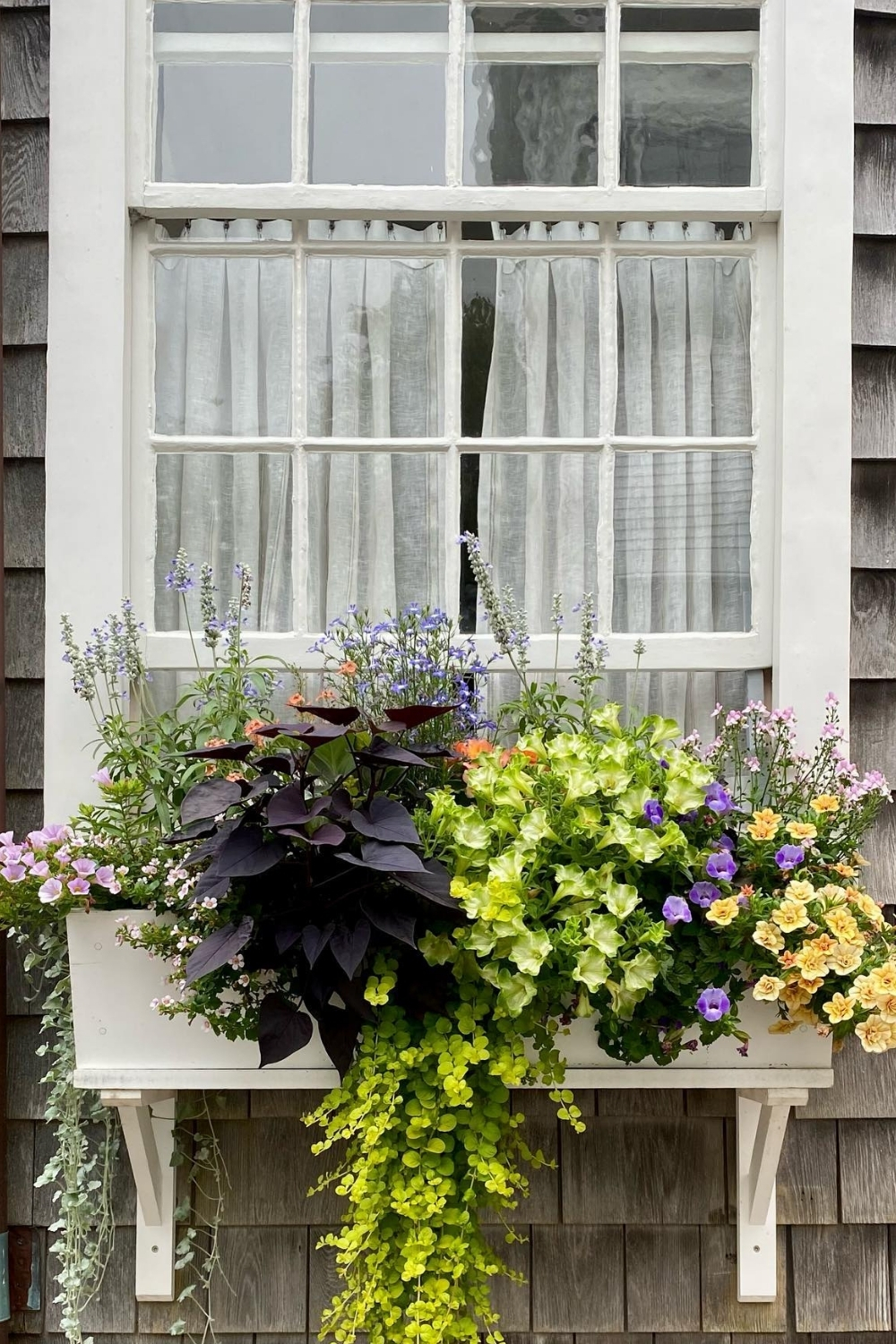
A box like this one mixes a dark sweet potato vine with a lime green trailer and soft blue and yellow flowers, and the color contrast does most of the work. One recipe for a sunny window:
- Thriller: blue or purple salvia
- Filler: pink and white petunias
- Spiller: lime green sweet potato vine
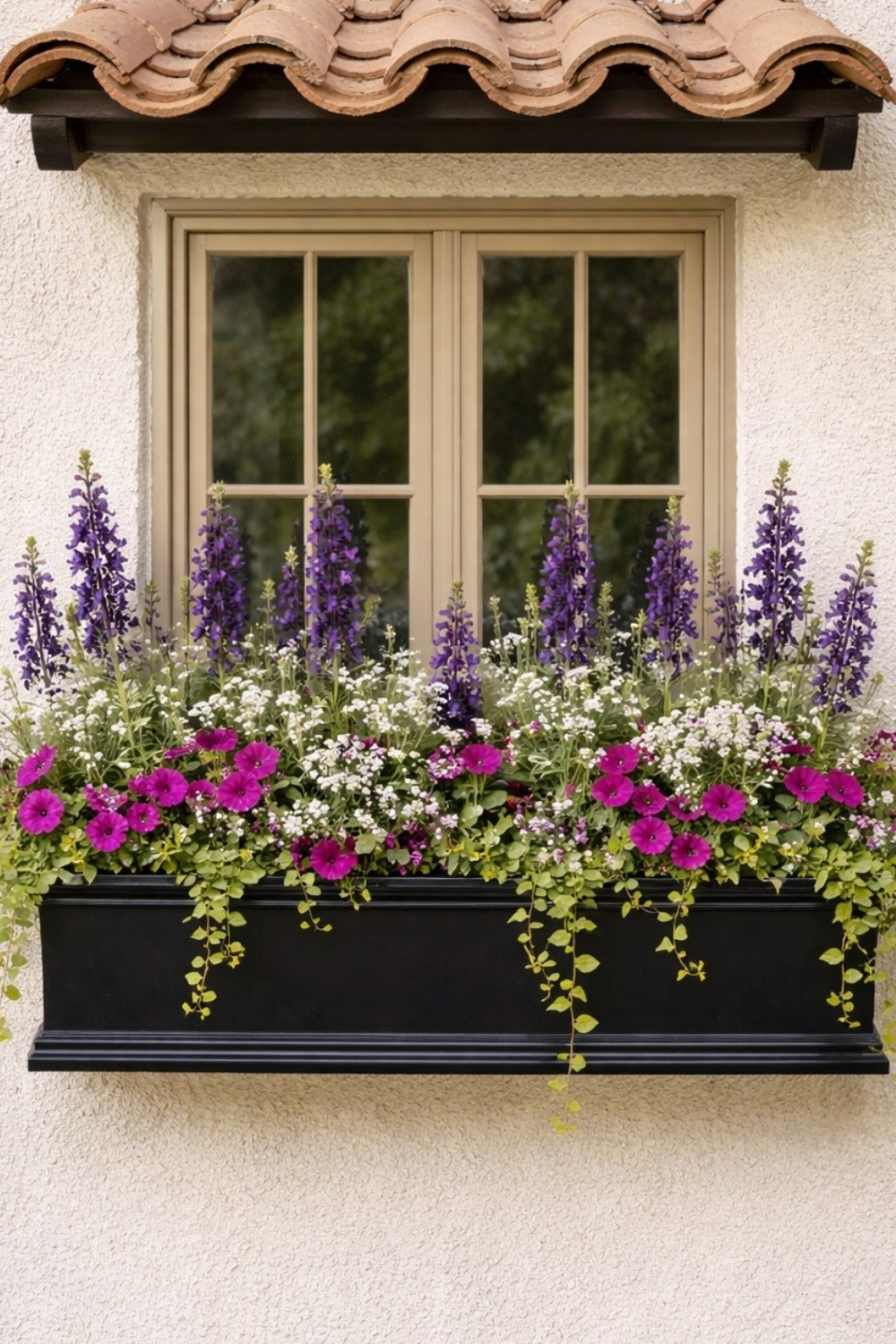
A box mostly of purple salvia and petunias, with a white filler between them, shows how far a tight color palette goes. Two or three colors, repeated along the box, usually look better than seven.

Trailing flowers for window boxes are what make a box look generous from the street. Beyond sweet potato vine, bacopa drapes tiny white or blue flowers over the edge, ivy geraniums trail and bloom in heat, and trailing petunias and calibrachoa do double duty as filler and spiller. Plant them right at the front lip, angled slightly outward, so they start hanging over the edge within a few weeks.
Railing boxes and hayrack planters, open metal baskets lined with coconut fiber, dry out even faster than solid boxes. Water them daily in summer, and choose tough, heat-loving plants like calibrachoa and verbena.
A pet note: petunias and salvia are generally listed as safe for cats and dogs, but lantana is toxic to them, and so are the berries it forms after flowering.
Summer window boxes for shade
A north-facing window or a window box under deep eaves still has plenty of choices. Begonias flower in shade, impatiens (Impatiens walleriana) cover themselves in blooms, ferns add a soft, feathery texture, caladiums (Caladium) bring huge painted leaves in white, pink and green, and heuchera, also called coral bells, adds leaves in purple, amber or lime. Coleus is a favorite for its bright patterned leaves; pet safety sources disagree on it, so check the ASPCA plant list if you have a curious cat.
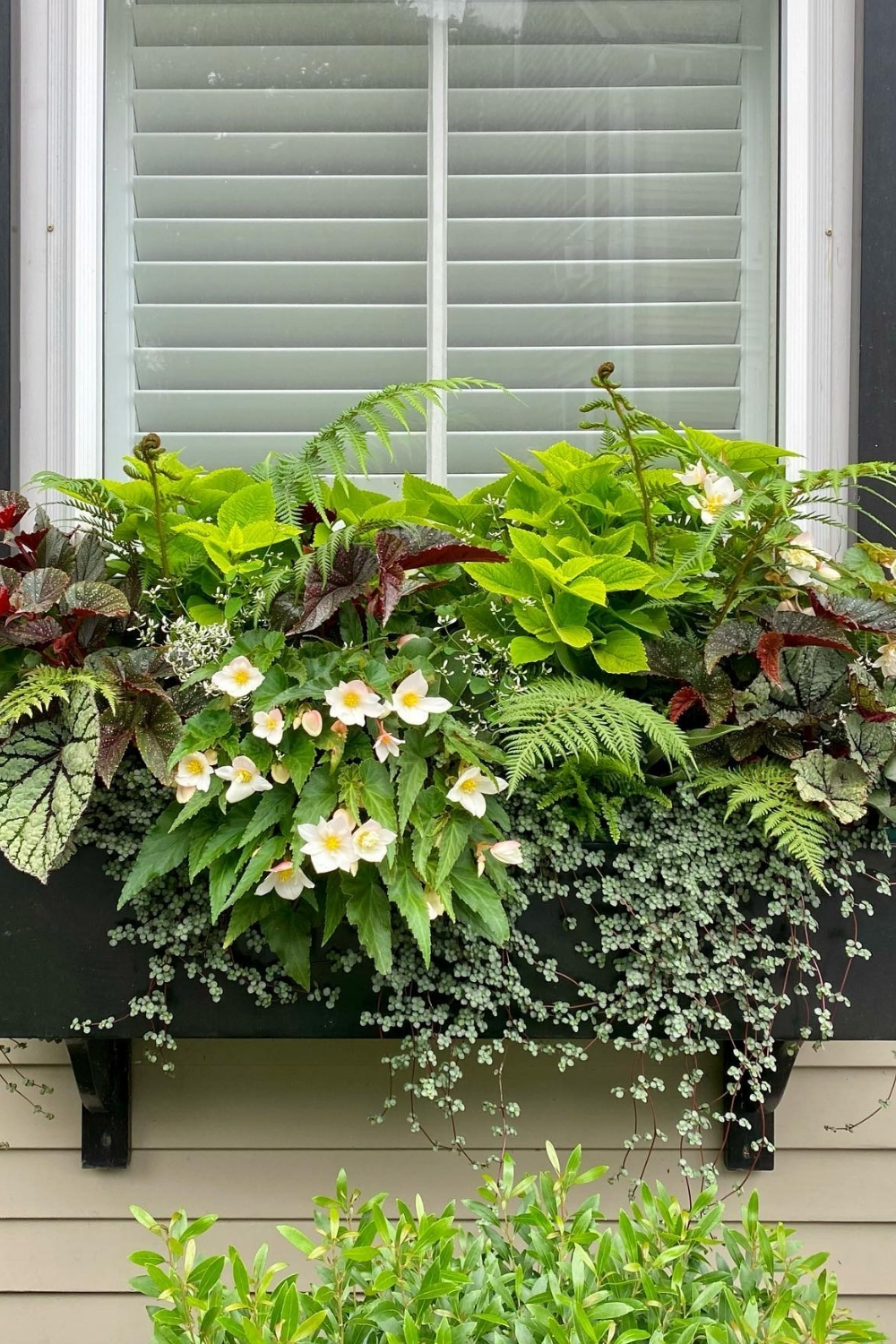

Foliage carries a shade box. Mixing leaf colors and shapes, like the striped begonia leaves, fern fronds and coleus in these boxes, keeps a shady window bright even when few flowers are open. One recipe:
- Thriller: a caladium or a tall fern
- Filler: wax begonias or impatiens
- Spiller: trailing ivy or a trailing begonia
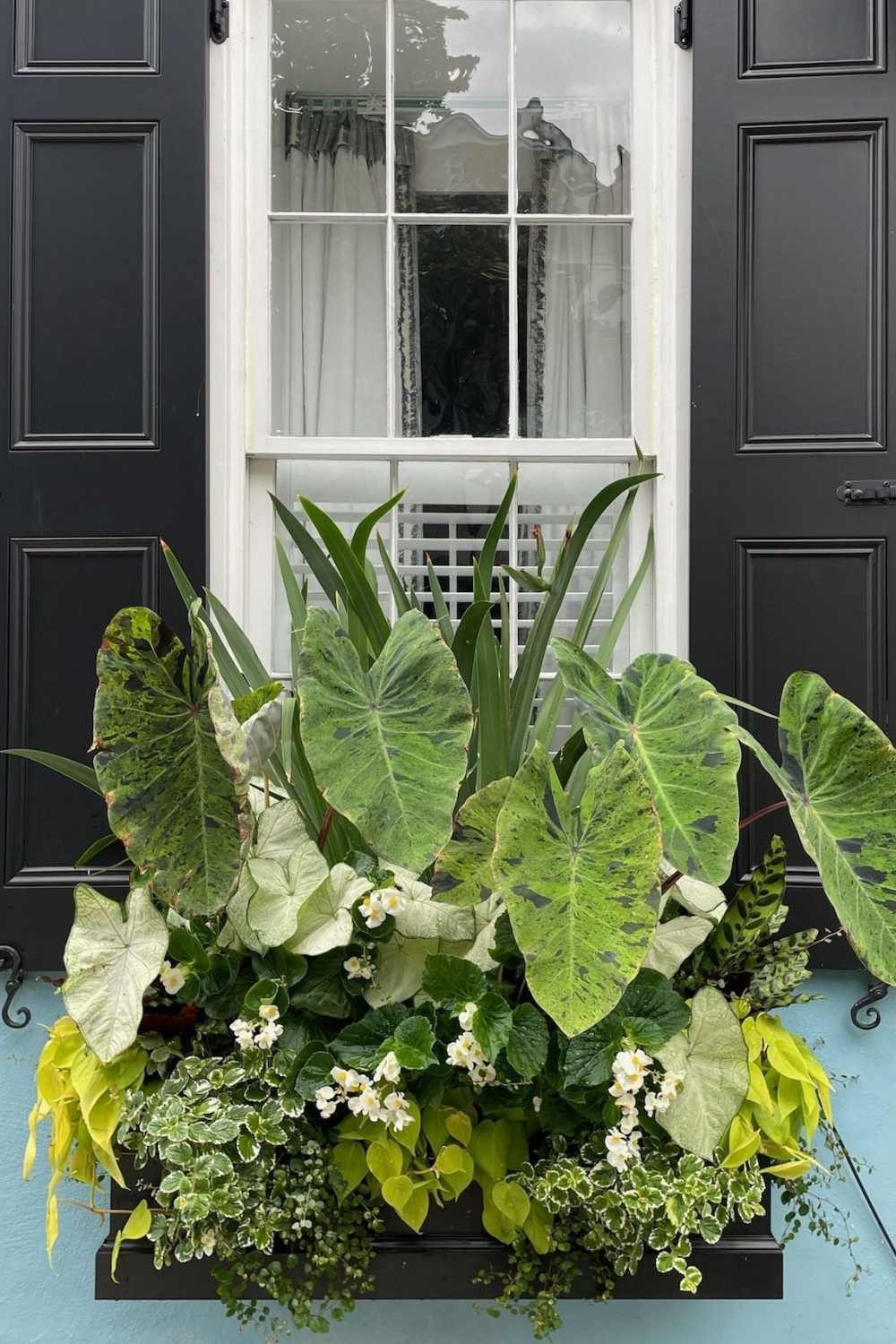
Window box flowers for shade need less water than sunny ones, since the soil dries more slowly out of direct sun. Check with a finger before watering; a shade box that stays soggy invites root rot and fungus gnats, the tiny flies that hover over wet potting soil.
Elephant ears and caladiums turn a shade box into something closer to a small jungle. Begonias, caladiums and ivy are toxic to cats and dogs; impatiens and heuchera are considered safe. For more plants that cope with low light, this list of what actually grows in shade carries over well to window boxes.
Fall swaps when nights turn cool
Summer window box annuals start to look tired once nights drop into the 50s °F. Anyway, moving on: that’s the moment to pull them and replant the window box for fall, which in many zones gives two more months of color.
Garden mums, heather (Calluna vulgaris), heuchera, ornamental kale and ornamental peppers all handle cool nights, and a few small pumpkins or gourds tucked between them finish the look. Cyclamen bring pink and white flowers to a fall box too. According to the ASPCA’s entry on cyclamen, it’s toxic to cats, dogs and horses, and the tubers are the most dangerous part, so keep it out of reach of pets that dig. Mums are toxic to cats and dogs as well.
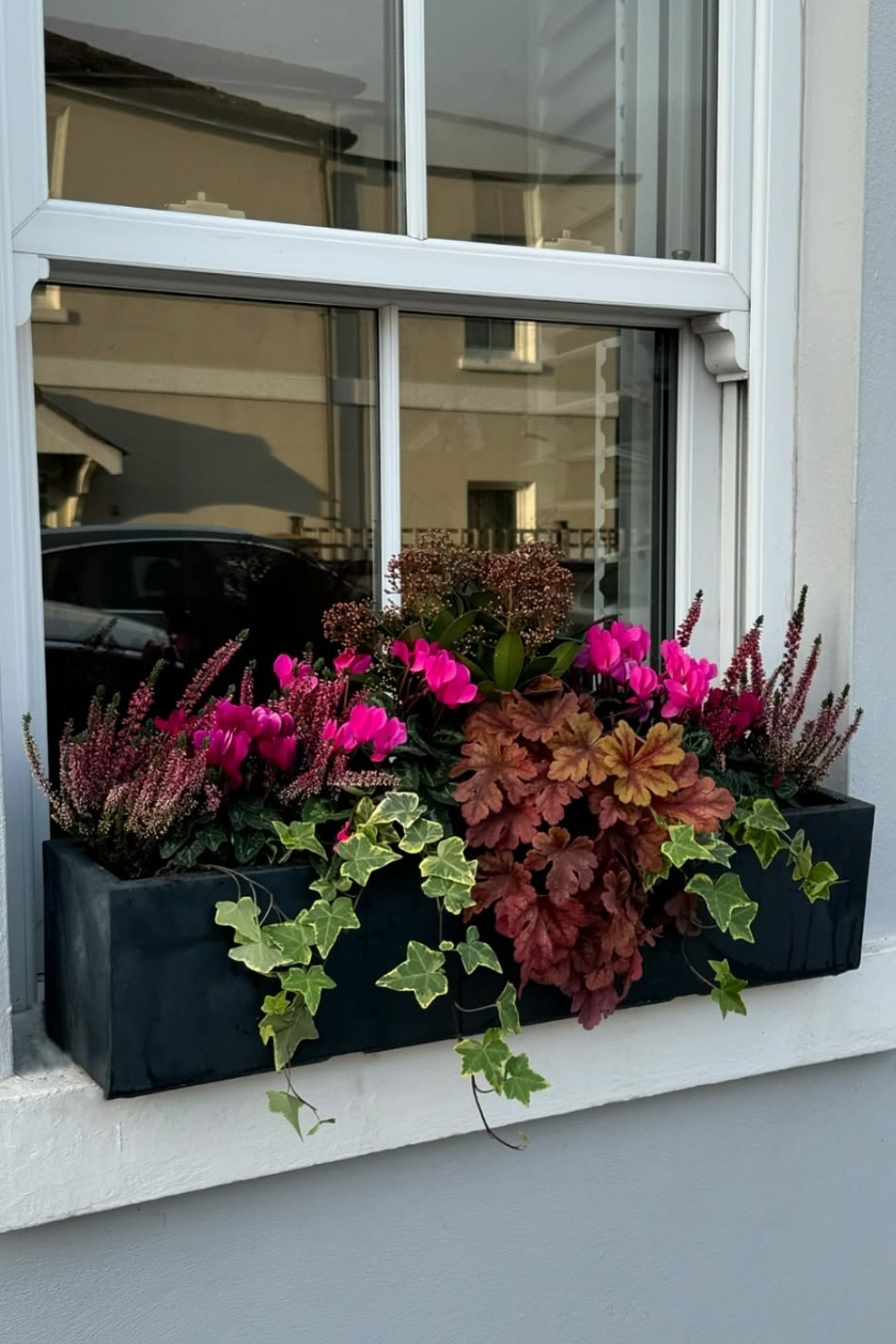

A fall recipe:
- Thriller: a dark heuchera or a small ornamental grass
- Filler: garden mums in rust, wine or yellow
- Spiller: trailing ivy
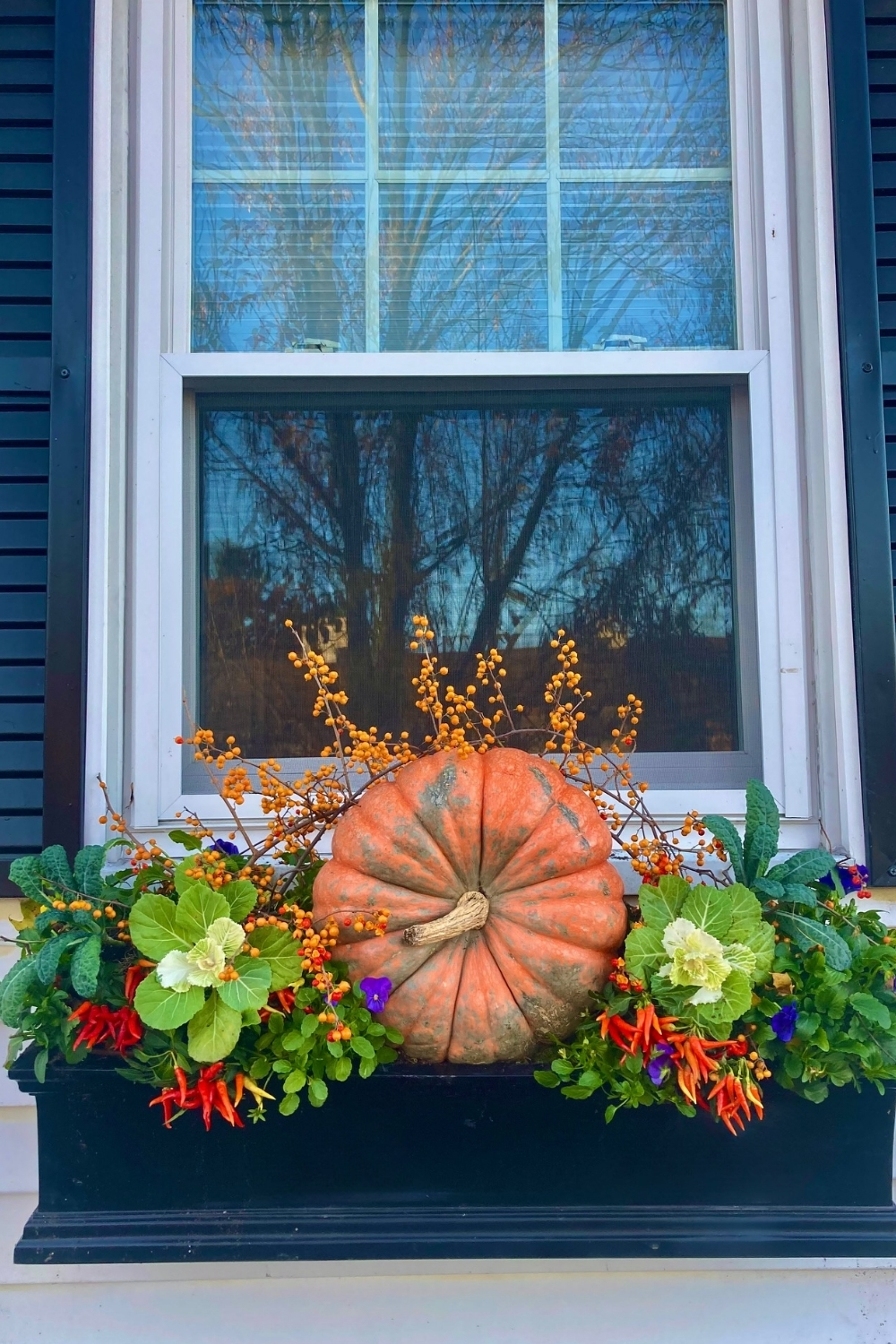
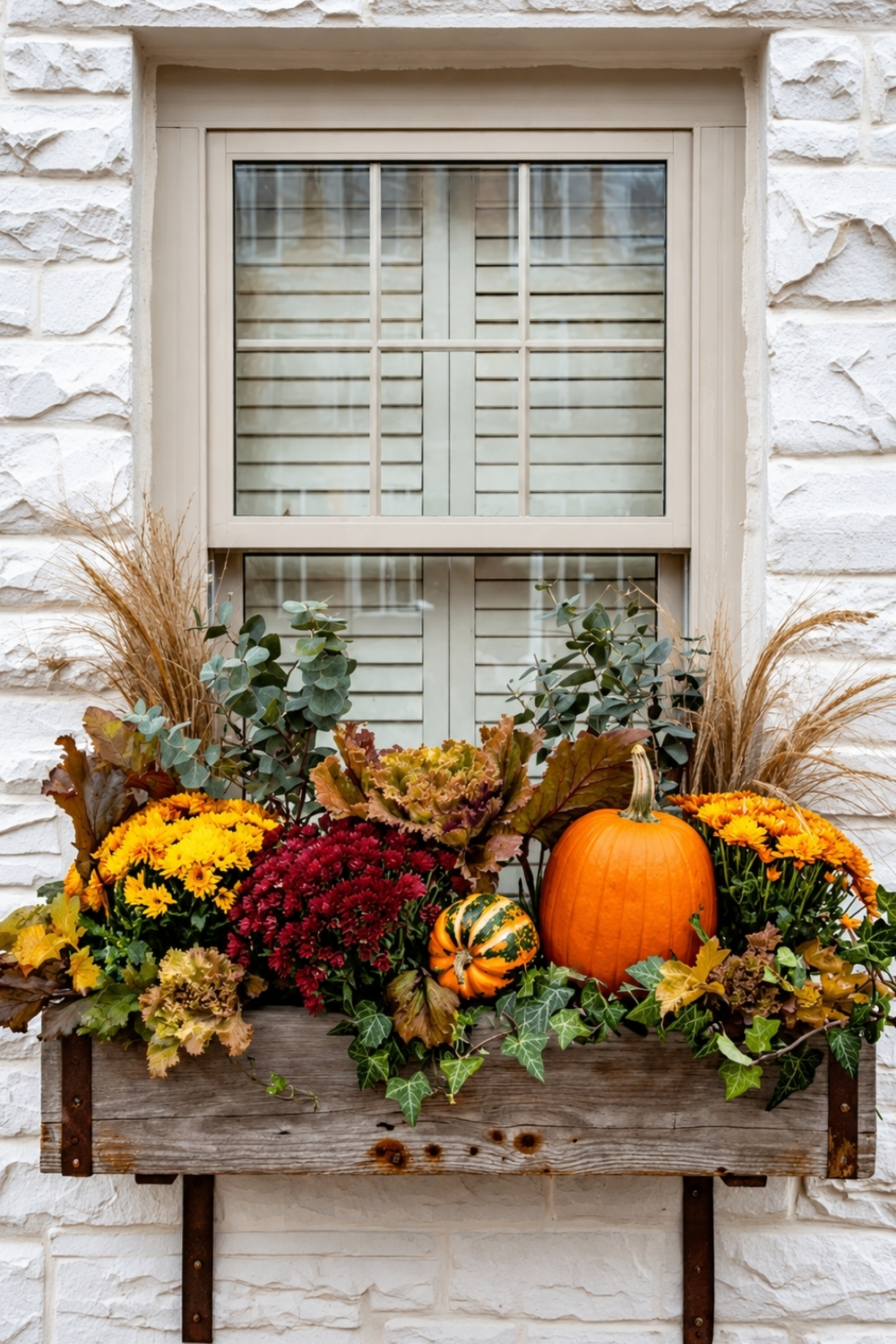
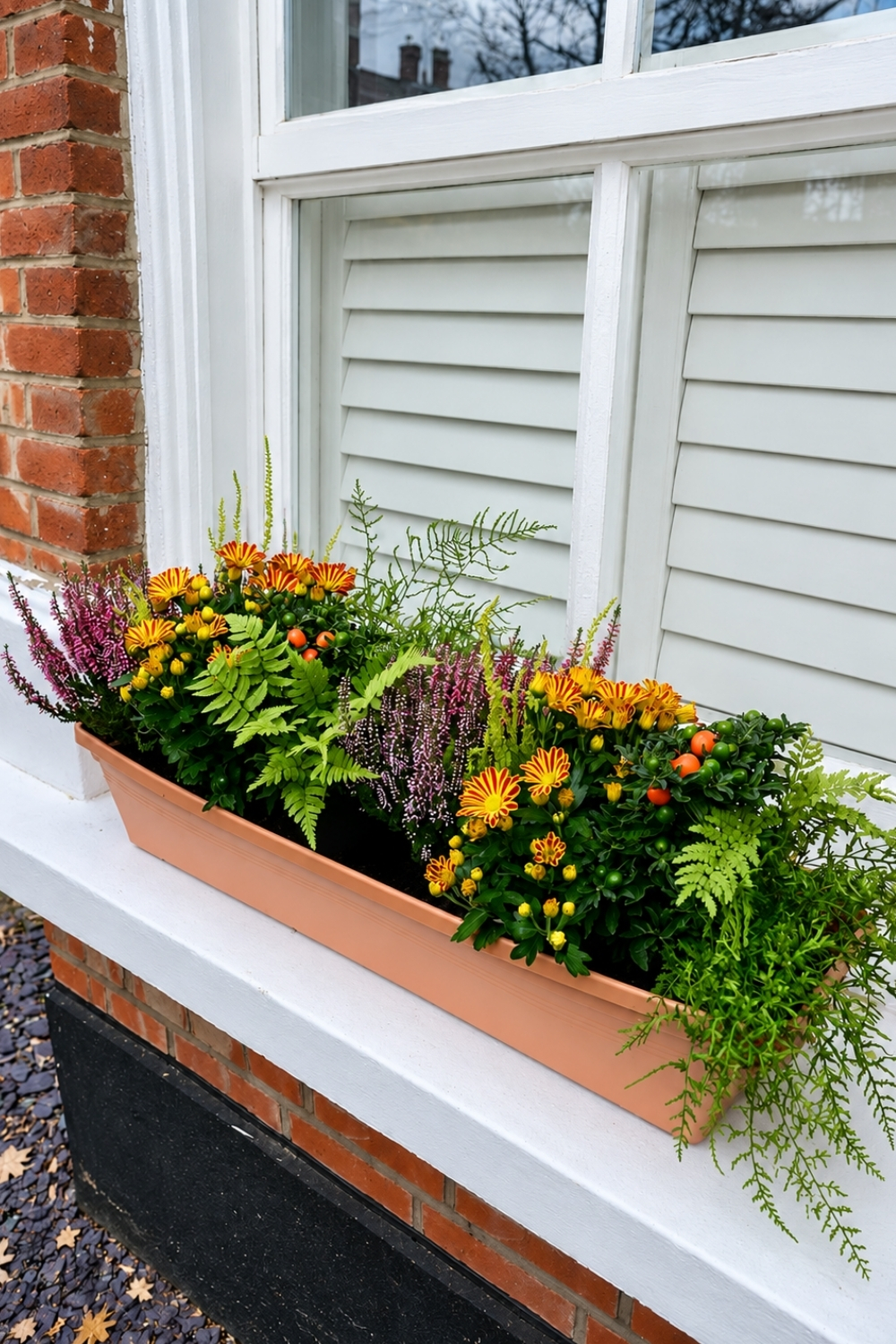
A single pumpkin set into the middle of a box of peppers and kale is an easy centerpiece (and a small nod to Halloween garden decor), and a weathered wooden box filled with mums, pumpkins and dried grasses carries straight through to Thanksgiving. We love to see it.
Matching the box to the house
A window box is part of the house, so its color matters. A box painted the same color as the window trim or shutters looks built in. A black or dark green box makes bright flowers stand out against white or pale siding. Natural terracotta or weathered wood suits brick and older houses. Whatever the color, pick one and use it on every box on the same side of the house; mismatched boxes look like a collection rather than a design.
Size follows the window. A window box that runs the full width of the window, or a couple of inches wider including the trim, looks in proportion; a short box centered under a wide window looks like an afterthought. For height, aim for a box about a quarter as tall as the window, so the plants rather than the box fill the view.
The same thinking about color and scale works indoors, too, and this kitchen windowsill makeover shows the inside version of a window full of plants.
Keeping boxes full all season
Deadheading, which simply means snipping off faded flowers, keeps petunias, salvia and most annuals blooming instead of setting seed. Calibrachoa and many newer petunias are bred to drop their old blooms on their own, so they need it less.
Feed window boxes every week or two through summer, since frequent watering washes nutrients out of a small box fast. A slow-release fertilizer, the granules mixed into the potting soil that feed plants a little at a time for several months, helps cover the gaps.
Don’t be shy about swapping a tired plant mid-season. If one petunia has gone leggy by August, pull it and slip in a fresh one from the garden center. A leggy plant by late summer happens in every window box (that’s so real), and a single replacement makes the whole box look new again.
Deep box, good potting mix, three plants repeated along it, water every day in summer, and a fresh start each fall.