Every garden seems to have one corner that nobody knows what to do with: a strip of bare soil by the fence, a spot beside the shed, an awkward angle behind the patio. A small water feature can turn that forgotten corner into the most peaceful place in the yard. The sound of trickling water masks traffic and neighbors, birds come to drink and bathe, and the whole space suddenly feels calmer. Best of all, you don’t need a big budget or a backhoe to build one.

Photo by SassyGarden
The before and after above shows exactly that kind of corner. First, a patch of bare soil and thin grass sits where a wooden fence meets the side of a house. Then, a dark ceramic urn fountain bubbles inside a low ring of stacked stone, surrounded by a small Japanese maple, hydrangeas and ferns, with a small solar panel on a stake beside it. It’s the same corner, now the spot everyone heads for with a cup of coffee.
Which water feature suits your corner?
The right DIY water feature depends on how much space, time and upkeep you want to give it. Here is a quick comparison:
| Water feature | Space | Effort to build | Upkeep |
|---|---|---|---|
| Container pond | A patio corner | An afternoon | Top up water, trim plants |
| Urn or bowl fountain | Small corner | A day | Clean pump, top up |
| Pondless waterfall | Medium corner | A weekend or two | Low; no open water to clean |
| Small wildlife pond | Larger corner | Several weekends | Moderate; seasonal cleanup |
If you’ve never built one before, start small. A container pond or solar fountain teaches you how water behaves in your garden before you commit to digging a hole.
Choose the spot first
Before you pick a design, sit in the places you use most, the patio, a bench or the kitchen window, and look for a corner you can both see and hear from there. Sound carries surprisingly far, so even a small trickle close to a seat does more than a big splash at the far end of the yard.
Then check the practical details. Most water plants need at least half a day of sun, but full afternoon sun in a hot climate warms small volumes of water quickly and feeds algae, so morning sun with afternoon shade is ideal. Avoid spots directly under deciduous trees, or you’ll spend every autumn fishing out leaves. Choose level ground, or be ready to level it, and check how far the nearest outdoor outlet is if you don’t want to rely on solar. Finally, avoid low spots where runoff collects after heavy rain; my post on backyard drainage helps if your yard tends to flood.
A container pond in an afternoon
A container pond is the easiest way into water gardening. All you need is a large, watertight pot or tub, some stones, a few water plants and, if you like, a small pump.

Photo by SassyGarden
The four stages above build a container pond on a paved patio: first a large, empty dark bowl among potted plants, then river stones placed in the bottom as water pours in, then a small solar fountain added with water lilies and upright grassy plants, and finally the finished pot surrounded by flowers and a lantern. Choose a container at least 18–24 inches across so the water stays cooler and more stable, and seal any drainage hole with a plug and waterproof silicone.
Put the pond where it gets at least five or six hours of sun if you want water lilies to flower, and set plants at the right depth on bricks or upturned pots. Savvy Gardening’s container water garden ideas has lots of inspiration and planting combinations.
Bubbling urns and solar fountains
If you want the sound of water without the care of a pond, a fountain is the answer. Bubbling urns, tiered fountains and self-contained bowl fountains recirculate the same water through a hidden basin and pump.

This weathered stone fountain, with a pedestal and a wide shallow basin set on a lawn in front of pink and white climbing roses, is a classic focal point for a formal or cottage garden. A garden fountain like this works best where it can be seen from the house or a seating area.
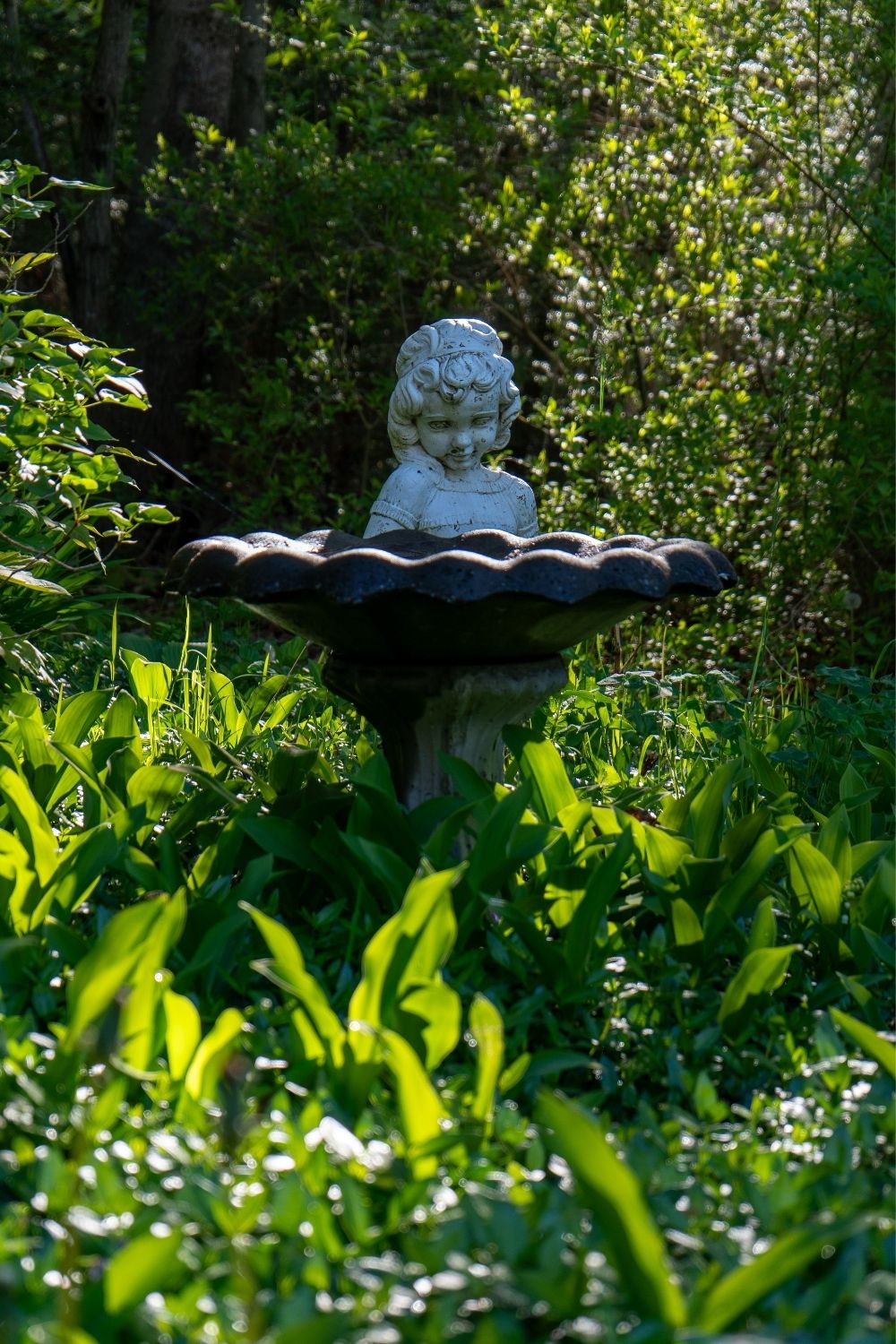
Photo by Matt Barnard on Pexels
A smaller option, shown above, is a birdbath-style basin with a cherub statue on top, tucked into a leafy, shady corner. Even without moving water, a shallow basin like this brings birds into the garden; add a small solar fountain pump, and the sound makes it even more appealing to them.
Solar fountains are the easiest to set up: no wires, no outlet, and you can move them freely. They run only in sun, though, unless they have a battery. For a fountain that runs day and night, you’ll need an outdoor outlet with a GFCI (ground fault) protection, and any new outdoor wiring should be installed by a licensed electrician. Solar lights around the fountain make it glow in the evening; see my post on solar garden lighting ideas.
A pondless waterfall
A pondless waterfall gives you the look and sound of a stream without any open water. Water trickles over rocks and disappears into a gravel-covered underground basin, where a pump sends it back to the top.
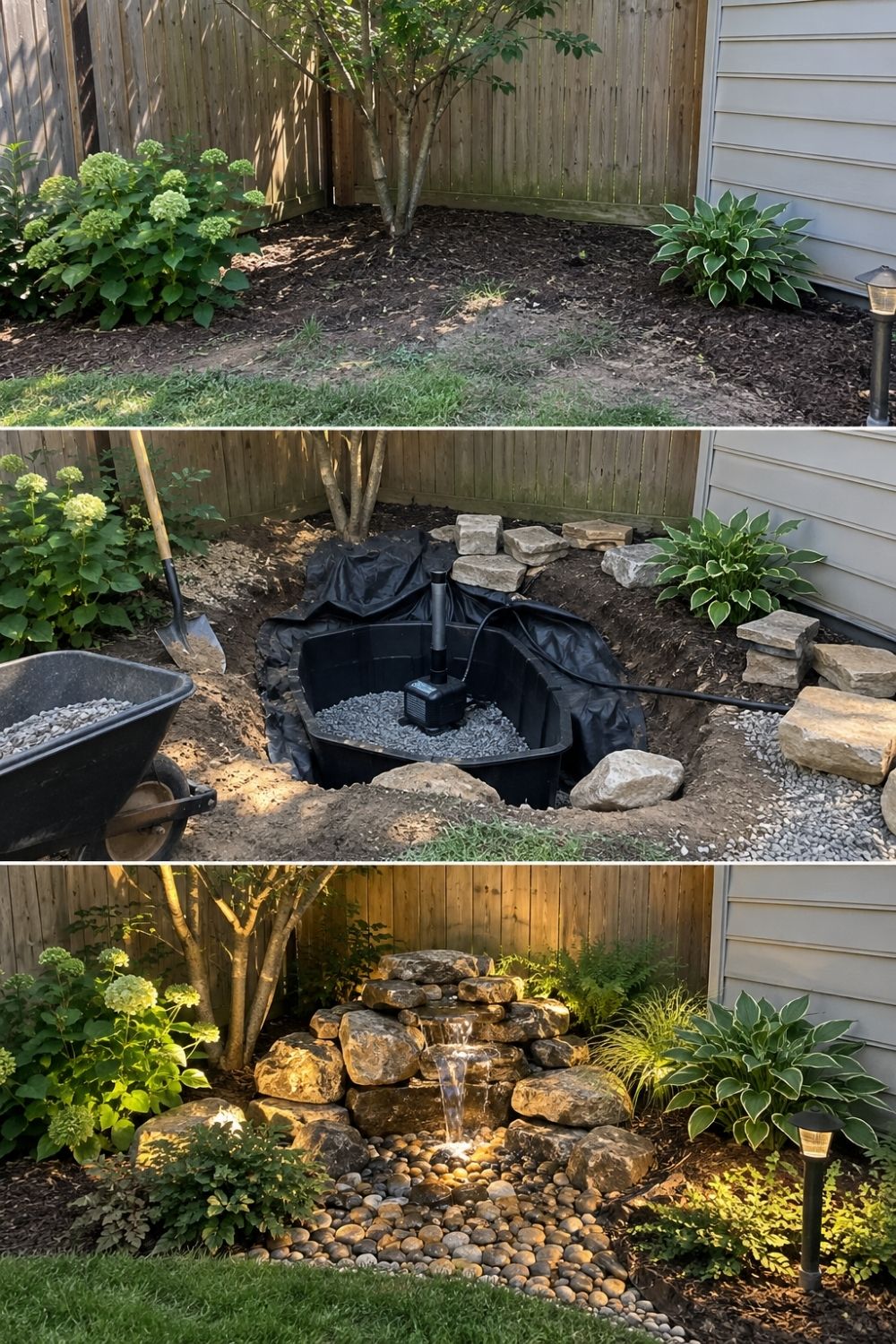
Photo by SassyGarden
The three stages above show a pondless waterfall in a corner by a fence: first an empty bed with hydrangeas and hostas, then the dug-out basin with a black liner, a pump vault, gravel and a pile of flat stones, and finally the finished feature with water spilling over stacked rocks into a bed of rounded pebbles, lit by small lights at dusk. Choose a pump rated for the height of your waterfall; the packaging usually lists the flow at each lift height.
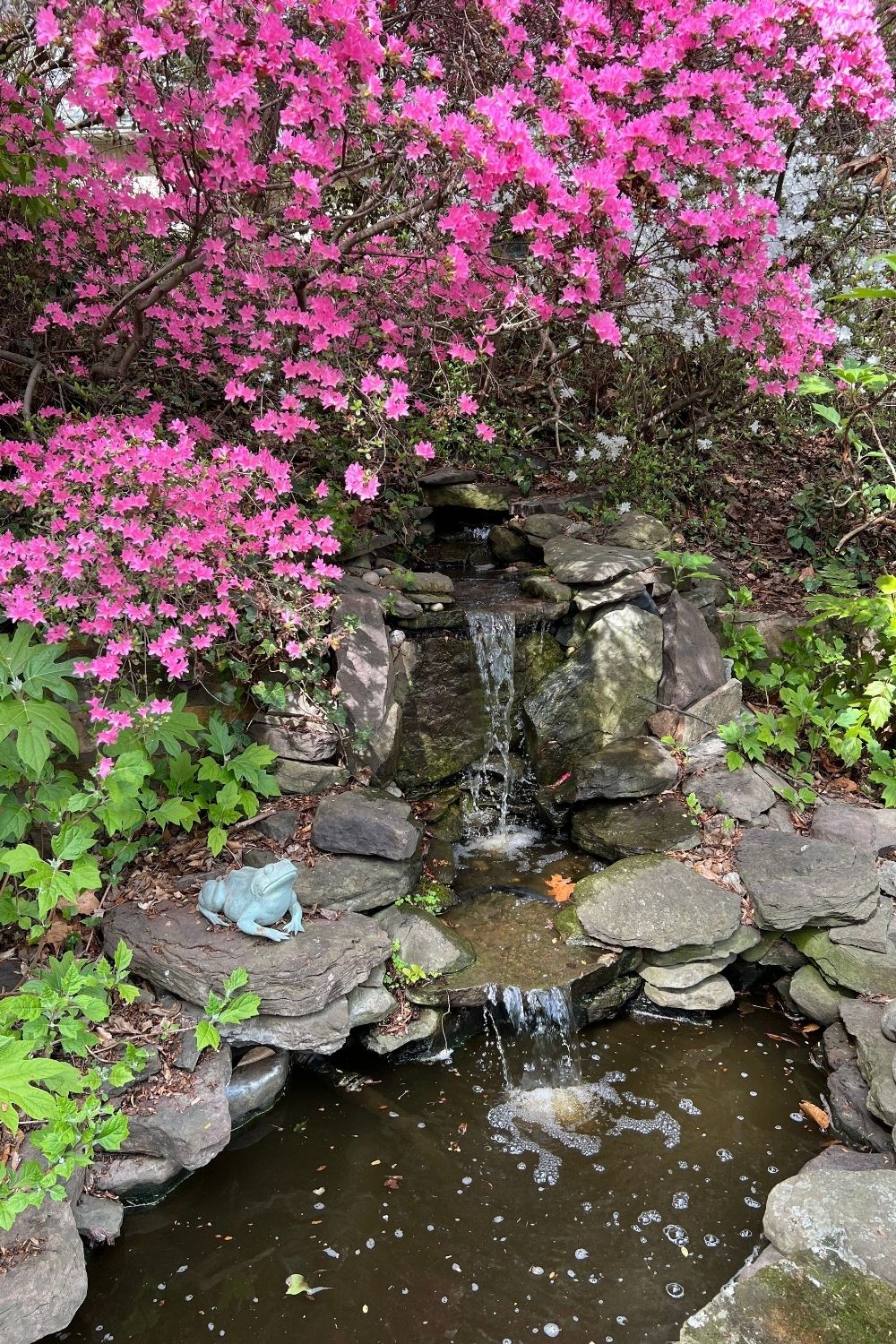
Photo by Yelena HeyTam on Pexels
Once it’s settled in, a waterfall can look as natural as this one, with water tumbling down mossy rocks into a small pool below bright pink azaleas. With no standing water, a pondless water feature is safer for young children, uses less water and needs less cleaning than a pond. It’s also a good way to use leftover river rock; my post on river rock landscaping has more ideas for it.
A small wildlife pond
If you have a little more space, a small pond brings a whole new world into the garden: dragonflies, frogs, birds and pollinators all visit within weeks.
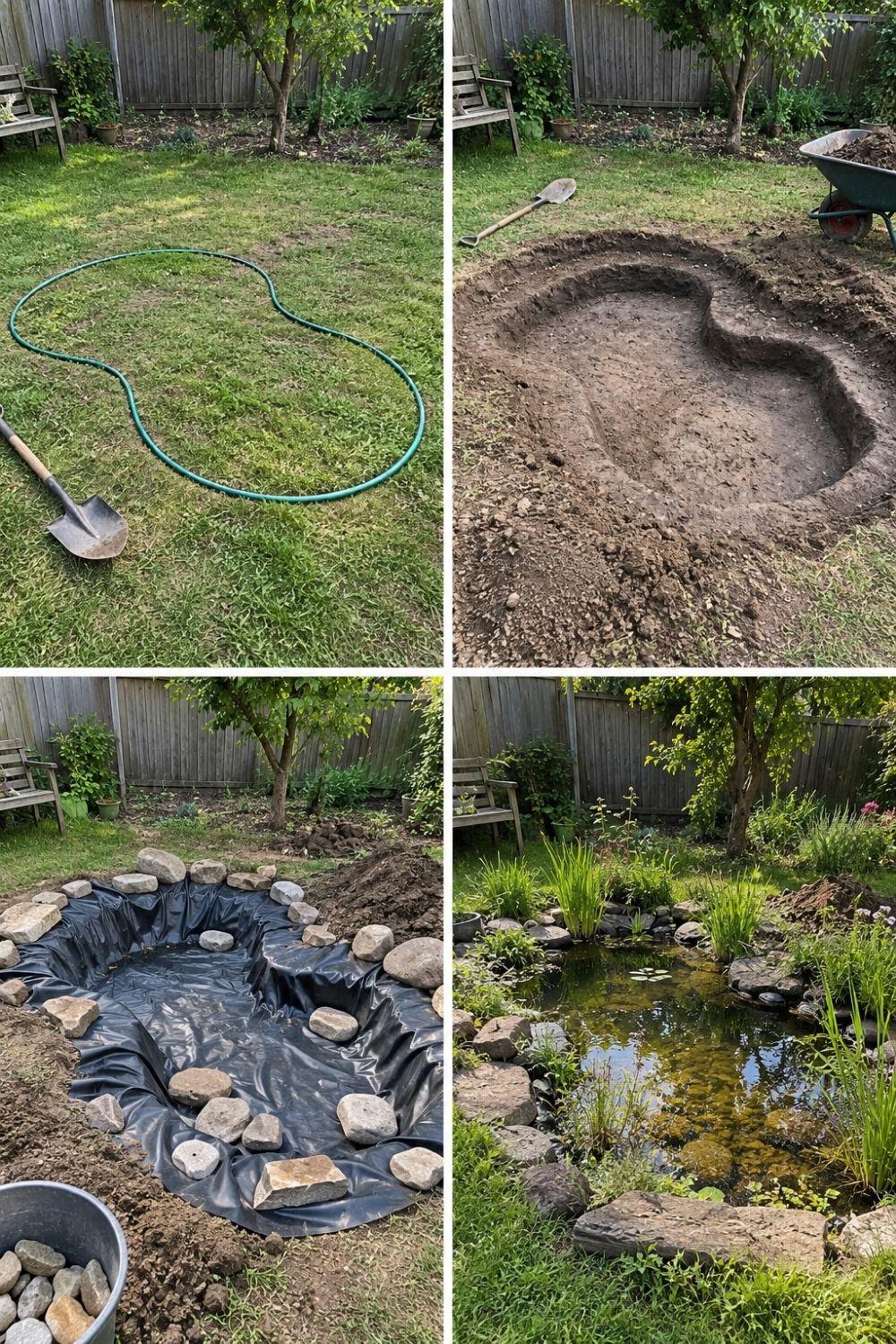
Photo by SassyGarden
The four stages above show a kidney-shaped wildlife pond being built in a lawn: a garden hose laid out to mark the shape, the hole dug with shelves at different depths, a black liner laid in and edged with stones, and finally the finished pond full of water and edged with grasses and plants. A few tips for this kind of pond:
- Include shelves at 8–12 inches deep for marginal plants, and a deepest area of at least 18–24 inches so the water stays cooler.
- Add a gently sloping “beach” of gravel at one edge so frogs, birds and hedgehogs can get in and out safely.
- Use a flexible liner such as EPDM rubber on top of an underlayment or old carpet to protect it from stones.
- Skip the fish. Fish eat frog spawn and insect larvae, so a wildlife pond is better without them.

This garden pond, edged with stacked flat stones and backed by tall yellow flowers and purple spiderwort, shows how a pond looks once planting fills in around it. Planting right up to the edge gives wildlife cover as they come and go. For more planting ideas that support insects and birds, see my post on pollinator gardens with native plants.
Plants for water features
A few plants make any water feature look natural and help keep the water clear by shading it and using up nutrients:
- Water lilies, in dwarf varieties for containers and tiny pools.
- Marginal plants like pickerelweed, blue flag iris, marsh marigold and dwarf cattail for shallow shelves.
- Oxygenating plants such as hornwort, which grow underwater and help keep algae in check.
- Edge plants like hostas, ferns, sedges and Japanese forest grass around the outside.
Avoid water hyacinth and water lettuce outdoors in warm regions; both are highly invasive and illegal to sell or grow in several states. Check your state’s list before buying floating plants.
Keeping water clear, and mosquitoes out
Moving water rarely breeds mosquitoes, so a pump or fountain helps a lot. In still water, frogs, dragonfly larvae and other wildlife eat mosquito larvae, and mosquito dunks with Bti (a natural bacterium) control them without harming fish, pets or birds. My post on keeping mosquitoes away from your patio covers more ways to reduce them.
For clear water, cover about half to two-thirds of the surface with plants, avoid overfeeding fish if you have them, and scoop out fallen leaves in autumn. Top up with rainwater where possible, since tap water can encourage algae.
Safety
Open water and children need care: a child can drown in just a couple of inches of water. If you have young children or grandchildren visiting, a pondless waterfall, a bubbling urn or a sturdy grid just under the water’s surface is much safer than an open pond. Check your local rules too, since some areas require fences around ponds deeper than a certain depth.
Start with the sound you want: a gentle bubble from an urn, a trickle over stones or the stillness of a small pond. Match it to the corner you have, and even a small DIY water feature will make that forgotten spot the most relaxing part of the garden.