Why does a solar fountain stop the moment a cloud drifts over the sun? Because most of them have no battery: the panel powers the pump directly, so no sun means no spray. That one fact decides almost everything about solar water fountains outdoor DIY projects, from where the bowl goes to which pump is worth buying. Get the sun right and the rest is a pot, some water and a floating disc.
Find a spot with six hours of direct sun
A solar fountain needs direct sun on its panel, not bright shade and not dappled light under a tree. Six hours a day is a good minimum. Watch the spot for a day first: a fence or the corner of the house can shade it for hours without anyone noticing.
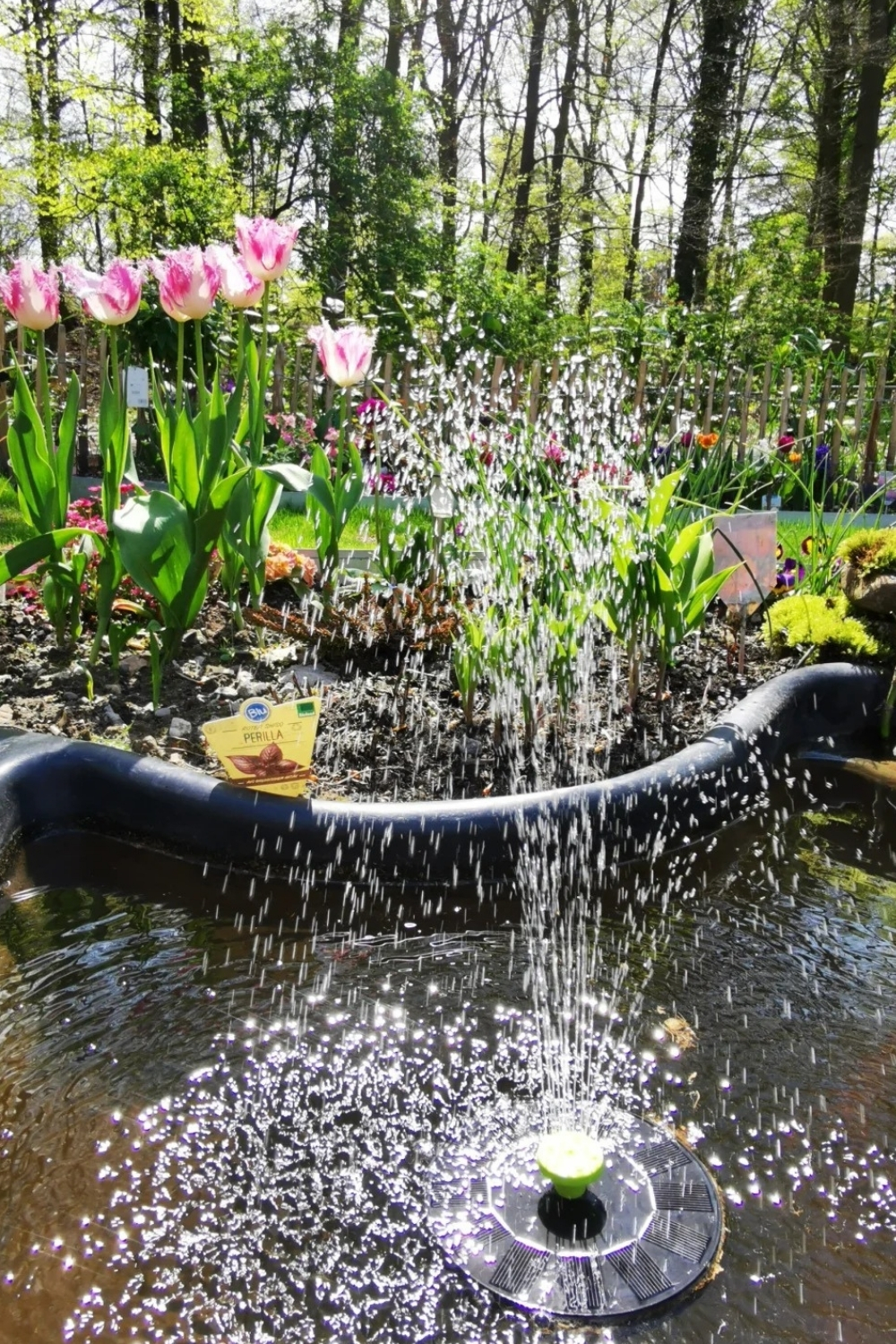
The bowl itself doesn’t have to sit in full sun if the pump has a separate panel on a cable. That setup lets the water stay in a shady corner, where it evaporates more slowly and grows less algae, while the panel sits on a stake a few feet away in the sun. It’s also the easiest way to put a solar water fountain on a covered porch or under a pergola. Panels for solar garden lighting follow the same rule about sun hours.
Choose the pump: floating disc, separate panel or battery
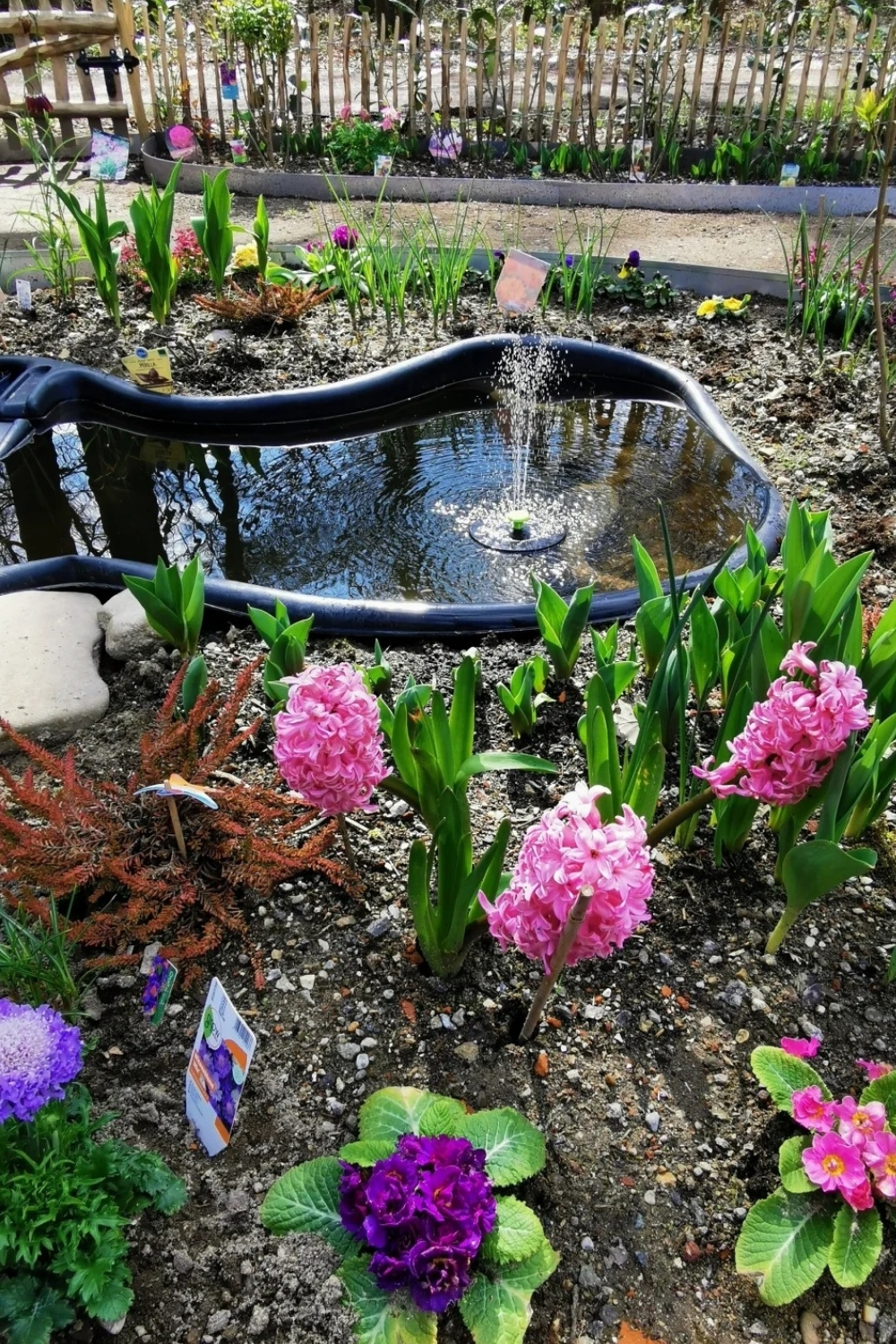
The floating solar fountain disc is the cheapest and simplest. Panel and pump are built into one round unit that floats on the surface, and the spray comes out of the center. It needs no installation at all, but it drifts around the bowl, often ends up against the rim, and stops whenever its own surface is shaded or dirty.
A pump with a separate panel sits on the bottom of the container, with a cable running up to the panel. It’s a little more work to hide the cable, though the panel can face the sun at the best angle and the pump stays put. For tiered fountains and urns, where the water has to rise through a tube, this is usually the only type that works.
Battery models charge during the day and keep running in the evening or on cloudy days. As this explainer on how solar fountain pumps work puts it, the panel charges a battery instead of powering the pump directly, which smooths out the stop-start behavior. They cost more, and the battery wears out after a few seasons. For beginners, I’d personally recommend starting with a floating disc in a small bowl and upgrading only if the stop-start spray starts to bother you.
Pick a solar fountain container that holds water
Almost anything that holds water can become a solar fountain planter, as long as it’s wide enough for the disc to float freely and deep enough that the pump never sucks air.
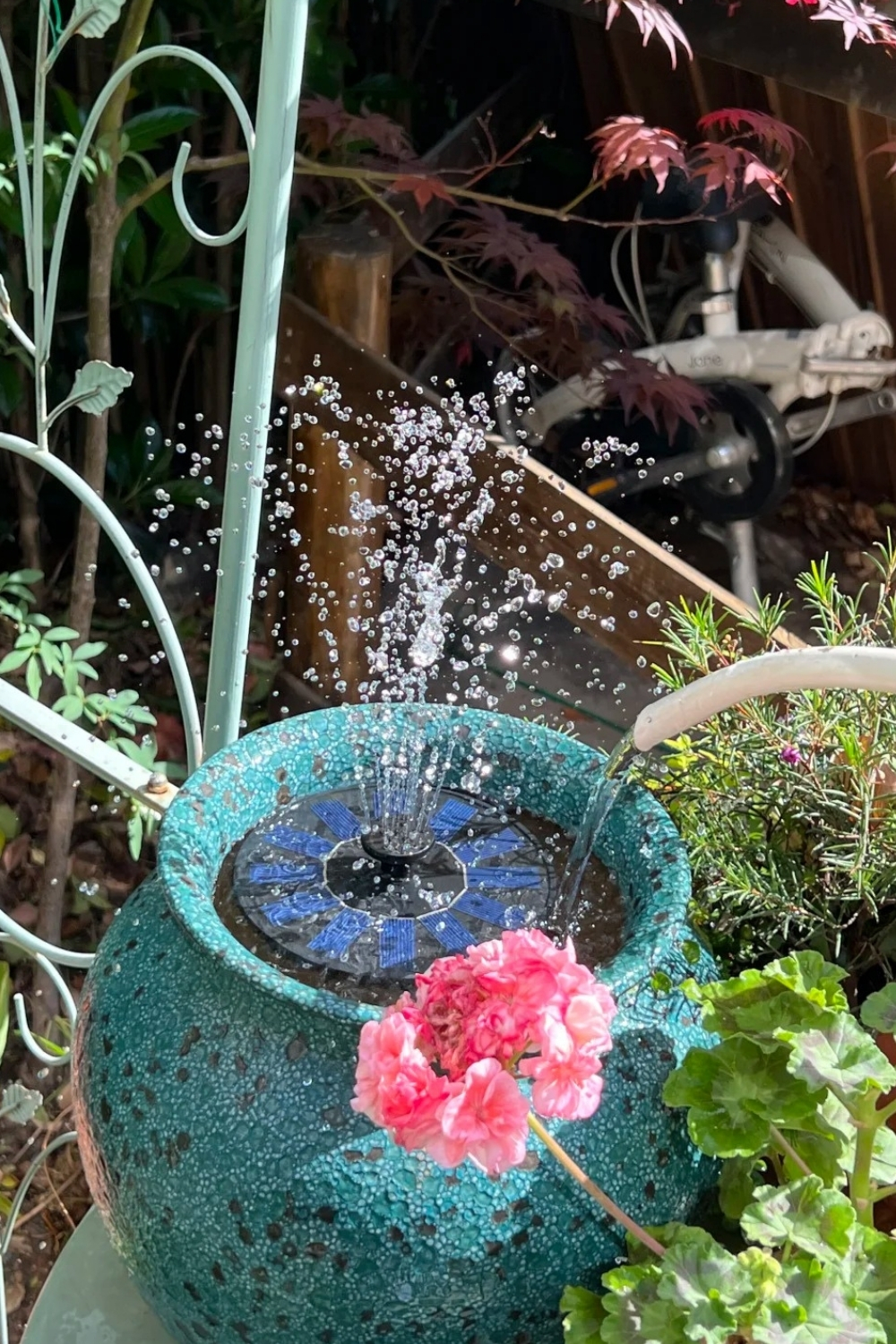
A glazed pot is the easy choice for a first solar fountain: the glaze holds water, the color carries the look, and a geranium or two planted around the base finishes the setting.
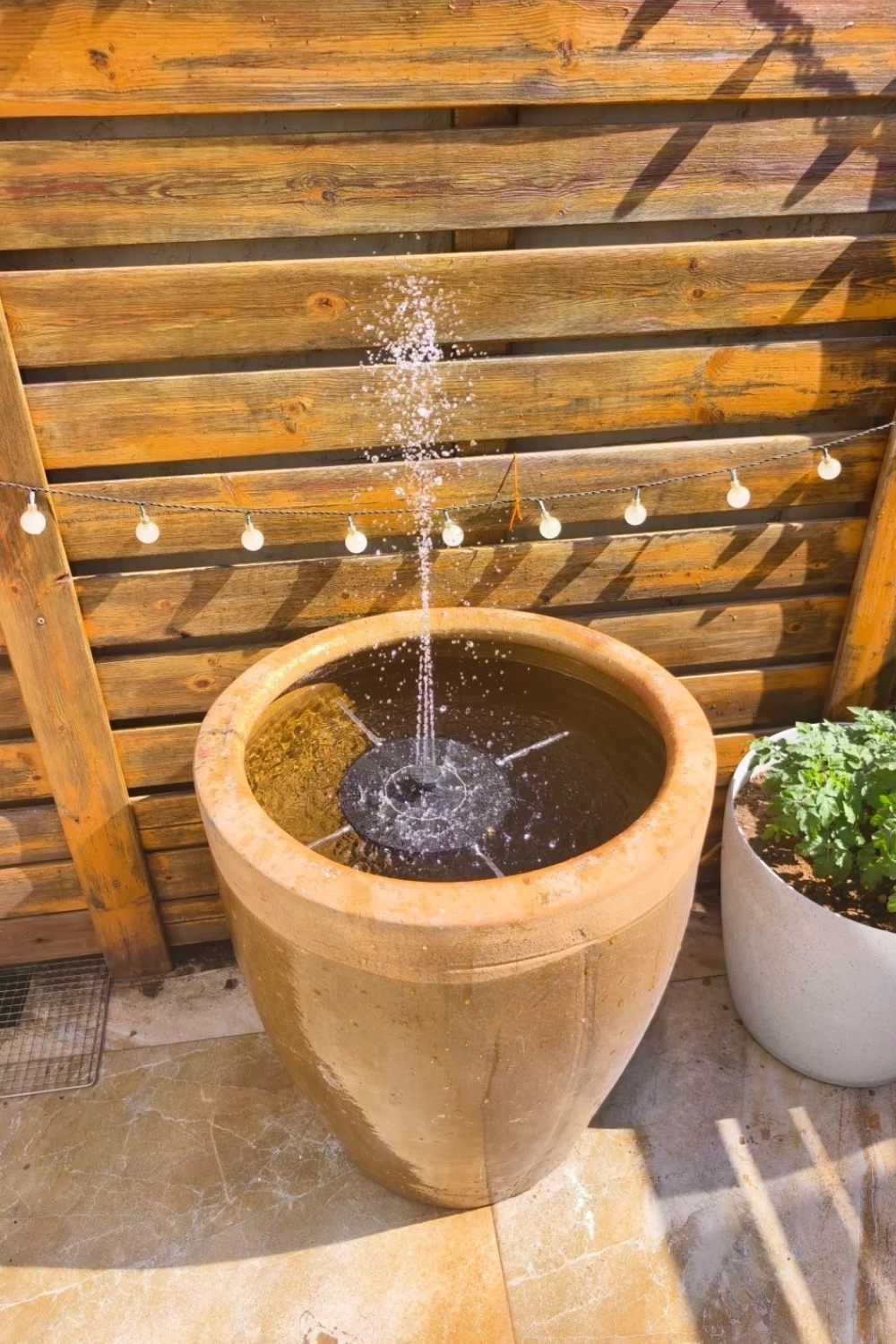
Terracotta looks warm on a deck, but unglazed clay sweats water through its walls. (A bigger basin with fish turns into a container pond, which is a different project.) Seal the inside with a pond-safe sealer, or drop a plastic liner pot inside, before filling it.
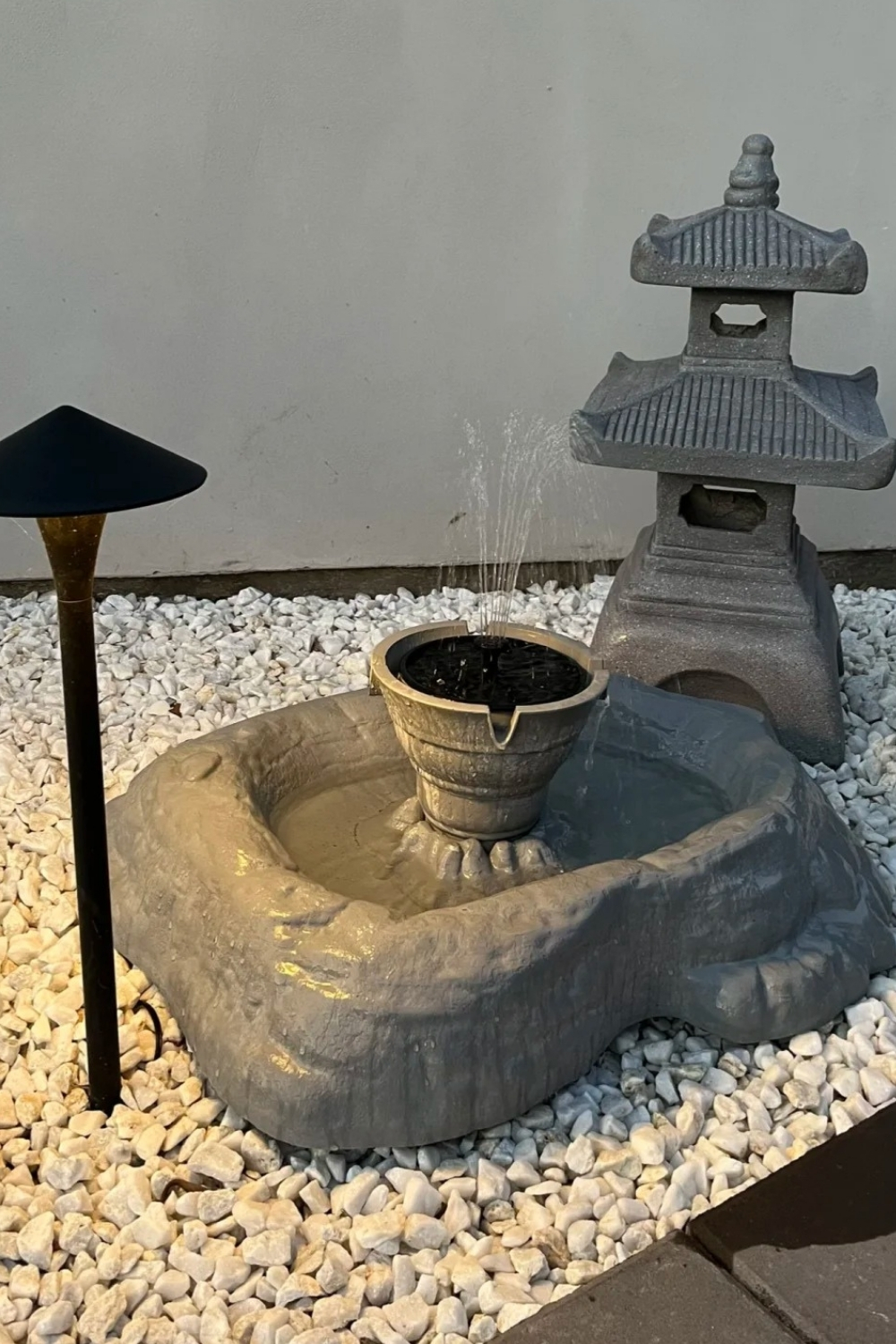
A stone or cast basin on a bed of white gravel, with a lantern beside it, gives a small corner of the yard a focal point, and a ring of moss around the base softens it further.
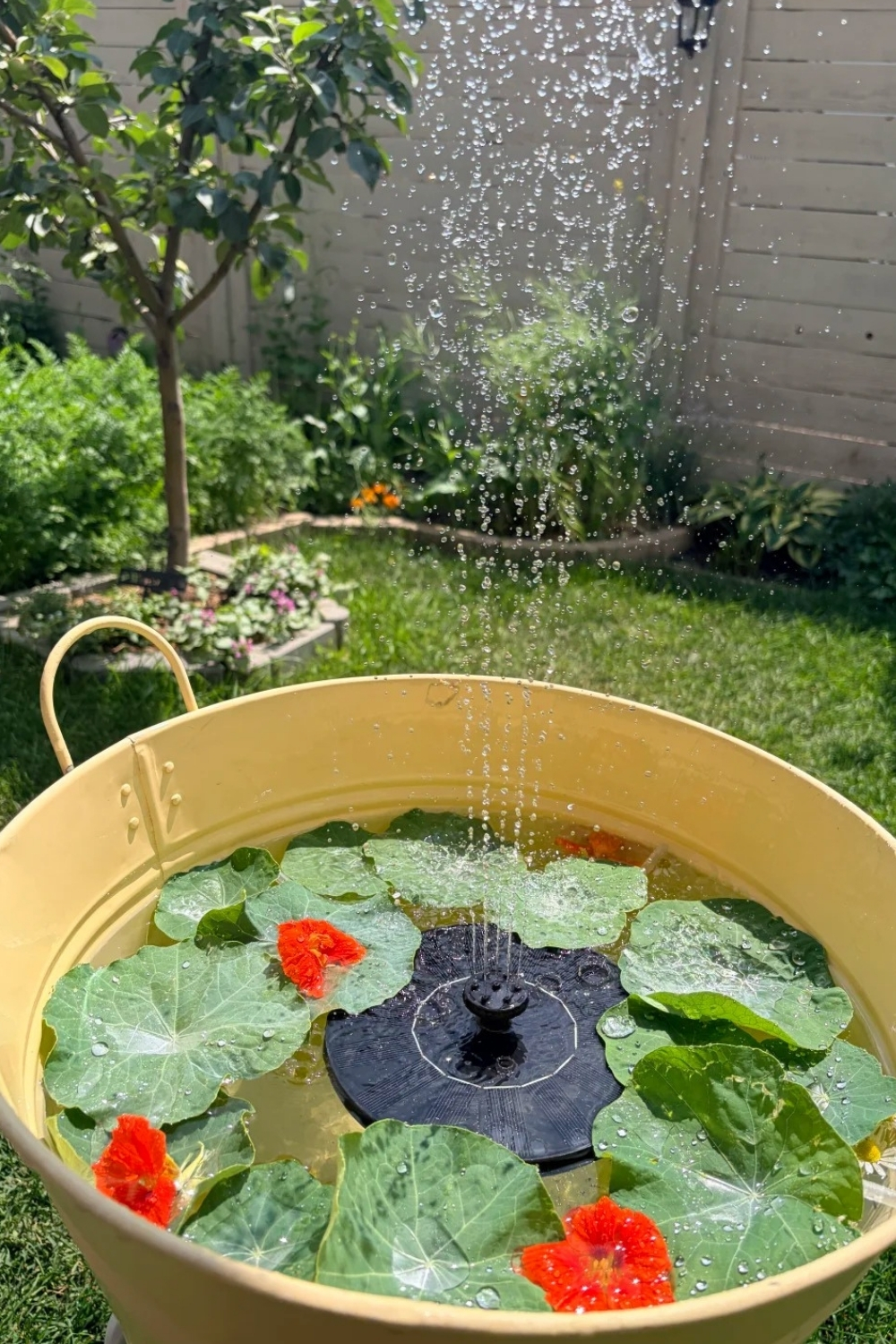
A galvanized tub is wide, shallow and cheap, which makes it one of the best DIY water feature cheap options for a floating solar fountain.
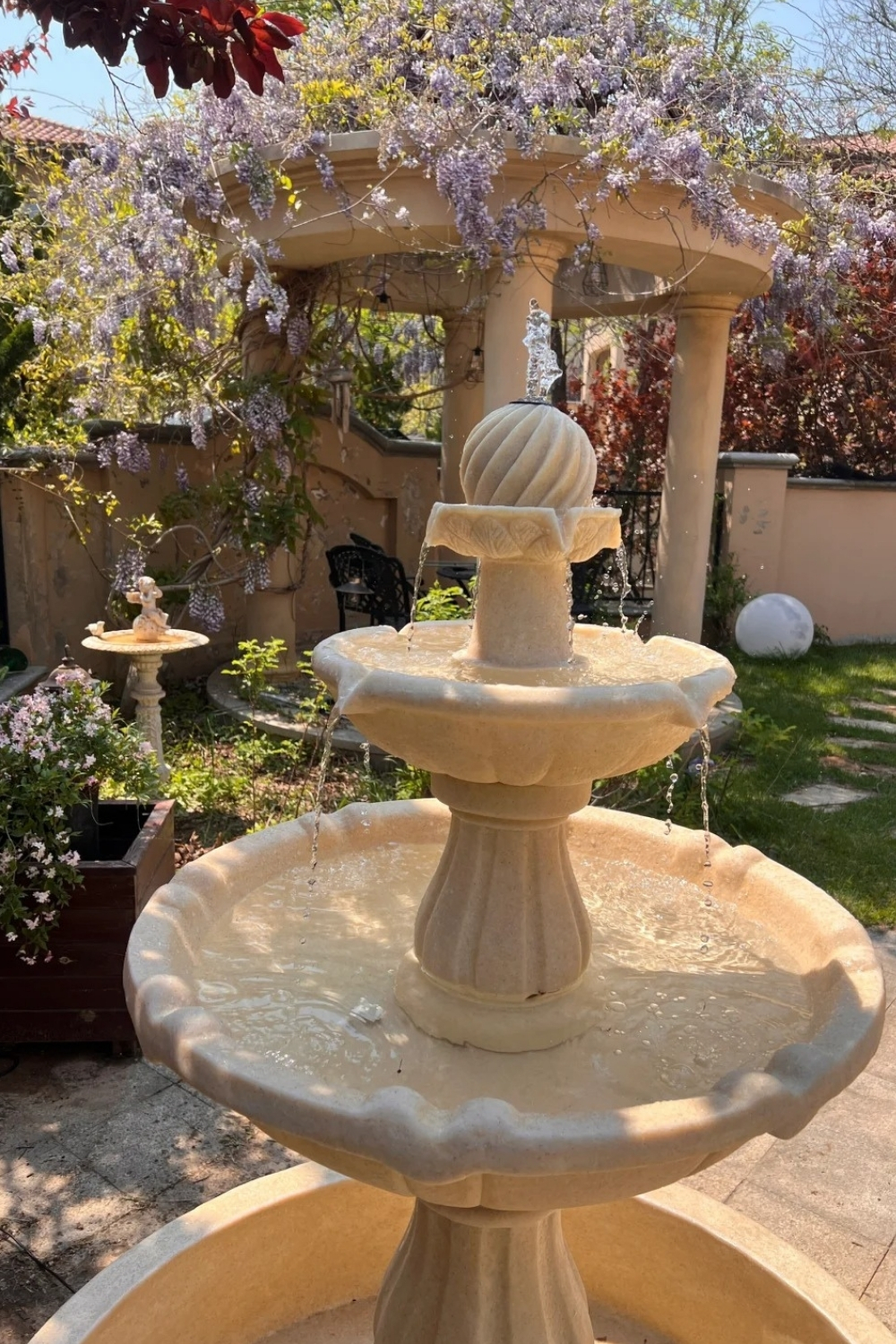
An old tiered fountain that lost its plug-in pump years ago can come back to life as a solar fountain with a submersible pump and a panel on a cable.
However, before filling any of them, there is something else we need to consider: weight. Water weighs a little over 8 pounds per gallon, so a 10-gallon tub holds more than 80 pounds before you count the container. Set it where it will stay, on level ground or a solid deck, since moving it full is not an option. While we’re here, check for slow leaks too: fill the container a day early and mark the water line before adding the pump.
Keep the spray inside the bowl
Most solar fountain pumps come with a handful of nozzles: a single jet, a fan, a bell, a ring of small sprays. The tall jet looks best in the photos and empties a small bowl the fastest, because every drop that lands outside the rim is gone. A rule that works well is to keep the spray no taller than the bowl is wide. On a windy patio, pick a low bell or bubbler instead of a high jet, and the water level will drop far more slowly.
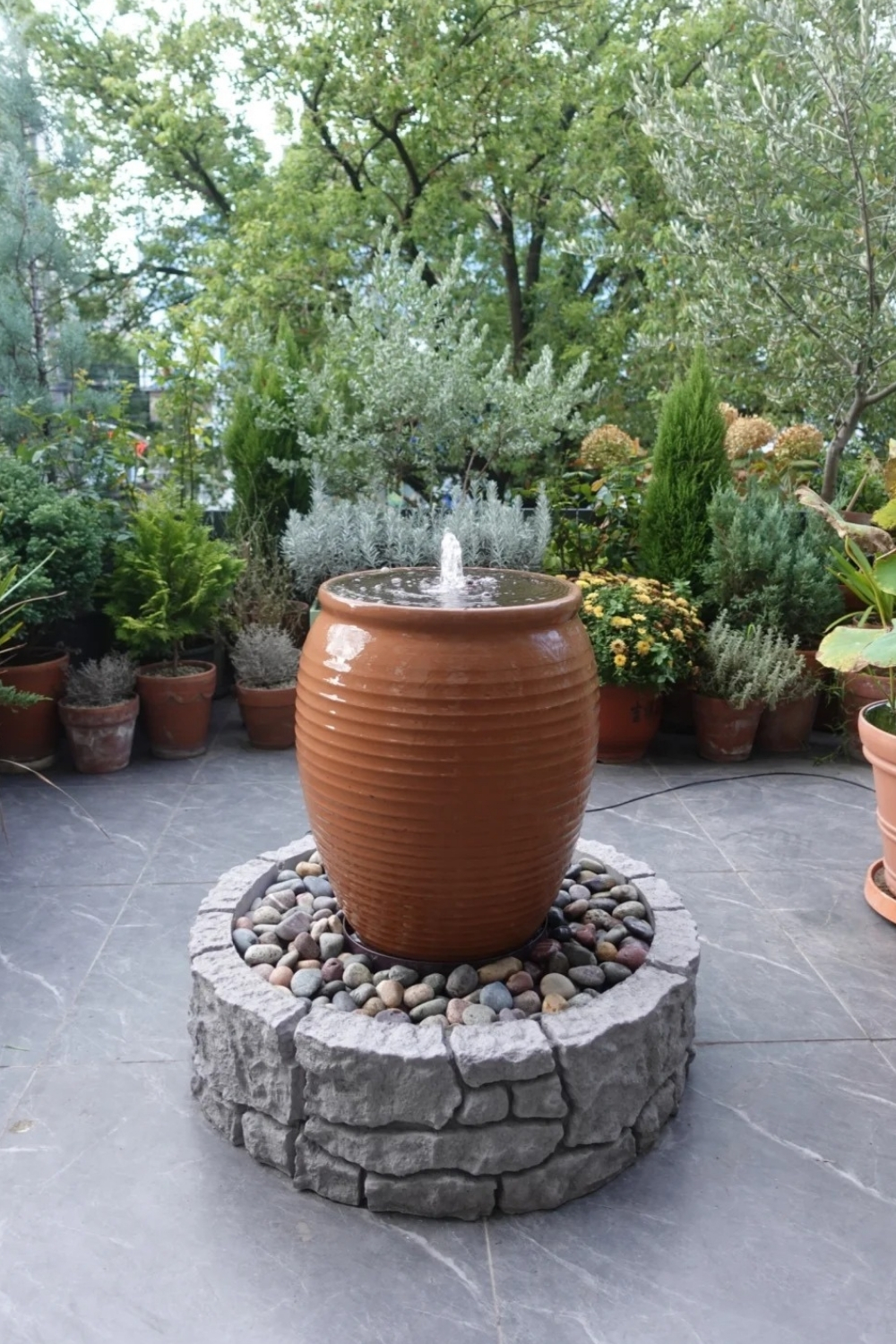
The same logic applies to a glazed urn on a ring of stone. A bubbler that wells up over the rim and runs back down the sides needs a hidden basin underneath to catch the water. Urns like this are often sold with plug-in pumps, but a submersible solar pump with a separate panel can run them too, as long as the panel gets its six hours.
Add plants and a landing spot for birds
A few plants turn a solar fountain into a small water garden. Nasturtium leaves floating on the surface look like tiny lily pads and come straight from the garden, and a potted marginal plant set on a brick at the rim adds height. Pickerelweed (Pontederia cordata) is a good native choice for that spot, hardy in zones 3–10.
Water lettuce (Pistia stratiotes) shows up in many fountain photos, but it’s an invasive floating plant: it’s illegal to sell or import in Texas and wildlife agencies in other states list it as invasive too, and in warm climates it chokes ponds and streams once it escapes. I’d skip it, even in a closed bowl.
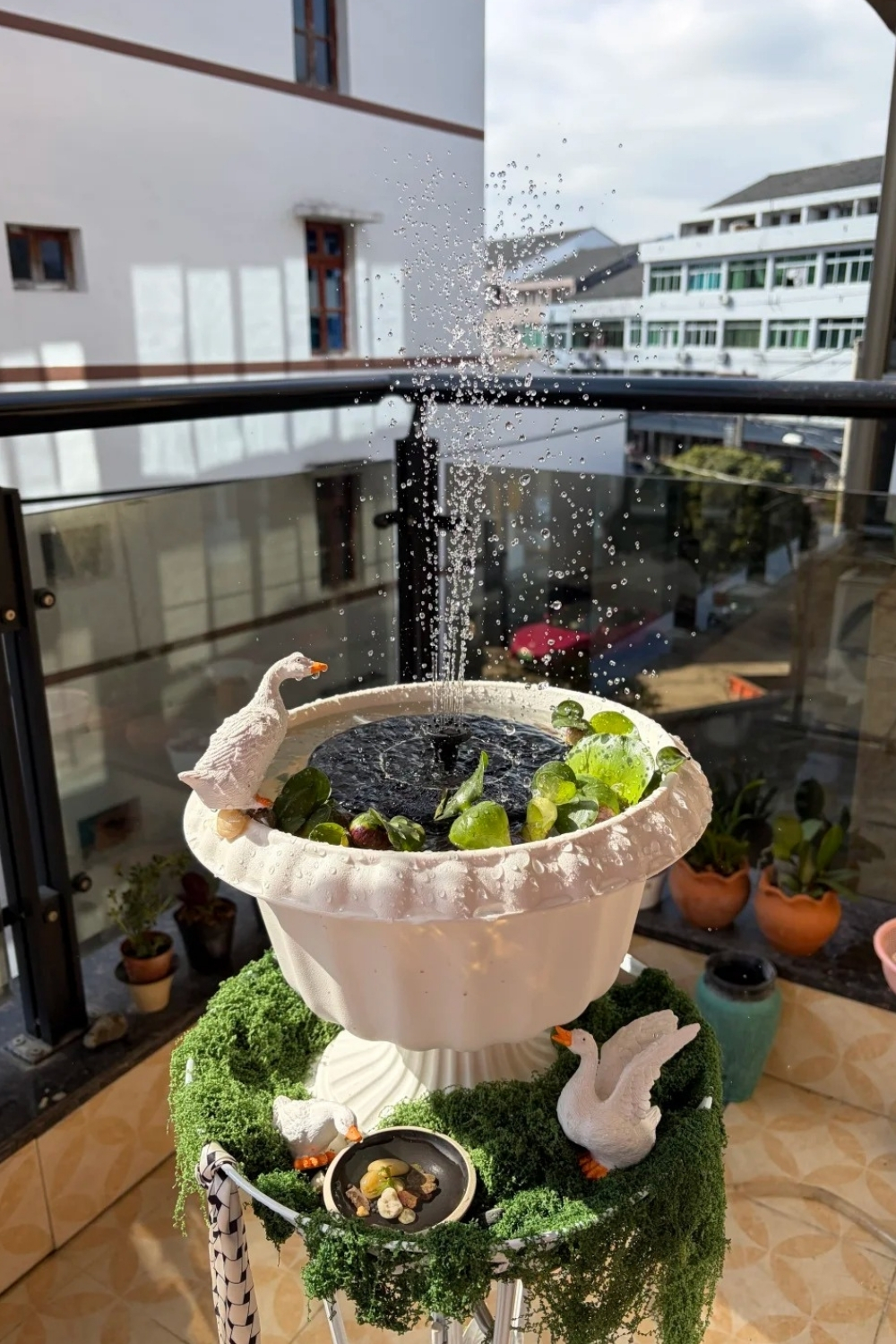
Birds use a solar fountain as a birdbath if they can stand in it. According to a master gardener column on birdbaths without mosquitoes, water should be no more than 2 inches deep, and moving water helps in two ways: birds find it more easily, and mosquitoes can’t lay their eggs in it. A flat stone set in a deeper bowl gives birds a shallow landing spot. For more bird bath ideas landscaping can support, these pollinator garden ideas with native plants pair water with the flowers that bring birds and insects in.
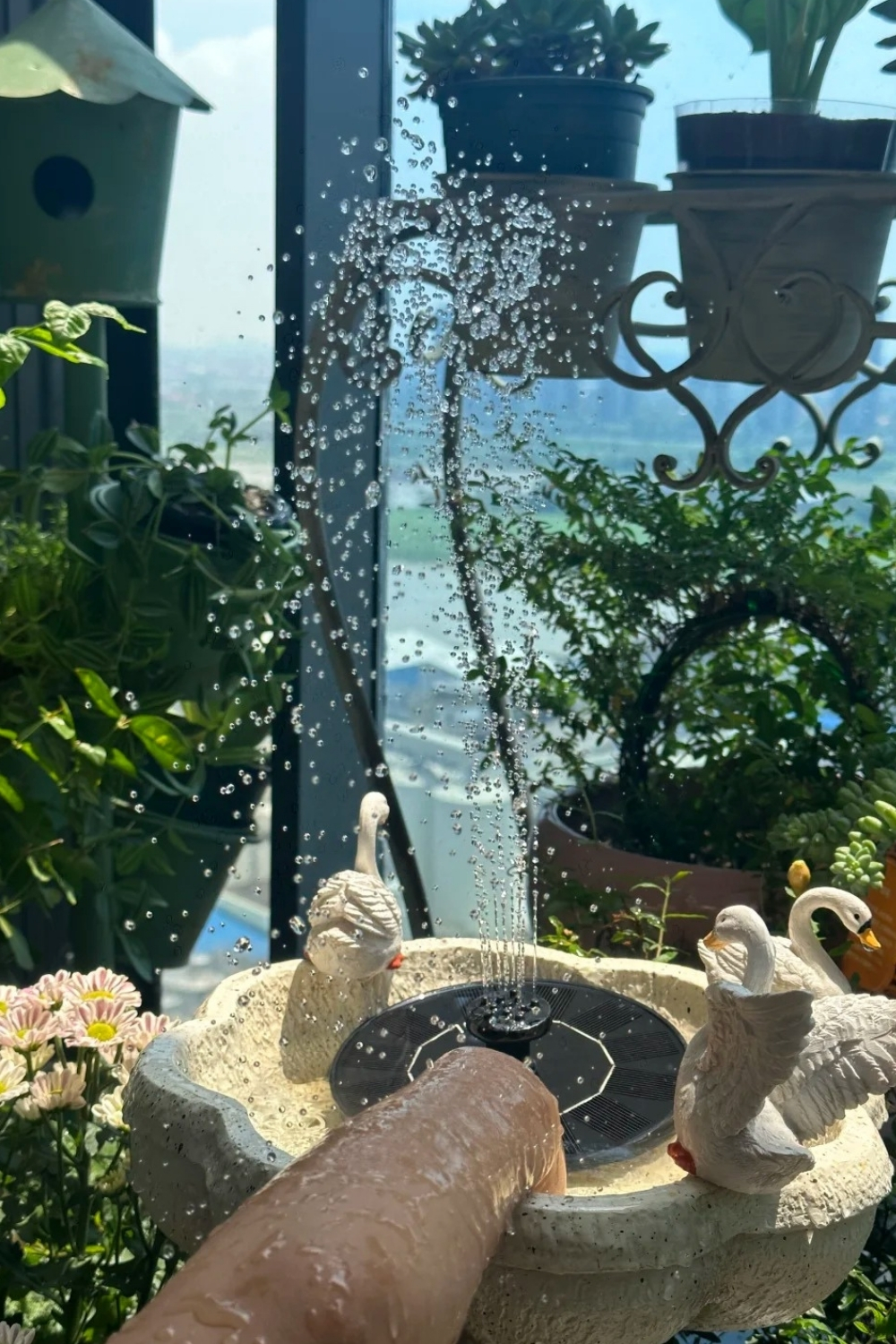
The mosquito point has a catch. A solar pump stops at night and on cloudy days, and mosquitoes need only about 7 to 10 days to go from egg to adult. A fountain that sits still for a rainy week can breed them, so empty and refill it after a long dull spell. A fresh start for the water, I guess you could say.
When a solar fountain sputters or stops
Spray stops and starts. A passing cloud, a shadow from a branch, or the disc drifting under the rim is the usual cause. Move the bowl, trim the branch, or switch to a pump with a separate panel.
Spray is weak even in full sun. The intake filter is probably clogged with algae, pollen or leaf bits. Pull the pump, rinse the foam filter under the tap, and push a toothpick through the nozzle.
Pump hums but nothing comes out. The water level has dropped too low and the pump is sucking air. Top it up. Most small pumps don’t like running dry, and for whatever reason this is the problem that kills them fastest.
Nothing at all. Wipe the panel. A film of dust, pollen or bird droppings cuts power more than it seems to. It’s worth investigating the cause rather than immediately buying a new pump: more often than not, the fix is a cloth or a rinse.
Topping up, cleaning and bringing it in for winter
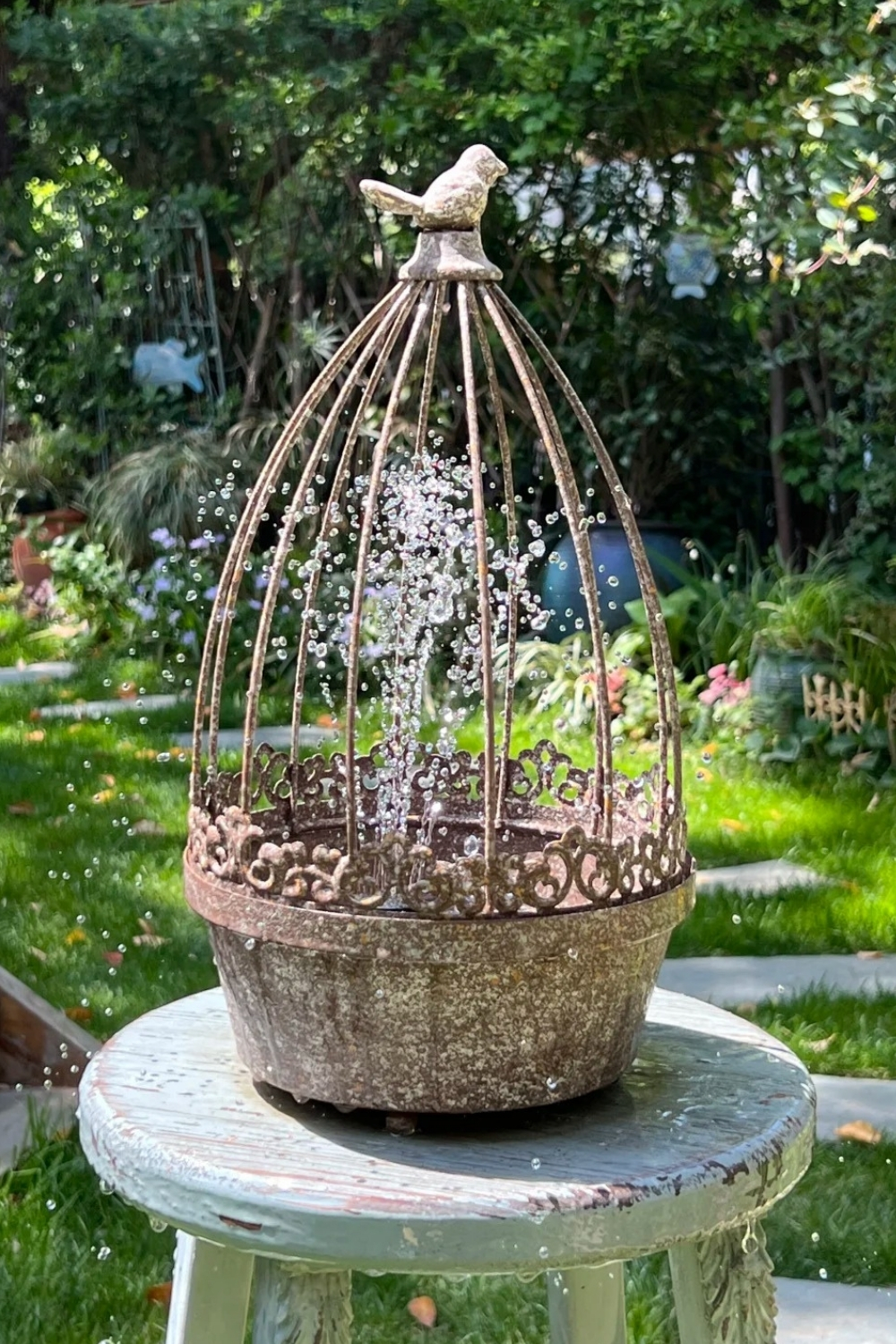
In summer heat, a small solar water fountain can lose a surprising amount of water to evaporation and spray, so check the level every day or two and top it up with a watering can. Rinse the pump filter about once a week, and scrub out green algae from the bowl when it builds up. Before the first frost, empty the container, bring the pump and panel indoors, and store terracotta and glazed pots dry and upside down, since water that freezes in their walls cracks them. For a bigger project with the same relaxing sound, this DIY water feature for a quiet corner goes into ponds and fountains that stay in place year-round.
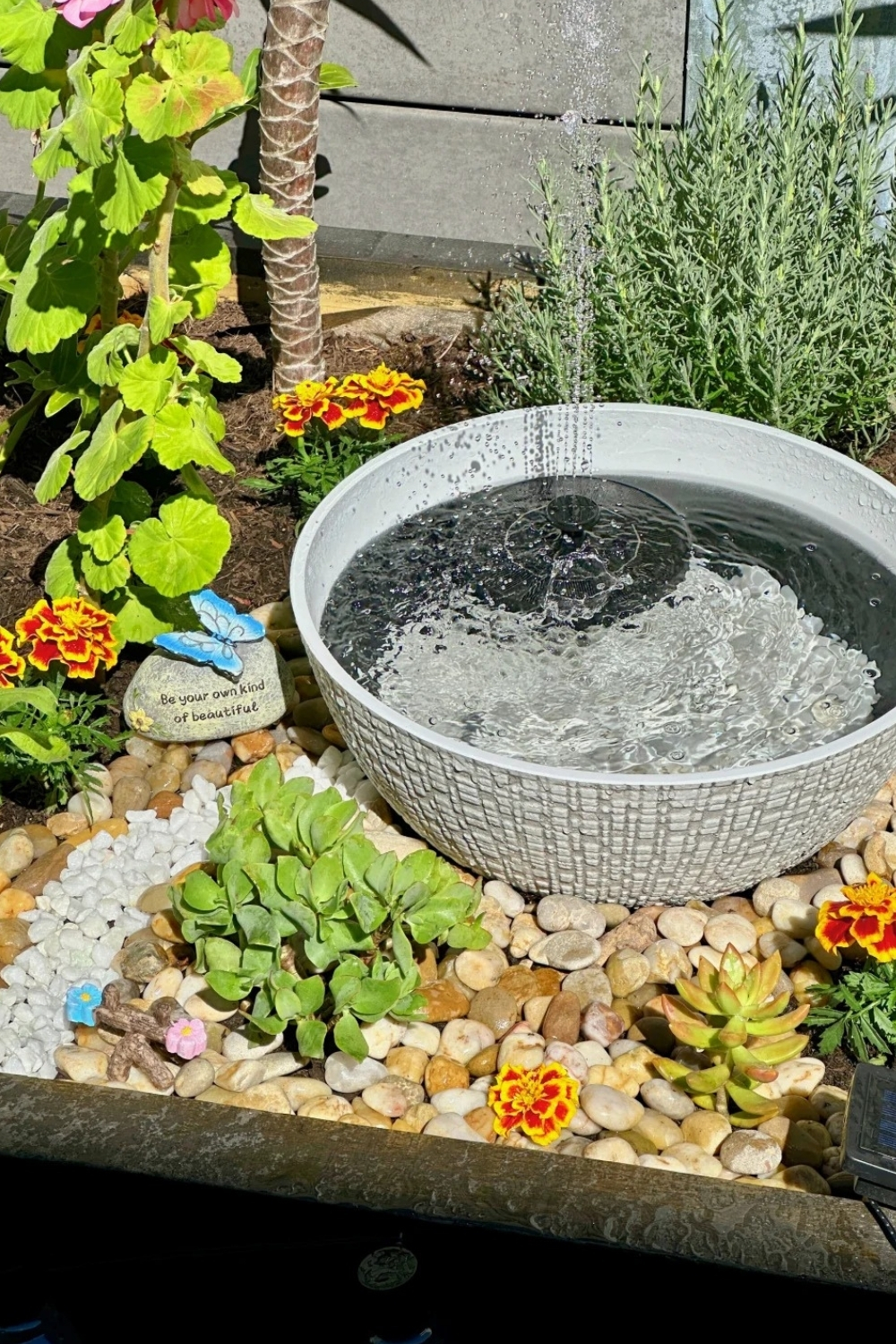
Six hours of sun, a bowl that doesn’t leak, and a spray that stays inside it.