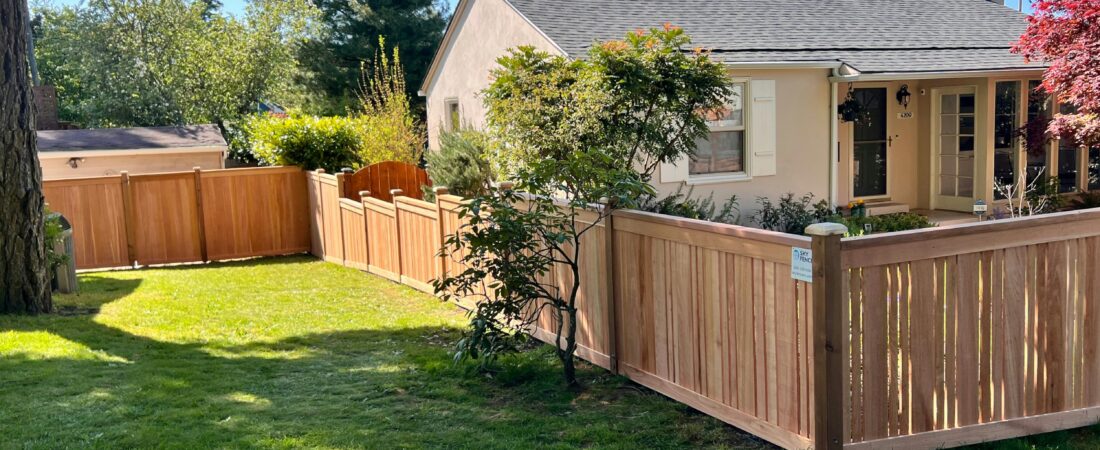
Fencing is one of the biggest costs in any yard project, and it’s easy to assume that a good-looking fence has to be an expensive one. It doesn’t. A few smart material choices, some weekend DIY and a little paint can give you a budget fence that looks custom for a fraction of the price. The budget fence ideas below range from quick covers for an ugly chain-link fence to simple wood builds that look like they came from a landscaper.
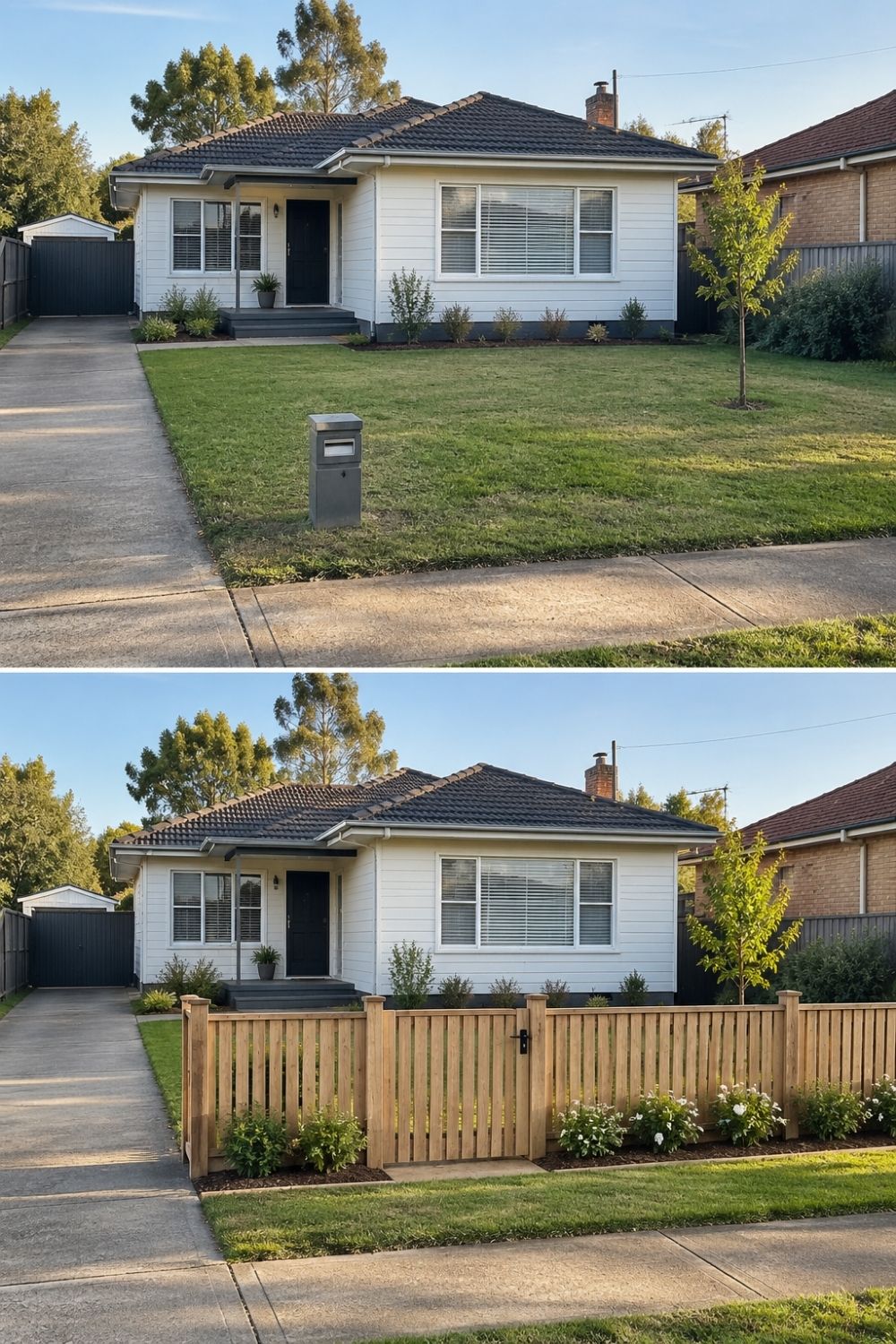
Photo by SassyGarden
The before and after above shows how much a low fence can change the look of a house. First, a white cottage sits behind a completely open front lawn, with nothing to separate it from the sidewalk. Then, a simple wooden picket fence with a small gate runs along the front, with a strip of flowers planted along its base. The house suddenly looks framed and welcoming, and the fence itself is one of the simplest and cheapest designs there is.
Cover an old chain-link fence with reed or bamboo
If you already have a chain-link fence, don’t tear it out. Covering it is one of the easiest budget fence ideas, and it hides the metal completely.
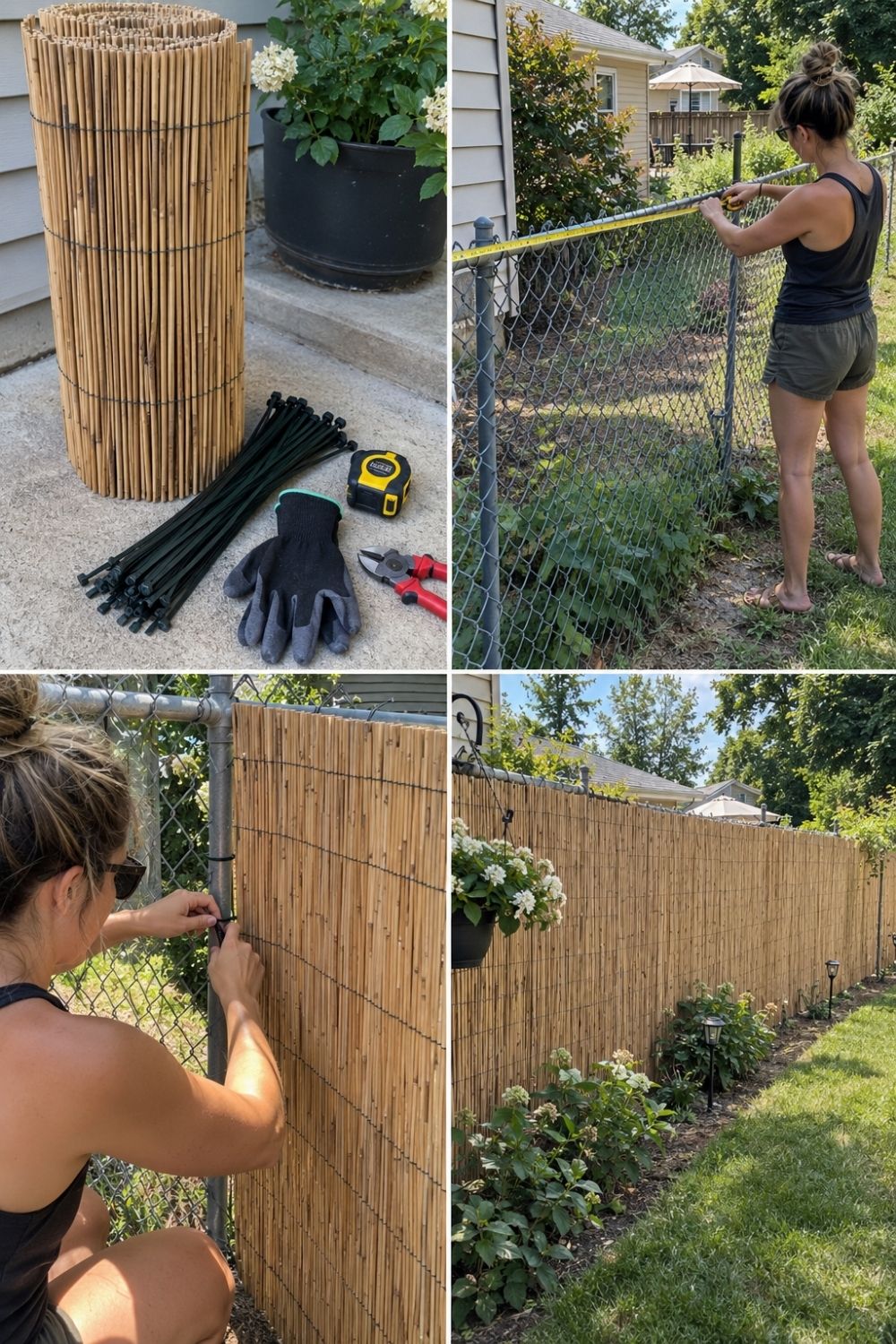
Photo by SassyGarden
The four stages above show the whole process: a roll of reed screening, black cable ties, gloves, a tape measure and snips laid out on the patio; a woman measuring the chain-link fence; then unrolling and tying the reed screen to the fence; and finally the finished fence, now a warm golden wall with a flower bed and hanging baskets in front. Tie the screen at the top, middle and bottom every foot or so, so it doesn’t sag or flap in the wind.
Reed and bamboo rolls make an ideal DIY fence cover for renters, because they come off again with a pair of snips and leave no trace. Reed usually lasts two to five years outdoors; bamboo is a little pricier but often lasts longer.
Reed rolls on a simple post frame
No existing fence? A few wooden posts and a couple of lines of wire make a frame that can hold the same rolls.
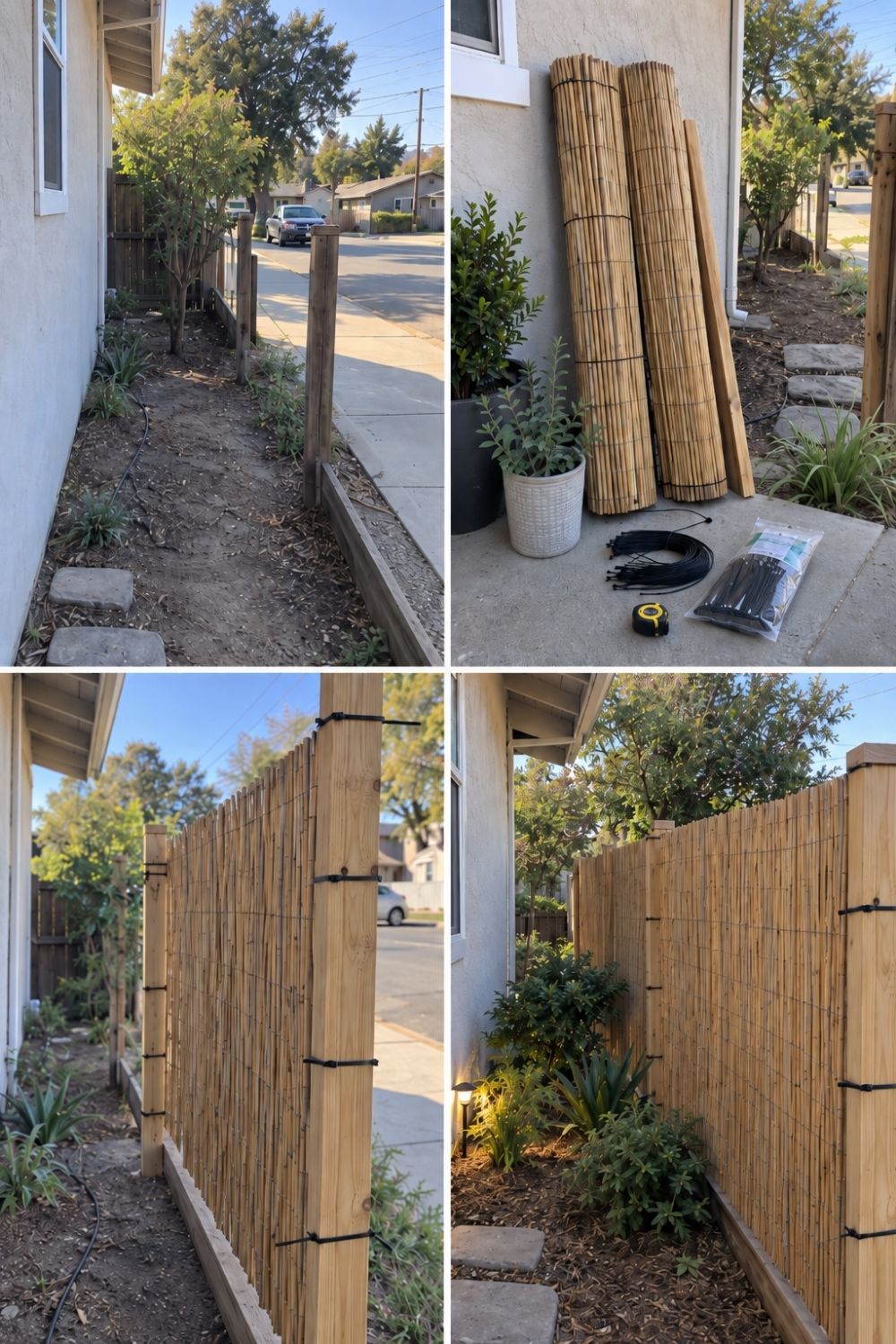
Photo by SassyGarden
The four stages above follow a narrow side yard between a house and the street: first bare soil with a few wooden posts set in a row, then reed rolls, cable ties and tension wire laid out nearby, then the rolls fixed to the posts and wire, and finally a tall, golden screen with plants in front. It’s a cheap fence that quickly closes off a side path or hide trash cans. Set the posts about 6–8 feet apart and a third of their length in the ground, and run wire between them at the top, middle and bottom to support the rolls between posts.
Welded wire around the vegetable garden
A vegetable garden fence is usually about keeping animals out, not hiding the view, so it doesn’t need to be solid. A welded wire DIY fence on wooden posts is cheap, sturdy and almost invisible from a distance.
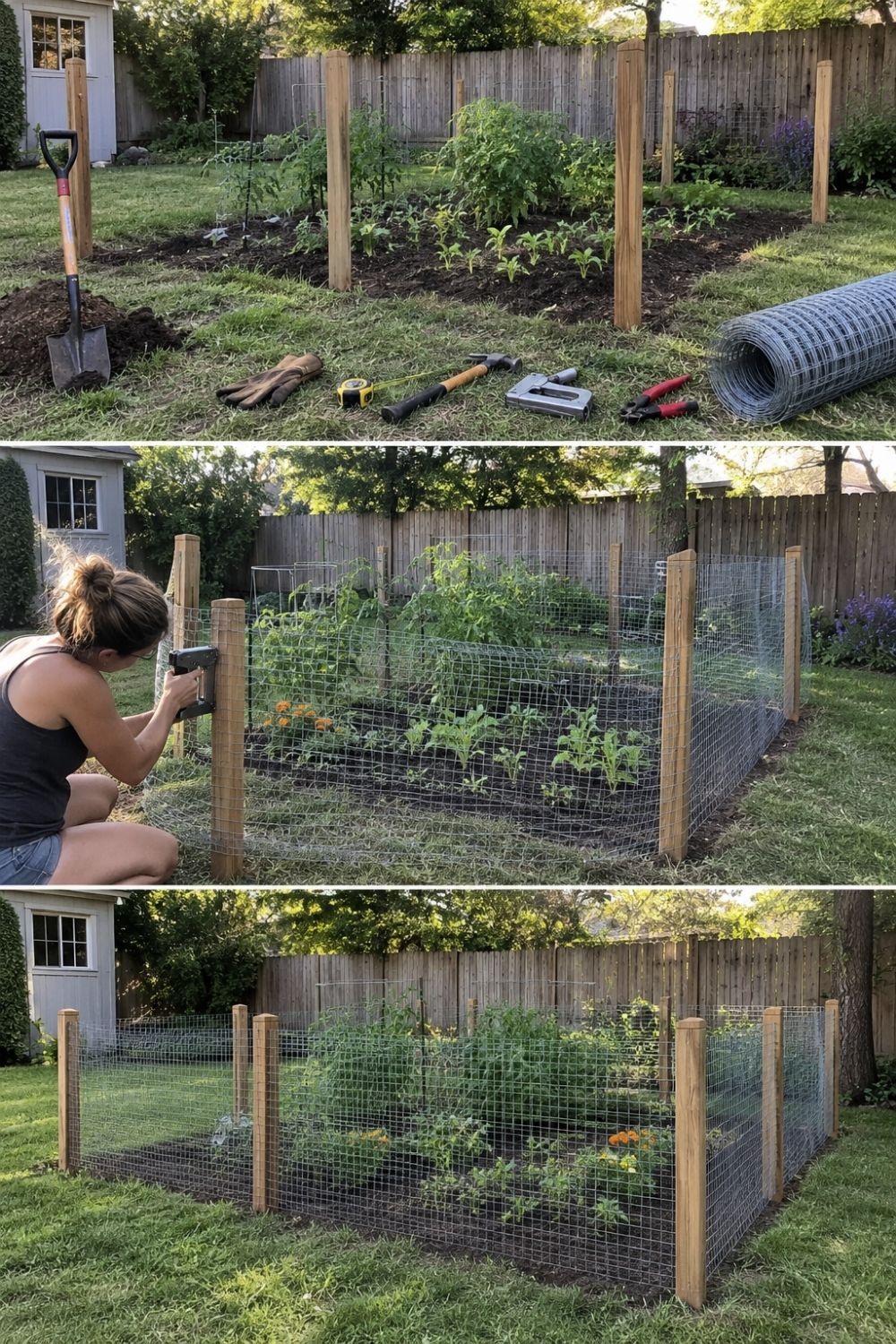
Photo by SassyGarden
The three stages above show a backyard vegetable bed first with wooden posts set around it and a roll of wire mesh, a staple gun and tools on the grass, then a woman stapling the wire to the posts, and finally the finished enclosure with vegetables growing safely inside. For rabbits, use mesh with openings of 1 inch or less along the bottom, and bury the lower edge 6 inches deep or bend it outward along the ground so they can’t dig under. For deer, you’ll need a much taller fence, around 7–8 feet. For more ideas on laying out an edible garden, see my post on kitchen garden ideas.
Hog wire in a wood frame
Hog wire panels, heavy welded wire panels with square openings, set inside a simple wood frame are one of the most stylish budget fence ideas around. They look clean and open, keep pets and kids in, and let the garden show through.
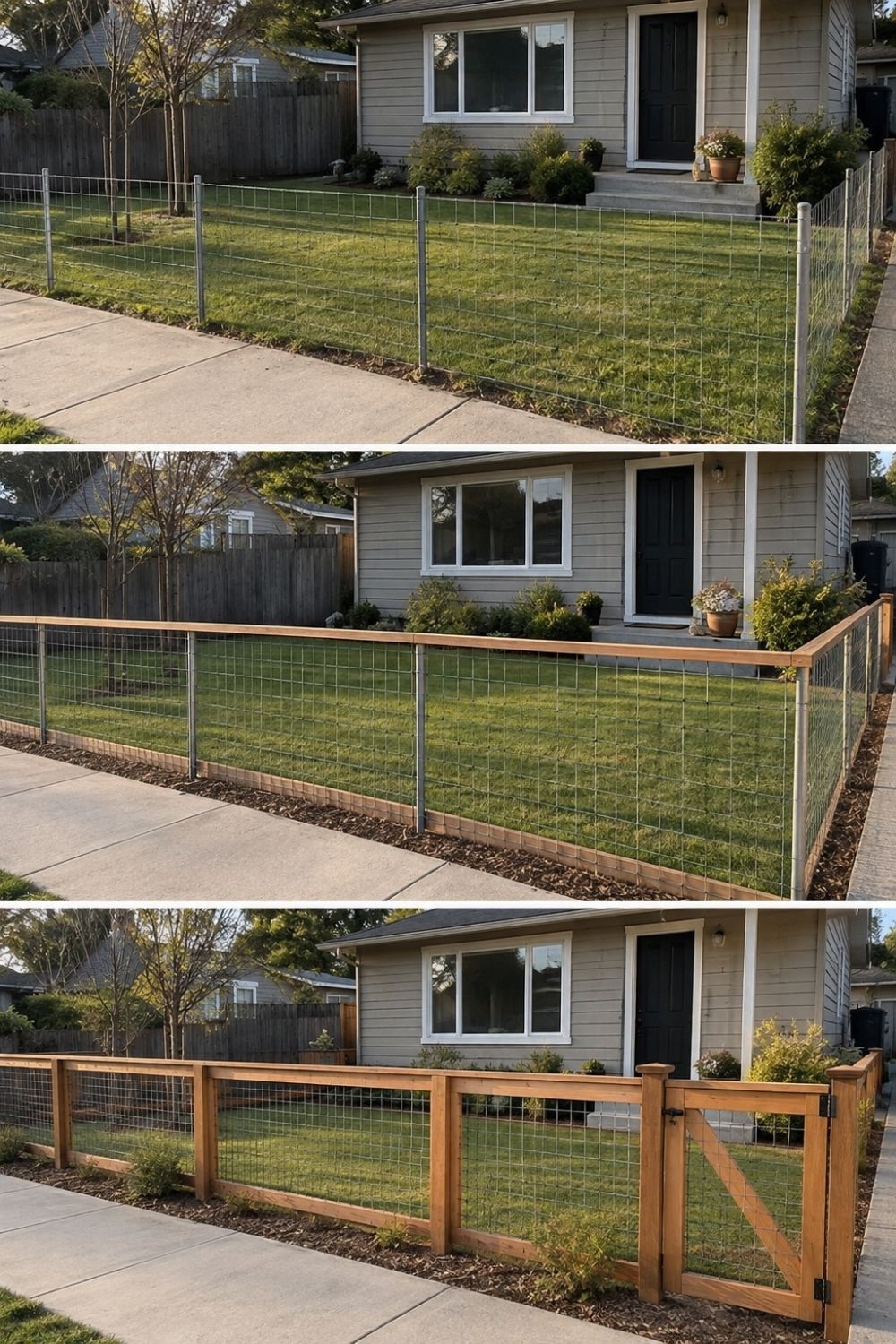
Photo by SassyGarden
The three stages above change a front yard: first a basic wire fence on metal posts, then a timber frame of posts and top rails built around the wire, and finally a finished fence with a stained wood frame, hog wire panels and a matching gate along the sidewalk. The wood frame turns cheap fencing into something that looks designed.
Build the frame with pressure-treated 4×4 posts, a top rail and a bottom rail, then screw the panels to the inside and cover the edges with thin trim strips for a neat finish. For a detailed build with costs, Our Liberty House’s DIY hog wire garden fence is a helpful walk-through.
Lattice panels for a quick screen
When you only need to screen one side of a patio, lattice panels are about as quick as a budget fence gets.
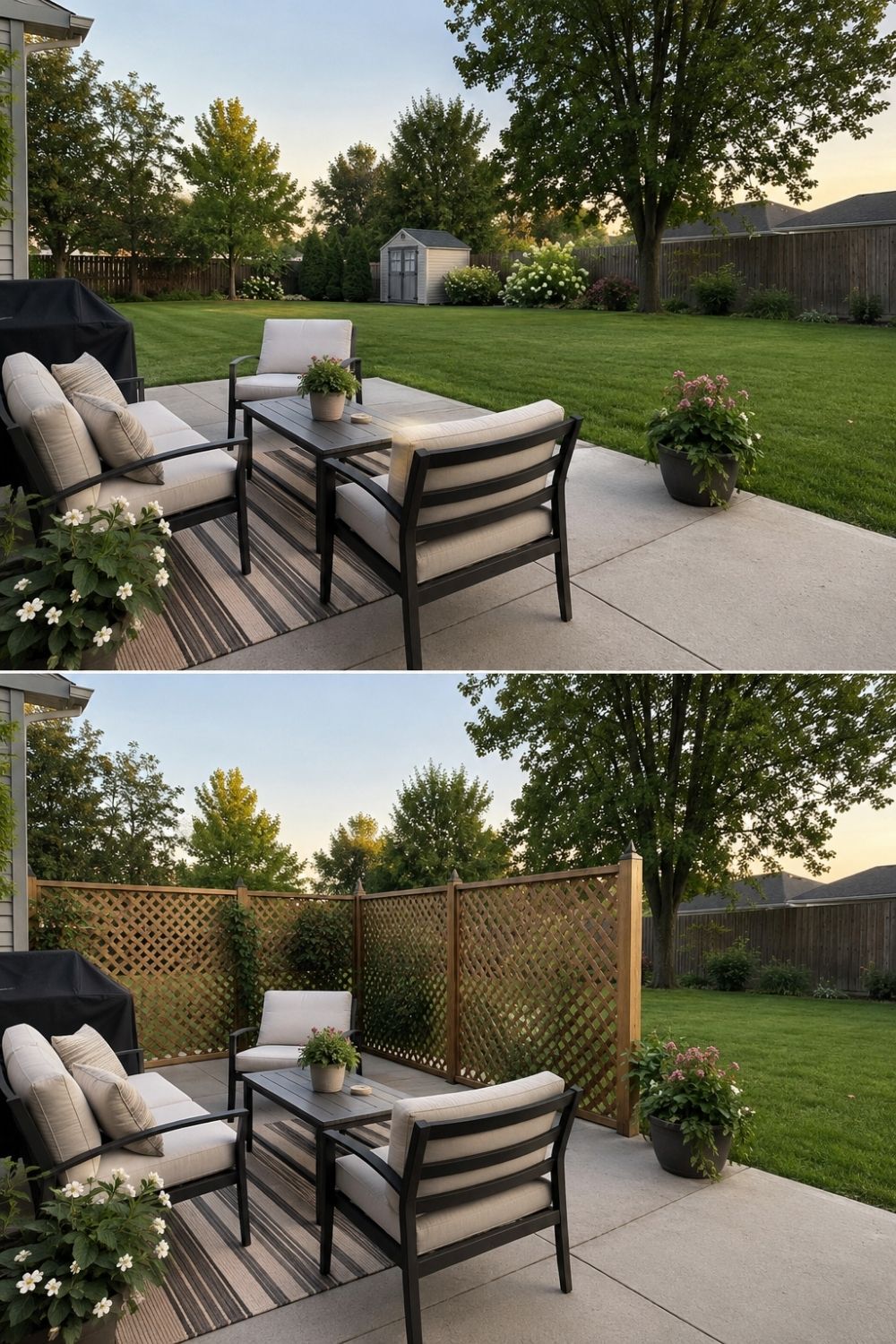
Photo by SassyGarden
The before and after above shows a concrete patio with outdoor chairs and a small table, first completely open to the lawn and yard beyond, then enclosed on two sides by freestanding wooden lattice panels on posts, with climbing plants starting to grow up them. Lattice gives partial privacy on day one and full privacy once climbers fill in. My posts on garden privacy screens and trellis ideas have more options and the right climbers for each.
Reclaimed wood
Salvaged boards, old fence panels and pallets can make a beautiful rustic budget fence for next to nothing. Ask neighbors replacing a fence, check local marketplaces or look for free pallets from businesses.
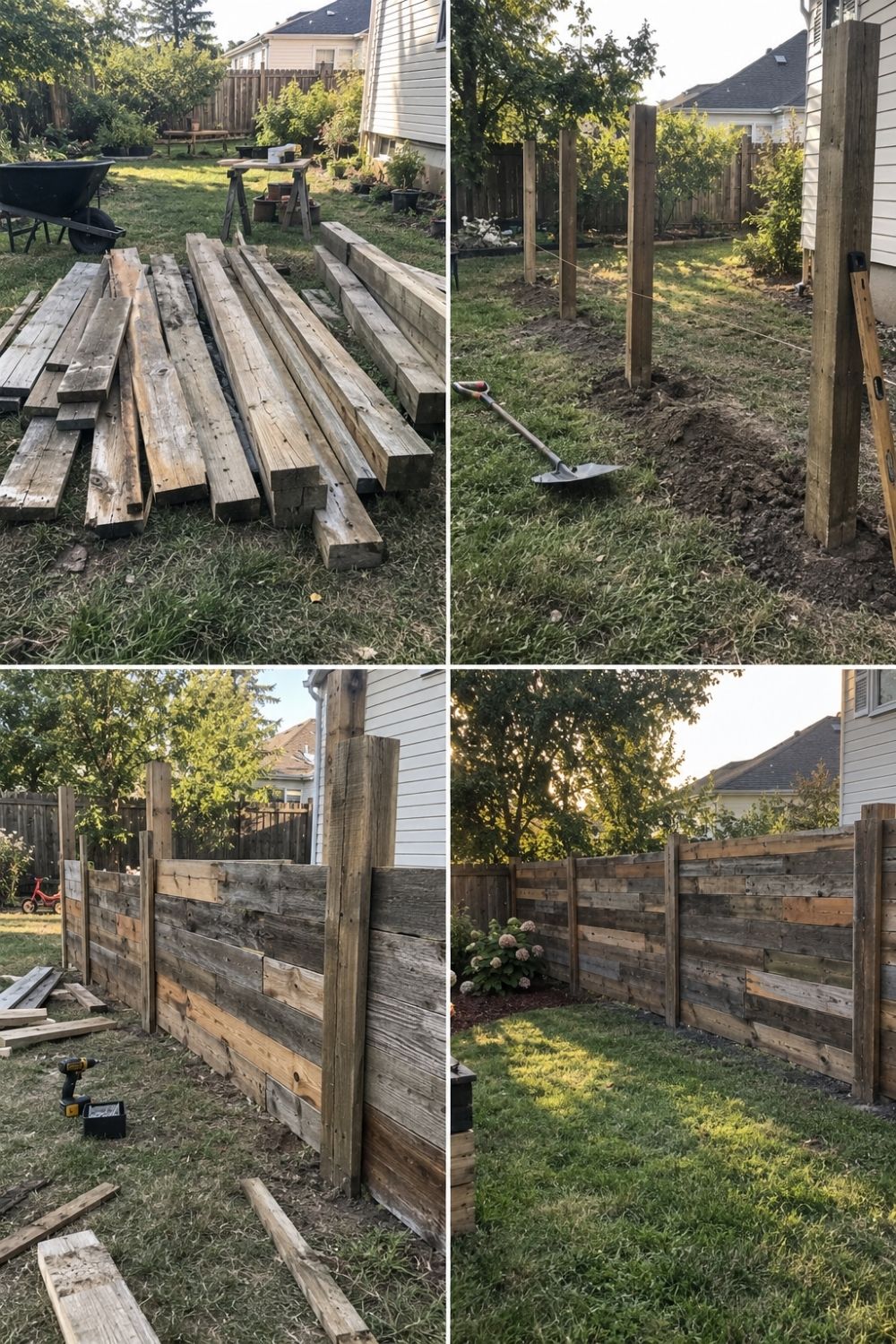
Photo by SassyGarden
The four stages above show a reclaimed wood fence taking shape along a backyard: a pile of weathered boards and a wheelbarrow on the grass, a row of new posts set along the boundary, the old boards being screwed on horizontally, and the finished fence with its mix of gray and brown tones in the evening sun.
A few safety checks for salvaged wood: avoid boards with old, flaking paint, since paint from before 1978 may contain lead, and skip wood treated before 2004, which may contain arsenic-based preservatives. On pallets, look for the “HT” stamp (heat treated) and avoid any marked “MB,” which were treated with methyl bromide.
A simple slat fence, painted or stained
A plain horizontal or vertical slat fence built from standard lumber is one of the most versatile budget fence ideas. Finish is what makes a cheap fence look expensive.
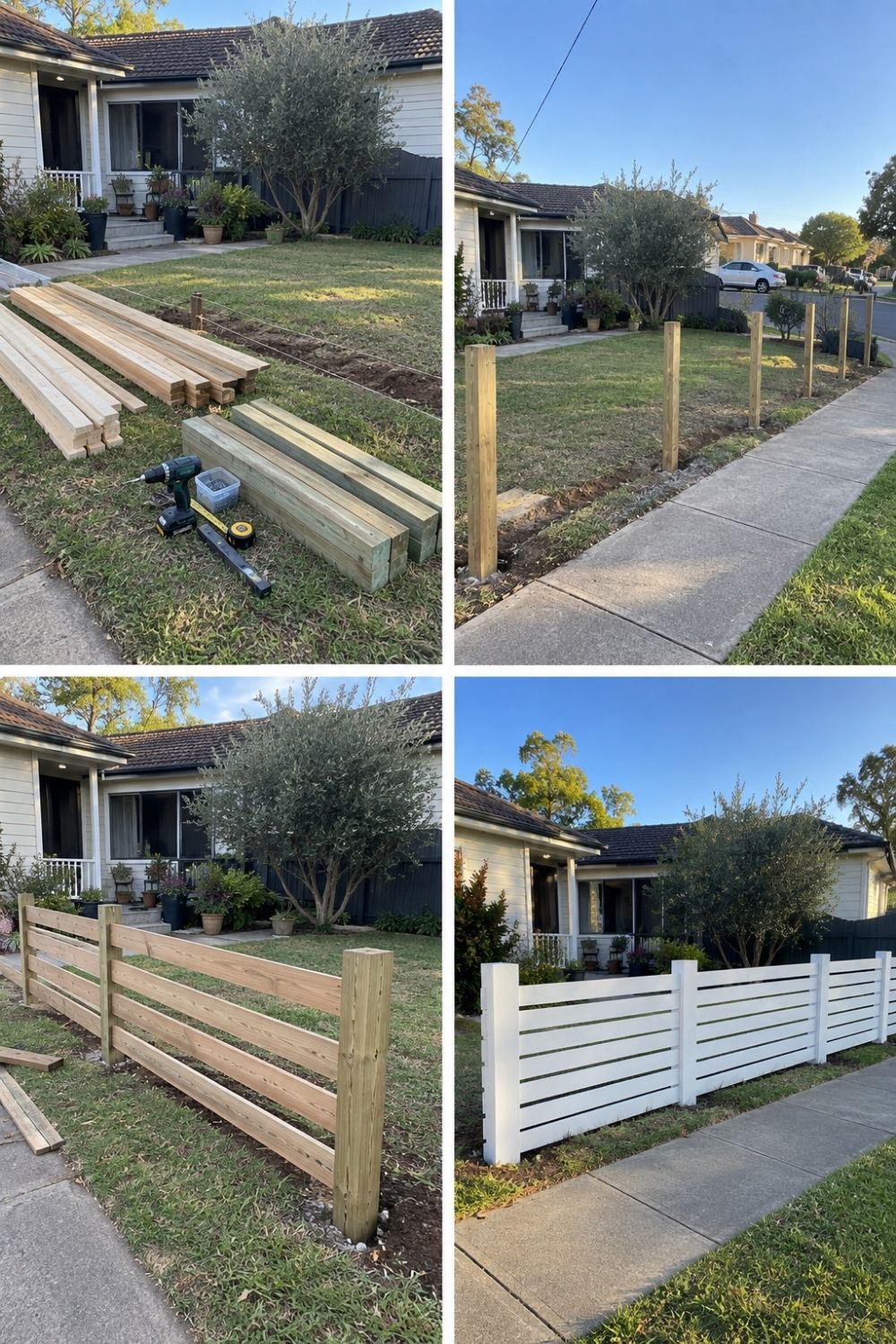
Photo by SassyGarden
The four stages above follow a front-yard fence from a stack of lumber and tools on the lawn, to posts set along the sidewalk, to horizontal slats screwed on with even gaps, and finally to the same fence painted crisp white, which makes the whole house look brighter. White suits cottages and traditional houses; black or charcoal looks sharp against green planting; a natural stain works almost everywhere. Paint or stain also protects cheaper softwood and helps it last years longer.
Compare the budget fence options
| Fence type | Relative cost | DIY difficulty | Lifespan |
|---|---|---|---|
| Reed or bamboo over chain-link | $ | Very easy | 2–8 years |
| Reed rolls on a post frame | $ | Easy | 2–8 years |
| Welded wire on wood posts | $ | Easy | 10+ years |
| Lattice panels | $ | Easy | 5–10 years |
| Reclaimed wood | $ to $$ | Moderate | 5–10 years |
| Hog wire in a wood frame | $$ | Moderate | 15+ years |
| Painted or stained slat fence | $$ | Moderate | 15+ years with upkeep |
Prices vary a lot by region and change often, so get local quotes for materials before you plan.
Ways to save on any DIY fence
- Fence only where you need to. A short section that blocks one view costs far less than a full perimeter.
- Use a lower fence at the front. Three to four feet is usually enough to define a front yard, and it’s often all local rules allow.
- Do the finishing yourself. Even if a pro sets the posts, painting or staining the fence yourself saves a lot.
- Combine materials. Wood posts with wire or reed infill cost much less than solid boards.
- Plant along it. A few climbers or a flower border make a simple fence look finished; my post on English cottage garden ideas has plenty of planting ideas.
Before digging post holes for any DIY fencing, confirm your property line, check whether your town or HOA needs a permit or limits fence height, and call 811 in the US to have underground utilities marked. It’s free, and it can save you from a very expensive mistake.
Spend where it shows: good posts, a neat top line and a coat of paint or stain make any budget fence look more expensive, while the infill can be as simple as wire, reed or salvaged boards. Pair it with a garden path and a few plants along the base, as in my post on what makes a garden path look really good, and nobody will guess how little it cost.