
The direction a garden faces decides how much sun it gets, when it gets it and how hot it runs, and that in turn decides almost everything else: which plants thrive, where the patio should go, how often you’ll be dragging the hose around. Garden orientation isn’t the whole story, though. A tall hedge, a neighbor’s garage or a big maple can turn a south-facing garden into a shady one, so the compass is where I start, not where I stop.
A quick note on terms: a “north-facing garden” is the one you see when you stand at the back of the house and look north. The house sits on the south side and casts its shadow over it. Everything below assumes the Northern Hemisphere; south of the equator, swap north and south.
Start with a sun map, not a compass
Before I’d pick a single plant for a new bed, I’d watch where the light actually lands. A sun map sounds technical but it’s just a sketch of the yard with the shadows drawn in at a few times of day.

Photo by SassyGarden
The four photos above show the same narrow backyard from the patio in the morning, around midday, in the afternoon and at sunset. The lawn that’s fully lit at noon is striped with long shadows from the trees by late afternoon, and the right-hand border sits in shade for most of the evening. A single look at noon would miss all of that.
The simplest method I’ve come across is the one Robert Pavlis describes in sun mapping your garden the easy way:
- Sketch the yard on paper and make four copies.
- On a sunny day, shade in the shadows at about 9 a.m., noon, 3 p.m. and 6 p.m.
- Count the hours of sun each area gets: 6 or more is full sun, roughly 4–6 is part sun or part shade, and less than that is shade.
- Combine them into one map and keep it with your garden notes.

Photo by SassyGarden
A notebook on the patio chair and a few wooden stakes in the lawn, like in the photo, are all the equipment you need. Repeat the exercise in spring and midsummer if you can: the sun sits much higher in June than in March, so a bed that’s shaded in April may be baking by July. The map then feeds straight into the bigger layout, which I cover in planning a garden that feels designed.
North-facing gardens: cool, even light
A north-facing garden gets the least direct sun, especially close to the house. The shadow of the building reaches furthest in spring and fall, when the sun is low, and in winter parts of the yard may see no direct sun at all. The payoff is steady, soft light and a cooler, moister spot that doesn’t dry out in August.

Photo by SassyGarden
The before and after above is a typical north-facing bed along a house: first a few leggy sun lovers struggling in bare mulch, then the same bed filled with hostas, ferns and other shade plants that actually like it there. That’s the main lesson for this exposure. Stop asking the bed to be a sunny border and plant for what it is: hostas, ferns, heuchera, astilbe, hellebores, and shade-tolerant shrubs such as hydrangeas and rhododendrons in the brighter parts. Hostas are toxic to dogs and cats if eaten, so keep that in mind by a path the dog uses.
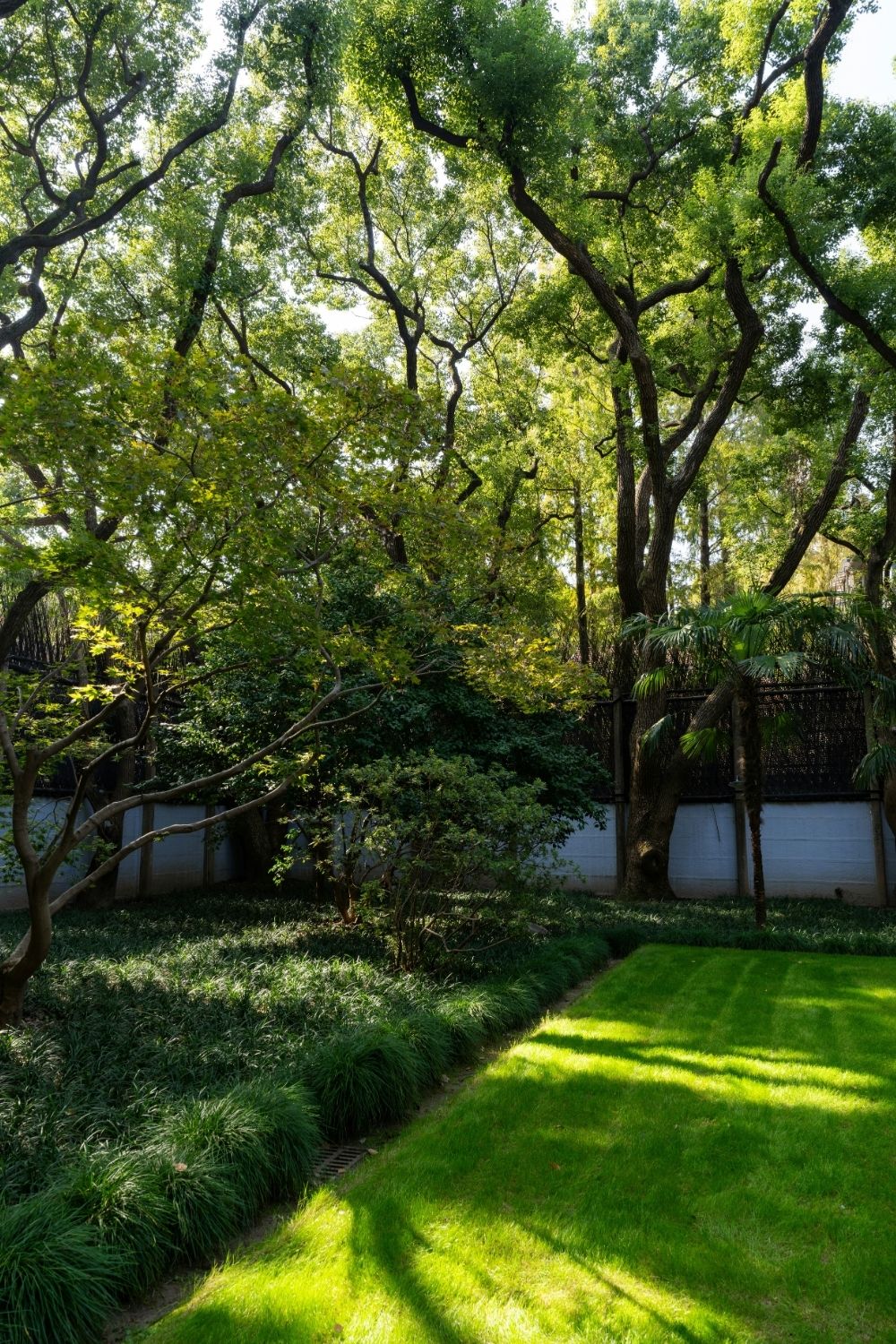
Photo by Declan Sun on Unsplash
A north-facing yard is rarely dark everywhere, though. Further from the house, the light often opens up, like the bright strip of lawn in this garden between shady beds under tall trees. Put the lawn, the vegetable bed or the seating in that sunny band and let the shade plants take the rest. The far end of a long north-facing garden is often the sunniest spot in the whole yard, which makes it a good place for a bench. Moss and damp soil can be an issue near the house, so improve drainage before planting there. For plant lists sorted by type of shade, see what plants actually grow in shade.
South-facing gardens: the sun trap
A south-facing garden gets sun for most of the day, from mid-morning to late afternoon. It warms up earliest in spring, stays warm longest into fall, and suits the widest range of flowering plants and vegetables. It also dries out fastest, and a paved area in full sun can get uncomfortably hot by early afternoon.
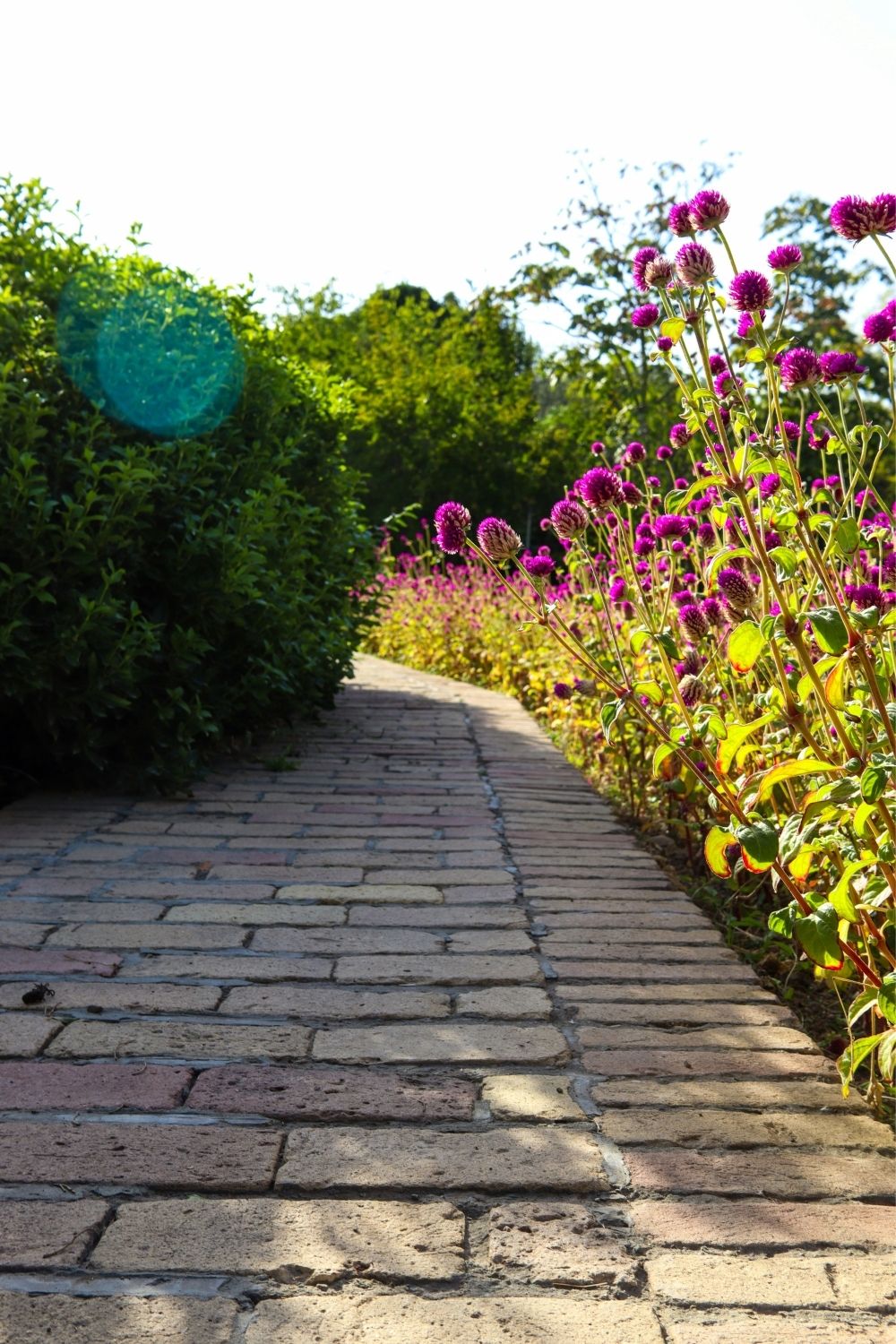
The brick path above runs between a clipped hedge and a sunny border of globe amaranth (Gomphrena globosa), an annual that keeps flowering through heat that makes softer plants collapse. That’s the planting logic here: pick sun lovers that don’t mind drying out between waterings, such as salvia, lavender, coneflowers, yarrow, sedum, ornamental grasses and most herbs. Mulch the beds to hold moisture, and water deeply but less often so roots grow down.
For seating, a south-facing garden is lovely in spring and fall but can be too hot in July. Plan for shade over the patio from the start: a pergola, a tree on the south-west side or a large umbrella. A south-facing wall is also the warmest spot in the yard, where tender plants and figs often survive winters they’d lose in the open. If you want to lean into the heat, my post on drought-tolerant gardens goes further.
East-facing gardens: gentle mornings
An east-facing garden gets the sun from sunrise until around midday, then falls into shade. For many plants that’s the best of both worlds: bright light while it’s cool, protection from the hot afternoon. Woodland plants, hydrangeas, camellias, ferns and many perennials labeled “part shade” do well here.
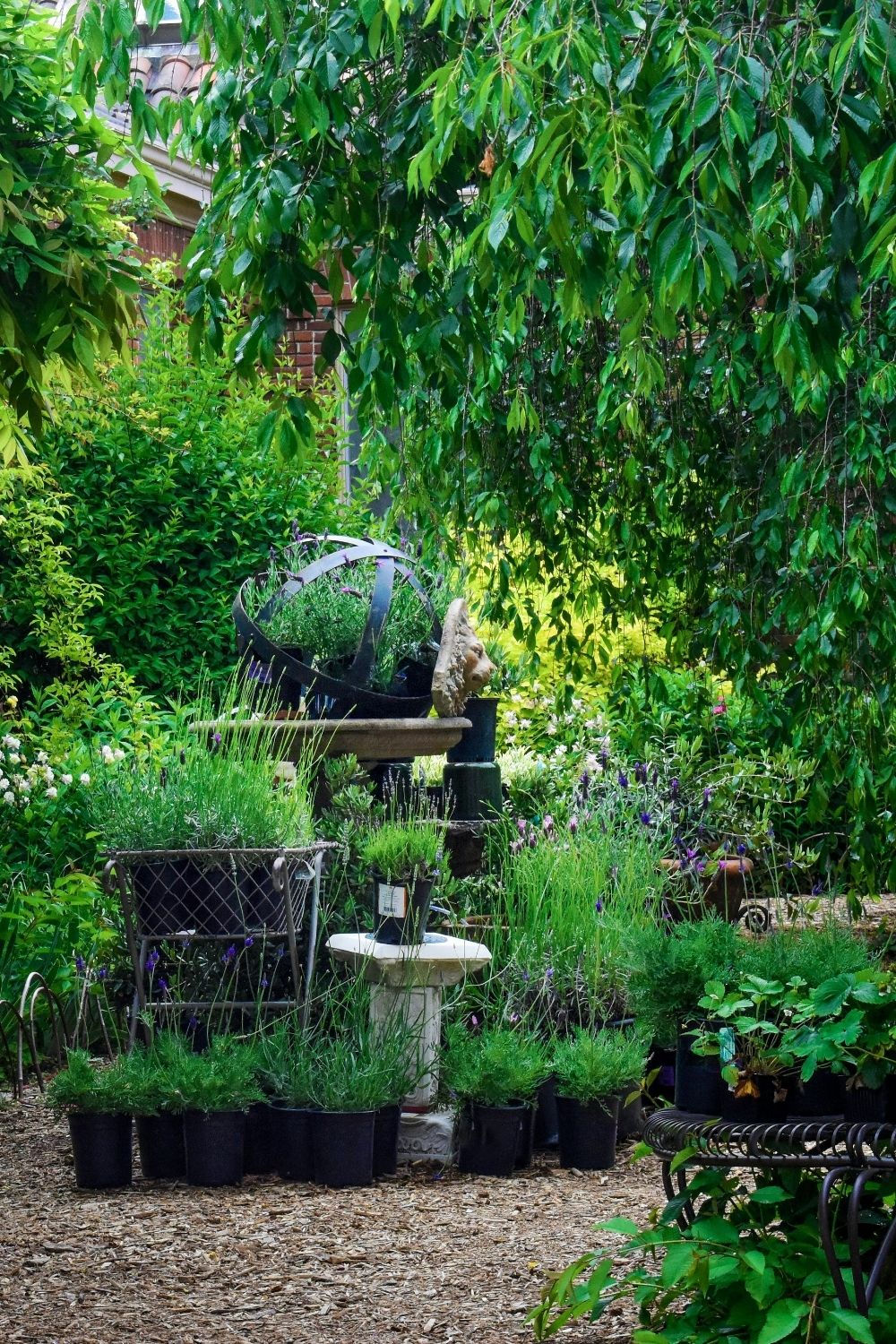
Photo by Declan Sun on Unsplash
This garden under a large tree mixes pots of herbs and perennials, a birdbath pedestal and a metal planter on a bark-covered floor. It’s the kind of spot that benefits from an east-facing layout: plants get morning light through the branches and shelter later in the day. Pots are useful here because you can move them toward the brightest corner as the season changes.
One thing to watch: in spring, early morning sun hits frozen buds and flowers quickly, and a fast thaw can damage the blossoms of camellias, magnolias and early fruit trees. If late frosts are common where you live, give those plants a spot that gets sun a little later in the morning. For seating, an east-facing patio is made for breakfast and coffee, and it’s pleasantly shaded by dinner time.
West-facing gardens: hot afternoons, golden evenings
A west-facing garden sits in shade in the morning and gets the sun from midday until sunset. Afternoon sun is the hottest of the day, so this exposure behaves almost like a south-facing garden in summer, with the difference that it heats up later and holds the warmth well into the evening.
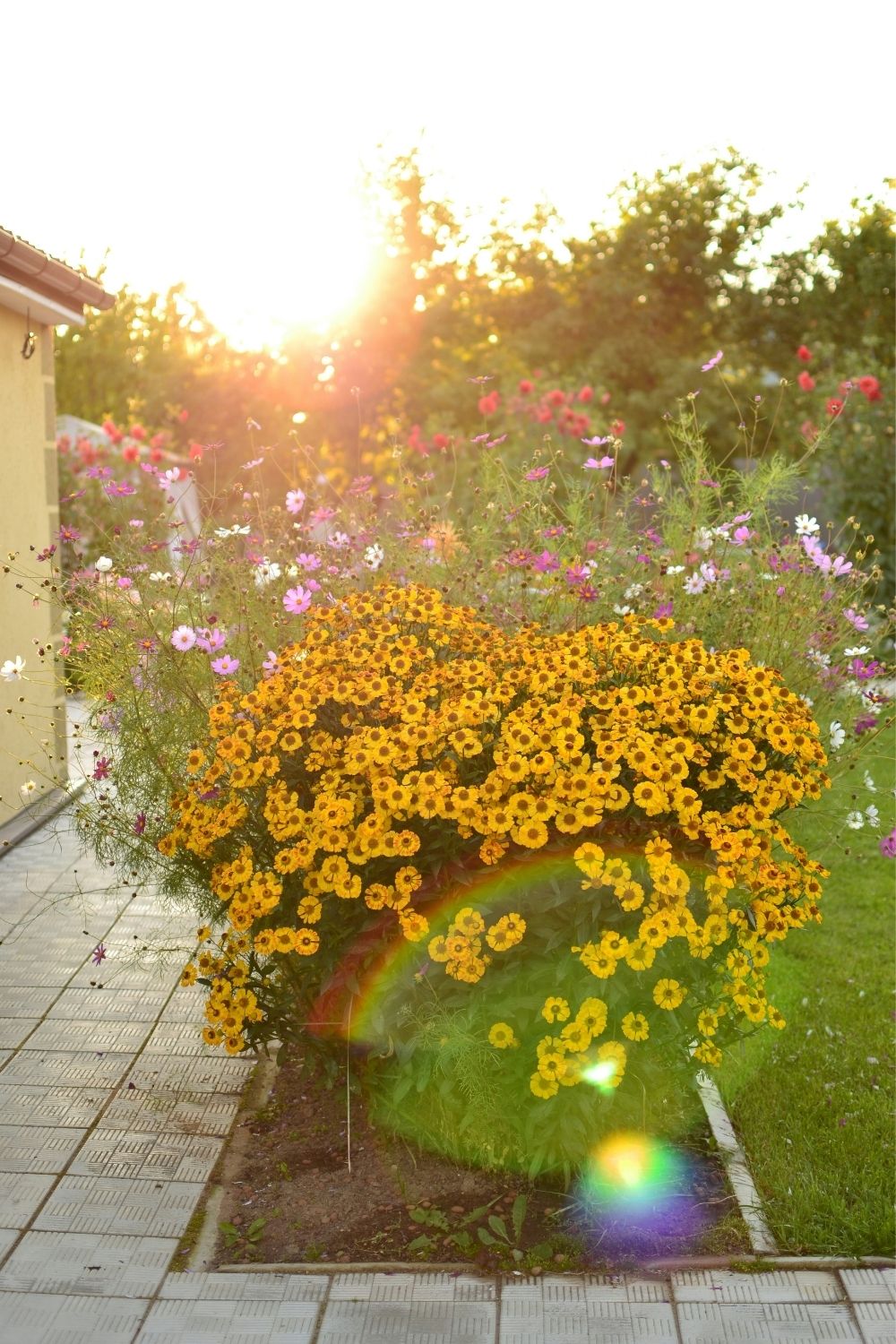
Photo by Pavel Borodenkov on Unsplash
A mound of golden flowers with pink and white cosmos behind them, backlit by the low evening sun, shows what this exposure does best. Warm colors glow in late light, so yellows, oranges and reds look especially good in a west-facing bed. Plants that handle afternoon heat do well: cosmos, zinnias, black-eyed Susans, coreopsis, grasses. Plants with thin leaves that prefer part shade, like hostas or Japanese maples, often scorch here.
This is the evening garden. Put the main seating where the last sun lands and you’ll use it far more after work than you would a patio on the shady side. Just give it some shelter: in many regions the prevailing wind comes from the west, and a trellis panel or hedge on that side makes the seating area far more usable.
Courtyards and small spaces break the rules
In small gardens and courtyards, walls matter as much as orientation. A light-colored wall reflects light and heat into the space; a tall wall on the south side can shade a small yard completely even if it faces south on paper.

Photo by SassyGarden
The small courtyard above uses its brightest corner for a bistro set on stone paving and leaves the dappled area under the tree for pots of shade-tolerant plants and a lawn strip. That’s the approach for any small space: map the light first, then give the sunniest square yard to whatever you want most, whether that’s seating, tomatoes or roses. Small courtyard garden ideas often lean on containers for exactly this reason, since you can move them if the first guess was wrong. For specific combinations, see my post on garden planting ideas.
Front gardens face the opposite way
It’s easy to forget that the front yard always faces the opposite direction from the back. A house with a sunny south-facing garden at the back has a north-facing front yard, and the other way around. That matters for front garden ideas, because the planting that looks great in the back may sulk out front.
A north-facing front yard sits in the shadow of the house for much of the year, especially in winter when the sun is low. Evergreen shrubs, ferns and hostas keep it looking tidy, and a light-colored front door or pale paving bounces some brightness back. Keep the lawn small or skip it; grass thins out quickly in that kind of shade.
A south-facing front yard is the opposite: bright, warm and often dry, particularly along a driveway that soaks up heat. It’s a good place for a gravel garden, lavender, grasses and flowering perennials that make the house look cared for from the street. If the front door faces west, afternoon sun on it can be fierce in summer, so a small tree or a tall planter beside the steps helps both the plants and whoever waits at the door.
Garden orientation at a glance
| Aspect | Direct sun | Feels like | Best use | Plants that like it |
|---|---|---|---|---|
| North-facing | Least, strongest far from the house | Cool, damp, even light | Shade borders, sunny bench at the far end | Hostas, ferns, heuchera, hellebores |
| South-facing | Most of the day | Warm, dry, sun trap | Vegetables, flower borders, shaded patio | Salvia, lavender, herbs, grasses |
| East-facing | Morning until midday | Mild, sheltered afternoons | Breakfast seating, woodland planting | Hydrangeas, ferns, part-shade perennials |
| West-facing | Midday until sunset | Hot afternoons, warm evenings | Evening seating | Cosmos, zinnias, coreopsis, grasses |
The compass gives you a starting guess, the sun map gives you the facts, and the plants follow from there. Put people where the light is pleasant at the hours they’re home, and plants where the light matches their tag.