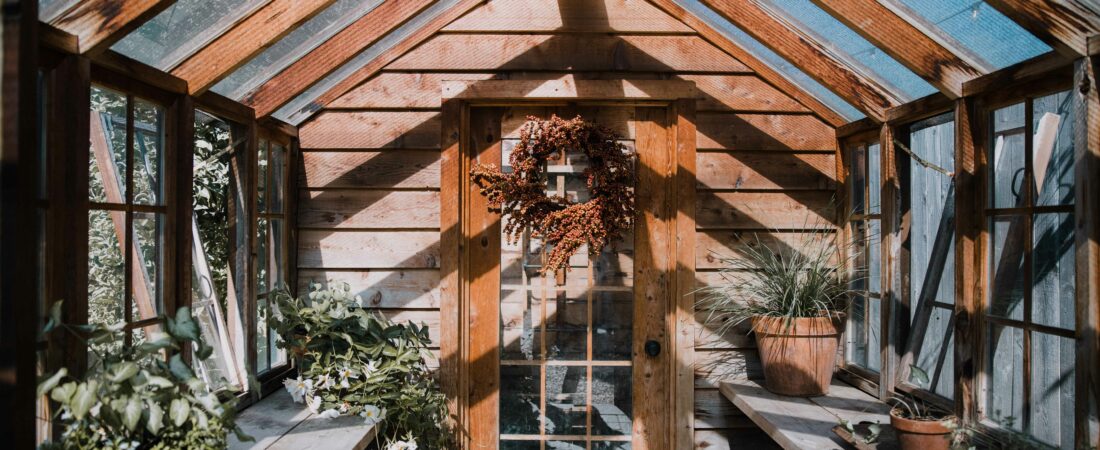
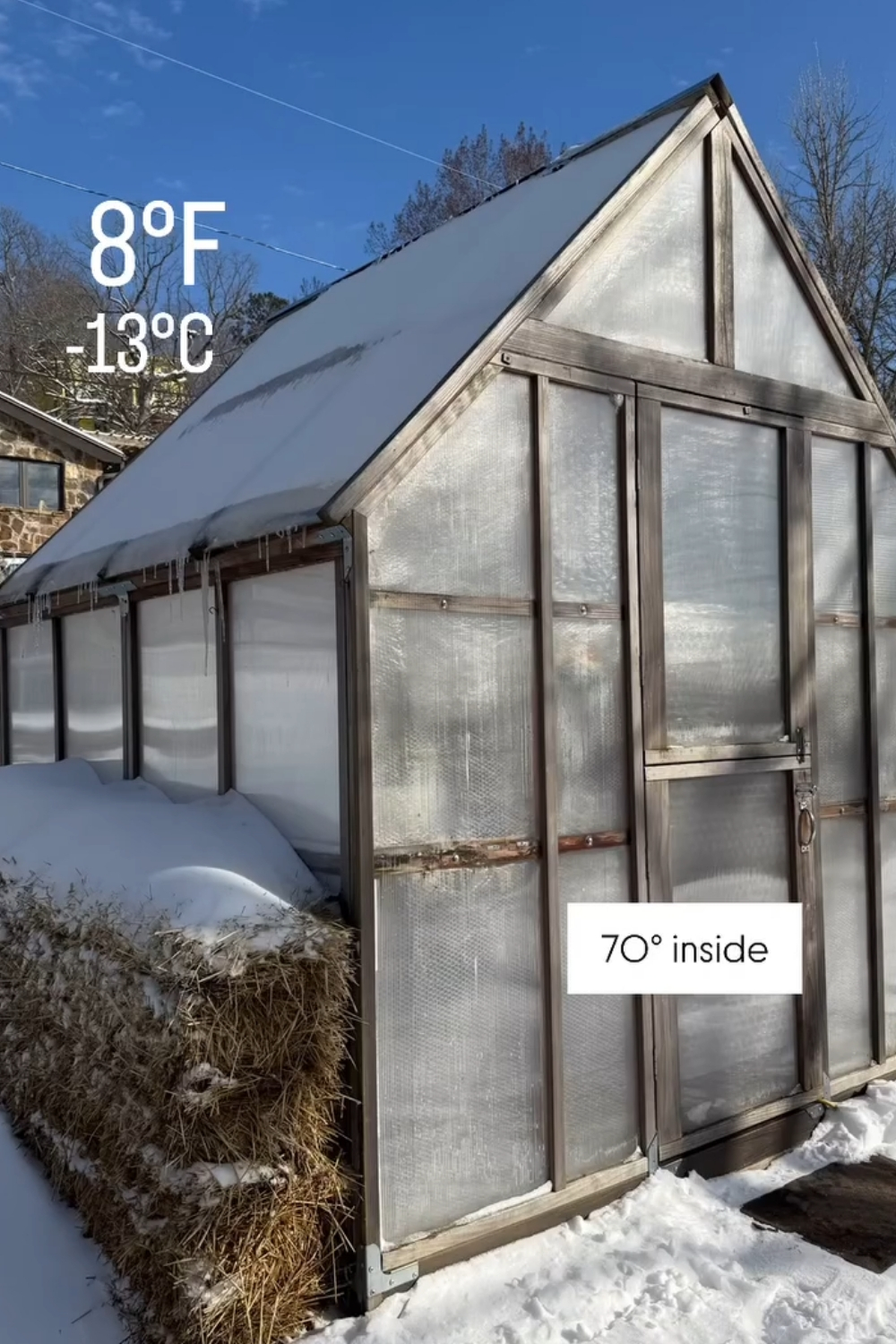
Yes, with the right expectations. A small greenhouse in winter isn’t a summer garden under glass. It’s closer to a cool pantry: it keeps hardy greens fresh and slowly growing, keeps tender plants alive until spring, and gives seedlings a head start in late winter. How far it can go depends on how much heat it holds onto, how much light it gets, and how well it handles damp air. The photo above, with 8 °F outside and 70 °F inside, shows what’s possible with heat and insulation; most winter greenhouse ideas aim for far less, and that’s fine.
The three things winter takes away are heat, light and dry air. Every idea below puts one of them back.
What a small greenhouse can realistically do
Without any heating, a small greenhouse stays a few degrees warmer than outside at night and much warmer on sunny days. That’s enough to keep cold-hardy greens like spinach, kale, lettuce and mâche growing slowly through most of winter in many zones, and to protect plants that could survive a light frost but not a hard one.
With a little heat, it can keep tender plants such as geraniums, citrus and potted figs frost-free until spring. With more heat and some extra light, it can start tomato and pepper seedlings weeks before the last frost.
Decide which of those you want before buying a heater. The costs and effort rise quickly from one level to the next.
How warm does it need to be?
Winter greenhouse gardening comes in three rough temperature levels, and each one opens up a different set of plants.
Frost-free, about 35 to 40 °F at night. Enough to keep dormant and semi-dormant plants alive: geraniums, rosemary, potted citrus, figs, agapanthus and dahlia tubers in crates. According to Lawn Love’s guide to heating a greenhouse, most tender plants need the greenhouse kept at or above about 37 °F. These plants won’t grow much; they just wait.
Cool, about 45 to 55 °F. The same guide calls this the sweet spot for most winter crops. Lettuce, spinach, kale, chard, Asian greens, parsley, cilantro and chives keep producing slowly, and a few rows of salad are realistic all winter.
Warm, about 60 °F and up. Needed for germinating warm-season seeds, like tomatoes, peppers and eggplant, in late winter. In a small greenhouse, it’s usually easier to keep just a heated propagation mat or a small enclosed shelf this warm, rather than the whole space.
Keep the heat in: insulation
Most heat in a greenhouse escapes through the walls and roof at night. Cutting that loss is the cheapest step, and it makes any heater work far less.
Bubble wrap on the inside
Lining the inside of the glass or panels with bubble wrap works like double glazing, trapping a layer of air between the outer wall and the inside. According to GrowVeg’s guide to insulating a greenhouse, bigger bubbles let in more light and insulate better, and horticultural bubble wrap, which is made to resist sunlight, lasts longer than packing wrap. It blocks some light, so leave the south side as clear as possible and line the north and roof first.
Straw bales and a solid base
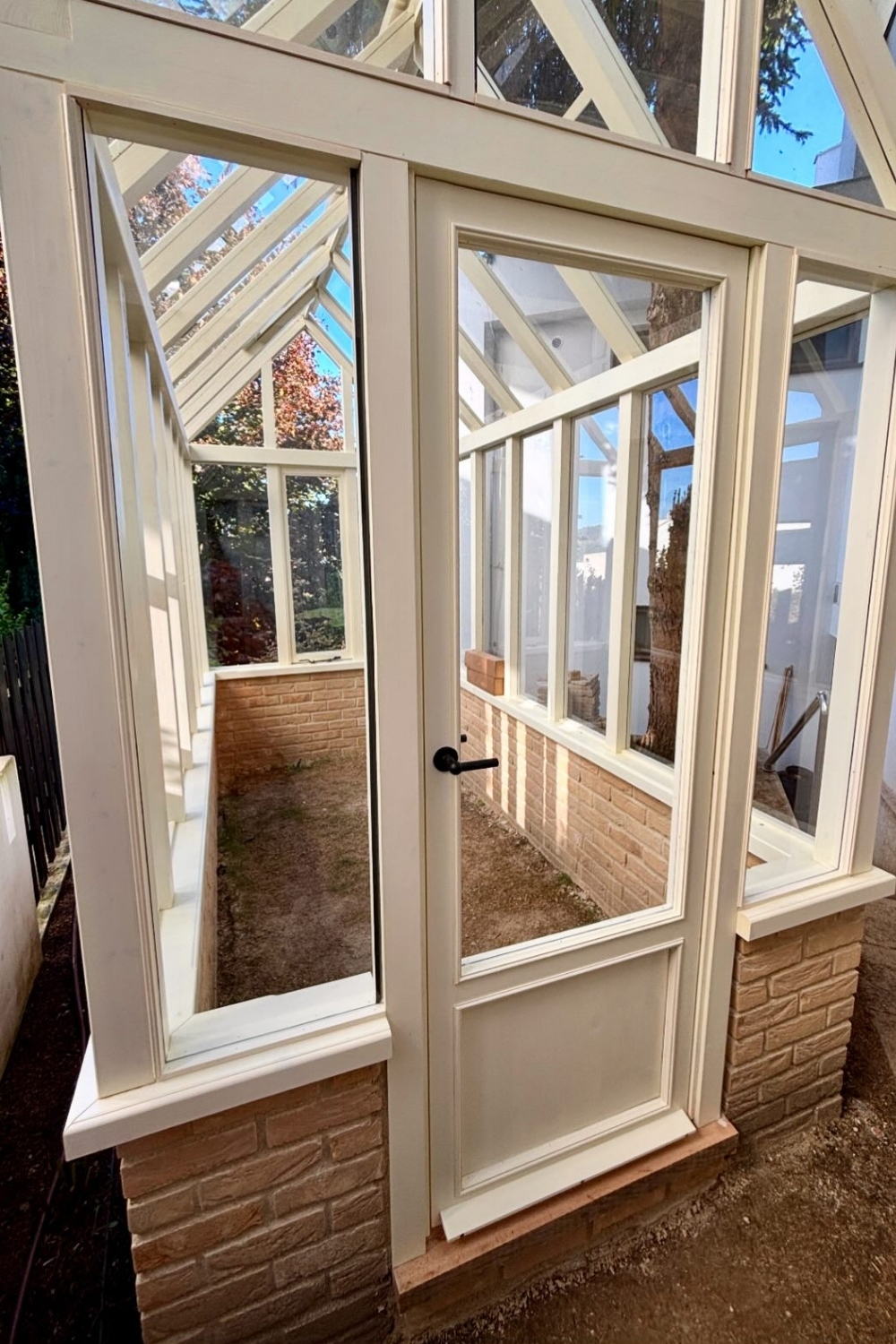
Heat also leaks out at ground level. Straw bales stacked along the outside of the walls, like the ones in the opening photo, block wind and insulate the lowest part of the greenhouse, where cold air settles. A greenhouse built on a brick or block knee wall, as here, holds heat better than glass down to the ground, since the solid base doesn’t lose warmth the way glass does.
A solid north wall
The north side of a greenhouse gets almost no direct sun in winter but loses heat all night. Covering it with insulated panels, a sheet of foam board, or even reflective foil inside turns it from a heat leak into a heat shield, and foil bounces some light back onto the plants.
Store the day’s warmth: water barrels
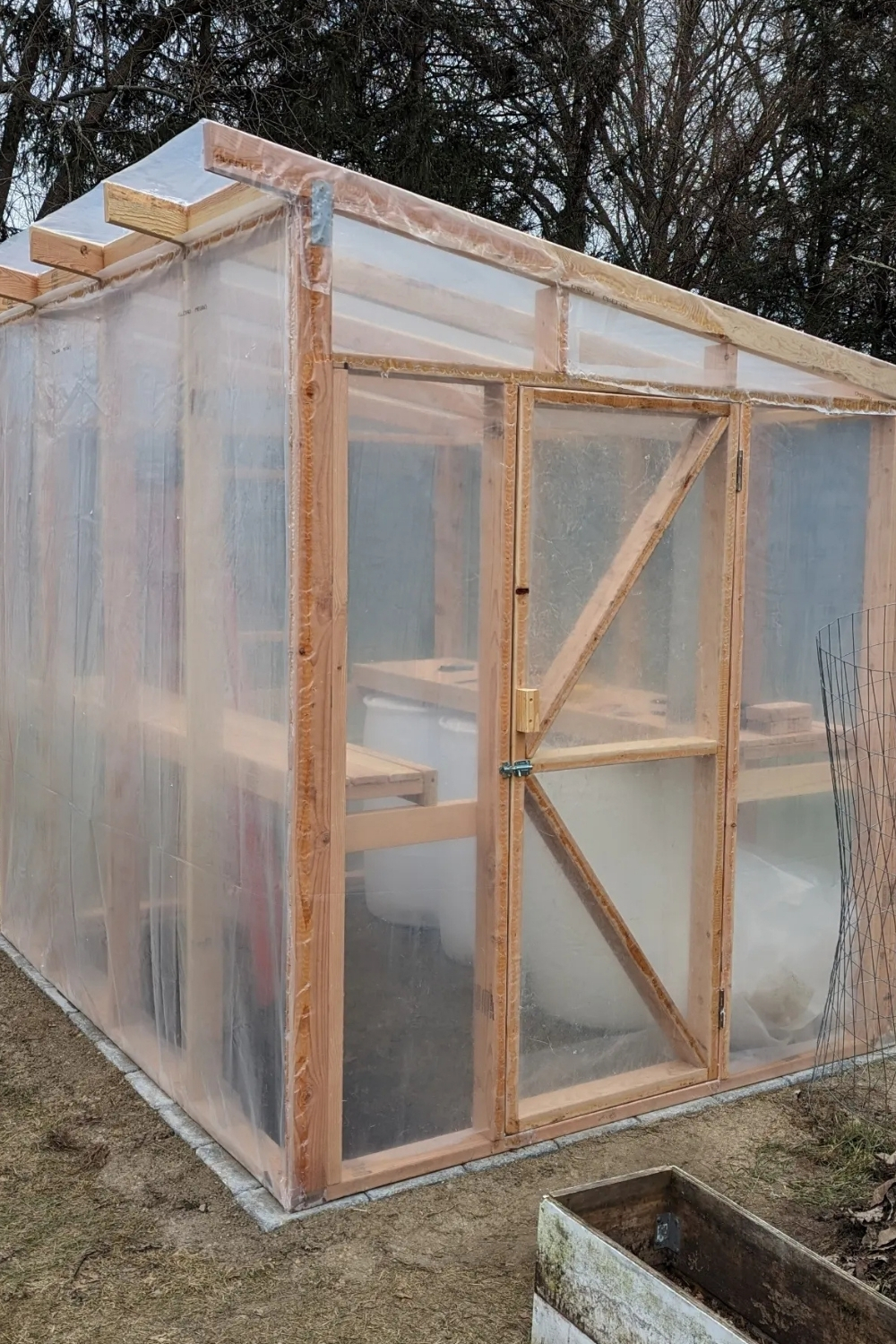
Water soaks up heat during sunny days and releases it slowly overnight, which smooths out the cold dips. Many DIY greenhouses keep a few barrels or large jugs of water inside for exactly this reason. The same Lawn Love guide suggests placing them along the north wall and in corners, and dark containers absorb the most heat.
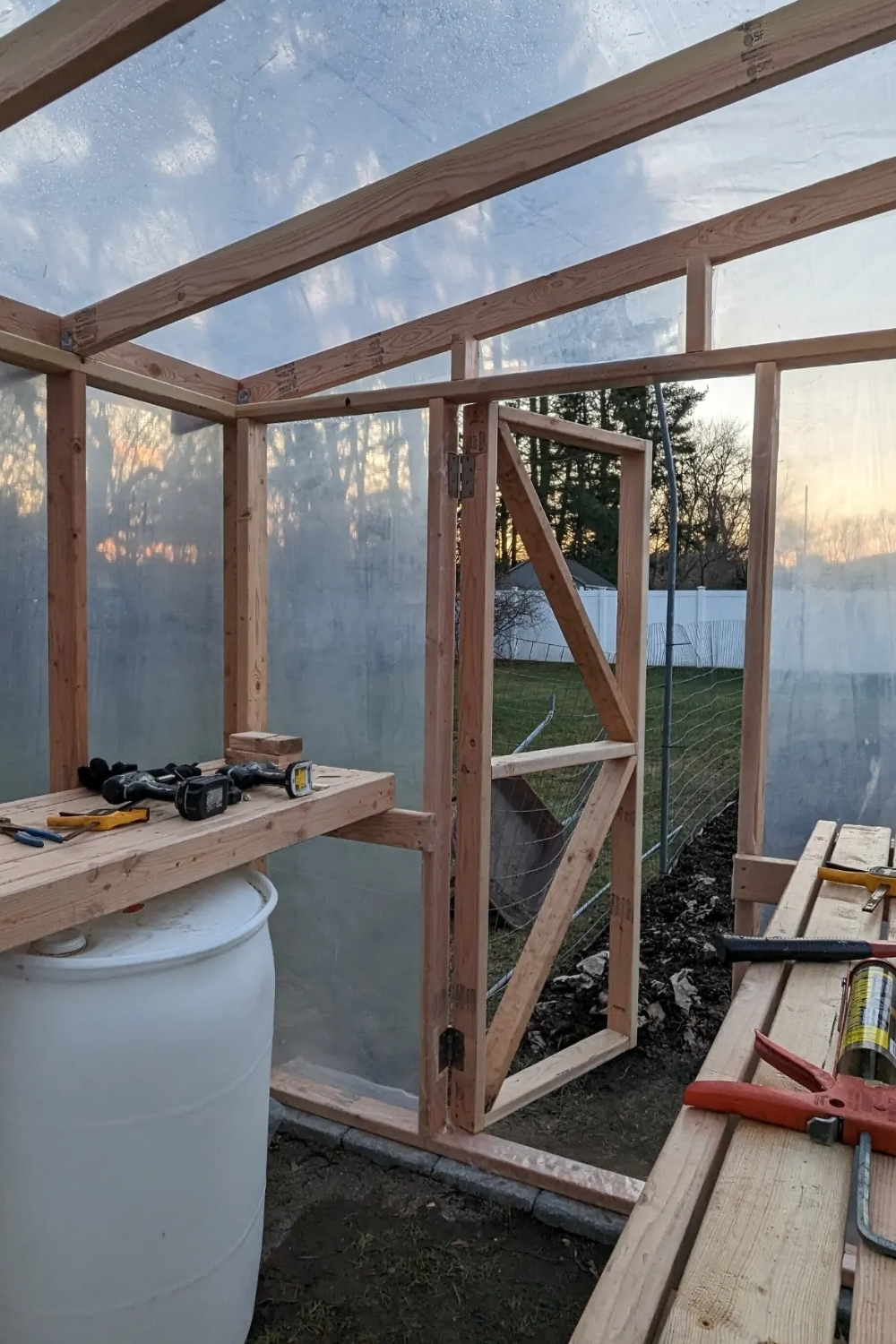
A plastic drum under the potting bench, like this one, doubles as a work surface support. Leave some space at the top of each barrel so that if the water does freeze, the expanding ice doesn’t split the container. In very cold climates, water barrels help most in spring and fall; in deep winter they can freeze solid themselves. They’re a buffer, I guess you could say, not a heater.
Add heat: heating a small greenhouse
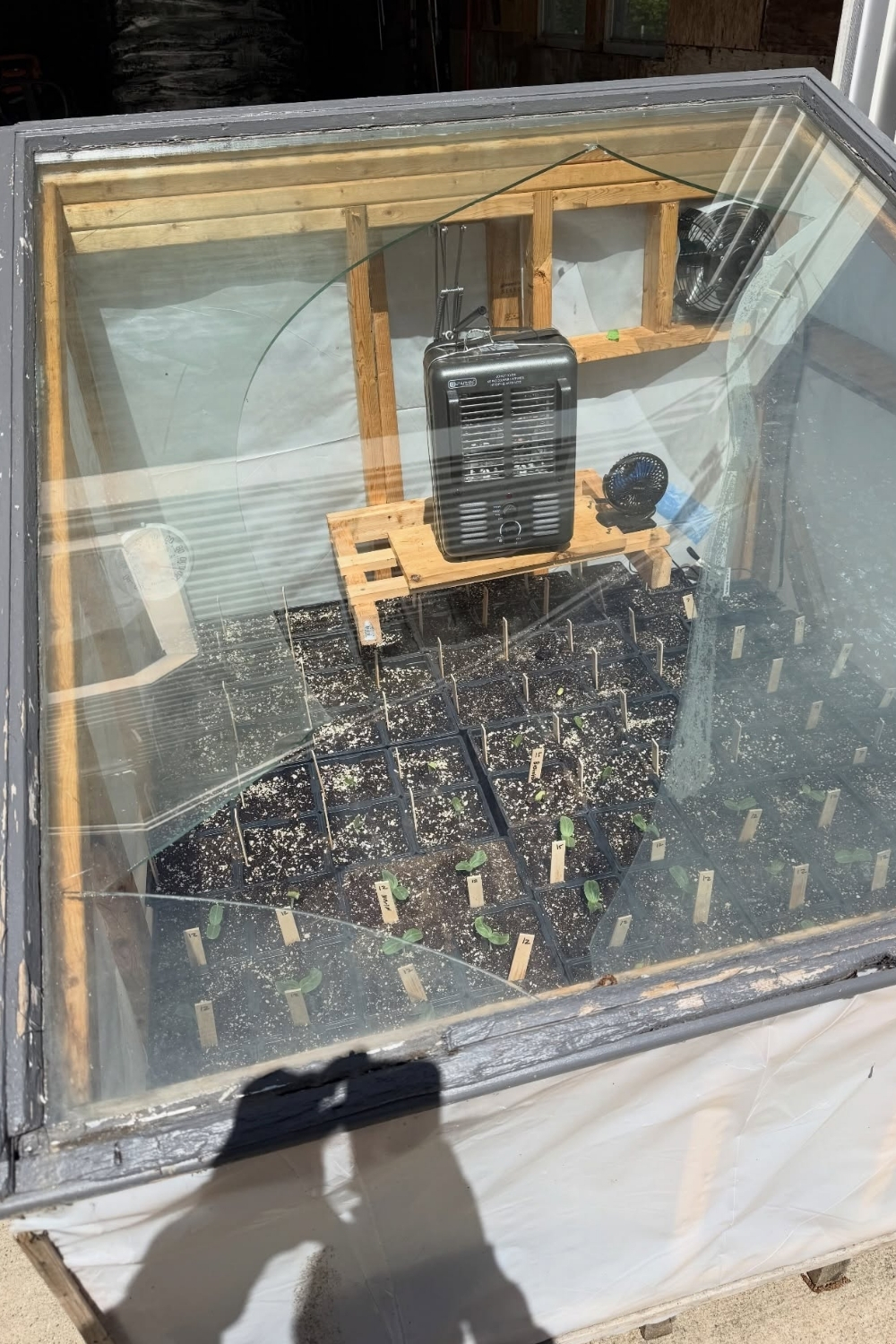
For a frost-free or cool greenhouse, a small electric heater is the simplest choice. Pick one with a built-in thermostat, or plug it into a separate plug-in thermostat, so it only runs when the temperature drops below your setting. Set it just above the level your plants need, for example 40 °F for overwintering, rather than leaving it running all night. A small fan to move air around keeps the heat from pooling at the roof.
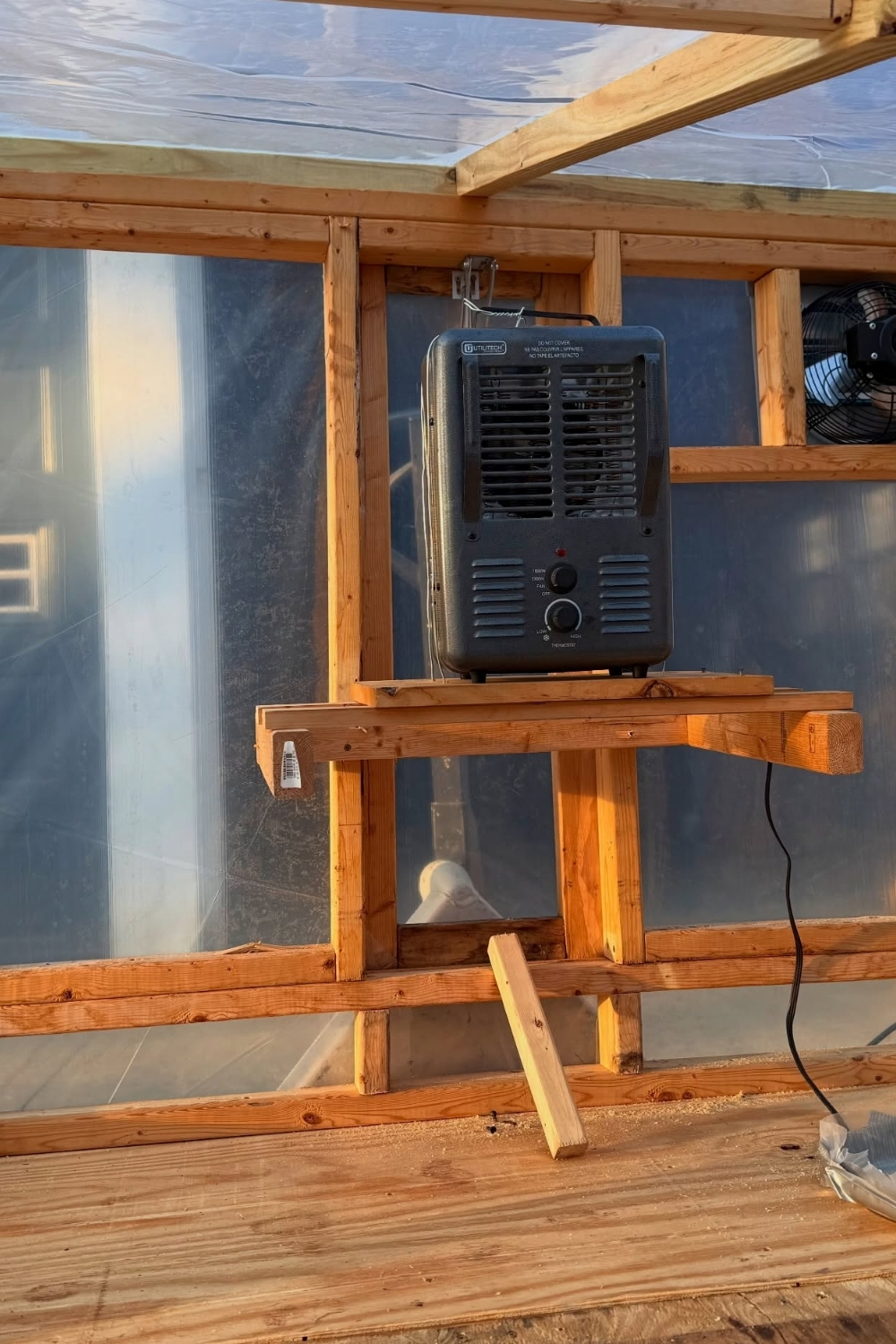
Mount the heater off the ground on a shelf or bracket, as in these photos. Keep it well away from water, wet soil and plastic sheeting, and plug it into a properly protected outdoor outlet.
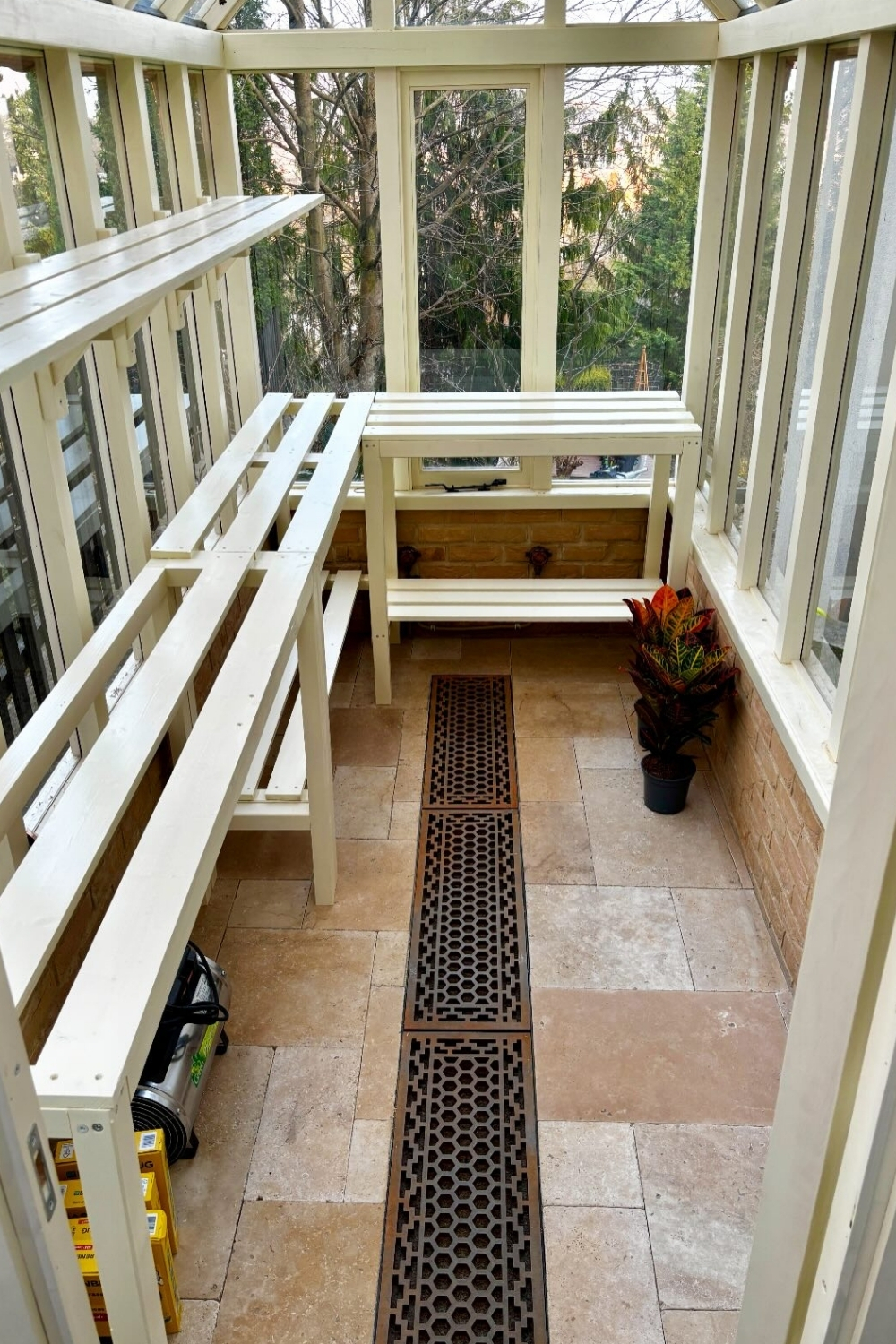
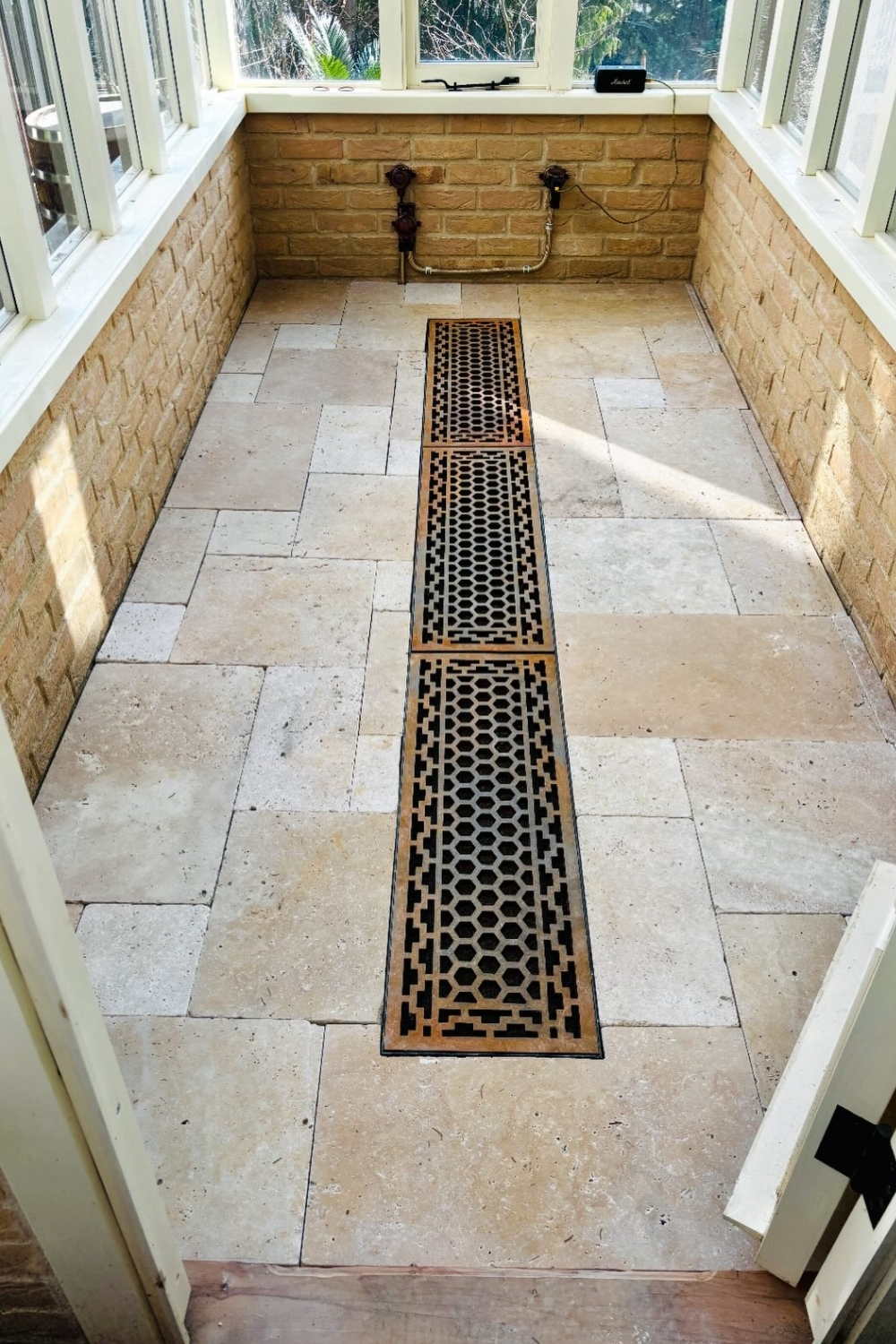
Larger, permanent glass houses sometimes have heating built into the floor, with warm air rising through a long grate down the middle like these. It’s a bigger investment, but it spreads warmth evenly from the ground up.
Make the most of the light
Winter light is short and weak, and a small greenhouse doesn’t have space to waste. Stack plants on benches and shelves so more of them sit up in the light rather than shaded on the floor.
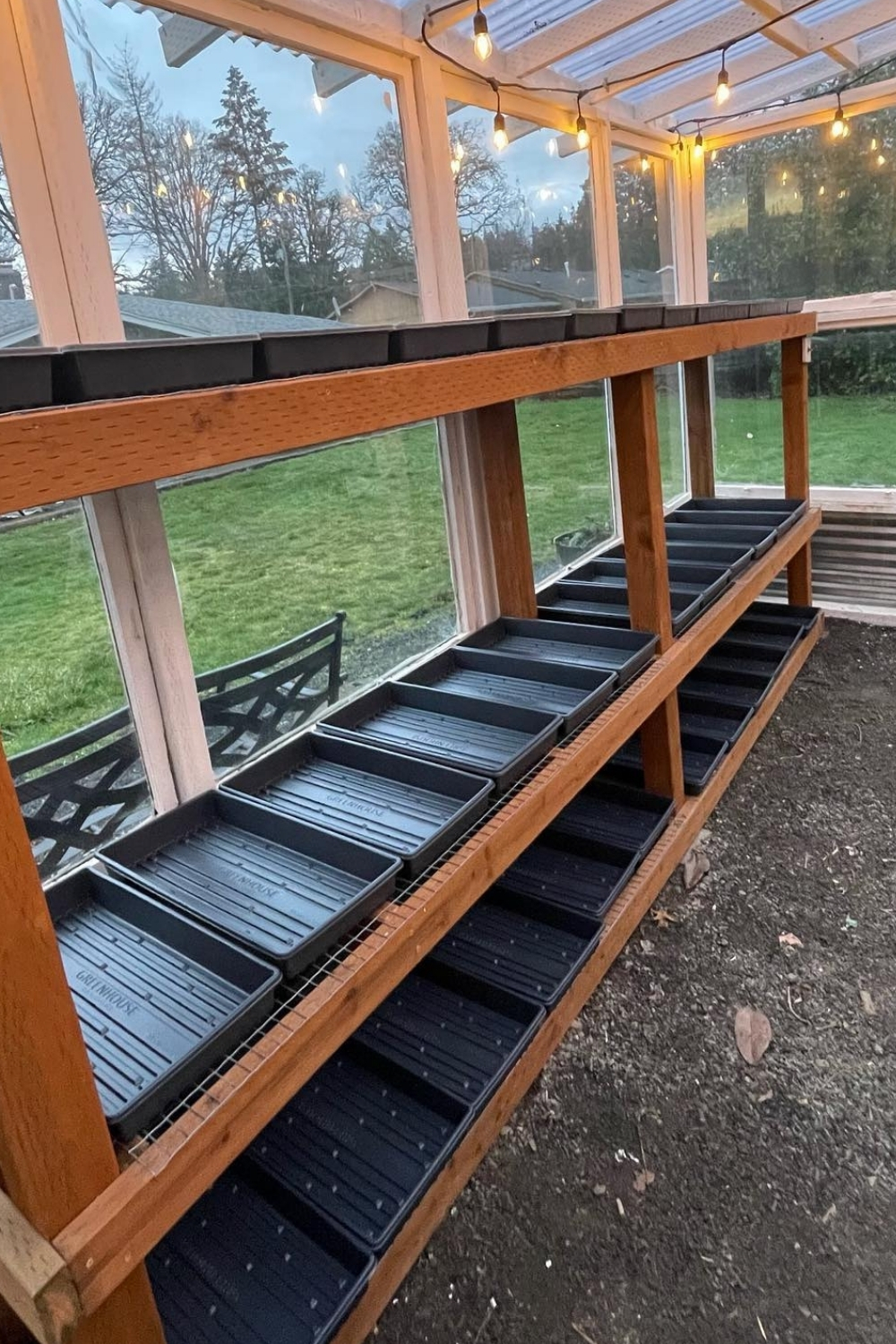
Two tiers of trays along the sunny side, like these, fit far more seedlings and greens into a small footprint than a single bench.
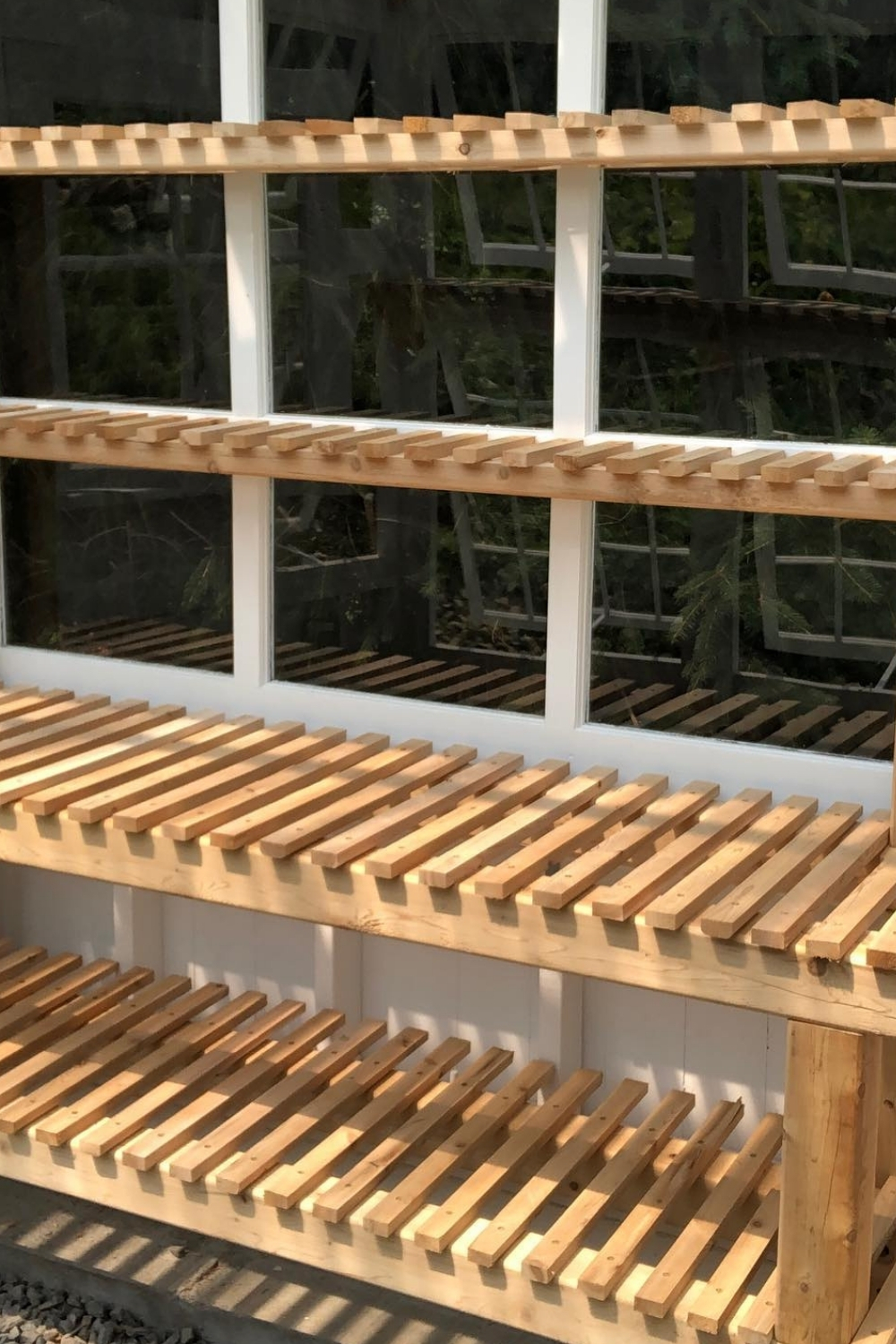
Slatted shelves let light and air pass through to the plants below and let water drain straight through. Keep the panels clean; a film of dirt or algae on the glass can block a surprising share of winter light. Wash them in fall before the plants move in.
What to grow in a winter greenhouse
Winter greenhouse plants fall into two groups. The first is food: lettuce, spinach, kale, chard, mâche, arugula, Asian greens like tatsoi and mizuna, scallions, parsley, cilantro and chives. Sow most of them in late summer or early fall, so they’re well grown before the short days of December slow everything down. For which crops hold up best in cold, these winter vegetable garden ideas go through each one, and greens can also grow in raised beds inside the greenhouse; this look at why raised garden beds are worth it applies there too.
The second group is shelter: tender plants that just need to get through the cold. Geraniums, citrus, potted bay and figs, fuchsias and dahlia tubers can all spend winter in a frost-free greenhouse, watered sparingly. This guide to overwintering dahlias, geraniums and potted plants covers what each one needs.
Ventilation and condensation
A closed greenhouse in winter fills up with damp air. Plants release moisture, wet soil evaporates, and at night that moisture condenses on the cold glass and drips back onto the leaves. Damp, still air is how gray mold and mildew take hold.
The answer is to open a vent or the door on sunny days, even in winter, for a few hours around midday. It lets moist air out and stops the temperature spiking: a closed greenhouse in full sun can hit 80 °F or more on a freezing day. Close up again by midafternoon to trap warmth for the night. Water in the morning rather than the evening, so leaves and soil surfaces dry before dark.
While we’re here, a small fan running on low, even without heat, keeps air moving and helps a lot with condensation.
A simple winter greenhouse routine
Winter greenhouse gardening takes a few minutes a day, not hours. In the morning, check the min-max thermometer to see how cold it got overnight, and water anything that’s dry, sparingly and at the base of the plants. On sunny days, open a vent or the door around late morning and close it again by midafternoon. Once a week, pick off yellowing or moldy leaves, which is where gray mold starts, and harvest the outer leaves of greens so the plants keep producing.
Before a forecast cold snap, add a layer of fleece over the most tender plants at night and check the heater’s thermostat. After heavy snow, brush it off the roof gently, since a thick load blocks light and can bow a lightweight frame.
Winter greenhouse mistakes to avoid
The most common one is overwatering. Plants in a cold, dim greenhouse use very little water, and wet soil plus cold air is a recipe for rot. The second is keeping everything shut on sunny days, which cooks plants by noon and soaks them in condensation by night. The third is heating more space than you need. In a small greenhouse, it’s often smarter to heat one insulated corner, or a shelf wrapped in bubble wrap with a heat mat, than to warm the whole structure.
DIY winter greenhouse options
Not every winter greenhouse has to come from a kit.
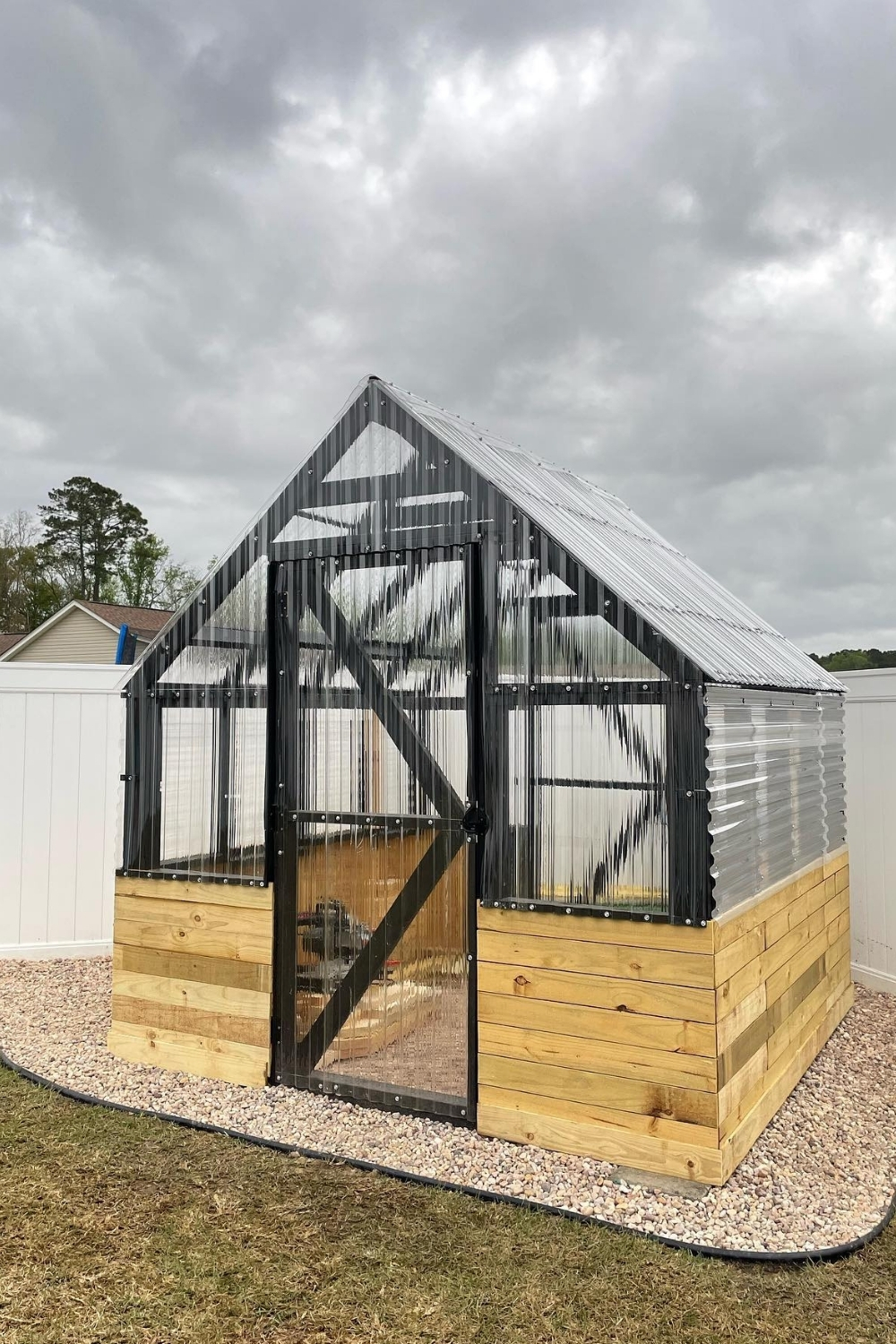
A timber frame clad with twin-wall polycarbonate is one of the best DIY designs for cold climates. Polycarbonate is a rigid plastic sheet with hollow channels inside, which insulate much better than single glass. This black-framed build sits on a raised timber base, which adds a few more inches of insulated wall.
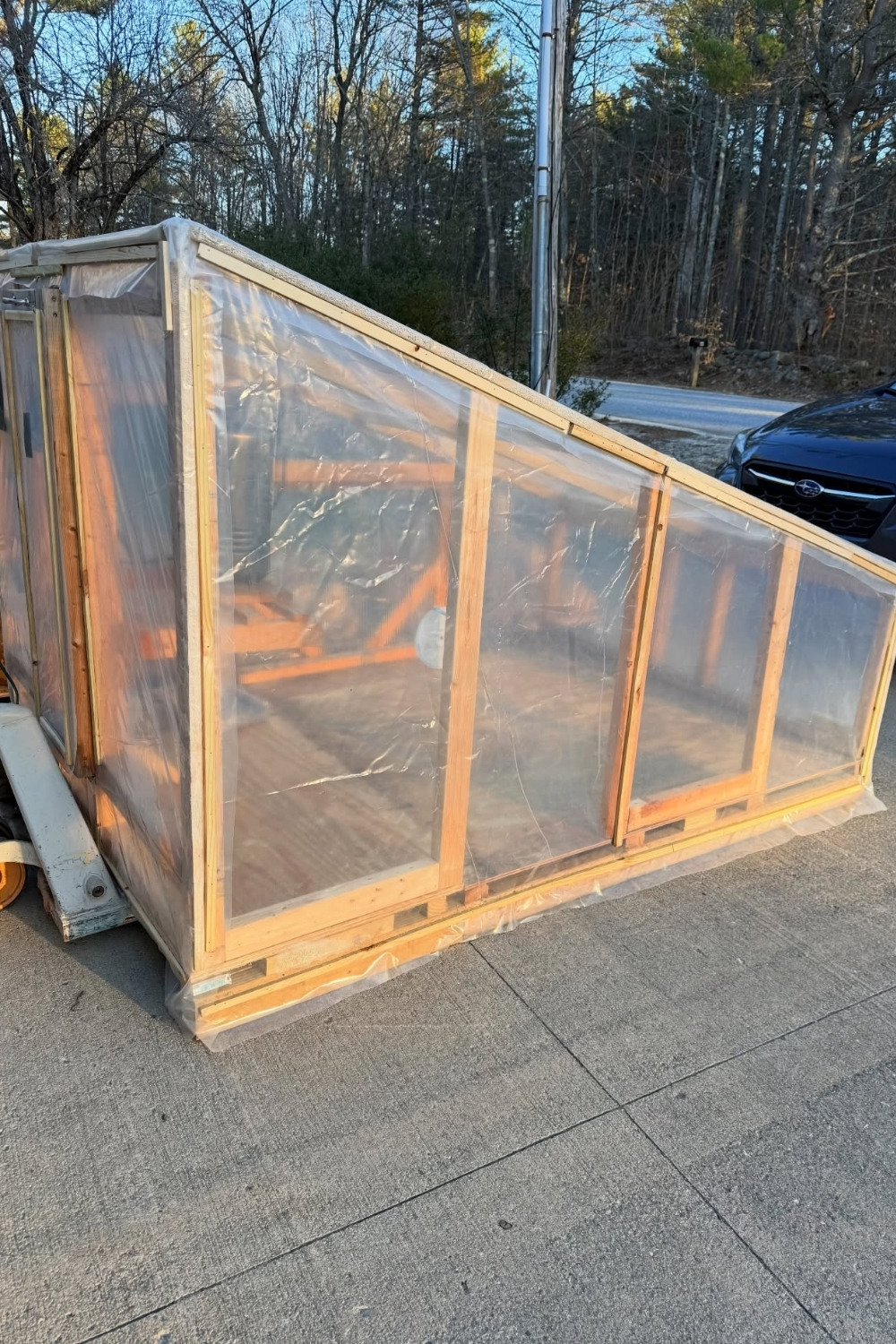
A greenhouse film over a simple wooden frame is cheaper and quick to build. A single sloping roof, like this one, sheds snow well. Built as a lean-to against the south wall of a house or garage, the same design borrows warmth from the building and is noticeably warmer than a freestanding greenhouse.
For the smallest gardens, a cold frame, a low box with a clear lid set right on a bed, does much of what a winter greenhouse does on a tiny scale, and it’s a good place to start. For the bigger picture, these kitchen garden ideas show how a small greenhouse or cold frame fits alongside beds and paths.
Before buying a heater or insulation, put a simple minimum-maximum thermometer in the greenhouse for a week of cold nights. It records the lowest and highest temperatures, and those two numbers tell you exactly which of these ideas your greenhouse needs first.