
What makes a concrete fence look designed rather than industrial? Usually it’s what goes with the concrete. A plain gray wall on its own can feel like a parking garage, but the same wall with warm wood slats, black metal pickets, a smooth pale render or a thick cap on top looks like part of the house. The concrete fence designs below range from light, open styles to solid walls, and most of them come down to pairing concrete with one other material.

They fall into three families: concrete pillars with slats between them, solid walls, and low walls topped with something lighter.
Concrete pillars with slats
This is the most popular way to use concrete in a fence, and the easiest of the concrete fence designs to adapt to any house. The pillars and a low base do the heavy lifting, and the panels between them keep the fence from looking like a fortress.
1. Concrete pillars with metal slats
Tall rendered or precast concrete pillars, with vertical metal pickets or flat bars between them, give a crisp, sharp look. The photo at the top shows the classic version: pale stone-colored pillars with caps, a low concrete plinth, and dark gray steel slats with narrow gaps. The gaps let air and some light through, which helps on windy streets, and the slats read as a fence rather than a wall, so the front of the house doesn’t feel closed off.
Powder-coated aluminum or steel is the usual choice for the slats. Powder coating is a baked-on paint finish that holds up far better outdoors than ordinary paint, which matters on a fence that faces rain and sun for decades.
Pairs with: stucco or rendered houses, clean front yards, and anywhere the fence should feel secure without blocking the view entirely.
2. Concrete base with horizontal wood slats
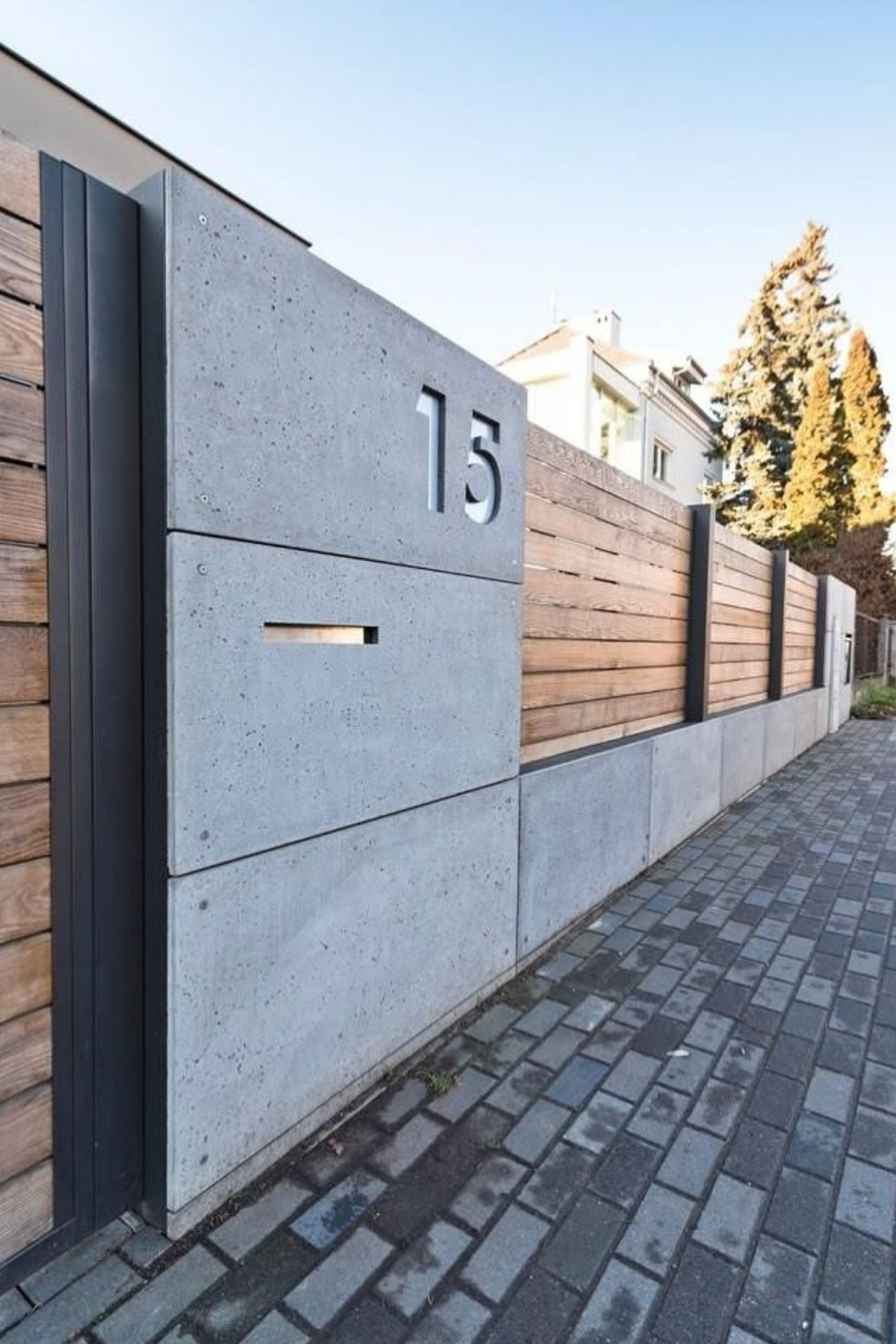
This is the warmer version. A concrete base, a few concrete or steel posts, and horizontal timber boards between them combine the toughness of concrete with the softness of wood. The concrete stops the wood from touching the soil, where it would rot fastest, and the horizontal boards make a narrow front yard look wider.
The entry pillar in this photo shows how far the idea can go: a big concrete block with the house number cut into it and a mail slot built right in, set between wood-slat panels. It’s pretty much a mailbox, address sign and fence post in one piece.
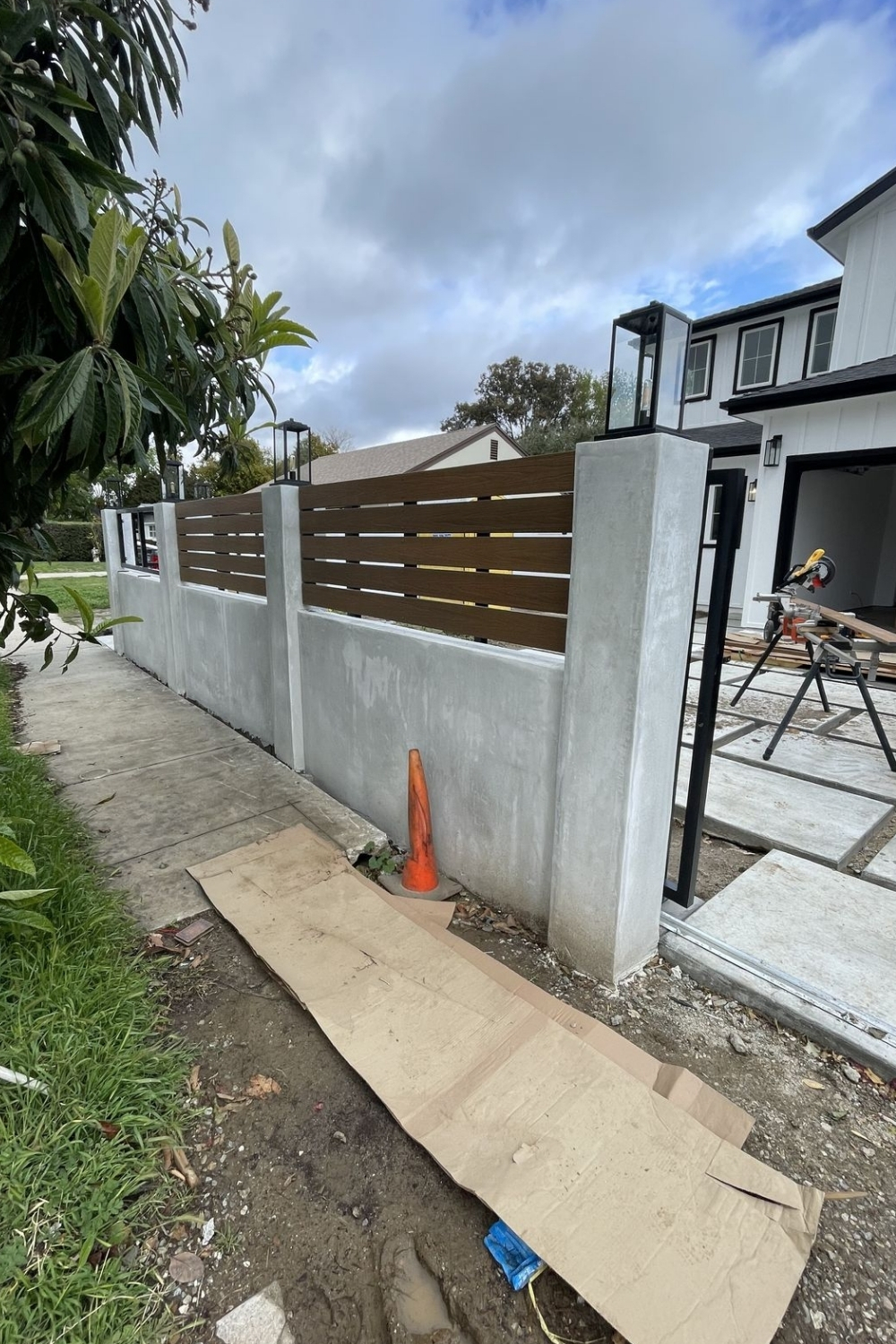
A simpler concrete fence, like this one still under construction, uses a low rendered wall with thick concrete pillars, then slatted panels set on top of the wall between the pillars. Hardwoods such as ipe, or thermally modified wood, last longest; pine needs a stain or oil every couple of years.
Pairs with: houses with wood details, gardens with lots of planting, and anyone who wants concrete without the cold look.
Solid concrete walls
A solid concrete wall fence gives full privacy, blocks road noise better than any slatted fence, and holds up for generations. They also show every bit of design choice, good or bad, so finish and proportion matter more here.
3. Rendered concrete walls

Render is a cement-based plaster troweled over a block or concrete wall to give it a smooth, even surface. It hides the joints of a block wall completely, so the finished wall reads as one solid piece. It can be left natural gray, tinted, or painted to match the house.
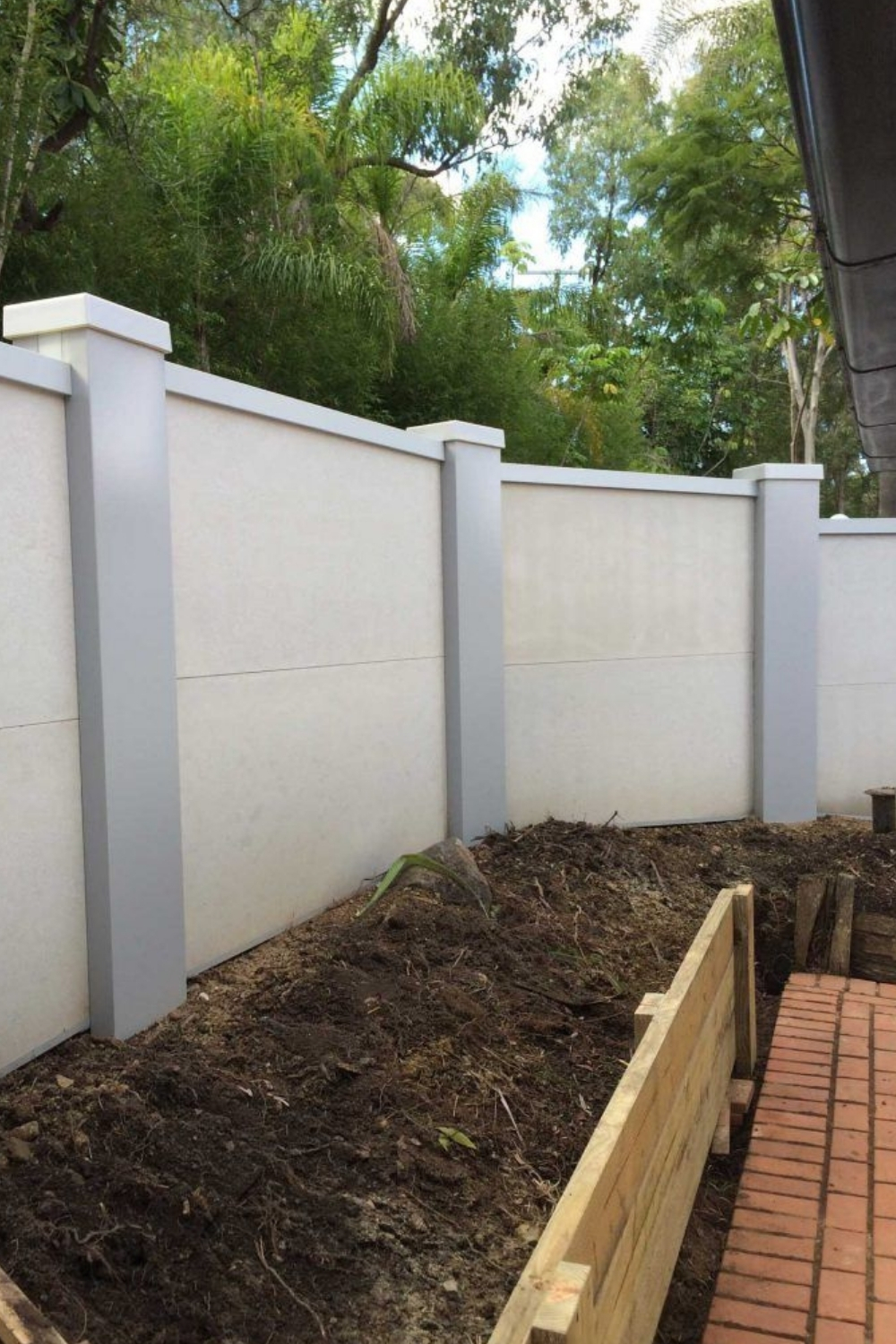
Thin, crisp edges and a slightly darker or lighter cap on top keep a rendered wall from looking heavy. Pillars that step forward from the wall every few panels, as in this photo, break up a long run and give the eye somewhere to rest. Render needs a fresh coat of masonry paint every several years if it’s painted, and small cracks are easy to patch.
Pairs with: Mediterranean, Spanish-style and stucco houses, and gardens with olive trees, lavender and gravel.
4. Precast concrete panels
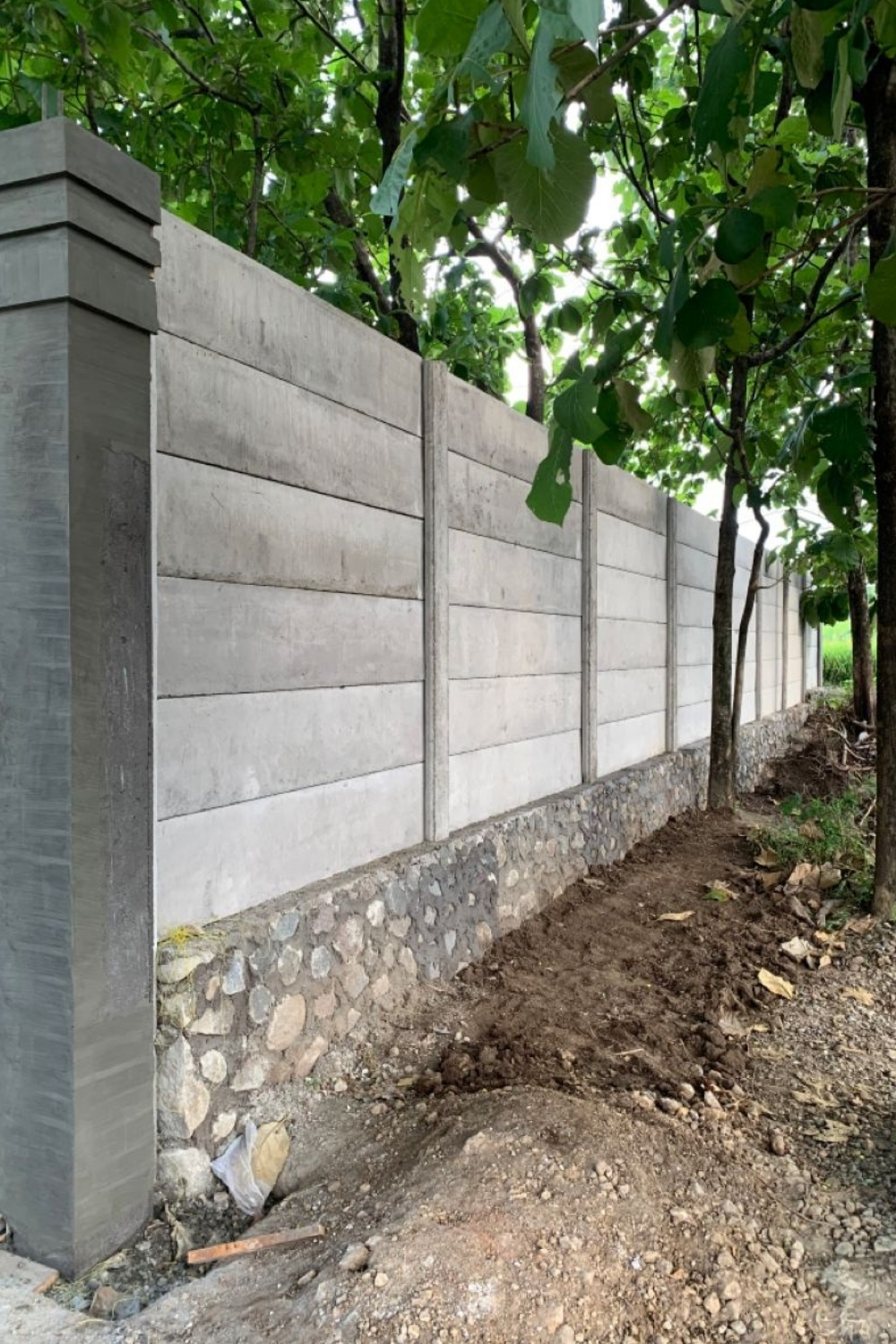
Precast concrete fence panels are made in a factory and slotted into grooved concrete posts on site, a bit like sliding boards into a frame. Installation is fast, often a day or two for a long run, and the panels come in smooth, wood-grain, stone-look or textured finishes.
This one sits on a rough stone base and runs under trees along a property line, which shows one of the advantages: precast panels can follow a slope by stepping down from post to post. The lightly textured gray finish weathers well and doesn’t need painting.
Pairs with: long property lines, back boundaries and rural or semi-rural lots where speed and durability matter more than fine detail.
5. Poured concrete walls
A poured concrete wall is cast in place: wooden or metal forms are built on site, steel reinforcing bars go inside, and concrete is poured in and left to harden. It’s the most permanent fence there is.
The finish comes from the forms. Smooth plywood forms leave a clean, even surface. Rough-sawn boards leave the imprint of wood grain in the concrete, a look called board-formed concrete. According to this explainer on board-form concrete, the grain and knots of the boards press into the surface as it cures, and the size, spacing and alignment of the boards all change the final pattern. On a garden wall, that texture catches the low sun beautifully, which is kinda crazy for something that started as plywood and planks.
Poured walls are a job for a concrete contractor, and they cost more than block or precast.
Pairs with: architectural houses, sloped lots where the wall also holds back soil, and gardens with grasses and bold, simple planting.
Low walls with something lighter on top
A low concrete wall, roughly knee to waist height, with a lighter fence above it is the friendliest style for a front yard. It marks the boundary clearly while keeping the house visible from the street.
6. Concrete block walls with capped pillars

Concrete blocks with a split face, a rough, stone-like surface made by splitting the block during manufacturing, look far more finished than plain blocks. Built into pillars with flat concrete caps and a matching wall between them, they make a sturdy, slightly traditional boundary. This one pairs gray split-face pillars with a solid black metal gate.
Caps do more than finish the look. They shed rainwater off the top of the wall, so water doesn’t soak into the blocks and crack them in freezing weather.
Pairs with: brick or stone houses, and front yards that need a solid gate. These brick landscaping ideas show how brick can echo the same blocky, built feel in paths and borders.
7. Low wall with metal railing
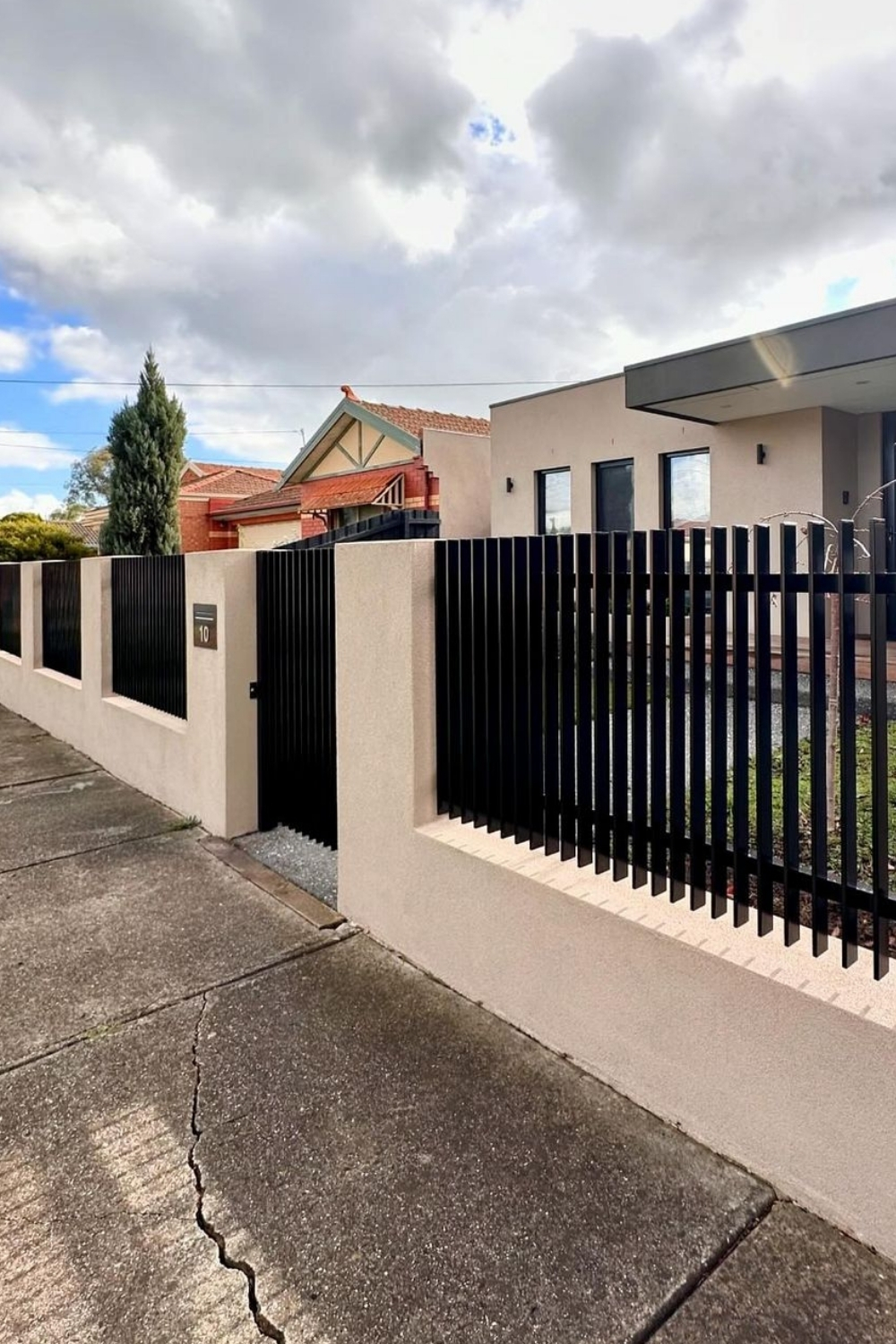
A rendered wall about 2 to 3 feet high, with black vertical railings above it and rendered pillars every 6 to 8 feet, is a very common front-yard fence in newer neighborhoods, and for good reason. The wall gives weight and privacy at ground level, while the railings keep the frontage open.

Taller pillars with railings and a matching sliding gate push the same idea further. Planting behind the wall, like the shrubs and lights here, softens the whole thing. Love that for a street that otherwise looks like rows of garage doors.
Pairs with: suburban front yards, corner lots and houses where the garden should still be seen from the street.
8. Concrete pillars with a wrought-iron gate

The most decorative option sets a low concrete wall and pillars with a traditional iron fence on top, scrolls, finials and all. A small roofed gateway over the pedestrian gate, rendered to match the wall, gives the entrance a sense of arrival. It’s a more ornate style, but the concrete keeps it grounded.
Pairs with: Spanish, colonial and older houses, and front gardens with lawn and clipped shrubs.
Choosing between them
Start with how much you want to see through it. Slatted and railing designs keep the house and garden visible, which suits front yards and streets where a blank wall would feel unfriendly. Solid concrete walls suit back boundaries, busy roads and anywhere privacy or quiet comes first.
Then look at the house. The fence is the first thing people see, so it should borrow something from the building: the render color, the trim color for the metal, the same timber as the deck or the porch. A concrete fence that repeats one material from the house almost always looks right, while one that introduces three new ones rarely does.
Finally, think about the ground. On a flat lot, any of these concrete fence designs works. On a slope, precast panels step down neatly, block and render can follow the grade, and poured walls can double as retaining walls. Slatted panels on a slope need careful planning so the gaps at the bottom stay even.
Upkeep over the years
Concrete is about as low-maintenance as fencing gets, but not zero. Natural concrete and precast panels mostly need a wash with a hose and a stiff brush every year or two to clear algae and dirt, especially on the shady side. Painted render needs repainting every several years. Wood slats need oil or stain every year or two, and metal slats or railings need a quick check for chips in the coating, touched up before rust starts. Compared with an all-wood fence, a concrete fence wins easily on lifespan.
Finishes and pairings
Gray isn’t the only option for concrete. Smooth render can be painted any color, though off-white, warm sand and soft gray tend to age best outdoors. Natural concrete can be left raw and sealed with a clear masonry sealer, which slows staining from rain and leaves. Board-formed texture adds interest without any color at all.
The pairings make the design. Warm wood slats soften concrete and suit planted gardens. Black metal sharpens it and works with almost any house color. Stone at the base anchors a wall and hides splash marks from rain. Whatever the combination, stick to two materials, maybe three. A wall with concrete, brick, wood and metal all at once looks like four different fences.
The same idea carries into the rest of the yard. A concrete and timber fence pairs well with a pergola for shade and dining built in the same timber, and on a slope, the fence can share its footing with a retaining wall in matching block or render.
Before you build
Every concrete fence needs a proper footing, a concrete foundation set below the frost line, the depth where soil stops freezing in winter. Without it, freeze and thaw cycles lift and crack the wall. Solid walls also need small drainage gaps or weep holes at the base, so water trapped behind them can get out, especially where the ground on one side is higher than the other.
Concrete fences are heavy and permanent, so check your property line and local rules on front-yard fence height before you dig. That’s easier than moving a wall later.
For a cheaper boundary, these budget fence ideas cover wood, wire and reclaimed options, and these garden screening ideas add privacy with plants and panels without a full wall.
Fall is a good time to plan a fence. Gardens are cut back, so property lines and sightlines are easy to see, and contractors often have more room in their schedules before the ground freezes. Pick the design over the winter, and the footings can go in as soon as the soil thaws.