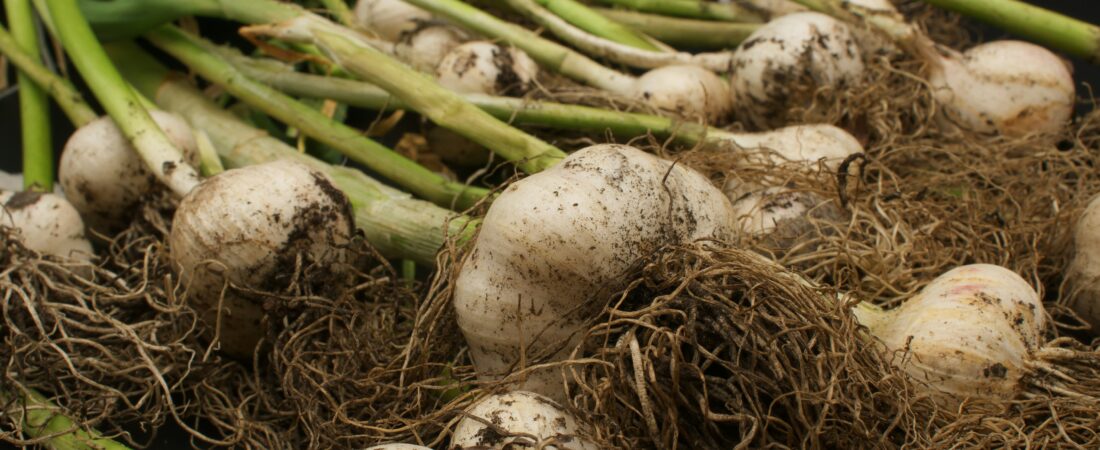
Plant garlic in fall, a few weeks after the first frost and roughly four to six weeks before the ground freezes. That’s the answer to when to plant garlic almost everywhere it grows. The timing gives each clove enough weeks to grow roots before winter, but not enough warmth to push up a lot of soft green leaves that the cold would only damage.
Garlic at a glance:
- Hardiness: zones 4–9; hardneck types for cold winters, softneck types for mild ones
- Sun: full sun, at least six hours a day
- Water: evenly moist, never soggy
- Size: about 1.5–2 feet tall at full growth
- Harvest: early to midsummer the following year
- Toxicity: toxic to cats and dogs, including the leaves and bulbs
Timing garlic planting with frost, not the calendar
The calendar date changes a lot from one region to the next, so frost is the better guide. Once the first frost has come and gone and the soil has cooled, it’s time for planting garlic, along with the other crops to plant in October. In the coldest zones that usually means late September or early October; in the middle of the country, October into early November; in mild zones, as late as December.
According to Illinois Extension’s advice on fall garlic, the target is four to six weeks before the ground freezes. That window lets the roots settle in while the top stays mostly underground.
In the warmest zones, winter may not get cold enough on its own. Some gardeners there keep their bulbs in the refrigerator for several weeks before planting garlic, away from fruit, to give the cloves the cold spell they would otherwise miss.
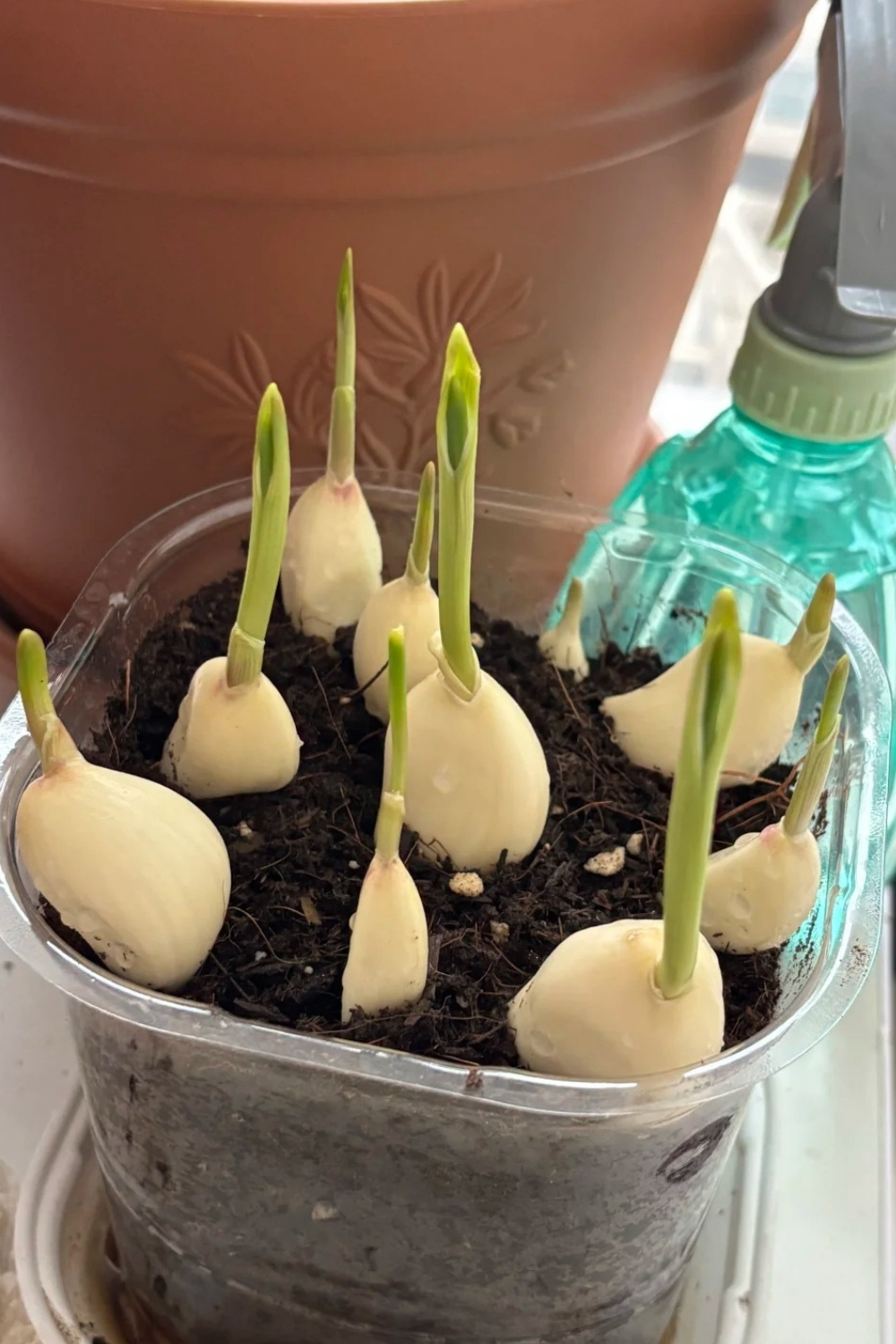

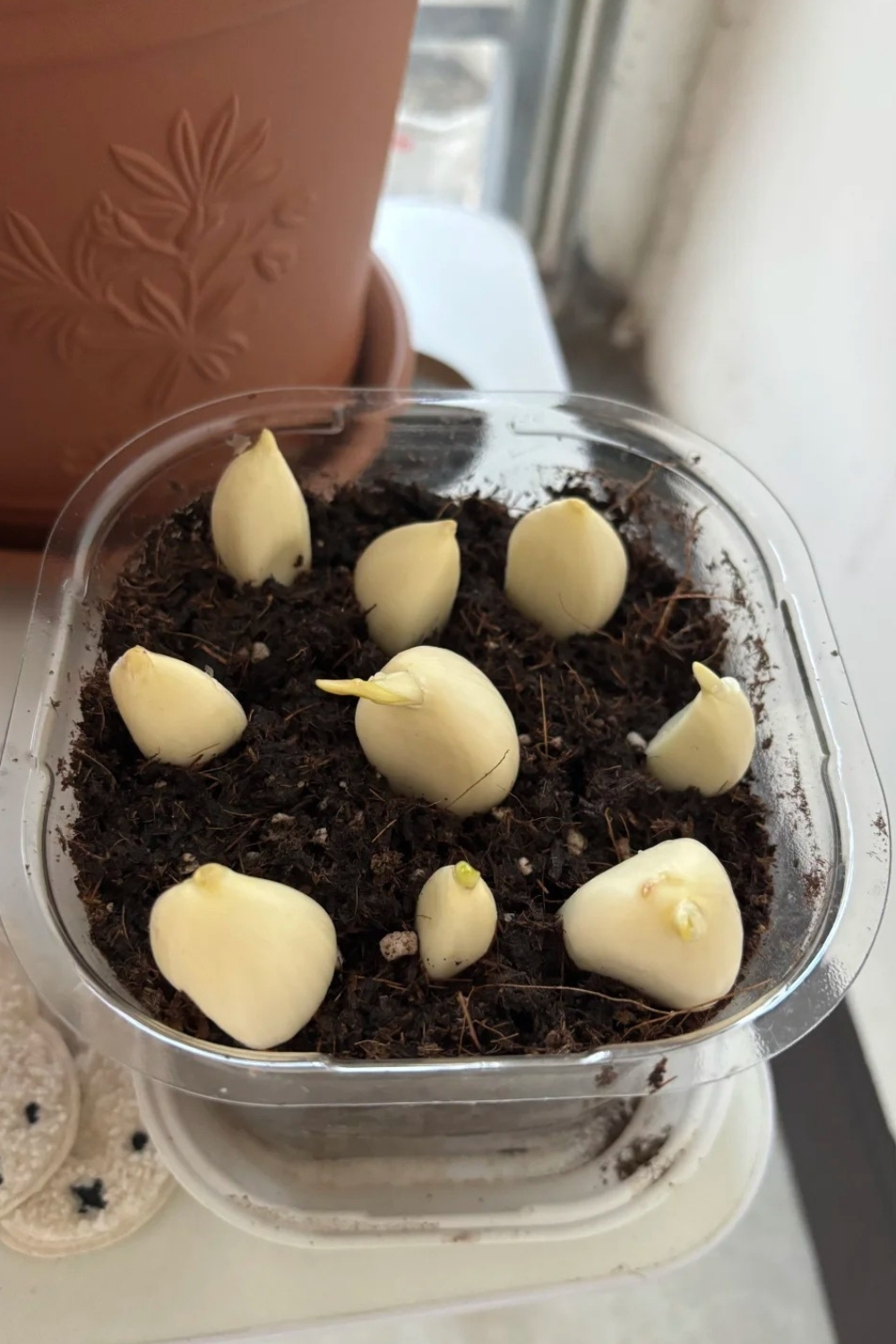
Planting too early, or keeping cloves somewhere warm, does what these photos show: long green shoots before the clove has any real roots. Now, obviously, a bit of green above the soil before winter is fine. A tall, leafy plant going into a hard freeze is not, because the frozen leaves die back and the plant spends its spring energy recovering instead of building a bulb.
Hardneck or softneck
Garlic comes in two main types, and the one to plant depends on your winters.
Garlic goes in at the same time as spring-flowering bulbs, so it’s easy to do both in one weekend. Hardneck garlic grows a stiff stalk up the middle of the bulb. It needs a long, cold winter to form proper bulbs, so planting garlic of this type makes the most sense in zones with real winters. It has fewer, bigger cloves, a stronger flavor, and in late spring it sends up a curly flower stalk called a scape, which is good to eat.
Softneck garlic has no stiff stalk, only soft leaves. It handles mild winters better, stores longer after harvest and has more, smaller cloves. It’s also the type that can be braided. Most garlic in grocery stores is softneck.
In the middle zones, both types usually do well, and planting garlic of each kind is a good way to see which one likes your garden best.
Picking the cloves
Buy seed garlic, which simply means garlic sold for planting, from a nursery, seed company or farmers’ market. Grocery store garlic will sometimes grow, but some of it is treated to stop sprouting, and it’s usually a softneck type grown for a mild climate, which may struggle through a cold winter.

Break the bulb into single cloves only a day or two before planting garlic, and keep the papery skin on each one. Then plant the biggest cloves. Each clove grows into a whole new bulb, and big cloves make big bulbs. For planning, count one clove for every bulb you hope to harvest next summer, plus a few extra, since a clove or two usually fails over winter. That makes planting garlic for a year of cooking easy to work out: a household that uses one bulb a week needs about 50 to 55 cloves in the ground. The small inner cloves can go into a pot for garlic greens instead, the mild young leaves cut like chives.
Don’t plant a whole, unbroken bulb if the goal is fat bulbs. All the cloves sprout in one crowded clump, and none of them has room to grow into a full head.
Depth and spacing in the ground
When planting garlic, set each clove pointed end up and flat end down, about 2 inches deep, measured from the base of the clove. Space cloves 4–6 inches apart, in rows about a foot apart, or in a grid with 5 or 6 inches in every direction.
Loose, well-drained soil with some compost mixed in suits planting garlic best. Heavy clay that stays wet over winter rots cloves, which is why many gardeners grow garlic in raised beds: the soil drains faster and warms sooner in spring. This look at whether raised garden beds are worth it covers how to fill one with soil that drains well.
Growing garlic in pots and planters
No garden bed? Planting garlic in containers works fine, with a few adjustments. According to Epic Gardening’s guide to growing garlic in containers, the pot should be at least 8 inches deep, with drainage holes, and cloves can go 3–6 inches apart. For fat bulbs, give each clove the full spacing, not the minimum.

A long balcony planter fits a neat row or two. Use a good potting mix, not garden soil, which packs down hard in a pot.
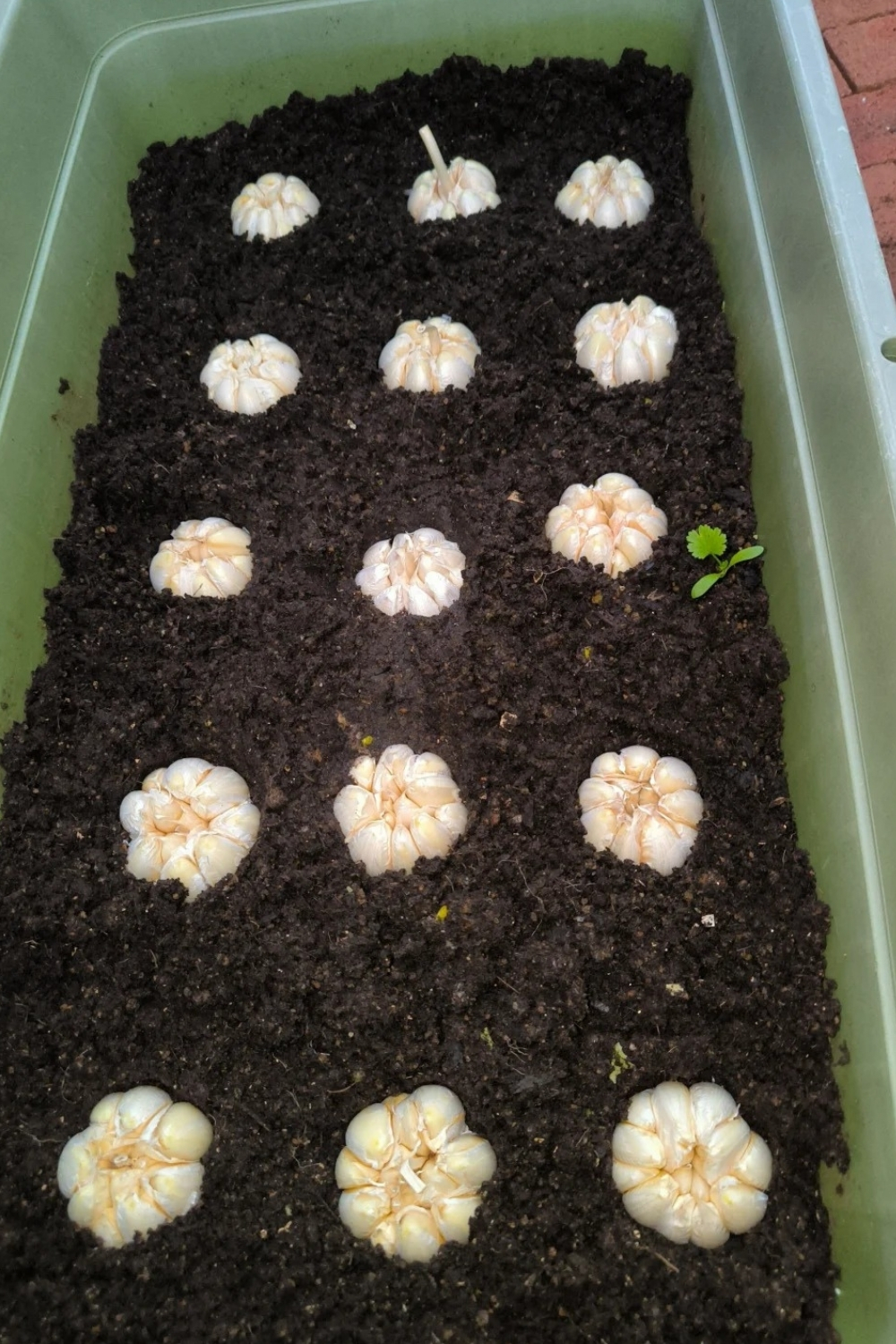
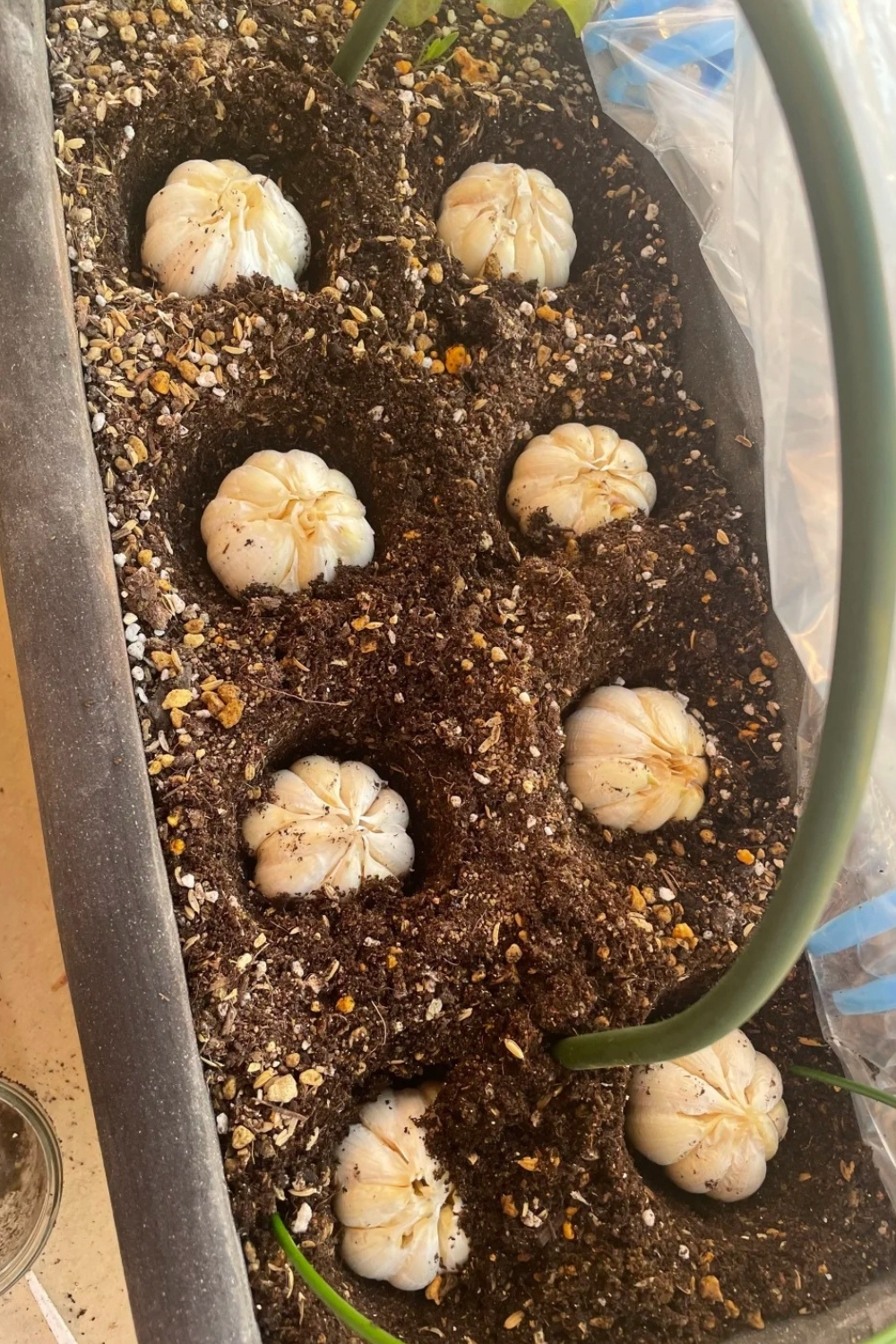
In these planters, whole bulbs sit on the surface. That’s a quick way to grow garlic greens, since dozens of shoots come up fast. Well, technically, it can grow a few small bulbs too, but for fat heads, break them into cloves and bury each one 2 inches down.
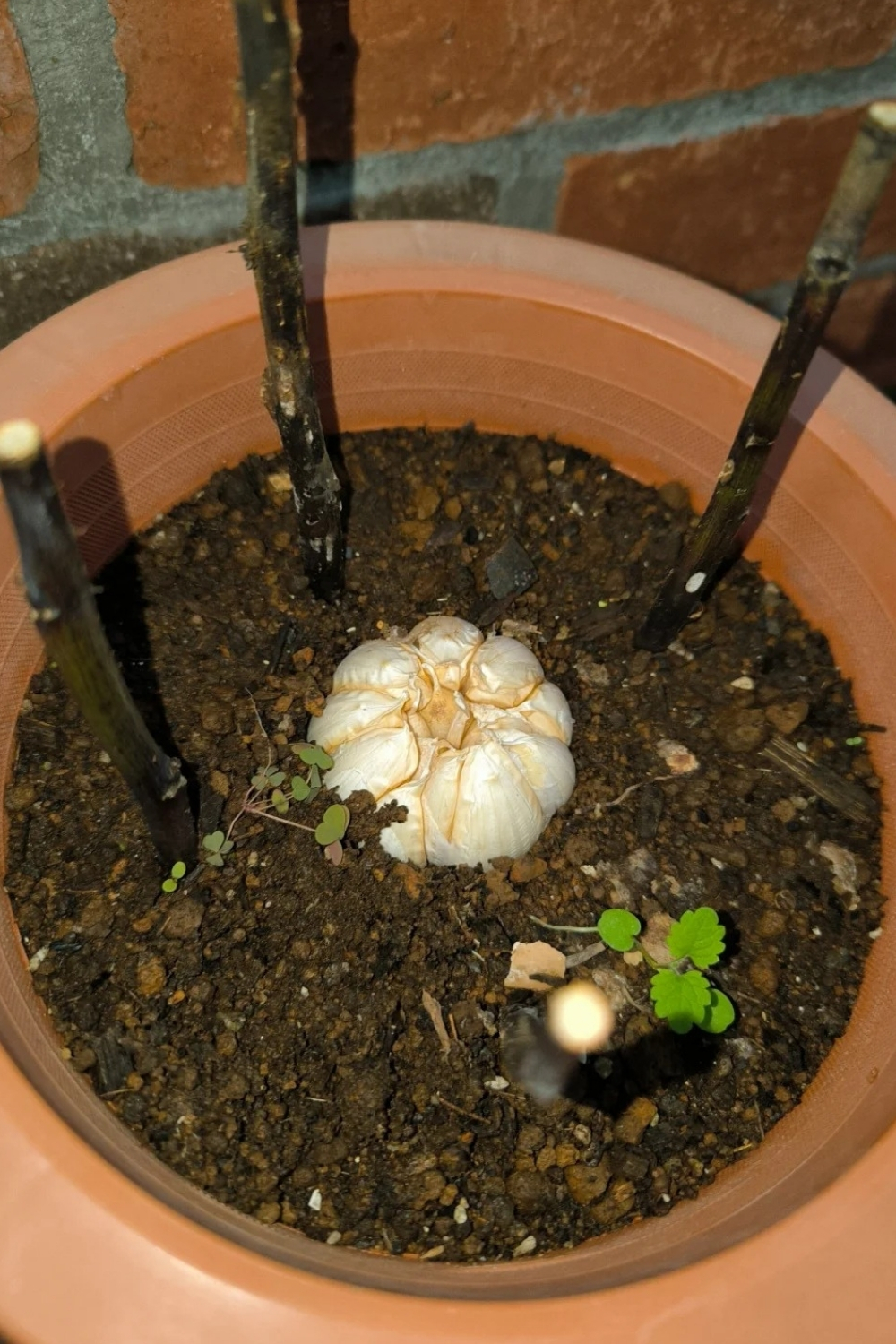
Winter is the tricky part for pots. Soil in a container freezes much harder than soil in the ground, and the roots can die. In mild zones, a layer of mulch on top is enough. In colder zones, wrap the pots in burlap or an old blanket, cover them with frost cloth during hard freezes, or move them to an unheated garage that stays cold but doesn’t freeze solid.

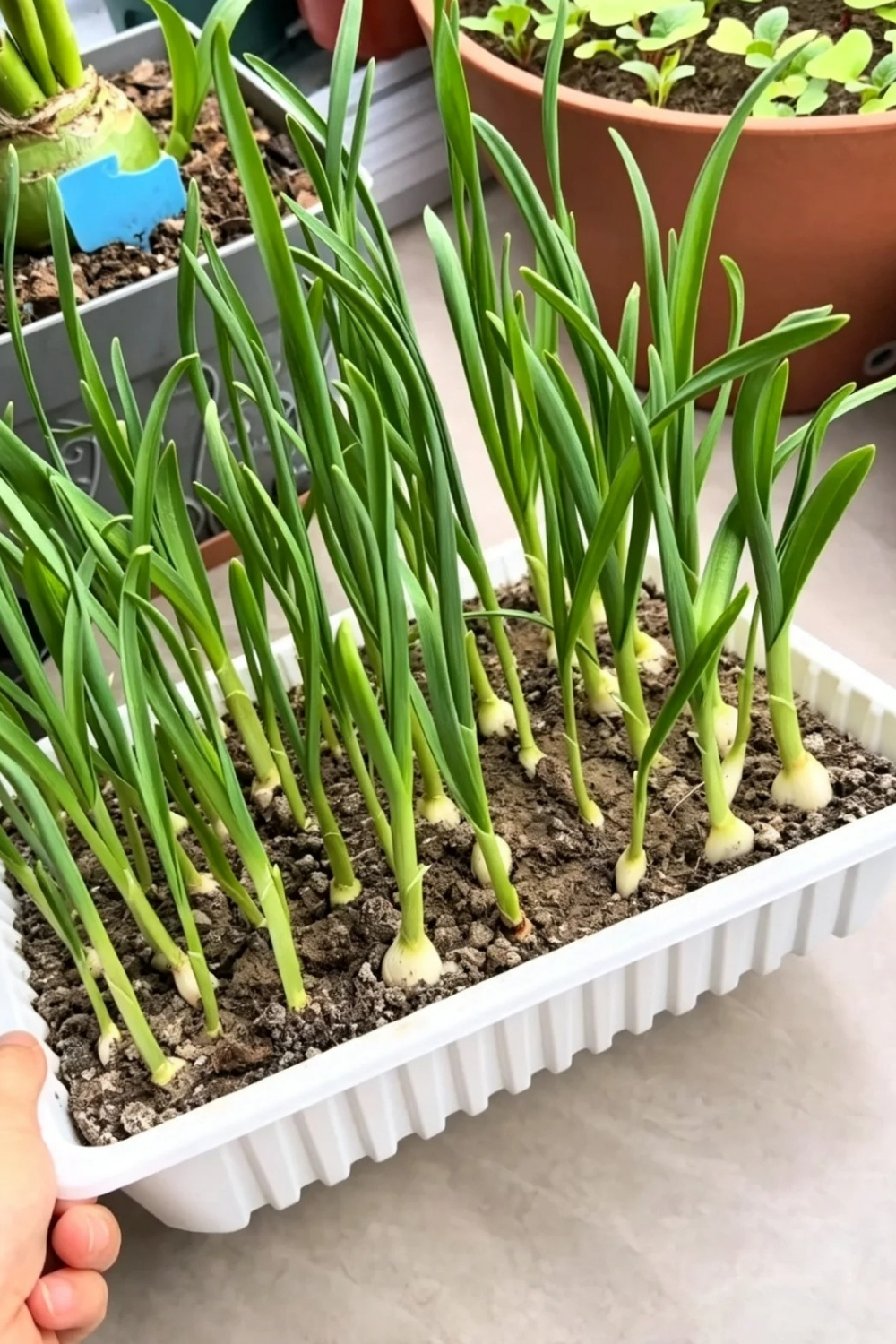

Shallow trays packed with cloves, like the last two photos, are great for a harvest of greens in a few weeks. They won’t make bulbs, since the cloves have no room and no depth, but they keep the kitchen in mild garlic flavor through fall. A few of these space-saving herb garden ideas work the same way on a sunny windowsill.
Mulch, water and scapes in spring
After planting garlic in a bed, cover it with 4–6 inches of straw or shredded leaves once the ground starts to freeze, the same way you’d prep the rest of the garden beds for winter. The mulch evens out soil temperature and prevents frost heaving, when repeated freezing and thawing pushes cloves up out of the soil. In spring, pull the mulch back a little as the shoots come through, and leave the rest to hold moisture and keep weeds down.
Garlic has been living on the energy stored in the clove since fall, so a light feeding helps once it starts growing again. Spread a little compost along the rows or use a balanced fertilizer in early spring, following the label, a few months after planting garlic, and again a few weeks later. Keep the soil evenly moist through spring, about an inch of water a week counting rain, then cut back on watering once the leaves start to yellow in early summer, so the bulbs can firm up.
Hardneck garlic sends up its scape in late spring. Cut it off once it curls, so the plant puts its energy into the bulb instead of a flower. Scapes taste like mild garlic and go into pesto, stir-fries and eggs. I’m just saying, they’re one of the best parts of growing hardneck garlic. A kitchen garden with a garlic row has something to pick in late spring, weeks before the first tomatoes.
Common problems with planting garlic
Most garlic trouble traces back to planting, not to pests. Cloves set too shallow, an inch or less, tend to get pushed out of the ground by frost heaving and dry out on the surface. Cloves in soggy soil rot over winter, usually without any sign above ground until spring, when nothing comes up. That’s why drainage matters more than fertilizer.
Planting garlic too late, after the ground has already gone cold, can produce small, round bulbs with no separate cloves, sometimes called rounds. They’re still edible, and if replanted next fall they usually grow into normal, divided bulbs.
Shade is the other common culprit. Garlic in less than about six hours of sun grows thin leaves and small bulbs, however good the soil is. And since garlic sits in the ground for about nine months, it’s worth choosing a spot where it won’t be in the way of spring and summer crops.
Harvest and curing next summer
Garlic is ready when about a third of the leaves have turned yellow or brown while the rest are still green, usually in early to midsummer. Waiting too long splits the papery wrappers, and the bulbs won’t store as well.
Loosen the soil with a garden fork a few inches away from the plant, then lift the bulb out. Don’t pull on the leaves; they tear off and leave the bulb in the ground. Brush off loose soil, but don’t wash the bulbs.
Curing means drying the garlic so it keeps for months. Hang the plants in bunches, or lay them flat, somewhere airy, dry and out of direct sun, with the leaves and roots still attached. After several weeks, once the necks are dry and the wrappers papery, trim the roots and store the bulbs somewhere cool and dry. Softneck garlic can be braided while the leaves are still a little flexible.
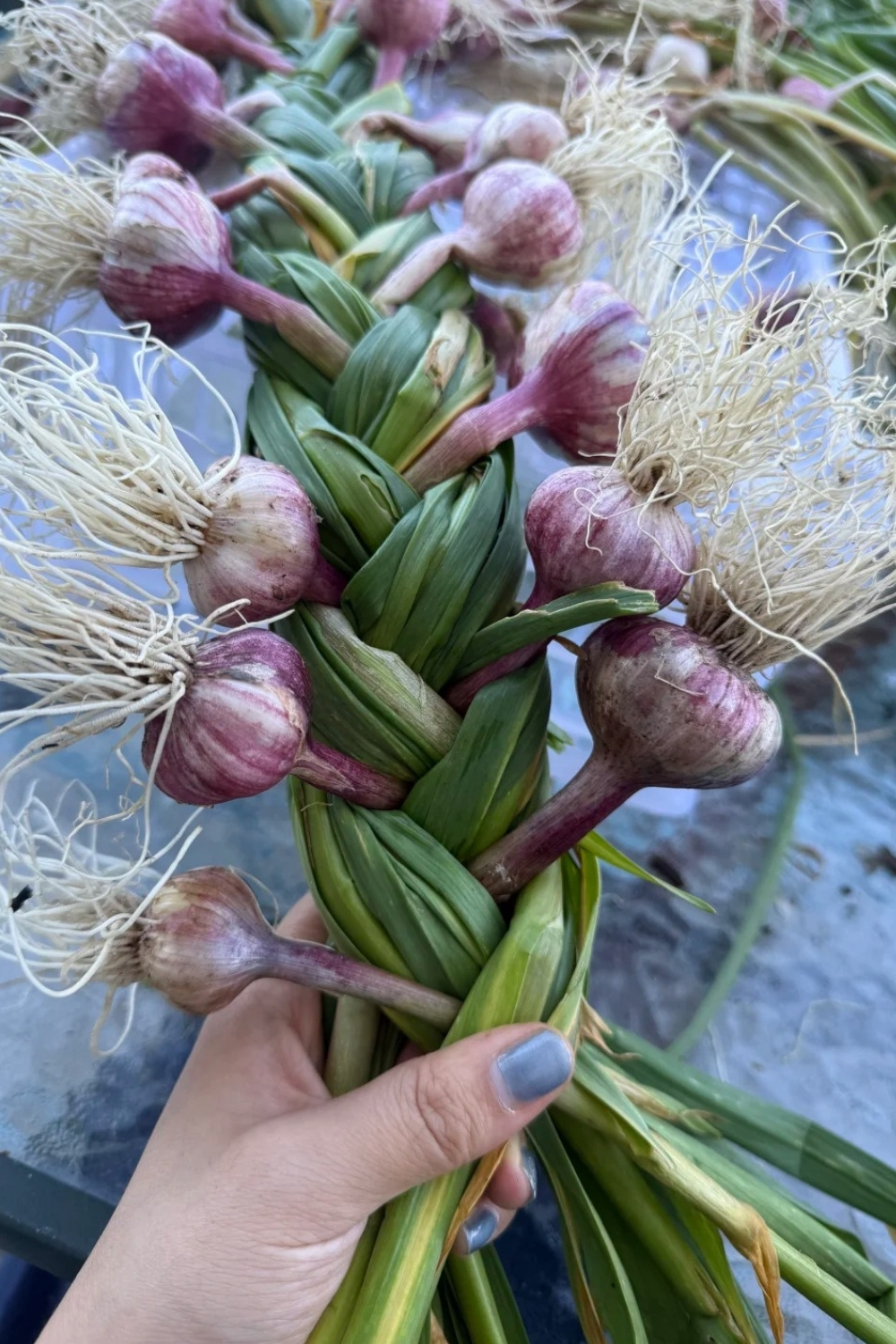
In short: when planting garlic, use the biggest cloves a few weeks after the first frost, 2 inches deep and well spaced, mulch them once the ground starts to freeze, and dig them up next summer when a third of the leaves have browned.