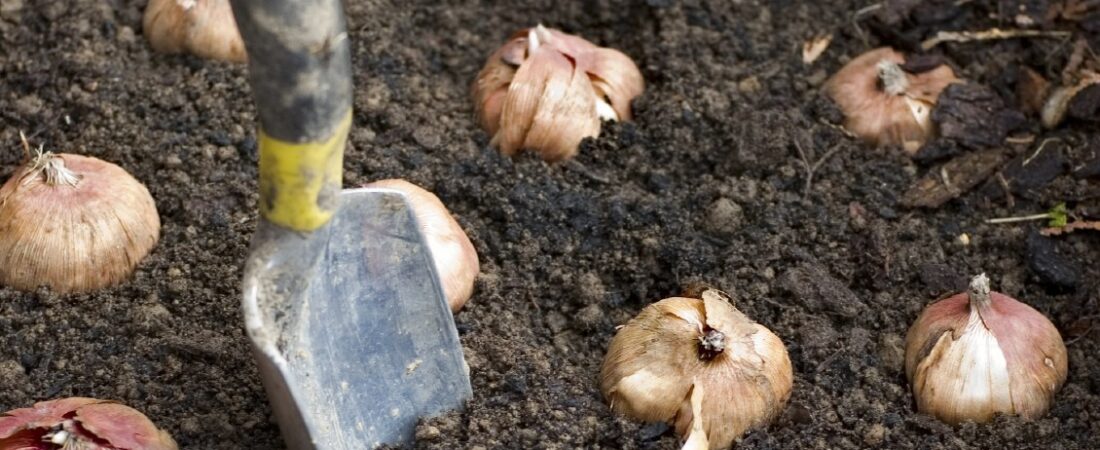
Tulips, daffodils, hyacinths, crocus and alliums go in the ground once the soil cools below about 60 °F, which in most gardens lands four to six weeks before the ground freezes. That’s how fall bulbs for spring blooms work: they need a long, cold winter underground before they’ll flower, so the planting happens months before the color shows up.
Which fall bulbs go in the ground now?
The spring bloomers do: tulips (Tulipa), daffodils (Narcissus), hyacinths (Hyacinthus orientalis), crocus (Crocus) and ornamental onions, usually sold as alliums (Allium). Their edible cousin, garlic, goes in at the same time; this guide on planting garlic in fall covers it.
What they have in common is that each bulb already holds next spring’s flower, packed inside like a folded umbrella. Cold weather is what tells it to open. Without about 10–14 weeks of cold, a tulip either won’t bloom or sends up a short, stunted flower.
Not all of them come back equally. Daffodils, crocus and alliums tend to naturalize, which means they return every spring and slowly spread on their own. Tulips are less reliable: many bloom beautifully the first year and then fade, especially in warm zones, where most gardeners simply treat them as annuals and replant each fall.
When buying spring bulbs, squeeze them. A good bulb feels firm, like a fresh onion, with no soft spots, mold or shriveled patches. Bigger bulbs of the same type usually mean bigger flowers. Garden centers stock fall bulbs from late summer, while mail-order catalogs ship them in time for planting in your zone, and those often carry more colors and varieties. Store them somewhere cool, dry and dark until planting day.
One safety note before buying: tulips, daffodils, hyacinths and alliums are all toxic to cats and dogs, and the bulbs are the most toxic part. If a dog likes to dig, plant where it can’t get at them, and don’t leave a bag of bulbs lying around on the patio.
When is the soil cool enough to plant?
Fall bulbs go in when the soil stays below 60 °F. According to Longfield Gardens’ guide on when to plant tulip bulbs, the sweet spot is around 55 °F at 6 inches deep, which in many areas arrives around the first light frost. A soil thermometer costs a few dollars and settles the question in ten seconds.
Roughly, that works out like this. In zones 3–5, bulbs go in during September or October, ideally four to six weeks before the soil freezes solid. In zones 6–7, October and November are the usual months, alongside the other crops to plant in October. In zones 8–10, the soil doesn’t get cold enough until December or early January, and tulips, hyacinths and crocus need extra help there.
That help is called pre-chilling: keeping the bulbs in the refrigerator, not the freezer, for at least 10 weeks before planting, to fake the winter they won’t get outside. Keep them away from apples and pears in the fridge, because those fruits give off a gas that can kill the flower inside the bulb. Daffodils are more forgiving, and many types bloom in warm zones without it.
Water the bed well right after planting, so the soil settles around the bulbs and roots can start growing before the cold sets in. In zones 3–5, a few inches of shredded leaves or straw over the bed once the top of the soil freezes keeps fall bulbs from heaving up during freeze-and-thaw swings.
Late is better than never, too. As long as you can still dig 6 inches into the soil, fall bulbs can go in, even in December.
How deep and how close?
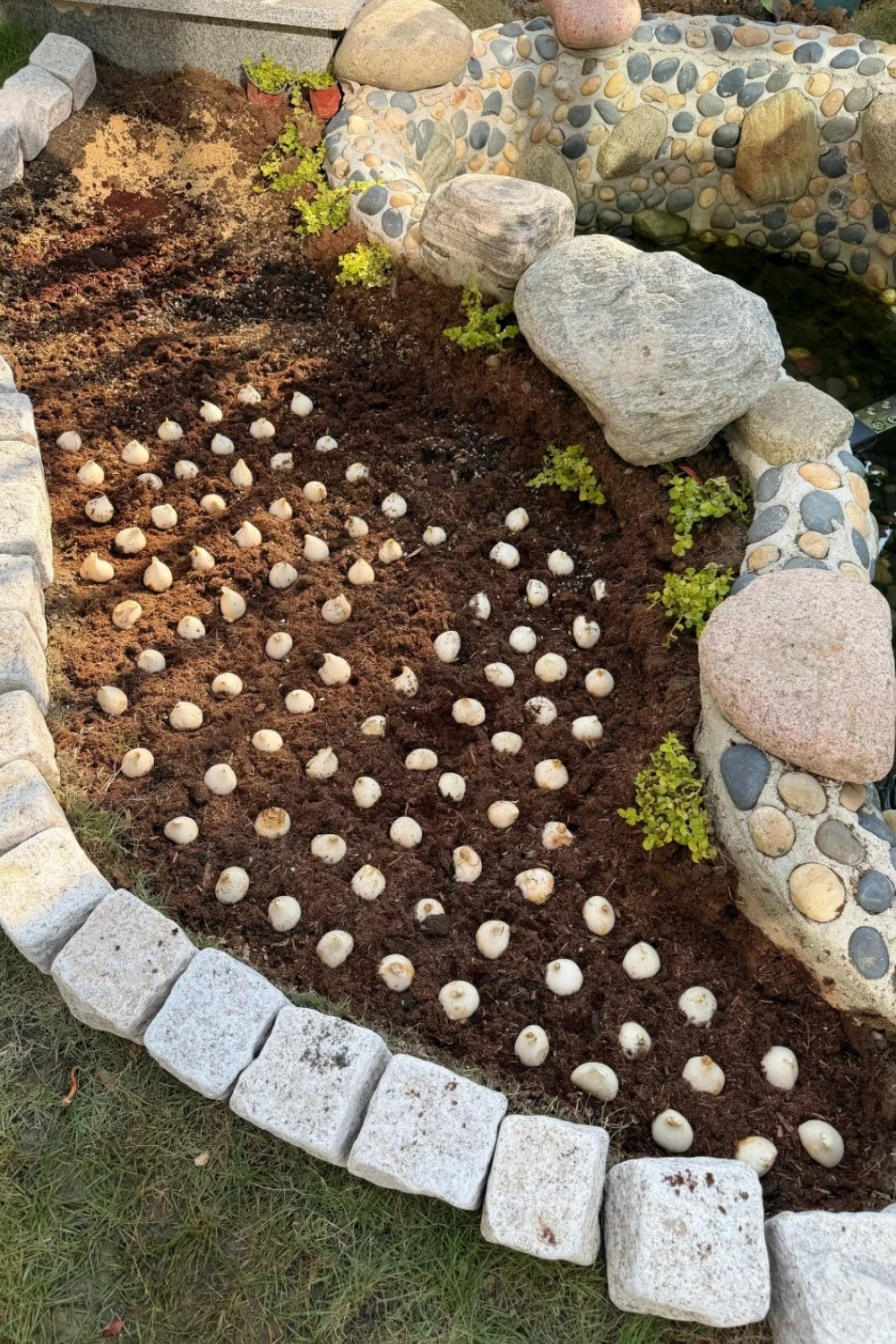
Plant fall bulbs two to three times as deep as they are tall. For a standard tulip, that’s about 6–8 inches down to the bottom of the bulb; for small crocus, about 3–4 inches.
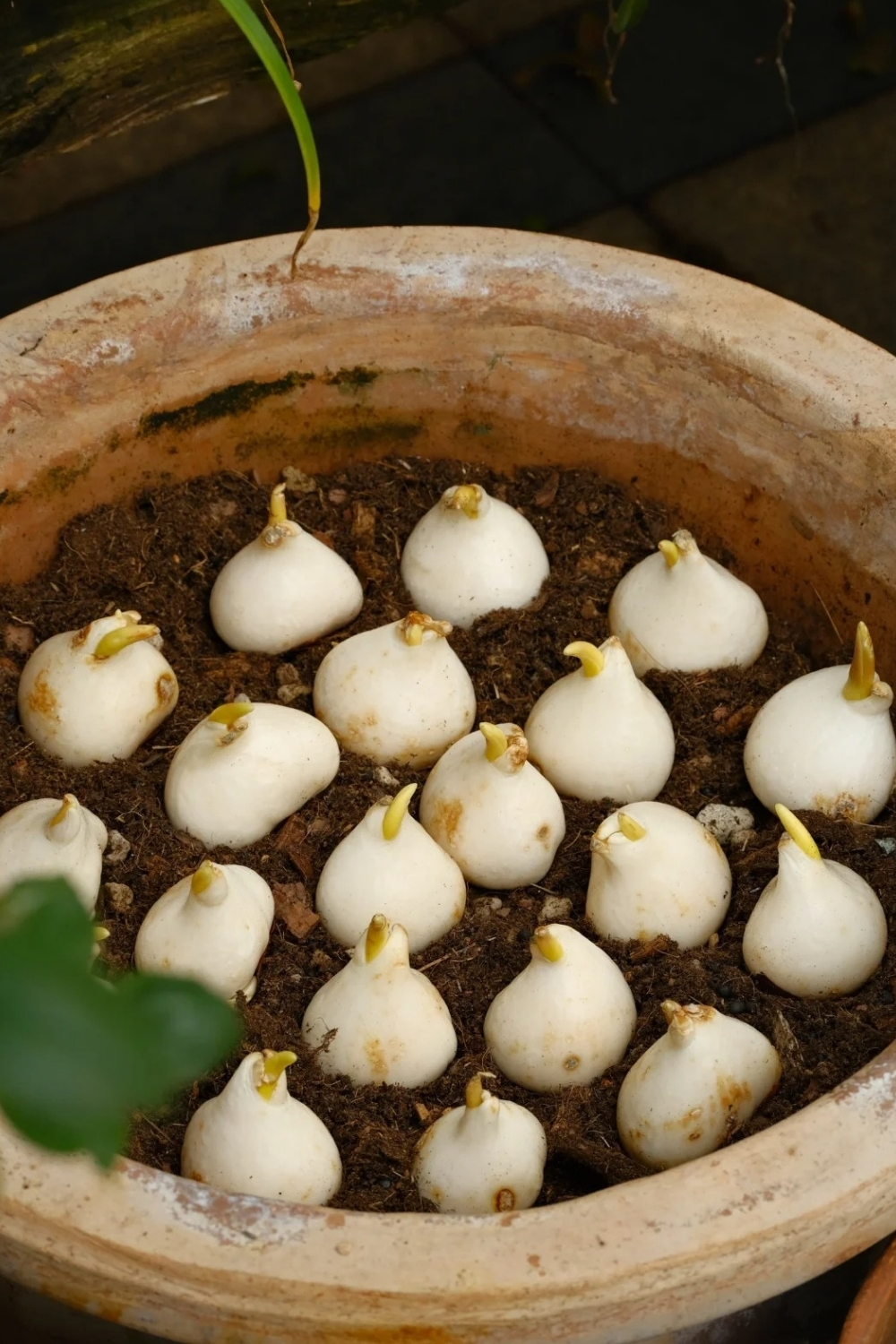
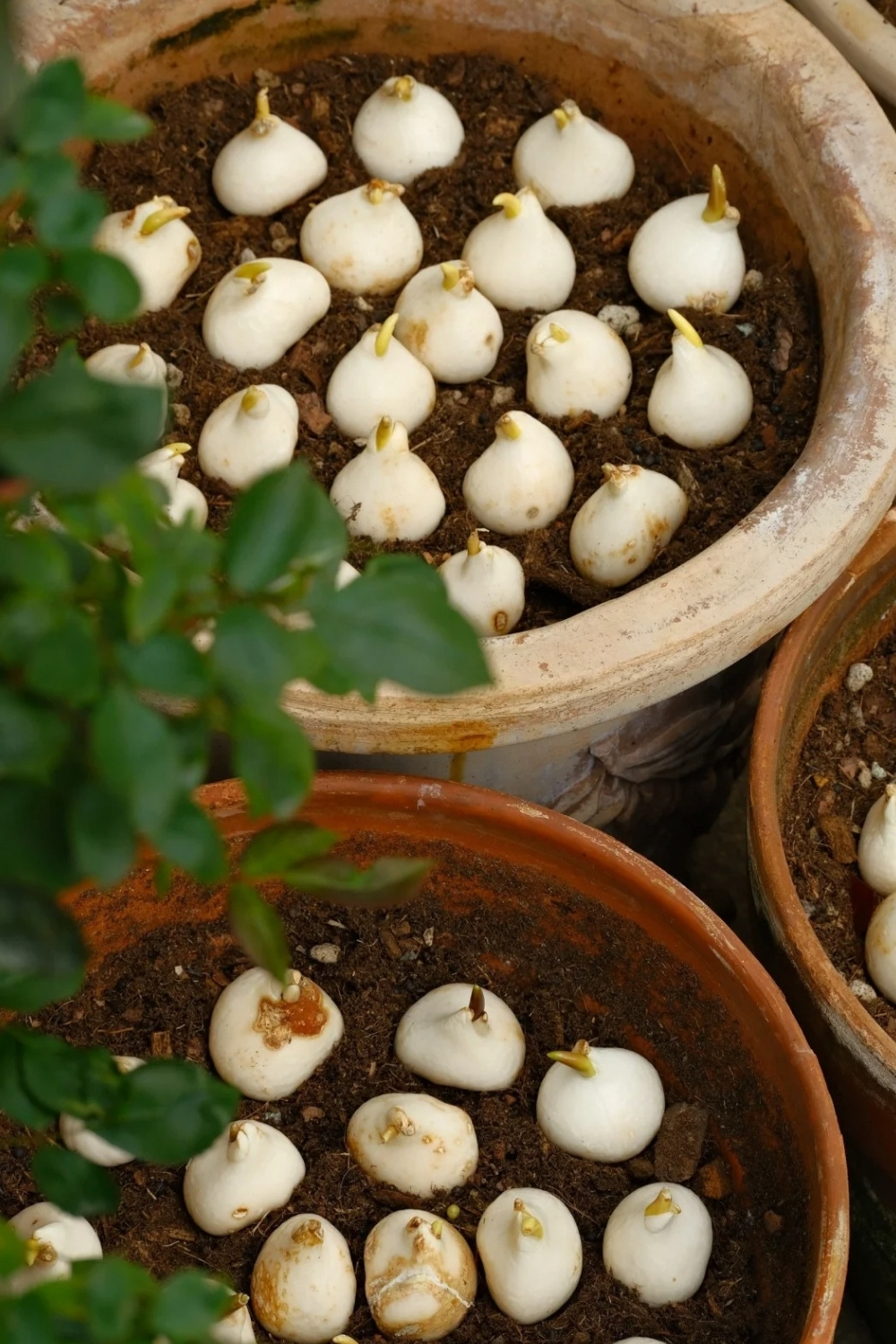
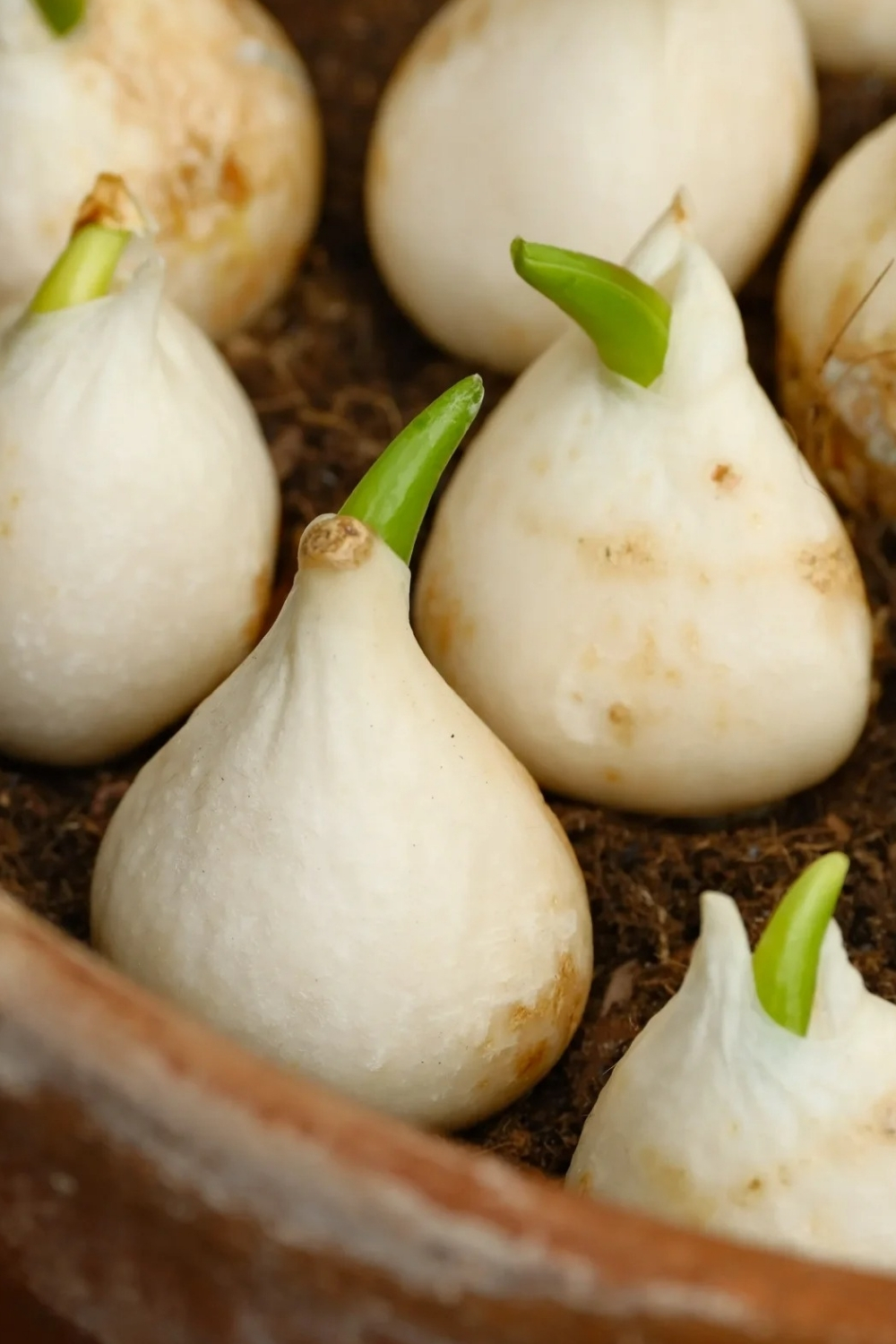
The pointy end goes up. The flat bottom, called the basal plate, is where the roots grow from, so it goes down. Some bulbs make it hard to tell which end is which; wait, actually, it barely matters then: plant them on their side and the shoot will find its way up.
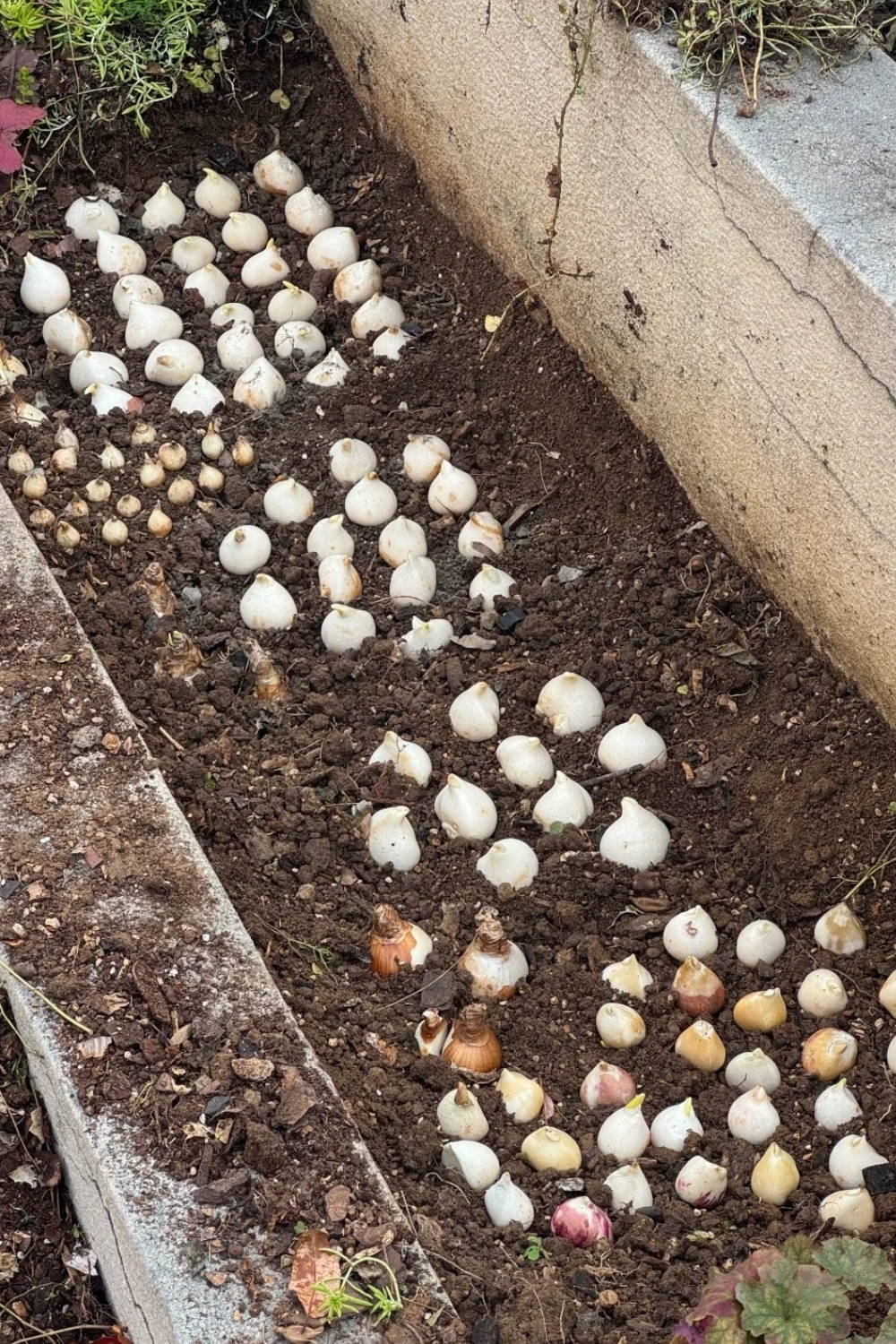
Photos of bulbs laid out on the soil, like these, show the spacing before the bulbs get covered. In the ground, a final depth of 6 inches or more puts them well out of sight.
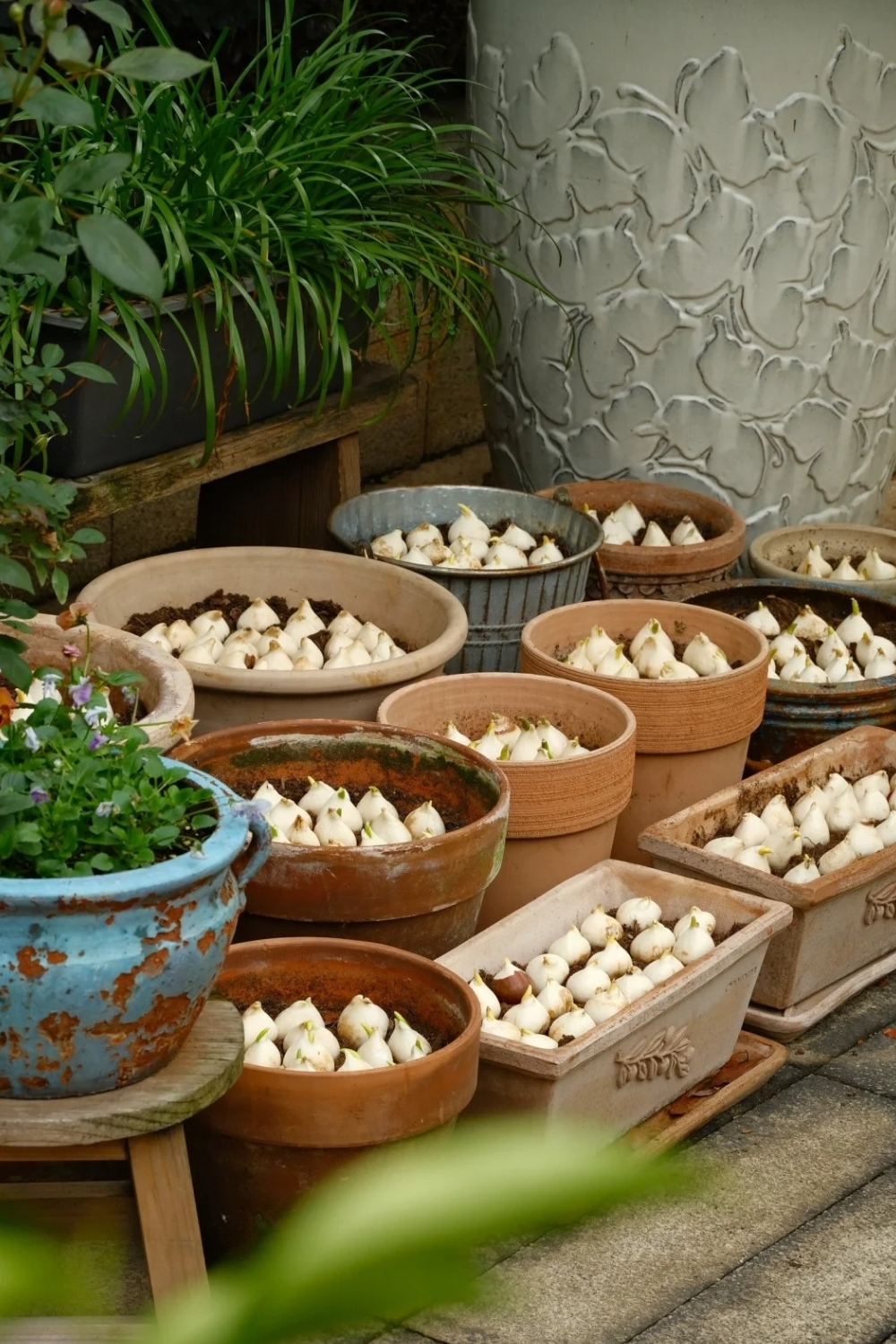
Spacing depends on the look. In a bed, about 3–4 inches apart gives a full display without bulbs touching. In pots, they can go much closer, almost shoulder to shoulder, since a pot is a one-season show anyway. I’m not even kidding about the difference this makes: ten tulips spaced a foot apart look lost, and the same ten in a tight cluster look like a bouquet.
The papery brown skin on the outside, called the tunic, protects the bulb. Leave it on. Some of the bulbs in these photos have been peeled, which is a habit in some places to check for damage, but a peeled bulb is more open to rot and to animals.
How do you plant fall bulbs in a bed?
Three layouts cover most beds. A drift is a loose, irregular patch with bulbs scattered rather than lined up, the way flowers spread on their own in a meadow. A block is a solid shape, a rectangle or a long band of one color. And a whole bed of bulbs is just what it sounds like: every square foot planted, for a single big burst of color.
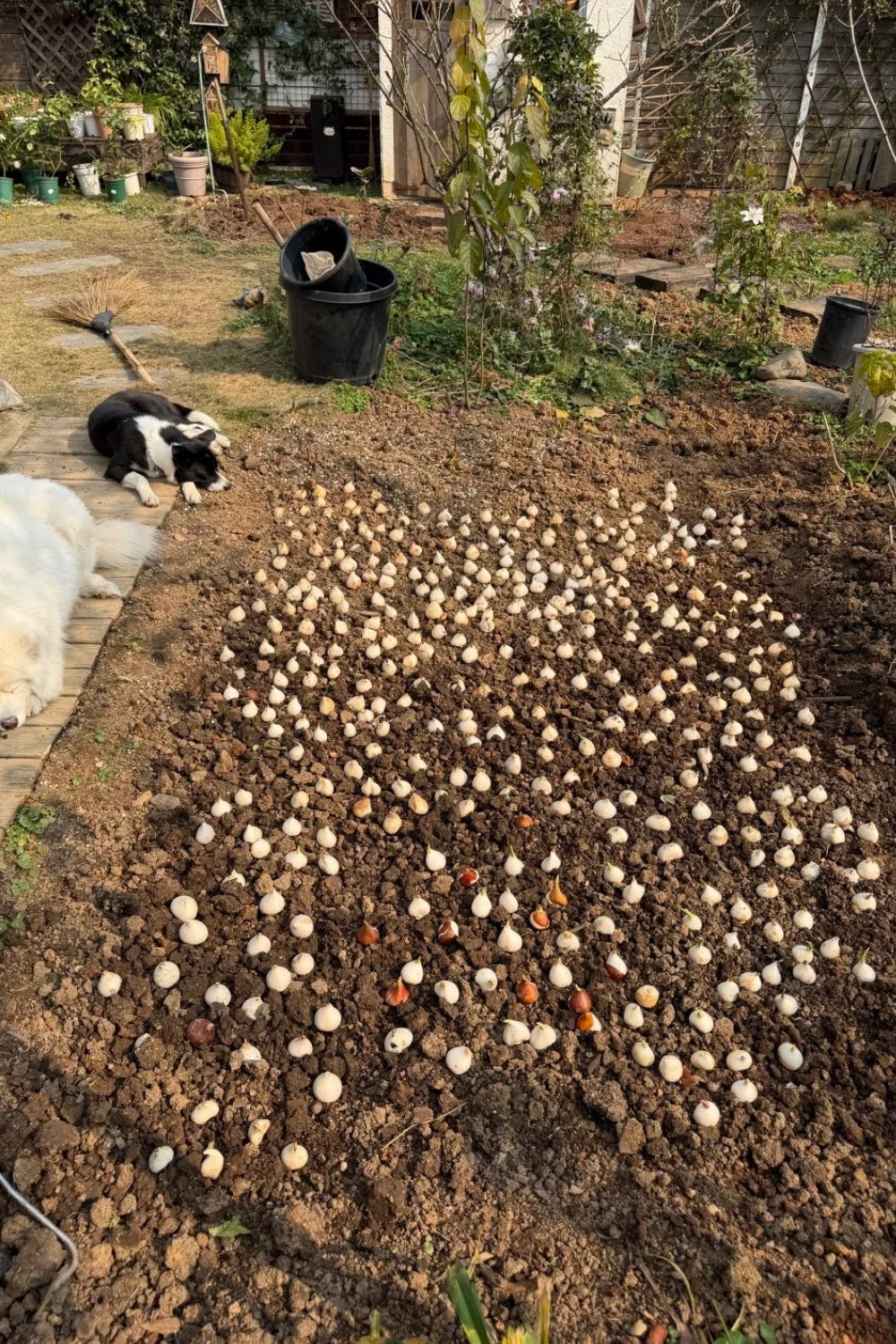
Mixing bloom times stretches the show. Crocus open in early spring, daffodils and hyacinths follow, tulips come next, and alliums finish in late spring, so a bed with all four spring bulbs has something in flower for two months or more.
For a lot of bulbs, digging a trench is faster than digging single holes. Dig out the whole area to the right depth, set the bulbs in, and backfill it in one go.
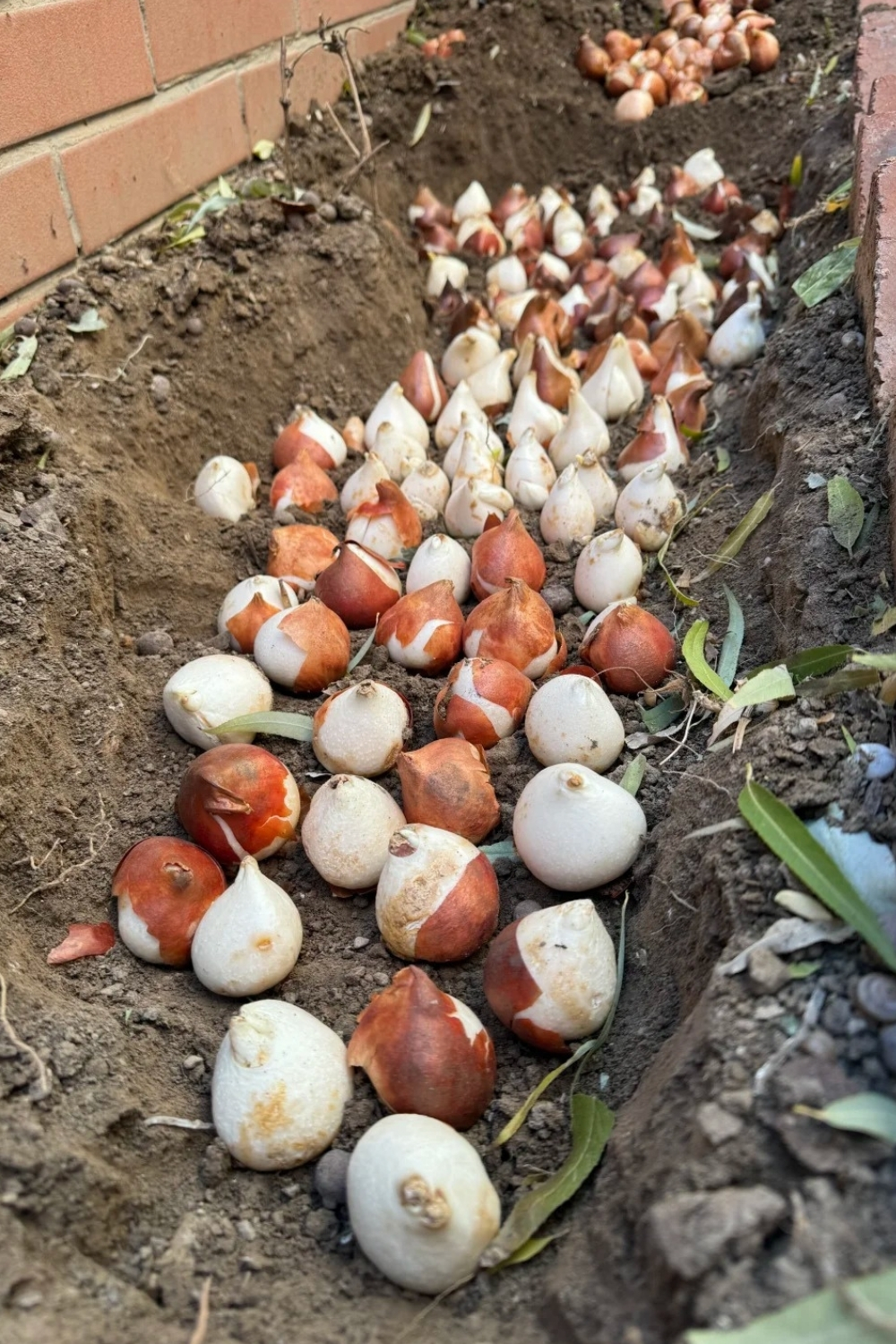
Rows along a wall or the edge of a border work well where perennials will fill in later and hide the bulb leaves as they fade. These ideas on deciding what to plant where help with pairing bulbs and later perennials. For a looser, mixed look, bulbs tucked between roses, catmint and lady’s mantle are one of the backbones of an English cottage garden.
Before heading out, have these within reach:
- Bulbs, sorted by type and labeled
- A trowel or bulb planter, or a spade for trenches
- A tape measure or a stick marked at 6 inches
- Compost to mix into heavy clay soil
- Chicken wire if squirrels are a problem
- A hose, since bulbs need one good watering after planting
Can you plant spring bulbs in pots?
Yes, spring bulbs grow well in pots, and pots are where layering shines. Lasagna planting means stacking bulbs in layers in one deep pot: the biggest, latest-blooming bulbs at the bottom, a few inches of soil, then medium bulbs, more soil, and the smallest, earliest ones near the top. The result is a pot that blooms in waves from early to late spring.
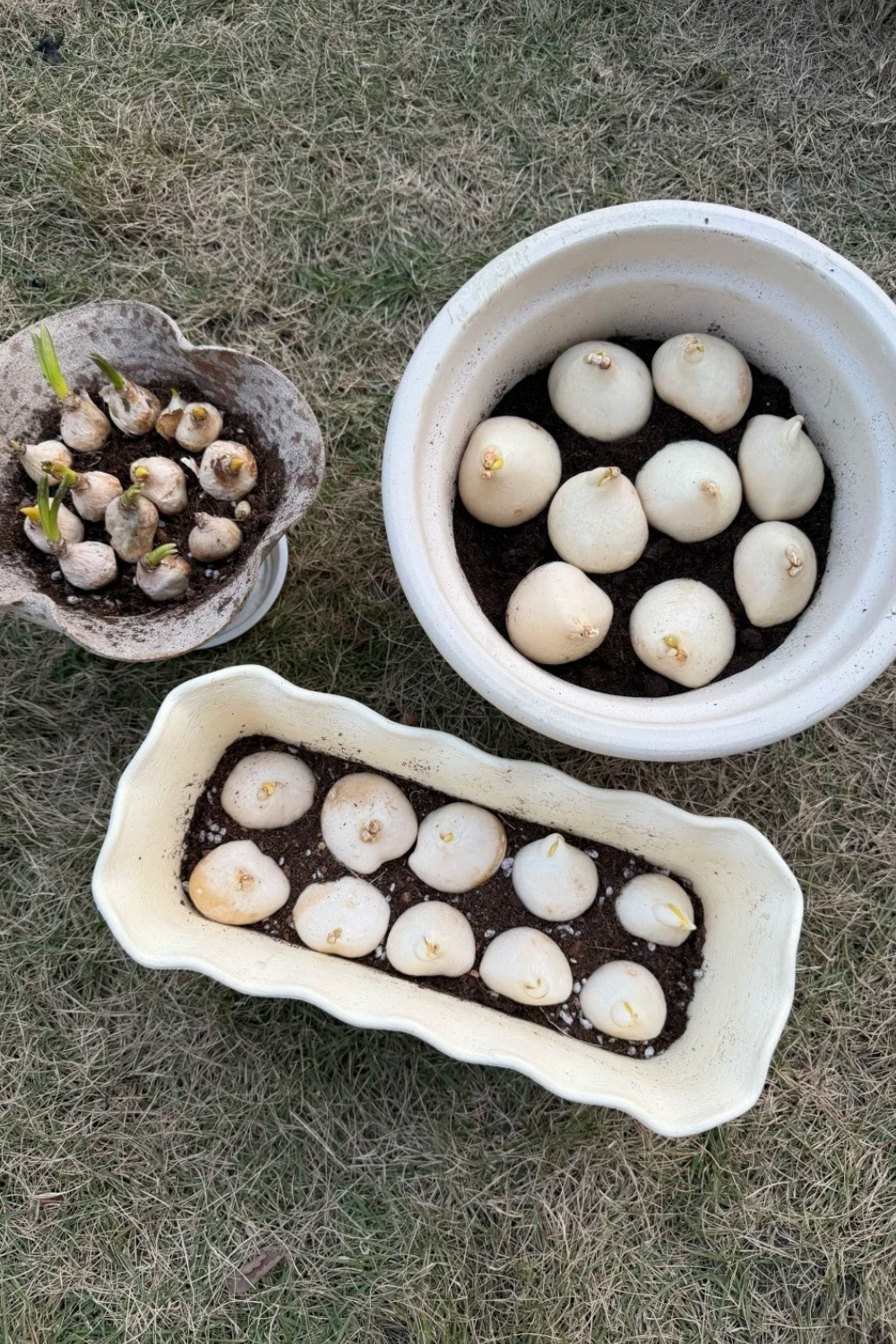
The pot needs drainage holes, since bulbs rot fast in soggy soil, and enough depth for the bottom layer to sit at its planting depth with room for roots beneath. Measure the depth from about an inch below the rim, to leave space for watering. Keep the bulbs a little away from the sides of the pot, where the cold reaches first.
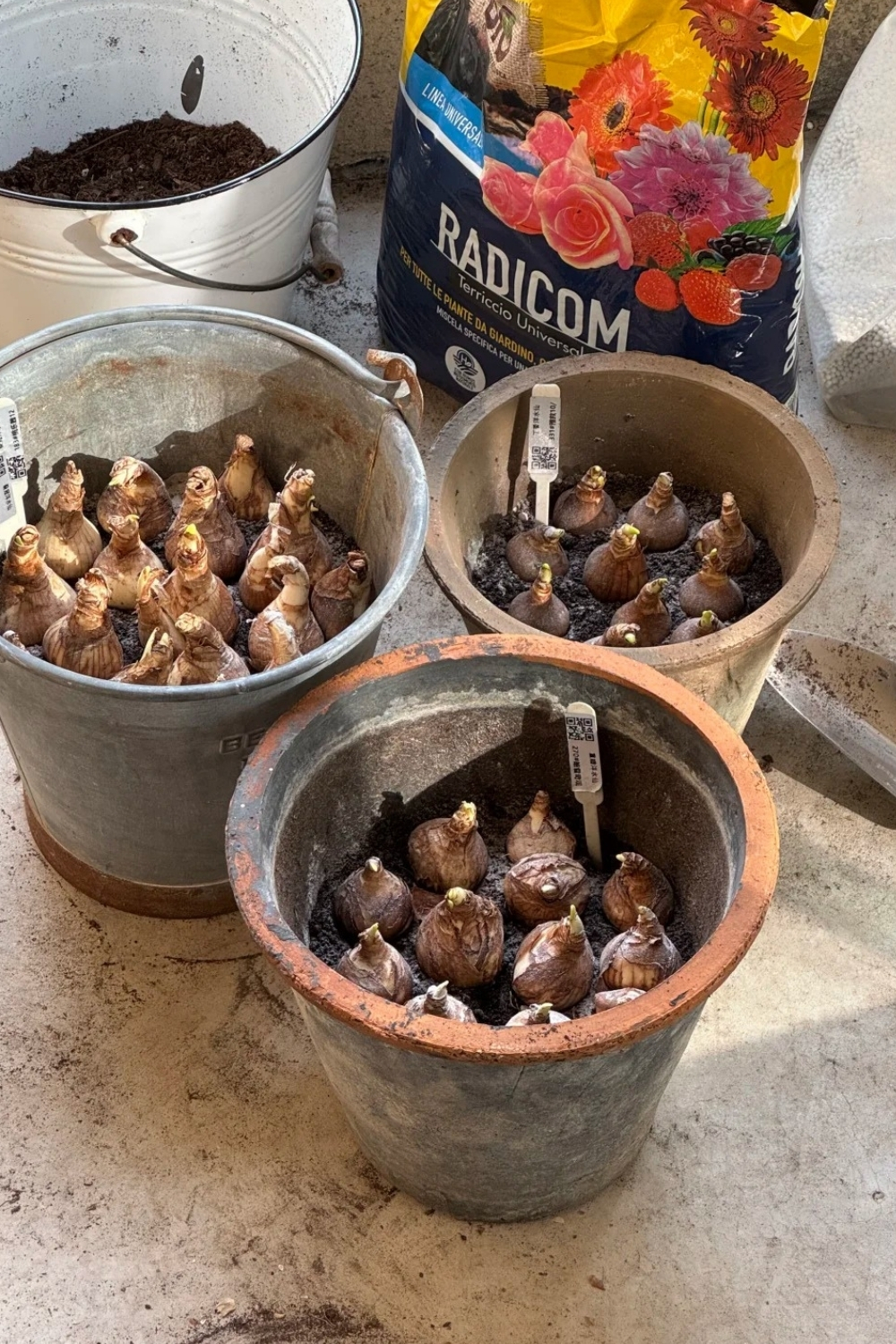
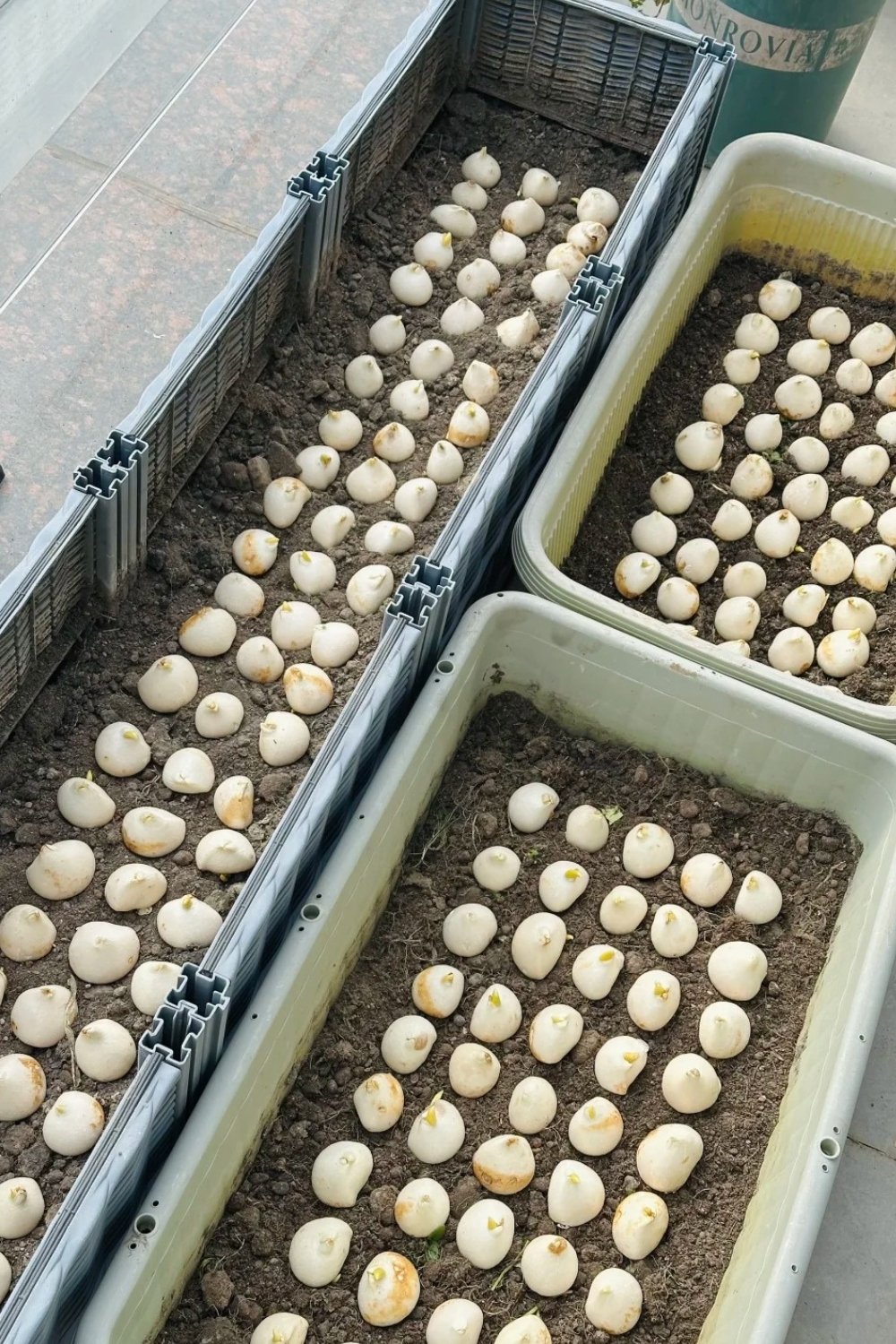
Winter is the tricky part with pots. Soil in a container freezes much harder than soil in the ground, which can kill the bulbs. Potted spring bulbs need about 8–14 weeks at 35–45 °F, so in colder zones they’re happiest in an unheated garage, shed or cold frame, watered now and then so they don’t dry out completely. In mild zones, the pots can stay outside. Once spring growth starts, they come back out into the light. This guide to the thriller-filler-spiller container formula shows how to turn a bulb pot into a fuller arrangement once the tulips are up.
How do you keep squirrels and voles away?
Lay chicken wire over a bed of fall bulbs, an inch or two below the surface or flat on top of the soil, and pin it down. The Chicago Botanic Garden’s advice on protecting bulbs from wildlife suggests this as the main fix, with finer mesh for small bulbs like crocus. Shoots grow straight through the holes in spring.
Squirrels and chipmunks go for tulips and crocus first. Daffodils and alliums are much less tempting, since animals tend to leave them alone, so in a yard with a busy squirrel population, they’re the safer fall bulbs to plant. Voles, small mouse-like animals that tunnel underground, can be slowed down with a handful of sharp gravel around each bulb.
So there you go, one more small habit: clean up the papery skins and empty bags after planting. The smell of fresh bulbs on the surface tells every squirrel in the neighborhood where to dig.
What happens after they bloom?
Over winter, while the rest of the beds get prepped for winter and the November checklist winds down, nothing seems to happen above a bed of fall bulbs, though underground they’re busy putting down roots. In late winter or early spring, the first green tips push through, often while nights are still frosty. The leaves come first, then the flower buds, and the bloom itself lasts one to three weeks depending on the weather.
After the flowers fade, cut off the spent flower head but leave the leaves alone until they turn yellow and flop over, which usually takes about six weeks. The leaves are making food for next year’s flower and sending it down into the bulb. Cutting them early, or braiding and tying them up, means a weaker show the next spring. For spring bulbs that come back every year, like daffodils and alliums, a light sprinkle of bulb fertilizer when the shoots first appear helps them keep flowering.
By the time the snow melts, the first green tips of these fall bulbs will already be pushing up, and the only job left until then is waiting.